Introduction to Gosaikunda Lake Nepal
Gosaikunda Lake Nepal is a sacred alpine lake at about 4,380 metres in Langtang National Park, and it is one of the few high-altitude destinations you can reach from Kathmandu without a flight. The road to the trailhead takes most of a day, the walk takes four to six days, and the reward is a still, dark lake ringed by rock, prayer flags and, in season, pilgrims in white. It is also a trek that catches people out: the final ascent is steep, the nights are cold, and the altitude gain from the roadhead is bigger than the distance suggests.
This guide gives you what you need to plan the Gosaikunda trek properly: where the lake is, why it matters to Hindus and Buddhists, the route options, a realistic itinerary, difficulty and altitude safety, the best months, permits, budget, packing and the mistakes that cut trips short.
Short answer: start from Dhunche or Syabrubesi, sleep at Sing Gompa (Chandanbari), then climb to the lake on day three. Go in spring or autumn, take a rest day if you feel any symptoms, and book through a registered operator because guides and permits are required in the national park.
Where Is Gosaikunda Lake and How High Is It?
Gosaikunda, also spelled Gosainkunda, lies inside Langtang National Park in Rasuwa District, north of Kathmandu, between the Langtang Valley and the Helambu region. Sources agree on an elevation of about 4,380 metres (14,370 feet), which puts it well above the altitude where mild altitude symptoms become common. It is lower than Everest Base Camp but high enough that you should treat it as a real mountain trek, not a long walk.
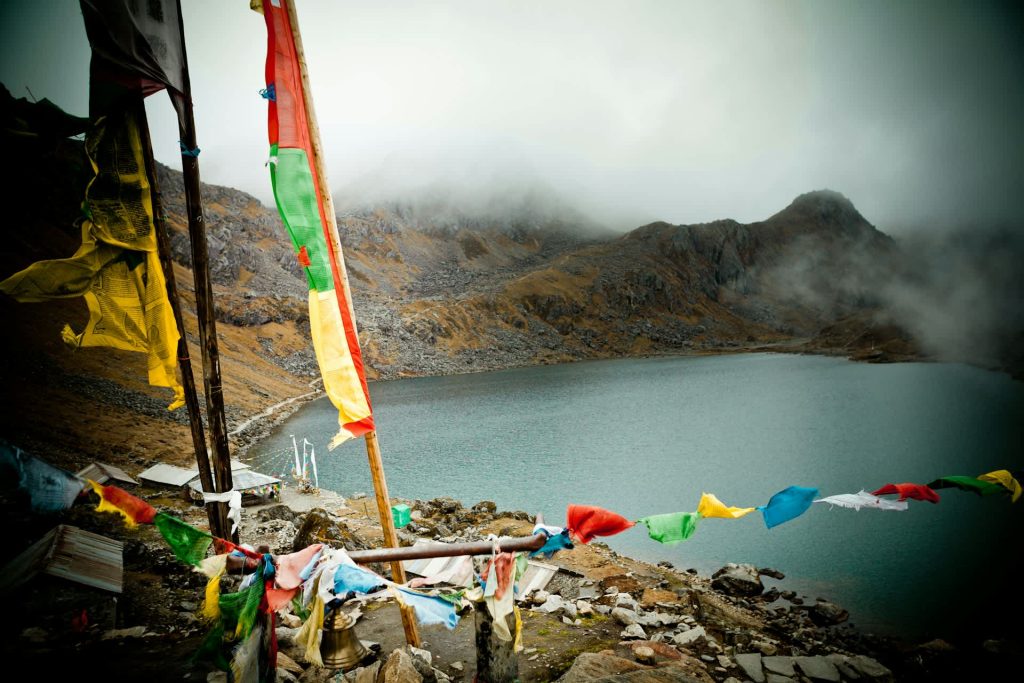
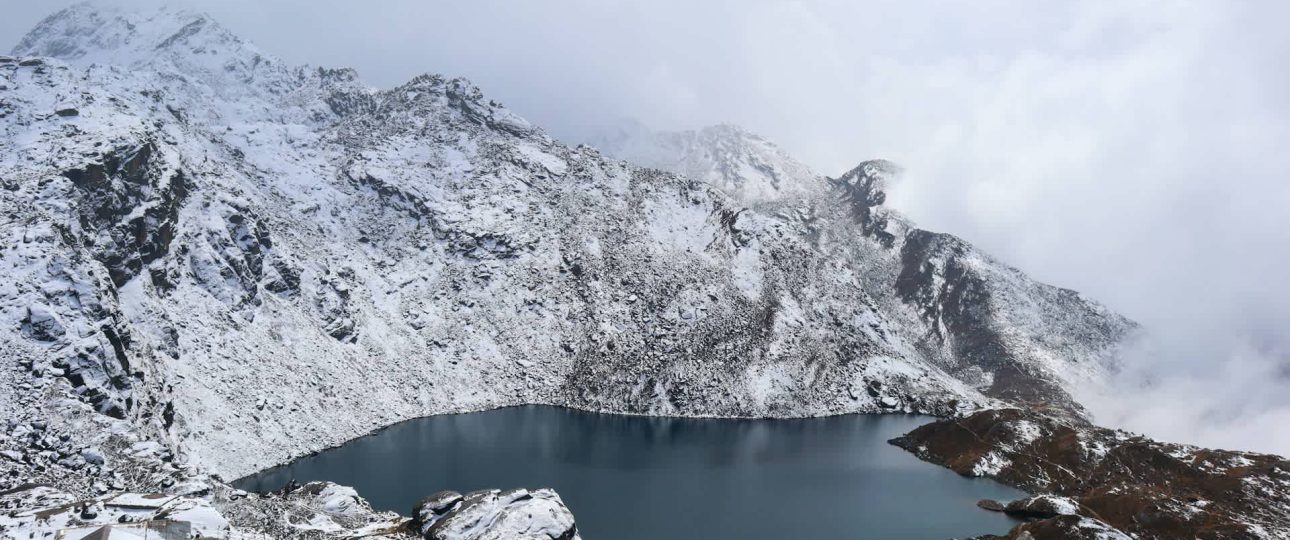
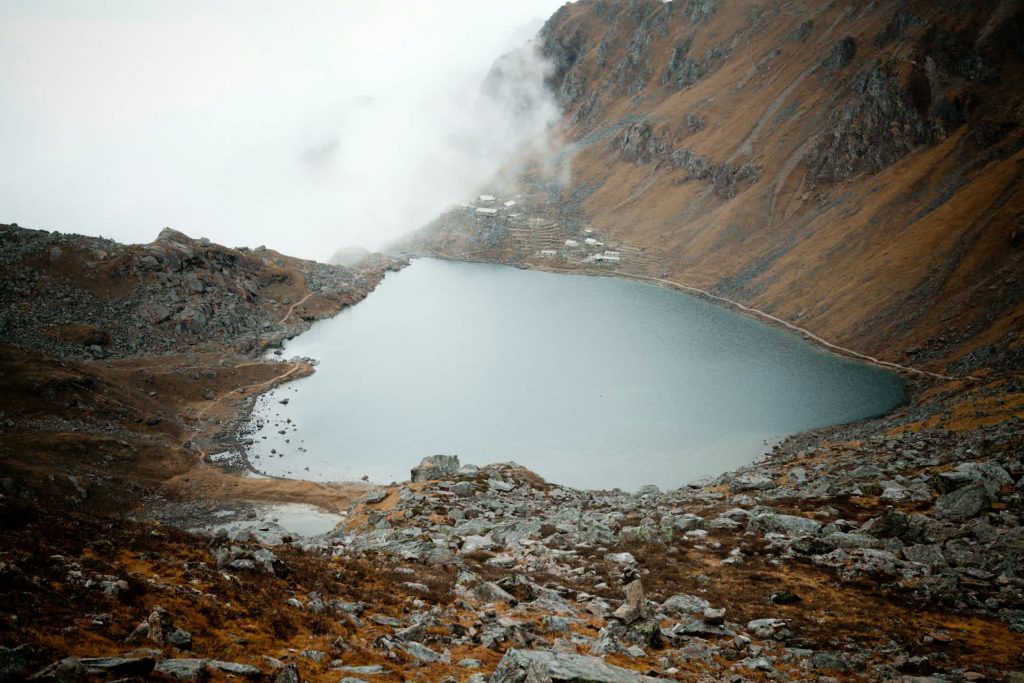
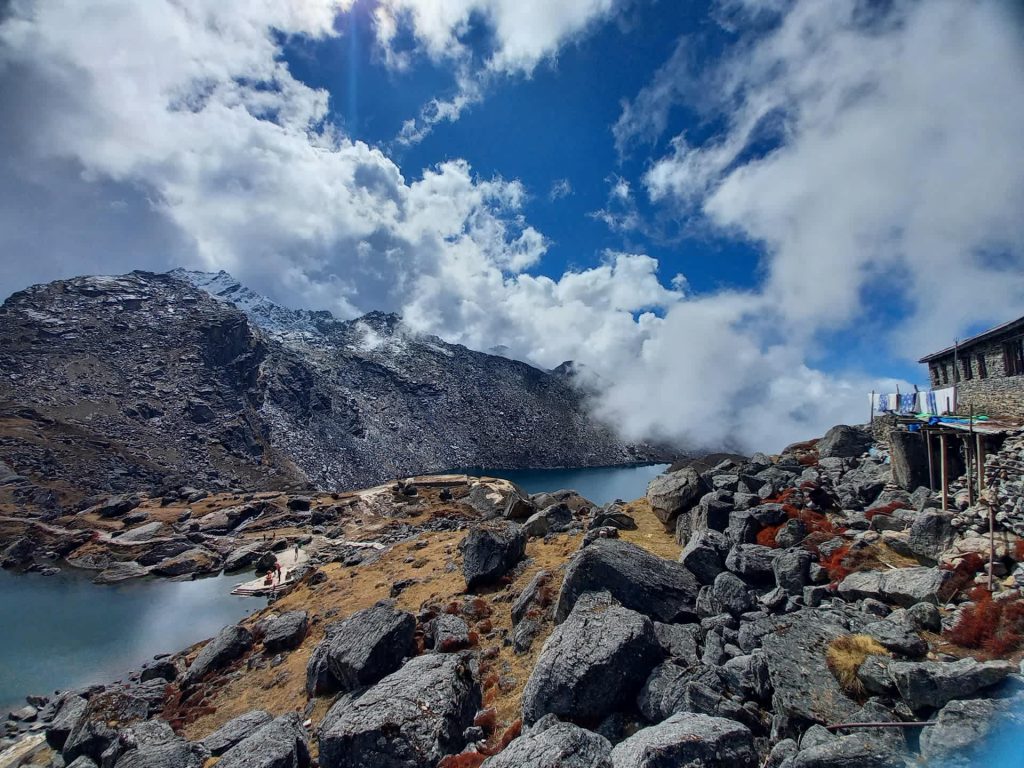
The lake is part of a larger complex of alpine lakes, and counts differ by source, from around a dozen to over a hundred if you include every small pond. The best known are Saraswati Kunda, Bhairav Kunda and Surya Kunda. The appearance of the main lake changes with the season and weather: frozen and white in late winter, glassy and blue in clear autumn light, and sometimes shrouded in cloud so thick that you only see the shoreline.
The nearest road access is Dhunche, at roughly 2,000 metres, about 117 kilometres from Kathmandu. Most trekkers drive to Dhunche or Syabrubesi, then walk. For the wider region and its peaks, our Langtang Himal guide shows how the area fits together, and the Langtang National Park guide covers wildlife and park rules.
Why Gosainkunda Is Sacred
For many visitors, the reason to go is spiritual. The lake is a pilgrimage site for Hindus and Buddhists, and tradition holds that it was created by Lord Shiva. In the popular telling, Shiva drove his trident into the mountain to draw out water and cool his throat after swallowing poison released during the churning of the cosmic ocean. Many Hindus believe the water of the lake is connected to the holy waters of the Ganges.
The main gathering is the Janai Purnima festival, which falls on the full moon in the Nepali month of Shrawan, usually in August. Pilgrims from Nepal and India walk up, bathe in the lake and renew their sacred threads. It is also a monsoon-season event, which means the trails are wet, leech-prone in the lower forest and often cloudy. Trekkers who want the lake at its busiest and most devotional can go then, but the experience is very different from a calm autumn trip.
Whatever the season, treat the lake as a place of worship. Dress modestly near shrines, do not swim or wash in the water, and ask before photographing people who are praying.
How to Get to Gosaikunda Lake: Route Options
Most itineraries fall into three patterns. The right one depends on how many days you have and how much altitude you want to accumulate.
| Route | Typical length | High point | Best for |
|---|---|---|---|
| Direct out-and-back from Dhunche or Syabrubesi | About 5 to 7 days from Kathmandu | Gosaikunda at about 4,380 m | Short trips, first-time high-altitude trekkers |
| Gosaikunda to Helambu via Laurebina Pass | About 8 to 10 days | Laurebina Pass at about 4,610 m | Trekkers who want a crossing and a different exit |
| Langtang Valley plus Gosaikunda | About 11 to 14 days | Laurebina Pass or higher Langtang viewpoints | People with time who want the full Langtang experience |
Direct route: the short Gosaikunda trek
This is the simplest and most popular option. You drive from Kathmandu, walk up through forest to Sing Gompa, climb to the lake, then return the same way or descend to a different trailhead. It suits anyone with limited time, and it is also the easiest version to adjust if the weather or your body says slow down.
Gosaikunda to Helambu: crossing Laurebina Pass
Continuing past the lake takes you over Laurebina La, listed at about 4,610 metres, and down towards the Helambu region. The pass is the highest point of the route, and the descent is long and knee-testing. Many trekkers end at Sundarijal on the Kathmandu side, which can require an additional national park entry permit for Shivapuri-Nagarjun, so confirm your exit plan in advance.
Langtang Valley and Gosaikunda combined
Adding the Langtang Valley, including Kyanjin Gompa, makes a fuller trek with more villages, monasteries and mountain views. It also gives better acclimatization. If that appeals, see our Langtang Valley trek guide for route and itinerary details.
If you only have a week, Nepal short treks shows how this trip compares with other short routes.
A Realistic Gosaikunda Trek Itinerary
The itinerary below is the classic shape. Exact day counts vary by operator, and a good plan adds a spare day for weather or acclimatization.
- Day 1, Kathmandu to Dhunche or Syabrubesi: a long road day of roughly six to seven hours depending on traffic and road conditions. Dhunche sits at about 1,960 metres.
- Day 2, Dhunche to Sing Gompa (Chandanbari): around 13 kilometres and five to six hours, climbing through forest to about 3,330 metres. Sing Gompa is known for its small cheese factory.
- Day 3, Sing Gompa to Gosaikunda: around 11 kilometres and five to six hours. You leave the forest behind, climb through open slopes and ridges, and gain the lake at about 4,380 metres. This is the hardest day for most people.
- Day 4, acclimatization or exit: either explore the nearby lakes and viewpoints, or cross Laurebina Pass towards Helambu.
- Day 5 onward: descend by the same route back to Dhunche, or continue to Helambu and Sundarijal, then return to Kathmandu.
These distances and timings come from typical operator itineraries, so treat them as a guide. Weather, pace and trail conditions change the real numbers.
The jump from Sing Gompa at 3,330 metres to the lake at 4,380 metres is more than 1,000 metres of altitude in a single day, which is why many experienced guides prefer to add an extra night or build in a short acclimatization hike. If your schedule allows, ask for a version of the itinerary that splits this climb.
What Each Stage of the Trek Feels Like
Numbers on a schedule do not tell you what the walk is like, so here is how the stages usually unfold. Conditions change by season, and your guide’s advice on the day always comes first.
The road to Dhunche
The drive is long and often slow, with steep, winding sections and landslide-prone stretches in the wet months. Leave early, carry snacks and water, and keep a warm layer within reach, because the temperature drops as you climb. It is a good moment to meet your guide and go over the plan, including what happens if the weather turns.
Through the forest to Sing Gompa
The first full day is a steady climb through mixed forest. In spring, rhododendrons bloom along the trail, and in autumn the air is clear and cool. The trail is mostly shaded, which helps, but it is steep and continuous, so pace yourself. Langtang National Park is home to wildlife such as musk deer and red panda, though sightings are rare. Sing Gompa has a small monastery and a cheese factory, and it is a good place to rest, drink tea and let your body settle at over 3,000 metres.
Above the tree line to the lake
On the third day the vegetation thins, views open up, and the trail zigzags along ridges. The air feels noticeably thinner, and many trekkers slow right down. You pass viewpoints and small tarns before the main lake appears below you. Arrive early if you can, because afternoon cloud often rolls in and the temperature falls quickly once the sun drops.
Around the lake
If you have an acclimatization day, walk gently around the shoreline and visit the small shrine area, taking care not to overexert yourself. Several smaller lakes sit nearby, including Saraswati Kunda and Bhairav Kunda, and short hikes to ridgelines give wider views. Keep the hike short and return to sleep at the lake, which supports acclimatization without adding stress.
How Difficult Is the Gosaikunda Trek?
Most operators grade it moderate. That is fair for people who walk regularly and are comfortable with steady uphill hiking, and it is too generous for people who have never been above 3,000 metres.
What makes it hard
- Altitude gain: you start near 2,000 metres and finish above 4,300 within three days.
- Steep, sustained climbing: the climb to Sing Gompa is relentless, and the final day to the lake includes long uphill sections.
- Cold: nights at the lake are well below freezing for much of the year, and lodges are basic.
- Weather: clouds can roll in quickly, and visibility, rain or snow can change the day.
What makes it manageable
- No technical climbing: it is a walking trail, not a mountaineering route.
- Short duration: you can complete the direct trek in less than a week.
- Flexible exits: you can descend the way you came if the weather or health turns.
Treks in the Langtang region are often compared with Tilicho Lake, which sits at a higher elevation and is generally harder. If you are weighing the two, our Tilicho Lake trek difficulty guide gives a useful benchmark.
Training and Fitness for the Gosaikunda Trek
You do not need to be an athlete, but you do need to arrive with a base of regular uphill walking. Start six to eight weeks before departure if you are already active, and three months if you are not.
- Walk uphill with a pack: two or three sessions a week on hills or stairs, building from 45 minutes to two hours with a loaded daypack.
- Add one long weekend hike: aim for four to six hours on varied terrain, in the boots you plan to wear.
- Build leg strength: squats, lunges and step-ups twice a week help with long ascents and knee-straining descents.
- Do some steady cardio: cycling, swimming or jogging for 30 to 60 minutes keeps your aerobic base strong.
- Practice downhill: the descent from the lake, or over Laurebina Pass, is hard on knees, so train with poles on downhill sections if you can.
Fitness does not predict how you handle altitude, but it makes long days less draining and recovery easier. The training that matters most is the habit of walking slowly and steadily for hours.
Altitude Sickness and Safety on the Gosaikunda Trek
At 4,380 metres, altitude sickness is the most important health risk, and it can affect fit people as readily as unfit ones. A shorter itinerary can make it more likely, not less, because there is less time to adapt.
Habits that reduce risk
- Walk slowly. If you can talk comfortably, your pace is about right.
- Drink water regularly throughout the day, and avoid alcohol on the way up.
- Eat even when appetite drops. Carbohydrate-heavy lodge meals are good fuel.
- Sleep lower than the highest point you reached during the day where possible.
- Tell your guide early about headache, nausea, dizziness or unusual tiredness.
Warning signs that mean you stop or descend
Mild symptoms include headache, loss of appetite and poor sleep. If a headache persists or you develop vomiting, confusion, loss of coordination or breathlessness at rest, do not go higher. Descend, and get medical help. Do not climb to sleep while symptoms are worsening. Talk to a doctor before you travel about medication and your own risk, particularly if you have heart, lung or blood conditions.
Other practical safety points
- Travel insurance should cover trekking to at least 4,600 metres and include helicopter evacuation.
- Carry a basic first-aid kit, and ask your operator whether the guide carries an oximeter.
- Do not trek alone. Guides are required in the national park, and the weather can change rapidly above the tree line.
For deeper background on altitude adaptation and training, see our high altitude expedition guide.
Best Time to Visit Gosaikunda Lake Nepal
The two main trekking seasons are spring (March to May) and autumn (September to November). Both give the best balance of stable weather and open trails.
- Autumn (September to November): usually the clearest skies and the most reliable views after the monsoon. It is the busiest season, so book lodges and guides early.
- Spring (March to May): warmer, with rhododendrons flowering in the lower forest. Views can be hazier, and afternoon clouds are common.
- Monsoon (June to August): wet, cloudy and leech-prone, though Janai Purnima in August draws pilgrims. Not recommended for views or comfort.
- Winter (December to February): cold, with snow and ice at the lake and a real risk of closed passes. Only suitable for experienced, well-equipped trekkers.
If your priority is clear mountain views and a calm lake, choose October or early November. If you want fewer people and warmer days on the way up, April is a good compromise.
Month-by-Month Conditions to Expect
These are general patterns, not forecasts, and mountain weather can break any rule. Use them to choose a month, then rely on your guide’s daily read of conditions.
- March and April: cold nights, increasingly warm days and flowering forest. Some snow can remain near the lake early in the season, which may slow progress.
- May: warmer, but haze and afternoon cloud build as the pre-monsoon approaches.
- June to August: monsoon rains, leeches in the lower forest, slippery trails and poor visibility. Roads can also be affected by landslides.
- September: the tail of the monsoon. Clouds can linger, but trails are lush and crowds are lighter.
- October and November: the most stable weather and best views, with colder nights as November advances.
- December to February: clear days are possible, but the cold is serious, snow can cover the trail, and facilities may be limited.
Whatever month you choose, pack for cold. Even in the best season, the lake can feel wintry once the sun leaves it.
Permits and Rules for the Gosaikunda Trek
The Gosaikunda route is inside Langtang National Park, so you need a park entry permit. Foreign nationals currently pay about NPR 3,000, according to recent 2026 permit guides, and the fee is set in Nepali rupees. You can read a recent breakdown in this Gosaikunda trek permit guide.
Sources disagree on whether a TIMS card is still required for Langtang. Some operators list it, with a figure around NPR 1,000 to 2,000, and others say it is no longer needed. Your operator handles the paperwork, so ask them to confirm exactly which permits are included. If your route ends at Sundarijal, a Shivapuri-Nagarjun National Park permit of around NPR 1,000 is also reported.
- Permits are normally issued through a registered agency, and independent trekking in the park is reportedly restricted.
- Carry originals. Checkpoints along the trail inspect permits.
- No separate religious permit is required to visit the lake, but follow local etiquette.
Because rules change often, our Langtang trek permits guide is worth a look before you book.
Gosaikunda Trek Cost: What You Will Actually Pay For
Prices vary with season, group size, comfort level and how many days you take, so use this list to compare quotes rather than as a fixed budget.
Usually included in a guided package
- Kathmandu to trailhead transport and return
- Langtang National Park permit and any other permits
- A licensed guide, and a porter if arranged
- Lodge accommodation and meals during the trek
- Basic first-aid and oximeter
Usually not included
- International flights and visa
- Travel insurance with altitude and evacuation cover
- Personal gear and sleeping bag hire
- Tips, drinks, hot showers, battery charging and extras
Permit costs themselves are small compared with guide, transport and lodge costs. Cheap offers often hide shorter schedules, large group sizes or missing inclusions, so ask for the exact list.
Where You Sleep and Eat on the Trek
Accommodation is simple tea-house lodging: small rooms with basic beds, shared bathrooms and a communal dining room, usually heated by a stove in the evening. Higher up, rooms are unheated and nights are cold, so a warm sleeping bag matters more than the mattress.
Meals are typical Nepali trekking fare. Dal bhat is the standard, along with noodles, soups, eggs, pasta and porridge. Eat early, because lodges can be slow when full, and choose freshly cooked food over anything that has been stored. Bottled water gets expensive at altitude, so bring purification tablets or a filter and refill from lodge supplies where your guide approves.
Facilities are thinner than on Everest or Annapurna. Expect limited electricity, patchy mobile signal and few options for hot showers near the lake. Book ahead in peak autumn, because lodges at Sing Gompa and Gosaikunda have limited capacity.
What to Pack for Gosaikunda
- Footwear: broken-in waterproof trekking boots, spare socks, camp shoes
- Layers: thermal base layers, fleece, down jacket, waterproof shell jacket and trousers
- Cold protection: warm hat, gloves, buff, and a sleeping bag rated for freezing nights
- Sun and eyes: sunglasses, sun cream, lip balm
- Trek essentials: daypack, trekking poles, water bottles, headlamp, power bank
- Health: personal medication, blister care, first-aid kit, hand sanitizer
Pack light for your porter and keep valuables, medicine and your warm layers in your daypack. For packing principles that apply equally here, see our trek gear list.
Gosaikunda vs Helambu vs Langtang Valley
People often ask which Langtang-region trek to choose. The honest answer depends on time and goals.
- Gosaikunda: best for a sacred lake, a short schedule and a quieter trail. More altitude pressure over fewer days.
- Helambu: lower, gentler and cultural, with Sherpa and Tamang villages. A good choice for beginners or winter trips.
- Langtang Valley: best for big mountain views, Kyanjin Gompa and a gradual altitude profile.
- Combined routes: the best acclimatization and variety, but they take the most days.
If you have eight days or fewer and want a sacred lake, Gosaikunda is hard to beat. If you want more time to adapt and more mountain scenery, the Langtang Valley is a smarter first choice.
Short Itinerary or Longer Route: How to Decide
The biggest planning question is how many days to give the trek. A short itinerary is attractive because it fits into a busy schedule, and for fit, experienced trekkers it works well. For most first-timers, though, an extra day is the cheapest insurance you can buy.
Choose the direct short route if you have under a week, have trekked above 3,000 metres before, and are comfortable turning back at the first sign of trouble. Choose the Helambu crossing if you want a point-to-point journey and have eight to ten days. Choose a combined Langtang and Gosaikunda route if you want the gentlest altitude profile and the richest cultural experience.
Whichever you pick, ask the operator how the plan handles bad weather and altitude symptoms. A trek to Gosaikunda Lake Nepal that has a spare day built in will almost always be more enjoyable than the same trek squeezed to the minimum.
Common Mistakes on the Gosaikunda Trek
- Rushing the climb from Sing Gompa. The altitude jump is big, and moving too fast is the most common reason for illness.
- Underestimating the cold. A thin sleeping bag makes the night at the lake miserable.
- Choosing the cheapest package. Low prices can mean oversized groups and missing safety margins.
- Skipping insurance details. Make sure your policy covers the altitude and helicopter evacuation.
- Ignoring weather windows. Cloud and snow can close the way ahead, so build in a spare day.
- Treating it as just a lake. It is a place of worship for many visitors, so behave accordingly.
Responsible Trekking at a Sacred Lake
Gosaikunda sees heavy pilgrim traffic in some months, and the alpine environment is fragile. Carry out your rubbish, including wrappers and batteries. Use lodge toilets and avoid contaminating water sources that people and animals depend on.
Respect religious practice. Do not bathe in the lake unless you are following local custom, keep voices low near shrines, and ask permission before taking photographs of worshippers. Hire local guides and porters, ensure your team has proper clothing and insurance, and stay at local lodges. The park is also home to wildlife such as musk deer and red panda, so stay on trails and keep distance.
For more background on the cultural and geographic setting, this overview of Gosaikunda and the Langtang highlands is a useful read.
Frequently Asked Questions About Gosaikunda Lake
- Where is Gosaikunda Lake located? Gosaikunda is in Langtang National Park in Rasuwa District, north of Kathmandu, between the Langtang Valley and Helambu. The usual trailheads are Dhunche and Syabrubesi.
- How high is Gosaikunda Lake? The lake sits at about 4,380 metres (14,370 feet). The nearby Laurebina Pass is around 4,610 metres, and the trek starts near 2,000 metres at Dhunche.
- How many days does the Gosaikunda trek take? The direct trek takes about five to seven days from Kathmandu, while the Helambu crossing takes about eight to ten days and Langtang Valley combinations can run longer.
- How difficult is the Gosaikunda trek? It is usually graded moderate. There is no technical climbing, but the steady altitude gain, steep climbs and cold nights challenge beginners.
- Is Gosaikunda Lake Nepal worth visiting? Yes, if you want a quiet, sacred alpine lake without a flight. It suits trekkers who value culture and scenery, provided they take altitude seriously.
- What is the best time to visit Gosaikunda? Spring (March to May) and autumn (September to November) are best. Autumn usually has the clearest skies and spring has flowering forests.
- Do I need a guide for the Gosaikunda trek? Yes, trekking in the national park is reported to require a licensed guide arranged through a registered agency, and a guide also improves safety at altitude.
- Which permits are needed for Gosaikunda? A Langtang National Park entry permit is required, currently about NPR 3,000 for foreigners. Some operators also include a TIMS card, so confirm what applies.
- Can beginners trek to Gosaikunda? Fit beginners can do it with a guide and enough days to acclimatize. Anyone with no previous high-altitude experience should choose a slower itinerary with a spare day.
- Why is Gosaikunda sacred? Hindus and Buddhists regard the lake as holy, and tradition links it to Lord Shiva. Pilgrims gather at Janai Purnima in August to bathe and make offerings.
Plan Your Gosaikunda Lake Nepal Trek With Merriment
Choosing the right route, season and pace makes the difference between a memorable pilgrimage trek and a hard, rushed week. Tell us your dates, your fitness level and whether you want the short route, the Helambu crossing or a combined Langtang trek, and we will help you build a safe, realistic plan.
Message us on WhatsApp: +977 974-0262168
Ask about permits, departure dates, acclimatization options, gear and custom itineraries, and we will reply with clear, practical answers.