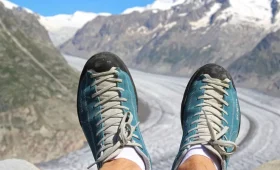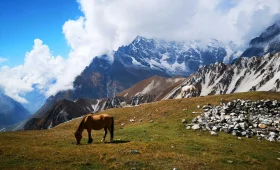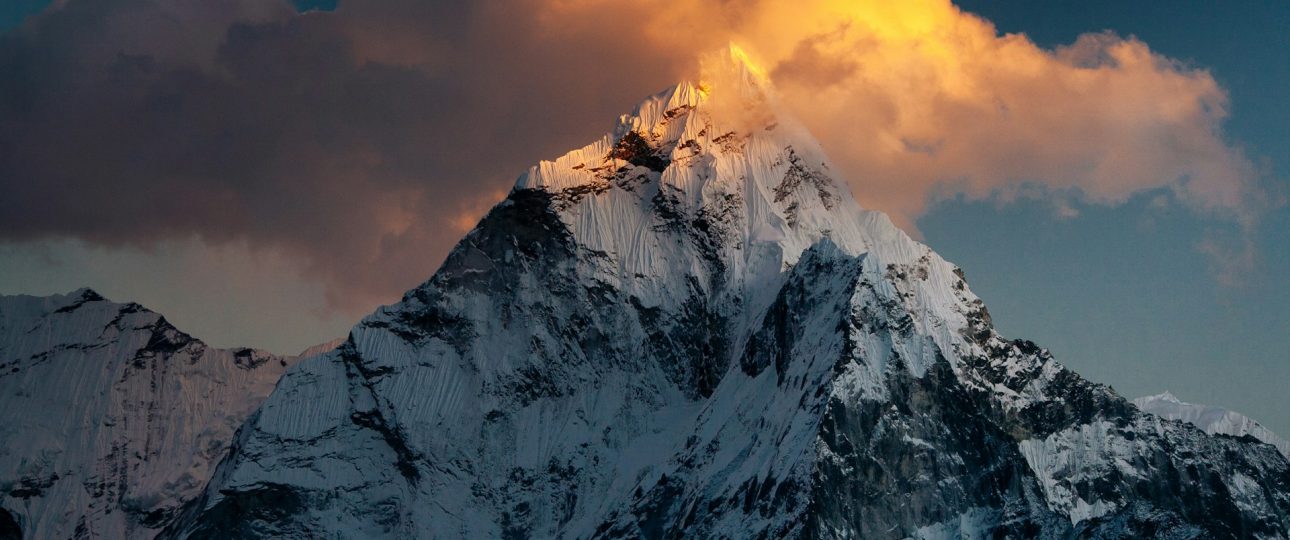
Peak climbing in Nepal is the most realistic way for a fit trekker to stand on a 6,000-metre Himalayan summit without joining a full-scale expedition. You walk through villages and valleys for days, sleep at base camp, then spend one long night and morning on snow and ice, roped to a guide. No eight-thousander logistics, no months away from home. But the climb is real, the altitude is serious, and choosing the wrong peak or the wrong operator is the most common way to ruin the trip.
This guide answers the questions most people actually have: which peaks count as trekking peaks, which one suits your level, how hard the climbs really are, what permits and costs to expect, when to go, and how to prepare without guessing. It is written for first-timers and for climbers stepping up from high-altitude trekking.
Short answer: if you are fit and new to mountaineering, Mera Peak (6,476 m) is the usual starting point. If you want a more technical summit, Island Peak (6,189 m) or Lobuche East (6,119 m) fit better. Allow two to three weeks, travel in spring or autumn, go with a licensed operator, and treat acclimatization as the main event, not an afterthought.
What Peak Climbing in Nepal Actually Means
Peak climbing sits between trekking and expedition mountaineering. The mountains are between roughly 5,500 and 6,500 metres, and they are officially opened for climbing by permit. Reaching the top usually involves glacier travel, steep snow slopes, and in some cases rock sections, using crampons, an ice axe, a harness and fixed ropes.
What separates it from a trek is the summit day. On a trek, the hardest day is long and cold. On a peak climb, you wake at night, walk by headlamp, rope up, and spend six to twelve hours on terrain where a slip matters. What separates it from an expedition is the scale: small teams, a short window, no weeks of load carries between camps.
The experience also includes everything before the snow. Most peaks sit inside the Everest, Annapurna or Langtang regions, so the approach itself is a high-altitude trek through Sherpa, Tamang or Gurung villages. If you want to understand the wider sport first, our guide to mountaineering in Nepal covers how climbing first-timers move from trekking into the mountains.
Peak Climbing vs Trekking: Which Is Right for You?
Many people searching for peak climbing in Nepal are really deciding between a big trek and a climb. The honest difference is commitment. A trek such as Everest Base Camp asks for fitness, time and tolerance for basic lodges. A peak climb asks for all of that plus a willingness to learn new skills, wake in the dark, accept a real turnaround risk and carry more gear.
Choose a trek if you mainly want scenery, culture and a manageable daily rhythm. Choose a peak climb if the idea of a summit pulls you, you are comfortable with cold and discomfort, and you can give the trip enough days to acclimatize. Many climbers do both in one trip: an Everest-region trek first, then Island Peak or Lobuche East at the end, which also helps with altitude adaptation.
If you are on the fence, a good test is this: could you enjoy a hard day of walking in snow, at night, in cold wind, while tired? If the answer is a cautious yes, a trekking peak is a sensible next step.
Trekking Peaks vs Expedition Peaks
The Nepal Mountaineering Association (NMA) classifies climbing peaks into trekking peaks and expedition peaks. The names matter because they decide your permit, your costs and how much experience you need.
Trekking peaks
Trekking peaks are the beginner-friendly end of Himalayan climbing. They include Mera Peak, Island Peak (Imja Tse), Lobuche East, Pisang Peak and Yala Peak. They are still serious at altitude, but the climbing is lower-grade and the permits are cheaper. Sources differ on the exact number of peaks in the trekking category and how they are split into Group A and Group B for fee purposes, so check the current NMA list before you commit to a less common peak.
Expedition peaks
Expedition peaks are higher and more demanding. Pumori (7,161 m) is a classic example. These climbs expect real mountaineering experience, fixed-camp systems, and a larger budget. They are not a first step.
A useful rule: if you have never worn crampons, start with a trekking peak. If you already have glacier and altitude experience, an expedition peak becomes a fair conversation.
Best Peaks for Peak Climbing in Nepal
The table below compares the most popular options. Elevations vary slightly between sources (Island Peak is quoted from about 6,160 to 6,189 m), so treat them as close approximations.
| Peak | Region | Elevation | Level | Best for |
|---|---|---|---|---|
| Mera Peak | Khumbu (Hinku valley) | 6,476 m | Easy to moderate | First 6,000 m summit, endurance climbers |
| Island Peak | Khumbu | about 6,189 m | Moderate to difficult | Climbers wanting steeper terrain |
| Lobuche East | Khumbu | 6,119 m | Moderate to difficult | Technical practice, Everest views |
| Pisang Peak | Annapurna (Manang) | 6,091 m | Moderate to difficult | Quieter climb on the Annapurna Circuit |
| Yala Peak | Langtang | about 5,500 m+ | Easy to moderate | Shorter trips, closer to Kathmandu |
| Pumori | Khumbu | 7,161 m | Expedition | Experienced mountaineers |
Mera Peak: the highest trekking peak
Mera Peak is regarded as Nepal’s highest trekking peak. It is a large, glaciated mountain that rewards stamina over technical skill. The approach through the Hinku and Hongu valleys is quieter than the main Everest trail, and the summit gives a panorama of five of the world’s highest peaks on a clear day.
The difficulty is not the slope; it is the altitude and the length of the days. Many first-timers underestimate how much a 6,476-metre summit day takes out of the body. Operator listings typically put Mera itineraries at roughly 14 to 19 days.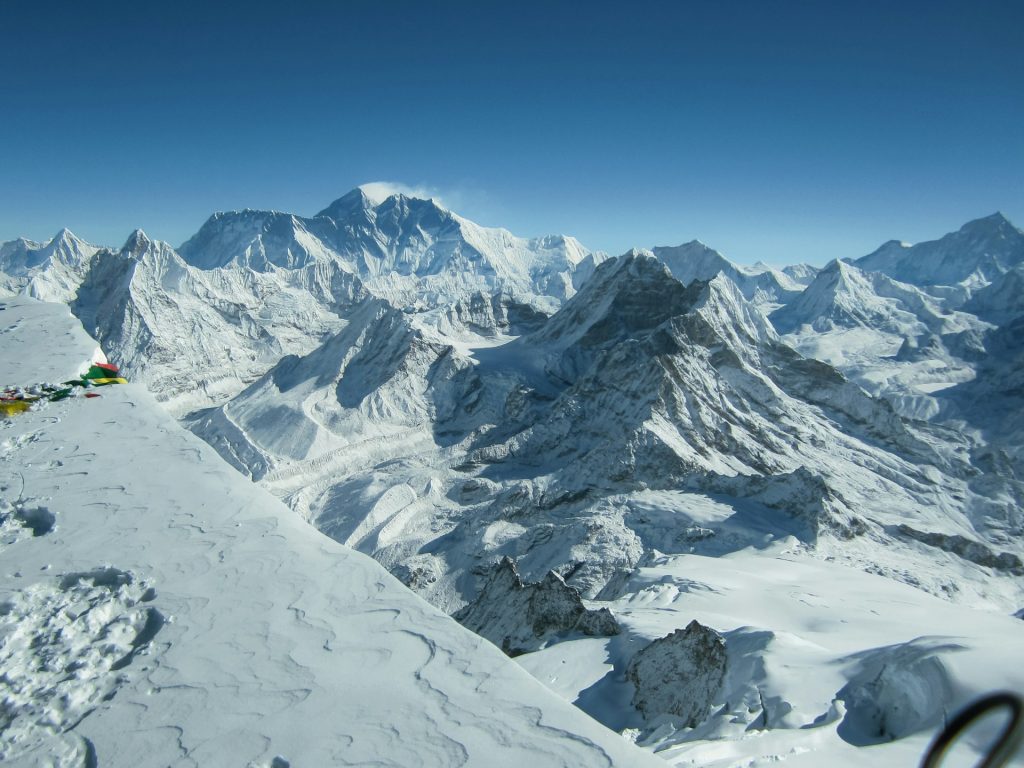
Island Peak: the classic with a real headwall
Island Peak, also called Imja Tse, is the most climbed trekking peak in the Everest region and is often added to the end of an Everest Base Camp trek. It is technically harder than Mera because of its steep headwall and a narrow summit ridge, even though it is lower. Climbers usually fix ropes on the headwall and use a jumar to ascend.
If you want a detailed breakdown of route, camps and difficulty, read our dedicated Island Peak climbing guide.
Lobuche East: technical, scenic, and demanding
Lobuche East is more technical than Mera, with steep sections that demand good footwork and comfort on fixed lines. The reward is a close-up view of Everest, Lhotse and Nuptse from a rocky and icy summit ridge. It also pairs well with an Everest Base Camp trek, which helps with acclimatization.
Lobuche has an East and a West summit. The East summit is the one commonly climbed as a trekking peak.
Pisang Peak: a quieter Annapurna option
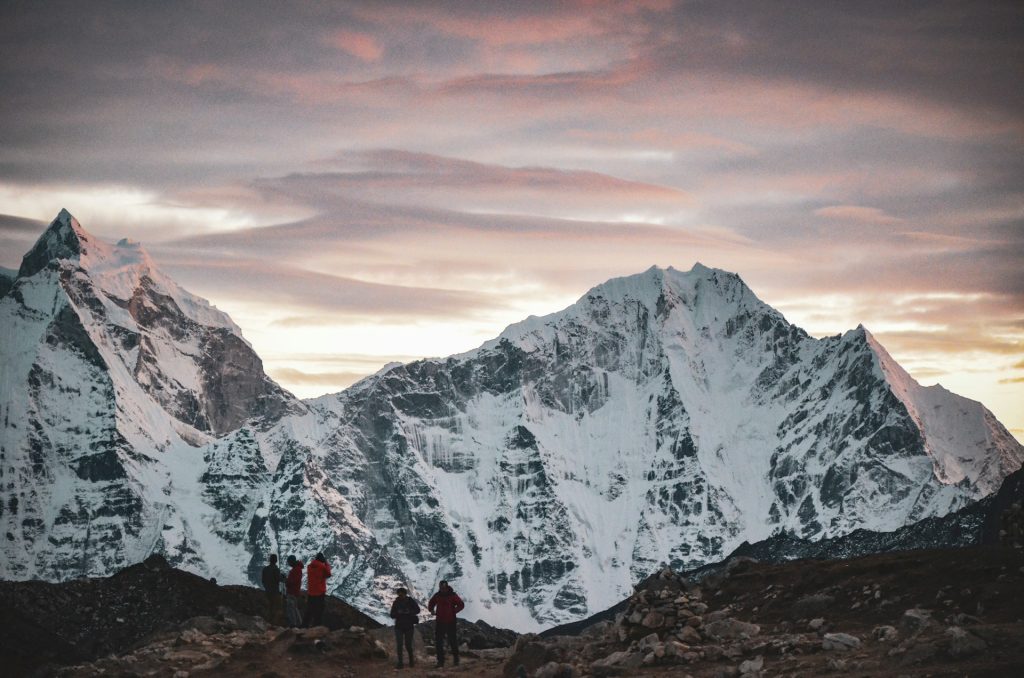
Pisang Peak, near the village of Pisang on the Annapurna Circuit, is a classic climb with fewer crowds than the Khumbu peaks. It is moderate to difficult, with a steep final section, and it lets you combine a climb with the scenery and culture of the Manang valley.
Langtang options: closer to Kathmandu
The Langtang region is reached by road from Kathmandu to the trailhead, which makes it attractive when time is limited. Yala Peak is the usual entry-level climb here, and it is generally graded easy to moderate. Naya Kanga, also known as Ganja La Chuli, at 5,863 m, is another option in the area.
For the region’s peaks, geography and trekking context, see our Langtang Himal guide.
Pumori: when you are ready for an expedition peak
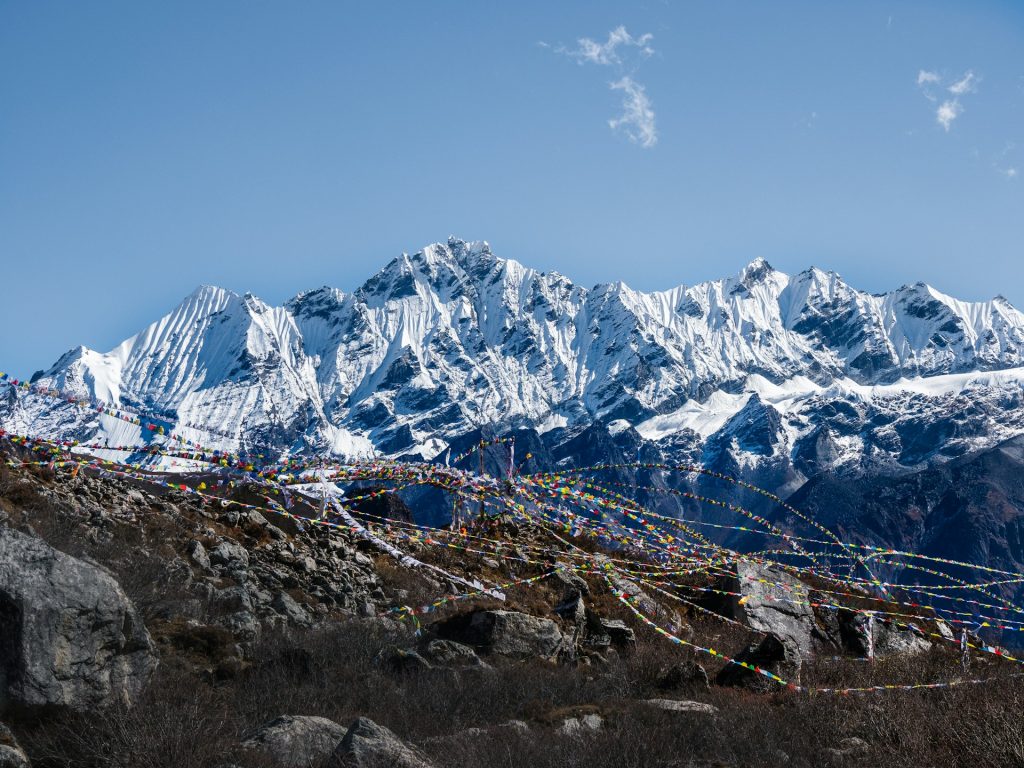
Pumori rises above Gorak Shep, close to Everest Base Camp, and is one of the most striking mountains in the Khumbu. At 7,161 metres it is not a trekking peak. It is permitted under the expedition peak system and demands prior experience with steep snow, ice and extended high-altitude camps.
Treat Pumori as a second or third step in a progression, not a bucket-list shortcut. If you want to see what else is on offer around Everest, our overview of peaks near Everest helps you compare.
How Hard Is Peak Climbing in Nepal?
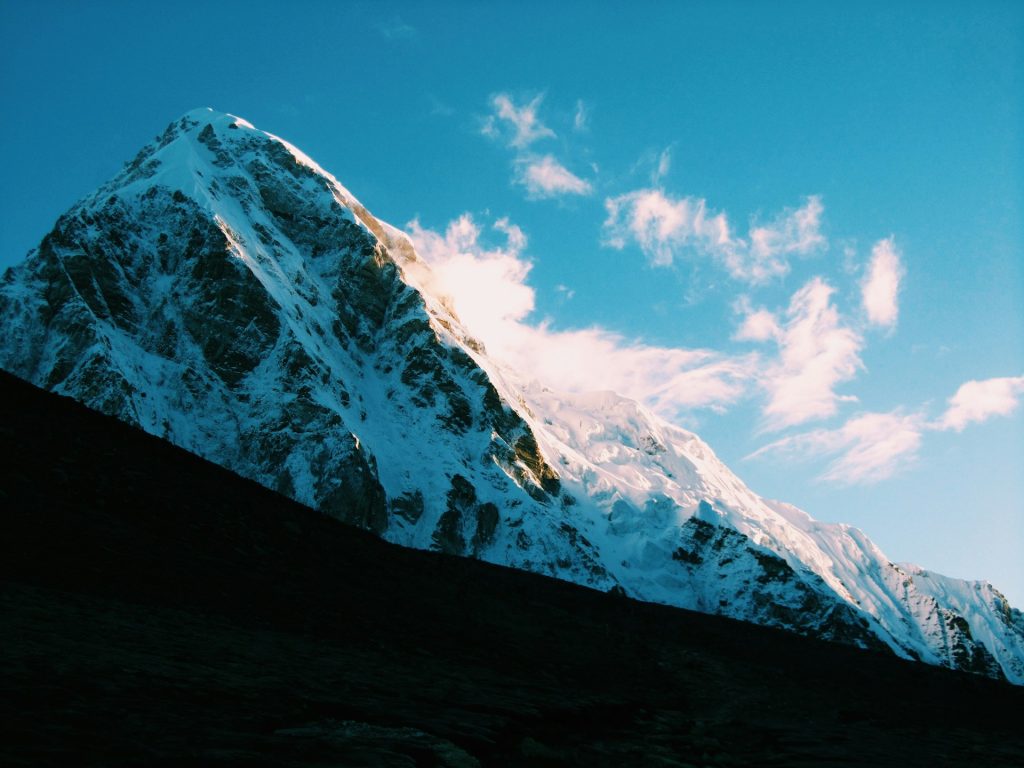
Difficulty has three layers: altitude, technicality and duration. Most people focus on technicality and get caught out by the other two.
Altitude
Every popular trekking peak tops 6,000 metres. At that height, there is roughly half the oxygen available at sea level in each breath. Fit people struggle here, and unfit people can still do well if they acclimatize properly. Altitude tolerance is individual and cannot be predicted by fitness alone.
Technicality
Mera is mostly glacier walking with a short steeper finish. Island and Lobuche East include steeper snow and ice sections and fixed ropes. Pumori is a different category entirely. A good guide will brief you on rope work, crampon technique and ascender use at base camp before summit day.
Duration and cold
Summit days often start around midnight or the early hours and last eight to twelve hours. Temperatures are low, wind is common, and you need to keep moving, eating and drinking when you are tired. Mental stamina matters as much as leg strength.
A realistic summary: a trekking peak is achievable for a well-prepared, fit beginner with a good guide, but it is not easy, and a meaningful share of people turn around before the top. That is a normal and sensible outcome, not a failure.
What Summit Day Is Usually Like
Summit day is where all the planning is tested, so it helps to know the typical rhythm. Details change by peak and conditions, and your guide’s plan always overrides a general description, but the shape is similar almost everywhere.
- Wake-up and breakfast: usually in the middle of the night. Appetite is low at altitude, but tea and a few bites of real food matter.
- Approach on rock or moraine: you start in boots, walking by headlamp. This is often the stretch where people overheat, so adjust layers early.
- Putting on crampons and harness: at the edge of the snow or glacier, your guide checks every buckle and knot before you rope up.
- Steady climbing: the pace is slow and deliberate. Rest steps and controlled breathing are far more useful than speed.
- The steep section: on Island Peak and Lobuche East, this is where fixed ropes and ascenders come in. Mera’s final slope is gentler but long.
- The summit: time at the top is short because of cold, wind and the descent ahead. Take photos, eat something, and start down.
- The descent: often the most dangerous part, because tiredness makes small mistakes more likely. Stay roped, keep concentrating and do not rush.
Plan to drink small amounts regularly rather than waiting until you are thirsty, and keep a snack within reach. Many people find the descent mentally harder than the climb, and a calm, practiced routine is what gets you down safely.
Permits, Fees and Rules
You need several permits, and the details change, so use this as a map rather than a price list.
- NMA climbing permit: required for each trekking peak and issued by the Nepal Mountaineering Association. The fee depends on the peak and the season.
- National park or conservation area permit: for example, the Sagarmatha National Park permit for the Khumbu region, or Makalu Barun National Park for the Mera approach.
- Local municipality entry fee: in the Khumbu, a local rural municipality fee has replaced the old TIMS card, which is no longer required there according to recent guides.
- Garbage deposit: reported to be a refundable deposit paid by the expedition organizer.
Recent 2026 sources report the NMA fee for popular Group B peaks like Island Peak, Mera Peak and Lobuche East at about US$350 in spring, with lower rates in autumn and the off-season. Other sources still quote older figures, such as US$250. The NMA revised royalty fees for lower-altitude peaks in September 2025, so confirm the current number with your operator before you budget. You can compare published figures in this 2026 mountaineering permit cost reference and this peak climbing permit guide.
For the Everest-region trail permits you will also need on the approach, see our EBC trek permit guide.
Independent climbing on the main trekking peaks is reported to be no longer permitted. In practice, you book through a registered operator that files the paperwork and supplies a licensed guide.
What Peak Climbing in Nepal Really Costs
Rather than quote a single figure that may not match your trip, it is more useful to understand what a quote should include. Prices vary with the peak, the season, group size, guide ratio and how much comfort you want on the approach.
Usually included in a good package
- Airport transfers, hotel nights in Kathmandu and domestic flights where the route needs them
- Permits and fees (NMA permit, park permits, local fees)
- A licensed climbing guide, support staff and porters
- Meals, lodge or tent accommodation, and base camp or high camp setup
- Group climbing equipment such as ropes and technical hardware
Usually not included
- International flights and visa
- Travel and rescue insurance
- Personal gear, or rental fees for boots, harness and crampons
- Tips for guides and staff, drinks and extras
Cheap quotes often hide weak points: poor guide ratios, thin safety margins, shortened acclimatization or unpaid permit costs. When comparing offers, ask for the exact inclusions line by line and compare them like for like.
Best Time for Peak Climbing in Nepal
The main seasons match Nepal’s trekking seasons: spring (March to May) and autumn (September to November). Both offer the most stable weather for high-altitude climbing.
- Autumn (September to November): typically clearer skies and steadier conditions after the monsoon. It is the busiest season, so lodges and routes are more crowded.
- Spring (March to May): warmer approach, longer days and blooming valleys, though afternoon cloud is more common and conditions on snow can be softer.
- Winter and summer: possible on some peaks, with lower permit fees, but cold, snow or monsoon conditions make them harder and riskier for beginners.
Whatever the month, build one or two spare days into the itinerary. Weather windows on summit day are narrow, and flexibility is what turns a closed window into a summit instead of a turnaround.
Training and Fitness for Peak Climbing
Start at least three to four months before departure. The goal is to build the ability to move steadily for many hours with a pack, day after day.
- Base cardio: three to four sessions a week of running, cycling or fast hiking, building toward 60 to 90 minutes.
- Hiking with load: one long weekend hike a week with a loaded daypack, increasing duration and elevation gain. Use the boots you will wear in Nepal.
- Leg and core strength: squats, lunges, step-ups and planks, two sessions a week.
- Back-to-back days: two long hikes on consecutive days to simulate trek fatigue.
- Cold and gear familiarity: practice with layers, gloves and a headlamp so nothing is new on summit night.
If you can, add a practice day on snow or glacier with a qualified instructor to learn crampon technique and rope basics. It makes base camp training far less stressful. For deeper reading on preparation, our high altitude expedition guide covers training and acclimatization in detail.
Acclimatization and Safety
Altitude illness is the biggest controllable risk. Good itineraries build in gradual ascent, rest days and the option to descend.
Core acclimatization habits
- Climb high, sleep low: spend time at higher elevations during the day and return lower to sleep.
- Keep daily sleeping-altitude gains modest once above about 3,000 metres, and include rest days.
- Drink plenty of water, eat even when appetite drops, and avoid alcohol on the approach.
- Report headaches, nausea, dizziness or unusual breathlessness to your guide early.
Know the warning signs
Acute mountain sickness starts with headache, nausea and poor sleep. Confusion, loss of balance, a wet cough or breathlessness at rest are warning signs of the severe forms, high altitude cerebral and pulmonary edema, and mean you descend immediately. Talk to a doctor before the trip about altitude medication and your personal risk.
Insurance and turnaround rules
Your policy should explicitly cover peak climbing and name the maximum altitude, for example 6,500 metres, and include helicopter evacuation. Agree a turnaround time with your guide before summit day and respect it, even if the top looks close.
Gear You Need for a Trekking Peak
You do not need to buy everything. Boots, harness, crampons and ice axe can be rented in Kathmandu, which is often the smart choice for a first 6,000-metre peak. If you plan to keep climbing, investing in your own boots and harness pays off.
- Technical: mountaineering boots, crampons, ice axe, harness, helmet, carabiners, ascender
- Layers: base layers, fleece, insulated jacket, hard shell jacket and pants, warm gloves plus liner gloves
- Head and eyes: warm hat, buff, glacier glasses or goggles, headlamp with spare batteries
- Sleep and pack: a sleeping bag rated for very cold nights, a trekking pack and a duffel for porters
- Health: sun cream, lip balm, first-aid kit and personal medication
For the trek portion of your trip, our Everest Base Camp trek gear list covers clothing and packing basics that also apply to the approach.
Guides, Sherpas and Choosing an Operator
Your guide is your safety system. A licensed guide reads snow conditions, fixes ropes, manages pace and decides when to turn around. Sherpa and Nepali mountain staff carry much of the logistical and technical load on these routes, and their experience is the main reason peak climbing is workable for non-experts. To understand that role, read about Sherpa mountain climbers.
Questions to ask any operator
- Is the company registered in Nepal, and are the guides licensed?
- What is the guide-to-climber ratio on summit day?
- How many acclimatization days are built in, and what spare days exist for weather?
- What emergency, oxygen and communication equipment is carried?
- What exactly is included and excluded in the price?
- What is the evacuation procedure, and how is insurance handled?
Beware of itineraries that look rushed. A shorter schedule is not a bargain if it removes acclimatization time.
What a Typical Itinerary Looks Like
Exact schedules differ by peak, but most follow the same pattern.
- Arrival and preparation in Kathmandu: gear check, permit paperwork and briefing.
- Fly or drive to the trailhead: for the Khumbu, usually a flight to Lukla.
- Acclimatization trek: several days of gradual ascent, with rest days at key villages.
- Base camp and skills day: practice crampons, fixed ropes and ascender use.
- High camp or early start: depending on the peak, you either sleep higher or start before dawn from base camp.
- Summit day: a long, cold climb and descent, sometimes back to base camp the same day.
- Reserve day and return: weather buffer, then trek out and return to Kathmandu.
Allow roughly two to three weeks door to door, longer if you combine a peak with Everest Base Camp.
Common Mistakes First-Time Climbers Make
- Choosing by elevation alone. A lower peak can be technically harder. Match the peak to your skills, not the number.
- Cutting acclimatization to save money or time. This is the most common reason people fail to summit.
- Training only cardio. Loaded hiking and leg strength matter as much.
- Arriving with untested gear. New boots and unfamiliar layers cause blisters and cold hands at the worst moment.
- Picking the cheapest quote. Low prices usually mean thinner safety margins.
- Ignoring the turnaround time. Summit fever is real. A guide who tells you to descend is protecting you.
- Skipping insurance details. A policy that excludes climbing or caps altitude can leave you paying for a rescue.
Climbing Responsibly in the Himalayas
Popular peaks see heavy traffic, and the mountain environment recovers slowly. Responsible climbing is part of doing this well, not an optional extra.
Pack out what you carry in, including food wrappers, used batteries and tape. The garbage deposit that organizers pay exists to encourage exactly this. Use designated toilet arrangements at base camp rather than improvising, and avoid washing in or near streams that villages use downstream.
Treat your team fairly. Porters and support staff should have proper clothing, footwear, insurance and sensible load limits, so ask any operator how they look after them. Tip according to common local practice, and learn a few words of Nepali or Sherpa greetings. Small courtesies go a long way in mountain villages that depend on respectful visitors.
Finally, respect local customs on the trail: walk clockwise around mani walls and stupas, ask before photographing people and religious sites, and keep noise down near monasteries. A climb that leaves villages and mountain staff better off is the kind worth doing.
How to Choose Your First Peak
Use this quick filter. If you are fit but have no snow experience and want the most forgiving route, choose Mera Peak. If you have done a little glacier work and want a steeper challenge, choose Island Peak or Lobuche East. If you have limited time and want to stay near Kathmandu, look at Yala Peak in Langtang. If you want a quieter trail and a cultural approach, consider Pisang Peak. If you already have serious mountaineering experience, start the Pumori conversation with an operator.
Then check your calendar against the seasons, your budget against a transparent inclusions list, and your training plan against the departure date.
Frequently Asked Questions About Peak Climbing in Nepal
What is peak climbing in Nepal?
Peak climbing in Nepal means summiting Himalayan peaks, usually between about 5,500 and 6,500 metres, that are officially open under a climbing permit. Most are called trekking peaks. They combine a multi-day trek with a short, technical summit push using crampons, an ice axe and fixed ropes.
Do I need climbing experience for peak climbing in Nepal?
For Mera Peak, you need strong fitness and the willingness to learn basic crampon and rope skills, not prior climbing experience. For Island Peak and Lobuche East, some prior snow or glacier practice helps. Expedition peaks like Pumori require real mountaineering experience.
Which is the easiest peak to climb in Nepal?
Mera Peak is widely regarded as the easiest of the popular trekking peaks because its summit route is mostly a non-technical glacier walk. It is still a high-altitude climb at 6,476 metres, and the long approach and altitude are the real challenge.
Which is harder, Island Peak or Mera Peak?
Island Peak is generally considered technically harder because of its steep headwall and ridge, even though Mera Peak is higher. Mera tests endurance and altitude tolerance; Island tests basic technical skills on steeper terrain.
How much does a peak climbing permit cost in Nepal?
Permit fees for popular NMA trekking peaks such as Island Peak, Mera Peak and Lobuche East vary by season. Recent 2026 sources report about US$350 in spring and lower rates in autumn and the off-season. Fees are revised periodically, so confirm the current figure with your operator or the NMA before you book.
When is the best time for peak climbing in Nepal?
Spring (March to May) and autumn (September to November) are the main seasons. Autumn usually brings clearer, stabler weather after the monsoon, while spring offers longer days and warmer conditions on the approach, with more afternoon cloud.
Can I climb a trekking peak in Nepal without a guide?
Independent climbing on the main trekking peaks is reported to be no longer permitted, and a licensed operator and guide are the standard and safest route. A guide also manages permits, route conditions, fixed ropes and decisions about weather and turnaround times.
How long does peak climbing in Nepal take?
Most trips run about two to three weeks including the approach trek, acclimatization days, base camp and summit day. Mera Peak itineraries typically run roughly 14 to 19 days, and combining Island Peak with Everest Base Camp takes longer.
How fit do I need to be for peak climbing in Nepal?
You should be able to hike six to eight hours a day with a pack for several days in a row, and to keep moving on a long, cold summit day. Start cardio and hiking-based training at least three to four months ahead.
Is peak climbing in Nepal dangerous?
Any climb above 6,000 metres carries real risks: altitude illness, weather, crevasses and falls. Risk drops sharply with proper acclimatization, a licensed guide, correct gear, travel insurance that covers climbing to your peak’s altitude, and a willingness to turn around.
For a deeper look at the trekking-peak classification and royalty groups, this list of Nepalese trekking peaks is a useful reference.
Plan Your Peak Climb With Merriment
Choosing a peak, a season and a safe schedule is easier with someone who can answer your specific questions. Tell us your fitness level, your experience on snow and the time you have, and we will help you match a peak and an itinerary to it.
Message us on WhatsApp: +977 974-0262168
Ask about permits, dates, gear rental, acclimatization schedules or custom plans, and we will reply with clear, practical answers.