Introduction to Nagarkot Short Hiking
Nagarkot short hiking is the easiest way to swap Kathmandu’s noise for a ridge-top walk with big views, and you can do it in a single day. Nagarkot sits at about 2,175 metres on the rim of the Kathmandu Valley, roughly an hour and a half to two hours by road, and the trails around it run from a gentle one-hour sunrise walk to a full day descent to the ancient temple town of Changunarayan. You need no permit-heavy planning, no flight and no multi-day commitment. You do need an early start, a realistic view of the weather, and the right route for your legs.
This guide explains which short hikes are worth your time, how long each really takes, what you can honestly expect to see, how to get there, what to carry and what to avoid. It is written for travellers with a free day or two, for beginners testing the idea of trekking, and for experienced walkers who want a quick, scenic day out.
Short answer: for most people, the best Nagarkot day hike is a sunrise at the viewpoint followed by the walk down to Changunarayan and a stop in Bhaktapur. Go between October and March for the clearest mountain views, leave Kathmandu before dawn or sleep on the ridge, and allow a full day.
Where Is Nagarkot and Why Does It Suit Short Hikes?
Nagarkot is a hill station east of Kathmandu, in the Bhaktapur area, with sources quoting a distance of roughly 27 to 32 kilometres from the capital. The elevation is usually given as about 2,175 metres, and some sources round it to 2,200. That height is enough for cool, clear mornings and wide views without any altitude worry, which is exactly why it works so well for short walks.
Three things make it a good base for a short hike near Kathmandu. First, the ridge has a network of paths through terraced fields, pine and rhododendron forest and small villages. Second, you can reach it in a morning and be back in Kathmandu by evening. Third, the walks connect with cultural stops: Changunarayan and Bhaktapur are both recognised as UNESCO World Heritage Sites, so a hike here can double as a heritage day.
Nagarkot also suits people who are new to hiking. The trails are mostly gentle, there is no technical terrain and lodges, cafés and guides are easy to find. If you are weighing it against other day trips around the capital, our guide to hiking places in Kathmandu compares the valley’s best day trails.
What You Can Really See From Nagarkot
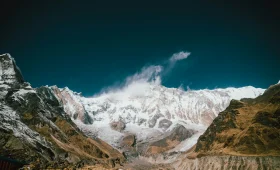
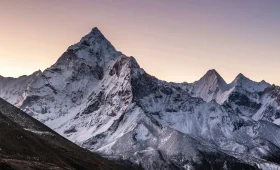
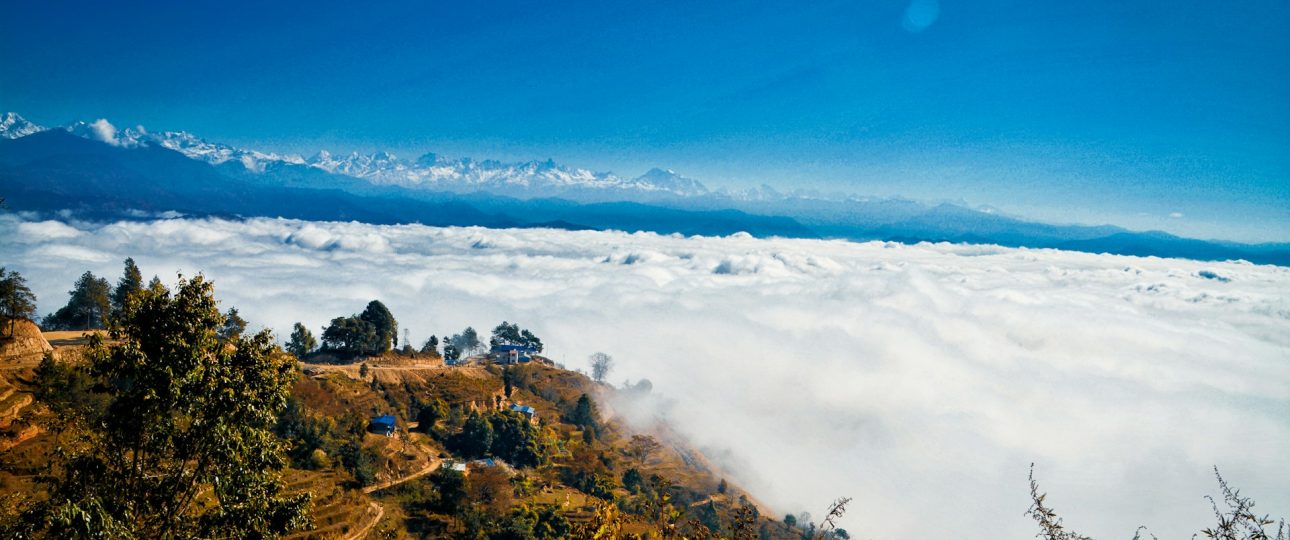
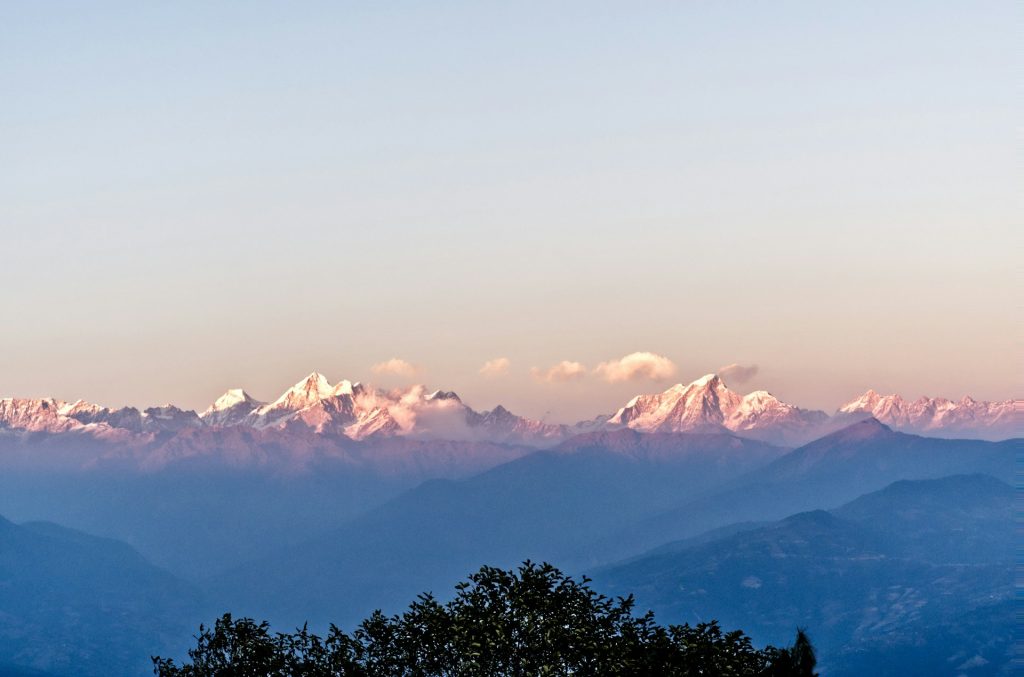
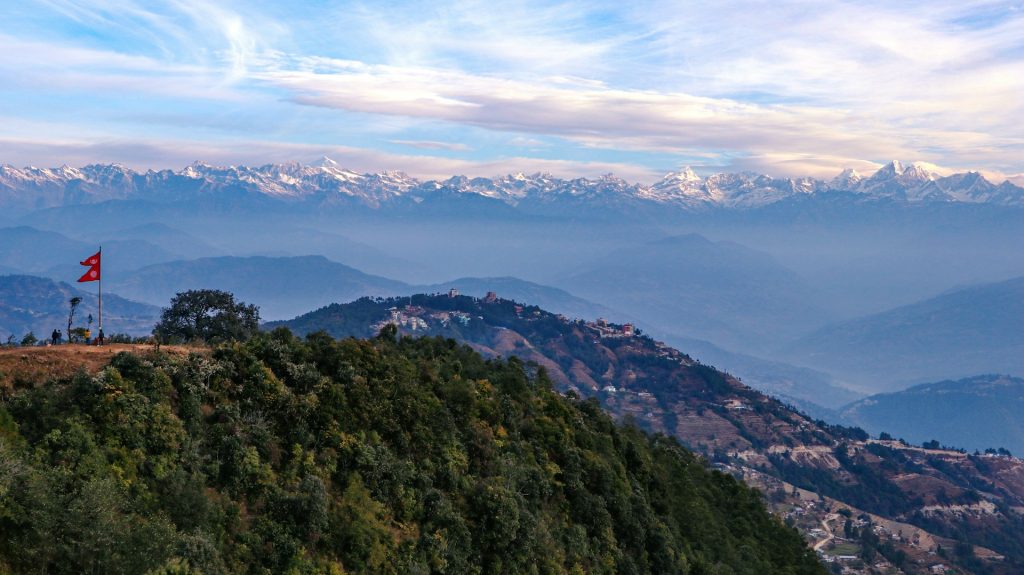
Nagarkot is famous for mountain views, and on a clear morning they are impressive. Local sources list Everest, Langtang Lirung and Ganesh Himal among the peaks visible, along with other ranges in the Himalayan chain. Everest appears far away, as a small pyramid on the eastern horizon, not a towering wall.
It is worth being honest about expectations. Travellers who have already trekked in the Everest or Annapurna regions often find the views here more distant and less dramatic than what they saw on the trail. Others, especially first-time visitors with only a day, find them wonderful. The best way to enjoy Nagarkot is to treat the mountains as a bonus and the ridge walk, the forest and the villages as the main event.
Visibility depends heavily on season and time of day. Mornings are usually clearest, because haze and cloud build later. During the monsoon months of June to September, cloud often hides the mountains entirely. If you want to know how likely an Everest sighting is from the valley, our article on whether you can see Mt Everest from Kathmandu sets out the realistic odds, and this page on the Nagarkot sunrise viewpoint gives a useful local summary.
The Sunrise Trail and Viewpoint Walk
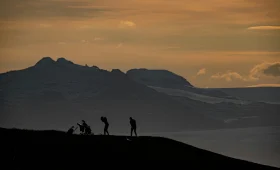
The simplest hike is also the most popular. The Nagarkot sunrise hike is a short walk, often described as an easy one-to-two-hour route, to the viewpoint area and the viewing tower, where crowds gather before dawn. Sunrise falls roughly between 5:30 and 7:00 in the cooler months, so you should arrive about half an hour before first light.
What to expect:
- The climb: a gentle uphill walk on a road or path, with the final stretch to the tower slightly steeper.
- The cold: mornings can be near freezing in winter, so bring a warm jacket, hat and gloves.
- The crowd: the tower platform fills early. Arrive before sunrise for a good position, or walk to a quieter viewpoint along the ridge.
- The light: the peaks turn gold and pink for a short window, and then the colour fades quickly. Stay for the full change instead of leaving as soon as the sun clears the horizon.
If you are staying overnight, this walk is a lovely, unhurried way to start the day. If you are a day-tripper, it means a pre-dawn departure from Kathmandu, which is tiring but doable.
Photography Tips for a Nagarkot Sunrise
You do not need professional equipment to get good pictures here, but a few habits make a big difference.
- Arrive early and scout: find your spot while it is still dark, because good positions at the tower disappear quickly.
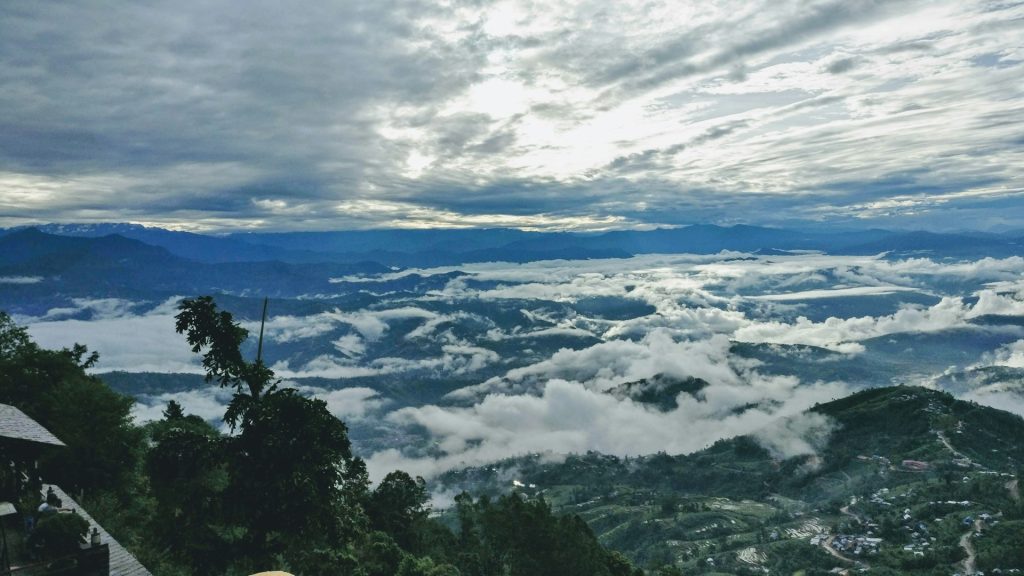
- Use the blue hour: the soft light before sunrise often gives the most atmospheric shots, with mist lying in the valley and the peaks faintly visible.
- Keep your phone warm: cold drains batteries fast, so keep it in an inside pocket between shots and carry a power bank.
- Frame the foreground: prayer flags, pine branches or ridge lines add depth and make distant peaks feel larger.
- Look behind you: the valley and the lit hillsides often look as good as the mountains once the sun is up.
- Stay after sunrise: the light on the terraces and villages is lovely for the first hour of the walk.
Be considerate. Do not block the viewing platform for long, and ask before photographing people, particularly at temples and in villages.
Nagarkot to Changunarayan: The Classic Day Hike
This is the route most operators and guidebooks recommend. You watch the sunrise at Nagarkot, have breakfast, then walk down through forest and villages to Changunarayan, one of the oldest and most important temples in the Kathmandu Valley.
What the walk is like
The route is mostly downhill or rolling, with sections on dirt paths, farm tracks and short stretches of road. Typical itineraries put the walking time at around four to five hours, though your pace, the number of stops and the exact route change that. It is rated easy to moderate. The ground can be slippery after rain, and the descent is hard on knees, so trekking poles and good shoes help.
Why Changunarayan is worth the walk
Changunarayan Temple is a Vishnu temple on a hilltop, traditionally linked to the Licchavi period and regarded as one of the oldest temples in Nepal. It is a UNESCO World Heritage Site, and its carved pagoda-style structures and stone sculptures reward a slow visit. Allow at least an hour to look around.
A typical day shape
- Pre-dawn drive from Kathmandu to Nagarkot, often leaving around 4:15 to 4:45 am
- Sunrise and mountain views, then breakfast
- Walk to Changunarayan, usually four to five hours with stops
- Temple visit and lunch, then a drive back, often via Bhaktapur
Many operators sell this as a single day of about seven to nine hours door to door. Treat those timings as a guide, and add a buffer if you want to linger at the temple or in Bhaktapur.
The Descent Section by Section
Knowing how the walk unfolds helps you pace yourself and decide where to stop. Details shift with the exact route your guide chooses, so treat this as a general picture.
Leaving the ridge
The first stretch leaves the busy viewpoint area and drops into quieter forest and open hillside. The path is usually clear, and this is where most walkers settle into their rhythm. Take it slowly at the start, because early enthusiasm on the descent is what tires knees later.
Villages and terraced fields
Further down, the trail passes small settlements, terraced fields and farm tracks. You will cross paths with locals, children on their way to school and farmers at work. Tea shops appear along the way, and a short rest with a glass of tea is a good chance to drink water and adjust layers as the day warms up.
The mid-section
The middle of the walk often mixes forest sections and exposed slopes. This is where the sun can feel strong in spring and autumn, so use a hat and sun cream. Where the trail forks, a guide saves time and avoids wrong turns, because signs are limited and tracks branch often.
The final approach
The last section climbs gently to the hilltop temple area, with the village and temple complex coming into view. After the long descent, the short rise can feel surprisingly tiring, so keep something in reserve. When you arrive, take off your pack, drink water and give yourself a few minutes before you start sightseeing.
Other Nagarkot Short Hiking Routes
If you have more than a day, or want something different, several variations on the same ridge are worth knowing.
Sankhu to Nagarkot
This option starts from Sankhu, an old Newar town north-east of Kathmandu, and climbs to Nagarkot. Operators typically offer it as a two-day trip: hike up on day one, watch sunrise on day two, then continue to Changunarayan. The climb is steady and the trail is described as easy to moderate, with a gradual ascent after the first hour.
Nagarkot to Dhulikhel
Another two-day pattern links Changunarayan, Nagarkot and Dhulikhel, with a night on the ridge and a morning walk to Dhulikhel. It suits people who want longer days on foot and a quieter finish.
Chisapani to Nagarkot
For trekkers who want a mini-trek, some operators offer a three-day Chisapani to Nagarkot walk. It is longer and steeper than a day hike, but still a short trek by Nepali standards.
Local nature trails
The ridge itself has marked nature and panoramic paths, including an eco-trail, that let you stroll through forest and viewpoints without committing to a long route. These are ideal if you are travelling with children, older relatives or anyone who prefers a slow pace.
If you are comparing options beyond this area, Nepal short treks lists other brief routes that fit a tight schedule.
Route Comparison at a Glance
| Route | Time | Effort | Best for |
|---|---|---|---|
| Sunrise viewpoint walk | 1 to 2 hours | Easy | Everyone, including families |
| Nagarkot to Changunarayan | About 4 to 5 hours walking, full day trip | Easy to moderate | First-timers, heritage lovers |
| Sankhu to Nagarkot (plus Changunarayan) | 2 days | Easy to moderate | People who want a longer walk and an overnight on the ridge |
| Changunarayan, Nagarkot, Dhulikhel | 2 days | Moderate | Walkers who want a quieter finish |
| Chisapani to Nagarkot | 3 days | Moderate | Mini-trek seekers |
Changunarayan and Bhaktapur: The Cultural Side of the Hike
Many people treat the temple and the old town as add-ons, but they are half the reason this route is so popular, so it pays to know what you are looking at.
Changunarayan sits on a hill above a small village and is dedicated to Vishnu. The compound contains carved wooden struts, stone statues and ancient inscriptions, and the setting gives wide views over the valley. Visitors are expected to dress modestly, remove shoes where required and follow local customs, so go quietly and ask before taking pictures of worshippers.
Bhaktapur, the usual stop on the way back to Kathmandu, is a medieval Newar city known for its brick-paved squares, carved windows and potters at work in the pottery area. Bhaktapur Durbar Square is a UNESCO World Heritage Site, and foreign visitors normally pay an entry fee. Even a short walk through the old streets, with a cup of the city’s famous curd, gives a good sense of valley life. If you want a wider list of what to see around the capital, Kathmandu tour places sets out the main sights.
A Sample One-Day Nagarkot Day Hike Plan
This plan fits most people with only one free day. Adjust it to the season and your own pace.
- Before dawn: leave your Kathmandu hotel with a driver or guide. Bring layers, snacks, water and a headlamp or phone torch.
- Sunrise: reach the viewpoint about half an hour before sunrise. Watch the light change, then have tea or breakfast.
- Mid-morning: start the walk down toward Changunarayan. Keep a steady pace, and stop at villages for tea.
- Midday: reach Changunarayan and spend an hour at the temple.
- Afternoon: have lunch, then drive back to Kathmandu, with an optional stop in Bhaktapur.
If you are short of time, you can also skip the full walk and do only the sunrise trail, followed by a drive to Changunarayan or Bhaktapur. It is a lighter day, and it still delivers the main highlights.
A Sample Overnight Plan on the Ridge
Sleeping at Nagarkot removes the worst part of the day trip: the pre-dawn drive. It also gives you an evening on the ridge and a calmer morning.
- Day 1, afternoon: travel from Kathmandu, check in, and take a short walk along the ridge for sunset.
- Evening: eat early, pack your daypack and set an alarm for before dawn.
- Day 2, sunrise: walk to the viewpoint, watch the light, and have breakfast at the lodge.
- Day 2, hike: walk down to Changunarayan or follow another route, then return to Kathmandu by car.
Many guesthouses on the ridge are simple but comfortable. Ask for a room facing the mountains, and check whether heating, hot water and meals are included, because nights are cold in winter.
Best Time for Nagarkot Short Hiking
The best months for clear mountain views are generally October to March, with sunrise between about 5:30 and 7:00 considered the prime window. Autumn (September to November) brings crisp air after the monsoon, while spring (March to May) offers pleasant temperatures and blooming rhododendrons, though haze and afternoon cloud are more common.
- October and November: the most reliable views and comfortable days. This is also the busiest period.
- December to February: clear but cold, with frosty mornings and warm clothing essential.
- March to May: warmer, with greener hills and flowering forest, but views are less dependable later in the day.
- June to September: monsoon. Cloud often hides the mountains, trails can be muddy and landslides are possible, though the countryside is lush and quiet.
Whatever month you choose, go early. By late morning, haze often softens the peaks, and the best light has gone.
How to Get to Nagarkot From Kathmandu
There are three common ways to reach the ridge, and the right one depends on your budget and how much you value convenience.
- Private car or taxi: the most comfortable option, taking around 1.5 hours each way depending on traffic. One local guide quotes a return taxi from Thamel at roughly NPR 2,500 to 3,500, but prices vary, so agree the fare in advance.
- Local bus: buses run from Bhaktapur to Nagarkot, and you reach Bhaktapur from Kathmandu by bus first. It is the cheapest option but slower, and it makes a pre-dawn arrival difficult.
- Guided day trip: operators arrange the car, driver and a guide, and often handle the early-morning pickup. This is the easiest choice for sunrise day trips.
For more on routes and transport, see this guide to reaching Nagarkot from Kathmandu. If you are a day-tripper hoping to see sunrise, remember that public transport will not get you there in time, so private transport or an overnight stay is the sensible choice.
How Hard Is a Short Hike in Nagarkot?
Most routes here are easy to moderate, but there is a real difference between a one-hour sunrise stroll and a five-hour descent on uneven ground.
What makes it easy
- No technical terrain or scrambling
- Moderate altitude, with no real risk of altitude sickness at about 2,175 metres
- Easy access to food, water and shelter in villages
What can catch you out
- Early starts and cold mornings
- Long descents that strain knees and toes
- Slippery sections after rain
- Heat and sun in the middle of the day during warmer months
If you walk regularly, you can do the Nagarkot to Changunarayan hike without special training. If you rarely exercise, a few weeks of regular walks, including a couple of hours on uneven ground, will make the day far more enjoyable.
Hiking With Children, Older Walkers or a Mixed Group
One of the strengths of this area is that it flexes for different abilities, but the full descent is not right for everyone.
- Families with young children: stick to the sunrise walk and ridge paths, then drive to Changunarayan or Bhaktapur. Children tire quickly on long descents, and early starts are hard on them.
- Older walkers: choose the shorter routes, use trekking poles on descents and set a slow pace. Ask your guide to plan extra rest stops.
- Mixed groups: split the day. Stronger walkers can hike down while others take the car to meet them at the temple. A private vehicle makes this simple.
- Nervous first-timers: start with the sunrise walk. If you enjoy it, add the longer route on a second day.
Whatever the group, agree on a turnaround or bail-out point before you start. A short hike is only enjoyable if everyone is comfortable, and the ability to change the plan is what keeps it that way.
What to Carry on a Nagarkot Day Hike
- Footwear: comfortable walking shoes or light boots with good grip
- Layers: a warm jacket, fleece, hat and gloves for the pre-dawn cold, plus a lighter layer for the day
- Rain protection: a light waterproof jacket, particularly outside the dry season
- Water and snacks: at least one litre of water, plus energy snacks
- Sun protection: sunglasses, a hat and sun cream
- Extras: a small first-aid kit, a headlamp or phone torch, cash in small notes, and a power bank
- Optional: trekking poles for the descent, and a camera or phone with enough storage
For packing ideas that apply to any trek, our trek gear list covers layers and footwear in more detail.
What a Nagarkot Day Hike Costs
Costs vary with transport, guide and whether you stay overnight, so use this as a checklist for comparing quotes rather than a fixed price.
Costs to budget for
- Transport between Kathmandu and Nagarkot, and onward from Changunarayan or Bhaktapur
- A guide, if you want one, particularly for the full descent to Changunarayan
- Entry fees for heritage sites such as Changunarayan or Bhaktapur Durbar Square, which are charged to foreign visitors
- Meals, tea and snacks on the ridge and at the temple
- A guesthouse room if you stay overnight, which varies widely from basic to mid-range
Guided day trips often list a package that covers the car, driver and guide, sometimes with breakfast and entry fees. Ask exactly what is included, and compare like for like.
Where to Stay and Eat in Nagarkot
The ridge has a range of guesthouses, hotels and homestays, from simple rooms with shared bathrooms to mid-range hotels with mountain-view balconies. Budget places often include a basic breakfast, and the best-value rooms face the sunrise.
Food is straightforward and filling. Dal bhat is on almost every menu, with momos, noodle soup, fried rice and tea widely available. In winter, ask whether rooms have heating, because nights can be very cold. In the busy autumn season, book ahead, particularly for weekends and festival periods.
If you want a sunset as well as a sunrise, staying overnight is the clear winner. You also get a calmer morning and avoid the early drive from Kathmandu.
Safety, Weather and Trail Etiquette
Short hikes are low-risk, but a few sensible habits keep them that way.
- Check the weather: mornings are usually clear, but afternoons can bring cloud and rain, especially outside the dry season.
- Watch the trail in the monsoon: slippery paths and landslides are a real concern, so avoid steep or exposed sections after heavy rain.
- Start early: it gives you cooler walking, clearer views and a margin if you are delayed.
- Carry water and snacks: shops and teahouses are available, but not at every stage.
- Tell someone your plan: especially if you walk without a guide.
Respect the places you pass through. Dress modestly at temples, remove shoes where required, ask before photographing people, and carry your rubbish back with you. Many of the villages along the route are working communities, so greet people, be patient on narrow paths and support local tea shops and lodges.
Common Mistakes on a Nagarkot Short Hike
- Arriving after sunrise. The best views and light are early, so plan for a pre-dawn start or an overnight stay.
- Expecting Everest-region views. Nagarkot offers distant mountains, not close-ups, so adjust your expectations.
- Going in monsoon and expecting clear skies. Cloud is common from June to September.
- Underdressing for the cold. Mornings feel much colder than the valley below, especially in winter.
- Wearing unsuitable shoes. Slippery paths and long descents are hard in thin soles.
- Squeezing in too much. Trying to combine the full hike, Bhaktapur and other stops in one day often leaves you rushed. For a good Nagarkot short hiking day, pick one main route and one cultural stop.
- Skipping the plan for transport. Public buses do not run early enough for sunrise, so arrange a car or stay overnight.
Nagarkot vs Other Short Hikes Near Kathmandu
Nagarkot is not the only short hike around the capital, so it helps to know where it fits.
- Nagarkot: best for sunrise, Himalayan views and a cultural finish at Changunarayan.
- Shivapuri and other valley-rim hikes: good for forest walking and a more natural feel, often closer to the city.
- Hills around Kathmandu and Lalitpur: shorter, simpler walks that suit half a day.
- Longer short treks: routes such as Langtang-region trips need more days and add real altitude, as covered in our Gosaikunda Lake trek guide.
If you only have a day, Nagarkot is one of the best-balanced choices, because it combines mountain views, a walk and a heritage site in one trip. If you want a deeper mountain experience, plan a longer trek instead.
Frequently Asked Questions About Nagarkot Short Hiking
- How long is the Nagarkot to Changunarayan hike? Typical itineraries put the walking time at about four to five hours, while the full day trip from Kathmandu usually takes seven to nine hours including transport and sightseeing.
- How high is Nagarkot? Nagarkot is about 2,175 metres above sea level, although some sources round it to 2,200 metres. That is high enough for cool, clear mornings but not high enough to cause real altitude problems.
- How far is Nagarkot from Kathmandu? Sources quote roughly 27 to 32 kilometres. By road, the journey usually takes about 1.5 to 2 hours depending on traffic and road conditions.
- Can you see Mount Everest from Nagarkot? Yes, on clear days, Everest is visible in the distance along with other peaks such as Langtang Lirung and Ganesh Himal. Views are best at sunrise in the cooler months.
- What is the best time of year for hiking in Nagarkot? October to March offers the clearest mountain views, and spring brings pleasant temperatures and flowering rhododendrons. The monsoon from June to September often brings cloud that hides the mountains.
- Is the Nagarkot hike suitable for beginners? Yes. Most routes are easy to moderate, with no technical sections and little altitude risk. Beginners should wear good shoes, start early and choose a shorter route if they are unsure.
- Do I need a guide for a Nagarkot day hike? A guide is not essential for the sunrise walk, but it is useful for the full descent to Changunarayan, where trails branch and navigation can be confusing.
- Is it better to stay overnight in Nagarkot or do a day trip? Staying overnight avoids the pre-dawn drive and gives you both sunset and sunrise. A day trip works if you are short on time and arrange a private car for the early start.
- What should I wear for a Nagarkot hike? Wear layers: a warm jacket, hat and gloves for the cold morning, plus lighter clothes for the walk, and sturdy shoes with good grip.
- Can I combine Nagarkot with Bhaktapur? Yes. Many itineraries pair the two, since Bhaktapur Durbar Square lies on the way back to Kathmandu and is a UNESCO World Heritage Site worth a visit.
For another local overview, this Nagarkot view guide explains the sunrise trail and viewpoints in more detail.
Plan Your Nagarkot Short Hiking Day With Merriment
A short hike works best when the timing, transport and route are sorted before you arrive. Tell us your dates, whether you want a day trip or an overnight stay, and how much walking you are comfortable with, and we will help you build a simple plan with the right start time and route.
Message us on WhatsApp: +977 974-0262168
Ask about sunrise timing, private transport, guides, Changunarayan and Bhaktapur add-ons, or a longer trek from Kathmandu, and we will reply with clear, practical answers.