What Are the Himalayas Mountain Names Translations 2026
What are the Himalayas mountain names translations takes you into the languages, religions, and histories of the communities who named the world’s highest peaks. The word “Himalaya” itself comes from Sanskrit: hima (snow) and ālaya (abode), meaning “abode of snow”. But individual mountain names come from Nepali, Tibetan, Balti, Urdu, and even nineteenth-century survey numbers. Everest alone carries three names: Everest (English), Sagarmatha (Nepali), and Chomolungma (Tibetan). Kanchenjunga, Dhaulagiri, Annapurna, and Manaslu each carry meanings rooted in Buddhist or Hindu traditions. This guide explains what the major Himalayan mountain names actually mean, which languages they come from, which translations are established and which are disputed, and how these names connect to the trekking routes travellers walk. Merriment Treks works across Nepal’s trekking regions, and understanding these names is part of understanding the places themselves.
What the Word “Himalaya” Actually Means
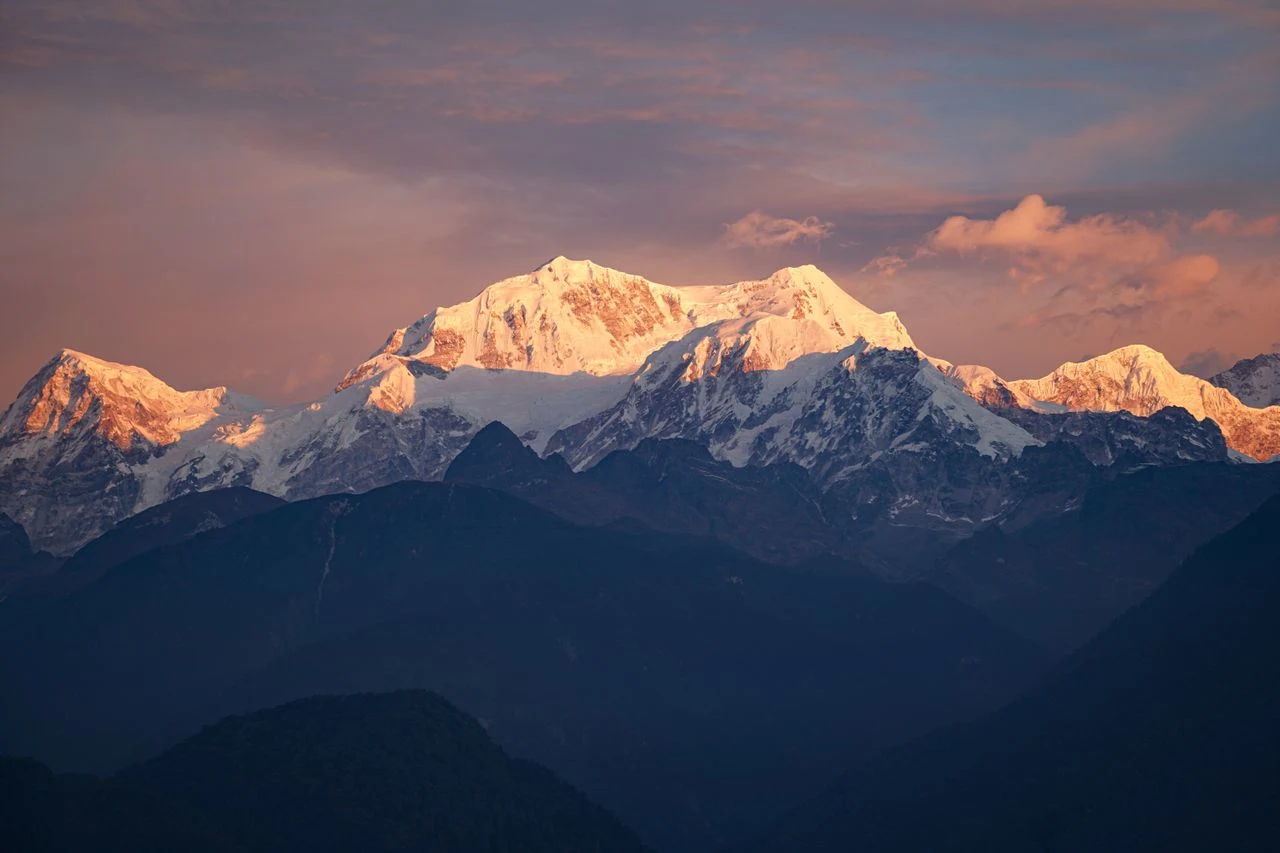
What are the Himalayas mountain names translations begins with the name of the range itself. The word Himalaya comes from Sanskrit, combining hima (snow, frost) with ālaya (dwelling, home, abode). The literal translation is “abode of snow” or “home of snow”. In Nepali, himal (हिमाल) commonly refers to the Himalayas, snow peaks, or a high snow-covered mountain. This is why the word appears in many Nepali mountain and regional names, including Mardi Himal, Ganesh Himal, and the Mahalangur Himal.
The name appropriately describes the vast snow-covered mountain system stretching across South Asia. However, the Himalayas are not a single uniform range. They are a system of parallel ranges and massifs, and the names of individual peaks come from different languages and cultural traditions. Some names describe the mountain’s appearance; others connect the peak with gods, goddesses, spiritual beliefs, or local legends. A few internationally recognised names were introduced by foreign surveyors and explorers.
Travel connection: When you trek in Nepal, you will hear the word himal used constantly. Understanding that it means “snow mountain” helps you read the landscape. Mardi Himal, for example, is literally “Mardi Snow Mountain.” The naming pattern is consistent across the region.
Why Himalayan Mountains Have Different Names
What are the Himalayas mountain names translations becomes more complex when you realise that most major peaks have at least two or three names. Everest has three: Everest (English), Sagarmatha (Nepali), and Chomolungma (Tibetan). Kanchenjunga has variations in spelling and meaning depending on whether you are reading a Sikkimese, Tibetan, or British source.
There are several reasons for this multiplicity.
Different communities named the same mountain independently. The Sherpa, Tibetan, and Nepali communities living around Everest all had their own names for the peak long before British surveyors arrived. These names were not translations of each other; they were independent acts of naming.
Surveyors imposed new names. In the nineteenth century, British surveyors of the Great Trigonometrical Survey of India assigned names to peaks that had no known local name, or chose to use English names even when local names existed. Mount Everest was named after Sir George Everest, the former Surveyor General of India, despite the fact that the mountain already had well-established local names.
Transliteration creates variants. Tibetan and Nepali names are written in scripts that do not map neatly onto the Latin alphabet. Chomolungma can appear as Qomolangma, Chomolungma, or Jomo Langma. Kanchenjunga can be spelled Kangchenjunga, Kinchinjunga, or Kanchenjunga. These variants are not different names; they are different attempts to render the same name in English letters.
Travel connection: When you read trekking guides or maps, you will encounter different names for the same peak. Knowing that Sagarmatha, Chomolungma, and Everest all refer to the same mountain prevents confusion and deepens your appreciation of the cultural layers embedded in the landscape.
The Eight-Thousanders: Names and Translations
What are the Himalayas mountain names translations for the highest peaks is the core of this guide. The table below summarises the major names, their language of origin, and their meanings. The fourteen peaks above 8,000 metres are often discussed together, though not all of them lie in the Himalaya range in the strict geographical sense. K2, Broad Peak, and the Gasherbrum mountains belong to the neighbouring Karakoram range.
| Mountain | Local Name(s) | Language | Meaning | Certainty |
|---|---|---|---|---|
| Everest | Sagarmatha / Chomolungma | Nepali / Tibetan | “Peak of Heaven” / “Goddess Mother of the World” | Established |
| K2 | K2 / Chogori | Survey number / Balti | Survey designation / “Great Mountain” | Established |
| Kanchenjunga | Kanchenjunga | Tibetan | “Five Treasuries of the Great Snow” | Established |
| Lhotse | Lhotse | Tibetan | “South Peak” | Established |
| Makalu | Makalu / Mahākāla | Sanskrit | “The Great Black” | Established |
| Cho Oyu | Cho Oyu | Tibetan | “Turquoise Goddess” | Established |
| Dhaulagiri | Dhaulagiri | Sanskrit | “Dazzling White Mountain” | Established |
| Manaslu | Manaslu | Sanskrit | “Mountain of the Spirit” | Established |
| Annapurna | Annapurna | Sanskrit | “Goddess of Food and Nourishment” | Established |
| Nanga Parbat | Nanga Parbat | Urdu | “Naked Mountain” | Established |
| Gasherbrum I | Gasherbrum I / Hidden Peak | Balti / English | “Beautiful Mountain” / “Hidden Peak” | Established |
| Broad Peak | Broad Peak / Falchan Kangri | English / Balti | Named for its wide summit | Established |
| Shishapangma | Shishapangma | Tibetan | “Crest Above the Grassy Plains” | Established |
Mount Everest: Three Names, Three Stories
What are the Himalayas mountain names translations for Everest is the most complex case, because the mountain carries three names from three different languages and historical contexts.
Everest (English)
The internationally recognised name honours Sir George Everest, a former Surveyor General of India. British surveyors adopted the name during the nineteenth century after identifying the peak as the world’s highest mountain. The name was controversial even at the time. George Everest himself objected to the use of his name, and many argued that the mountain’s local names should be used instead. The name persisted anyway, and “Everest” became the standard in English-language atlases and expedition records.
Sagarmatha (Nepali)
The Nepali name Sagarmatha is composed of sagar (sky) and matha (forehead or head), giving the literal translation “forehead of the sky” or “peak of heaven”. The name was officially adopted by the Nepali government in the early 1960s, when Nepal began asserting its own naming conventions for the peaks within its borders.
Chomolungma (Tibetan)
The Tibetan name Chomolungma, sometimes written as Qomolangma, is composed of chomo (goddess), lung (valley, cave, or rock), and ma (mother). The most common translation is “Goddess Mother of the World,” though some sources render it as “Goddess of the Valley”. The name reflects the Tibetan Buddhist understanding of the mountain as a sacred feminine deity. Sherpa and Tibetan communities have used this name for centuries.
Travel connection: Trekkers flying into Lukla and walking toward Everest Base Camp will hear the mountain called Sagarmatha by Nepali guides and Chomolungma by Sherpa and Tibetan communities. The name you use reflects the cultural context you are in. Using the local name is a mark of respect.
Kanchenjunga: The Five Treasuries of Snow
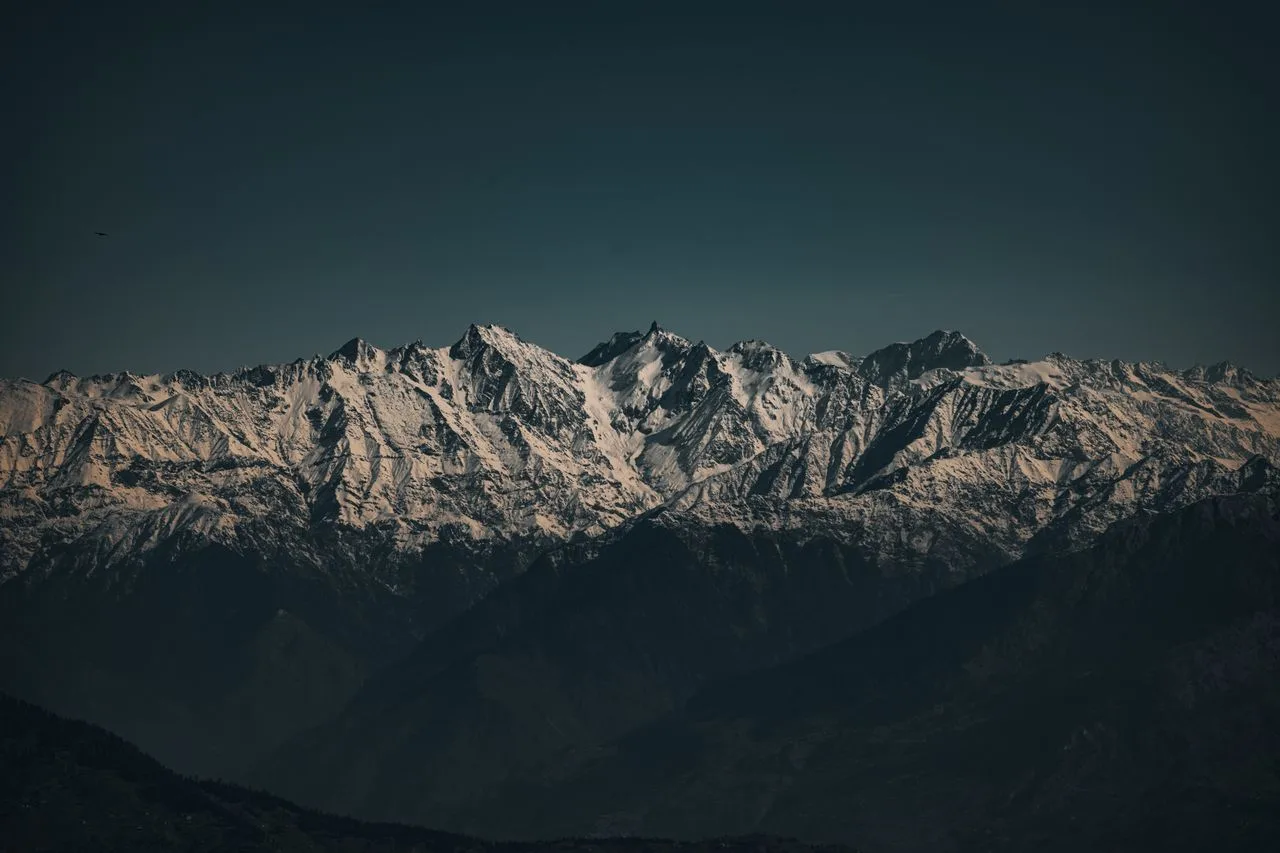
What are the Himalayas mountain names translations for Kanchenjunga reveals a name rich in religious symbolism. Kanchenjunga (also spelled Kangchenjunga) derives from four Tibetan words: kang (snow), chen (great), dzö (treasury, strongbox, or fortress), and nga (five). The literal translation is “Five Treasuries of the Great Snow”. The “five” refers to the five principal summits of the massif, four of which exceed 8,450 metres. The name also carries a legend: five boxes of treasure are said to be buried at the summit, containing sacred books, precious stones, invincible armour, salt, and medicine. The mountain is sacred to the Sikkimese and Tibetan communities, and climbing it has historically been restricted to avoid disturbing the summit.
Travel connection: Kanchenjunga is the third-highest mountain in the world and lies on the border between Nepal and the Indian state of Sikkim. Trekking to Kanchenjunga Base Camp is a remote and rewarding experience, less crowded than Everest or Annapurna.
Lhotse: The South Peak
What are the Himalayas mountain names translations for Lhotse is one of the most straightforward cases. Lhotse comes directly from Tibetan: lho means “south” and tse means “peak.” The name literally translates as “South Peak”. Early British surveyors called it E1 (Everest 1) because they first identified it as a subsidiary peak of Everest, but it is considered an independent mountain. Lhotse is the fourth-highest mountain in the world at 8,516 metres.
Travel connection: Lhotse is climbed via the same route as Everest through the South Col. Trekkers on the Everest Base Camp trail see Lhotse constantly, though many do not realise it is a separate 8,000-metre peak. It stands directly behind Everest and is connected to it by the South Col.
Makalu: The Great Black One
What are the Himalayas mountain names translations for Makalu points to a Sanskrit origin. Makalu was called Mahākāla in Sanskrit, meaning “Great Time” or “Great Black.” The name refers to the mountain’s distinctive band of dark granite and its steep, pyramid-like structure. It is the fifth-highest mountain in the world at 8,485 metres, located just 22 kilometres from Everest. Climbers often refer to it as “the Great Black One” or “the Big Black.”
Travel connection: Makalu is visible from the Everest region on clear days, though it is not on the standard Everest Base Camp trek. The Makalu Base Camp trek is a remote alternative for trekkers seeking solitude.
Cho Oyu: The Turquoise Goddess
What are the Himalayas mountain names translations for Cho Oyu is a Tibetan name. Cho (or chomo) means goddess or deity, and yu means turquoise. The name translates as “Turquoise Goddess”. Cho Oyu is the sixth-highest mountain in the world at 8,188 metres, located about 20 kilometres west of Everest on the Nepal-China border. There is some variation in interpretation. Some sources suggest the original name may have been Chomo Yu, meaning “Goddess of the Turquoise,” which was simplified to Cho Oyu over time.
Travel connection: Cho Oyu is considered one of the more accessible 8,000-metre peaks for experienced climbers. It is visible from the Gokyo Valley trek in the Everest region.
Dhaulagiri: The Dazzling White Mountain
What are the Himalayas mountain names translations for Dhaulagiri is rooted in Sanskrit. The name comes from dhawala (dazzling, white, beautiful) and giri (mountain). Dhaulagiri can be translated as “Dazzling White Mountain,” “White Mountain,” or “Beautiful White Mountain”. It is the seventh-highest mountain in the world at 8,167 metres and is the highest mountain that lies entirely within Nepal.
Travel connection: Dhaulagiri is a major landmark on the Annapurna Circuit trek. The Kali Gandaki Gorge, which separates Dhaulagiri from Annapurna, is one of the deepest gorges on Earth. Trekkers on the circuit pass close to Dhaulagiri’s base.
Manaslu: The Mountain of the Spirit
What are the Himalayas mountain names translations for Manaslu is also Sanskrit in origin. The name comes from Manasa, meaning “intellect” or “soul.” Manaslu translates as “Mountain of the Spirit”. It is the eighth-highest mountain in the world at 8,163 metres, located in the Mansiri Himal range in west-central Nepal.
Travel connection: The Manaslu Circuit trek is a restricted-area trek that circles the mountain. It requires a special permit and a licensed guide, but offers a less crowded alternative to the Annapurna Circuit.
Annapurna: The Goddess of Food and Nourishment
What are the Himalayas mountain names translations for Annapurna is one of the most culturally significant. The name comes from Sanskrit: anna means “food” or “grains,” and purna means “full,” “complete,” or “perfect.” Annapurna literally translates as “filled with food” or “possessor of food”. In Hindu tradition, Annapurna is the goddess of food and nourishment, a manifestation of Parvati. She is believed to reside on the mountain, and the name reflects the belief that the mountain provides sustenance to the world.
Travel connection: The Annapurna region is one of Nepal’s most popular trekking destinations. The Annapurna Circuit and Annapurna Base Camp treks both offer views of the mountain and its surrounding peaks.
Nanga Parbat: The Naked Mountain
What are the Himalayas mountain names translations for Nanga Parbat comes from Urdu and Persian: nanga means “naked” and parbat means “mountain.” The name translates as “Naked Mountain,” referring to the mountain’s sheer, exposed rock faces and lack of vegetation. Nanga Parbat is the ninth-highest mountain in the world at 8,126 metres and is located in Pakistan’s Gilgit-Baltistan region.
Travel connection: Nanga Parbat is not in Nepal, but it is often discussed alongside the Nepali eight-thousanders as part of the broader Himalayan system. The Fairy Meadows trek offers views of the mountain’s dramatic Rupal Face.
Shishapangma: The Crest Above the Grassy Plains
What are the Himalayas mountain names translations for Shishapangma is Tibetan. The name is composed of shisha (crest or ridge) and pangma (grassy plain or meadow). The full translation is “Crest Above the Grassy Plains”. Shishapangma is the fourteenth-highest mountain in the world at 8,027 metres and is the only eight-thousander located entirely within Tibet.
Travel connection: Shishapangma is not accessible from Nepal without crossing into Tibet. It is primarily climbed from the Tibetan side.
The Karakoram Eight-Thousanders: Different Range, Different Languages
What are the Himalayas mountain names translations becomes more complex when you realise that not all eight-thousanders are in the Himalayas. K2, Broad Peak, and the Gasherbrum peaks belong to the Karakoram range, which stretches across Pakistan, China, and India. Their names come from different linguistic traditions.
K2 is a survey number, not a name. It stands for Karakoram 2, the second peak listed in the Survey of India’s 1852 triangulation. It was briefly called Mount Godwin-Austen after the explorer Henry Godwin-Austen, but that name was never officially recognised. The local Balti name is Chogori, meaning “Great Mountain,” but K2 remains the standard name internationally.
Broad Peak is named for its wide summit ridge, which is over 1.5 kilometres long. The local Balti name is Falchan Kangri, meaning “Broad Snow Mountain”.
Gasherbrum comes from the Balti language: rgasha (beautiful) and brum (mountain), meaning “Beautiful Mountain”. Gasherbrum I is also called Hidden Peak, a name given by surveyors because it is hidden behind other peaks from the approach valley.
Travel connection: These peaks are in Pakistan, not Nepal, but they are part of the broader Himalayan and Karakoram mountaineering world. Trekkers in Nepal may not see them, but climbers often attempt them as part of a broader eight-thousander circuit.
Language Origins: Where Himalayan Names Come From
What are the Himalayas mountain names translations requires understanding the languages involved. The major source languages are:
Sanskrit. The oldest layer of naming. Annapurna, Dhaulagiri, and Manaslu are all Sanskrit names. Sanskrit is the liturgical language of Hinduism and the source of many Nepali words. Its influence on mountain names reflects the Hindu religious tradition of the Nepali mid-hills and the Kathmandu Valley.
Tibetan. The second major layer. Lhotse, Cho Oyu, Shishapangma, and Kanchenjunga are Tibetan names. Tibetan is the language of the Buddhist communities of the high Himalaya, including Sherpa, Tamang, and Tibetan refugees. The Tibetan names often have religious meanings, invoking goddesses, sacred objects, and spiritual concepts.
Nepali. The official language of Nepal. Sagarmatha is a Nepali name, created by the Nepali government in the 1960s as a national alternative to Everest. Nepali names often combine Sanskrit roots with local usage.
Balti. A Tibetan dialect spoken in the Karakoram region of Pakistan. Gasherbrum and Chogori are Balti names.
Urdu. The national language of Pakistan. Nanga Parbat is an Urdu name.
English. The colonial layer. Everest and Broad Peak are English names, imposed by British surveyors.
Travel connection: When you trek in Nepal, you will hear names from all these layers. A Sherpa guide will call Everest “Chomolungma.” A Nepali guide will call it “Sagarmatha.” An international map will label it “Everest.” Understanding the language origins helps you navigate these different naming systems.
Disputed and Uncertain Etymologies
What are the Himalayas mountain names translations is not always a matter of settled fact. Some mountain names have disputed or uncertain etymologies, and responsible sources should say so.
Sagarmatha is sometimes translated as “goddess of the sky” or “mother of the universe,” but the more literal translation is “forehead of the sky.” The name was created in the 1960s, so its etymology is relatively recent and documented, but popular sources often embellish it.
Chomolungma is usually translated as “Goddess Mother of the World,” but some scholars argue for “Goddess of the Valley” based on the meaning of lung as valley or rock. Both translations appear in authoritative sources.
Makalu is usually translated as “Great Black,” but the Sanskrit Mahākāla has a broader range of meanings, including “Great Time” and a reference to a fierce form of Shiva. The “Great Black” translation is the most common in mountaineering contexts, but it is not the only possible reading.
Cho Oyu is sometimes translated as “Turquoise Goddess,” but other sources suggest “Head of God” or “Bald God.” The variation reflects different interpretations of the Tibetan syllables.
Travel connection: When you read trekking guides that present mountain name translations as certain facts, be aware that some are interpretations rather than established translations. The most reliable sources are those that acknowledge uncertainty.
Practical Trekking Relevance: Why Names Matter on the Trail
What are the Himalayas mountain names translations is not just an academic question. It has practical relevance for trekkers.
Navigation. Maps and signs use different names. If you are looking for “Everest” on a Nepali map, you may need to look for “Sagarmatha.” If you are asking a Sherpa guide about “Lhotse,” they will know the name, but they may also refer to it as “South Peak.”
Cultural respect. Using local names is a mark of respect. Calling Everest “Sagarmatha” in Nepal or “Chomolungma” in Tibetan contexts shows that you understand the mountain’s cultural significance, not just its status as a climbing objective.
Understanding the landscape. The names describe the mountains. Dhaulagiri means “White Mountain” because it is dazzling white. Makalu means “Great Black” because of its dark granite. Annapurna means “Goddess of Food” because the mountain’s glaciers feed the rivers that irrigate the plains below. Knowing the names helps you see the mountains as more than peaks.
Travel connection: Merriment Treks guides use local names alongside international ones, and we encourage trekkers to learn the meanings behind the peaks they see. It is one of the simple ways that a trek becomes more than a physical challenge.
Merriment Treks: Trekking with Understanding
What are the Himalayas mountain names translations is the kind of question that comes up naturally on the trail. At Merriment Treks, we work with guides who know the local names, the languages, and the stories behind the peaks. If you are planning a trek in the Everest, Annapurna, Langtang, or Manaslu regions, we are happy to help you understand not just the route, but the cultural and linguistic landscape you will be walking through. Contact us for route-specific planning support.
Frequently Asked Questions
1. What does “Himalaya” mean?
Himalaya comes from Sanskrit: hima (snow) and ālaya (abode). It means “abode of snow” or “home of snow.”
2. Why does Mount Everest have three names?
Everest is the English name honouring Sir George Everest. Sagarmatha is the Nepali name meaning “forehead of the sky.” Chomolungma is the Tibetan name meaning “Goddess Mother of the World.” Each reflects a different cultural and historical context.
3. What does Sagarmatha mean?
Sagarmatha is a Nepali name composed of sagar (sky) and matha (forehead), meaning “forehead of the sky” or “peak of heaven.”
4. What does Chomolungma mean?
Chomolungma is Tibetan, composed of chomo (goddess), lung (valley or rock), and ma (mother). It means “Goddess Mother of the World” or “Goddess of the Valley.”
5. What does Annapurna mean?
Annapurna comes from Sanskrit: anna (food) and purna (full). It means “filled with food” or “Goddess of Food and Nourishment.”
6. What does Dhaulagiri mean?
Dhaulagiri comes from Sanskrit: dhawala (dazzling, white) and giri (mountain). It means “Dazzling White Mountain.”
7. What does Manaslu mean?
Manaslu comes from Sanskrit Manasa (intellect or soul). It means “Mountain of the Spirit.”
8. What does Kanchenjunga mean?
Kanchenjunga is Tibetan, meaning “Five Treasuries of the Great Snow,” referring to its five principal summits.
9. What does Lhotse mean?
Lhotse is Tibetan: lho (south) and tse (peak). It means “South Peak.”
10. What does Makalu mean?
Makalu comes from Sanskrit Mahākāla, meaning “Great Black” or “Great Time,” referring to its dark granite.
11. What does Cho Oyu mean?
Cho Oyu is Tibetan: cho (goddess) and yu (turquoise). It means “Turquoise Goddess.”
12. What does Nanga Parbat mean?
Nanga Parbat is Urdu: nanga (naked) and parbat (mountain). It means “Naked Mountain.”
13. What does Shishapangma mean?
Shishapangma is Tibetan: shisha (crest) and pangma (grassy plain). It means “Crest Above the Grassy Plains.”
14. Why do some mountain names have disputed meanings?
Some names come from languages with multiple possible interpretations, or from oral traditions where the original meaning has been lost. Responsible sources acknowledge this uncertainty.
15. Are all eight-thousanders in the Himalayas?
No. K2, Broad Peak, and the Gasherbrum peaks are in the Karakoram range, not the Himalayas. They are often discussed together because they are all above 8,000 metres.