-
Hotel, Lodge
-
Kathmandu
-
Spring, Autumn
-
Guided
-
5,700 m
-
BLD
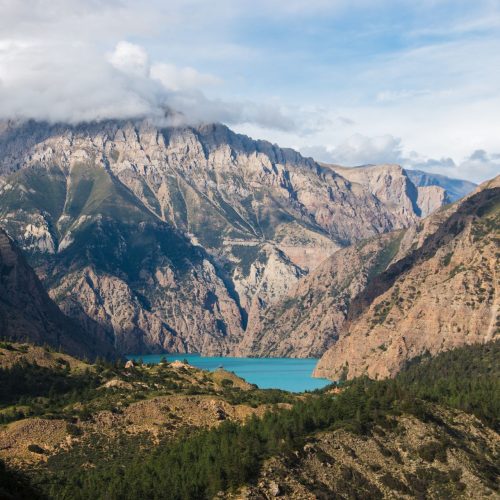
The Makalu Base Camp Trek takes you to the foot of the world’s fifth-highest mountain through one of the least-visited and most ecologically diverse trekking regions in Nepal. The route passes through Makalu Barun National Park, crosses ancient rhododendron forests, traverses high alpine meadows, and follows the Barun Valley deep into a glacial landscape where the 8,485-meter wall of Mount Makalu dominates everything around it. This is not a polished commercial trekking corridor.
Facilities are limited, the terrain is demanding, and the logistics require careful coordination. For trekkers who understand what that means and prepare accordingly, the Makalu Base Camp Trek delivers an experience that the more crowded routes in Nepal simply cannot replicate.
This 18-day package includes domestic flights, all permits, accommodation, meals, an experienced guide, and full porter support from arrival in Kathmandu to final departure. Everything on this page is written to help you accurately assess whether this trek is the right choice for you.
Makalu Base Camp Trek Facts
| Detail | Information |
|---|---|
| Duration | 18 Days |
| Maximum Altitude | 5,700m (Makalu Base Camp) |
| Trek Difficulty | Strenuous |
| Trek Style | Tea House and Camping (mixed) |
| Region | Makalu Barun National Park, Sankhuwasabha District, Eastern Nepal |
| Starting Point | Kathmandu → Tumlingtar (domestic flight) → Num |
| Ending Point | Num → Tumlingtar → Kathmandu |
| Package Cost | USD 1,950 per person |
| Best Season | March–May and September–November |
| Group Size | 2–10 trekkers |
| Accommodation | Tea houses (lower sections) and tented camps (upper sections) |
| Meals | Full board during trekking days |
| Minimum Age | 16 years (18+ recommended for upper sections) |
| Minimum Prior Experience | At least one prior trek above 4,500m strongly recommended |
Trip Overview
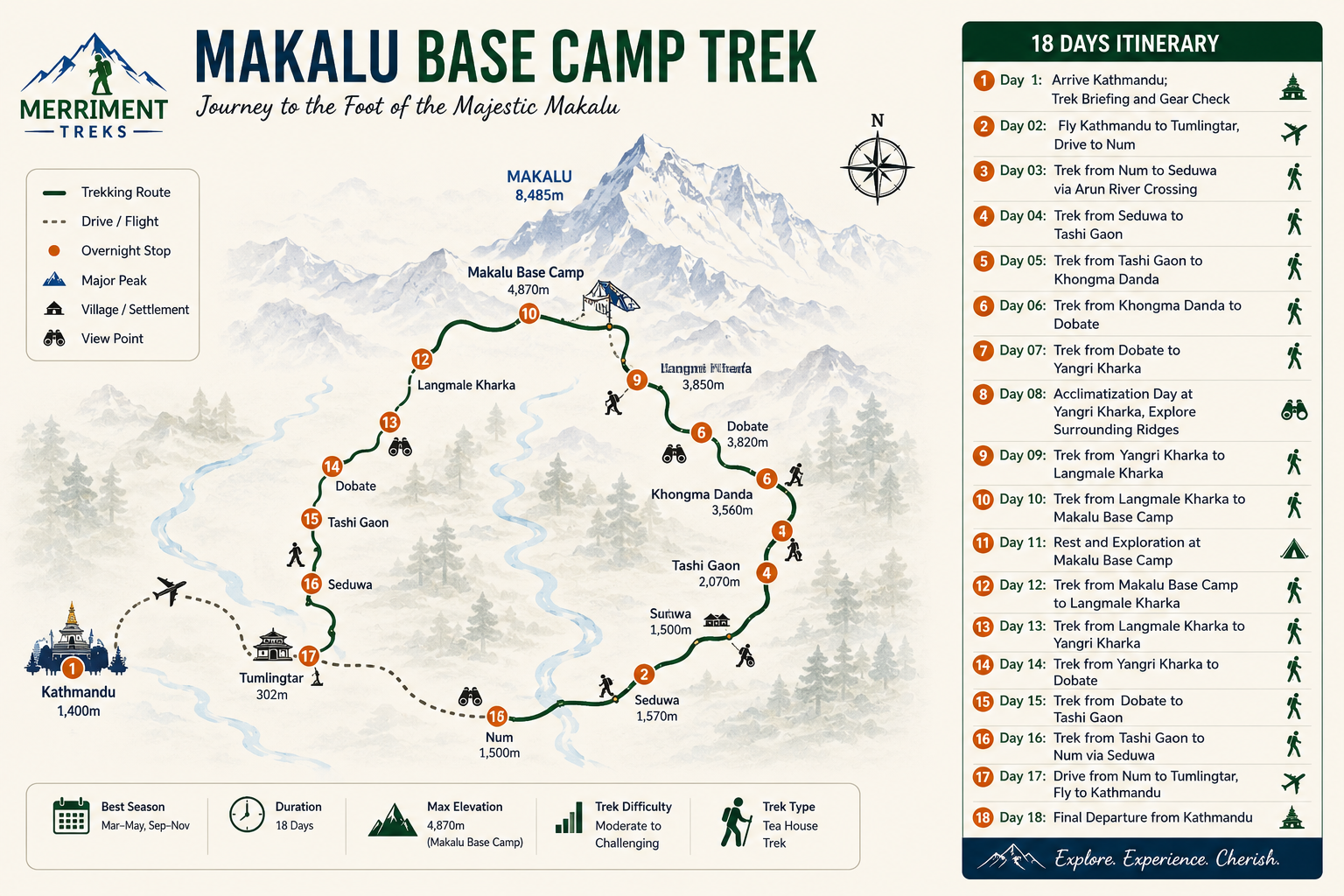
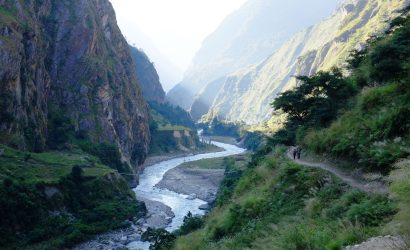
The standard approach to Makalu Base Camp begins with a domestic flight from Kathmandu to Tumlingtar in eastern Nepal, followed by a road transfer to Num, the last road-accessible village before the trail begins. From Num the route descends sharply to the Arun River, then climbs steeply through Seduwa and Tashi Gaon into the Makalu Barun National Park buffer zone.
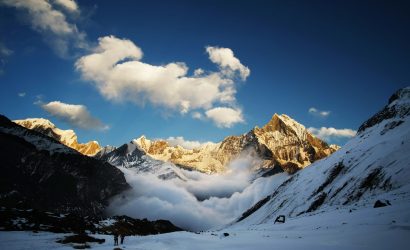
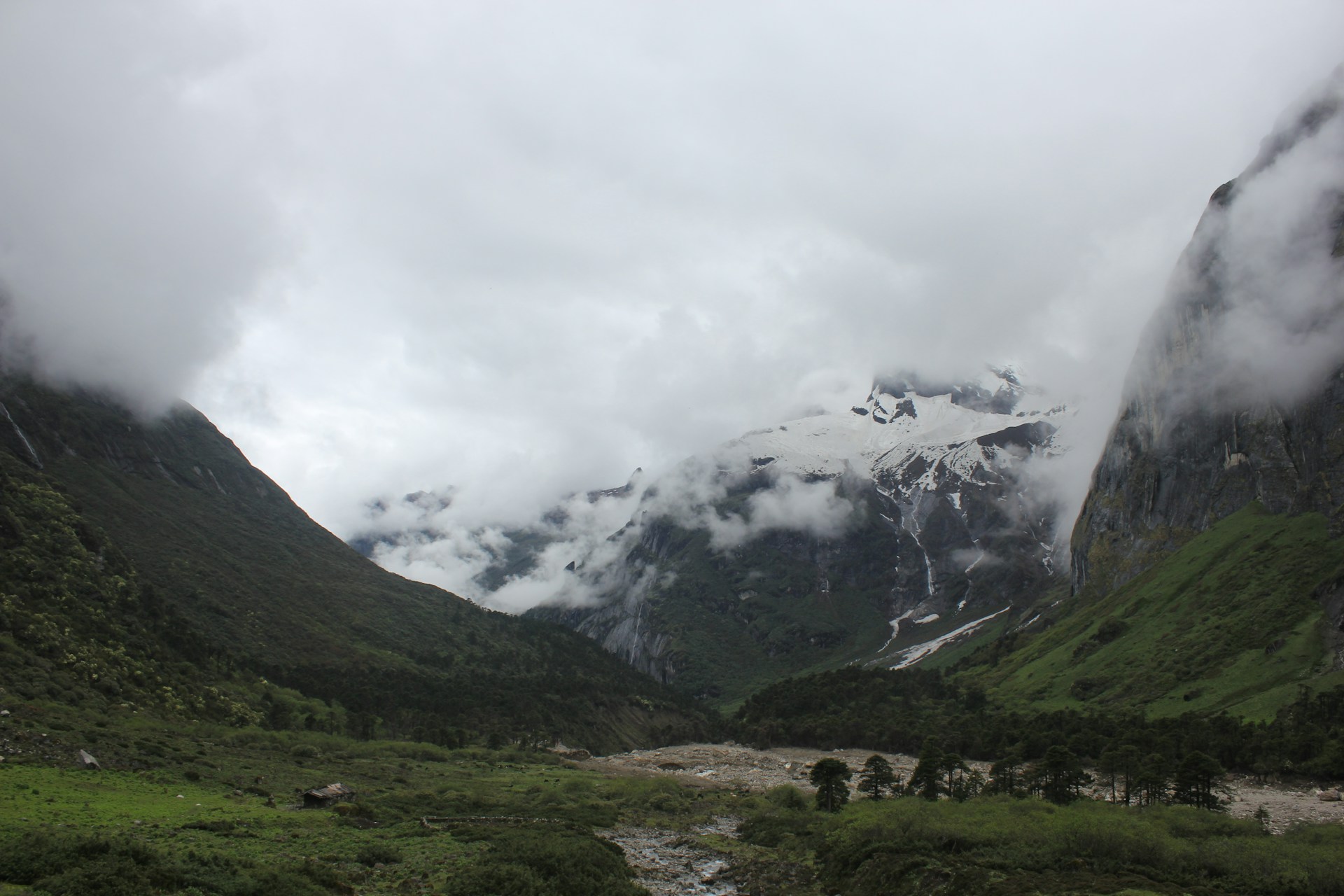
As altitude increases, the landscape transforms dramatically. Below 3,000 meters, dense subtropical and temperate forest covers the steep ridgelines. Between 3,000 and 4,000 meters, rhododendron forests give way to high pastures and the first clear views of the Makalu Himal.
Above 4,000 meters, the trail follows the Barun Valley floor, passing through a series of high kharka camps, Yangri Kharka, Langmale Kharka, and finally reaching Makalu Base Camp at approximately 5,700 meters.
The upper section is a camping trek. Tea house infrastructure ends around Langmale Kharka, and from there the camp cook and kitchen team provide all meals at established camping sites. This is not a tented luxury experience; it is practical expedition-style camping in a high-altitude wilderness environment. Trekkers should arrive prepared for both the physical demands and the basic conditions.
The descent follows the same route, giving trekkers a different perspective on the landscape as the valley opens up below them and the full southern face of the Makalu massif recedes behind.
Why Choose the Makalu Base Camp Trek
- It is genuinely uncrowded. The combination of limited infrastructure, demanding terrain, and relatively high logistics costs keeps annual visitor numbers in the low hundreds. On most days above Tashi Gaon, you will not see another trekking group. The base camp itself, which sits below one of the planet’s highest and most technically demanding peaks, often receives fewer visitors in a full year than Everest Base Camp sees on a single busy October day.
- Makalu Barun National Park is ecologically exceptional. The park protects one of the most intact and biodiverse Himalayan ecosystems remaining in Asia. The elevation range from 435 meters at the park boundary to 8,485 meters at Makalu’s summit creates an extraordinary concentration of ecological zones within a single protected area.
Red panda, snow leopard, Himalayan black bear, clouded leopard, and over 400 bird species have been recorded within the park. The rhododendron forests on the approach to Khongma Danda are among the most impressive in Nepal. - The mountain views are exceptional and underappreciated. The Makalu massif seen from its own base camp is a profoundly different experience from viewing it from the Everest region. You are standing directly below it. The southeast face rises nearly 3,800 vertical meters above the base camp in a single continuous sweep of rock, ice, and glacial seracs. Lhotse and Everest are visible from higher vantage points on the approach.
- It is a real wilderness trek. Trail maintenance is minimal in places. River crossings require care in high water. Navigation above the last tea houses requires a guide who knows the valley. This is what distinguishes the Makalu region from the heavily developed Annapurna and Everest trekking corridors.
Makalu Base Camp Trek Itinerary
| Day | Route | Altitude | Walking Hours |
|---|---|---|---|
| Day 1 | Arrive Kathmandu; trek briefing and gear check | 1,400m | — |
| Day 2 | Fly Kathmandu–Tumlingtar; drive to Num | 1,560m | — |
| Day 3 | Num to Seduwa via Arun River crossing | 1,220m–1,500m | 5–6 hours |
| Day 4 | Seduwa to Tashi Gaon | 2,070m | 5–6 hours |
| Day 5 | Tashi Gaon to Khongma Danda | 3,500m | 6–7 hours |
| Day 6 | Khongma Danda to Dobate | 3,630m | 4–5 hours |
| Day 7 | Dobate to Yangri Kharka | 4,340m | 5–6 hours |
| Day 8 | Acclimatization day at Yangri Kharka; explore surrounding ridges | 4,340m | 2–3 hours optional |
| Day 9 | Yangri Kharka to Langmale Kharka | 4,410m | 4–5 hours |
| Day 10 | Langmale Kharka to Makalu Base Camp | 5,700m | 6–7 hours |
| Day 11 | Rest and exploration at Makalu Base Camp | 5,700m | Optional glacier walk |
| Day 12 | Makalu Base Camp to Langmale Kharka | 4,410m | 5–6 hours |
| Day 13 | Langmale Kharka to Yangri Kharka | 4,340m | 3–4 hours |
| Day 14 | Yangri Kharka to Dobate | 3,630m | 4–5 hours |
| Day 15 | Dobate to Tashi Gaon | 2,070m | 5–6 hours |
| Day 16 | Tashi Gaon to Num via Seduwa | 1,560m | 6–7 hours |
| Day 17 | Drive Num to Tumlingtar; fly to Kathmandu | 1,400m | — |
| Day 18 | Final departure from Kathmandu | — | — |
Altitude Profile
| Location | Altitude |
|---|---|
| Kathmandu | 1,400m |
| Tumlingtar | 490m |
| Num | 1,560m |
| Seduwa | 1,500m |
| Tashi Gaon | 2,070m |
| Khongma Danda | 3,500m |
| Dobate | 3,630m |
| Yangri Kharka | 4,340m |
| Langmale Kharka | 4,410m |
| Makalu Base Camp | 5,700m |
The altitude gain between Yangri Kharka and Makalu Base Camp is significant — over 1,300 vertical meters in two days. The acclimatization day at Yangri Kharka is built into the itinerary specifically to prepare the body for this section. Do not treat this as an optional rest day; it is a medically important part of the schedule.
Difficulty Level of Makalu Base Camp Trek
Overall Rating: Strenuous
The Makalu Base Camp Trek is one of the more physically demanding standard trekking routes in Nepal. Several factors combine to make it genuinely challenging, and trekkers should understand each one clearly before booking.
Elevation: Reaching 5,700 meters places this trek in a category where altitude sickness is a serious concern, not a minor inconvenience. The acclimatization schedule is carefully designed, but individual responses to altitude cannot be predicted. Some trekkers who have completed Everest Base Camp without difficulty find the Makalu route harder due to the more sustained nature of the upper sections.
Terrain: The trail between Num and Tashi Gaon involves steep descents to the Arun River followed by equally steep climbs. The upper Barun Valley has sections of boulder-hopping, glacial moraine navigation, and stream crossings that require sure-footedness. The final push to base camp crosses lateral moraine and loose rock.
Remoteness: Above Tashi Gaon, the nearest medical facility is days away on foot. Helicopter evacuation is possible in good weather but cannot be guaranteed. This is a wilderness trek in the genuine sense, and trekkers need to approach it with the mental preparation that implies.
Duration: Eighteen days is a sustained commitment. The physical demands are cumulative, and trekkers need to arrive in good condition rather than planning to get fit during the trek itself.
Fitness Requirements
| Fitness Level | Assessment |
|---|---|
| No trekking experience | Not suitable |
| Occasional hiker | Not suitable |
| Regular hiker (day hikes 3–4x/week) | Possible with serious preparation |
| Experienced trekker with 4,000m+ experience | Well-suited |
| Experienced trekker with 5,000m+ experience | Ideal |
Begin physical preparation at least 10–12 weeks before departure. The most useful training combines long-distance loaded hiking, sustained cardiovascular exercise (running, cycling, or swimming), and specific leg and core strength work.
Practice hiking with a loaded daypack on consecutive days to simulate the cumulative fatigue of multi-day trekking. Trekkers who have completed routes like the Annapurna Circuit, Everest Base Camp, or Langtang Valley at full altitude are well positioned for the Makalu Base Camp Trek.
Altitude and Acclimatization
Managing altitude is the most critical safety factor on this trek. The route’s gradual ascent through the lower valleys provides natural acclimatization through the 2,000–4,000 meter range, but the jump from Langmale Kharka to Makalu Base Camp still represents a significant altitude challenge.
The acclimatization protocol built into this itinerary follows established high-altitude trekking practice. The rest day at Yangri Kharka (4,340m) allows the body to adapt before ascending further. The route to Makalu Base Camp involves a high camp at Langmale Kharka (4,410m) before the final push, following the “climb high, sleep low” principle where possible.
Signs of altitude sickness to monitor:
- Persistent headache unrelieved by ibuprofen or paracetamol
- Nausea or vomiting without a dietary cause
- Loss of coordination or unusual fatigue
- Shortness of breath at rest
- Confusion or unusual behavior (sign of serious HACE)
- Persistent dry cough or breathlessness (sign of HAPE)
Your guide carries a pulse oximeter and checks blood oxygen levels daily above 4,000 meters. Any trekker showing signs of deteriorating condition will be advised to descend immediately. Descent is always the correct response to worsening altitude sickness. There is no prize for reaching Makalu Base Camp with serious symptoms; the mountain will still be there when you are healthy.
Diamox (acetazolamide) is commonly used as an altitude sickness preventive measure. Discuss its use, appropriate dosage, and any contraindications with your physician before departure.
Best Time to do Makalu Base Camp Trek
| Season | Months | Weather | Trail Conditions | Crowds | Suitability |
|---|---|---|---|---|---|
| Spring | March–May | Clear to partly cloudy; warming temperatures | Good; rhododendrons blooming | Very low | Excellent |
| Pre-Monsoon | Early June | Increasingly humid | Acceptable | Minimal | Possible for experienced trekkers |
| Monsoon | July–August | Heavy rainfall; leeches below 3,000m | Difficult; landslide risk | Near zero | Not recommended |
| Autumn | September–November | Stable, clear; cool to cold | Excellent | Very low | Best overall season |
| Winter | December–February | Cold; snow above 4,000m | Difficult to dangerous | Minimal | Not recommended |
Spring (March–May) brings warming temperatures and the extraordinary rhododendron bloom through the forests below Khongma Danda. April and early May offer reliably clear mornings before afternoon cloud builds. The rhododendron display between 2,500 and 3,500 meters is genuinely extraordinary during this period.
Autumn (September–November) is the most stable season overall. October in particular delivers consistent clear days, cold nights above 4,000 meters, and excellent visibility from the higher camps. The post-monsoon clarity provides the best photographic conditions for the Makalu massif.
Weather Overview
| Month | Day Temperature | Night Temperature | Precipitation | Wind | Trekking |
|---|---|---|---|---|---|
| March | 8–18°C | -5–2°C | Low | Moderate | Good |
| April | 10–20°C | -3–5°C | Low–Moderate | Light | Very Good |
| May | 12–22°C | 0–8°C | Moderate | Light | Good |
| September | 10–18°C | -2–5°C | Low (post-monsoon) | Light | Excellent |
| October | 5–15°C | -8–0°C | Very Low | Light–Moderate | Best |
| November | 0–10°C | -12– -5°C | Very Low | Moderate | Good |
At Makalu Base Camp (5,700m), temperatures drop to -15°C or below on clear nights in autumn and can be significantly colder with wind chill. Daytime temperatures at base camp rarely exceed 5°C even in optimal conditions. A sleeping bag rated to -20°C is the minimum requirement for nights above 5,000 meters.
Permits and Entry Requirements for Makalu Base Camp Trek
| Permit | Cost | Validity | Notes |
|---|---|---|---|
| Makalu Barun National Park Entry Permit | NPR 3,000 (~USD 22) | Duration of trek | Required for all foreign trekkers |
| Makalu Barun Conservation Area Permit | NPR 2,000 (~USD 15) | Duration of trek | Required for buffer zone sections |
| TIMS Card | NPR 2,000 (~USD 15) | Duration of trek | Mandatory for all foreign trekkers |
| Restricted Area Permit (if applicable) | Variable | Per region | Some route variations require additional permits |
All permits are included in this package and processed by Merriment Treks before departure. You provide passport copies and photographs; we handle all applications and coordinate with the relevant government offices. Permits must be carried and presented at checkposts; your guide manages this at each checkpoint along the route.
Accommodation
The Makalu Base Camp Trek is a mixed tea house and camping trek. The distinction between the two sections is important for understanding what to expect.
Tea House Section (Num to Langmale Kharka):
| Location | Type | Bathroom | Hot Water | Electricity |
|---|---|---|---|---|
| Tumlingtar | Guesthouse | Private available | Hot shower available | Reliable |
| Num / Seduwa | Basic guesthouses | Shared | Cold water | Limited / generator |
| Tashi Gaon | Basic tea houses | Shared | Bucket (fee) | Solar / limited |
| Khongma Danda | Simple tea houses | Shared / outdoor | Bucket (fee) | Solar |
| Dobate | Simple tea houses | Shared | Cold only | Solar / minimal |
| Yangri Kharka | Basic lodges | Shared / outdoor | Cold only | Solar |
| Langmale Kharka | Very basic shelters | Outdoor | None | None |
Camping Section (Langmale Kharka to Makalu Base Camp):
Above Langmale Kharka, established camping sites are used at Makalu Base Camp. The package includes all camping equipment: tents, sleeping mats, and a fully equipped kitchen tent with cook team. Trekkers are responsible for their own sleeping bag. Toilet tents are established at each camp. Conditions are basic but functional for an experienced trekking team operating at this altitude.
Meals
Tea house section meals follow the standard Nepal trekking menu: dal bhat, noodle soups, rice dishes, egg preparations, porridge, and Tibetan bread. Options become progressively simpler above Tashi Gaon. Dal bhat remains the most reliably nutritious and filling choice throughout the lower and middle sections.
Camping section meals are prepared by the included camp cook using supplies carried from Langmale Kharka. Expect hot breakfast, packed lunch, and a cooked evening meal. Menu options above 4,500 meters prioritize caloric density and ease of preparation: rice, pasta, noodle soups, lentils, canned or dried protein sources, and local staples. The cook team carries sufficient food for all camping days; no additional meal purchase is required above Langmale Kharka.
Drinking water: Water sources are available throughout the route from streams and rivers. All water must be treated before drinking. The package includes water purification tablets for camping sections. Trekkers are strongly advised to carry a personal water filter (SteriPen or Sawyer Squeeze recommended) as a backup and to reduce reliance on single-use plastic bottles, which cannot be disposed of responsibly on this remote route. Boiled water is available at tea houses for a small fee.
Transportation
| Segment | Mode | Duration | Notes |
|---|---|---|---|
| Kathmandu–Tumlingtar | Domestic flight (~50 min) | Morning departure recommended | Included in package |
| Tumlingtar–Num | Jeep / local vehicle | 3–4 hours on rough road | Included; road condition variable |
| Num–Makalu Base Camp–Num | On foot | 14 trekking days | Core trek |
| Num–Tumlingtar | Jeep / local vehicle | 3–4 hours | Included |
| Tumlingtar–Kathmandu | Domestic flight (~50 min) | Morning departure preferred | Included |
The road between Tumlingtar and Num is rough and unmaintained in sections. The drive takes 3–4 hours under normal conditions and longer after rain. The domestic flight to Tumlingtar is weather-dependent; delays of one day occasionally occur. Build a buffer day at the beginning of your international travel schedule to account for this possibility.
Packing Checklist for Makalu Base Camp Trek
Clothing
| Item | Quantity | Notes |
|---|---|---|
| Heavyweight thermal base layers | 2 sets | Merino wool or synthetic; top and bottom |
| Fleece mid-layer jacket | 1 | 200-weight or heavier |
| High-loft down jacket | 1 | 700+ fill; essential above 4,500m |
| Waterproof hard-shell jacket | 1 | Fully seam-sealed; Gore-Tex or equivalent |
| Waterproof hard-shell trousers | 1 | Essential for rain and high-altitude wind |
| Trekking trousers | 2 | Lightweight and quick-drying |
| Thermal leggings | 1 | For cold nights and high camps |
| Warm hat | 1 | Covers ears |
| Balaclava | 1 | Essential above 5,000m |
| Sun hat with brim | 1 | UV protection critical at altitude |
| Insulated gloves | 1 pair | Waterproof outer shell preferred |
| Liner gloves | 1 pair | For layering under insulated gloves |
| Neck gaiter / buff | 2 | Dust and cold protection |
| Wool or synthetic trekking socks | 6 pairs | Merino wool preferred |
| Liner socks | 3 pairs | For blister prevention |
| High-ankle trekking boots | 1 pair | Well broken-in; waterproof; stiff sole recommended |
| Camp shoes or sandals | 1 pair | For tea house evenings |
Gear and Equipment
| Item | Notes |
|---|---|
| Sleeping bag (-20°C rated) | Absolutely non-negotiable for base camp nights |
| Sleeping bag liner | Adds 5–8°C warmth; useful hygiene layer in tea houses |
| Trekking poles | Strongly recommended; essential on steep descents |
| Headlamp with spare batteries | Cold kills batteries; carry 2 sets of spares |
| Large expedition daypack (35–45L) | For carrying personal items; porter carries main bag |
| Duffel bag | Porter-carried main luggage; max 15kg |
| Power bank (20,000 mAh minimum) | Charging is unavailable at camps and rare at high tea houses |
| Water bottles (2 × 1L wide-mouth) | Compatible with personal filter |
| Personal water filter (SteriPen or Sawyer) | Non-negotiable for camping sections |
| Water purification tablets | Backup to primary filter |
| Sunglasses (Category 4 UV) | Glacier conditions above 5,000m; eye protection critical |
| Gaiters | Useful on moraine and in light snow above 5,000m |
| Trekking umbrella | Useful for rain on lower sections |
| Dry bags or waterproof stuff sacks | To protect gear in rain |
| Small padlock | For bag security at tea houses |
| Quick-dry towel | Not provided at tea houses or camps |
Medical and Personal
| Item | Notes |
|---|---|
| Diamox (acetazolamide) | Discuss with physician before trek; carry even if not planning to use |
| Dexamethasone | Carry if recommended by physician; emergency AMS treatment |
| Personal first-aid kit | Blister care, pain relief, antidiarrheal, antihistamine, antiseptic |
| High-SPF sunscreen (SPF 50+) | Reapply frequently; UV at 5,700m is extreme |
| High-protection lip balm | Wind and UV cause severe lip damage at altitude |
| Hand sanitizer | Running water is absent at camping sites |
| Toilet paper and waste bags | Leave-no-trace principles apply strictly on this route |
| Personal prescription medications | Carry double the required amount in two separate bags |
| Blister treatment supplies | Compeed or equivalent; moleskin for high-pressure points |
Cost Breakdown of Makalu Base Camp Trek
| Item | Cost (USD) |
|---|---|
| Package Base Price (per person, twin sharing) | 1,950 |
| Domestic flights (Kathmandu–Tumlingtar–Kathmandu) | Included |
| Ground transportation (Tumlingtar–Num–Tumlingtar) | Included |
| Makalu Barun National Park Permit | Included |
| Makalu Barun Conservation Area Permit | Included |
| TIMS Card | Included |
| All accommodation (tea houses and camping) | Included |
| All meals during trekking days | Included |
| Camping equipment (tents, kitchen tent, toilet tent) | Included |
| Camp cook and kitchen staff | Included |
| Licensed English-speaking guide | Included |
| Porter service (1 per 2 trekkers) | Included |
| Government taxes and agency fees | Included |
| Additional Costs to Budget Separately | Estimated Cost (USD) |
|---|---|
| Nepal visa (on arrival, 30 days) | 50 |
| Travel and helicopter evacuation insurance | 100–180 |
| Personal trekking equipment | Variable |
| Hot showers at tea houses | 20–40 |
| Charging fees at tea houses | 10–20 |
| Guide and porter tips (recommended) | 180–280 total |
| Personal snacks and extra beverages | 80–150 |
| Single room supplement | 180 |
| Emergency evacuation costs beyond insurance | Variable |
Optional Add-ons
- High camp extension: For trekkers with mountaineering experience, an optional push above base camp to the lower slopes of the Barun Glacier can be arranged with additional technical guide support. Discuss in advance.
- Baruntse Base Camp detour: The Barun Valley provides access routes toward Baruntse (7,129m) and the Sherpani Col area. Extensions of 2–3 days can be added for acclimatized trekkers with high-altitude experience.
- Single tent at camps: Available for solo trekkers at the single supplement rate.
- Extended Tumlingtar stopover: If exploring Sankhuwasabha district’s lower valleys before the trek, we can arrange additional accommodation and local excursions around Tumlingtar.
Responsible Trekking Practices
The Makalu Barun National Park is one of Nepal’s most important protected areas and one of the most ecologically intact in the Himalayan region. The very factors that make it valuable — remoteness, minimal infrastructure, limited visitor numbers — also make it vulnerable to the impact of those visitors who do come.
- Carry out all non-biodegradable waste. There is no waste management infrastructure above Tashi Gaon. Everything your group brings in must come out.
- Use a water filter rather than purchasing plastic bottles. Plastic waste above 4,000 meters is an environmental disaster in slow motion across Nepal’s mountain regions.
- Camp only at established sites. Setting up tents in undisturbed meadows or near water sources damages fragile alpine vegetation that takes decades to recover.
- Do not collect plants, flowers, rocks, or biological specimens. Removing material from a national park is illegal and ethically wrong regardless of scale.
- Respect wildlife corridors. The Barun Valley provides critical habitat connectivity for large mammals including snow leopard and red panda. Move quietly, do not pursue or feed wildlife, and keep your group together in areas where wildlife sightings are possible.
- The local communities of Seduwa and Tashi Gaon have specific cultural practices and subsistence economies. Purchase locally produced food and goods where available rather than relying entirely on supplies carried from Kathmandu.
Photography in the Makalu Region
The photographic environment in the Makalu Barun National Park is exceptional and very different from the more frequently photographed Nepal trekking corridors.
- Lower forest sections (Day 3–5): Dense subtropical and rhododendron forest with dramatic light filtering through canopy. Best in early morning before the light becomes flat. During spring, the rhododendron bloom between 2,500 and 3,500 meters provides extraordinary color.
- High valley sections (Day 7–10): Open Barun Valley with sweeping views of the Makalu massif, Baruntse, and Chamlang. Overcast mornings can give way to brilliant clarity after 9:00 AM. Afternoon clouds build from the southwest; complete your most important photography before noon.
- Base camp (Day 10–11): The southeast face of Makalu seen from base camp requires a wide-angle lens to capture the full scale. Telephoto lenses reveal glacial detail on the upper routes. The Barun Glacier provides strong foreground interest for base camp shots.
- Battery management: Cold temperatures reduce lithium battery performance significantly above 4,500 meters. Keep spare batteries in an inner jacket pocket at all times. At base camp, treat spare batteries as a critical resource.
- Dust and moisture: The lower valley sections can be muddy after rain. The upper sections are dusty in dry conditions. Carry your camera in a weatherproof bag and use a UV filter for lens protection.
Practical Travel Tip
- Arrive in Kathmandu at least one day before the trek begins. The pre-departure briefing, gear check, and permit finalization all happen on Day 1. Arriving jet-lagged on the day the trek starts is a poor beginning to an 18-day physical challenge.
- Carry sufficient cash from Kathmandu. There are no ATMs north of Tumlingtar. Budget for the full trek period in cash before leaving Kathmandu. NPR 30,000–50,000 covers personal expenses comfortably for most trekkers.
- Do not underestimate the lower valley approach. The steep descent to the Arun River followed by the equally steep climb through Seduwa feels brutal on Day 3 when legs are fresh. Pace yourself; this is not the hard part of the trek, and burning out on the approach is a genuine risk for trekkers who set off too fast.
- Communicate medical history to your guide before departure. This is not bureaucratic procedure. Your guide makes real-time decisions about acclimatization, pace, and evacuation. They need accurate information about any conditions that altitude, sustained exertion, or remoteness might affect.
- Pack your most critical items in your daypack. Your porter carries the main bag, but your daypack should always contain your down jacket, first aid essentials, water, headlamp, and any medication. Porters and trekkers sometimes become separated during the day.
- Build one buffer day into your Kathmandu departure schedule. Domestic flight delays from Tumlingtar are uncommon but possible. Missing an international connection because of a 24-hour flight delay is avoidable with a single buffer day.
FAQs of Makalu Base Camp Trek
1. How remote is the Makalu Base Camp Trek compared to Everest Base Camp?
Significantly more remote. Everest Base Camp sits at the end of one of Nepal’s most developed trekking corridors, with regular helicopter service, teahouses at hourly intervals, and hundreds of trekkers on the trail daily. The Makalu route has sparse tea house infrastructure, no commercial helicopter pad above the lower valleys, and annual visitor numbers in the low hundreds across the entire route. If something goes wrong above Tashi Gaon, the response timeline is considerably longer than on the Everest trail.
2. Is this a camping trek or a tea house trek?
Both. The lower sections from Num to Langmale Kharka use tea houses and basic guesthouses. Above Langmale Kharka, including the final push to Makalu Base Camp and the camp at base camp itself, the trek operates on a full camping basis with tents, a camp cook, and kitchen support provided by the package.
3. What prior trekking experience is genuinely required?
At least one prior trek to 4,500 meters is strongly recommended, not merely preferred. Trekkers who arrive without experience at significant altitude frequently underestimate the combined effect of altitude, sustained physical effort, and basic conditions. Completing the Everest Base Camp Trek, Annapurna Circuit, or a comparable route is the appropriate preparation benchmark.
4. How is emergency evacuation handled above tea house areas?
Your guide carries a satellite communication device and maintains contact with our Kathmandu office. Helicopter evacuation can be arranged from the Barun Valley in suitable weather conditions, though landing zones are limited above Langmale Kharka. In serious medical situations, the guide team will begin moving the affected trekker downward immediately while arranging evacuation — descent is always the primary treatment. This is why comprehensive travel insurance covering helicopter evacuation to at least 6,000 meters is mandatory, not optional.
5. What is the biggest difference between spring and autumn for this trek?
Spring offers the rhododendron bloom and warmer temperatures on the approach. Autumn offers more stable weather, colder but clearer conditions, and generally better visibility from the high camps. Both are excellent seasons. Spring trekkers should be prepared for more afternoon cloud and occasional pre-monsoon rain on lower sections. Autumn trekkers face colder nights at base camp, sometimes significantly below -15°C in October.
6. Can I do the trek if I have never been above 4,000 meters?
It is possible but not advisable. Individual responses to altitude are unpredictable, and reaching Makalu Base Camp at 5,700 meters without prior acclimatization experience means your first encounter with serious altitude effects happens in a very remote location far from medical support. We recommend completing at least one trek above 4,500 meters before attempting this route.
7. What is the food like on the camping sections?
The camp cook prepares three cooked meals per day at the camp sites. Breakfast typically includes porridge, eggs, toast, and hot drinks. Lunch is a packed meal of sandwiches, fruit, and snacks for eating on the trail. Dinner is a substantial cooked meal of rice, pasta, or noodles with a protein source (lentils, canned meat, or eggs) and soup. The variety is limited by the supply weight the porters can carry, but caloric content is adequate for the physical demands of the route.
8. What are the tea houses like in Tashi Gaon?
Tashi Gaon has several basic guesthouses operated by local families. Rooms are simple twin-sharing with foam mattresses and shared squat toilets. Hot water for washing is available as a bucket of solar-heated water for a small fee. Electricity from solar panels is available but limited. The guesthouses are clean and adequate by remote Himalayan standards. The family-run nature of these lodges provides a more genuine cultural encounter than the commercial tea houses on busier routes.
9. Is there mobile phone or internet access on this route?
NTC mobile signal is available in Tumlingtar and the lower villages. Above Seduwa, signal becomes intermittent and generally disappears above Tashi Gaon. There is no internet access beyond Tashi Gaon under normal circumstances. Inform family and colleagues before departure that you will be out of contact for approximately 10–12 days during the mid-to-upper section of the trek. The guide team carries a satellite communication device for emergency use.
10. How many porters will be in the team and what do they carry?
The standard ratio is one porter per two trekkers, with each porter carrying a maximum of 15 kilograms of trekker luggage. Additional porters carry camping equipment, kitchen supplies, and food for the camping sections. For a group of four trekkers, the total team including guide, cook, kitchen assistant, and porters typically numbers 10–14 people. This is a logistically intensive trek, and the support team is what makes it safe and manageable.
11. What altitude does the trek actually reach?
The standard itinerary reaches Makalu Base Camp at approximately 5,700 meters. High viewpoints and optional excursions around base camp can take trekkers to 5,800–5,900 meters. The trek does not involve technical mountaineering, ice axe use, or crampons under normal conditions, but moraine and glacier edge terrain requires careful navigation and good footwear.
12. Is the Makalu Base Camp Trek suitable for solo travelers?
Yes, solo trekkers are welcome. Single travelers join as part of a small group if available, or operate as a private group of one with all necessary guide and porter support. The single room supplement applies to private room accommodation at tea houses. Solo trekkers should be aware that the remoteness of this route makes having an experienced guide not just a regulation requirement but a genuine safety necessity.
13. What wildlife is realistically likely to be seen?
The lower rhododendron forests between Seduwa and Khongma Danda offer the best wildlife viewing opportunity. Red panda sightings are occasionally reported in this zone, though they are shy and not reliably seen. Himalayan black bear, various deer species, and a very rich bird life including colorful pheasants, Himalayan monal, and numerous raptors are more commonly encountered. Above the tree line, blue sheep (bharal) are frequently visible on the cliff faces above the Barun Valley. Snow leopard inhabits the region but sightings are extremely rare.
14. How does the Makalu Base Camp Trek compare to other Nepal base camp treks in terms of cost?
The Makalu Base Camp Trek costs more than Everest Base Camp packages of similar duration, primarily because the route requires a combination of domestic flights, jeep transportation, tea house accommodation, and full camping support. The camping infrastructure, cook team, and kitchen equipment add significant logistical cost. The Makalu Barun National Park permit is relatively affordable compared to Upper Mustang’s restricted area permit, but the overall package cost reflects the genuine complexity of operating in this remote region.
15. Is there any cultural component to the trek?
Yes, though it is less prominent than on treks through more densely settled Himalayan regions. The villages of Seduwa and Tashi Gaon are home to Rai and Sherpa communities with distinct cultural practices, languages, and traditions. Your guide can provide context on local customs, religious practices, and community life. Chortens and mani walls appear along the upper trail sections, reflecting the Tibetan Buddhist influence that extends throughout the high Himalayan communities of Nepal. Trekkers should treat all religious structures with the same respect expected in more well-known Buddhist communities.
16. What happens if I cannot complete the trek and need to turn back?
Your guide will assess the situation and arrange for the affected trekker to descend with a porter to the nearest tea house or village. Depending on the location, this may mean waiting for a day or two before being escorted out to Num and onward transport to Tumlingtar. The remaining group can continue with the senior guide. No partial refund is available for unused trekking days, which reinforces why comprehensive travel insurance covering trip interruption is mandatory.
17. What documentation do I need to carry during the trek?
You must carry your original passport, all issued permits (national park permit, conservation area permit, and TIMS card), and your travel insurance policy details including the emergency contact number. Your guide holds the permit originals and presents them at checkposts. Keep photocopies of all documents in a separate bag as backup.
18. Is the Makalu Base Camp Trek open to trekkers year-round?
Technically yes, but practically no. The monsoon season from July to August makes the lower trail sections extremely difficult due to heavy rainfall, active landslides, and leeches throughout the forest sections. The winter months of December and February bring heavy snowfall to the passes above 3,500 meters and dangerous conditions at high camps. The practical trekking window is March through May and September through November.
19. How long does it take to fly from Kathmandu to Tumlingtar?
The domestic flight takes approximately 50 minutes in good weather. Yeti Airlines and Tara Air operate this route with small turboprop aircraft. Flights depart in the morning; afternoon flights to mountain destinations in Nepal are generally unreliable due to afternoon convection and cloud. The Tumlingtar airstrip is less weather-sensitive than Jomsom or Lukla, but delays of a day are occasionally possible.
20. What is the single most important piece of advice for trekkers attempting Makalu Base Camp for the first time?
Do not underestimate the approach. The section from Num to Tashi Gaon involves more cumulative elevation change than most trekkers expect — the deep descent to the Arun River followed by the steep climb back up through Seduwa is genuinely hard work on legs that have not yet found their trekking rhythm. Trekkers who pace themselves carefully on Days 3–5 arrive at the higher camps in significantly better condition than those who push too hard on the approach. The mountain is not going anywhere. Your energy reserves are finite.
Begin Your Makalu Base Camp Trek Planning
The Makalu Base Camp Trek requires more preparation time than a standard Nepal trekking package. Domestic flights need to be secured, permits coordinated, and camping logistics planned well in advance of departure. Trekkers targeting the Tiji Festival or peak autumn season in October should begin inquiring at least 3–4 months ahead.
To start the booking process:
- Contact our team with your target travel dates, group size, and prior trekking experience
- We confirm availability, assess whether the itinerary suits your experience level, and answer any logistical questions
- A 25% deposit initiates permit processing and flight reservations
- Full payment is due 30 days before departure
We respond to all inquiries within 24 hours. If you have questions about fitness preparation, medical considerations, equipment rental in Kathmandu, or combining Makalu with another Nepal destination, include those details in your message and we will give you a direct and honest answer.
The Makalu region rewards trekkers who arrive prepared and with realistic expectations. The infrastructure is basic, the terrain is demanding, and the isolation is genuine. Those are also precisely the reasons it delivers an experience that most Nepal trekkers never have access to.
Makalu Base Camp Trek Highlights
- Fly into Tumlingtar and drive through the dramatic Arun River gorge on the approach to the trailhead
- Trek through Makalu Barun National Park's extraordinary biodiversity from subtropical forest to high-alpine wilderness
- Walk through the traditional Rai and Sherpa villages of Seduwa and Tashi Gaon, the last permanent settlements on the route
- Ascend the Barun Valley, one of the most scenically isolated glacial valleys in the Nepal Himalaya
- Reach Makalu Base Camp at 5,700m with close-up views of the fifth-highest mountain on earth
- Camp in the high Barun Valley below Lhotse, Everest, Baruntse, and Chamlang
- Photograph the Barun Glacier in one of Nepal's least-visited high-altitude environments
- Experience a professionally managed mixed tea house and camping itinerary with full cook team support above the tree line