Sherpa mountain climbers 2026
Sherpa mountain climbers are the most misunderstood professionals in global mountaineering. Most people encounter the word “Sherpa” in the context of Everest Base Camp, and they assume it means “porter” or “guide.” Neither assumption is correct. Sherpa is an ethnicity — a Tibeto-Burman people who migrated from the eastern Tibetan Plateau into the Solukhumbu valleys of northeastern Nepal roughly four to five centuries ago. Merriment Treks works with Sherpa guides across the Everest region, and this article reflects that on-the-ground experience.
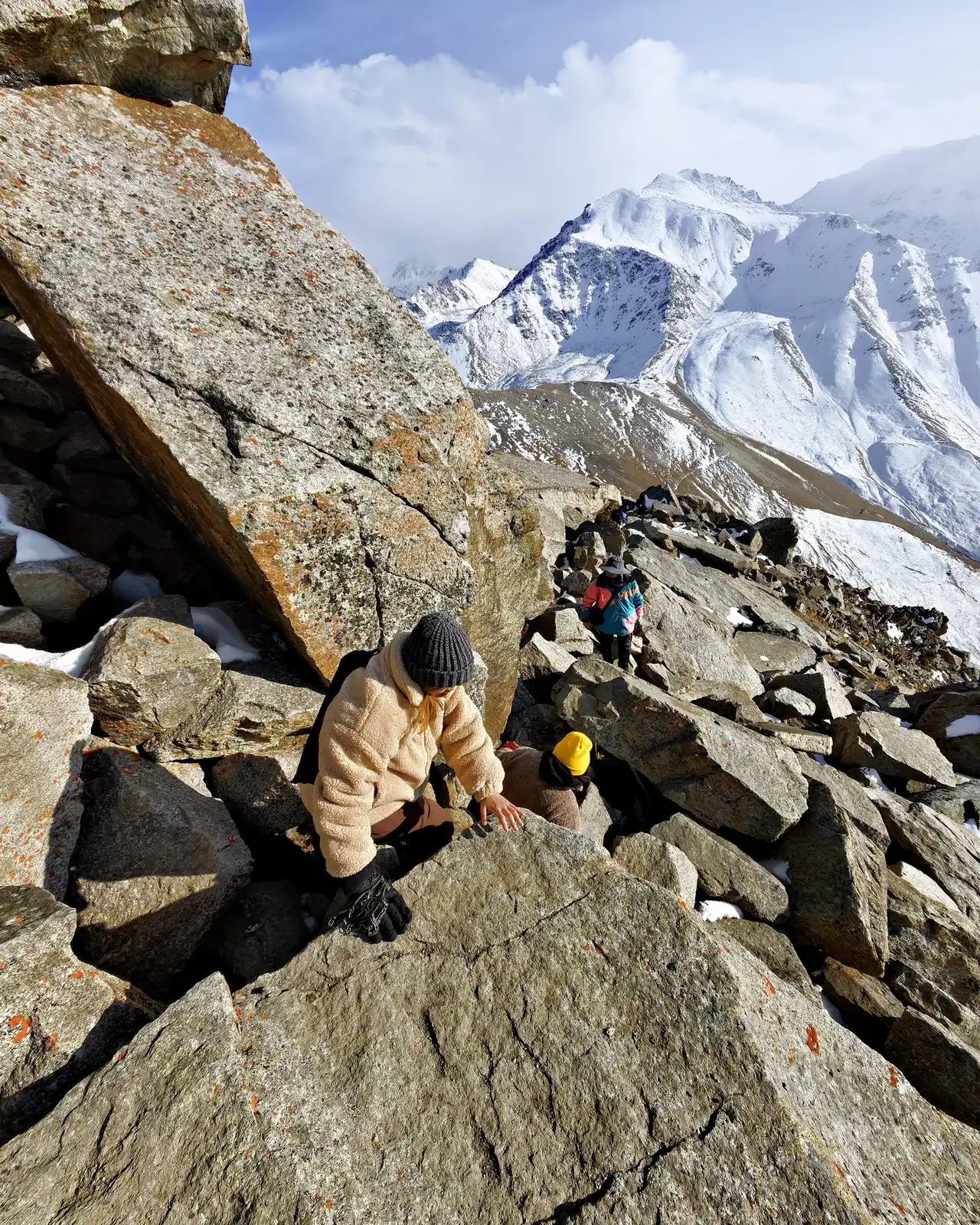
Sherpa Is an Ethnicity, Not a Job Title
Sherpa mountain climbers is a phrase that conflates two different things: a people and a profession. The Sherpa are an ethnic group with their own language, religion, and history. They migrated from the eastern Tibetan Plateau into the Solukhumbu region of Nepal — the valleys beneath Everest — several centuries ago. They speak a Tibeto-Burman language, practise Tibetan Buddhism, and maintain distinct cultural traditions around monasteries, prayer flags, and sacred mountains. There are Sherpa communities in Nepal, and smaller populations in India (Darjeeling, Sikkim) and Bhutan. A person can be ethnically Sherpa and never have climbed a mountain, carried a load, or worked on an expedition.
Sherpa as occupation is a different matter. In the mountaineering world, “Sherpa” has become a role term for a high-altitude worker who carries loads, fixes ropes, and supports expeditions. Most people in this role are ethnically Sherpa, but not all. Since the term has become synonymous with high-altitude expertise, some non-Sherpa Nepali climbers have adopted it professionally. This has caused tension within the Sherpa community, which points out that being Sherpa is not a job title you can simply take on.
A related term is Sardar (or Sirdar). A Sardar is a Sherpa who manages the other Sherpas on an expedition: assigning responsibilities, hiring porters, purchasing food, and making route decisions. The Sardar is the senior Sherpa on the team. Not all Sherpas become Sardars. The normal progression usually involves starting as a porter, working up to kitchen assistant, then assistant guide, and finally Sardar.
Travel connection: When you book an Everest trek or expedition, you will be supported by a team that may include Sherpa guides, Sherpa kitchen staff, Sherpa climbing Sherpas, and porters who are not ethnically Sherpa. Understanding the roles helps you interact respectfully with everyone on the team.
Why Sherpas Became Central to Himalayan Mountaineering
Sherpa mountain climbers became central to Himalayan mountaineering for reasons that are historical and economic, not just physiological. The story begins in the nineteenth century, when Sherpa men from the Solukhumbu began migrating seasonally to Darjeeling in India in search of wage labour. They worked on road-building projects, survey expeditions, and eventually climbing expeditions. By 1907, British climbers were already noting that Sherpas seemed particularly well suited to the support work involved in mountain exploration.
When the first British Everest expeditions arrived in the 1920s, they recruited heavily from the Sherpa communities of Darjeeling and the Khumbu. Sherpas carried loads, set up camps, cooked, and increasingly joined the climbing party itself. Tenzing Norgay’s summit with Edmund Hillary in 1953 cemented the Sherpa role in the global imagination. After 1953, the Everest industry expanded, and Sherpa climbers became the professional backbone of every commercial expedition.
The economic logic is straightforward. Sherpa villages sit at altitudes between 3,000 and 4,500 metres. Sherpa children grow up walking steep terrain and sleeping at altitude. By the time they are adults, their bodies are acclimatized in ways that lowland climbers take weeks to approximate. For Sherpa families, expedition work offers wages that are difficult to match in farming or local tourism. The result is a professional community with deep experience, accumulated over generations, in the specific skills of Himalayan climbing.
Travel connection: When you see a Sherpa guide on the trail, you are seeing someone whose family has probably been involved in mountain work for generations. The knowledge they carry — about weather, snow conditions, route-finding, and altitude — is inherited professional expertise.
What Climbing Sherpas Actually Do on an Expedition
Sherpa mountain climbers do far more than carry bags. On a modern Everest expedition, the Sherpa team performs a range of tasks that make the climb possible for clients. The role is best understood through the distinct positions that Sherpas hold during an expedition.
Sardar (team leader). The Sardar selects and organises the team, hires porters, purchases food, and makes route decisions. The Sardar earns more than any other team member, partly through a commission from the climbing Sherpas and porters they recruit.
Climbing Sherpa (team guide). The climbing Sherpa opens the route, fixes ropes, sets up camps, and prepares the way for the teams. They also hold responsibility for evacuating expedition members in an emergency. Rope-fixing is one of the most dangerous tasks on the mountain, because the team cannot climb the face until the rope-fixing is complete.
Kitchen boy. The kitchen boy accompanies the team to base camp, cooks for them, and waits for the team members until their return. Kitchen staff and porters reach base camp ahead of the climbing team, transporting packaged equipment and food.
Porter. A porter carries the luggage of the team members, accompanies them to base camp, and waits for their return. Porters do not go above base camp, though many aspire to one day be recognised as climbing Sherpas.
Travel connection: The price you pay for an Everest expedition includes the cost of this work. Sherpa wages, equipment, insurance, and logistics are a significant part of every commercial expedition budget.
High-Altitude Adaptation: What the Science Actually Says
Sherpa mountain climbers are often described as “superhuman” at altitude, and there is real science behind the observation. Sherpas and other Tibetan highland populations have evolved physiological adaptations that allow them to function more efficiently in low-oxygen environments than lowland populations. But the science is more nuanced than the popular narrative suggests.
Genetic adaptations. Research has identified specific genetic variants in Sherpa populations associated with high-altitude tolerance. The genes EPAS1 and EGLN1 are the most studied. A 2026 study published in the Annals of Human Genetics found that Sherpa highlanders carrying adaptive variants of these genes show reduced mRNA expression of both genes and a blunted erythropoietin (EPO) response. In other words, Sherpas do not overproduce red blood cells the way lowlanders do at altitude. This is counterintuitive but protective: excessive red blood cell production thickens the blood and increases the risk of clotting and chronic mountain sickness. Instead of overreacting to hypoxia, Sherpa bodies regulate it more efficiently.
Energy efficiency. Research from the University of Cambridge found that Sherpas are extremely efficient at producing energy in low-oxygen conditions. Their muscles use oxygen more efficiently and rely less on anaerobic metabolism than lowlanders. This translates into better endurance and less fatigue at altitude.
What this does not mean. Sherpas are not immune to altitude sickness. They can and do develop acute mountain sickness, high-altitude pulmonary edema, and high-altitude cerebral edema. The adaptations reduce risk and improve performance, but they do not eliminate the dangers of extreme altitude. Sherpa climbers also carry heavy loads, spend longer at high altitude, and undertake more dangerous tasks than most clients, which increases their overall exposure to risk.
Travel connection: The science of Sherpa adaptation is fascinating, but the practical takeaway for trekkers is simple: altitude affects everyone differently, and no one — Sherpa or otherwise — is immune. Acclimatize properly, respect the mountain, and trust your guide’s judgment.
Famous Sherpa Mountain Climbers and Their Achievements
Sherpa mountain climbers have produced some of the most remarkable mountaineering achievements in history. The individuals below are not a “top 10” list. They are figures whose contributions changed the sport, set records, or broke barriers.
Tenzing Norgay Sherpa (1914–1986)
Tenzing Norgay reached the summit of Everest with Edmund Hillary on 29 May 1953. He was already one of the most experienced Himalayan climbers of his generation, having served on multiple Everest expeditions and reached within 150 feet of the summit on a Swiss expedition the previous year. His summit with Hillary was the first confirmed ascent of Everest.
Nawang Gombu Sherpa (1936–2011)
Nawang Gombu was Tenzing Norgay’s nephew and the youngest member of the 1953 Everest expedition. In 1963, he reached the summit with Jim Whittaker, becoming the first person to climb Everest twice — a record that stood for nearly 20 years. Gombu went on to a long career in mountaineering and training.
Apa Sherpa (born 1960)
Apa Sherpa held the record for the most Everest summits — 21 — from 2011 until 2018, when Kami Rita Sherpa surpassed him. He climbed Everest for the first time in 1990 and summited every year except 1996 and 2001. Apa has worked extensively on environmental issues, using his expeditions to raise awareness about climate change in the Himalayas.
Pasang Lhamu Sherpa (1961–1993)
Pasang Lhamu Sherpa became the first Nepali woman to summit Everest on 22 April 1993. She died on the descent, at the age of 32. Her achievement inspired a generation of Nepali women and is commemorated annually in Nepal.
Lhakpa Sherpa (born 1973)
Lhakpa Sherpa holds the women’s record for the most Everest summits. She reached the summit for the first time in 2000, becoming the first Nepali woman to summit and return alive. She has now summited 11 times, most recently on 17 May 2026. She completed eight of her climbs from the northern side in Tibet and three from the southern route in Nepal.
Kami Rita Sherpa (born 1970)
Kami Rita Sherpa is the most prolific Everest climber in history. He reached the summit for the first time in 1994 at the age of 24 and has now summited 32 times, most recently on 17 May 2026. Born in Thame village in Solukhumbu, he followed his father into the profession of high-altitude guiding. He has held the world record for the most Everest ascents since May 2018. After his 32nd summit, he called for limits on the number of climbers on Everest.
Dawa Yangzum Sherpa
Dawa Yangzum Sherpa became the first Nepali woman to summit all 14 of the world’s eight-thousanders. She completed the feat in 2024. She is also an IFMGA-certified guide.
Nima Rinji Sherpa (born 2006)
Nima Rinji Sherpa became the youngest person to summit all 14 eight-thousanders in October 2024, at the age of 18. His achievement has been framed as a statement about the younger generation of Sherpa climbers: they are not just guides; they are athletes and record-setters in their own right.
Travel connection: These climbers are not just historical figures. Many are active guides who lead expeditions today. If you book a high-altitude trek in Nepal, there is a chance you will be guided by someone trained by or connected to this professional lineage.
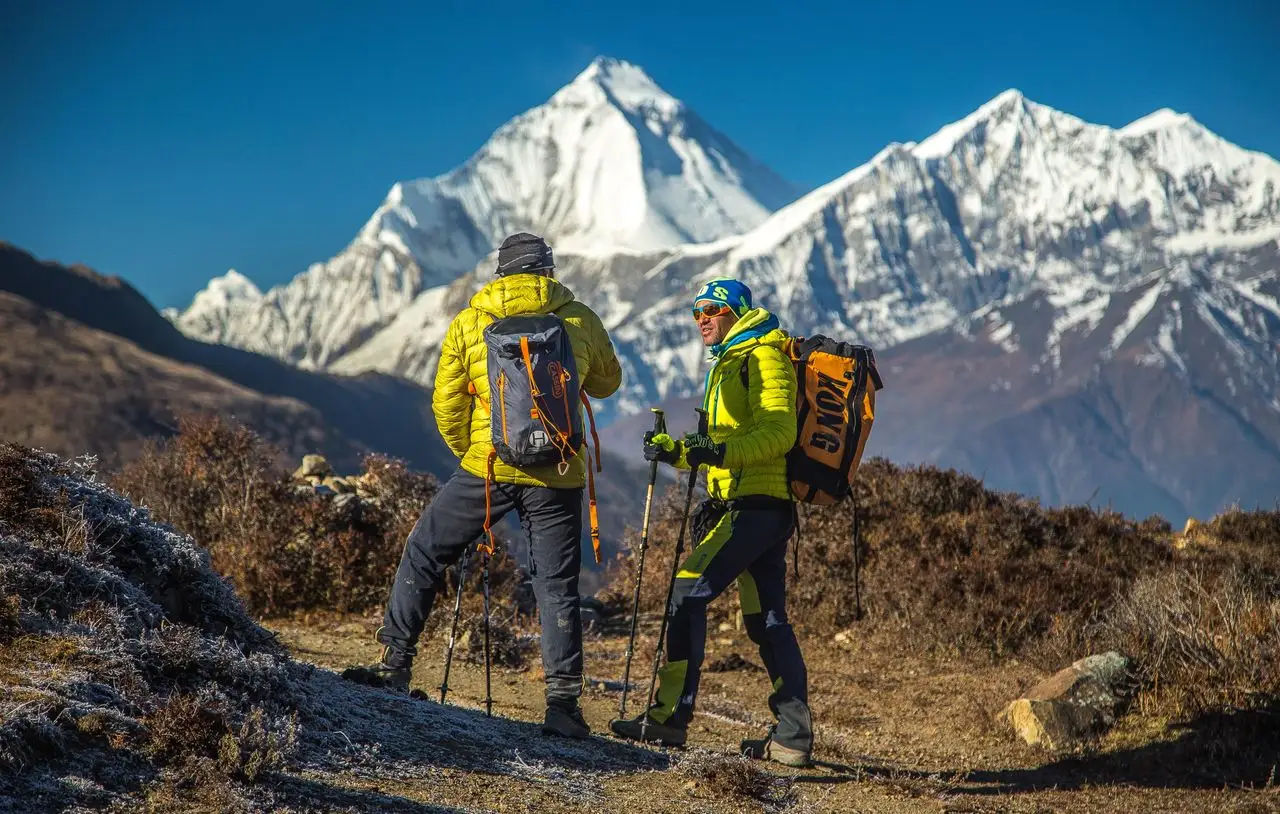
Sherpa Training and Professional Skills
Sherpa mountain climbers are not born with their skills. They are trained, and the training infrastructure has improved dramatically over the past two decades. Before the Khumbu Climbing Center (KCC) existed, most Sherpas who worked on Everest had little to no formal climbing training.
The Khumbu Climbing Center was founded in 2003 in Phortse, a village a few days’ trek from Lukla. It offers eight- and ten-day courses in winter, the low season for tourism, when most Sherpa guides are free. The curriculum covers technical climbing skills, belay techniques, crevasse rescue, English language, mountain safety, and wilderness first aid. Since its first course, more than 700 Nepali students have attended. As of 2024, the KCC is completely operated by Nepali locals.
Other training pathways. The Nepal Mountaineering Association runs training programmes, and some Sherpas pursue international certifications such as the IFMGA guide credential. Experienced Sherpas often mentor younger climbers on expeditions, passing on route knowledge, client management skills, and judgement about mountain conditions.
Skills that matter. A professional Sherpa climber needs technical climbing ability, but that is only part of the job. They need to read snow and ice conditions, manage ropes and fixed lines, assess avalanche risk, communicate with clients who may be struggling, and make decisions under pressure. The best Sherpas are not just strong climbers; they are leaders.
Travel connection: When you hire a guided expedition, you are paying for training, experience, and judgement. The KCC and similar programmes have made Sherpa guides safer and more professional, which benefits everyone on the mountain.
Everest Risks: What Sherpas Face
Sherpa mountain climbers face risks that most clients never see. The death toll on Everest each season includes a disproportionate number of Sherpas, and the reasons are structural.
Icefall exposure. The Khumbu Icefall is the most dangerous section of the South Col route. It is a moving glacier, and seracs — blocks of ice — can collapse without warning. Sherpas pass through the Icefall many more times than clients, because they carry loads, fix ropes, and maintain the route. In 2026, a giant serac above the glacier prevented the Icefall Doctors from working for about two weeks, delaying the entire season and compressing the summit window.
Load carrying at altitude. Sherpas carry heavy loads to high camps, often above 7,000 metres. This work is physically exhausting and increases exposure to altitude-related illness.
Rescue responsibilities. When something goes wrong, Sherpas are often the first responders. They perform high-altitude rescues, assist with evacuations, and put themselves at risk to help others.
2026 season. The 2026 spring season on Everest saw multiple Sherpa deaths, including Phura Gyaljen Sherpa, a 21-year-old guide who fell into a crevasse near Camp III. The tragedy was the third death in two weeks on Everest and brought the total death toll in Nepal’s Himalaya for the season to five. These deaths have renewed debate about safety standards, workload, and the ethics of the commercial expedition industry.
Insurance and compensation. Sherpa guides typically have insurance, but the payouts are often far lower than what a Western climber would receive. A Sherpa death on Everest may result in compensation in the range of USD 15,000, which critics argue is inadequate given the risks.
Travel connection: If you are planning an Everest expedition, ask your agency about their safety protocols, insurance coverage for Sherpa staff, and workload management. The way a company treats its Sherpa team is a reflection of its overall standards.
Sherpa Culture and the Khumbu Region
Sherpa mountain climbers come from communities with a rich cultural and religious life that is distinct from the rest of Nepal. The Khumbu Valley, the heartland of Sherpa culture, is home to monasteries, mani walls, and prayer flags that mark the landscape as sacred.
Buddhism. Sherpa religion is Tibetan Buddhism, blended with older animist and shamanic traditions. The monasteries at Tengboche, Pangboche, and Thame are important religious centres. The first Sherpa monastery was established in 1916 at Tengboche, and several monasteries and nunneries followed in the Solu-Khumbu region. Before climbing, Sherpas and clients often receive blessings from lamas. The mountains themselves are considered sacred, and the Sherpa approach to climbing reflects that reverence.
Village life. Sherpa villages are agricultural settlements, with terraced fields of barley, potatoes, and buckwheat. Most families combine farming with tourism work — trekking, climbing, lodge ownership, and portering. The seasonal rhythm of the Khumbu is shaped by the trekking and climbing calendar.
Festivals. Sherpa communities celebrate festivals such as Mani Rimdu, a nineteen-day event at Tengboche Monastery that includes masked dances and blessings. Losar, the Tibetan New Year, is also widely celebrated.
Change and continuity. The Khumbu has changed dramatically in the past fifty years. Roads, schools, health clinics, and tourism infrastructure have transformed daily life. Yet Sherpa culture remains resilient. The monasteries are active, the language is spoken, and the connection between the mountains and the community remains central to Sherpa identity.
Travel connection: Trekking in the Khumbu is not just a physical journey. It is an encounter with a living culture. Respect the monasteries, learn a few words of Sherpa or Nepali, and take time to understand the communities you pass through.
The Modern Sherpa Climbing Industry in 2026
Sherpa mountain climbers are working in a changing industry. The 2026 Everest season saw 492 climbing permits issued to climbers from 55 nations, the highest number ever. Because China closed the north side of Everest, all climbers crowded onto the Nepali south route, creating bottlenecks and safety concerns. Kami Rita Sherpa, after his 32nd summit, called for limits on the number of climbers and warned that climate change is making the mountain less predictable.
Climate change. Sherpa guides report that the Khumbu Icefall route has shifted dramatically. A veteran guide noted that five or six years ago the route used to open from the Rolang side, but now it opens from the Nuptse side — a direct consequence of melting ice and destabilising glaciers. A French-Nepali team has been working on a new route that would avoid the Khumbu Icefall entirely, using via ferrata on rock walls instead of glacier travel.
Guide shortage. The risks of the work, combined with the availability of safer jobs in tourism and overseas employment, have made it harder for agencies to recruit and retain senior Sherpas. One Sherpa guide told the Himalayan Times that “if nothing changes, who will fix the ropes on Everest?”.
Recognition and control. At the same time, Sherpa climbers are gaining more recognition and more control. The Khumbu Climbing Center is run by Nepalis. Sherpa-owned trekking companies are increasingly prominent. And a younger generation of Sherpa climbers — people like Nima Rinji Sherpa — are asserting that they are not just support staff but athletes and professionals in their own right.
Travel connection: When you plan an Everest trek or expedition with a company like Merriment Treks, you are participating in an industry that is changing. Ask how your trip supports Sherpa guides and workers. Ask about training, insurance, and working conditions. The best companies are transparent about these issues.
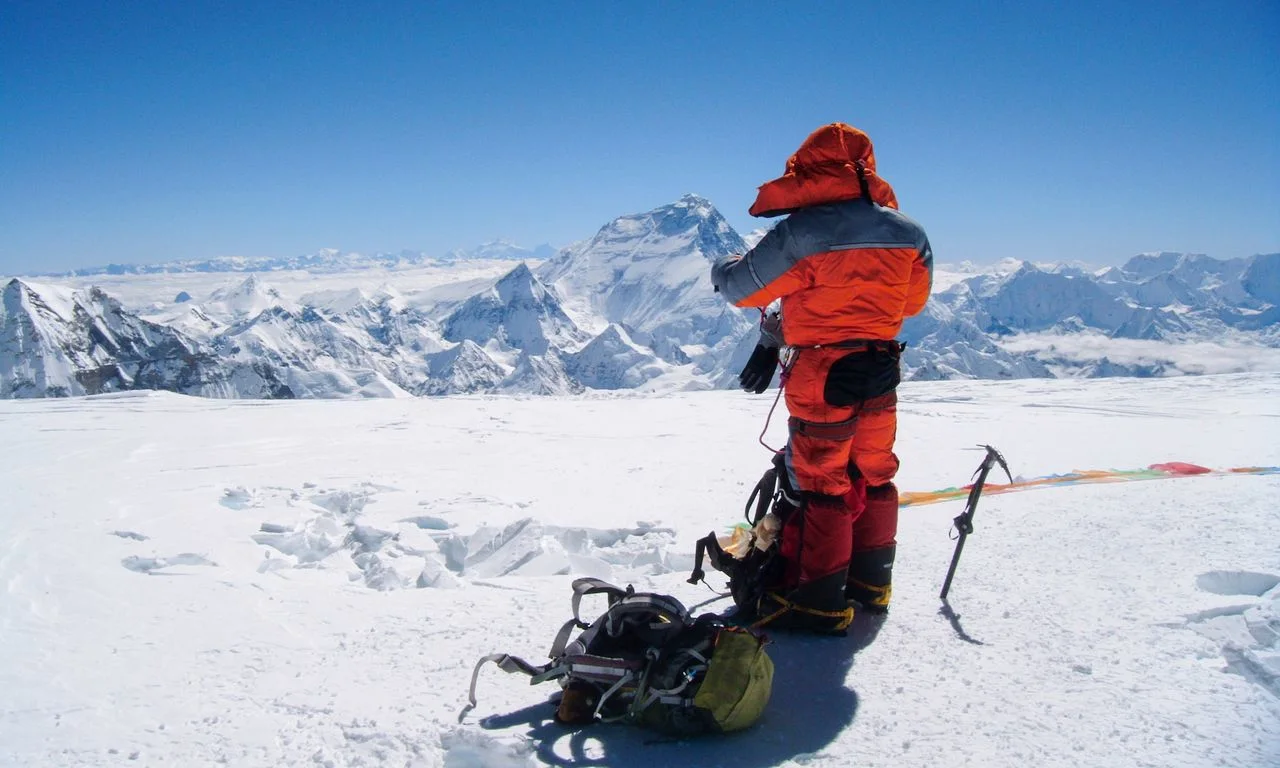
Merriment Treks: Planning Your Himalayan Adventure
Sherpa mountain climbers are the reason Himalayan mountaineering works. At Merriment Treks, we work with experienced Sherpa guides and high-altitude workers on treks and expeditions across the Everest region. We believe that planning a Himalayan trip means understanding the people who make it possible. If you are considering an Everest Base Camp trek, a Three Passes adventure, or a high-altitude expedition, we are happy to discuss routes, seasons, acclimatization, and what to expect from your Sherpa team. Contact us for route-specific planning support.
Frequently Asked Questions
1. Are Sherpas genetically better climbers?
Sherpas have genetic adaptations that improve oxygen efficiency and altitude tolerance, but “better climbers” is an oversimplification. They also have generations of experience, training, and cultural knowledge. Genetics is part of the picture, not the whole story.
2. Are Sherpas immune to altitude sickness?
No. Sherpas can and do develop acute mountain sickness, HAPE, and HACE. Their adaptations reduce risk, but they are not immune, especially when carrying heavy loads and spending long periods at extreme altitude.
3. What is the difference between a Sherpa and a porter?
Sherpa is an ethnicity. A porter is a job. Many porters are ethnically Sherpa, but many are not. Climbing Sherpas work at higher altitudes and perform more technical tasks than general porters.
4. Who was the first Sherpa to climb Everest?
Tenzing Norgay reached the summit with Edmund Hillary on 29 May 1953. Nawang Gombu Sherpa was the first person to climb Everest twice, in 1963.
5. How many times has Kami Rita Sherpa climbed Everest?
Kami Rita Sherpa has summited Everest 32 times, most recently on 17 May 2026. He holds the world record for the most Everest ascents.
6. Who holds the women’s Everest record?
Lhakpa Sherpa holds the women’s record with 11 summits, most recently on 17 May 2026.
7. How are Sherpa climbers trained?
Many train at the Khumbu Climbing Center in Phortse, which offers courses in technical climbing, rescue, English, and mountain safety. Others learn through mentorship on expeditions.
8. What do climbing Sherpas do?
They fix ropes, carry loads, set up camps, guide clients, and perform rescues. They are the backbone of every commercial Everest expedition.
9. How dangerous is Sherpa climbing work?
Sherpas face significant risks, especially in the Khumbu Icefall. They pass through dangerous sections more often than clients and often perform high-risk rescue work. Historically, Sherpas have accounted for a disproportionate share of Everest deaths.
10. What is a Sardar?
A Sardar is a senior Sherpa who manages the Sherpa team on an expedition, assigns responsibilities, hires porters, and makes route decisions.
11. Are all Nepali climbers Sherpas?
No. Nepal has many ethnic groups, and climbers come from various backgrounds. Sherpa is one ethnicity among many.
12. What is the Khumbu Climbing Center?
The KCC is a training centre in Phortse, Nepal, founded in 2003. It has trained more than 700 Nepali climbers in technical skills, rescue, and safety.
13. How much do Sherpa guides earn?
Sherpa guide wages vary by experience and expedition. Senior guides on Everest can earn several thousand dollars per season, but the work is seasonal and dangerous. Insurance payouts for deaths are often criticised as inadequate.
14. What is the future of Sherpa mountaineering?
The industry faces challenges including guide shortages, climate change, and crowding on Everest. At the same time, Sherpa climbers are gaining more recognition and control, and younger climbers are pushing the boundaries of what is possible.
15. Can I trek in Nepal without a Sherpa guide?
Yes, in non-restricted areas you can trek independently. However, hiring a guide is recommended for safety, navigation, and cultural understanding. In restricted areas, a licensed guide is mandatory.