Bungy in Nepal
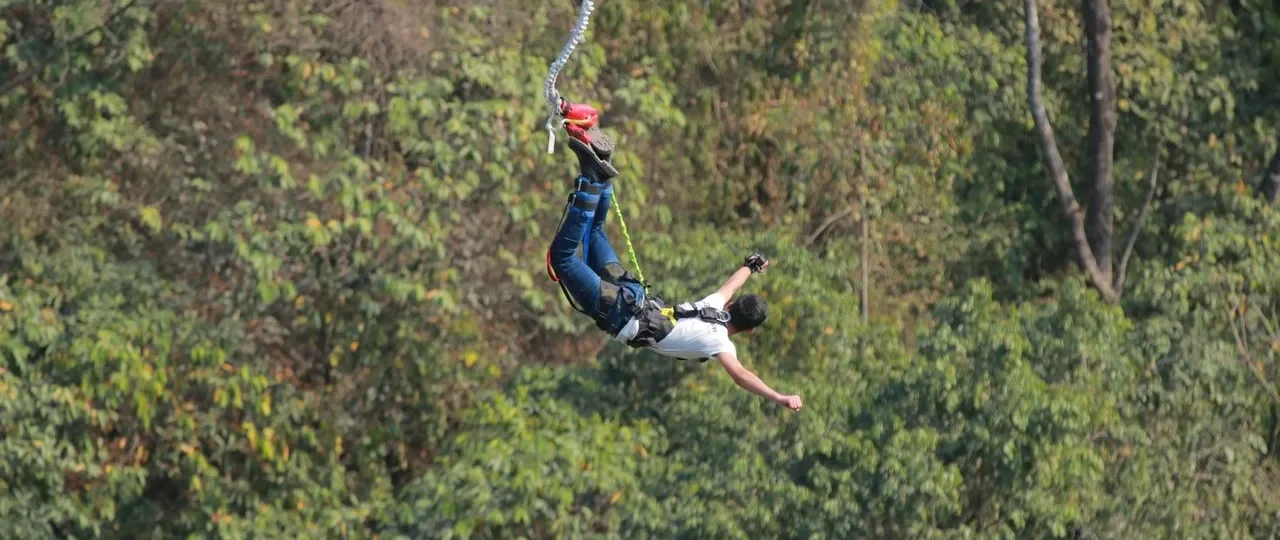
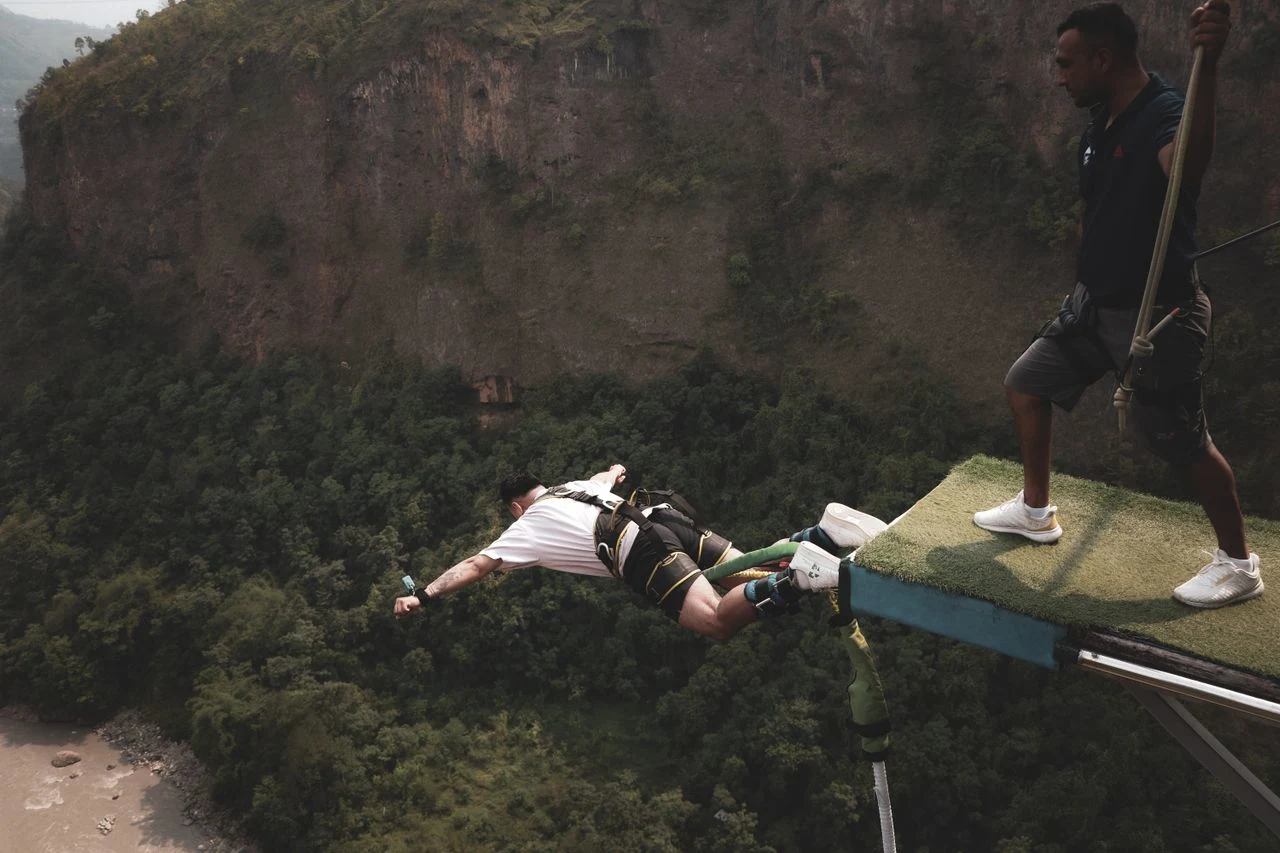
Standing on a steel suspension bridge 160 metres above a roaring Himalayan river, you have about four seconds of freefall ahead of you. That is what bungee jumping in Nepal looks like — not a crane in a parking lot, but a plunge into a natural gorge with forested canyon walls and glacial water below. Nepal has quietly become one of the more interesting bungee destinations in Asia, and the three main sites — Bhote Koshi, Kushma, and Pokhara — each offer a different version of the experience.
This guide breaks down what each site actually offers, what you need to know before booking, and how to decide which one fits your itinerary. It is written for travellers who want real answers, not marketing copy.
The Three Bungee Sites That Matter
Nepal has three established commercial bungee operations that international travellers can book. A fourth site near Everest, called Everest Bungee at Hillary Bridge, opened briefly but was shut down following a licensing dispute and is not reliably operating as of 2026.
Bhote Koshi (The Last Resort) — A 160-metre bridge jump over the Bhote Koshi River gorge, about 3–4 hours from Kathmandu near the Tibet border. This is Nepal’s original bungee site, designed by New Zealand consultants and operating since the late 1990s.
Kushma (The Cliff) — A 228-metre jump from a suspension bridge over the Kali Gandaki River, about 2–3 hours from Pokhara. It opened in 2020 and is marketed as the world’s second-highest commercial bungee jump.
Pokhara/Hemja (HighGround Adventures) — A 70-metre tower jump about 20 minutes from Pokhara Lakeside. This is Nepal’s only tower bungee and the most accessible option for beginners.
What Changed in 2025: Nepal’s New Safety Regulations
In July 2025, the Government of Nepal implemented the Adventure Sport Bungee Operation Standards, 2078 under the Tourism Act, 2035. This is the first time bungee jumping has been comprehensively regulated at the national level, and it affects anyone planning a jump.
The standards set a national baseline:
-
Age: Participants must be between 16 and 70 years old
-
Weight: Participants must weigh between 40 kg and 130 kg
-
Health screening: Operators must conduct pre-jump health checks. Individuals with heart disease, high blood pressure, epilepsy, or who are pregnant are prohibited
-
Jump masters: Licensed jump masters with at least five years of experience and international-level training are required
-
Equipment: Bungee cords must be of international quality and retired after 500–700 jumps or within six months, whichever comes first. Harnesses and ropes must be stored in temperature-controlled environments
-
Licensing: Operators must register with the Department of Tourism and submit a bank guarantee of NPR 10 lakh (1,000,000)
-
Pricing: The maximum price for a single jump has been capped at NPR 6,000, with discounts for repeat jumps on the same day
In May 2026, the Department of Tourism issued a notice requiring all adventure operators, including bungee jumping, to obtain proper permits within 30 days or face legal action under the Tourism Act 2035. This means the regulatory environment is actively being enforced, and operators are under pressure to comply.
What this means for you: The national standards set the floor. Individual operators may have stricter requirements. Always confirm the specific operator’s current rules before booking.
Bhote Koshi Bungee (The Last Resort): Nepal’s Original Jump
The Last Resort sits on the Araniko Highway, about 100 km northeast of Kathmandu and 12 km from the Tibet border. The jump is from a 166-metre steel suspension bridge designed specifically for bungee jumping with a 4x safety factor and a loading capacity of 41,500 kg. The drop is 160 metres into the Bhote Koshi River gorge.
Key details:
-
Height: 160 metres (525 feet)
-
Location: Sindhupalchok district, 3–4 hours from Kathmandu
-
Jump type: Bridge jump over a natural river gorge
-
Operator: The Last Resort
-
Operator-specific eligibility: Minimum age 13 (under 18 requires parental consent); weight 35–125 kg (some sources cite 35–120 kg or 40–120 kg — confirm at booking)
-
Freefall: Approximately 4–5 seconds
The setting is what makes Bhote Koshi distinctive. The gorge is narrow — the river runs grey-green and loud far below, and the canyon walls on both sides are dense jungle. The bridge itself is Nepal’s first and only privately owned bridge; before its construction, locals walked five hours to cross the river gorge.
Afternoon gusts can cancel jumps, so morning slots are safer. The Last Resort also operates canyon swings and rafting on the same stretch of river, making it possible to combine activities.
Who it suits: Travellers based in Kathmandu who want a full-day adventure; anyone wanting the original Nepal bungee experience; those who prefer a natural gorge setting over a tower.
Who should consider alternatives: Travellers based in Pokhara (Kushma is closer); anyone wanting the highest possible jump (Kushma is 228m); beginners who want a shorter, lower-stakes introduction (Pokhara tower).
Kushma Bungee (The Cliff): The Highest Jump in Nepal
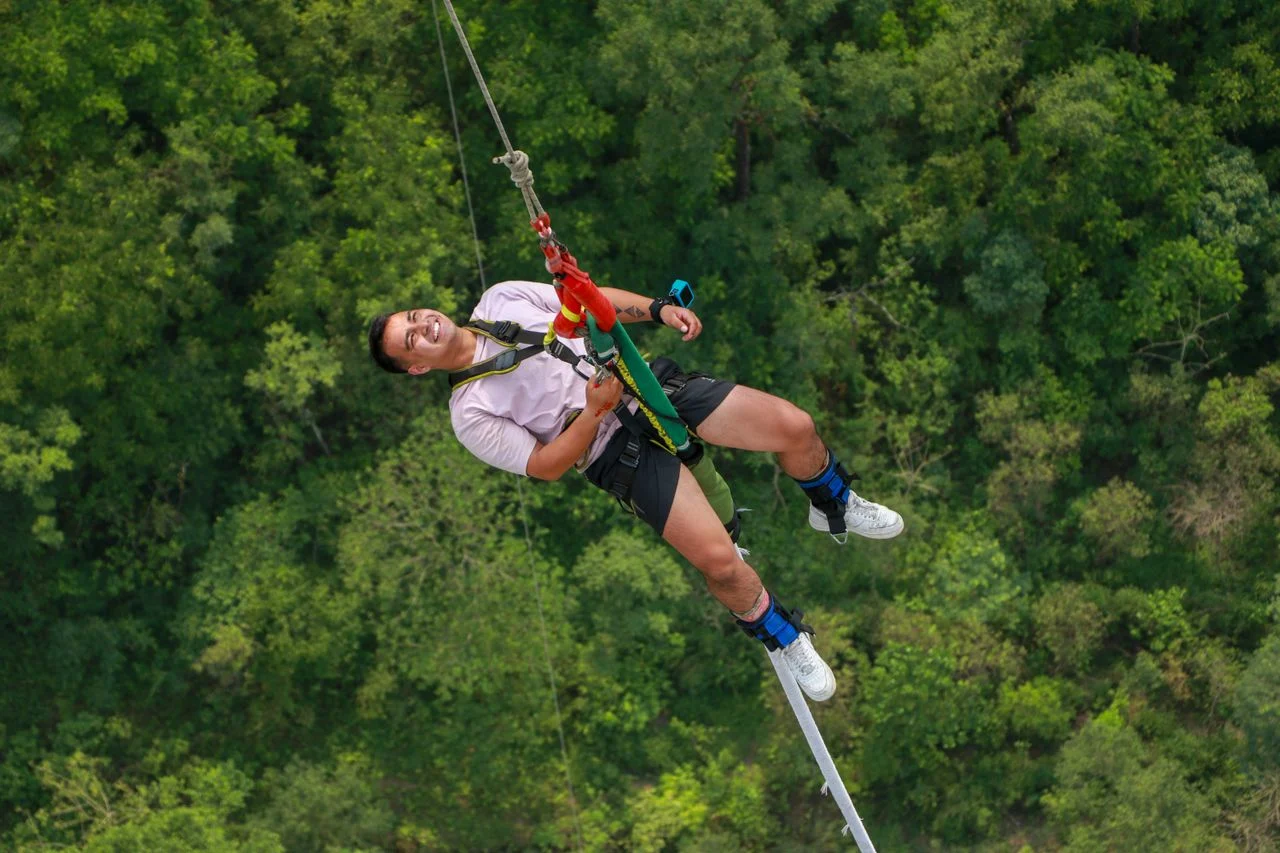
The Cliff at Kushma operates from a suspension bridge connecting Kushma in Parbat district with Balewa in Baglung district. The bridge spans roughly 520 metres across the Kali Gandaki River gorge. The bungee platform sits 228 metres above the river — the highest commercial bungee jump in Nepal and the second-highest in the world.
Key details:
-
Height: 228 metres (748 feet)
-
Location: Kushma, Parbat district, 2–3 hours from Pokhara
-
Jump type: Bridge jump over the Kali Gandaki gorge
-
Operator: The Cliff Nepal
-
Operator-specific eligibility (bungee): Minimum weight 45 kg, maximum 100 kg; minimum age 13 (under 18 requires parental consent)
-
Operator-specific eligibility (swing): Minimum weight 40 kg, maximum 145 kg (combined weight for couple swing)
-
Freefall: Approximately 4.5 seconds
The Cliff also operates a canyon swing, sky cycle, and giant swing from the same bridge. The setting is more open than Bhote Koshi — the Kali Gandaki gorge is vast, and the views stretch toward Dhaulagiri and Annapurna on clear days. The Cliff operates a luxury resort on site with glamping tents, so you can stay overnight.
Who it suits: Travellers based in Pokhara; anyone wanting the highest bungee jump in Nepal; adventure seekers who want to combine bungee with a swing or sky cycle.
Who should consider alternatives: Travellers based in Kathmandu (Bhote Koshi is closer); anyone outside the 45–100 kg range for bungee (the swing has a wider range of 40–145 kg); beginners who may find 228 metres overwhelming.
Pokhara Tower Bungee (HighGround Adventures): The Beginner-Friendly Option
HighGround Adventures operates Nepal’s first and only tower bungee at Hemja, about 20 minutes from Pokhara Lakeside. The jump is approximately 70 metres from a cantilevered tower platform.
Key details:
-
Height: Approximately 70 metres (some sources cite 75–80 metres)
-
Location: Hemja, Pokhara
-
Jump type: Tower jump
-
Operator: HighGround Adventures Nepal Pvt. Ltd.
-
Operator-specific eligibility: Minimum age 13; weight 35–125 kg (some sources cite 35–110 kg — confirm at booking)
-
Freefall: Approximately 3 seconds
-
Additional activities: Zipline, SkyScreamer swing
The tower bungee is the most accessible option. You can complete the activity and return to Lakeside within a few hours. It is popular with first-time jumpers, couples, and travellers who want the experience without committing to a full-day excursion. A certificate of completion is provided, and photos/videos are available for purchase.
Who it suits: Beginners; travellers short on time; anyone based in Pokhara who wants a quick adrenaline activity; families with teenagers.
Who should consider alternatives: Anyone wanting a higher jump or a natural gorge setting; travellers who specifically want the Bhote Koshi or Kushma experience.
Quick Comparison: Bungee Locations in Nepal
| Feature | Bhote Koshi (The Last Resort) | Kushma (The Cliff) | Pokhara (HighGround) |
|---|---|---|---|
| Height | 160 m | 228 m | ~70 m |
| Jump type | Bridge over gorge | Bridge over canyon | Tower |
| Nearest city | Kathmandu (3–4 hrs) | Pokhara (2–3 hrs) | Pokhara (20 min) |
| Operator | The Last Resort | The Cliff Nepal | HighGround Adventures |
| Operator weight limit (bungee) | 35–125 kg (verify) | 45–100 kg | 35–125 kg (verify) |
| Operator age limit | 13+ (under 18 parental consent) | 13+ (under 18 parental consent) | 13+ |
| Best for | Original gorge jump; Kathmandu-based travellers | Highest jump; Pokhara-based travellers | Beginners; convenience |
| Freefall | ~4–5 seconds | ~4.5 seconds | ~3 seconds |
| Combo activities | Canyoning, rafting | Canyon swing, sky cycle | Zipline, swing |
Operator requirements may be stricter than national standards. Confirm current rules at booking.
What It Costs to Bungee in Nepal
Prices vary significantly by operator, location, nationality, and package inclusions. Nepal has a three-tier pricing structure: Nepali citizens, SAARC nationals, and foreign nationals. The 2025 national standards capped the price for a single jump at NPR 6,000, but operators have historically charged higher rates for foreign tourists, and it is unclear whether the cap is being enforced uniformly.
Typical price ranges (confirm current rates before booking):
| Location | Foreigner Price Range | What’s Typically Included |
|---|---|---|
| Bhote Koshi (The Last Resort) | NPR 12,000–15,000 (~USD 90–115) | Transport, lunch, T-shirt, photos/video |
| Kushma (The Cliff) | NPR 7,500–9,500 (~USD 55–70) | Bungee jump; photos/video may be extra |
| Pokhara (HighGround) | NPR 5,000–8,000 (~USD 37–60) | Bungee jump; photos/video may be included |
Why prices differ:
-
Transport: Bhote Koshi includes a 3–4 hour round-trip transfer from Kathmandu. Kushma requires a 2–3 hour transfer from Pokhara. Pokhara tower bungee requires only a short transfer from Lakeside.
-
Package inclusions: Some operators include photos, video, lunch, and a T-shirt. Others charge separately.
-
Nationality: SAARC nationals and Nepali citizens often pay lower rates.
-
Season: Peak season (October–November, March–April) may have less discounting.
-
Booking channel: Booking through an OTA may cost more than booking directly with the operator.
What to confirm before paying: Current price, what’s included, what’s extra, cancellation policy, and whether transport is included or additional.
Eligibility: Can You Jump?
The 2025 national standards set a baseline: 16–70 years old and 40–130 kg. But individual operators have stricter requirements. This is the part where most online guides are vague, so here is the operator-by-operator breakdown.
National standard (Adventure Sport Bungee Operation Standards, 2078):
-
Age: 16–70
-
Weight: 40–130 kg
-
Medical restrictions: heart disease, epilepsy, high blood pressure, recent surgery, pregnancy, artificial limbs
The Last Resort (Bhote Koshi):
-
Age: 13+ (under 18 requires parental consent)
-
Weight: 35–125 kg (verify — some sources cite 35–120 kg or 40–120 kg)
The Cliff (Kushma):
-
Bungee age: 13+ (under 18 requires written parental consent)
-
Bungee weight: 45–100 kg
-
Swing weight: 40–145 kg (combined for couple swing)
HighGround Adventures (Pokhara):
-
Age: 13+
-
Weight: 35–125 kg (verify — some sources cite 35–110 kg)
Medical restrictions (all operators): Heart disease, epilepsy, high blood pressure, pregnancy, recent surgery, orthopedic problems, neurological conditions, and intoxication are prohibited. Operators require a health declaration before jumping.
If you fall outside an operator’s limits: You may still be able to participate in a swing or tandem activity at some locations. The Cliff’s swing has a wider weight range (40–145 kg) than its bungee (45–100 kg).
What Happens on Jump Day
Exact procedures vary by operator, but here is the general sequence:
-
Arrival and registration — You check in, show ID, and sign a liability waiver.
-
Health declaration — You disclose medical conditions and sign that you meet eligibility requirements.
-
Weight verification — You are weighed. This determines your harness fit and jump order.
-
Safety briefing — Staff explain the jump process, hand signals, and what to expect.
-
Equipment preparation — Harness fitted, ankle straps attached (for bridge jumps).
-
Final checks — Jump master verifies all connections.
-
Move to platform — You walk to the jump point.
-
Jump — You jump on the jump master’s signal.
-
Recovery — Staff retrieve you from the landing zone.
-
Return and collection — You collect photos/video, have lunch (if included), and return.
At Bhote Koshi, the walk back up from the river landing zone takes time. At Kushma, the recovery is from the gorge. At Pokhara, the tower recovery is quicker.
What to Wear and Bring
Wear:
-
Closed-toe shoes with a secure fit (required by operators — no flip-flops, sandals, or slip-on shoes)
-
Comfortable clothing that allows a harness to fit properly
-
Layers (mornings can be cool; afternoons warm)
Bring:
-
Passport or ID (required for registration)
-
Cash for any extras or tips
-
Weather protection (light rain jacket)
Leave behind:
-
Loose items (phones, wallets, keys) — secure them or leave them at the office
-
Jewellery and watches
-
Large bags
Getting There: Transport to Nepal’s Bungee Sites
Kathmandu → Bhote Koshi (The Last Resort):
-
Distance: ~100 km via Araniko Highway
-
Travel time: 3–4 hours (can be longer with traffic or road conditions)
-
Transport: Most operators include round-trip transport in the package. Private jeep is available for an additional cost.
-
Departure: Typically 6:00 AM from Thamel
Pokhara → Kushma (The Cliff):
-
Distance: ~60 km
-
Travel time: 2–3 hours each way
-
Transport: Private vehicle pickup from Pokhara hotels is commonly included. Public bus is possible but slower.
-
Departure: Morning pickup from Lakeside
Pokhara Lakeside → Hemja (HighGround):
-
Distance: ~10 km
-
Travel time: 20–30 minutes
-
Transport: Transfer from the HighGround office in Lakeside is typically included
Travel times are approximate. Road conditions, traffic, and weather can extend them. Do not book a bungee jump on the same day as a flight or a trek departure.
Best Time to Bungee in Nepal
Bungee jumping operates year-round at most sites, but conditions vary.
October–November: Best overall. Clear skies, moderate temperatures, stable weather. Peak season.
March–May: Second-best. Rhododendrons bloom, temperatures are pleasant, but afternoon winds can pick up.
December–February: Cold but often clear. Mornings can be foggy in the valley.
June–September (Monsoon): Not recommended. Bhote Koshi may close due to heavy rain and wind. Roads can be affected by landslides. Leeches are present on trails.
Time of day: Morning jumps are generally calmer. Afternoon gusts can cancel jumps, especially at Bhote Koshi and Kushma. If you have a choice, book a morning slot.
Choosing the Right Bungee Experience
If you want the highest jump: Kushma (228m).
If you want the original Nepal bungee experience: Bhote Koshi (160m, bridge over gorge).
If you’re based in Kathmandu and want a day trip: Bhote Koshi.
If you’re based in Pokhara and want a day trip: Kushma.
If you’re short on time or a first-time jumper: Pokhara tower bungee (70m).
If you want to combine bungee with other activities: Bhote Koshi (rafting, canyoning) or Kushma (canyon swing, sky cycle) or Pokhara (zipline).
If you fall outside standard weight limits: Check operator-specific rules — The Cliff’s swing has a wider range than its bungee.
Booking Checklist: What to Confirm Before You Pay
Before paying for any bungee experience in Nepal, confirm:
-
Operator name and location — Is it The Last Resort, The Cliff, or HighGround? Each has different heights and rules.
-
Current price — For your nationality. Ask what’s included and what’s extra.
-
Date and time — Morning slots are calmer. Peak season fills quickly.
-
Weight requirement — Confirm the operator’s current limit. Do not assume the national standard applies.
-
Age requirement — Confirm minimum age and parental consent rules if applicable.
-
Medical requirements — Ask what conditions are prohibited and whether a health declaration is required.
-
Cancellation policy — What happens if you cancel? What happens if the operator cancels due to weather?
-
Weather policy — What happens if afternoon gusts cancel your slot? Is there a backup?
-
Transportation — Is pickup included? From where? What time?
-
Package inclusions — Photos, video, T-shirt, lunch, certificate?
-
Additional charges — Photos/video, transport upgrades, insurance, tips?
How Merriment Treks Can Help
Merriment Treks arranges adventure activities and travel logistics across Nepal, including bungee jumping at Bhote Koshi, Kushma, and Pokhara. They can help with itinerary planning, transport coordination, and combining a bungee jump with trekking or sightseeing. If you want the logistics handled — transport, booking, timing — their local team can arrange it. This is particularly useful if you’re fitting a bungee jump into a broader Nepal itinerary and want to avoid scheduling conflicts.
Frequently Asked Questions
1. What is the highest bungee jump in Nepal?
Kushma Bungee, operated by The Cliff, is 228 metres — the highest in Nepal and marketed as the world’s second-highest.
2. How much does bungee jumping cost in Nepal?
Prices vary by location and nationality. Foreigner rates typically range from NPR 5,000–15,000 depending on the site and package. Confirm current pricing with the operator.
3. What is the weight limit for bungee jumping in Nepal?
The national standard is 40–130 kg, but operators may be stricter. The Cliff requires 45–100 kg for bungee. The Last Resort allows 35–125 kg. Confirm with your chosen operator.
4. What is the age limit for bungee jumping in Nepal?
National standard is 16–70. Operators may allow younger participants with parental consent. The Last Resort allows 13+; The Cliff requires 13+; HighGround allows 13+.
5. Is bungee jumping safe in Nepal?
Nepal introduced national safety standards in 2025 requiring licensed jump masters, equipment replacement schedules, and insurance. Bungee jumping carries inherent risk. Verify your operator’s licensing and safety procedures before booking.
6. Can beginners do bungee jumping in Nepal?
Yes. No previous experience is required. Staff handle all technical aspects. The Pokhara tower jump (70m) is the most beginner-friendly option.
7. How long does a bungee jump take?
The jump itself is seconds. The full experience — including transport, briefing, and waiting — takes 3–4 hours at Pokhara, 5–7 hours at Kushma, and 8–10 hours at Bhote Koshi.
8. Do I need to book in advance?
Yes. Peak season slots fill quickly. Book at least a few days ahead. Same-day availability is unreliable.
9. What should I wear for bungee jumping in Nepal?
Closed-toe shoes with a secure fit, comfortable clothing, and layers. No loose items or jewellery.
10. Is bungee jumping available in Pokhara?
Yes. HighGround Adventures operates a 70-metre tower bungee about 20 minutes from Pokhara Lakeside.
11. How far is Bhote Koshi from Kathmandu?
Approximately 100 km, a 3–4 hour drive via the Araniko Highway.
12. Can I combine bungee jumping with rafting?
Yes. The Last Resort at Bhote Koshi offers rafting and canyoning on the same river. Kushma offers canyon swing and sky cycle.
13. What happens if the weather cancels my jump?
Policies vary by operator. Some offer rescheduling; others may not refund. Confirm the weather policy before booking.
14. Is there a bungee jump near Everest?
Everest Bungee at Hillary Bridge opened briefly but was shut down following a licensing dispute. It is not reliably operating as of 2026.
15. Can I bungee jump in Nepal during monsoon?
It’s possible but not recommended. Bhote Koshi may close. Roads can be affected by landslides. If you must jump, stick to Pokhara tower bungee and check conditions.
Final Thoughts
Bungee jumping in Nepal is not a generic activity. The three main sites offer genuinely different experiences: a narrow gorge bridge jump at Bhote Koshi, a massive canyon bridge jump at Kushma, and an accessible tower jump at Pokhara. The right choice depends on where you are, how much time you have, and what kind of adrenaline you’re looking for.
Check the operator’s current eligibility rules. Confirm what’s included in the price. Book a morning slot if you can. And if you want the logistics handled — transport, booking, timing — Merriment Treks can arrange it as part of a broader Nepal itinerary.