Most first-time visitors arrive in Kathmandu expecting a transit city — somewhere to sort permits, change money, and fly out to Everest or Pokhara the next morning. What they find instead is a valley that has been continuously inhabited for over two thousand years, layered with many Kathmandu tour places to visit like seven UNESCO World Heritage Sites, dozens of living temples where ritual and daily life happen in the same breath, medieval squares that survived both monarchy and earthquake, and a street culture that genuinely cannot be found anywhere else in South Asia.
Three days in Kathmandu, done thoughtfully, can be one of the most disorienting and memorable experiences of any Nepal trip. This guide covers every significant attraction in and around the valley — what each one actually is, what to expect when you’re there, the 2026 entry fees, practical visit tips, and the order that makes the most geographic sense so you’re not bouncing back and forth across a city with unpredictable traffic. There’s also a section on the hidden and undervisited places that most itineraries skip entirely.
Start here, and by the time you leave, you’ll understand why people who come to Kathmandu for two days often end up staying for five.
Understanding the Kathmandu Valley
Before listing attractions, it helps to understand that “Kathmandu” is technically three cities sharing one valley: Kathmandu itself (the capital), Patan (also called Lalitpur), and Bhaktapur. Each has its own Durbar Square, its own distinct character, and its own architectural tradition. The valley’s seven UNESCO World Heritage Sites are distributed across all three, plus the outlying temple complexes of Changu Narayan and Swayambhunath.
The practical implication: a Kathmandu sightseeing itinerary isn’t just about one city. It’s about moving between these three urban centers and the sacred sites that sit between them. Taxis, hired cars, and three-wheeled tempos connect everything — Patan is about 20 minutes from Thamel, Bhaktapur roughly 45 minutes to an hour depending on traffic. Most travelers base themselves in Thamel, the central tourist neighborhood, and move outward from there.
Boudhanath Stupa
If you visit only one place in Kathmandu, make it Boudhanath. That’s not marketing language — it’s a reflection of how many travelers, including those who’ve visited extensively across Asia, describe their experience here as something genuinely without comparison.
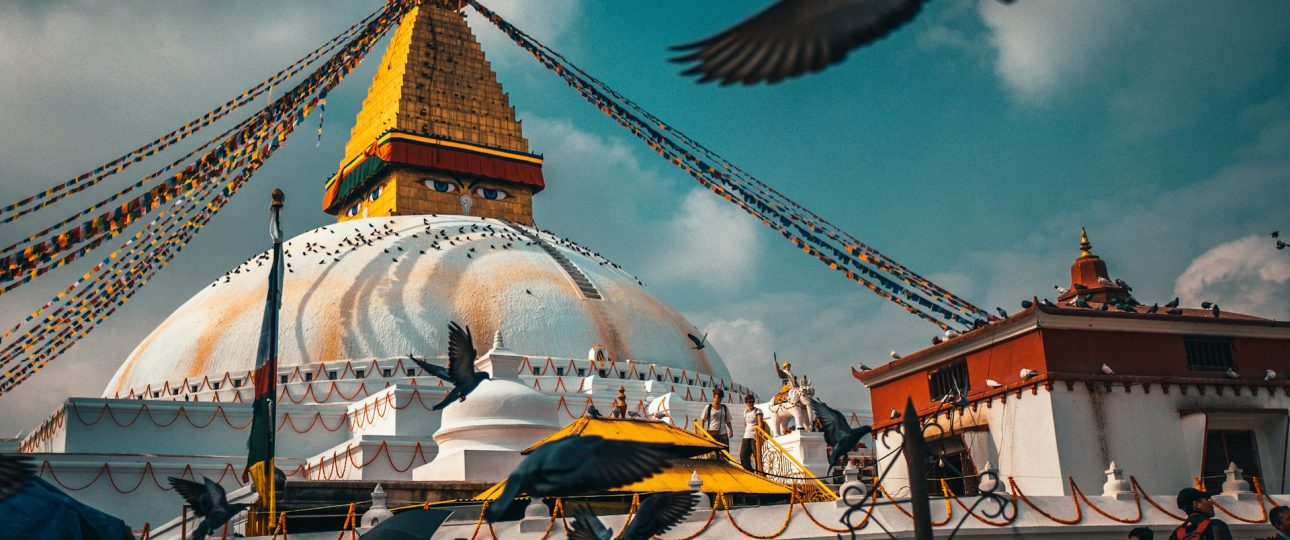
- The stupa is immense — one of the largest spherical stupas in Asia — and the scale of it doesn’t fully register until you’re standing at its base looking up at the white dome rising perhaps 36 meters above the courtyard, surmounted by a gilded tower with the all-seeing eyes of Buddha painted on each face, watching every direction simultaneously. Around the base, hundreds of prayer wheels line the circumference, each engraved with the mantra Om Mani Padme Hum. The circling of the stupa — clockwise, always — is called kora, and locals do it every morning and evening. During festivals, the number of people circling runs into the thousands.
- What makes Boudhanath exceptional beyond the structure itself is the living community that has grown around it. In the monasteries ringing the plaza, hundreds of monks and nuns live, study, and practice. The smell of juniper incense drifts across the courtyard from the butter lamps. The rooftop cafes overlooking the stupa are some of the better places in the valley to sit with a coffee and watch the morning ritual unfold below you.
- The stupa was seriously damaged in the 2015 earthquake and subsequently restored — the restoration was careful and largely sympathetic to the original. It was re-consecrated in 2016 and fully functional by 2017.
Entry fee for foreign nationals in 2026: NPR 400. SAARC nationals pay NPR 100. Nepali citizens enter free. The stupa complex is accessible from early morning, and the best time to visit is before 8 AM when the circling pilgrims are most concentrated and the light is clear and directional, or in the early evening when butter lamps are lit. The midday hours are the flattest for photography and atmosphere.
Pashupatinath Temple
No temple in Nepal carries the same weight as Pashupatinath. It is among the holiest Hindu temples in the world dedicated to Lord Shiva, a UNESCO World Heritage Site, and a site of active daily ritual that includes open-air cremation along the banks of the sacred Bagmati River. These three facts together create an experience that no amount of preparation fully readies you for.
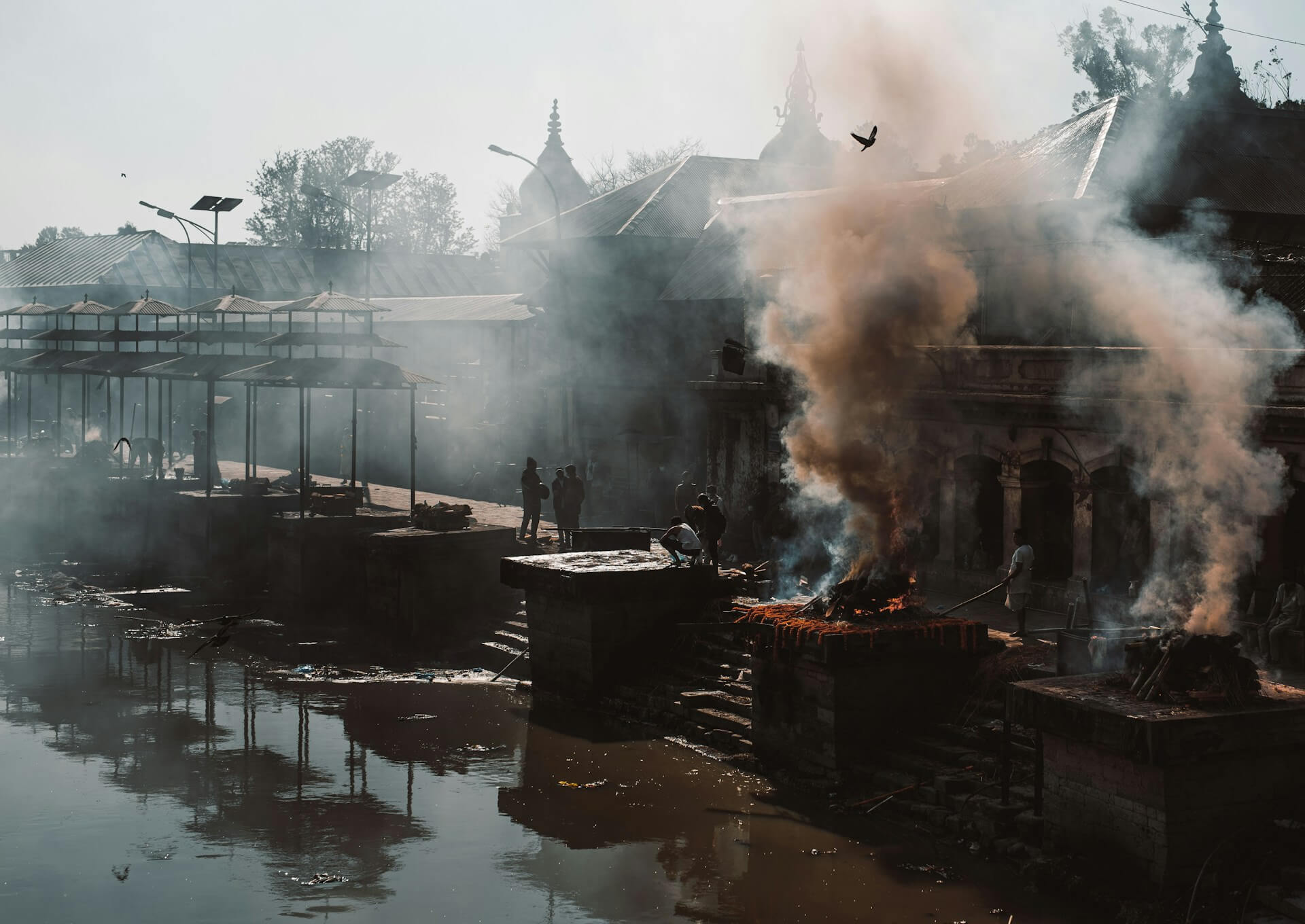
- The temple itself — a two-tiered pagoda with gilded roofs — is off-limits to non-Hindus. The main sanctum is accessible only to Hindu devotees. What foreign visitors can see, from the viewing platforms on the eastern bank of the Bagmati, is the temple complex from across the river: the ghats (stone steps leading to the water), the cremation platforms, the sadhus (Hindu holy men) with painted foreheads and matted hair who gather in the courtyard to pray, meditate, and occasionally pose for photographs in exchange for a small donation.
- The cremations, which happen throughout the day, are public — this is a core part of Hindu tradition, not a performance for tourists. Watching a cremation here is a confronting experience and a profoundly meaningful one. The cremation ghats are considered sacred space, and visitors are expected to observe from a respectful distance, speak quietly, and not photograph grieving family members directly. Most visitors who approach this thoughtfully describe it as one of the most significant experiences they have in Nepal — a direct encounter with how a culture that doesn’t separate the sacred from the everyday actually lives.
- Maha Shivaratri, typically in February or early March, brings hundreds of thousands of pilgrims to Pashupatinath over several days — the scale of the gathering is extraordinary.
Entry fee for foreign nationals: NPR 1,000. The temple area is open from 4 AM to 9 PM, and the quietest, most atmospheric time to visit is early morning when prayers are being conducted along the ghats. Midday is the busiest with tour groups. Hire a guide if you can — the symbolism and function of different structures in the complex is opaque without context, and a good guide transforms the visit from confusing to revelatory.
Patan Durbar Square
Of the three Durbar Squares in the Kathmandu Valley, Patan’s is consistently described by architects and art historians as the most refined. This is a city — now called Lalitpur, meaning “city of artisans” — that has been a center of craftsmanship and metalwork for centuries, and the quality of the stonework, wood carving, and bronze casting visible in the square and the Patan Museum is several steps above anything comparable in the region.
The Krishna Mandir, a 17th-century Shikhara-style temple built entirely of stone, is extraordinary — each floor features carved panels depicting scenes from the Mahabharata and Ramayana. The Golden Temple (Hiranya Varna Mahavihar) is a Buddhist monastery with a gilded facade whose inner courtyard, rarely visited by tourists who don’t know it’s there, is one of the quietest and most beautiful spaces in the valley.
The Patan Museum, housed in the restored Royal Palace complex, is the finest museum of traditional Nepali art and metalwork in the country. Even travelers who wouldn’t normally prioritize a museum find themselves spending longer here than planned — the collection of bronze deity figures, cast using techniques unchanged for centuries, is remarkable, and the interpretive materials are genuinely illuminating about the religious context of what you’re seeing.
Entry fee for foreign nationals: NPR 1,000 for the square and museum combined. The museum is closed on Tuesdays. The square itself is accessible on foot, and the surrounding lanes of old Patan — lined with traditional courtyard houses, metalwork shops, and small temples — reward wandering without a fixed itinerary.
Kathmandu Durbar Square (Hanuman Dhoka)
Kathmandu Durbar Square is the historic royal heart of the old city — a complex of palaces, courtyards, temples, and shrines that served as the seat of the Malla kings and later the Shah dynasty. Today it’s a living neighborhood as much as a heritage site, with shops, restaurants, and residential lanes threaded through and around the historic structures.
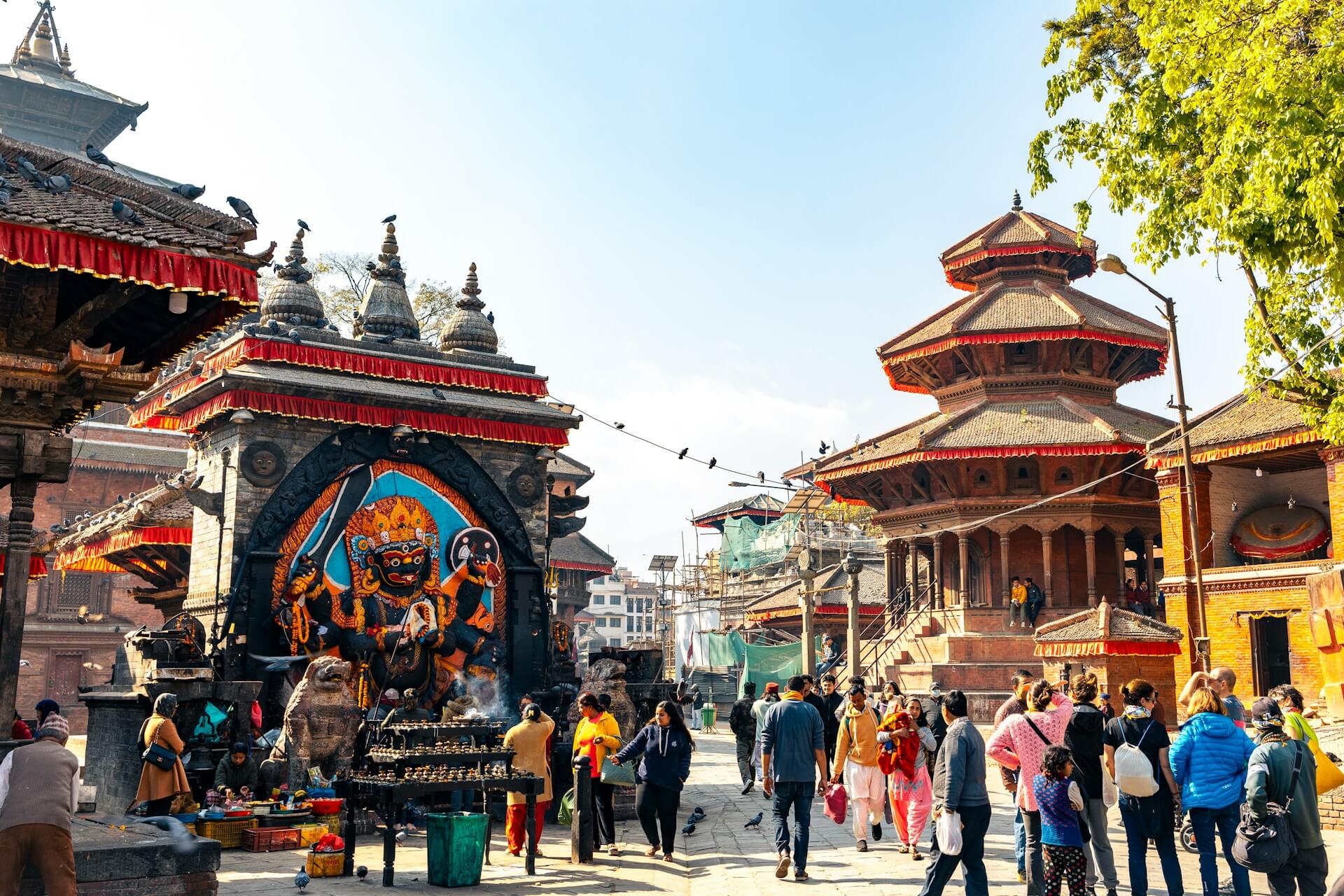
- The square took serious damage in the 2015 earthquake, including the collapse of the Kasthamandap pavilion (the building that gives Kathmandu its name) and significant damage to the Trailokya Mohan Narayan Temple. Reconstruction has been ongoing since 2016, and most of the major structures are now restored or actively being restored — this means you’ll see scaffolding alongside ancient woodwork in some areas, which is jarring but also a reminder that heritage preservation is a present-tense activity, not a frozen museum.
- Key structures worth time: Hanuman Dhoka Palace, the former royal palace whose name translates as “door of Hanuman” after the statue of the monkey god at the entrance; the Jagannath Temple with its famous erotic carvings on the roof struts; Kumari Chowk, the courtyard of the Living Goddess; and the Taleju Bhawani Temple, restricted to Hindus but visually dramatic from the exterior.
- The Living Goddess — the Kumari — is a prepubescent girl from the Shakya caste of Newar Buddhists, worshipped as the earthly manifestation of the goddess Taleju until she reaches puberty. She lives in the Kumari Ghar adjacent to the square, and if you’re present in the courtyard at the right moment (which is unpredictable), she may appear briefly at a first-floor window. Photography of the Kumari is traditionally forbidden.
Entry fee for foreign nationals in 2026: NPR 1,000-1,500 depending on the latest government rate, which includes access to the Tribhuvan Museum inside the palace complex. The ticket is valid for multiple days, so if you want to return, keep it. Children under 10 enter free.
Bhaktapur Durbar Square
Bhaktapur is the most intact medieval city in Nepal and — some would argue — one of the best-preserved medieval urban environments in Asia. It sits about 14 kilometers east of Kathmandu and functioned as a separate kingdom until the 18th century. The relative isolation has worked in its favor: Bhaktapur’s old city is compact, walkable, and remarkably coherent in its architectural character — narrow brick lanes, pagoda temples, and traditional Newari houses with ornately carved wooden windows that families still live in.
- The Durbar Square anchors the city’s western end, dominated by the 55-Window Palace — built by King Bhupatindra Malla in the early 18th century, its carved window panel is considered one of the finest examples of traditional woodcarving in Nepal. The Vatsala Durga Temple, the Pashupatinath Temple (smaller than its Kathmandu counterpart), and the golden Taleju Bell occupy the square alongside the palace.
- East of the Durbar Square is Taumadhi Square, home to the Nyatapola Temple — the tallest surviving temple in Nepal at five stories, built in 1702, with a series of mythological guardians progressively more powerful at each tier flanking the stairway. Watching the sun move across the Nyatapola from a rooftop cafe across the square is one of the better ways to spend a Kathmandu afternoon.
- Further east is Pottery Square, where traditional potters still work on foot-operated wheels producing the same forms — water jugs, flower pots, ritual vessels — that have been made in this neighborhood for centuries. The work happens outdoors, and you can watch from a few feet away.
Bhaktapur’s entry fee is among the highest of any single site in the valley: approximately USD 18 for foreign nationals, NPR 500 for SAARC nationals. It’s the one entry fee that makes some budget travelers hesitate, but given that it covers an entire walled medieval city with multiple squares and monuments, a full day of exploration, and funds the considerable preservation effort the city requires, it’s genuinely justified. Block a full day for Bhaktapur — half a day doesn’t do it justice.
Changu Narayan Temple
Changu Narayan is the oldest Hindu temple in Nepal — estimates put the original structure in the 4th century CE — and sits on a forested hilltop about 22 kilometers east of Kathmandu near Bhaktapur. It’s consistently undervisited, which makes it one of the most rewarding stops in the valley for anyone willing to make the trip.
The temple is dedicated to Vishnu and contains some of the finest stone sculptures in the country — carvings of Vishnu in his various manifestations that date to the Licchavi period (4th-8th centuries CE) and are considered masterpieces of Nepali religious art. The UNESCO World Heritage designation here is specifically about the artistic quality of these sculptures, and unlike the more tourist-heavy sites in the valley, you can often stand directly in front of them with nothing between you and 1,600-year-old stone carving.
The surrounding village of Changu retains much of its traditional character. The walk from Bhaktapur to Changu Narayan through terraced fields and traditional settlements takes about 90 minutes and is one of the better short walks in the valley — doable in a half-day combined with a Bhaktapur visit.
Entry fee: moderate, lower than most major sites. Budget about half a day.
Thamel: The Tourist Hub
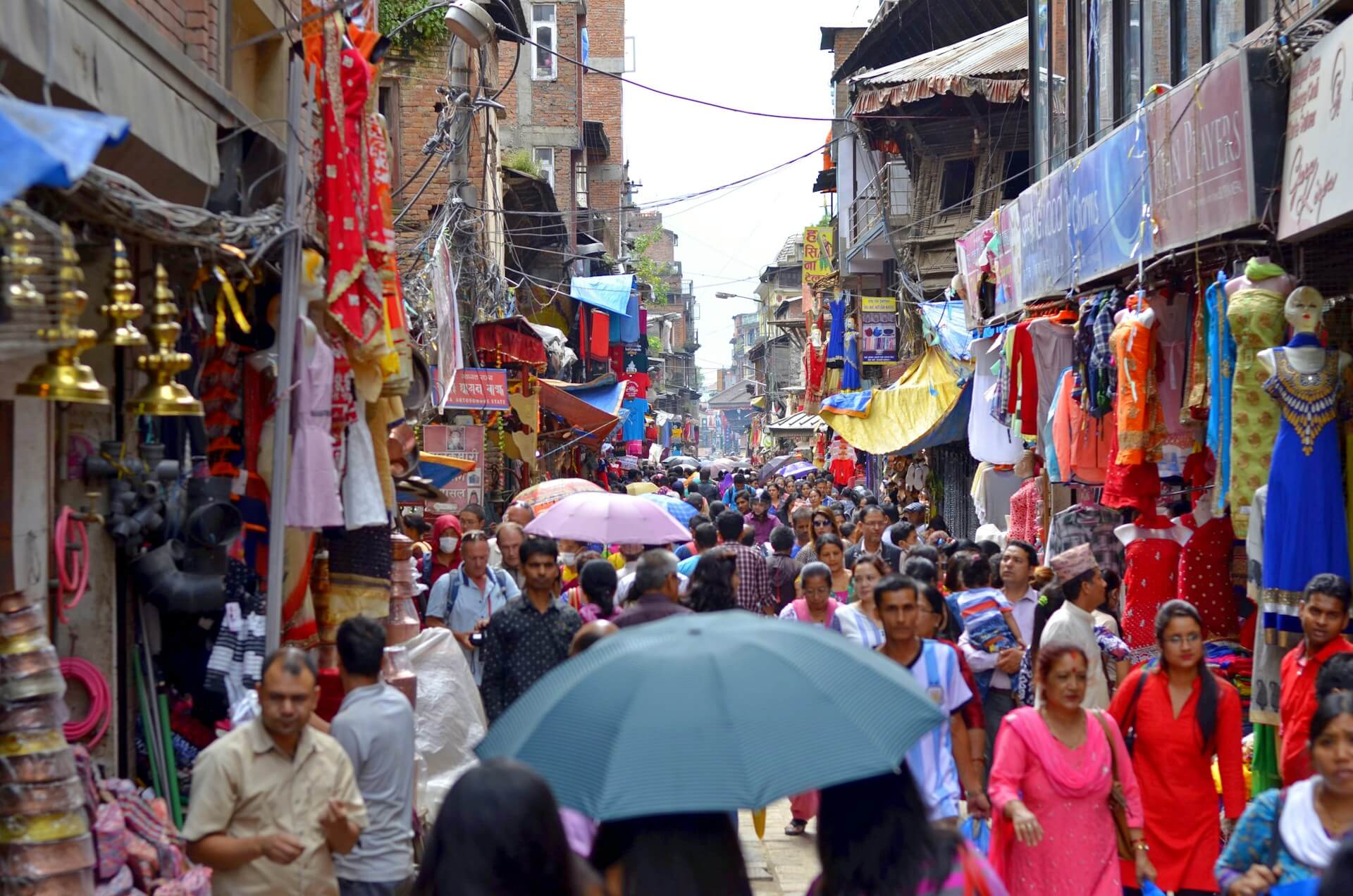
Thamel is not a heritage site. It’s Kathmandu’s main tourist district — a dense, chaotic neighborhood of guesthouses, trekking gear shops, restaurants serving everything from dal bhat to pasta, bookshops with the best collection of Nepal-related titles outside of academic libraries, and narrow lanes draped with prayer flags and trekking company banners. It’s loud, it’s often smoky, and it’s where most travelers end up spending more time than they planned.
What Thamel is genuinely useful for: organizing your trek permits, buying or renting trekking gear, finding a good cup of coffee, getting a SIM card, and eating dinner without having to plan ahead. The gear shops range from cheap local copies of brand names to genuine equipment at reasonable prices — if you’re missing anything before a trek, Thamel will have it. The bookshops, particularly Pilgrims Book House and a handful of others on the main lanes, carry serious collections of Himalayan literature, Nepali history, and Buddhist philosophy that you won’t find outside Kathmandu.
For food, Thamel has improved considerably in quality over the past decade. Beyond the standard Western-tourist menus, a handful of genuinely good restaurants serving traditional Newari food, Tibetan cuisine, and regional Nepali cooking exist if you’re willing to explore the smaller lanes. Newari khaja sets — beaten rice, black-eyed peas, fried meat or egg, and a side of achar — are the local snack culture and a much better use of an afternoon than a pizza.
Garden of Dreams
The Garden of Dreams — locally called Swapna Bagaicha — is a neoclassical garden built in the 1920s by Field Marshal Kaiser Shamsher, one of Nepal’s Rana-era oligarchs, modeled loosely on Edwardian English garden principles adapted to Nepali taste. It fell into complete disrepair after the Rana era ended, was restored with Austrian funding in the early 2000s, and now sits quietly behind a wall in central Kathmandu as one of the city’s most pleasant surprises.
The garden covers about 6,500 square meters — not large by any measure, but its value is in what it isn’t: noisy, crowded, traffic-filled Kathmandu. The restored pavilions, fountains, and paved paths create a genuinely peaceful enclave about a 5-minute walk from Thamel. There’s a cafe inside (Kaiser Cafe) that serves decent food and good coffee. For travelers who’ve spent a morning at the bustling heritage sites, an hour in the Garden of Dreams has a restorative function disproportionate to its modest scale.
Entry fee for foreign nationals: around NPR 400. Open daily.
Chandragiri Hills
Located on the southwestern rim of the Kathmandu Valley, Chandragiri Hill is accessible by cable car from Thankot — the ride covers roughly 2.5 kilometers of ascent in about 10-15 minutes and delivers you to a hilltop at approximately 2,551 meters, where the Bhaleshwor Mahadev Temple stands and the panoramic view on a clear day sweeps from Langtang in the east to Ganesh Himal and Himchuli in the west, with the entire Kathmandu Valley spread below.

The Himalayan view from Chandragiri is better than from any point within the city itself, and on a clear October or November morning, the range presents itself in full. The hilltop also has walking trails, a small park area, and facilities for families with children. It has become a popular half-day trip from Kathmandu for both tourists and locals, meaning the cable car queue can be long on weekends.
Cable car entry and ride: approximately NPR 700-800 round trip for foreign visitors. The temple at the top is a functioning Shiva shrine. Aim for a morning visit during October-November or March for the clearest mountain views.
Kopan Monastery
Kopan Monastery sits on a hill northeast of Kathmandu, looking down toward Boudhanath in the valley below. It’s a functioning Tibetan Buddhist monastery and meditation center run under the Gelugpa tradition — the same school of Buddhism practiced by the Dalai Lama — and is home to several hundred resident monks and nuns.
What distinguishes Kopan from most Kathmandu valley sites is that it remains primarily a working monastery rather than a tourist attraction. Visitors are welcome, but the atmosphere is contemplative rather than commercial. The grounds include the main gompa (prayer hall) where prayer sessions take place multiple times daily, residential quarters, a library, and gardens with Himalayan views. The monastery regularly offers courses in Buddhist philosophy and meditation, ranging from one-day introductions to month-long retreats, and people attend these from around the world.
Even without taking a course, a morning visit to Kopan — sitting in the courtyard during the early prayer session, watching the monks assemble in the gompa as the sound of conch shells and drums drifts across the hilltop — is one of the more genuinely moving experiences available in the valley. There is no formal entry fee, but donations support the monastery and are appropriate.
Budhanilkantha — The Sleeping Vishnu
About 8 kilometers north of Kathmandu city center, at the base of the Shivapuri Hills, lies one of the most unusual and undervisited sacred sites in the valley: Budhanilkantha, where a massive stone figure of Vishnu reclines in a tank of water, the image carved from a single block of black stone approximately 5 meters long. The figure, which appears to float in the water, depicts Vishnu in his cosmic sleep — his body supported by the coils of the serpent Ananta, from whose navel the lotus of creation is said to spring.
The statue is believed to date to the Licchavi period (7th-9th centuries CE) and has never been explained — no one knows definitively how the massive stone was brought to this location or who made it. This ambiguity is part of its atmosphere. The site is a working pilgrimage destination with a constant trickle of worshippers leaving flowers and offerings. Non-Hindus cannot enter the inner sanctum but can view the statue from the surrounding edge. No entry fee. About 30-40 minutes from Thamel by taxi.
Swayambhunath Stupa — The Monkey Temple
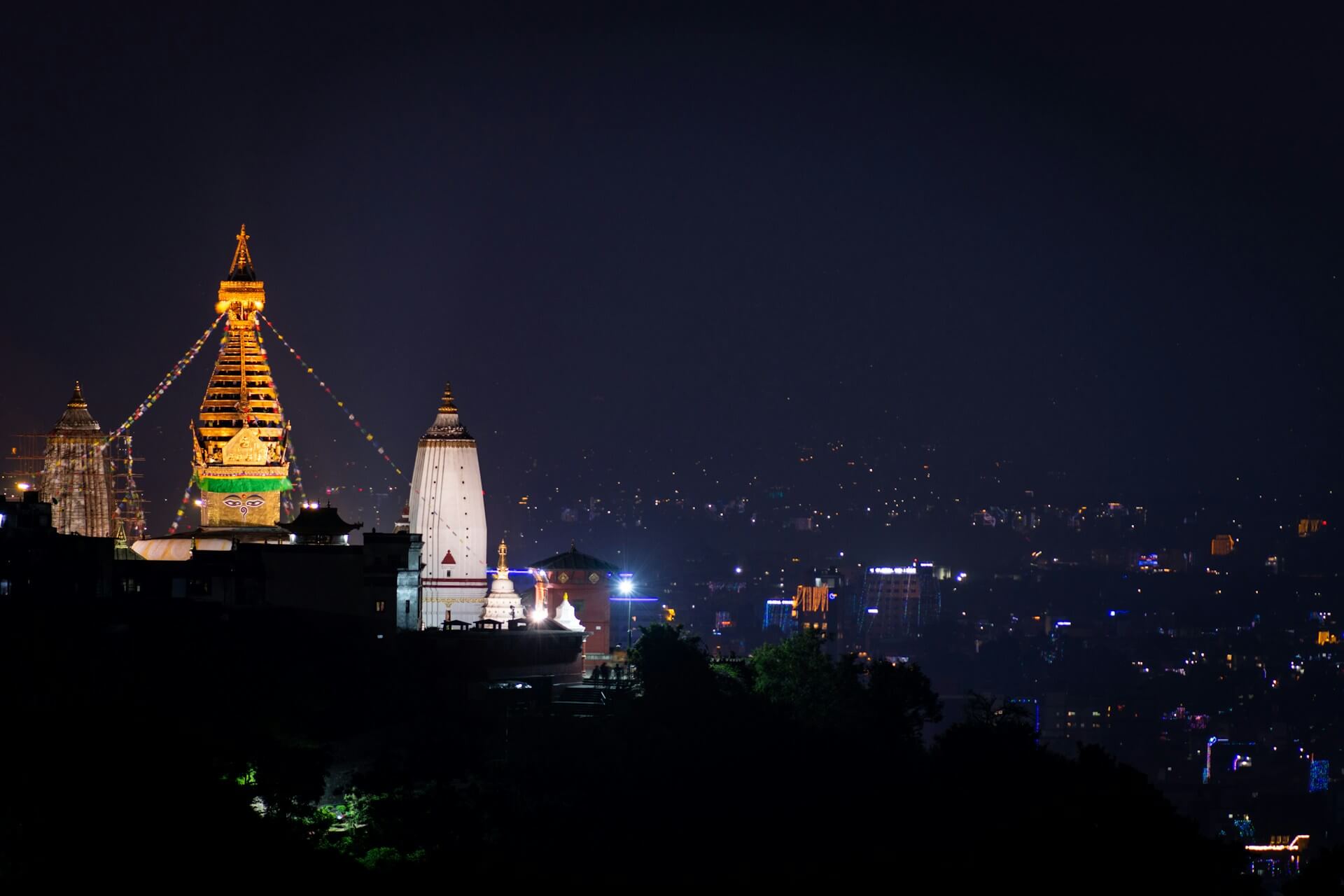
Swayambhunath sits on a forested hill above the western edge of Kathmandu city, its golden spire visible from much of the valley below. The climb to reach it — around 365 stone steps from the eastern entrance, or a shorter approach from the back road entrance — takes you through rhododendrons and past dozens of monkeys who have inhabited the hilltop for as long as anyone can remember. The name “Monkey Temple” is a tourist invention, but an accurate description of the welcome committee.
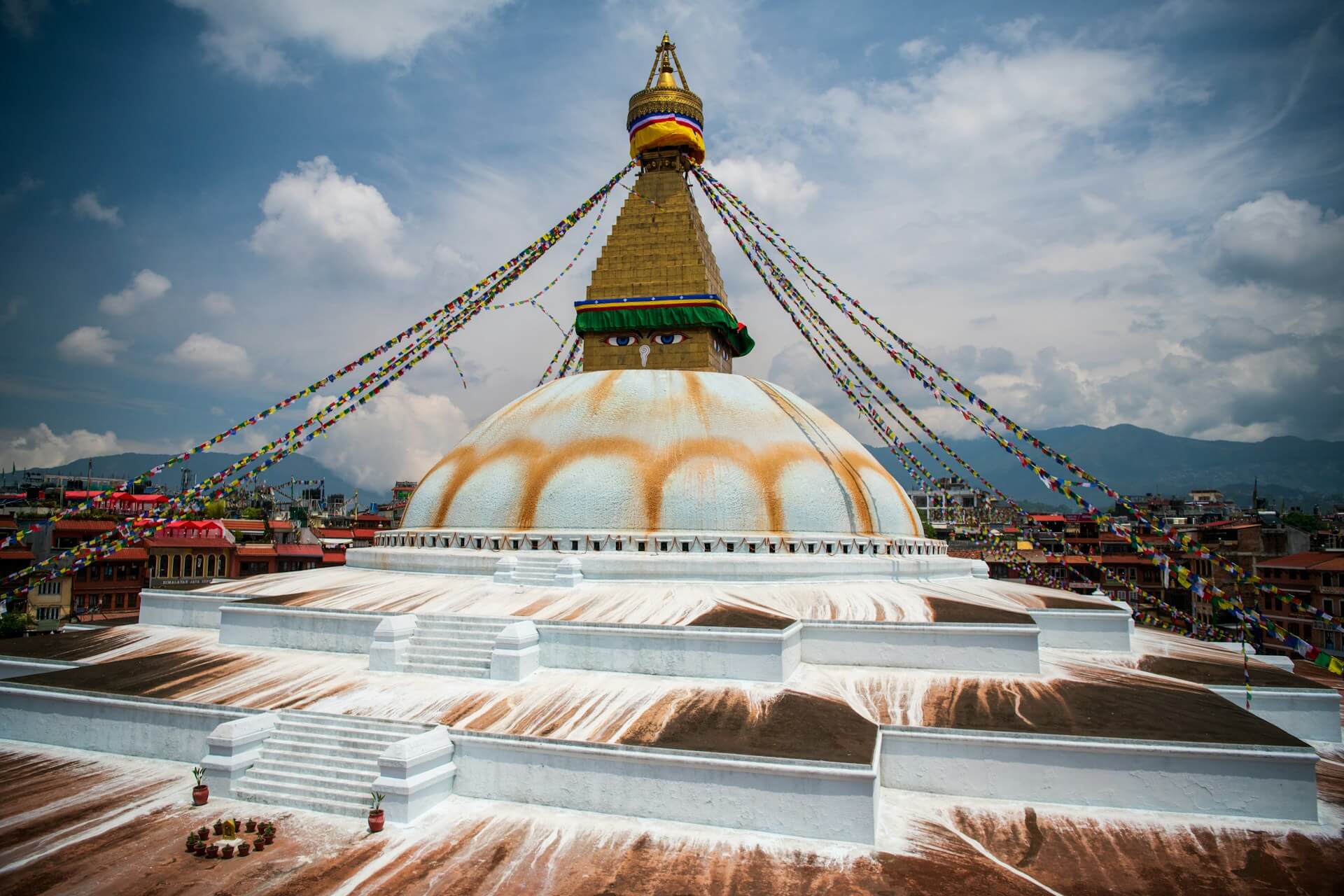
At the top, the stupa complex is a dense layering of Buddhist and Hindu shrines, prayer flags strung between every available point, butter lamp stations, small pagodas, and the steady sound of bells. The stupa itself is ancient — believed to have been established in the 5th century, though the present structure has been rebuilt and expanded repeatedly through the centuries. The same all-seeing eyes of Buddha that appear on Boudhanath are here, watching the city from a higher vantage point.
The best reason to visit Swayambhunath beyond the stupa itself is the 360-degree view of the Kathmandu Valley from the hilltop. On a clear day — most likely in October and November, or March and April — you can see the Himalayan range to the north and the broad spread of the valley in every other direction. On typical hazy days, the city view is still remarkable for its scale, though the mountains disappear into the atmosphere.
Entry fee for foreign nationals in 2026: approximately NPR 200-300. The complex is open from 5 AM to 8 PM, and early morning is markedly better than midday — the light is better, the monkeys are more active, and you’ll share the space with local devotees rather than tour group traffic. Budget about 1.5 to 2 hours.
Asan Tole and Old Kathmandu’s Bazaar Lanes
Asan is a traditional Newar bazaar in the heart of Kathmandu’s old city — a six-way intersection around a small temple to the goddess Annapurna, surrounded by multi-story traditional houses whose ground floors overflow with daily trade: spices, grains, fruits, textiles, household goods, and the everyday commerce of a city that’s been doing business in this spot for centuries.
Most visitors to Kathmandu walk through Asan on the way from Thamel toward Kathmandu Durbar Square without realizing they’re in one of the most historically continuous market spaces in South Asia. The lanes leading from Asan — particularly toward Indra Chowk and the Akash Bhairab temple — are lined with the kind of small-scale commercial activity that shopping malls have replaced everywhere else: tiny shops selling incense supplies, metalwork, traditional cloth, devotional images, and the raw ingredients for daily ritual life.
No entry fee. The area is at its most active in the early morning when fresh goods arrive and again in the late afternoon. Exploring these lanes without a map or agenda, following curiosity rather than a route, is genuinely more rewarding than trying to tick off a checklist.
Namo Buddha — Beyond the City
Namo Buddha sits about 38 kilometers east of Kathmandu in the Kavrepalanchok district — a hilltop monastery and sacred stupa marking the location where, according to Tibetan Buddhist tradition, Prince Mahasattva offered his body to a starving tigress and her cubs. The legend, depicted in painted panels throughout the monastery, is one of the most important Jataka stories in the Buddhist canon.
The drive takes about 1.5-2 hours from Kathmandu, and the approach road climbs through terraced farmland and small hillside villages that give a completely different picture of Nepal from the city or the high mountain zones. At the top, the monastery complex offers one of the best mountain views in the greater Kathmandu area — on a clear day, the Langtang range and peaks of the Rolwaling valley are visible. Monks and nuns circulate through the complex throughout the day, and the main prayer hall, open to respectful visitors, is worth entering.
Many travelers combine Namo Buddha with Bhaktapur for a full-day eastern valley circuit. No formal entry fee; donations support the monastery.
How to Spend Three Days in Kathmandu: A Practical Order
The geography of the valley and the opening hours of specific sites suggest a sensible sequence that most itinerary articles never explain.
Day 1 works best focused on Boudhanath (early morning, when the atmosphere is peak), then Pashupatinath (mid-morning, hiring a guide for context), with the afternoon in Thamel to orient yourself and sort any logistics. This puts the two most intense and atmospheric sites on your freshest day and in the best morning light.
Day 2 belongs to Kathmandu Durbar Square in the morning (when it’s less crowded and the light falls directly on the facade of the palace), followed by walking the old bazaar lanes through Asan and Indra Chowk, and ending with Swayambhunath in the late afternoon or early evening when the light is warm and the city view is at its best.
Day 3 is most rewarding as a Bhaktapur full day — leave early to beat the midday tour group peak, give Taumadhi Square and Pottery Square equal time with Durbar Square, and if energy allows, add the short trip to Changu Narayan before returning.
Patan can be done as a half-day addition to any of the above days — it’s close enough to Kathmandu’s Thamel area that an afternoon there fits naturally into a broader day without requiring a separate full-day slot.
Kathmandu Tour Places – Entry Fees Summary for 2026
- Boudhanath Stupa: NPR 400 for foreign nationals, NPR 100 for SAARC.
- Pashupatinath Temple: NPR 1,000 for foreign nationals and SAARC.
- Swayambhunath: approximately NPR 200-300.
- Kathmandu Durbar Square with Tribhuvan Museum: NPR 1,000-1,500, valid for multiple days.
- Patan Durbar Square and Museum: NPR 1,000, closed Tuesdays.
- Bhaktapur Durbar Square: USD 18 (approximately NPR 2,400), full-day city access.
- Chandragiri cable car: NPR 700-800 round trip. Garden of Dreams: NPR 400.
- Kopan Monastery, Budhanilkantha, Namo Buddha, Asan: no formal entry fee.
Carry Nepali Rupees in small denominations for all site visits. Most ticket offices don’t make change easily for large notes, and some smaller sites and monasteries don’t have card payment facilities.
Frequently Asked Questions About Kathmandu Tour Places
- How many days do you need to see Kathmandu properly?
Three days covers the major UNESCO sites and neighborhoods comfortably without feeling rushed. Two days is possible but tight, requiring you to skip either Bhaktapur or Patan entirely. Four to five days allows you to add day trips to Namo Buddha, Chandragiri, and the slower exploration of old Kathmandu’s lanes that reveals the city’s texture far better than a quick checklist approach. - What is the most important place to visit in Kathmandu?
This depends on what you’re looking for. For pure spiritual atmosphere, Boudhanath at sunrise or in the evening butter-lamp hour is unmatched. For cultural and historical depth, Bhaktapur is the most complete medieval experience in the valley. For emotional impact, Pashupatinath — with its cremation ghats and constant ritual activity — is the most confronting and meaningful. - Can non-Hindus visit Pashupatinath Temple?
Yes, but with a restriction. Non-Hindus cannot enter the inner sanctum of the main temple. The surrounding complex — ghats, secondary temples, ashrams, the viewing area across the Bagmati River — is fully accessible. The experience for non-Hindus is complete without the inner sanctum, and the cremation ghats and sadhu area are where most of the memorable observation happens anyway. - What is the best time of year to visit Kathmandu?
October and November offer the best combination of weather (cool, dry, clear), Himalayan visibility, and post-monsoon freshness. March to May is the second-best window with warmer temperatures and rhododendron bloom in the surrounding hills. June through September (monsoon) brings daily rain, poor visibility, and muddy conditions but also far fewer tourists and vivid green landscapes. December through February is cold but clear, with occasional excellent mountain views. - Is Kathmandu safe for solo travelers?
Generally yes. The major tourist areas and heritage sites are well-trafficked and safe to navigate independently. Standard urban awareness applies — keep valuables secured, be aware of tuk-tuk drivers who try to take you to shops rather than your actual destination, and be cautious in unlighted areas at night. The most common problem tourists encounter is overcharging for taxi rides, which is resolved by agreeing on a price before getting in the vehicle. - How do I get around Kathmandu?
Taxis are the most practical option for moving between sites, and Kathmandu has relatively reasonable fares if you agree on a price beforehand or use a ride-hailing app (Pathao is widely used locally). For the old city area and Thamel, walking is faster than any vehicle during traffic hours. Private cars hired for a full day cost $35-60 and make sense for covering multiple sites including Bhaktapur and Patan efficiently. - Is one day enough for Bhaktapur?
One full day is the minimum to do Bhaktapur justice — covering Durbar Square, Taumadhi Square with the Nyatapola Temple, Pottery Square, and some time in the surrounding lanes. Half a day feels rushed and leaves you with the impression of having skimmed rather than experienced one of the best-preserved medieval cities in Asia. - What is the Living Goddess (Kumari) and where can you see her?
The Kumari is a prepubescent girl from the Shakya community of Newar Buddhists, worshipped as the living incarnation of the goddess Taleju. She lives in the Kumari Ghar in Kathmandu Durbar Square and occasionally appears at a first-floor window. There’s no schedule for her appearance — if you’re in the courtyard and patient, you may see her. Photography is traditionally forbidden. A separate Kumari also resides in Patan. The custom is specific to the Kathmandu Valley’s Newar community and has no direct equivalent elsewhere. - What should I buy in Kathmandu?
Kathmandu is a genuinely good place to buy certain things. Thangka paintings (Tibetan Buddhist scroll paintings) range from mass-produced tourist items to genuine works of traditional craft — a knowledgeable seller will explain the difference. Singing bowls, prayer flags, and traditional textiles are widely available and reasonable. Pashmina products vary enormously in quality; good pashmina is warm, lightweight, and soft against the skin, and a reputable shop will let you run the fabric through a ring to demonstrate purity. For trekking gear, Thamel shops carry both genuine branded equipment and local alternatives at a fraction of the import price. - Do I need a guide for Kathmandu sightseeing?
Not strictly, but a good guide at the right sites makes a significant difference. Pashupatinath is the one where a guide is most valuable — the symbolism, history, and protocol of the complex are dense and largely invisible without someone to explain them. The Durbar Squares are navigable independently with some advance reading.
Bhaktapur benefits from a guide if you want to understand what you’re looking at, though wandering independently is also pleasurable. Licensed guides can be arranged through agencies in Thamel, and half-day guide fees run $25-50 depending on language and experience.
Final Word on Kathmandu Tour Places
Kathmandu is the kind of city that reveals itself incrementally. The first morning can feel overwhelming — the traffic, the smells, the density of religious iconography on every surface, the roosters at 5 AM. By the third morning, you’ve found a tea shop that opens at 6:30 with a table facing the street, you know which lane cuts through to Asan without hitting the worst traffic, and the city has started to make sense on its own terms rather than in comparison to anywhere you’ve been before.
The places in this guide aren’t just tourist attractions. Boudhanath is where a community of Tibetan Buddhist refugees rebuilt their religious life after 1959 and made a home. Pashupatinath is where Kathmandu’s Hindu majority confronts the largest questions of existence in the most practical possible way. Bhaktapur is proof that a community can decide to protect what it has — and largely succeed. Asan is the oldest continuously operating market in a city that’s been a trade crossroads for two millennia.
Come with time, with curiosity, and without an agenda that’s too tight to bend. Kathmandu will fill whatever space you give it.