Can You See Mt Everest From Kathmandu?
The short answer is not from the city itself — but from the hills surrounding the Kathmandu Valley, yes, on a clear morning, you can see Mount Everest. It will be distant, small, and unmistakable once you know what to look for: a dark pyramid rising above the other peaks on the northeastern horizon, roughly 160 kilometers away.
What you will not see is the full, dramatic profile that trekkers encounter from Kala Patthar at 5,545 meters. From the Kathmandu valley rim, Everest appears as a distant peak among distant peaks — its summit identifiable by its position and its characteristic shape, not by the scale and proximity that define the view from the Khumbu. That distinction matters when planning your expectations. The view from the hills around Kathmandu is genuinely rewarding but categorically different from anything you see on the trek itself.
This guide tells you exactly where the view is possible, why you cannot see Everest from the city floor, the specific viewpoints ranked by quality and accessibility in 2026, the best time of day and year to attempt it, and the mountain flight option for those who want Everest up close without the multi-day commitment.
Why You Cannot See Everest From Central Kathmandu
Kathmandu city sits in a bowl-shaped valley at approximately 1,400 meters above sea level, ringed on all sides by hills rising to between 2,100 and 2,795 meters. These surrounding hills — Chandragiri to the southwest, Phulchowki to the south, Shivapuri to the north, and the eastern rim where Nagarkot sits — form a continuous barrier that blocks the line of sight in most directions from the valley floor.
Mount Everest is approximately 160 kilometers to the northeast of Kathmandu. Between the city and the mountain sit multiple layers of intervening ridges, foothills, and subsidiary ranges that rise progressively toward the main Himalayan chain. From the city streets, from the rooftops of Thamel, from the platforms at Boudhanath or Pashupatinath, the surrounding hills cut off the view to the northeast entirely. There is simply no geometric sight line from the valley floor to the summit of Everest.
The COVID-19 lockdown of 2020 produced a viral photograph that many interpreted as Everest visible from Kathmandu city. The image showed mountains on the horizon — but the peaks in question were the Ganesh Himal range and closer Himalayan foothills, not Everest. The confusion is understandable — few people have the mountain identification skills to distinguish Everest from other peaks at extreme distance — but the image was widely miscaptioned. Everest was not visible from the Kathmandu valley floor during the lockdown or at any other time.
To see Everest, you need to be above the valley rim — on the hills surrounding the valley, at elevations of 2,000 meters or more, with a clear north or northeastern sightline across the intervening ridges.
The Best Viewpoints Near Kathmandu for Seeing Everest
| Viewpoint | Distance from Kathmandu | Altitude | Everest Visibility | Access |
|---|---|---|---|---|
| Nagarkot | ~32 km northeast | 2,175 m | Good on clear days | Road (90 min drive) |
| Chandragiri Hills | ~16 km southwest | ~2,550 m | Good on clear days | Cable car (30 min drive + 10 min cable car) |
| Phulchowki | ~14 km south | 2,795 m | Good on very clear days | Road to base; hike to summit |
| Dhulikhel | ~30 km east | ~1,550 m | Possible on clear days | Road (45 min drive) |
| Kakani | ~27 km northwest | ~2,073 m | Possible on very clear days | Road (60 min drive) |
| Chisapani | ~29 km northeast | ~2,300 m | Possible on clear days | Road + 2-3 hr hike |
| Champadevi | ~8 km southwest (valley rim) | 2,285 m | Possible on very clear days | 3-4 hr hike from Pharping |
Nagarkot — The Most Established Everest Viewpoint
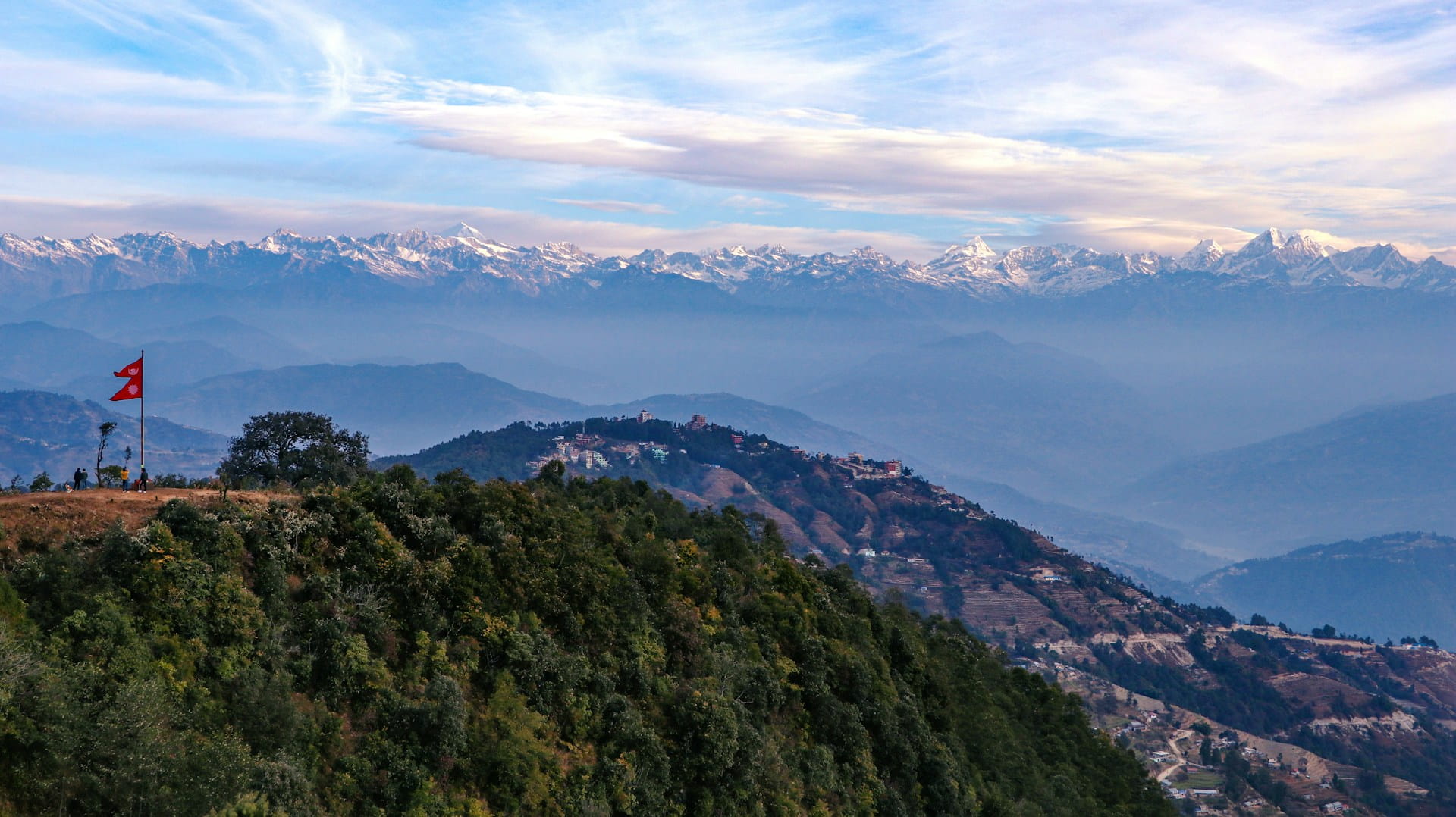
Nagarkot is the best-known and most consistently recommended place to see Everest from the Kathmandu area. It sits on the eastern rim of the Kathmandu Valley in Bhaktapur District at 2,175 meters above sea level, approximately 32 kilometers from central Kathmandu — a drive of roughly 90 minutes depending on traffic and road conditions.
From Nagarkot, the Himalayan panorama stretches from the Annapurna range in the west to Kanchenjunga in the far east on a clear day. Mount Everest appears in the northeast — identifiable as a dark peak whose summit rises slightly above the surrounding ridgeline. The view is not a close-up. At 160 kilometers, Everest is a small but distinct feature in a wide panoramic sweep of high peaks. Most visitors use binoculars or a telephoto camera lens to identify it clearly.
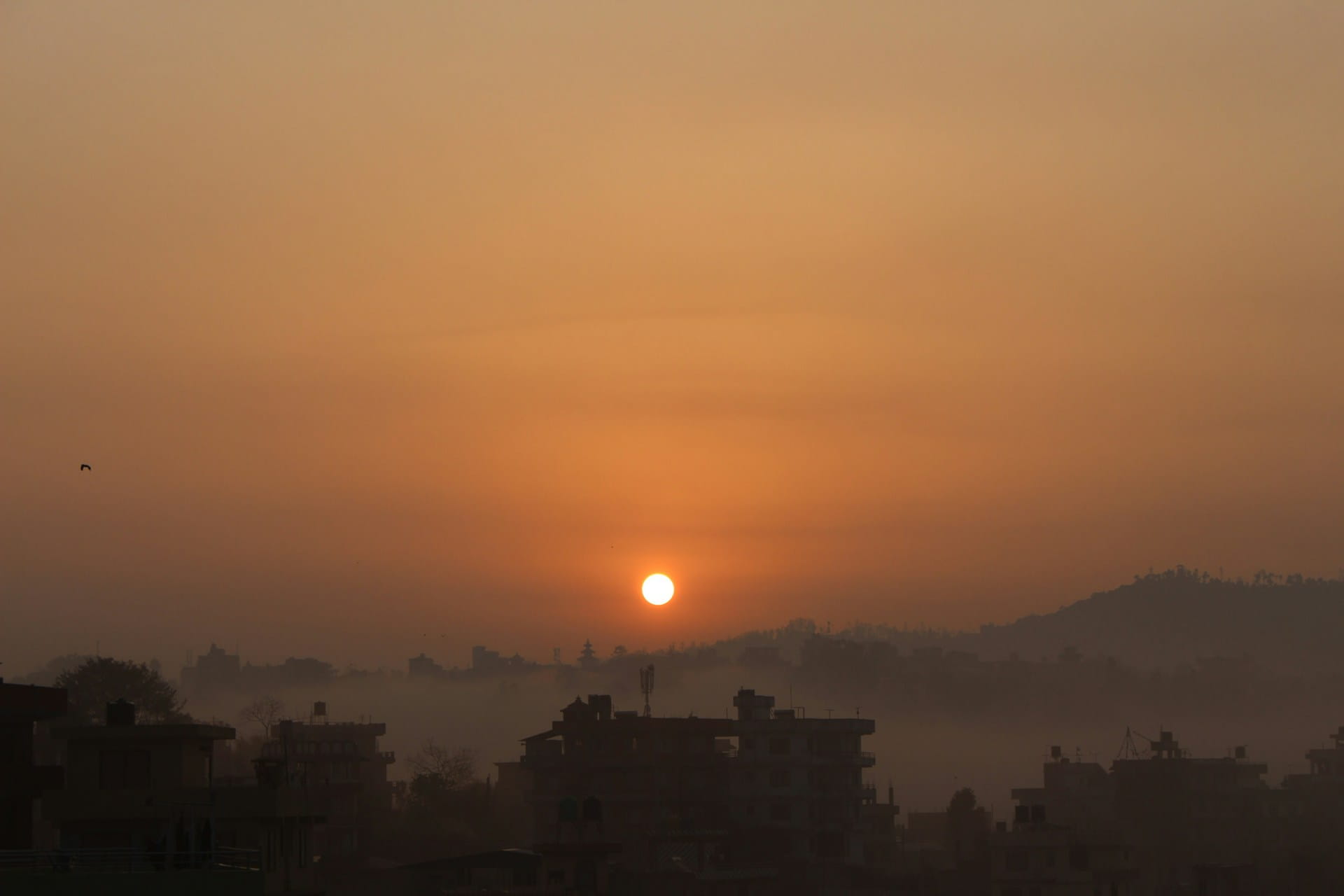
The classic Nagarkot experience is an overnight stay, departing Kathmandu in the afternoon, settling into a hilltop hotel or guesthouse, and rising before dawn for the sunrise view. At sunrise on a clear morning — particularly in October and November — the snow-capped peaks catch the first orange light before the surrounding landscape receives any color, creating the photographic moment that has made Nagarkot famous for generations of Nepal visitors. Everest is among the peaks visible in this sunrise panorama, though it is not the dominant feature of the view.
Nagarkot can also be visited as a day trip, departing Kathmandu early enough to arrive for the morning mountain clarity before haze builds. Most visitors find the overnight option more rewarding since the best views are in the first 30 to 60 minutes after sunrise, before atmospheric haze begins to reduce visibility.
Chandragiri Hills — Cable Car Access and Valley Views
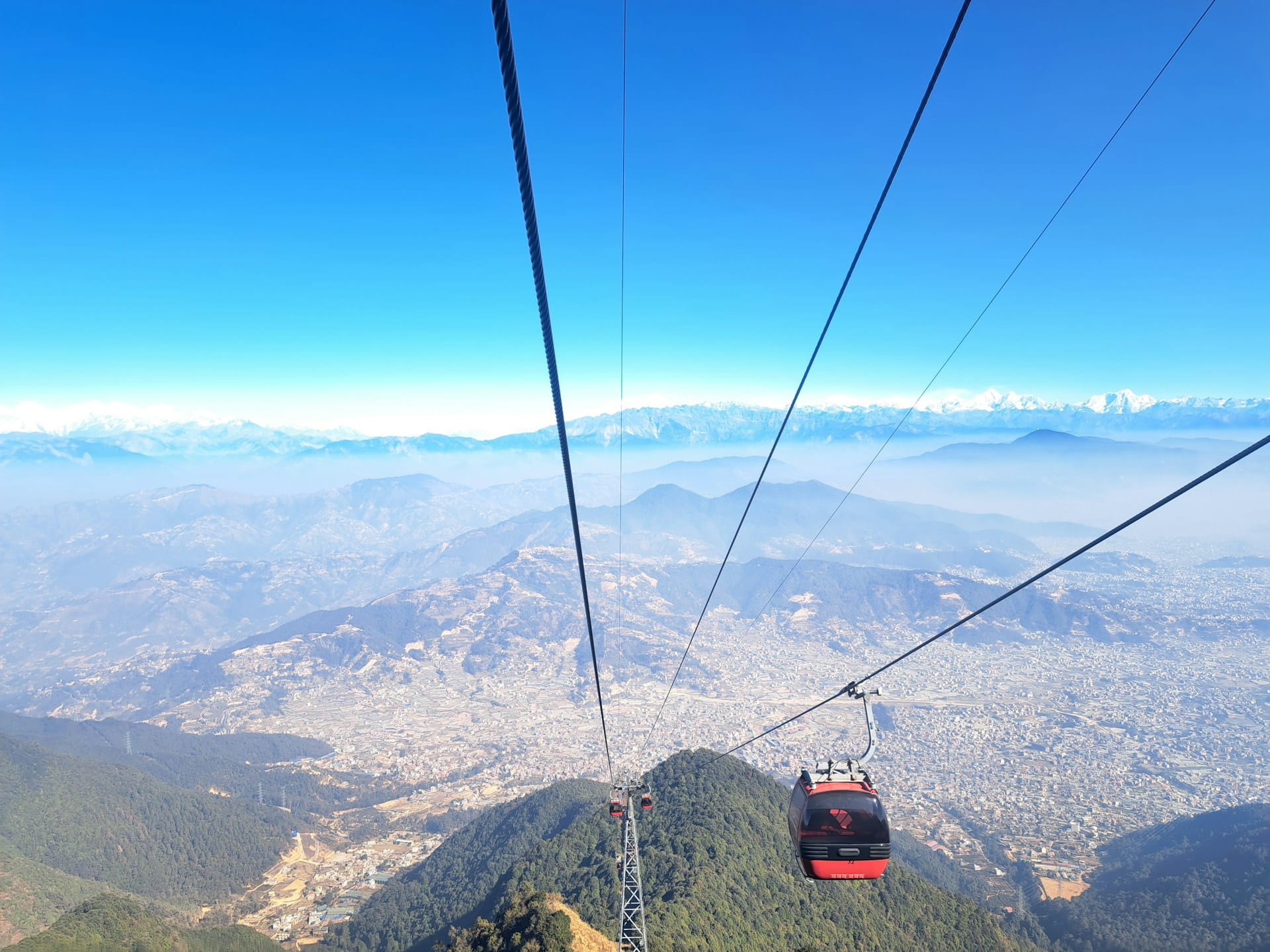
Chandragiri Hill at approximately 2,550 meters sits on the southwestern rim of the Kathmandu Valley, approximately 16 kilometers from central Kathmandu. The cable car from the Thankot base station covers the 2.5-kilometer ascent in roughly 10 minutes, making it the most accessible high viewpoint from the city center — reachable without a long drive or a hike.
From the summit at 2,550 meters, the view spans the Himalayan range from west to east, with Annapurna visible to the far west and Everest identifiable in the northeast on clear days. The Bhaleshwor Mahadev Temple at the summit is an active Shiva shrine and gives the viewpoint a cultural dimension beyond the mountain view itself.
Chandragiri’s advantage over Nagarkot is accessibility and the shorter time commitment — a half-day from central Kathmandu is genuinely enough to go up, enjoy the view, and return. Its disadvantage is that the southwestern position means Everest is at a more oblique angle than from Nagarkot or Dhulikhel, and the intervening ridge structure makes the view slightly more obstructed than from the eastern viewpoints.
The cable car operates from approximately 9:00 AM daily — too late for the very best morning mountain clarity, which typically peaks between 6:00 and 8:00 AM. Trekkers who hike up rather than taking the cable car can arrive earlier and catch the clearest morning window. The hike from the Pharping side takes approximately 3 hours.
Phulchowki — Highest Point in the Kathmandu Valley
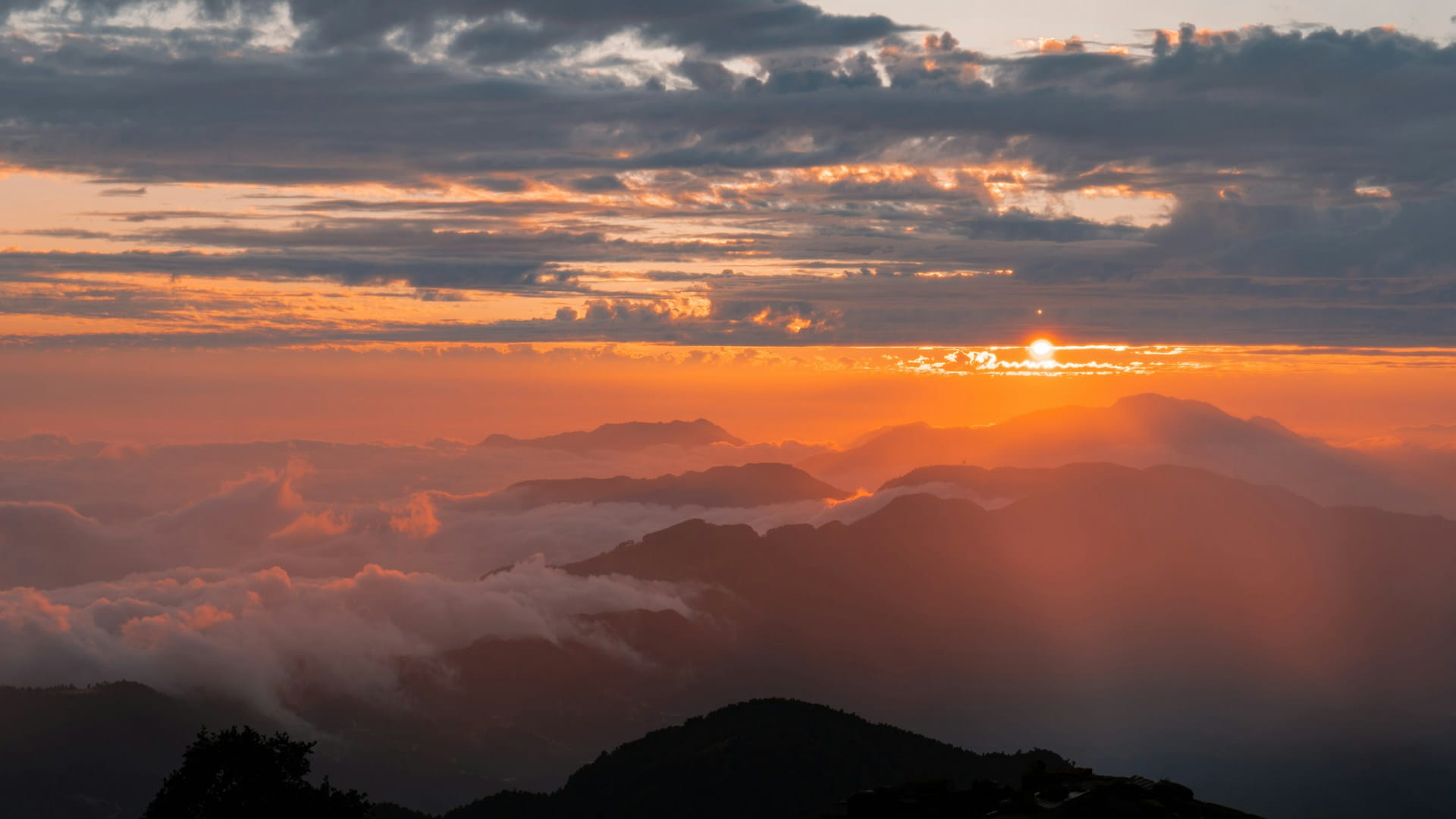
Phulchowki at 2,795 meters is the highest point within the Kathmandu Valley, located approximately 14 kilometers south of Kathmandu in the Lalitpur district. Its altitude gives it a theoretical advantage for long-range mountain views, and on genuinely clear days it offers one of the widest panoramas of any valley-rim viewpoint.
The summit is reached by road to the base, then a hike to the top. Phulchowki is also one of the most biodiverse forest environments in the valley — the mountain is famous for birdwatching, with over 270 bird species recorded, and is covered in rhododendron forest that blooms brilliantly in March and April. Its position on the southern rim means the mountain views are to the north and northeast, with Everest identifiable as part of the eastern Himalayan panorama on very clear days.
Phulchowki is less visited by foreign tourists than Nagarkot and Chandragiri, which can make the experience more peaceful if mountain solitude matters to you.
Dhulikhel — Cultural Town With Mountain Views
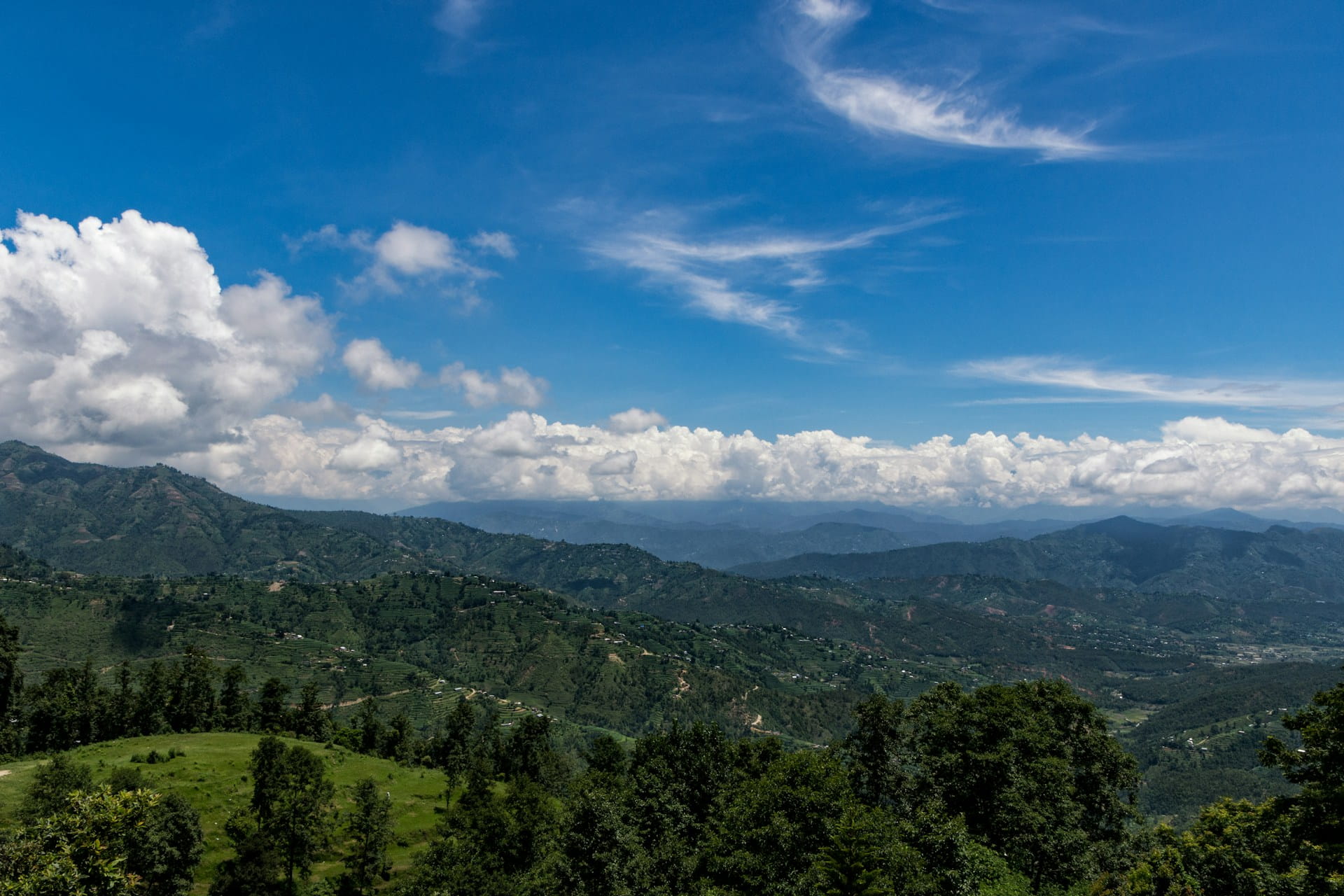
Dhulikhel at approximately 1,550 meters above sea level sits about 30 kilometers east of Kathmandu on the Araniko Highway — roughly a 45-minute drive. It is a traditional Newari market town with well-preserved architecture and is known as a hiking base as much as a viewpoint. The mountain views from Dhulikhel’s hilltop ridge, particularly from the viewpoint above the town, include a wide sweep of eastern Himalayan peaks. Everest is visible on clear mornings.
The lower elevation compared to Nagarkot means Dhulikhel’s mountain views require slightly clearer conditions than the higher viewpoints. However, it combines easily with visits to Namobuddha Monastery (approximately 45 kilometers southeast) and the walk between the two is one of the most enjoyable half-day hikes near Kathmandu. The cultural character of the town itself is also genuinely interesting in a way that purpose-built hilltop viewpoint settlements often are not.
The Critical Role of Weather and Season
The view of Everest from any of these locations is not guaranteed on any given day. Atmospheric conditions determine whether you see a sharp, clear peak or nothing at all, and understanding the seasonal pattern is essential to planning your visit.
| Season | Months | Mountain Visibility | Notes |
|---|---|---|---|
| Autumn | October–November | Best of the year | Post-monsoon clarity; most reliable window |
| Spring | March–May | Good, especially March-April | Clear before pre-monsoon haze builds |
| Winter | December–February | Often excellent, occasionally outstanding | Cold; some days crystal clear |
| Monsoon | June–September | Very poor | Cloud and haze obscure mountains almost completely |
October and November are the most reliable months. The monsoon that saturates the atmosphere from June through September ends in late September, and the weeks immediately following monsoon departure deliver the clearest air of the year. Particulate matter has been washed from the atmosphere, humidity drops sharply, and the Himalayan range emerges in exceptional clarity. Many of the best photographs of Everest from Kathmandu area viewpoints are taken in October.
March and April offer the second-best window. The winter cold produces clear air, and March in particular before pre-monsoon haze begins to build can deliver outstanding visibility. The added visual of the rhododendron bloom in the forests below viewpoints like Phulchowki is specific to this season.
Winter from December through February is cold — Nagarkot nights can drop below freezing — but the cold air is often the clearest of the year. The best individual visibility days in the Kathmandu area are sometimes in January or February when a front has swept through and left particularly clean air in its wake.
The monsoon months of June through September should not be planned around mountain views. The thick cloud cover and high humidity render the Himalayan range invisible from valley-rim viewpoints for most of this period.
The Time of Day Matters as Much as the Season
Even in the best seasons, the quality of mountain visibility follows a predictable daily pattern that determines when you need to be at the viewpoint.
Early morning — the window from sunrise to approximately 9:00 or 10:00 AM — is consistently the clearest period. Cool overnight air holds less moisture, and before surface heating begins to generate convective clouds, the atmosphere is most transparent. The mountains are clearest at this time, and the low-angle sunrise light gives them visual depth and color.
By midday, surface heating produces haze and cloud development that progressively obscures distant peaks. By mid-afternoon, cloud is often substantial enough to completely block any mountain view. The practical implication: if you are going to Nagarkot or Chandragiri to see Everest, you need to be at the viewpoint before 8:00 AM. Planning to arrive at 10:00 AM will almost certainly disappoint.
This early-morning requirement is the main practical argument for the overnight stay at Nagarkot — you are already there at dawn without having to drive 90 minutes in the dark from Kathmandu.
The Mountain Flight Option: Everest Up Close Without Trekking
For travelers who want to see Everest significantly closer than any Kathmandu valley rim viewpoint allows, and without committing to the 12 to 14-day EBC trek, the mountain flight from Kathmandu is the most practical option.
Mountain flights depart from Tribhuvan International Airport in Kathmandu on most mornings during the main tourist seasons. The flight typically takes approximately one hour. The route flies east from Kathmandu toward the Khumbu, approaching the Everest massif close enough that passengers can see the summit, the surrounding peaks including Lhotse and Nuptse, and the dramatic ridges and glaciers of the world’s highest mountain from a distance of a few kilometers rather than 160 kilometers.
The view from a mountain flight is categorically different from any Kathmandu valley rim viewpoint. The scale of Everest is apparent in a way that a distant speck on the northeastern horizon cannot convey. On a clear morning flight, the summit snow plume, the Southeast Ridge, and the massive south face of Lhotse are all visible in detail.
Each passenger in a mountain flight sits at a window seat — this is how the seating is arranged on these dedicated scenic flights. The aircraft flies a route that gives each side of the cabin comparable views during the journey.
Mountain flight prices for foreign nationals in 2026 typically run $175 to $235 per person depending on the operator and aircraft type. Multiple operators offer flights, including Buddha Air, Yeti Airlines, and several others. Flights depart in the early morning and are subject to weather cancellation — book with an operator that offers a refund or reschedule for weather cancellations, which is standard practice.
The Honest Expectation: What the View From Kathmandu Area Actually Looks Like
This is the section most people need but few articles provide honestly. Here is what the view of Everest from Nagarkot, Chandragiri, or similar viewpoints actually looks like, described without promotional language.
You are looking at a peak approximately 160 kilometers away. At that distance, Everest appears as a dark, pyramidal summit rising above the snowline — small against the width of the panorama, but distinctly shaped and identifiable once a guide or a clear photograph points out its position. The characteristic dark rock triangle of the summit pyramid (dark because the wind strips away the snow from the steeper faces) differentiates it from fully snow-covered neighboring peaks.
Without binoculars or a telephoto lens, identifying Everest specifically rather than just “the Himalayas” is difficult for most first-time visitors. With binoculars or a 300mm+ camera lens, the summit and its distinctive shape are clearly visible on a good morning.
The white feather of cloud that often streams from the summit — the wind plume caused by the jet stream hitting the peak — is sometimes visible from valley rim viewpoints on windy days, which is actually one of the easier ways to identify Everest at great distance: the cloud streaming eastward from a specific summit point.
The emotional experience of seeing Everest from Nagarkot on a clear October morning is not the same as standing at Kala Patthar looking up at the summit from 5,545 meters. Both are real Everest sightings. They are simply different experiences — one intimate and overwhelming, the other distant and panoramic.
Frequently Asked Questions about Can You See Mt Everest From Kathmandu?
- Can you see Mt Everest from Kathmandu city?
Not from the city itself. The hills surrounding the Kathmandu Valley block the line of sight in every direction from the city floor. To see Everest, you need to be on the valley rim at one of the surrounding hilltop viewpoints — Nagarkot, Chandragiri, Phulchowki, or Dhulikhel — at elevations between 1,550 and 2,795 meters. - How far is Mt Everest from Kathmandu?
Mount Everest is approximately 160 kilometers to the northeast of Kathmandu in a straight line. This is the consistent figure across multiple authoritative sources. The mountain is not visible from the city at this distance due to intervening hills and the valley’s enclosed geography. - What is the best place to see Everest from Kathmandu?
Nagarkot at 2,175 meters, approximately 32 kilometers northeast of Kathmandu, is the most established and most consistently recommended viewpoint. Chandragiri Hills at approximately 2,550 meters offers comparable views with easier cable car access. Phulchowki at 2,795 meters — the highest point in the Kathmandu Valley — offers potentially broader views on very clear days. - What time of day is best to see Everest from Kathmandu?
Early morning — from sunrise to approximately 9:00 AM — is consistently the clearest period. By midday, haze and cloud development reduce visibility significantly at most valley rim viewpoints. The overnight stay at Nagarkot specifically allows you to be at the viewpoint at dawn without a pre-dawn drive from the city. - What time of year is best to see Everest from Kathmandu?
October and November are the most reliable months, with post-monsoon atmospheric clarity at its best. March and April are the second-best window. The monsoon period from June through September produces consistent cloud cover that makes mountain views from valley rim viewpoints effectively impossible on most days. - Can you see Everest from Kathmandu without trekking?
Yes. Valley rim viewpoints at Nagarkot and Chandragiri are accessible by road and cable car respectively, with no trekking required. Mountain flights from Kathmandu provide a significantly closer view of Everest — approximately a few kilometers rather than 160 kilometers — in a one-hour flight that requires no trekking. - How much does a mountain flight to see Everest cost in 2026?
Mountain flights from Kathmandu typically cost $175 to $235 per person for foreign nationals, depending on the operator and aircraft type. Multiple operators offer morning flights during tourist season. Flights are subject to weather cancellation and most operators offer reschedule options for weather-related cancellations. - Is Everest visible from Kathmandu without special equipment?
On a very clear morning from a high viewpoint like Nagarkot, Everest is identifiable to the naked eye if you know exactly where to look. In practice, most visitors find binoculars or a telephoto camera lens significantly helps identification at 160 kilometers. The peak’s characteristic dark pyramid shape and any visible wind plume are the primary identification markers at this distance. - Why can’t you see Everest from Kathmandu during monsoon?
The monsoon season from June through September brings heavy cloud cover, high humidity, and atmospheric haze to the Kathmandu region. The Himalayan range — including Everest — is obscured by cloud and moisture-laden air on most days during this period. The best mountain visibility in the Kathmandu area occurs in the weeks immediately following the monsoon’s end in late September, when the atmosphere has been cleared by rain. - How do you distinguish Everest from other peaks visible on the same horizon?
Everest sits among a cluster of other 7,000-8,000 m peaks along the same distant ridge line, including Lhotse and Makalu, which can make identification tricky without local knowledge or a labeled viewpoint diagram. Most established viewpoints like Nagarkot post identification boards or offer guides who can point out Everest’s specific position relative to its visually similar neighbors. - Is Nagarkot worth an overnight stay, or can you do a day trip?
An overnight stay is genuinely the better option, since it positions you at the viewpoint for the clearest early-morning window without the 1-1.5 hour pre-dawn drive from Kathmandu that a day-trip would require. A day trip is still possible for travelers on a tight schedule, but arriving mid-morning after typical valley clarity has already started to fade reduces the odds of a clean view. - Does air pollution in Kathmandu affect Everest visibility from the rim viewpoints?
Yes, to some degree — pre-monsoon months, especially April, can bring haze from regional agricultural burning and urban pollution that reduces visibility even on days without natural cloud cover. This is one reason October-November is preferred over spring for the clearest photography-grade views, since the atmosphere has been freshly washed by the departing monsoon rains. - Can you see Everest from Kathmandu airport during the flight in or out?
It’s possible on very clear days, particularly on flights arriving from certain directions, but it’s not a reliable or guaranteed view given the aircraft’s altitude, flight path, and typical approach pattern into Kathmandu. Travelers hoping to spot Everest from a regular international flight shouldn’t count on it the way they can with a dedicated mountain flight product specifically routed close to the range. - Is Dhulikhel a good alternative to Nagarkot for seeing Everest?
Dhulikhel, at a lower elevation than Nagarkot, offers a decent but generally less expansive Himalayan panorama, making it a reasonable alternative for travelers already staying there rather than a primary recommended destination for Everest viewing specifically. It’s a wider mountain view rather than a Everest-specific one, since Dhulikhel’s angle favors the Langtang and Jugal ranges somewhat more than the Everest cluster of peaks and, similarly.
Final Word on Can You See Mt Everest From Kathmandu
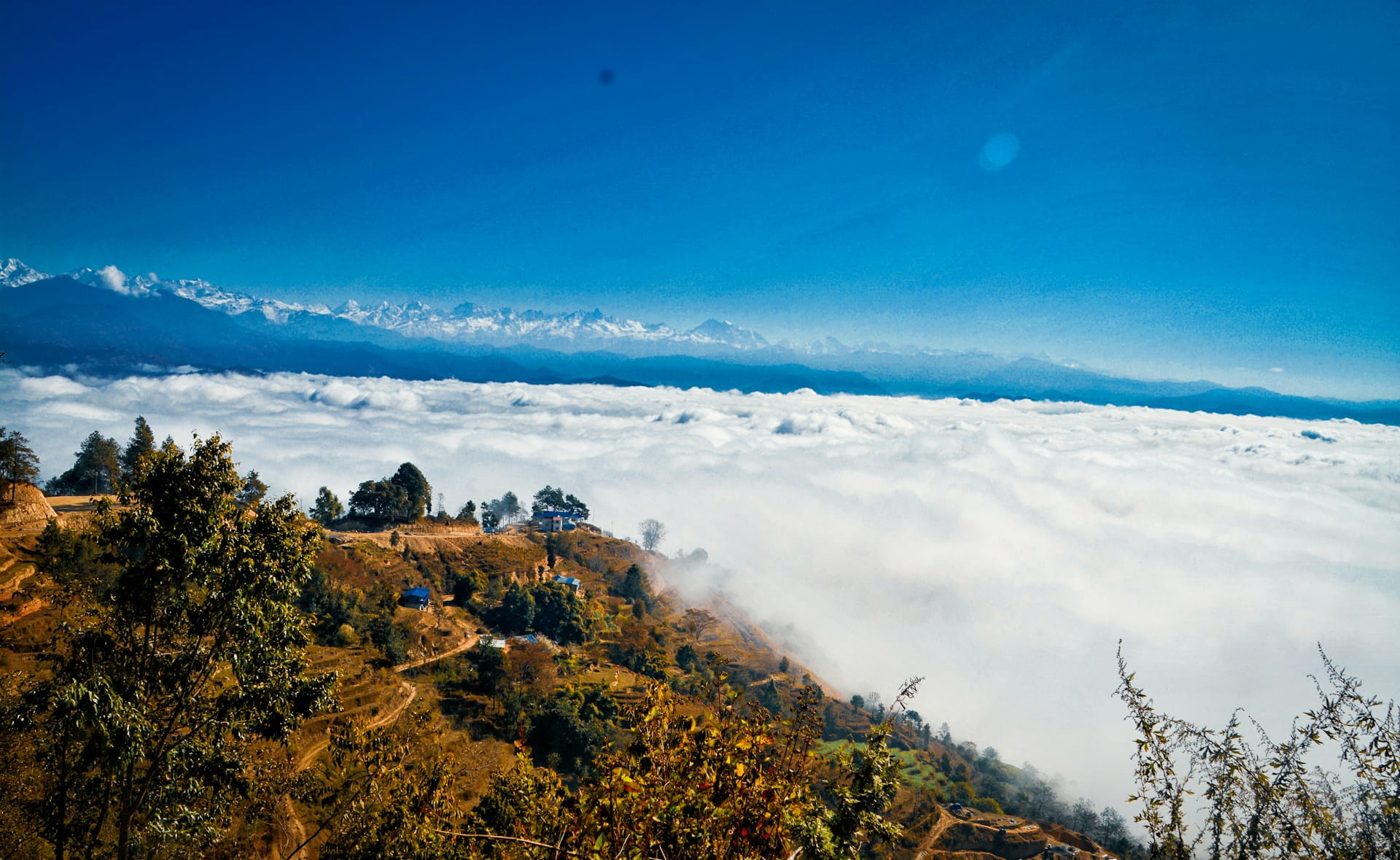
The view of Everest from the hills surrounding Kathmandu is not the view from Kala Patthar. It is not the view from the EBC helicopter. It is not even close to the view from a mountain flight. At 160 kilometers, the world’s highest mountain appears as a small dark pyramid among many white peaks, identifiable by shape and position rather than scale.
And yet — on a clear October morning from the ridgeline at Nagarkot, as the first light catches the snow-covered peaks and Everest’s summit emerges from the indigo sky in the northeast — the view carries its own specific quality. You are seeing the mountain from the valley that serves as the gateway to all of Nepal’s high-altitude journeys. The distance puts the mountain in context rather than filling your vision. You see it as part of a range, as a peak among giants, as the thing on the horizon that the city below you exists partly to reach.
That is a different Everest view from any you get on the mountain itself. Whether it is better or worse depends on what you came to find. But it is real, and on the right morning, from the right hill, it is quietly extraordinary.