-
6,165m (Island Peak summit)
-
B in Kathmandu; B, L, D on trek
-
Flight (Lukla) / Private vehicle
-
Spring & Autumn
-
Hotel, Teahouse, Tented camp
-
NMA-licensed climbing guide
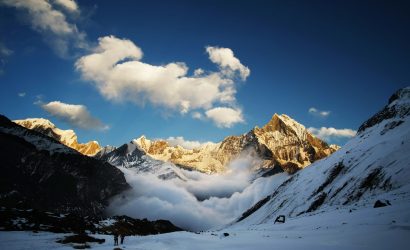
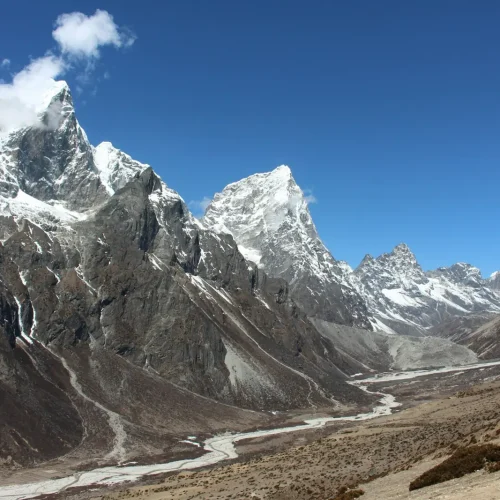
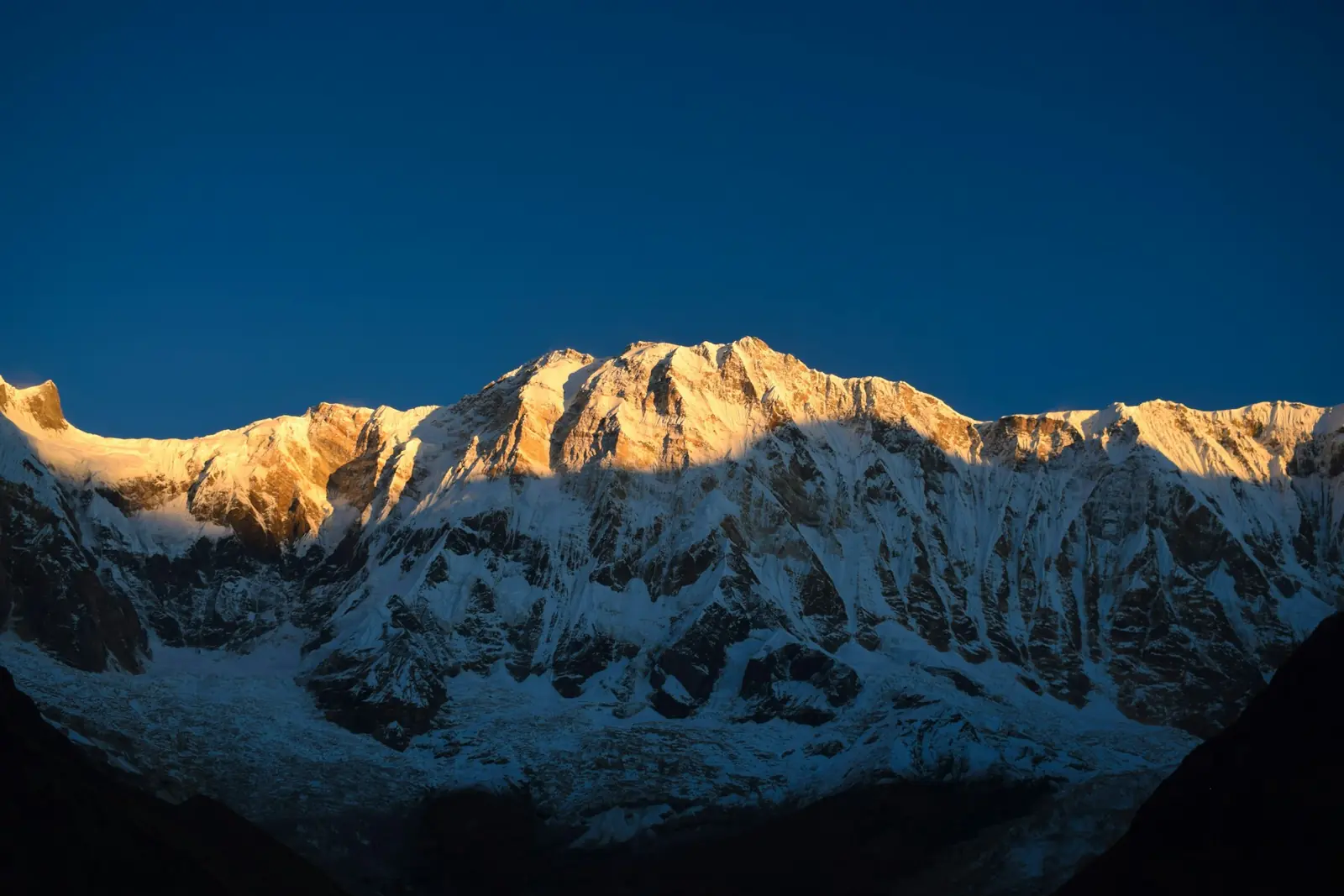
Island Peak Climbing is the most common way people go from trekking in Nepal to standing on a real Himalayan summit. Island Peak, known locally as Imja Tse, rises to 6,165m at the head of the Chhukung Valley in the Everest region. The normal route crosses a crevassed glacier, climbs a steep fixed-rope headwall and finishes on a narrow snow ridge with Lhotse’s south face towering directly above you.
This 18-day package flies you to Lukla, walks you up the same Sherpa trail as the Everest Base Camp Trek, and then turns east into the quieter Imja Valley. You get two dedicated acclimatisation days, a hike to 5,546m on Chhukung Ri before the climb, rope training at Base Camp, and a spare summit day for bad weather. Those last three things matter most, and they are often missing from cheaper itineraries.
This page covers everything you need before booking: the day-by-day plan, how hard the climb really is, the 2026 permit fees, what the price includes, what you still need to budget for, and the questions climbers most often ask us. For background reading on the mountain itself, see our Island Peak climbing guide.
Island Peak Climbing at a Glance
| Detail | Information |
|---|---|
| Summit altitude | 6,165m / 20,226ft (official NMA height; often quoted as 6,189m) |
| Region | Khumbu (Everest region), Sagarmatha National Park, Solukhumbu |
| Duration | 18 days Kathmandu to Kathmandu (12 days of trekking + summit + 1 spare day) |
| Route | Lukla – Namche – Tengboche – Dingboche – Chhukung – Island Peak Base Camp |
| Climbing grade | Alpine PD+ (glacier travel, fixed-rope headwall, exposed ridge) |
| Technical experience | Not required, but you must learn crampons, jumar and abseil (we teach you) |
| Highest sleeping altitude | 5,087m (Island Peak Base Camp) |
| Accommodation | Hotel in Kathmandu, teahouse lodges on trek, tents at Base Camp |
| Best seasons | Late March–May and late September–November |
| Group size | 1–12 climbers |
| Permits | NMA Island Peak permit, Sagarmatha National Park, Khumbu Pasang Lhamu Rural Municipality |
| Price | From USD 2,450 per person |
Package Highlights
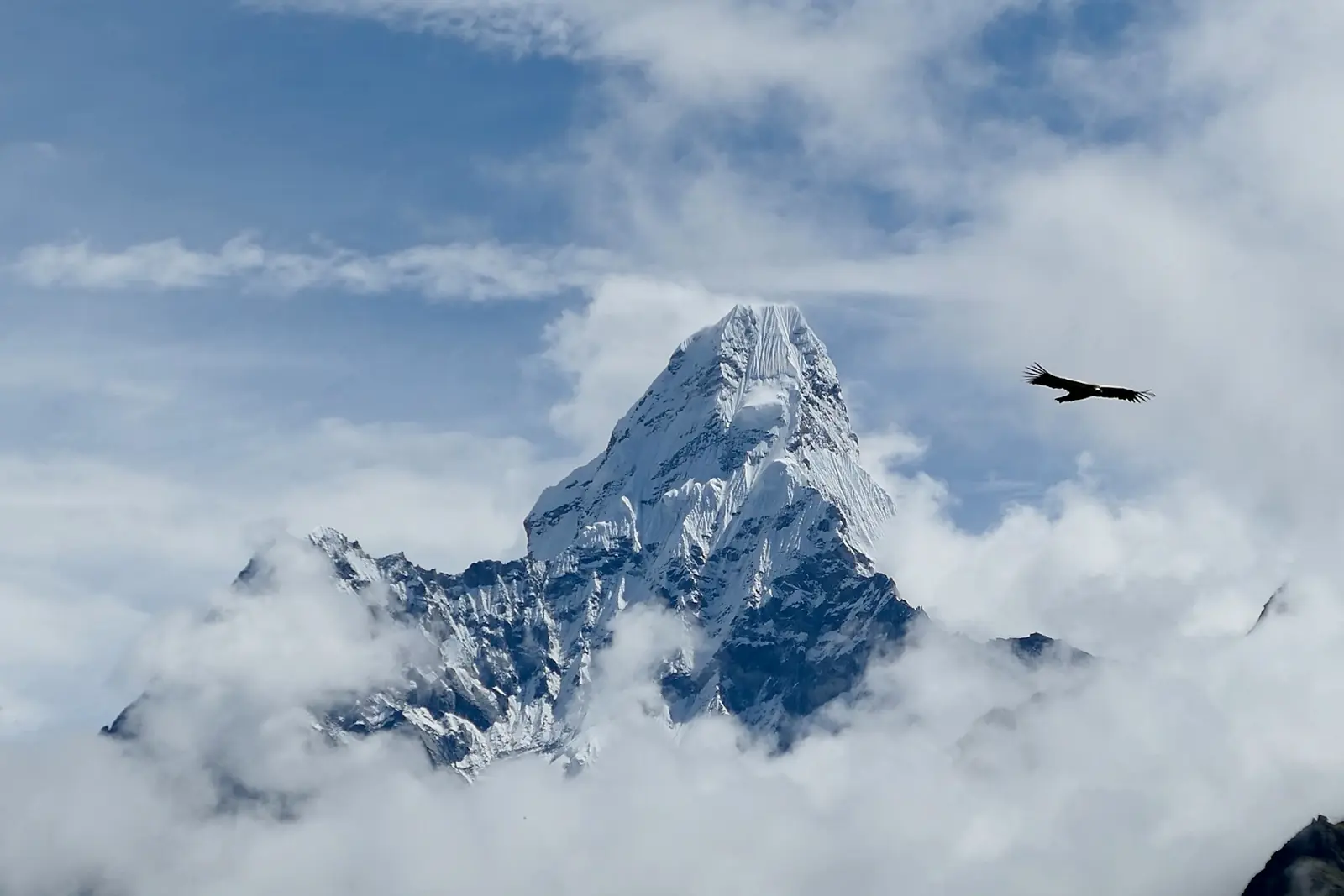
- Summit a 6,000m Himalayan peak with the Lhotse–Nuptse wall, Makalu, Baruntse and Ama Dablam around you
- Cross aluminium ladders over glacier crevasses and climb the famous headwall on fixed lines, the same skills used on Everest
- Proper acclimatisation: rest days in Namche and Dingboche, plus a 5,546m hike up Chhukung Ri before the climb
- A spare summit day built in, so one bad-weather morning doesn’t end your expedition
- Hands-on training at Base Camp with crampons, harness, ascender (jumar) and abseiling before summit night
- Namche Bazaar, Tengboche Monastery and Sherpa villages along the way
- Views of Everest from the Everest View Hotel ridge, and Imja Tsho glacial lake below Base Camp
- All permits, Lukla flights, NMA-licensed climbing guide and group climbing gear included
Why Choose This Island Peak Climbing Package
Island Peak is popular for good reasons. It is high enough to be a serious test (higher than Kilimanjaro by more than 250m), yet the route is short enough that most fit, well-acclimatised beginners can summit with good guiding. The Khumbu also has the best lodge infrastructure in Nepal, so you sleep in teahouses for all but two or three nights.
Its popularity is also its biggest risk. In peak weeks, dozens of climbers can queue on the same fixed lines, and rushed itineraries send people to Base Camp before their bodies are ready. Our itinerary is built around those two problems:
- Acclimatisation first. You sleep at 4,410m for two nights and climb to 5,546m on Chhukung Ri before you ever reach Base Camp. That is the single biggest factor in summit success.
- A real buffer. Day 13 is a spare summit day. If wind, snow or a slow team turns you back, you get a second chance instead of a refund conversation.
- Small rope teams. We plan one climbing guide for every two climbers on summit day, so nobody waits on a guide at the crevasse ladders or the headwall.
- Training before the climb, not on it. You practise every rope skill at Base Camp in daylight, so summit night is not your first time on an ascender.
If you have already trekked to Everest Base Camp and want a summit, this is the logical next step. If you want both, our team can combine the two on request.
Route Overview
The climb starts with the classic Khumbu approach. From Lukla (2,860m) you follow the Dudh Koshi river to Namche Bazaar, the Sherpa trading town, then climb to Tengboche Monastery and on to Dingboche at 4,410m. This is the same trail as the Everest Base Camp trek.
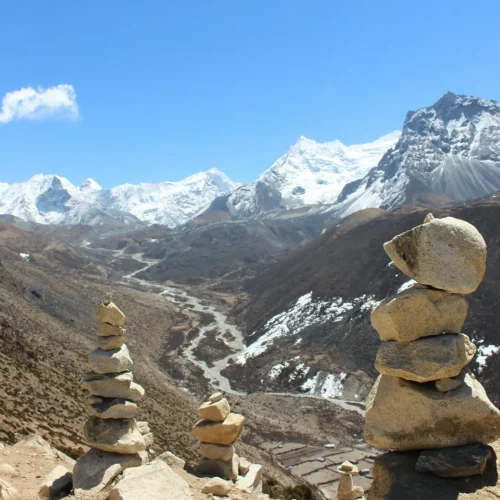
At Dingboche the route leaves the main Everest trail and heads east up the Imja Valley to Chhukung, a small climbers’ village at 4,730m. Island Peak Base Camp (5,087m) sits about 7km further up the valley, beside the moraine of the Lhotse and Imja glaciers.
On summit day you climb a rocky gully above Base Camp to Crampon Point at around 5,800m. You then rope up and cross the glacier, using fixed ladders over the larger crevasses, to the foot of the headwall. The headwall is roughly 100–150m of snow and ice at 40–50 degrees, sometimes steeper near the top, and you climb it on fixed lines with an ascender. A short, exposed ridge then leads to the summit. You descend the same way, abseiling the headwall.
The return trek retraces the route via Pangboche and Namche to Lukla for the flight back to Kathmandu.
Distance & Walking Hours
Expect about 100km of walking between Lukla, Base Camp and back, plus the acclimatisation hikes. Distances on Khumbu trails are approximate and vary with the exact path taken.
| Stage | Approx. distance | Walking time |
|---|---|---|
| Lukla → Phakding | 8 km | 3–4 hrs |
| Phakding → Namche Bazaar | 10 km | 5–6 hrs |
| Namche acclimatisation hike | 4–5 km round trip | 3–4 hrs |
| Namche → Tengboche | 10 km | 5–6 hrs |
| Tengboche → Dingboche | 11 km | 5–6 hrs |
| Nangkartshang hike (Dingboche) | 4 km round trip | 4–5 hrs |
| Dingboche → Chhukung | 5 km | 2.5–3 hrs |
| Chhukung Ri hike | 5 km round trip | 5–6 hrs |
| Chhukung → Island Peak Base Camp | 7 km | 3–4 hrs |
| Base Camp → Summit → Base Camp | about 8 km round trip | 10–14 hrs |
| Base Camp → Pangboche | 16 km | 6–7 hrs |
| Pangboche → Namche Bazaar | 13 km | 5–6 hrs |
| Namche Bazaar → Lukla | 18 km | 6–7 hrs |
Altitude Table
| Day | Overnight | Altitude | Gain/loss |
|---|---|---|---|
| 1–2 | Kathmandu | 1,400m | — |
| 3 | Phakding | 2,610m | Fly to Lukla 2,860m |
| 4–5 | Namche Bazaar | 3,440m | +830m |
| 6 | Tengboche | 3,860m | +420m |
| 7–8 | Dingboche | 4,410m | +550m |
| 9–10 | Chhukung | 4,730m | +320m (hike to 5,546m on Day 10) |
| 11–13 | Island Peak Base Camp | 5,087m | +357m (summit 6,165m on Day 12) |
| 14 | Pangboche | 3,985m | −1,102m |
| 15 | Namche Bazaar | 3,440m | −545m |
| 16 | Lukla | 2,860m | −580m |
| 17 | Kathmandu | 1,400m | Flight |
Map Overview
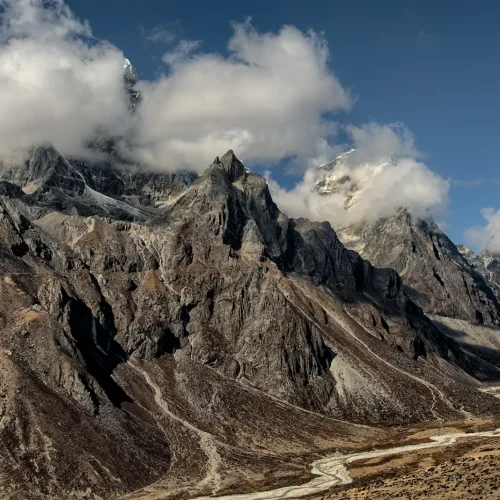
Picture the route as a long climb northeast up the Dudh Koshi valley from Lukla to Namche, then up the Imja Khola valley past Tengboche and Pangboche to Dingboche. From Dingboche it bends east into the Chhukung Valley, a dead-end valley closed off by the Lhotse–Nuptse wall to the north and Ama Dablam and Baruntse to the south. Island Peak stands in the middle of that valley floor, surrounded by glaciers, which is exactly why Eric Shipton’s party named it Island Peak in the early 1950s.
Island Peak Difficulty Level
Island Peak is graded PD+ (Peu Difficile, “a little difficult”) on the alpine scale. In plain terms, it is a non-technical peak by Himalayan standards, but it is a real climb, not a hard trek. Three things make it harder than it looks on paper:
- Altitude. You leave Base Camp at 5,087m and climb to 6,165m on very little sleep. Every step above 5,800m is slow, and the cold before dawn can drop to −15°C or lower, colder with wind.
- The headwall. The final 100–150m below the summit ridge is a snow and ice slope of roughly 40–50 degrees, steeper in places. You go up on a fixed line with an ascender (jumar) and come down by abseil. It is tiring rather than technically difficult, but it requires calm, practised rope handling.
- Summit day length. Most teams leave Base Camp between 1 and 2am and are back 10–14 hours later. Getting down safely is half the climb.
The crevasse crossings deserve a mention too. There is usually at least one ladder, and since 2016 a fixed aluminium ladder has been used to cross the large crevasse below the headwall. Everyone is roped to a guide on the glacier.
Many fit beginners do summit. People are most often turned around by poor acclimatisation, weather or a slow pace that runs out of time, not by technical difficulty. Our itinerary’s acclimatisation days and spare summit day are designed for exactly that.
Fitness Requirements
You do not need previous mountaineering experience. You do need to be fit enough to walk 6–7 hours a day for nearly two weeks and still have reserves for a 12-hour summit push.
A good benchmark: you should be able to hike 15–20km with 1,000m of ascent while carrying a 6–8kg daypack, and feel fine the next day.
Start training at least 10–12 weeks before departure:
- Endurance (3–4 sessions a week): hiking, stair climbing, cycling or running for 45–90 minutes. Build to one long hill day each weekend.
- Leg and core strength (2 sessions a week): step-ups with a pack, lunges, squats, deadlifts and planks. Strong legs make crampon work and the headwall far easier.
- Load training: practise uphill with a 10–12kg pack in the last month.
- Skills (optional but valuable): a one-day ice or snow course at home, or even an indoor rope session to practise using an ascender, makes summit day far less stressful.
If you have heart, lung or blood pressure conditions, talk to your doctor before booking. Our Everest Base Camp training guide covers the trekking part of the preparation in more detail.
Altitude Sickness & Acclimatisation
Acute Mountain Sickness (AMS) is the most serious risk on this trip. Symptoms include headache, nausea, poor appetite, dizziness and difficulty sleeping. Left untreated, AMS can progress to HAPE (fluid on the lungs) or HACE (swelling of the brain), both of which can be fatal. The only reliable cure for worsening symptoms is to go down.
How this itinerary reduces the risk:
- Gradual sleeping altitudes. After Namche, sleeping height rises by 320–550m per night, close to the commonly recommended limit of about 500m per night above 3,000m.
- Climb high, sleep low. You hike to 3,880m from Namche, to around 5,080m on Nangkartshang from Dingboche, and to 5,546m on Chhukung Ri from Chhukung, then sleep lower each time.
- Two full acclimatisation days in Namche and Dingboche, plus a third high hike from Chhukung.
- Daily checks. Your guide tracks symptoms and blood oxygen with a pulse oximeter every evening, and will advise you to rest or descend when needed.
- Evacuation plan. If someone needs to leave quickly, we coordinate a helicopter evacuation through your travel insurance.
What you can do: drink 3–4 litres of water a day, walk slowly, avoid alcohol above Namche, and tell your guide about symptoms early. Ask your doctor about acetazolamide (Diamox) before you travel; many climbers carry it, and it should only be used under medical advice.
Best Time for Island Peak Climbing
The best months are late March to May and late September to November.
- Spring (March–May) is warmer at altitude and the classic climbing season. Snow conditions on the headwall are often good, and rhododendrons bloom lower down. Afternoon cloud is common, and early May is the busiest time on the mountain.
- Autumn (late September–November) brings the clearest skies and sharpest views after the monsoon. October is the busiest month on the trail. November is colder but more stable and quieter.
- Winter (December–February) is possible for experienced, well-equipped climbers. Expect severe cold, harder ice on the headwall and occasional snow closures, but very few people.
- Monsoon (June–August) is not recommended. Cloud and rain lower down, fresh snow higher up, poor visibility and frequent Lukla flight cancellations.
Permit fees are also lower outside spring (see Permits below).
Weather by Season
Temperatures are approximate and vary year to year. Wind chill on the summit ridge can make it feel 10°C colder.
| Season | Dingboche (4,410m) day / night | Base Camp & summit night | Conditions |
|---|---|---|---|
| Spring (Mar–May) | 8–15°C / −8 to −2°C | −10 to −20°C | Warming, afternoon cloud, good snow |
| Monsoon (Jun–Aug) | 12–18°C / 2–6°C | −5 to −10°C | Rain, cloud, leeches lower down, flight delays |
| Autumn (Sep–Nov) | 5–14°C / −12 to −4°C | −12 to −25°C | Clearest skies, colder in November |
| Winter (Dec–Feb) | 0–8°C / −18 to −10°C | −20 to −30°C | Very cold, dry, few climbers |
Transportation Details
- Airport transfers in Kathmandu are included on arrival and departure.
- Kathmandu/Ramechhap – Lukla flights: the flight to Tenzing-Hillary Airport takes about 25–35 minutes. In the busy spring and autumn seasons, most Lukla flights now depart from Manthali Airport in Ramechhap instead of Kathmandu to reduce congestion. Ramechhap is roughly 130km from Kathmandu, a 4–5 hour drive, so on those dates we collect you from your hotel in the early hours by private vehicle (included). Read more in our guide to flying to Lukla.
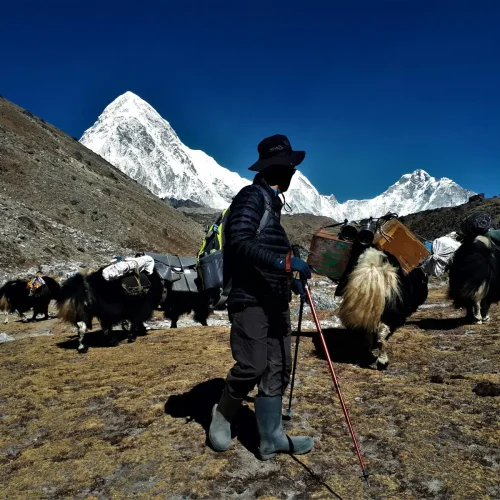
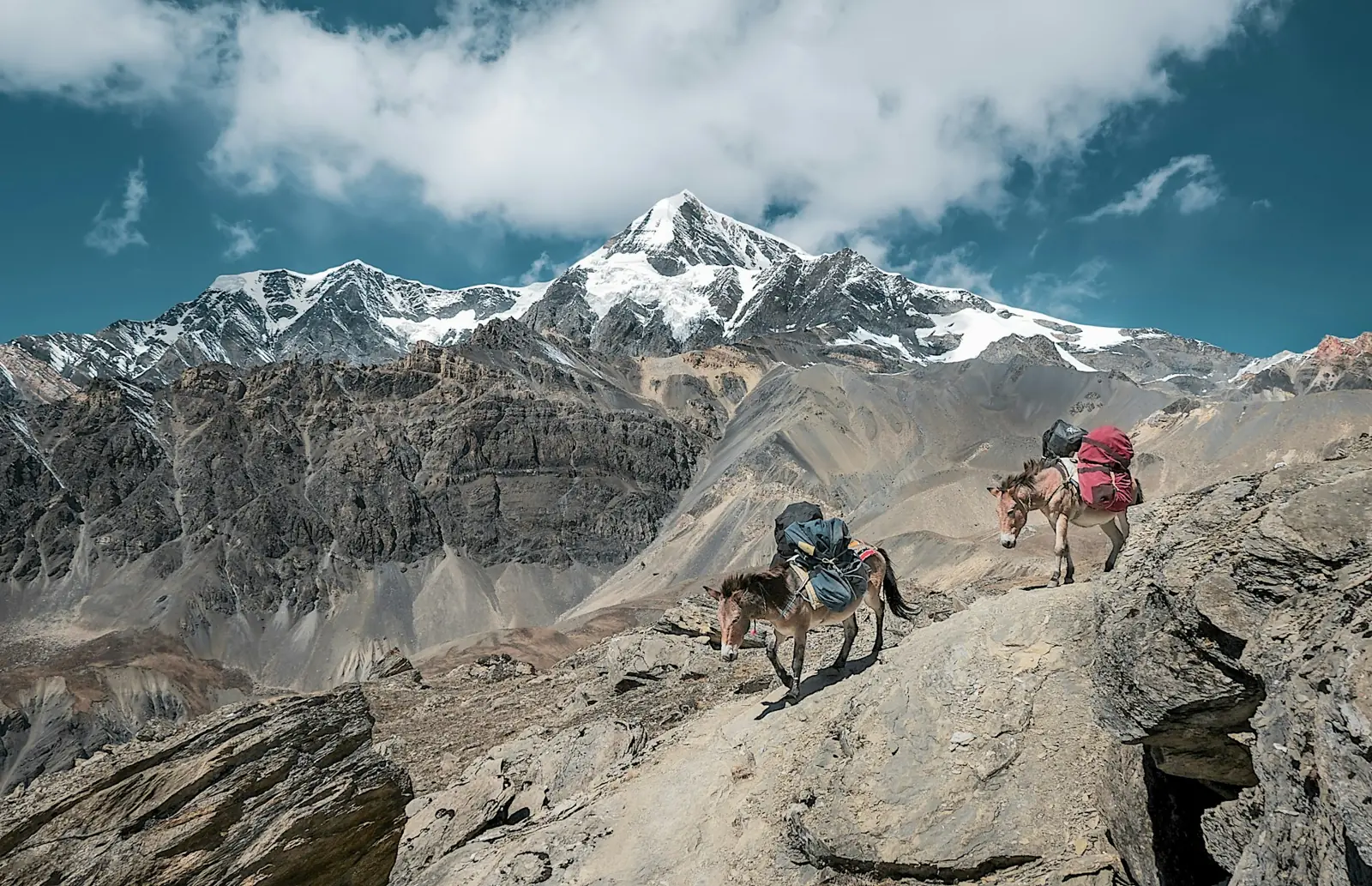
- On the trail you walk. Porters carry your main bag (up to 15kg).
- Weather delays at Lukla are common. That is why we recommend booking your international departure at least 1–2 days after the scheduled end of the trip.
Accommodation
- Kathmandu (3 nights): a comfortable tourist-standard hotel in or near Thamel, twin-share, with breakfast.
- Trekking lodges (11 nights): Khumbu teahouses are the best in Nepal. Expect twin rooms with two beds and a pillow and blanket, shared toilets on higher floors, and a heated dining room where everyone gathers in the evening. Namche and Lukla lodges often have attached bathrooms; Dingboche and Chhukung lodges are simpler.
- Island Peak Base Camp (2–3 nights): our crew sets up insulated tents with sleeping mats, a dining tent and a toilet tent. Your guide will explain whether your team sleeps at Base Camp or uses a high camp (around 5,600m), depending on conditions and water availability.
Single rooms are available in Kathmandu and at lower lodges for an extra cost, but they cannot be guaranteed in peak season higher up.
Meals & Drinking Water
All meals are included on the trek (breakfast, lunch and dinner), with breakfast in Kathmandu. Lodge menus are surprisingly broad: dal bhat (rice, lentils, vegetables and refills), noodle soups, Sherpa stew, pasta, potatoes, eggs and porridge. Dal bhat is the climbers’ choice for good reason: it is fresh, filling and you get seconds. At Base Camp our cook prepares hot meals for the team.
Avoid meat above Namche, since it is carried up without refrigeration. Don’t drink untreated tap or stream water. Carry purification tablets or a filter bottle, or buy boiled water at lodges. Avoid buying plastic bottles, as there is no waste collection on the trail.
Internet, Mobile Network & Charging
- Mobile data: Nepal Telecom and Ncell both have 4G coverage in many Khumbu villages, but it is unreliable above Dingboche and absent on the mountain.
- Wi-Fi: most lodges sell Wi-Fi or Everest Link prepaid cards. Speeds are slow and drop with weather.
- Charging: lodges charge per device, and the price rises with altitude. Bring a 20,000mAh power bank and keep batteries warm inside your sleeping bag at night.
- On the climb: your guide carries a radio or satellite communication for emergencies.
Island Peak Permits & Fees (2026)
Three permits are required, and a garbage deposit must be lodged. All are included in this package.
| Permit | Cost for foreign climbers |
|---|---|
| NMA Island Peak (Imja Tse) climbing permit | USD 350 spring (Mar–May); USD 175 autumn, winter & summer |
| Sagarmatha National Park entry permit | NPR 3,000 + 13% VAT (about USD 25) |
| Khumbu Pasang Lhamu Rural Municipality fee | NPR 3,000 (about USD 22) |
| Garbage deposit | USD 500 per team, refunded when waste is returned |
The NMA royalty was revised from 1 September 2025, so many older websites still show the previous rates. A TIMS card is not required in the Khumbu. Since April 2023, foreign trekkers in Nepal’s national parks must go with a licensed guide, and NMA peaks must be climbed with a licensed climbing guide. We need a copy of your passport and a passport photo to arrange the permits. More detail is in our trekking permits in Nepal guide.
Island Peak Packing List
Group climbing gear (fixed ropes, anchors, ice screws, ladders, tents) is provided. Personal climbing gear can be rented in Kathmandu, usually USD 100–150 for a full set. Your guide will check every item on Day 2, so you will not reach Base Camp with boots that don’t fit your crampons.
| Category | Items | Bring or rent? |
|---|---|---|
| Climbing hardware | Climbing harness, ascender (jumar), figure-8 or belay device, 2 locking + 2 non-locking carabiners, prusik/slings, ice axe, crampons, helmet | Rent in Kathmandu or bring |
| Footwear | Insulated double or high-altitude mountaineering boots (crampon compatible), broken-in trekking boots, camp shoes, liner + wool socks | Climbing boots can be rented; trekking boots should be your own |
| Insulation | Down jacket (rated about −20°C), synthetic or fleece mid-layer, thermal base layers (top and bottom) | Down jacket can be rented |
| Shell layers | Waterproof, windproof jacket and trousers | Bring |
| Hands & head | Thin liner gloves, insulated gloves, expedition mitts, warm hat, buff, sun hat | Bring |
| Sleeping | Sleeping bag rated −20°C or lower | Rentable in Kathmandu |
| Eyes & skin | Category 3–4 glacier sunglasses, ski goggles, SPF 50 sunscreen, lip balm | Bring |
| Packs | 35–45L daypack, duffel bag for porter (provided by us) | Bring daypack |
| Water & food | 2 × 1L insulated bottles, purification tablets or filter, energy snacks | Bring |
| Health | Personal first-aid kit, blister plasters, AMS medication (on medical advice), any personal medicines | Bring |
| Electronics | Headlamp + spare batteries, 20,000mAh power bank, phone/camera | Bring |
| Documents | Passport (6+ months validity), 2 passport photos, insurance details, cash in NPR | Bring |
For boots in particular, see our article on Everest hiking boots.
Island Peak Climbing Cost Breakdown
Our package price is from USD 2,450 per person. Here is what a realistic total budget looks like, so there are no surprises:
| Expense | Estimated cost (USD) | Included? |
|---|---|---|
| Island Peak Climbing package (18 days) | 2,450 | — |
| NMA permit, park & municipality fees, garbage deposit | — | Included |
| Kathmandu/Ramechhap–Lukla return flights | — | Included |
| Nepal tourist visa (30 days) | 50 | Not included |
| Travel insurance with helicopter evacuation to 6,500m | 150–400 (varies by age and country) | Not included |
| Personal climbing gear rental (if needed) | 100–150 | Not included |
| Lunch and dinner in Kathmandu (about 3 days) | 40–80 | Not included |
| Hot showers, charging, Wi-Fi, snacks on trek | 100–200 | Not included |
| Tips for guides, porters and Base Camp crew | 150–250 | Not included |
| Realistic total (excluding international flights) | about 3,050–3,550 |
How prices compare: budget Island Peak trips advertised for well under USD 2,000 usually cut acclimatisation days, the spare summit day, or the guide-to-climber ratio, or they leave permits and flights out of the headline price. Before you book with anyone, check those four points.
What’s Included
- Airport pickup and drop-off in Kathmandu
- 3 nights’ hotel in Kathmandu with breakfast (twin-share)
- Private transfer to Ramechhap (Manthali) airport when Lukla flights operate from there
- Kathmandu/Ramechhap – Lukla – Kathmandu/Ramechhap flights for you and your guide
- 11 nights in teahouse lodges on the trek (twin-share)
- 2–3 nights of camping at Island Peak Base Camp (tents, mats, dining and toilet tents)
- Breakfast, lunch and dinner throughout the trek and climb
- NMA-licensed climbing guide (one guide for every two climbers on summit day) and English-speaking trekking guide
- Porters (one porter for two climbers, up to 15kg each)
- Base Camp cook and kitchen staff
- NMA Island Peak climbing permit, Sagarmatha National Park permit and Khumbu Pasang Lhamu Rural Municipality fee
- Garbage deposit and waste management
- Group climbing equipment: fixed ropes, anchors, ice screws and snow stakes
- Rope training session at Base Camp
- Salary, meals, accommodation, insurance and equipment for all staff
- Comprehensive first-aid kit and pulse oximeter
- Duffel bag for the trek (yours to keep)
- Island Peak summit certificate issued by the NMA
- All government taxes and service charges
What’s Excluded
- International flights and Nepal visa fee
- Travel insurance (must cover high-altitude climbing and helicopter evacuation)
- Lunch and dinner in Kathmandu
- Personal climbing gear and clothing (rental available)
- Hot showers, battery charging, Wi-Fi, bottled drinks, alcohol and snacks
- Extra nights in Kathmandu or on the trail caused by early return, flight delays or personal reasons
- Helicopter rescue costs (billed to your insurance)
- Tips for your guides, porters and crew
- Anything not listed under What’s Included
Optional Add-ons
- Everest Base Camp & Kala Patthar extension (+2–3 days): walk to Base Camp and the Kala Patthar viewpoint before turning to Island Peak. This also improves your acclimatisation. See the Everest Base Camp Trek.
- Gokyo Lakes or Three Passes: for experienced trekkers who want more time in the Khumbu. See Gokyo Lakes Trek and our Three Passes trek guide.
- Helicopter return from Dingboche or Pheriche to Kathmandu after the climb, saving three days of walking (shared or private, price on request).
- Private climb: a dedicated guide team on your own dates.
- Kathmandu sightseeing: a guided day around the city’s UNESCO World Heritage sites. See our Kathmandu Valley Tour.
- Extra porter if you want to carry very little.
Travel Tips
- Break in your boots and rent the climbing boots early. On Day 2, try your rented boots with the crampons you will actually use.
- Book your international flight home 1–2 days after Day 18. Lukla weather does not care about your connection.
- Carry Nepali rupees. ATMs stop at Namche, and many of them run out of cash. Withdraw enough in Kathmandu for the whole trek.
- Keep the pace slow. If you can’t hold a conversation while walking, you are going too fast for the altitude.
- Protect your sleep. Earplugs, a buff over your eyes and a warm water bottle in your sleeping bag make a real difference above 4,000m.
- Eat on summit night, even if you are not hungry. Put snacks in an inside pocket so they don’t freeze.
- Hand warmers and a thermos of hot water are worth their weight before dawn.
- Listen to the turnaround time. Your guide will set one. Summits are optional; getting down is not.
Photography Spots
- The Lukla landing: sit on the left side of the plane for the best views of the mountains on the way in.
- Everest View Hotel ridge above Namche: your first proper view of Everest, Lhotse and Ama Dablam.
- Tengboche Monastery: the gompa with Ama Dablam behind it, best at sunrise.
- Dingboche and Nangkartshang: stone-walled potato fields with Ama Dablam, and big views of Makalu from the top of the hike.
- Chhukung Ri: a 360-degree panorama of the Lhotse–Nuptse wall, Island Peak and the Imja glacier.
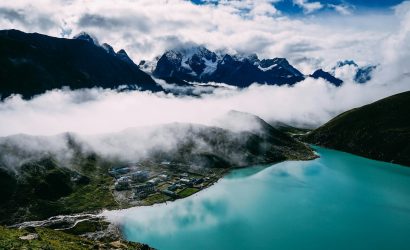
- Imja Tsho: the glacial lake below Base Camp, a striking blue-grey under the Island Peak ridge.
- The headwall and summit ridge at sunrise: keep your phone warm and on a lanyard, and only take photos when your guide says you are secure.
Responsible Trekking
- Carry it out. Everything that goes up to Base Camp comes back down, which is why the garbage deposit exists. We return all team waste.
- Use refillable bottles and purify your water instead of buying plastic.
- Respect Sherpa culture. Walk clockwise around mani walls and stupas, ask before photographing people, and dress modestly in villages and monasteries.
- Look after the porters. Our porters carry a maximum of 15kg each and have proper clothing, footwear, insurance and shelter. Please tip them fairly.
- Spend locally. Buy snacks and souvenirs in villages along the trail. That money stays in the Khumbu.
- Leave no trace on the mountain: no food scraps, no toilet paper left behind, and no new cairns.
Why Book Island Peak Climbing With Merriment Treks
- We design for the summit, not the brochure. The extra acclimatisation, Chhukung Ri and the spare day all cost us more to run, and they are there because they raise your chances of summiting.
- Licensed, experienced climbing guides registered with the Nepal Mountaineering Association, plus a cook and crew at Base Camp.
- Honest pricing. Permits, flights and the garbage deposit are in the price, and this page lists what you will still pay for yourself.
- Gear checked before you leave Kathmandu, and help renting anything you are missing.
- One local team from enquiry to summit: the people who answer your questions are the people who plan your climb.
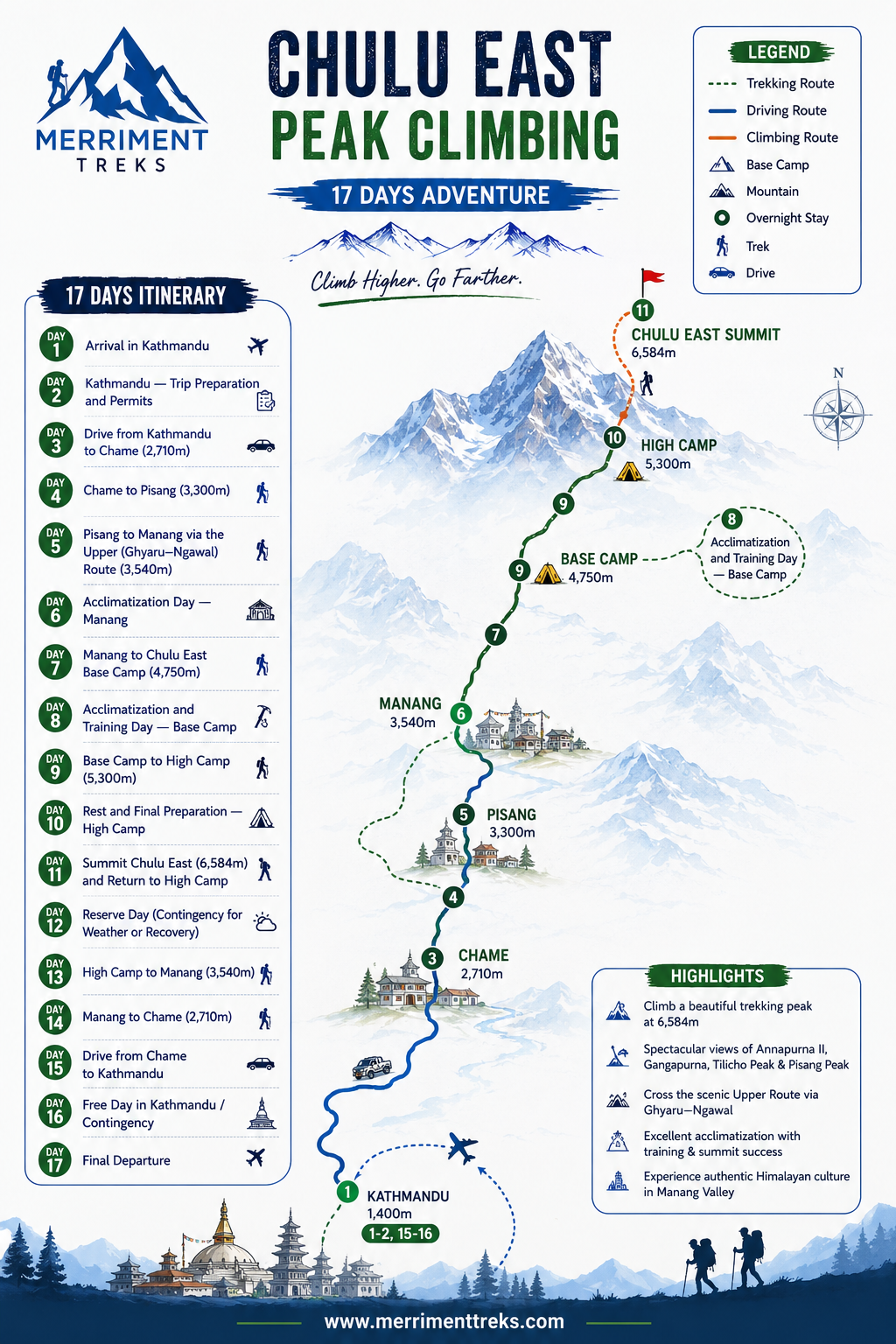
- Combined trips: Island Peak can be paired with our Everest Base Camp and Gokyo Lakes treks. For a higher, more remote objective, see Chulu East Peak Climbing in the Annapurna region, or browse all our peak climbing trips.
Cancellation & Refund Policy
Deposit, payment and cancellation terms are set out in our terms and conditions, and we confirm them in writing with every booking. Weather delays, a turned-back summit attempt or leaving the trek early are not refundable, so make sure your travel insurance covers trip cancellation and curtailment. If you have questions before booking, contact our team.
Ready to Climb Island Peak?
Island Peak Climbing is a serious but achievable goal for fit trekkers who prepare properly. The difference between a summit and a turnaround is usually decided weeks earlier: by your training, by the itinerary you choose, and by the team on the rope with you.
Tell us your preferred dates and your trekking experience, and we will reply with honest advice on readiness, the best departure for you and a clear quote. Contact us or use the booking form on this page to check dates.