Discover Nepal’s Living Heritage in Four Days
The Kathmandu Valley Tour is a 4-day package built around the seven UNESCO-listed monument zones that sit within a 15-kilometer radius of Kathmandu city. This is not a rushed sightseeing dash between photo stops. Each day is paced to give travelers time to actually look at the wood carving on a temple strut, watch a Newari craftsman at work, or sit at a rooftop café overlooking Durbar Square without being hurried to the next van pickup.
Most operators compress the valley’s heritage sites into one or two exhausting days, which usually means Bhaktapur gets a 45-minute drive-by and Patan is skipped entirely. This itinerary treats Patan and Bhaktapur as full-day destinations because they earn it — both were independent royal cities for centuries, each with its own architectural style, craft specialization, and Durbar Square layout. Rushing through them means missing what actually makes the valley worth visiting.
This package works for first-time visitors to Nepal who want a solid cultural introduction before or after a trek, travelers with limited time who don’t want to skip the valley’s core heritage, and repeat visitors who want to go deeper into neighborhoods and craft traditions they missed on a previous trip. Group sizes are kept small, and the itinerary is arranged so each site is visited at the time of day it’s least crowded and best lit, not simply in geographic order.
Quick Facts about Kathmandu Valley Tour
| Detail | Information |
|---|---|
| Package Name | Kathmandu Valley Tour – 4 Days |
| Duration | 4 Days / 3 Nights |
| Tour Type | Cultural & Heritage Sightseeing |
| Max Altitude | Nagarkot – approx. 2,175 m (optional add-on) |
| Group Size | 2–12 travelers (private departures available) |
| Difficulty | Easy |
| Walking Per Day | 3–6 km, mostly flat, some cobblestone lanes |
| Best Season | September to May |
| Starts/Ends | Kathmandu (Tribhuvan International Airport) |
| Accommodation | 3-star or 4-star hotel, Kathmandu |
| Transportation | Private tourist vehicle, driver included |
| Meals | Breakfast daily, one Newari lunch experience |
| Guide | English-speaking, government-licensed tour guide |
| Languages Available | English standard; other languages on request |
Kathmandu Valley Tour Overview
This Kathmandu Valley tour package is built around the three historic royal cities of the valley — Kathmandu, Patan, and Bhaktapur — along with the valley’s major Hindu and Buddhist pilgrimage sites. Each of the seven monument zones that make up the valley’s UNESCO World Heritage Site listing represents a different layer of Nepal’s history: Malla-era palace architecture, active Buddhist stupas that have functioned continuously for over a thousand years, and a Hindu temple complex that remains one of the most important Shiva shrines in South Asia.
Rather than treating each stop as a checklist item, the itinerary groups sites by theme and geography so travelers understand how they relate to each other historically. Bhaktapur and Patan are scheduled as separate full days because both cities reward slower exploration — narrow lanes, hidden courtyards (called bahals), and working craft squares that don’t register on a one-hour stop. Boudhanath and Pashupatinath are scheduled together on Day 3 since both sit on the eastern side of the valley and represent Nepal’s two major religious traditions almost side by side, a pairing that gives useful context on how Hinduism and Buddhism have coexisted in the valley for centuries.
Traffic and site-opening patterns also shape the schedule. Durbar Squares are quietest in early morning before tour buses arrive from outside the valley, so Kathmandu Durbar Square is visited on Day 1 afternoon when the Kumari House courtyard is calmer, and Bhaktapur is entered early on Day 2 before its narrow lanes fill with day-trippers from Kathmandu.
Why Choose This Kathmandu Valley Tour
- Balanced pacing. Four days is enough time to see the valley’s core heritage sites without the fatigue of a single-day marathon tour that many budget operators offer, where six sites get squeezed into eight hours.
- Licensed, English-speaking guides. Guides hold government-issued tourist guide licenses from the Department of Tourism and are briefed specifically on the history, architecture, and etiquette relevant to each site — not a generic memorized script repeated at every stop.
- Private vehicle throughout. No shared shuttle transfers between sites. The vehicle waits at each stop, which means the schedule can flex if a traveler wants an extra 20 minutes at a temple or a shorter stop somewhere else.
- Entry fees handled in advance. Ticket counters at Durbar Squares and religious sites can involve queues, particularly at Bhaktapur and Pashupatinath during peak season (October–November). These are arranged ahead of arrival where possible so the group doesn’t lose time standing in line.
- Realistic, honest recommendations. Where a monument is undergoing restoration work — still ongoing at some sites following the 2015 earthquake — or a viewpoint is weather-dependent, this is communicated upfront rather than glossed over in marketing photos.
- Local guide knowledge over generic commentary. Guides can point out details most self-guided visitors miss: which struts at Kathmandu Durbar Square depict erotic carvings and why, which section of Bhaktapur’s Nyatapola Temple survived the 2015 earthquake largely intact and why its design allowed that, and where in Boudhanath’s kora path older Tibetan refugee-run shops differ from newer tourist-facing ones.
Kathmandu Valley Tour Highlights
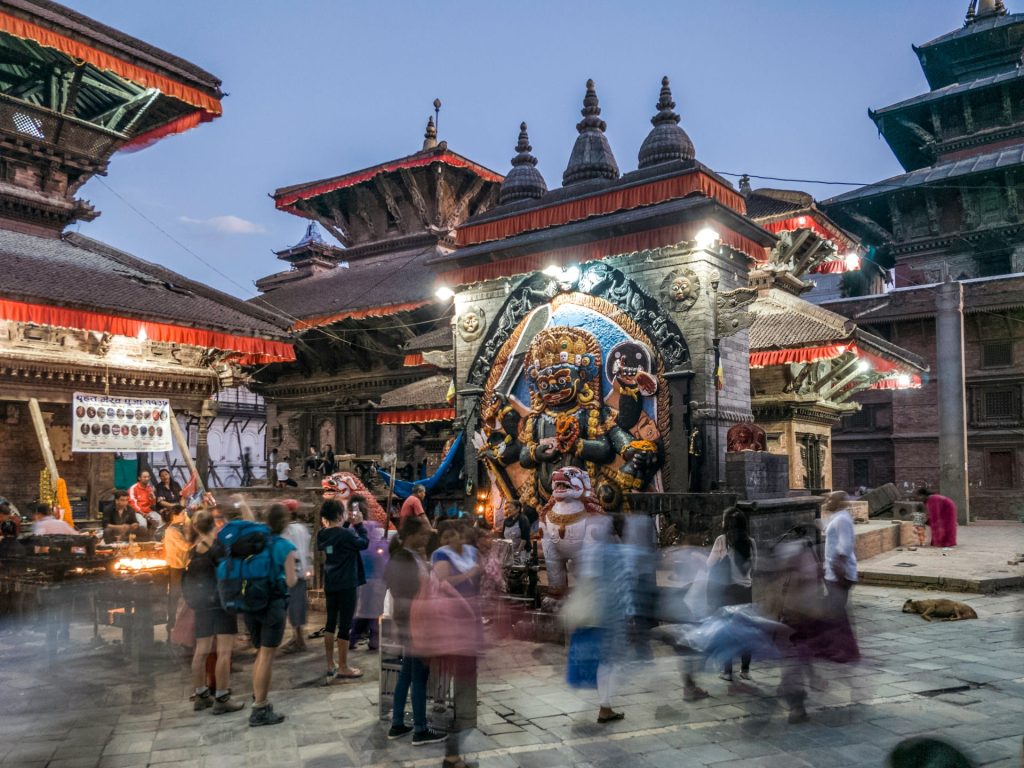
- Kathmandu Durbar Square, Patan Durbar Square, and Bhaktapur Durbar Square, all three former royal palace complexes
- Swayambhunath Stupa (the “Monkey Temple”) and its valley-wide viewpoint
- Boudhanath Stupa, one of the largest stupas in South Asia and center of the valley’s Tibetan Buddhist community
- Pashupatinath Temple, a major Hindu pilgrimage site on the Bagmati River
- Changunarayan Temple, believed to be the oldest surviving temple in the valley, dated to the 4th century
- Newari cultural neighborhoods, pottery squares, and hidden residential courtyards
- Optional Nagarkot sunrise excursion with Himalayan range visibility (weather-permitting)
- Local Newari lunch experience in Bhaktapur or Patan, including regional dishes rarely found outside the valley
- Time built in for photography at each site’s best light conditions, not just whenever the group happens to arrive
Kathmandu Valley Tour Itinerary Overview
Day 1: Arrival and Kathmandu Durbar Square
Day 2: Patan and Bhaktapur — Living Cities
Day 3: Boudhanath, Pashupatinath, and Changunarayan
Day 4: Optional Nagarkot Excursion and Departure
Places You’ll Visit
- Kathmandu Durbar Square
- Patan Durbar Square
- Bhaktapur Durbar Square
- Swayambhunath Stupa
- Boudhanath Stupa
- Pashupatinath Temple
- Changunarayan Temple
- Thamel
- Asan Bazaar
- Garden of Dreams (optional stop, entry fee applies separately)
- Nagarkot (optional)
UNESCO Heritage Sites Overview
Kathmandu Valley’s UNESCO World Heritage Site listing covers seven separate monument zones under one single designation, inscribed in 1979. This is worth understanding before visiting, since it explains why entry tickets and site management are handled separately at each zone despite falling under one UNESCO listing.
| Monument Zone | Significance | Approx. Visit Time |
|---|---|---|
| Kathmandu Durbar Square | Former royal palace of the Malla and Shah dynasties; Kumari House | 1.5–2 hours |
| Patan Durbar Square | Center of Newari art and metalwork tradition; best-preserved post-2015 | 2.5–3 hours |
| Bhaktapur Durbar Square | Largest and most intact of the three medieval city squares | 3 hours |
| Swayambhunath | Ancient Buddhist stupa, among the oldest religious sites in the valley | 1–1.5 hours |
| Boudhanath | Largest stupa in Nepal, center of Tibetan Buddhist community | 1–1.5 hours |
| Pashupatinath | Major Hindu temple complex on the Bagmati River | 1–1.5 hours |
| Changunarayan | Oldest temple in the valley, dated to the 4th century | 1 hour |
Cultural Experiences
Beyond the monuments themselves, this package includes exposure to Newari craft traditions still practiced in the valley today. In Patan, wood carving and metal repoussé work (used for temple struts, doors, and ritual objects) can be seen in small workshops just off the main square. In Bhaktapur, Pottery Square is a working craft site, not a staged tourist display — potters produce functional and decorative items daily using foot-powered wheels. Near Boudhanath, thangka painting studios (traditional Buddhist scroll paintings) operate openly, and some offer short demonstrations.
Religious practice is active throughout the tour rather than staged for visitors: butter lamp offerings at Buddhist stupas, daily prayer wheel circuits performed by locals as routine devotion rather than tourism, and Hindu cremation rituals conducted according to tradition at Pashupatinath. The guide provides context on what’s culturally appropriate to observe, photograph, or participate in at each of these moments.
Transportation Details
All transfers, including airport pickup/drop-off and daily sightseeing transport, use a private tourist vehicle sized to the group — typically a car for 2–4 travelers, a van for 5–8, or a small coach for larger groups. Vehicles are non-shared, meaning the schedule isn’t dependent on other travelers’ pace or unrelated group stops. Drivers are experienced with Kathmandu Valley’s traffic patterns and narrow old-town access roads, particularly relevant for reaching Bhaktapur and Patan during peak hours.
Accommodation
Three-star or four-star hotel accommodation in Kathmandu is included for all three nights, with breakfast. Hotels are typically located within or near Thamel or the Durbar Marg area for easy access to restaurants and nightlife during free evenings. Upgrades to four/five-star properties or boutique heritage hotels (some housed in restored Newari-style buildings) can be arranged on request at an additional cost, subject to availability.
Meals
Breakfast is included daily at the hotel. Lunch on Day 2 (the Newari cuisine experience in Patan or Bhaktapur) is included as part of the package. Other lunches and all dinners are not included, allowing travelers to explore Kathmandu’s restaurant scene independently — Thamel alone has a wide range of options from Nepali and Indian food to international cuisine and Western comfort food.
Best Time to Visit
September through November and March through May offer the clearest skies and most comfortable temperatures for sightseeing and the optional Nagarkot viewpoint. Autumn (Sept–Nov) also coincides with major festivals like Dashain and Tihar, which can add cultural richness to the trip but also means Durbar Squares and temples are busier than usual — worth factoring in if crowd levels matter to you.
The valley’s core Durbar Square and temple visits remain accessible year-round, since these aren’t weather-dependent the way mountain viewpoints are. Winter (Dec–Feb) brings cold mornings but generally clear, dry days, and is a quieter season for tourism overall. Monsoon season (June–August) brings afternoon rain most days, though mornings are typically clear enough for sightseeing if the schedule is planned around it.
Weather Overview
| Season | Months | Daytime Temp | Night Temp | Conditions |
|---|---|---|---|---|
| Autumn | Sept–Nov | 20–26°C | 10–15°C | Clear skies, ideal visibility, festival season |
| Winter | Dec–Feb | 10–18°C | 2–7°C | Cold mornings, generally clear days |
| Spring | Mar–May | 22–28°C | 12–18°C | Warm, occasional haze from regional dust |
| Monsoon | Jun–Aug | 24–30°C | 18–22°C | Humid, afternoon rain, clearer mornings |
Tour Difficulty
This is an Easy-grade tour. Walking is limited to short distances within Durbar Squares and pedestrian old-town areas, typically 3–6 km per day at a relaxed pace, and no trekking or strenuous physical activity is involved. Bhaktapur’s old town involves cobblestone lanes, and Swayambhunath’s stair route (if chosen over the road route) involves roughly 365 steps, so comfortable walking shoes are genuinely useful rather than optional advice.
Who Is This Tour Suitable For
- Families with children — short walking distances, flexible pacing, and no altitude concerns beyond the optional Nagarkot add-on
- Couples — private vehicle option available for a more personal, less group-paced experience
- Seniors — minimal walking, no strenuous days, and the option to skip Swayambhunath’s stairs in favor of road access
- Solo travelers — can join small group departures or book privately without a single supplement in some cases (ask when booking)
- Trekkers — commonly booked before or after a Himalayan trek as a cultural bookend, since the easy pacing works well either as an acclimatization buffer or a wind-down after a strenuous trek
Entrance Fees & Permits
Entrance fees for Kathmandu Durbar Square, Patan Durbar Square, Bhaktapur Durbar Square, Pashupatinath, Swayambhunath, Boudhanath, and Changunarayan are included in the package cost. These fees vary by nationality (SAARC nationals typically pay less than other international visitors) and are subject to change by the respective municipal authorities, so the included rate reflects current pricing at time of booking.
No special trekking permits (such as TIMS or conservation area permits) are required for this tour, since it does not involve restricted or conservation area trekking.
Packing Suggestions
| Category | Items |
|---|---|
| Clothing | Modest clothing covering shoulders/knees for temple visits, layers for cool mornings and evenings |
| Footwear | Comfortable walking shoes with good grip for cobblestone lanes and stairs |
| Accessories | Sun hat, sunglasses, scarf (useful for some temple entry requirements and dust) |
| Documents | Passport copy, visa (on arrival or pre-arranged), travel insurance details |
| Health | Basic first-aid items, hand sanitizer, any personal medication |
| Other | Reusable water bottle, camera/phone charger, small daypack, cash in Nepali rupees for donations and markets |
Cost Breakdown
The total cost for Kathmandu valley tour package is USD 275, and all the services included and not included are shown below:
| Item | Details |
|---|---|
| Accommodation (3 nights) | Included |
| Breakfast (daily) | Included |
| Lunch (Day 2 Newari experience) | Included |
| Private transportation | Included |
| English-speaking licensed guide | Included |
| Entrance fees (7 heritage sites) | Included |
| Airport transfers (arrival & departure) | Included |
| Other lunches/dinners | Not included |
| Nagarkot excursion | Optional add-on |
| International flights | Not included |
| Nepal visa fee | Not included |
| Personal expenses/tips | Not included |
Optional Experiences
- Nagarkot sunrise/Himalayan viewpoint excursion
- Newari cooking class in Bhaktapur or Patan
- Thangka painting workshop near Boudhanath
- Everest scenic mountain flight add-on
- Extended stay with a day trip to Dhulikhel or Panauti, two smaller heritage towns outside the main valley loop
Photography Tips
Photography is generally permitted at Durbar Squares, Swayambhunath, and Boudhanath, including the interior courtyards and temple exteriors. At Pashupatinath, photography of cremation rituals is discouraged out of respect for grieving families — the guide will indicate where and when this applies, and it’s a strictly followed etiquette point rather than a suggestion. Photography of the Kumari when she appears at Kathmandu Durbar Square is not permitted.
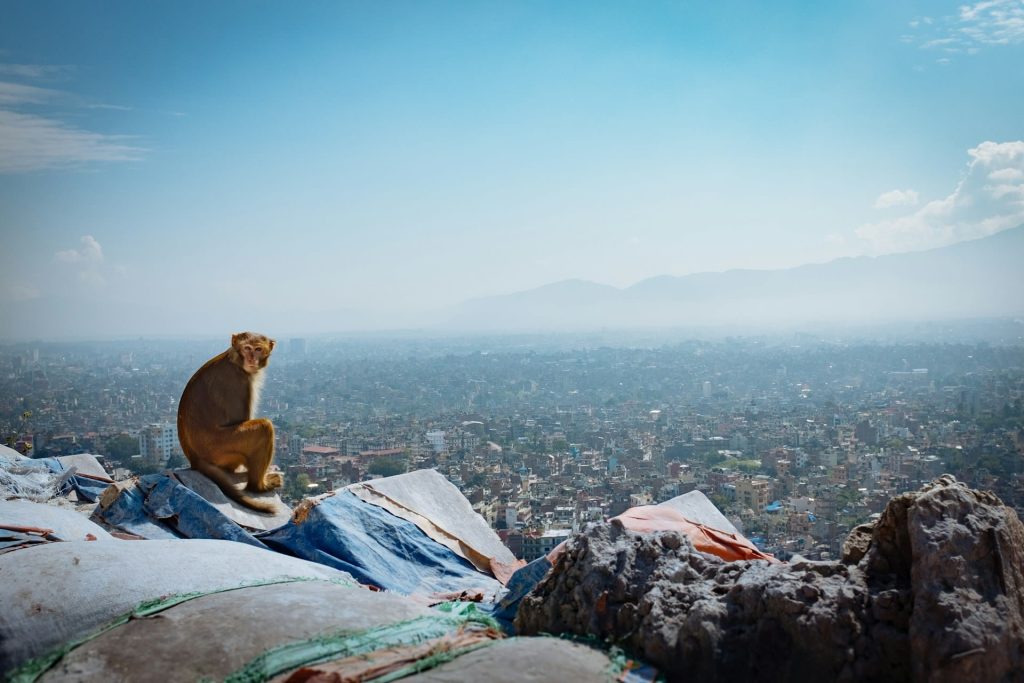
Early morning and late afternoon light works best at Bhaktapur’s Durbar Square due to the east-west orientation of the main temple facades. Swayambhunath’s hilltop viewpoint offers the best valley-wide photographs in the hour before sunset, which is part of why it’s scheduled for late afternoon on Day 1.
Local Travel Tips
- Remove shoes before entering temple interiors where required
- Dress modestly when visiting religious sites — shoulders and knees covered, and a scarf is useful for quick coverage
- Some areas of Pashupatinath are restricted to Hindus only; this is enforced and non-negotiable, not a formality
- Carry small denomination Nepali rupees for temple donations, tips, or minor purchases — larger bills can be hard to break at smaller shops
- Bargaining is customary in markets like Asan Bazaar, less so in fixed-price shops or established craft workshops
- Traffic in Kathmandu can be heavier than expected between roughly 8:00–10:00 AM and 5:00–7:00 PM; this is factored into the itinerary’s timing but worth knowing if extending free time independently
- Wi-Fi is widely available at hotels and cafés, but a local SIM card (available at the airport or in Thamel) is worth considering for navigation and connectivity during free time
Book The Kathmandu Valley Tour 4 days
This 4-day itinerary is built to give travelers a genuine, well-paced introduction to the Kathmandu Valley’s heritage without the exhaustion of an overpacked single-day tour. Reach out with our team with your group size, and we’ll confirm availability, hotel options, and current pricing.
-
Hotel
-
Kathmandu
-
Spring, Autumn
-
Drive
-
BLD
-
Available
Kathmandu Valley Tour Itinerary
Arrival at Tribhuvan International Airport. A representative from Merriment treks meets travelers at the arrivals hall with a name board, and the transfer to the hotel takes roughly 20–40 minutes depending on Kathmandu traffic and hotel location. After check-in, travelers have time to rest, particularly useful for long-haul arrivals affected by jet lag.
In the afternoon (typically starting around 2:00 PM), the tour begins at Kathmandu Durbar Square, the former royal palace complex of the Malla kings and later the early Shah dynasty. The square itself is a cluster of palace buildings, temples, and open courtyards built up over roughly 500 years, so the guide walks through it chronologically rather than randomly, starting at the older Hanuman Dhoka palace section before moving to later additions.
This stop includes the Kumari House, home to Nepal's living goddess tradition — the Kumari appears briefly at a upper-story window on some afternoons, though this is not guaranteed and depends on her schedule that day. Photography of the Kumari herself, when she does appear, is not permitted; photography of the courtyard and building is fine.
From Durbar Square, a short 10-minute drive leads to Swayambhunath Stupa, set on a hilltop on the western edge of the Kathmandu basin. The site is reached either by a steep stone staircase of roughly 365 steps (manageable for most fitness levels but genuinely a workout) or a longer, gentler road route that vehicles can approach directly — the guide will offer the choice based on group preference. Late afternoon is intentionally chosen for this stop: the crowds thin out, and the light over the valley is softer for photographs from the stupa's viewpoint. Evening is left free in Thamel, Kathmandu's main tourist district, for dinner and shopping at your own pace.
Departure from the hotel around 8:30 AM, ahead of Kathmandu's mid-morning traffic. Patan (also called Lalitpur), a short drive across the Bagmati River from central Kathmandu, is the first stop. Patan Durbar Square is generally considered to have the highest concentration of well-preserved temple architecture of the three Durbar Squares, largely because Patan suffered comparatively less damage in the 2015 earthquake.
The Patan Museum, housed in a restored wing of the old royal palace, is included as a quieter indoor stop — useful context on Newari metalwork and religious iconography before seeing more of it in situ later in the day. Beyond the square itself, the guide leads a short walk through Patan's surrounding bahals (traditional courtyard neighborhoods), which most tour groups skip entirely.
After lunch — a Newari meal at a local restaurant, usually featuring dishes like bara (lentil pancake) and choila (spiced grilled meat) — the tour continues to Bhaktapur, roughly 45 minutes to an hour away depending on traffic. Bhaktapur's old town is largely closed to vehicle traffic, so this stop is explored on foot at a slower pace than Patan.
Highlights include Bhaktapur Durbar Square itself, the 55-Window Palace, Nyatapola Temple (at five stories, the tallest pagoda-style temple in Nepal), and Pottery Square, where potters still throw clay on manually spun wheels using techniques passed down through generations. Because Bhaktapur charges a separate entry fee from Kathmandu and Patan, and enforces it more strictly, this is one of the fees explicitly included in the package cost.
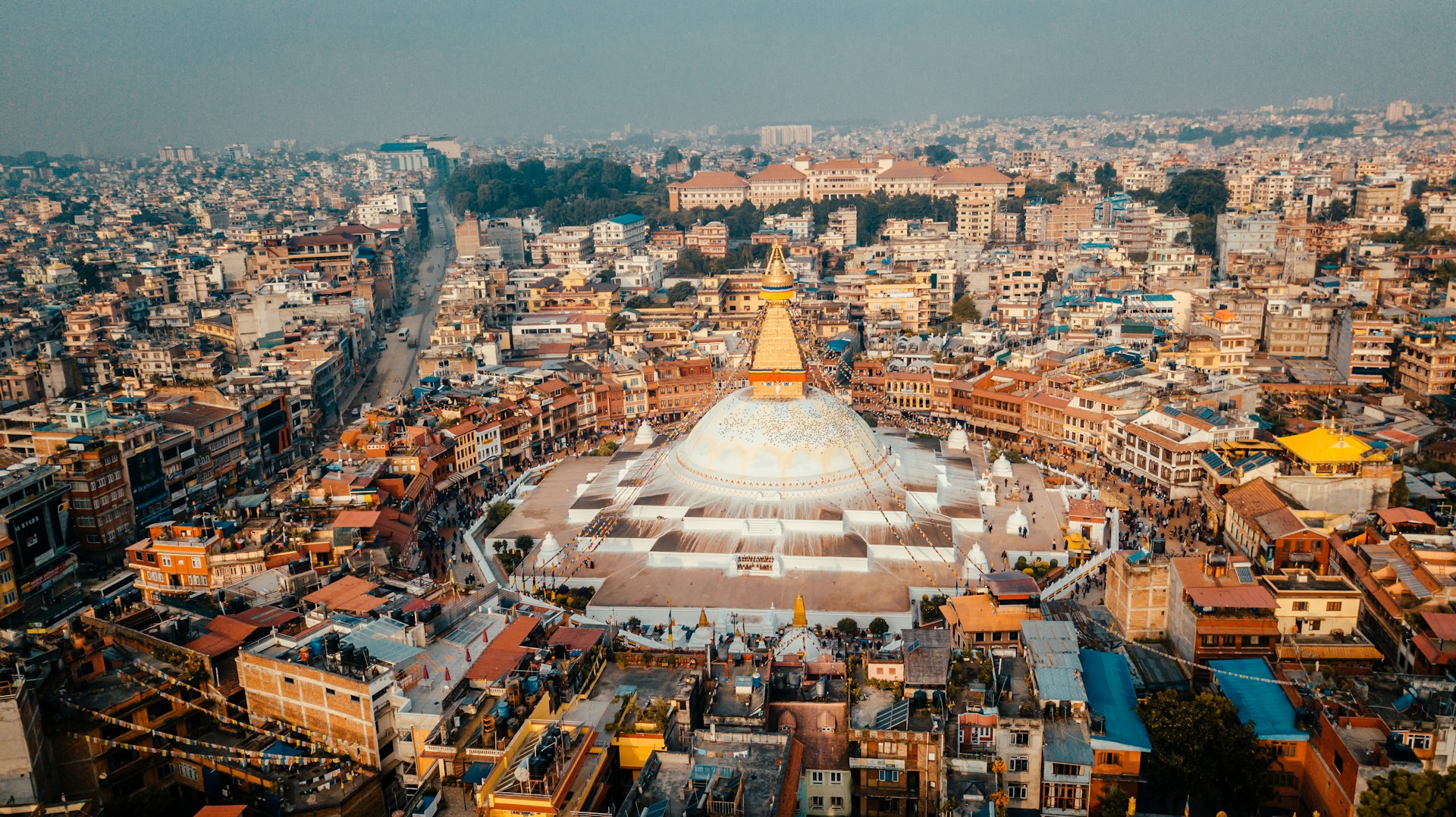
Departure around 8:00 AM to reach Boudhanath Stupa before it becomes crowded with mid-morning pilgrims and tour groups. Boudhanath is one of the largest stupas in South Asia and the center of the valley's Tibetan Buddhist community, many of whom settled in the surrounding neighborhood after 1959.
Travelers can walk the kora (clockwise circumambulation path) alongside monks and pilgrims, spin the prayer wheels lining the base, and — if timed right — watch or join butter lamp offerings at one of the surrounding monasteries. The rooftop cafés ringing the stupa plaza offer a good vantage point for photographs without joining the foot traffic below.
From Boudhanath, a short drive leads to Pashupatinath Temple, one of the most significant Hindu temples in South Asia, dedicated to Shiva. Non-Hindus cannot enter the main pagoda temple building — this is strictly enforced, not a soft suggestion — but the surrounding complex, including the cremation ghats along the Bagmati River, can be viewed from designated platforms across the river. The guide will explain what's happening at the ghats if a cremation is taking place, since it's common for visitors to be uncertain about etiquette here; photography of cremation ceremonies is discouraged, and the guide will indicate where this applies.
The day concludes at Changunarayan Temple, generally dated to the 4th century and considered the oldest surviving temple in the valley. It receives a fraction of the visitors that the other sites do, partly because it sits slightly outside the main touring loop, which makes it one of the quieter and more rewarding stops on the itinerary. The temple is known for intricate stone and metal artwork, including some of the oldest inscribed stone pillars in Nepal.
For travelers with a later flight, an early departure (around 5:00 AM) to Nagarkot offers a chance to view the Himalayan range, including Langtang and, on clear days, parts of the Everest range, from a valley-rim viewpoint roughly 32 km from Kathmandu. Visibility is genuinely weather-dependent — clearest in autumn and winter mornings, hazier in spring and monsoon — so this is offered as an optional add-on rather than a guaranteed itinerary highlight, and is priced and scheduled separately from the core package.
The remainder of the day is left free for last-minute shopping in Asan Bazaar, a market area known for spices, textiles, and religious goods, or in Thamel for more standard tourist shopping. Airport transfer is scheduled according to flight time, with pickup typically 3 hours before international departures.