-
6,584m
-
BLD
-
Drive/Flight
-
Spring
-
Hotel, Lodge
-
Guided
Chulu East Peak Climbing combines a trekking approach through the Manang Valley with a genuine technical summit above 6,500m, making it one of the more accessible entry points into Himalayan peak climbing without requiring prior expedition experience on an 7,000m or 8,000m mountain. At 6,584m, Chulu East sits within the Annapurna Conservation Area and is typically climbed alongside or as an extension of the Annapurna Circuit, using the acclimatization already built into that trek as a foundation for the higher, technical summit push.
Unlike trekking peaks that are essentially steep walks, Chulu East has a genuine glaciated section with crevasse hazard, a summit ridge requiring fixed-rope technique, and exposure that demands basic ice axe and crampon competence. This page sets out exactly what that means in practice — the route, the technical sections, the gear, the realistic cost, and who this expedition suits — so you can assess your own readiness honestly before booking.
Chulu East Peak Climbing Trip Facts
| Detail | Information |
|---|---|
| Peak Name | Chulu East |
| Height | 6,584m |
| Region | Annapurna Region, Manang Valley |
| Climbing Category | NMA Trekking/Climbing Peak (Group B) |
| Difficulty | Technical — moderate climbing grade |
| Expedition Duration | 18–19 Days (Kathmandu to Kathmandu) |
| Base Style | Approach trek + high camp + summit push |
| Best Season | Pre-monsoon (April–May), Post-monsoon (September–October) |
| Technical Requirements | Ice axe, crampon, and fixed-rope use on summit ridge |
| Permits Required | NMA Climbing Permit, Annapurna Conservation Area Permit (ACAP), TIMS Card |
| Cost | From USD 2,650 per person |
Trip Overview
Chulu East is classified by the Nepal Mountaineering Association as a Group B peak, which means it sits above the trekking-peak category in technical demand but well below expedition-grade mountains like Ama Dablam or the 8,000m giants. The approach follows part of the Annapurna Circuit through Manang before branching off toward Base Camp and High Camp, with the summit attempt itself involving a pre-dawn start, a glacier crossing, and a fixed-rope section on the final ridge.
This isn’t a peak to add on impulsively. The technical sections are genuine — not simulated for effect — and climbers who haven’t used crampons or an ice axe before arriving in Nepal should expect a steep learning curve during the on-route training days built into this itinerary.
Why Choose Chulu East Peak Climbing Package
Several operators sell Chulu East as a add-on to the Annapurna Circuit without adequate technical preparation time, which is where most unsuccessful summit attempts on this peak originate — not from altitude, but from climbers reaching High Camp without having practiced rope and crampon technique beforehand. This itinerary includes dedicated training days at Base Camp specifically to address that gap.
Guides on this expedition hold climbing-specific qualifications beyond standard trekking guide certification, and group sizes are kept small enough that the guide-to-climber ratio supports safe rope management on summit day rather than large groups moving as a bottleneck on narrow sections.
Chulu East Peak Climbing Highlights
- Summit a genuine 6,584m technical peak within the Annapurna Conservation Area
- Combine the cultural and scenic value of the Annapurna Circuit approach with a real technical climbing objective
- Dedicated on-site training days at Base Camp covering crampon technique, ice axe use, and fixed-rope ascent/descent
- Small group sizes for safer rope management on the glacier and summit ridge
- Full acclimatization built in through the Manang Valley approach before the technical climbing phase begins
- Summit day views across the Annapurna Himal, including Annapurna II, III, IV, and Gangapurna
Climbing Route Overview
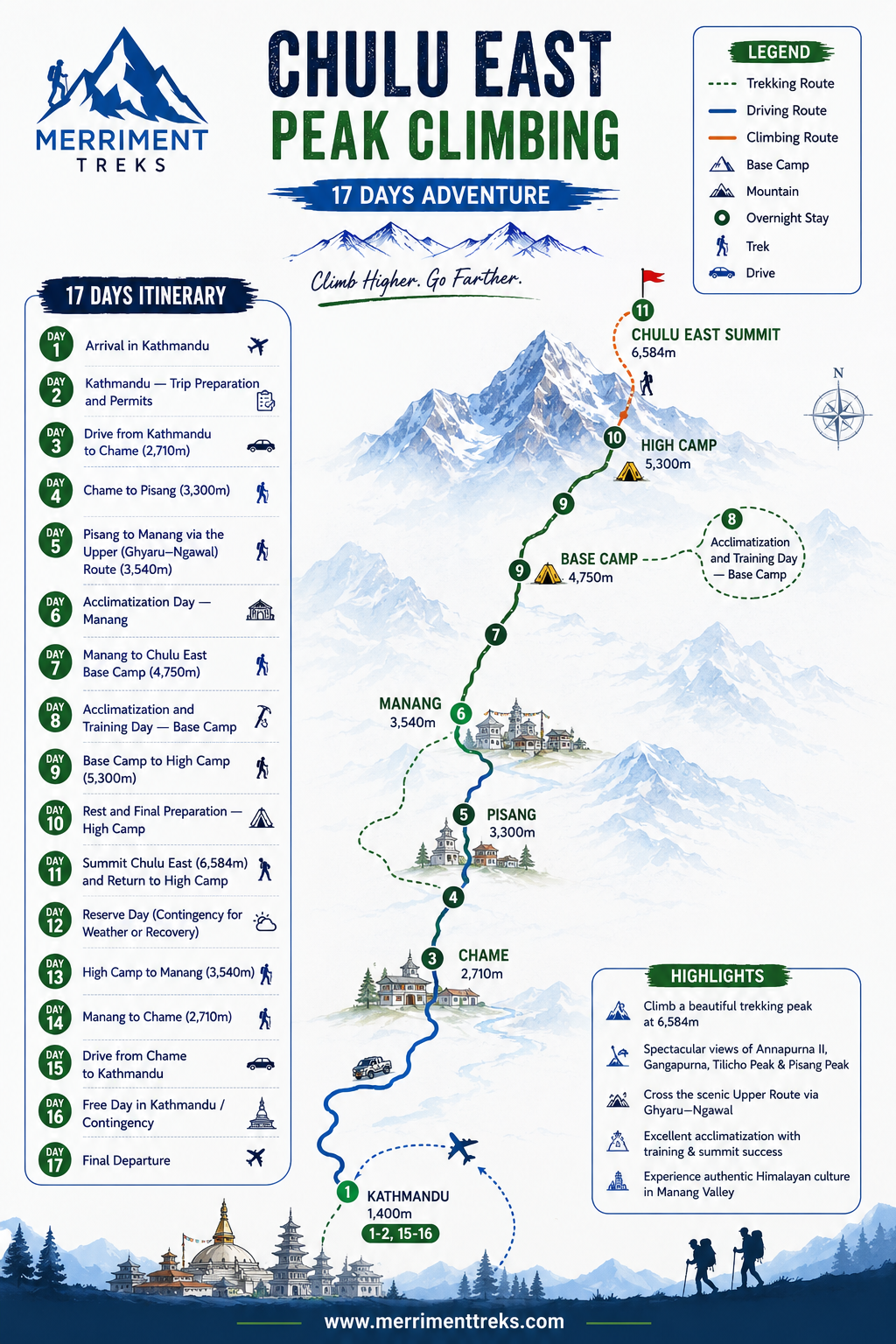
The route follows the standard Annapurna Circuit trail from Besisahar (or a shorter drive-in point) up through Chame and into Manang, then diverges toward Chulu East Base Camp via Julu village. From Base Camp, the route crosses moderate scree and rock terrain to High Camp, then onto the glacier itself for the final summit push, which involves roped travel across crevassed sections and a fixed-line ascent up the summit ridge.
Chulu East Peak Climbing Itinerary Overview
Day 1: Arrival in Kathmandu
Day 2: Kathmandu — Trip Preparation and Permits
Day 3: Drive from Kathmandu to Chame (2,710m)
Day 4: Chame to Pisang (3,300m)
Day 5: Pisang to Manang via the Upper (Ghyaru–Ngawal) Route (3,540m)
Day 6: Acclimatization Day — Manang
Day 7: Manang to Chulu East Base Camp (4,750m)
Day 08: Acclimatization and Training Day — Base Camp
Day 09: Base Camp to High Camp (5,300m)
Day 10: Rest and Final Preparation — High Camp
Day 11: Summit Chulu East (6,584m) and Return to High Camp
Day 12: Reserve Day (Contingency for Weather or Recovery)
Day 13: High Camp to Manang (3,540m)
Day 14: Manang to Chame (2,710m)
Day 15: Drive from Chame to Kathmandu
Day 16: Free Day in Kathmandu / Contingency
Day 17: Final Departure
Approach Trek Information
The approach to Base Camp follows genuine Annapurna Circuit trail for the first several days, meaning climbers experience the same tea house infrastructure, cultural exposure through Manang village, and gradual altitude gain that circuit trekkers rely on for acclimatization. This shared acclimatization is deliberate — attempting Chulu East without first spending several days above 3,000m substantially increases altitude-related risk on the glacier and summit ridge.
Summit Day Experience
Summit day starts in darkness, both to reach the summit before afternoon wind picks up and because the snow and ice conditions are more stable while still frozen from overnight temperatures. The route from High Camp crosses a moderately angled glacier section requiring roped travel due to crevasse risk, particularly later in the season as snow bridges weaken. The final section to the summit ridge involves a fixed rope that climbers ascend using a jumar, with genuine exposure on both sides in places.
The summit itself is a narrow point rather than a broad plateau, and time spent there is typically brief — group photos and a short rest before beginning the descent, which carries its own risk as fatigue and looser snow conditions develop through the day.
Altitude Profile
| Day | Location | Altitude |
|---|---|---|
| 1 | Chame | 2,710m |
| 2 | Pisang | 3,200m |
| 3 | Manang | 3,540m |
| 5 | Julu | 3,900m |
| 6 | Chulu East Base Camp | 4,900m |
| 9 | High Camp | 5,300m |
| 10 | Chulu East Summit | 6,584m |
Chulu East Peak Climbing Difficulty
Chulu East is graded as a technical climb, sitting above trekking-peak difficulty but below full expedition mountains. The approach trek itself is only moderately demanding, but the summit day involves genuine glacier travel with crevasse hazard and a fixed-rope ridge section with real exposure — not a simulated or optional technical element. Climbers should not treat this as “a long trekking day with a rope” — the skills used on summit day are the same fundamentals used on far bigger mountains, just at a shorter, more contained scale.
Required Skills and Experience
- No prior expedition-grade mountaineering experience required, but comfort with steep, exposed terrain is essential
- Basic crampon and ice axe familiarity is helpful before arrival, though the itinerary includes on-site training
- Ability to learn and correctly execute jumar ascent and rappel/descent technique under guide supervision within the training days provided
- Prior high-altitude trekking experience (4,000m or higher) is strongly recommended so climbers already know how their body responds before the technical phase begins
- Comfort with roped travel and basic self-arrest technique, taught on-site if not already known
Physical Fitness Requirements
- Strong cardiovascular fitness sufficient for consecutive days of 5–6 hour walking at altitude, followed by a 10–12 hour summit day
- Leg and core strength for sustained step-kicking on snow slopes and stability while wearing crampons on mixed terrain
- At least 3 months of structured training beforehand — cardio, leg strength, and if possible practice on any local snow/ice terrain or via a climbing gym for rope familiarity
- Mental readiness for early starts, cold exposure, and sustained exposure on the summit ridge
Acclimatization Strategy
Acclimatization happens in two phases. The approach trek through Chame, Pisang, and Manang follows standard “climb high, sleep low” principles with a dedicated rest day at Manang (3,540m), consistent with any Annapurna Circuit itinerary. The second phase happens at Base Camp itself, where the two training days serve a dual purpose — technical preparation and additional altitude adjustment before pushing to High Camp and the summit. Skipping or compressing either phase measurably increases summit-day risk.
Best Season for Chulu East Peak Climbing
Pre-monsoon (April–May): Warmer temperatures, generally stable weather windows, and firmer snow conditions on the glacier approach.
Post-monsoon (September–October): The clearer visibility window of the year, though early-season snow at higher elevations can occasionally affect route conditions on the summit ridge.
Winter and monsoon are not recommended — winter brings excessive cold and wind loading risk on the ridge, while monsoon significantly increases crevasse and avalanche risk due to fresh snow accumulation and poor visibility.
Weather Conditions
| Season | Base Camp Daytime Temp | Summit Day Temp | Conditions |
|---|---|---|---|
| Pre-monsoon (Apr–May) | 5–10°C | -15 to -10°C | Stable, firmer snow |
| Post-monsoon (Sep–Oct) | 0–8°C | -18 to -12°C | Clearest visibility, possible early snow |
| Winter (Dec–Feb) | -10 to -5°C | -25 to -20°C | Extreme cold, high wind loading |
| Monsoon (Jun–Aug) | 8–15°C | -10 to -5°C | High crevasse/avalanche risk, poor visibility |
Transportation Details
Kathmandu to the trailhead (Besisahar or a further drive point depending on road conditions) is covered by private jeep, taking 7–8 hours. The return from the circuit’s far side, if continuing over Thorong La, typically exits via Jomsom with a short flight or long drive back to Kathmandu or Pokhara.
Permits and Regulations
| Permit | Approximate Cost |
|---|---|
| NMA Peak Climbing Permit (Chulu East, Group B) | USD 250–350 depending on season |
| Annapurna Conservation Area Permit (ACAP) | NPR 3,000 approx. (USD 23) |
| TIMS Card | USD 20 approx. |
Permits are arranged by your agency, but the climbing permit specifically requires a certified climbing guide registered with the Nepal Mountaineering Association to accompany the group — independent climbing without a licensed guide is not permitted on NMA peaks.
Chulu East Peak Climbing Equipment Checklist
| Category | Items |
|---|---|
| Head & Body Protection | Climbing helmet, UV-rated sunglasses/glacier goggles |
| Technical Hardware | Ice axe, crampons (compatible with mountaineering boots), climbing harness, jumar, figure-8 or ATC descender, locking and non-locking carabiners |
| Footwear | Insulated mountaineering boots (rated for 6,000m+), liner socks, gaiters |
| Clothing | Down suit or heavyweight down jacket + insulated pants, base layers, softshell climbing layer, insulated gloves + liner gloves |
| Sleeping | 4-season expedition-rated sleeping bag (-20°C or colder) |
| Camp Gear | Headlamp with spare batteries, trekking poles, insulated water bottles/thermos |
| Personal | Sunscreen (high SPF), lip balm with SPF, personal first-aid kit, any personal medications |
Technical hardware (rope, ice axe, crampons, harness) is typically provided or available for rental through the agency; personal clothing and boots are the climber’s responsibility.
Accommodation During Expedition
Tea houses with twin-sharing rooms are used throughout the approach trek up to Manang and Julu. From Base Camp onward, accommodation shifts to expedition-style tented camps, with a communal dining tent and individual sleeping tents. High Camp uses lightweight tents suited for a short overnight stay before the summit push rather than extended comfort.
Meals and Food
Standard tea house meals (dal bhat, noodles, soups, breakfast items) are served through the approach trek. From Base Camp upward, meals are prepared by an expedition cook team and shift toward higher-calorie, easier-to-digest options suited to altitude and cold — soups, pasta, and hot drinks feature heavily, particularly around summit day when appetite typically decreases.
Guide and Climbing Support
This expedition is led by a guide holding NMA-recognized climbing qualifications in addition to standard trekking guide certification, supported by a climbing Sherpa team for rope-fixing and load-carrying on summit day. Group sizes are kept intentionally small so the guide-to-climber ratio supports proper rope management rather than large groups queuing on narrow sections of the summit ridge.
Safety and Risk Management
- Fixed ropes are set on the summit ridge in advance of client movement wherever conditions allow
- Guides continuously assess glacier and weather conditions and will delay or abort a summit attempt if crevasse bridges or wind conditions are unsafe
- Basic oxygen and first-aid supplies are carried by the guide team
- Communication equipment (satellite phone or equivalent) is carried for emergency coordination
- Descent, not medication, remains the primary response to worsening altitude symptoms at any stage of the expedition
- The built-in reserve day exists specifically so a weather-delayed summit attempt doesn’t force a rushed, riskier decision
Chulu East Peak Climbing Cost Breakdown
| Item | Cost (USD) |
|---|---|
| Chulu East Peak Climbing Package (18–19 Days) | 2,650 |
| NMA Climbing Permit | Included |
| Technical group climbing equipment (rope, anchors) | Included |
| International flights | Not included |
| Nepal visa fee | Not included |
| Personal climbing gear (boots, harness rental if needed) | Not included, rental available |
| Travel and rescue/evacuation insurance | Not included |
| Tips for guides and climbing Sherpas | Approx. 10–15% of package cost (customary) |
Optional Services
- Personal climbing equipment rental (boots, crampons, harness)
- Extension to complete the full Annapurna Circuit over Thorong La Pass
- Private guide-to-climber ratio upgrade (1:1 instead of standard group ratio)
- Additional acclimatization or training day at Base Camp
- Pre-departure gear check and technical briefing in Kathmandu
Preparation Tips
- Begin structured cardio and strength training at least 3 months before departure
- If possible, get hands-on practice with crampons, an ice axe, and basic rope work beforehand — a climbing gym or a mountaineering course does this well
- Break in mountaineering boots thoroughly; blisters at High Camp are a serious problem, not a minor inconvenience
- Rent unfamiliar technical gear locally in Kathmandu rather than buying new gear you haven’t tested
- Take the Base Camp training days seriously — treat them as mandatory skill-building, not a rest break
FAQs about Chulu East Peak Climbing
1. What is Chulu East Peak Climbing?
It’s a technical climb to a 6,584m peak in the Annapurna region, combining an Annapurna Circuit-style approach trek with a genuine glaciated summit push requiring rope and crampon skills.
2. Where is Chulu East Peak located?
In the Manang Valley, within the Annapurna Conservation Area, accessed via the standard Annapurna Circuit approach route.
3. How high is Chulu East Peak?
6,584m (21,601 ft).
4. How difficult is Chulu East Peak?
It’s classified as a technical Group B peak — harder than a trekking peak but less demanding than a full expedition mountain. The summit day involves genuine glacier travel and a fixed-rope ridge section.
5. Do I need previous climbing experience?
No prior expedition experience is required, but comfort with exposed, technical terrain and prior high-altitude trekking experience are strongly recommended.
6. What technical skills are required?
Crampon and ice axe use, jumar ascending, basic rappelling/descending, and roped glacier travel — all covered in the on-site training days if not already known.
7. How many days does the expedition take?
18–19 days from Kathmandu, including the approach trek, Base Camp training, summit attempt, and return.
8. What is the climbing route?
From Manang via Julu to Base Camp, then High Camp, followed by a glacier crossing and fixed-rope summit ridge to the top.
9. What permits are required?
An NMA Climbing Permit, Annapurna Conservation Area Permit (ACAP), and TIMS Card.
10. What equipment is needed?
Personal mountaineering clothing and boots, plus technical hardware (ice axe, crampons, harness, rope equipment) which is largely provided or available for rental.
11. What is included and excluded?
Included: permits, guide, transport, meals, accommodation, and group climbing gear. Excluded: international flights, insurance, personal gear, and tips — full detail above.
12. What is the best season for Chulu East?
Pre-monsoon (April–May) and post-monsoon (September–October) offer the most stable conditions.
13. How much does Chulu East Peak Climbing cost?
This package is USD 2,650 per person, covering permits, guide, transport, accommodation, meals, and group climbing equipment.
14. What accommodation is provided?
Tea houses during the approach trek, and expedition-style tented camps at Base Camp and High Camp.
15. How does acclimatization work on this climb?
Through the Annapurna Circuit-style approach trek with a rest day at Manang, followed by additional adjustment during the Base Camp training days before the push to High Camp and summit.
16. What safety measures are followed?
Fixed ropes on the summit ridge, continuous guide assessment of glacier and weather conditions, basic oxygen and first-aid on hand, satellite communication, and a built-in reserve day to avoid rushed summit decisions.
17. Why climb with a professional guide?
NMA regulations require a certified climbing guide on this peak, and beyond the legal requirement, professional rope management and route-finding on the glacier and ridge meaningfully reduce real risk.
18. Can beginners attempt Chulu East?
Climbers without prior technical experience can attempt it, provided they commit fully to the on-site training days and arrive with strong physical fitness and high-altitude trekking experience.
19. What is summit day like?
A pre-dawn start, a roped glacier crossing with crevasse hazard, and a fixed-rope ascent up an exposed summit ridge, totaling 10–12 hours round trip from High Camp.
20. Is Chulu East climbed alongside the Annapurna Circuit?
Yes, commonly — the approach shares the same trail through Manang, and climbers can extend to complete the full circuit over Thorong La Pass afterward as an optional add-on.
21. What happens if the weather is bad on summit day?
The built-in reserve day allows the guide team to delay the attempt rather than push through unsafe conditions, which is a deliberate part of this itinerary’s safety design.
22. Do I need travel insurance for this expedition?
Yes — specifically insurance covering high-altitude climbing and helicopter rescue/evacuation, given the technical and remote nature of the summit day.
Chulu East rewards climbers who prepare seriously and train with a guide team that treats the technical sections as real, not optional. If you’re ready for a genuine introduction to Himalayan peak climbing — glacier travel, fixed ropes, and a real summit above 6,500m — get in touch to check season availability and start planning your Chulu East Peak Climbing expedition