Everest View Hotel
Search “Everest View Hotel” and you’ll quickly learn the headline facts: it sits at 3,880 metres above Namche Bazaar, it opened in 1971, and it once entered the Guinness World Records as the highest-placed hotel on earth. What those facts don’t tell you is the thing you actually need to decide — how to experience it. Most people who see the hotel never sleep there. They walk up for an hour, drink tea on the terrace with Everest filling the sky, and walk back down. Others fly in by helicopter for breakfast. A few book a room. Each of those is a genuinely different trip, with different costs, effort, and — importantly — different effects on your body at altitude.
This guide is built around that decision. It covers what the hotel is and what you’ll see, then walks through the three realistic ways to visit, the acclimatization logic that should shape your choice, honest cost ranges, the best seasons, and who the experience suits. The aim is to help you arrive with the right expectations rather than the brochure version.
Everest View Hotel at a glance
| Detail | Information |
|---|---|
| Location | Syangboche ridge, above Namche Bazaar, Khumbu region, Sagarmatha National Park, Nepal |
| Altitude | 3,880 m (12,730 ft) |
| Opened | 1971 |
| Rooms | 12, all with direct views toward Everest |
| Distinction | Listed by Guinness World Records (2004) as the highest-placed hotel in the world |
| Access | On foot from Namche (~1.5–2.5 hrs) or by helicopter to the Syangboche helipad |
| Peaks in view | Everest, Lhotse, Nuptse, Ama Dablam, Thamserku, Kangtega, Taboche |
| Best seasons | Spring (Mar–May) and autumn (late Sep–Nov) |
What the hotel actually is
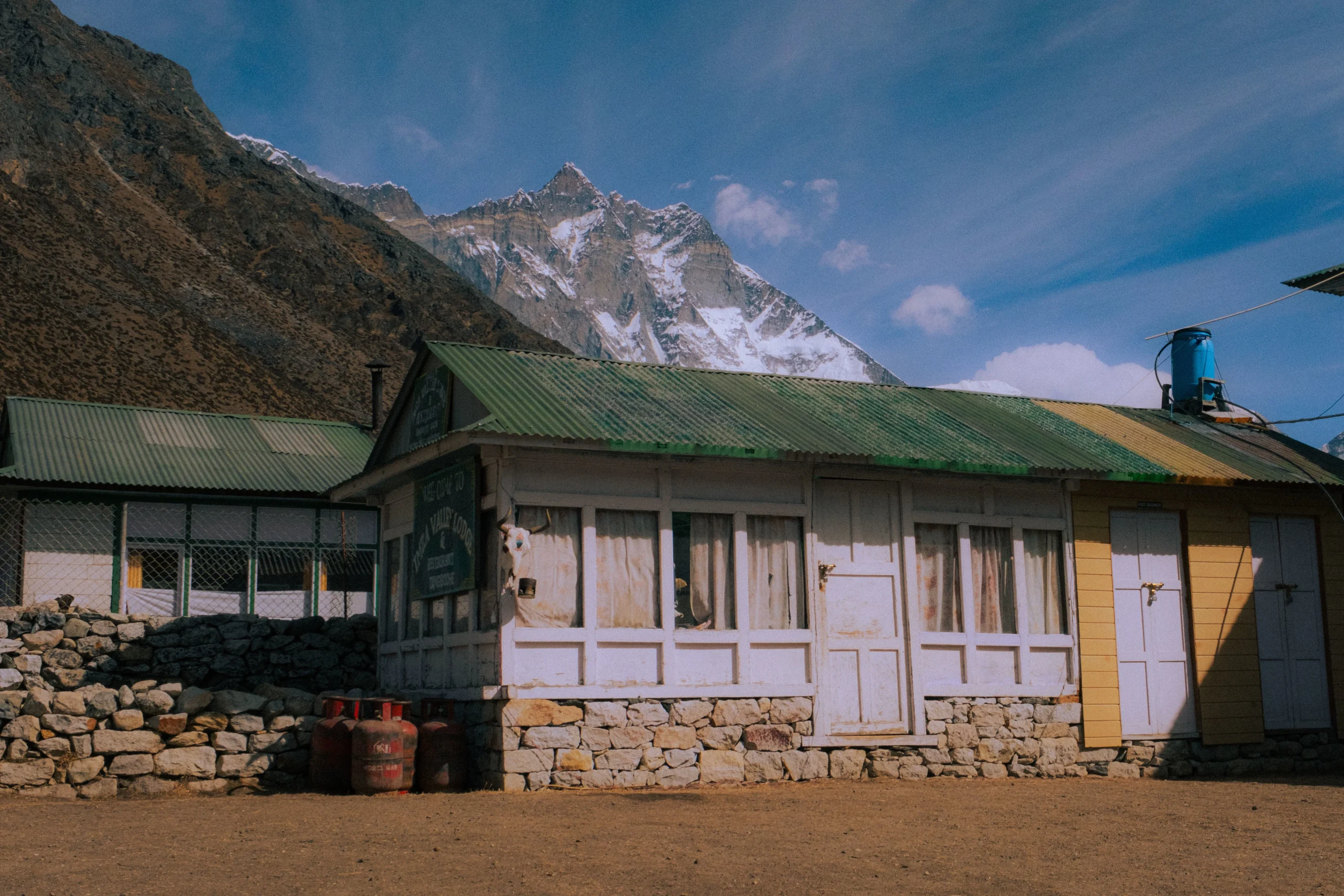
Everest View Hotel is a small, purpose-built lodge on a ridge that faces directly north toward the highest mountains on the planet. It was the vision of Takashi Miyahara, a Japanese tourism entrepreneur who saw what the Khumbu could offer, and it was designed by architect Yoshinobu Kumagaya. Building it in 1971, in a place with no roads, was a logistical feat — every window, blanket, and piece of cutlery had to be carried up by porter or flown in. That backstory matters, because it explains the hotel’s character. This is not a city five-star transplanted into the mountains. It is a modest, well-made building of stone and timber whose entire reason for existing is the view from its windows and terrace.
The Guinness listing in 2004 cemented its fame as the world’s highest-placed hotel, and it has featured in guidebooks and travel media ever since, becoming a destination in its own right rather than simply a place to sleep. Set your expectations accordingly and you’ll enjoy it; expect marble lobbies and you’ll be puzzled. The luxury here is location, quiet, and a window onto Everest — not thread count.
What you can actually see
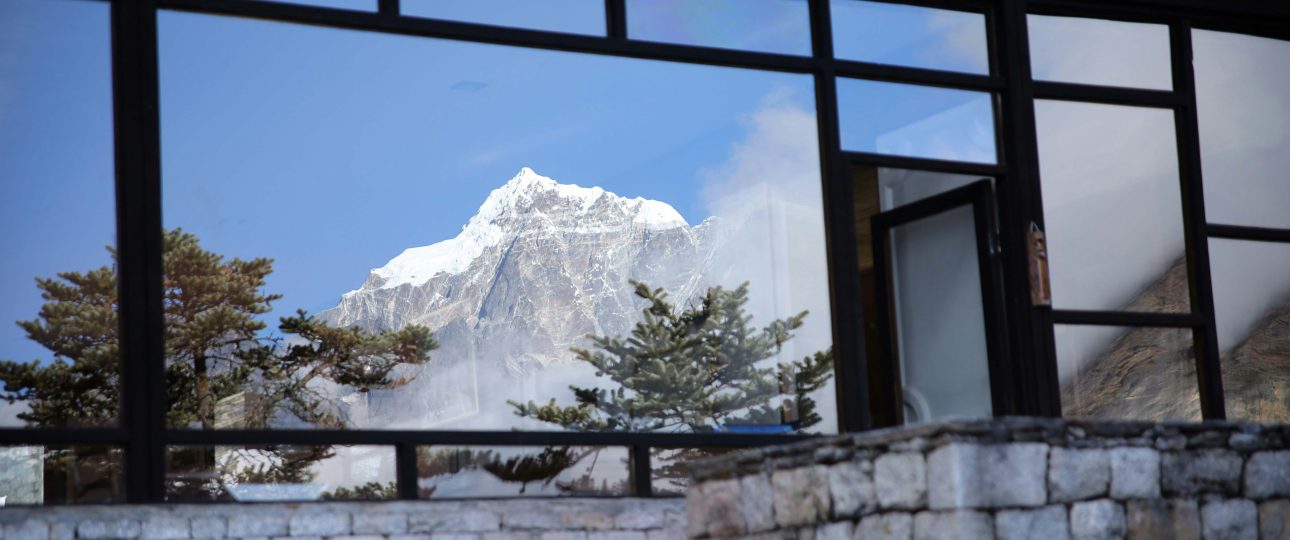
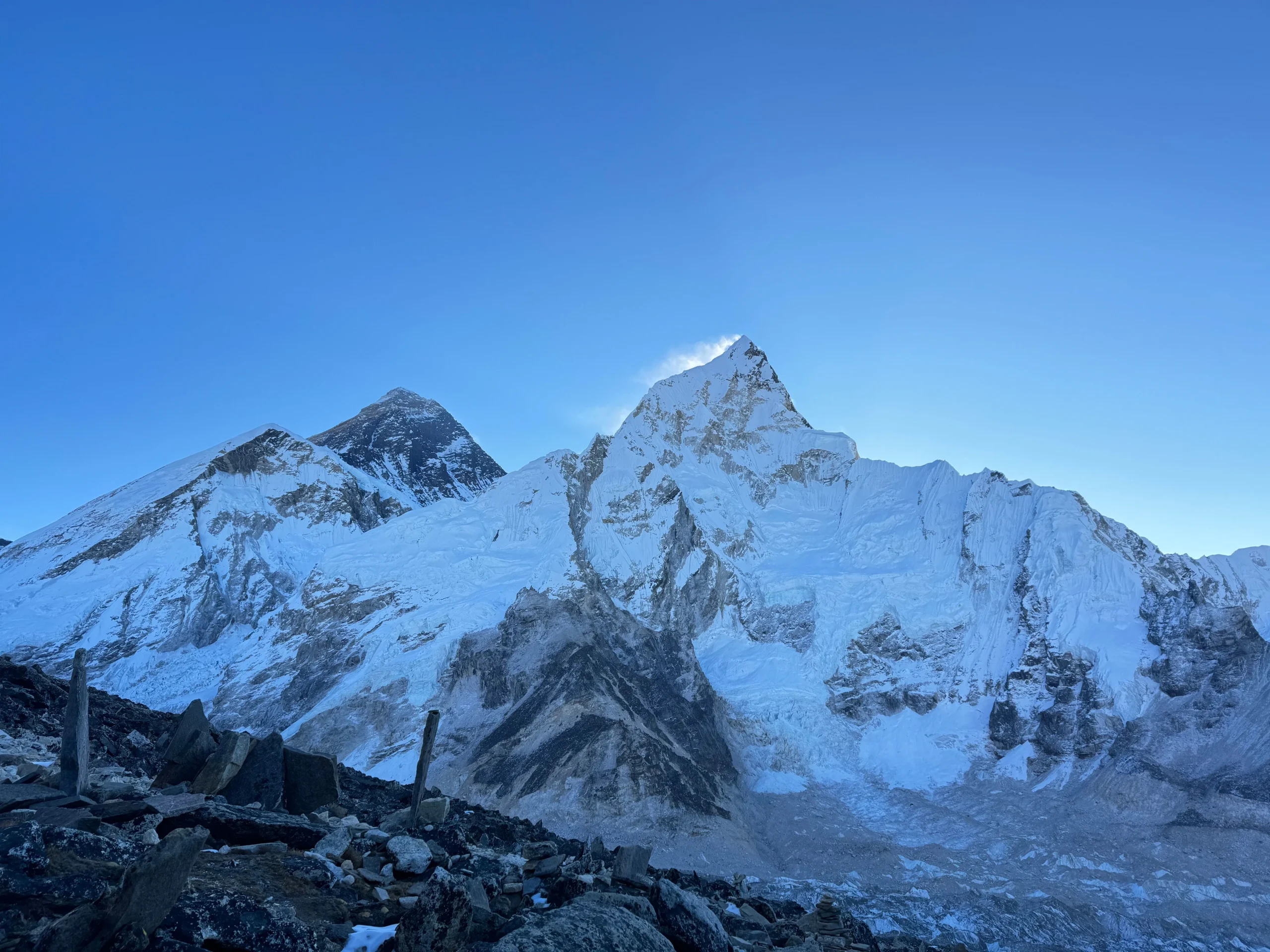
The hotel earns its name. From the rooms and, especially, the open terrace, the panorama runs across a wall of giants: Everest itself, the great face of Lhotse and the ridge of Nuptse, and — often the crowd favourite — the sharp pyramid of Ama Dablam. Thamserku, Kangtega, and Taboche complete the sweep. Because the ridge is high and clear of obstruction, the light does the rest: at sunrise and sunset the peaks turn gold, and on a settled morning the visibility is extraordinary.
Two honest caveats. First, mountain weather decides everything; a cloudy afternoon can hide Everest entirely, which is why timing and a bit of patience matter. Second, the classic image — a cup of tea on the terrace with Everest behind it — is real and, for many visitors, the single best hour of their trip. Aim for a clear morning and you’ll understand why people make the climb just for that.
Three ways to experience it — and how to choose
Almost everyone who “visits” Everest View Hotel does one of three things. Choosing the right one is the most important planning decision you’ll make.
1. A day visit on foot. This is how the majority experience it. Trekkers walking the Everest Base Camp route spend an acclimatization day in Namche, and the hike up to the hotel is the standard way to spend it. You don’t need a reservation; the terrace is open to visitors, and tea, coffee, and light meals are served. You climb up, soak in the view, and descend to sleep in Namche. It costs little beyond the price of your drink and the trek you’re already on, and it doubles as textbook altitude training.
2. An overnight stay. Booking one of the 12 rooms turns the view into an unhurried experience — dawn and dusk from your own window, time to rest, and the novelty of sleeping at nearly 4,000 metres in comfort. It suits honeymooners, photographers, and travellers on a luxury Everest itinerary. It is the most expensive of the three per hour of view, and it’s worth doing only if you’ve acclimatized sensibly on the way up.
3. A helicopter day trip. For those short on time or unable to trek, helicopters fly from Kathmandu (or Lukla), often as part of an Everest Base Camp aerial tour that lands here for breakfast. It’s the fastest, priciest, and — for your body — the riskiest option, for reasons covered below.
| Way to visit | Effort | Rough cost | Acclimatization | Best for |
|---|---|---|---|---|
| Day hike from Namche | Moderate, ~1.5–2.5 hrs uphill | Price of a drink/meal (you’re already trekking) | Excellent (climb high, sleep low) | EBC trekkers, most visitors |
| Overnight stay | Low once you’re there | Highest per night (see costs) | Fine if you arrived on foot | Luxury travellers, couples, photographers |
| Helicopter day trip | Minimal | High (shared or private charter) | Poor — skips acclimatization | Time-poor visitors, non-trekkers (with caution) |
The acclimatization angle you shouldn’t skip
Altitude is the quiet variable behind every choice here. At 3,880 metres the air holds noticeably less oxygen, and how your body copes depends almost entirely on how you arrived.
The reason the Namche day-hike is so valued is that it follows the golden rule of high-altitude travel: climb high, sleep low. You walk up to 3,880 metres, your body registers the thinner air and begins adapting, and then you drop back down to sleep at Namche’s ~3,440 metres. That mild, repeated stress is exactly what trains your system for the higher camps ahead. It’s one of the most effective acclimatization outings on the whole EBC route, which is why guides build it in.
Flying straight to the hotel is the opposite. A helicopter takes you from Kathmandu at around 1,400 metres to 3,880 metres in roughly 45 minutes, skipping the gradual adjustment entirely. Healthy visitors often feel only mild effects and recover after resting, which is why the hotel keeps an oxygen supply — piped to the rooms and available on request — and why staff meet heli guests with oxygen on arrival. But for some people this rapid gain triggers headaches, nausea, or worse, and anyone with a heart or lung condition should treat a direct flight to this altitude with real caution and speak to a doctor first. Whichever way you go, watch for the early signs of acute mountain sickness — headache, nausea, poor sleep, unusual breathlessness — and descend if they build. Travel insurance that explicitly covers high-altitude helicopter evacuation is essential.
Getting there on foot
The trekking route begins, as most Khumbu trips do, with the mountain flight to Lukla (sometimes routed via Ramechhap in peak season). From Lukla you walk up over one to two days to Namche Bazaar, the Sherpa capital and the natural base for visiting the hotel.
From Namche, the climb to Everest View Hotel takes roughly 1.5 to 2.5 hours over about 400 to 440 metres of ascent. The start is steep and stony — the hardest part is early — before the trail eases through rhododendron, pine, and juniper toward the ridge, with the Khumbu valley opening up behind you as you rise. Many trekkers combine the hotel with a loop through the nearby Sherpa villages of Khumjung and Khunde, which adds cultural texture and more gentle acclimatization walking. Under Nepal’s current rules, foreign trekkers are generally required to walk with a licensed guide in this national-park region, and you’ll need the standard Khumbu permits (more on those under costs).
The helicopter option
If you can’t trek, or you’re on a tight schedule, the helicopter is the alternative. Flights depart Kathmandu at dawn (and can also lift from Lukla), and the most popular product is an Everest Base Camp scenic tour that swings past the high peaks, sometimes with a brief landing near Kala Patthar for the classic Everest photo, before touching down at Syangboche — the helipad sits a short walk below the hotel — for breakfast on the terrace. It is spectacular, and for older travellers or those with limited time it opens up a view they could otherwise never reach.
The trade-offs are cost and physiology. Shared or group heli tours that include the hotel typically run into four figures per person, and private charters cost substantially more; prices vary widely by operator, season, and group size, so get a current quote. And, as above, the speed that makes it attractive is also its risk — you gain a lot of altitude very fast. Keep the time on the ground modest, use the oxygen if you feel unwell, and don’t attempt it against medical advice.
Rooms, food, and what to expect
The hotel has 12 rooms, each positioned for the view, with en-suite bathrooms and hot showers — genuinely a comfort at this altitude and remoteness. Rooms have heating and an oxygen supply available on request. The panoramic restaurant serves a mix of continental, Japanese, and Nepali dishes, and the Everest-facing breakfast is the highlight guests and heli visitors talk about most.
The expectation to manage is simplicity. Everything here is carried or flown in, power and water are hard-won, and connectivity is limited, so service and amenities are more modest than the “world’s highest luxury hotel” tag might suggest. Reviewers consistently land on the same verdict: the rooms are comfortable but plain, the prices are high, and the view is what makes it worth it. Go for the setting and the silence, not for resort trappings, and you’ll leave happy.
What it costs
Costs split cleanly along the three ways to visit. Treat the figures below as indicative and current-at-writing — mountain pricing shifts with season, fuel, and operator, so confirm live rates before booking.
| Experience | Indicative cost | Notes |
|---|---|---|
| Day visit (terrace) | The price of tea, coffee, or a light meal | No reservation needed; you’re already trekking, so factor Lukla flights, permits, and guide separately |
| Overnight room | Commonly cited from roughly US$300 to US$500+ per night | Varies by room, season, and whether meals are included; single occupancy costs more |
| Helicopter day tour | Often four figures per person (shared); private charters much higher | Usually sold as an EBC scenic tour that stops here; confirm inclusions |
To reach the hotel on foot you’ll also need the two Khumbu permits — the Sagarmatha National Park entry permit and the Khumbu Pasang Lhamu Rural Municipality entry permit — together roughly NPR 6,000 (about US$45) for foreign trekkers, plus your Lukla flights and guide. A TIMS card is no longer required in the Khumbu. Room rates generally exclude transport to and from the hotel, extra drinks and snacks, and staff tips.
Best time to visit
Season shapes both the view and the flying.
| Season | Months | What to expect |
|---|---|---|
| Spring | March–May | Warming days, clearing skies, rhododendron in bloom lower down, and the busy climbing season; book ahead. |
| Autumn | Late Sep–Nov | The most stable, crisp mountain views of the year; the most popular window. |
| Winter | Dec–Feb | Clear spells and fewer people, but hard cold and very cold nights at this altitude. |
| Monsoon | Jun–Aug | Cloud and rain lower down, unreliable views, and more flight disruption. |
Autumn offers the best odds of a cloud-free Everest morning; spring adds colour and a lively climbing scene. In either peak season, pre-book rooms and heli seats well in advance.
Who it suits — and who should be cautious
Everest View Hotel is unusually flexible: it works for hardened trekkers using it as an acclimatization stop, for luxury travellers and honeymooners who want the view with comfort, and for families or older visitors who want a taste of the high Himalaya without the full expedition. The day-hike from Namche is manageable for most reasonably fit walkers who have taken time to acclimatize.
Caution belongs mainly with the fast routes up. Anyone considering a direct helicopter arrival — especially with heart or respiratory conditions, or while pregnant — should get medical advice first, since 3,880 metres reached in under an hour is a real physiological jump. And no one, however fit, should treat this altitude casually: hydrate, ascend gradually where possible, and be honest about how you feel.
Fitting Everest View Hotel into an Everest trip
For most people, the hotel is not a stand-alone destination but a highlight inside a larger Everest experience. On the classic Everest Base Camp trek it’s the natural acclimatization hike from Namche. On a shorter Everest View Trek, it can be the turnaround point — a few days from Lukla to Namche, up to the hotel and the Khumjung villages, and back — ideal for travellers who want the views without going all the way to Base Camp. On a luxury EBC itinerary, an overnight here pairs with comfortable lodges further up the valley. And for those with only a day, the helicopter tour delivers the view in a morning.
At Merriment Treks, we help travellers match the hotel to the right kind of trip — building the Namche day-hike into an EBC itinerary, arranging an overnight for a luxury or honeymoon trek, or organising a helicopter day tour with sensible time on the ground — along with the permits, guide, and pacing that keep it safe and enjoyable. If you’re weighing a day visit against an overnight or a flight, our team in Nepal can talk you through the trade-offs for your dates, fitness, and budget, and shape an itinerary around what you actually want from your time in the Khumbu.
FAQs about Everest View Hotel
1. Where is Everest View Hotel?
On the Syangboche ridge above Namche Bazaar, in the Khumbu region of Nepal, inside Sagarmatha National Park. It faces directly toward Everest and the surrounding peaks.
2. How high is Everest View Hotel?
3,880 metres (12,730 feet) above sea level.
3. Is it really the highest hotel in the world?
It was listed by Guinness World Records in 2004 as the highest-placed hotel in the world, and it’s still widely described that way. Other high-altitude hotels have since made competing claims, but its Guinness distinction is well established.
4. Can I see Mount Everest from the hotel?
Yes. Rooms and the terrace face Everest, along with Lhotse, Nuptse, Ama Dablam, Thamserku, Kangtega, and Taboche — weather permitting, since cloud can hide the peaks.
5. Can I visit just for a meal without staying overnight?
Yes. The terrace is open to day visitors with no reservation needed, and tea, coffee, and light meals are served. Stopping for tea here is a classic ritual on the Namche acclimatization day.
6. How do I get to Everest View Hotel?
On foot from Namche Bazaar (about 1.5–2.5 hours uphill) as part of an Everest trek, or by helicopter from Kathmandu or Lukla to the Syangboche helipad just below the hotel.
7. How long is the hike from Namche?
Roughly 1.5 to 2.5 hours, gaining about 400–440 metres. The first section is steep and stony; it eases higher up.
8. Can I reach it by helicopter without trekking?
Yes. Helicopter tours fly in year-round, often as an Everest Base Camp scenic tour that lands here for breakfast. Be mindful of the rapid altitude gain.
9. Is it safe at that altitude?
For acclimatized trekkers, 3,880 metres is well within normal range. The main risk is arriving too fast by helicopter; the hotel keeps oxygen on hand, but anyone with heart or lung conditions should consult a doctor before a direct flight.
10. Why does the hotel have oxygen in the rooms?
Because some guests — especially those who fly straight up from Kathmandu — feel the altitude. Piped/on-request oxygen offers relief while the body adjusts.
11. How much does it cost to stay?
Rooms are commonly cited from around US$300 to US$500+ per night depending on room, season, and meals, with single occupancy higher. Confirm current rates, as pricing changes.
12. What’s included in the room price?
Typically the room and often meals, but usually not transport to/from the hotel, extra drinks and snacks, or tips. Check specifics when booking.
13. Do I need permits to hike there?
Yes — the Sagarmatha National Park permit and the Khumbu Pasang Lhamu Rural Municipality permit (together about NPR 6,000 / US$45 for foreigners). A TIMS card isn’t required in the Khumbu, and a licensed guide is generally required for trekkers.
14. When is the best time to visit?
Spring (March–May) and autumn (late September–November) for the clearest views and most reliable flying. Autumn is prized for crisp visibility.
15. Is Everest View Hotel worth it?
For the view, most visitors say yes. Set expectations around remote, simple comfort rather than city-style luxury, choose the way of visiting that fits your time and acclimatization, and it delivers one of the great Himalayan panoramas.