-
6,461m (Mera Central summit)
-
B in Kathmandu; B, L, D on trek
-
Flight (Lukla) / Private vehicle
-
Spring & Autumn
-
Hotel, Lodge, Tented camp
-
NMA-licensed climbing guide
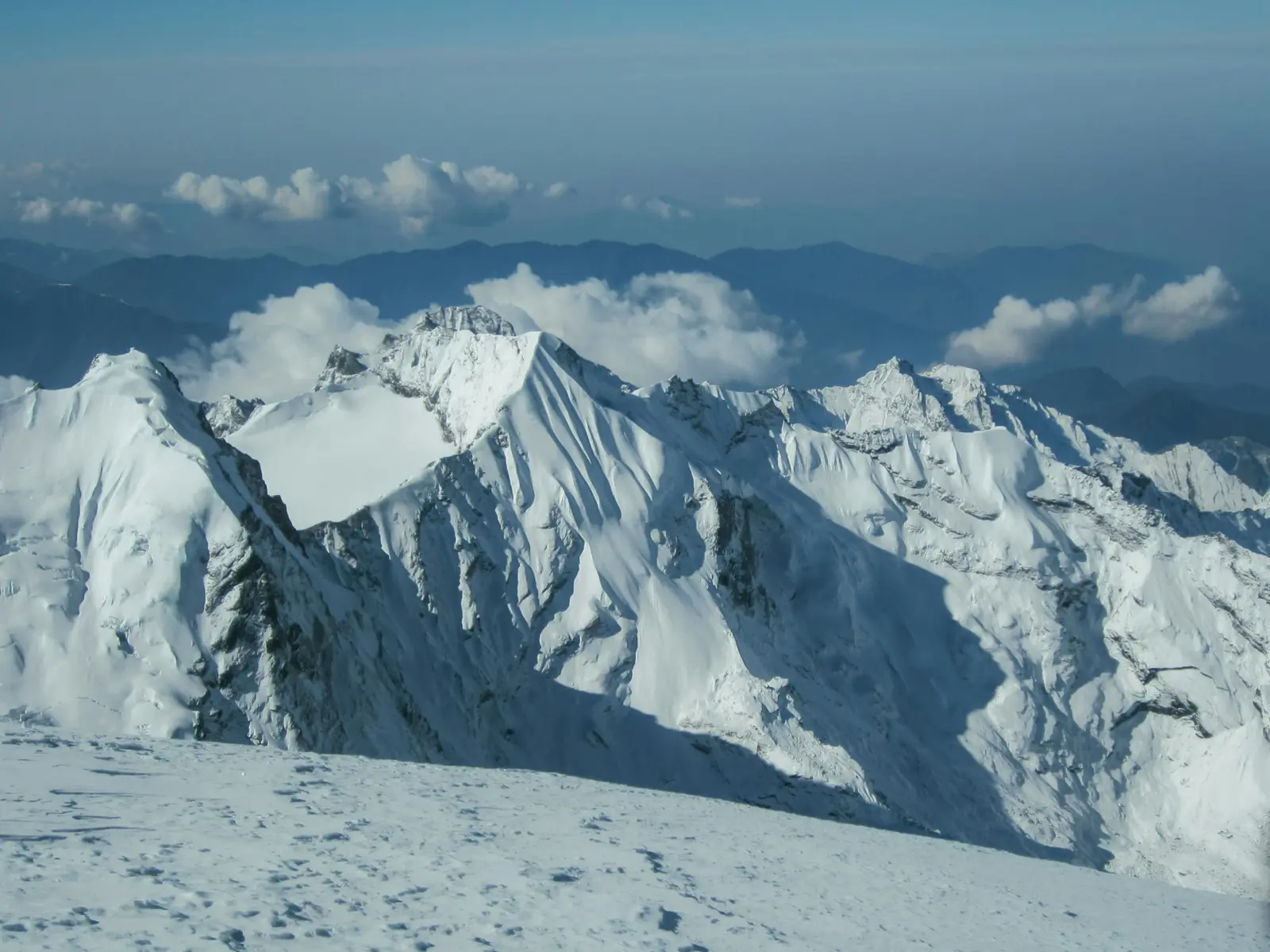
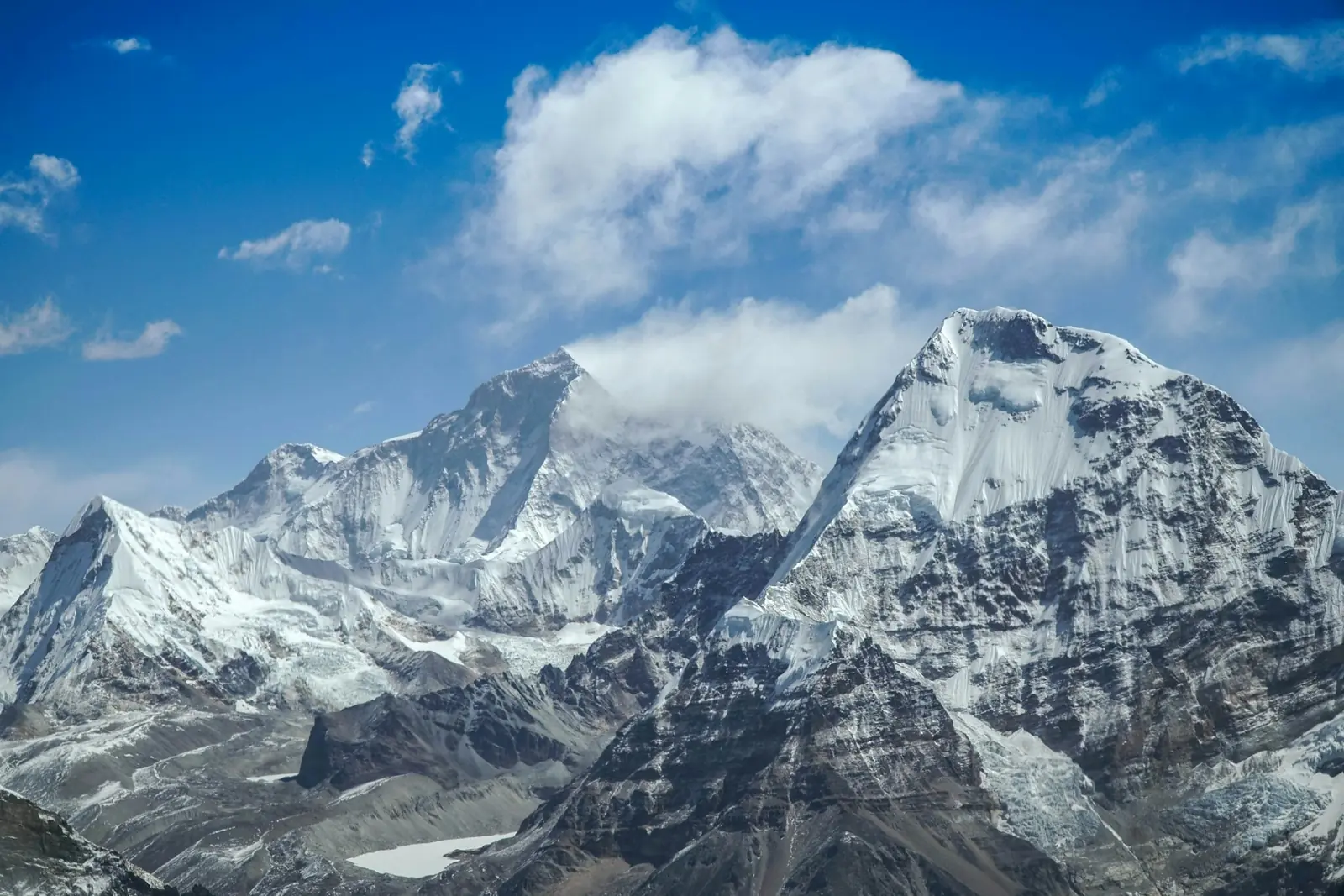
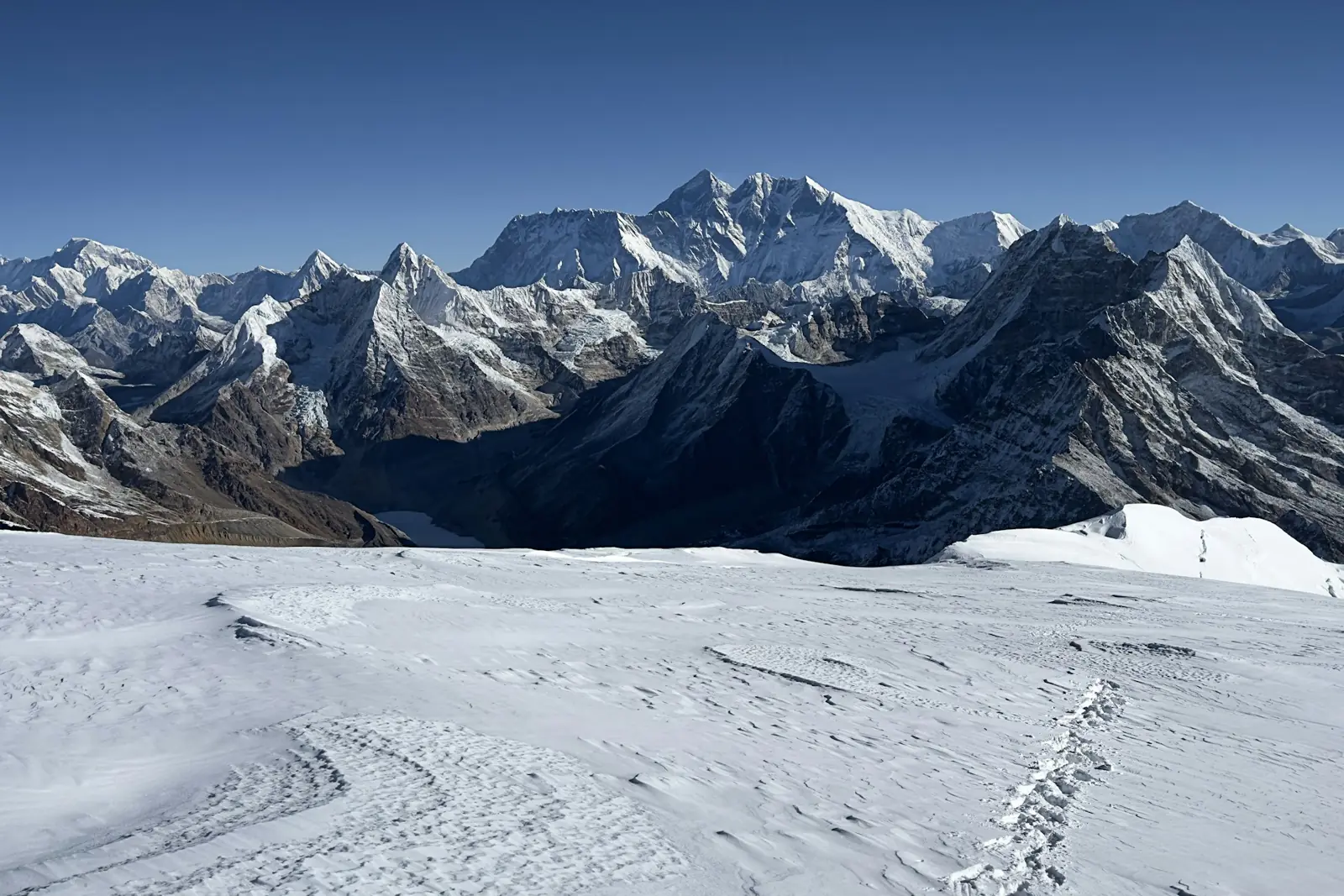
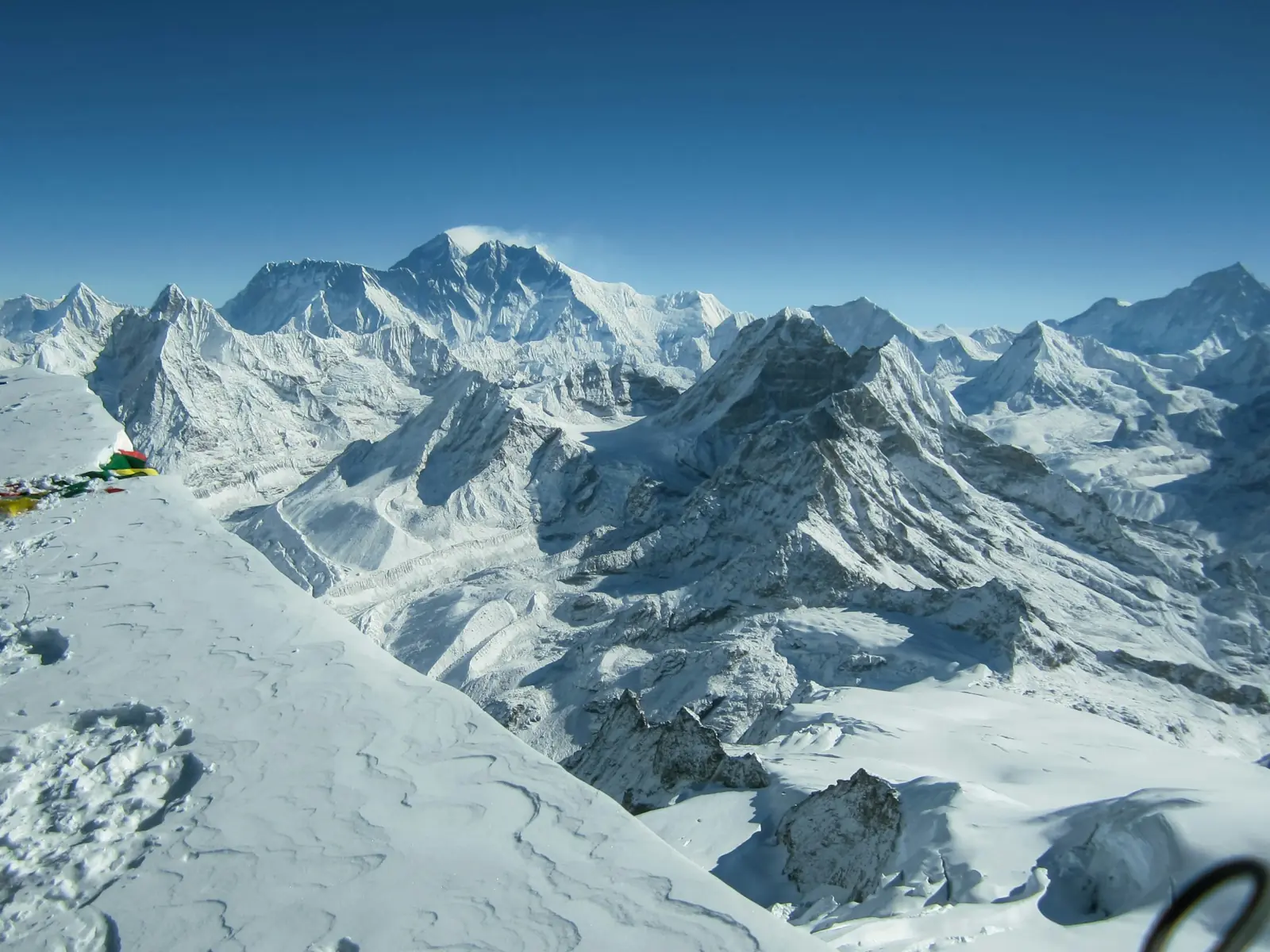
Mera Peak Climbing takes you to the summit of Nepal’s highest trekking peak, at 6,476m. On a clear morning the view from the top takes in five of the world’s six highest mountains: Everest, Kangchenjunga, Lhotse, Makalu and Cho Oyu. Technically, the climb is mostly a long, roped glacier walk with one short fixed-rope pitch at the top. Altitude is what makes it hard.
That’s why this 20-day itinerary takes the longer approach. Instead of rushing over the 4,610m Zatrwa La on day two, as the shortest itineraries do, you walk in through the forested Sherpa and Rai villages of Paiya, Pangkongma and Ningsow and gain height gradually. You then follow the remote Hinku valley to Khare, sleep at Mera La and High Camp, and keep a spare summit day in reserve. You return over the Zatrwa La when your body is fully acclimatised, so the pass is a final high point rather than a risk.
This page covers what you need to decide: the full itinerary, how hard Mera really is, 2026 permit fees, what’s in the price and what isn’t, gear, seasons and the questions climbers ask us most. Weighing it against our other Everest-region climb? Compare it with Island Peak Climbing.
Mera Peak Climbing at a Glance
| Detail | Information |
|---|---|
| Summit altitude | Mera Central 6,461m (normal summit); Mera North 6,476m (true summit) |
| Region | Hinku valley, Solukhumbu, inside Makalu Barun National Park |
| Duration | 20 days Kathmandu to Kathmandu (16 days of trekking and climbing) |
| Route in | Lukla – Paiya – Pangkongma – Ningsow – Chhatra Khola – Kothe – Thangnak – Khare |
| Route out | Khare – Kothe – Thuli Kharka – Zatrwa La (4,610m) – Lukla |
| Climbing grade | Alpine F (easy) on the glacier; final 30–40m about PD at 45–55° on a fixed rope |
| Technical experience | Not required; crampon, rope-team and ascender skills taught on the trip |
| Highest camp | High Camp, about 5,780m |
| Accommodation | Hotel in Kathmandu, lodges on the trek, tents at Mera La and High Camp |
| Best seasons | April–May and October–November |
| Group size | 1–12 climbers |
| Permits | NMA Mera Peak permit, Makalu Barun National Park, Khumbu Pasang Lhamu Rural Municipality |
| Price | From USD 2,750 per person |
Package Highlights
- Stand on Nepal’s highest trekking peak, with Everest, Lhotse, Makalu, Cho Oyu and Kangchenjunga in one panorama
- A gradual, acclimatisation-first approach through the Paiya–Pangkongma–Ningsow villages instead of the abrupt Zatrwa La ascent
- Walk the wild, thinly populated Hinku valley, far from the crowds of the Everest Base Camp trail
- Nights at Mera La (5,415m) and High Camp (5,780m), splitting the climb into short, manageable stages
- Roped glacier travel, crampon and ascender training with NMA-licensed climbing guides
- A spare summit day for weather or recovery
- Cross the 4,610m Zatrwa La on the way out, with views back over the Dudh Kosi and the Lukla valley
- All permits, Lukla flights, camping and group climbing gear included
Why Choose This Mera Peak Climbing Package
Mera Peak is often called “the easiest 6,000m peak in Nepal.” Technically, that’s fair. Physiologically, it isn’t. The summit is 300m higher than Island Peak and the high camp is almost 5,800m, so the climb punishes rushed acclimatisation more than any other popular trekking peak.
Most short itineraries fly to Lukla and cross the Zatrwa La on the second day, jumping from 2,860m to a 4,300m camp. Climbers and guides consistently report that route as the main cause of early altitude sickness on Mera. We made different choices:
- Up the long way, down the short way. The village approach adds a few days, but it keeps nightly sleeping height gains small at the start, when your body is least adapted.
- Two acclimatisation days, at Thangnak and Khare, each with a hike above the village.
- A night at Mera La before High Camp. Going straight from Khare to High Camp is a long day with 735m of gain at extreme altitude, and many teams that try it are too tired to summit.
- A reserve day so one storm, a sick team member or deep snow doesn’t end the climb.
- Small rope teams: one climbing guide for every two climbers on the glacier.
The trade-off is time: this trip is two days longer than the fastest commercial itineraries. If you can spare those days, they are the best investment you can make in reaching the top.
Route Overview
The climb begins with the same flight as the Everest trek, to Tenzing-Hillary Airport in Lukla (2,860m), but heads south and east instead of north. For four days the trail contours through the forested hills of the lower Hinku, crossing small passes and ridges between the villages of Paiya, Pangkongma and Ningsow. It’s slow work, with many ups and downs, but the altitude rises gently, which is the point.
From Chhatra Khola the trail turns north up the Hinku Khola into Makalu Barun National Park. Kothe (3,600m) and Thangnak (4,350m) are the last proper settlements, seasonal lodges below Mera’s west face and the striking spire of Peak 43 (Kyashar). From Thangnak the trail climbs moraine to Khare (5,045m), the base for the climb.
Above Khare you put on crampons for the first time and walk up the Mera Glacier to the broad snow saddle of Mera La (5,415m). The next day a steadier climb leads to High Camp on a rocky outcrop at about 5,780m, with Everest, Lhotse and Makalu across the horizon. Summit day follows the wide glacier at mostly 30–40 degrees, roped together for crevasses, to the foot of the central summit dome. The final 30–40m are much steeper (about 45–55 degrees), climbed on a fixed rope with an ascender.
You return down the Hinku to Kothe, climb to Thuli Kharka and cross the Zatrwa La back to Lukla.
Distance & Walking Hours
Distances in the Hinku are approximate. Trails change after landslides and seasonal lodges move.
| Stage | Approx. distance | Walking time |
|---|---|---|
| Lukla → Paiya | 9 km | 5–6 hrs |
| Paiya → Pangkongma | 8 km | 6–7 hrs |
| Pangkongma → Ningsow | 7 km | 5–6 hrs |
| Ningsow → Chhatra Khola | 9 km | 6–7 hrs |
| Chhatra Khola → Kothe | 10 km | 6–7 hrs |
| Kothe → Thangnak | 8 km | 4–5 hrs |
| Thangnak → Khare | 5 km | 3–4 hrs |
| Khare → Mera La | 3 km | 3–4 hrs |
| Mera La → High Camp | 3 km | 3–4 hrs |
| High Camp → Summit → Khare | about 10 km | 9–11 hrs |
| Khare → Kothe | 13 km | 6–7 hrs |
| Kothe → Thuli Kharka | 12 km | 6–7 hrs |
| Thuli Kharka → Zatrwa La → Lukla | 10 km | 6–7 hrs |
Altitude Table
| Day | Overnight | Altitude (approx.) |
|---|---|---|
| 1–2 | Kathmandu | 1,400m |
| 3 | Paiya | 2,730m (fly to Lukla 2,860m) |
| 4 | Pangkongma | 2,850m |
| 5 | Ningsow | 2,860m |
| 6 | Chhatra Khola | 2,800m |
| 7 | Kothe | 3,600m |
| 8–9 | Thangnak | 4,350m |
| 10–11 | Khare | 5,045m |
| 12 | Mera La camp | 5,415m |
| 13 | High Camp | 5,780m |
| 14 | Khare (after summit 6,461m) | 5,045m |
| 15 | Spare day (Khare) | 5,045m |
| 16 | Kothe | 3,600m |
| 17 | Thuli Kharka | 4,300m |
| 18 | Lukla (via Zatrwa La 4,610m) | 2,860m |
| 19 | Kathmandu | 1,400m |
Map Overview
Mera Peak sits south of Everest, between two remote valleys: the Hinku to the west and the Hongu to the east. Picture the trek as a loop. You leave Lukla heading south, curve east and then north through the middle hills, and climb the Hinku valley to the mountain’s northern flank. On the return you take the direct line west from Kothe over the Zatrwa La ridge, which separates the Hinku from the Dudh Kosi valley and Lukla. The climbing route leaves Khare, crosses Mera La, and turns south up the Mera Glacier to the summits.
Mera Peak Difficulty Level
Mera is graded F (Facile, “easy”) for most of the climb, with the final 30–40m to the central summit around PD (Peu Difficile). Changes to the glacier over recent years have made that last pitch steeper than older guidebooks describe. In practice:
- The glacier. Most of the route is snow at 30–40 degrees. It’s roped glacier walking in crampons, with crevasses that are usually obvious and bridged but can open late in the season.
- The summit dome. The final pitch steepens to roughly 45–55 degrees, and guides fix a rope here. You go up with an ascender and come down by abseil or with a safety line. It’s short but strenuous at 6,400m.
- Altitude. This is the real difficulty. High Camp is about 5,780m, and summit night means climbing nearly 700m in the cold and dark with about half of sea-level oxygen. Most turnarounds on Mera are due to altitude, cold or exhaustion, not technical terrain.
- Length. Summit day is typically 9–11 hours from High Camp to Khare, and the approach trek includes several long, hilly days.
Mera vs Island Peak: Mera is higher, colder and longer, but technically easier. Island Peak is lower but has a longer, steeper fixed-rope headwall and an exposed ridge. Both suit fit first-time climbers.
Fitness Requirements
You don’t need previous mountaineering experience. You need endurance: several 6–7 hour hill days in a row, then the ability to keep moving for 10 hours at over 5,500m.
A realistic benchmark: you can hike 18–20km with 1,000–1,200m of ascent carrying a 7–8kg pack, and do it again the next day.
Train for 12 weeks or more:
- Aerobic base (4 sessions a week): hill walking, stair climbing, incline treadmill, cycling or running, 45–90 minutes. Add one long day of 5–7 hours each weekend.
- Strength (2 sessions a week): step-ups, lunges, squats, deadlifts and core work. Downhill strength matters on the long descents.
- Pack training: in the last 6 weeks, train with a 10–12kg pack on steep ground.
- Practise the gear: if you can, do a winter skills day or a basic crampon and rope course before you go.
People with heart or lung conditions, or high blood pressure, should get medical advice before booking. Our peak climbing in Nepal guide explains more about preparing for a first 6,000m summit.
Altitude Sickness & Acclimatisation
Acute Mountain Sickness (AMS) is the biggest risk on Mera. Watch for headache, nausea, loss of appetite, dizziness, unusual tiredness and poor sleep. AMS can progress to HAPE (fluid on the lungs) or HACE (brain swelling), both life-threatening. The treatment for worsening symptoms is to descend.
How this itinerary manages it:
- Slow start: four nights between 2,730m and 2,860m in the lower Hinku hills, then 3,600m at Kothe. This is the opposite of the Zatrwa La shortcut.
- Climb high, sleep low: acclimatisation hikes above Thangnak and Khare before you sleep higher.
- Short stages at the top: Khare → Mera La → High Camp splits 735m of gain into two days.
- Daily health checks: guides record pulse oximeter readings and symptoms every evening.
- Reserve day: no pressure to push on with symptoms.
- Evacuation: helicopter rescue is possible from Khare and lower in most weather, arranged through your insurance.
Drink 3–4 litres a day, eat well even when you’re not hungry, avoid alcohol, and speak up early. Discuss acetazolamide (Diamox) with your doctor before travelling.
Best Time for Mera Peak Climbing
- Spring (April–May): the most popular season. Days are longer and slightly warmer on summit night, with stable snow. Afternoon cloud is common, and there are rhododendron forests on the lower approach.
- Autumn (October–November): the clearest skies, so the best chance of the full five-8,000m panorama. Late November is colder but quieter.
- Late September and early March can work but are less predictable: lingering monsoon cloud, or late winter snow on the Zatrwa La.
- Winter (December–February): very cold at High Camp, and the Zatrwa La is often blocked by snow. Only for experienced, well-equipped climbers.
- Monsoon (June–August): not recommended. Leeches and landslides lower down, poor visibility, more open crevasses and frequent Lukla flight cancellations.
Remember that the NMA permit costs less outside spring.
Weather by Season
Approximate temperatures; wind on the summit can make it feel 10–15°C colder.
| Season | Khare (5,045m) day / night | High Camp & summit | Conditions |
|---|---|---|---|
| Spring (Apr–May) | 5–12°C / −10 to −5°C | −10 to −20°C | Stable, afternoon cloud |
| Monsoon (Jun–Aug) | 8–14°C / −2 to 2°C | −5 to −12°C | Cloud, rain lower, fresh snow higher |
| Autumn (Oct–Nov) | 2–10°C / −15 to −8°C | −15 to −25°C | Clearest views, colder in November |
| Winter (Dec–Feb) | −5 to 5°C / −20 to −15°C | −25 to −35°C | Severe cold, snow on passes |
Transportation Details
- Airport transfers in Kathmandu on arrival and departure are included.
- Lukla flights: about 25–35 minutes each way. During the main spring and autumn seasons most Lukla flights leave from Manthali Airport in Ramechhap, roughly a 4–5 hour drive from Kathmandu. On those dates we drive you there by private vehicle in the early hours (included). Our Lukla flight guide explains how it works.
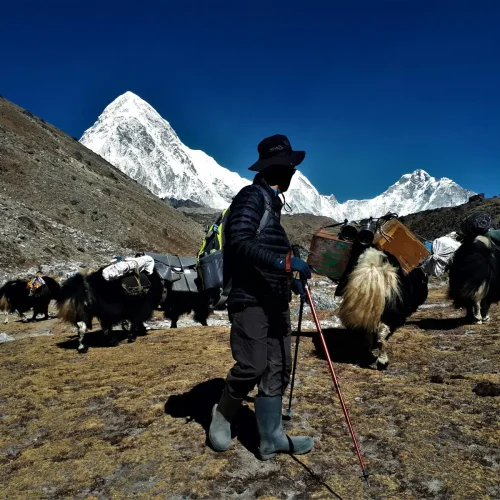
- On the trek everything is on foot. Porters carry your main bag (up to 15kg).
- Delays: mountain weather can ground Lukla flights for a day or more. Book your international flight home at least 1–2 days after Day 20.
Accommodation
- Kathmandu (3 nights): tourist-standard hotel, twin-share, with breakfast.
- Trekking lodges (14 nights): lodges in the lower villages and the Hinku are simpler than on the Everest Base Camp trail. Expect small twin rooms with foam mattresses and blankets, shared toilets and a warm communal dining room. Lodges at Kothe, Thangnak and Khare are basic but have improved a lot in recent years.
- Mera La and High Camp (2 nights): our crew sets up mountain tents with insulated mats, plus a cook tent. High Camp on its rock outcrop has one of the best sunrise views of any camp in Nepal.
Single rooms can be arranged in Kathmandu and are sometimes available on the trek outside peak weeks, at extra cost.
Meals & Drinking Water
Breakfast, lunch and dinner are included every day on the trek, with breakfast in Kathmandu. Lodge menus are shorter in the Hinku than in the Khumbu, so expect dal bhat, noodle soups, fried rice, potatoes, eggs, porridge and Tibetan bread. At Mera La and High Camp our cook prepares hot meals and drinks.
Choose vegetarian food above Kothe; meat is carried in without refrigeration. Treat all water: bring purification tablets or a filter, or buy boiled water. Single-use bottles are hard to dispose of in this valley, so please avoid them.
Internet, Mobile Network & Charging
- Mobile signal is patchy. You’ll often get some signal around Lukla and on ridges in the lower villages, but it’s unreliable or absent in the upper Hinku.
- Wi-Fi is available at some lodges as paid satellite Wi-Fi, slow and weather-dependent.
- Charging costs extra and runs on solar power higher up, so it isn’t always available. There’s no charging at Mera La or High Camp. Bring a 20,000mAh power bank and keep batteries warm overnight.
- Emergencies: your guide carries communication equipment for rescue coordination.
Mera Peak Permits & Fees (2026)
All permits and the garbage deposit are included in this package.
| Permit | Cost for foreign climbers |
|---|---|
| NMA Mera Peak climbing permit | USD 350 spring (Mar–May); USD 175 autumn, winter & summer |
| Makalu Barun National Park entry permit | NPR 3,000 + 13% VAT (about USD 25) |
| Khumbu Pasang Lhamu Rural Municipality fee | NPR 3,000 (about USD 22) |
| Garbage deposit | USD 500 per team, refundable |
The NMA revised peak royalties from 1 September 2025, so many websites still show the older rates. A licensed climbing guide is required for NMA peaks, and foreign trekkers must be accompanied by a licensed guide in Nepal’s national parks. We need a passport copy and photo to arrange permits. Read more in our trekking permits in Nepal guide.
Mera Peak Packing List
Group gear (ropes, anchors, tents, kitchen equipment) is provided. Most personal climbing gear can be rented in Kathmandu for about USD 100–150. We check everything on Day 2.
| Category | Items | Bring or rent? |
|---|---|---|
| Climbing gear | Harness, ascender (jumar), belay/abseil device, 2 locking + 2 non-locking carabiners, sling/prusik, ice axe, crampons, helmet | Rent or bring |
| Footwear | Insulated double or 6,000m-rated mountaineering boots, broken-in trekking boots, camp shoes, liner and wool socks | Climbing boots can be rented |
| Insulation | Expedition down jacket (about −25°C), fleece or synthetic mid-layer, thermal top and bottom | Down jacket rentable |
| Shell | Waterproof, breathable jacket and trousers | Bring |
| Hands & head | Liner gloves, insulated gloves, down or expedition mitts, warm hat, buff, sun hat | Bring |
| Sleeping | Sleeping bag rated −20°C or lower (−25°C in autumn) | Rentable |
| Sun protection | Category 4 glacier glasses, goggles, SPF 50 sunscreen, lip balm | Bring |
| Packs | 35–45L daypack (porter duffel provided) | Bring |
| Water & food | 2 insulated 1L bottles, purification, energy snacks | Bring |
| Health | Personal first-aid kit, blister care, medicines, AMS medication on medical advice | Bring |
| Electronics | Headlamp with spare batteries, power bank, phone/camera | Bring |
| Documents | Passport with 6+ months validity, 2 photos, insurance details, cash in NPR | Bring |
The cold on Mera’s summit morning is the main reason climbers turn around, so don’t economise on boots, mitts or your down jacket. See our guide to high-altitude hiking boots.
Mera Peak Climbing Cost Breakdown
Our package price is from USD 2,750 per person. A realistic total budget:
| Expense | Estimated cost (USD) | Included? |
|---|---|---|
| Mera Peak Climbing package (20 days) | 2,750 | — |
| NMA permit, national park, municipality fees, garbage deposit | — | Included |
| Kathmandu/Ramechhap–Lukla return flights | — | Included |
| Nepal tourist visa (30 days) | 50 | Not included |
| Insurance with helicopter evacuation to 6,500m | 150–400 | Not included |
| Climbing gear rental (if needed) | 100–150 | Not included |
| Kathmandu lunches and dinners | 40–80 | Not included |
| Charging, Wi-Fi, hot showers, snacks and drinks on trek | 120–220 | Not included |
| Tips for guides, porters and crew | 170–270 | Not included |
| Realistic total (excluding international flights) | about 3,380–3,920 |
Comparing quotes: a cheaper Mera trip is usually a shorter one, crossing the Zatrwa La early with no night at Mera La and no spare day. Check what’s dropped before comparing price alone.
What’s Included
- Airport pickup and drop-off in Kathmandu
- 3 nights’ hotel in Kathmandu with breakfast (twin-share)
- Private transfer to Ramechhap (Manthali) airport when Lukla flights operate from there
- Kathmandu/Ramechhap – Lukla – Kathmandu/Ramechhap flights for you and your guide
- 14 nights in trekking lodges (twin-share)
- 2 nights of camping at Mera La and High Camp (tents, mats, kitchen)
- Breakfast, lunch and dinner throughout the trek and climb
- NMA-licensed climbing guide (one guide for every two climbers on the glacier) and English-speaking trekking guide
- Porters (one porter for two climbers, up to 15kg each)
- Camp cook and kitchen staff on the mountain
- NMA Mera Peak permit, Makalu Barun National Park permit and Khumbu Pasang Lhamu Rural Municipality fee
- Garbage deposit and waste management
- Group climbing gear: fixed rope, anchors, snow stakes and ice screws
- Glacier and rope training at Khare
- Salary, meals, accommodation, insurance and equipment for all staff
- First-aid kit and pulse oximeter
- Trek duffel bag
- NMA summit certificate
- All government taxes and service charges
What’s Excluded
- International flights and Nepal visa fee
- Travel insurance (must cover climbing to 6,500m and helicopter evacuation)
- Lunch and dinner in Kathmandu
- Personal climbing gear and clothing (rental available)
- Charging, Wi-Fi, showers, bottled drinks, alcohol and snacks
- Extra nights caused by flight delays, early return or personal reasons
- Helicopter rescue (billed to your insurance)
- Tips for guides, porters and crew
- Anything not listed under What’s Included
Optional Add-ons
- Mera + Amphu Lapcha extension: for experienced climbers, continue over the remote Hongu valley and the Amphu Lapcha pass to Chhukung and the Khumbu. Ask us about this demanding traverse.
- Combine with Island Peak: climb Mera, then cross into the Khumbu to attempt Island Peak as a second summit.
- Helicopter return from Khare to Lukla or Kathmandu after the summit, saving three days of walking (price on request).
- Private climb with your own guide team and dates.
- Kathmandu sightseeing at the end of the trip. See our Kathmandu Valley Tour.
- Extra porter for a lighter load.
Travel Tips
- Don’t skip the slow days. The village days feel long and low, but they are what get you up at the end.
- Pack for real cold. Summit morning on Mera is colder than many climbers expect. Mitts, not gloves, on the glacier.
- Carry enough cash. There are no ATMs beyond Lukla. Withdraw rupees in Kathmandu.
- Wear glacier glasses from Khare onwards; snow blindness is common on bright days.
- Pace yourself on the Zatrwa La descent. It’s steep and often icy on the Lukla side.
- Keep your phone warm inside your jacket on summit day so the battery survives for photos.
- Leave buffer days after the trip for Lukla weather.
Photography Spots
- Kothe and the Hinku Khola: Mera’s long west face rising directly above the valley.
- Thangnak: Peak 43 (Kyashar) and Charpate Himal at dawn.
- Khare: the Mera Glacier and the climbing route in full view.
- High Camp sunset: Everest, Lhotse, Makalu, Chamlang and Baruntse turning red.
- The summit: five 8,000m peaks in one frame, with Kangchenjunga far to the east.
- Zatrwa La: prayer flags and the Dudh Kosi valley on your last high pass.
Responsible Trekking
- Bring your rubbish home. The Hinku has no waste collection; our team carries out all camp waste.
- Purify water instead of buying plastic bottles.
- Respect local culture: walk clockwise around mani walls and chortens, and ask before photographing people.
- Look after porters: ours carry a maximum of 15kg each, with proper boots, clothing and insurance.
- Buy locally: lodge meals and supplies support families in this remote valley.
- Leave no trace at Mera La and High Camp: pack out everything, including toilet waste where required.
Why Book Mera Peak Climbing With Merriment Treks
- An itinerary built for the summit: the village approach, a night at Mera La and a spare day all cost more to run, and they are there because they raise your chances.
- NMA-licensed climbing guides and a dedicated camp crew on the mountain.
- Honest pricing: permits, flights and the garbage deposit are included, and this page lists what you’ll still pay yourself.
- Gear checked in Kathmandu before you fly, with help renting anything you need.
- One local team from your first question to the summit.
- More climbs: Island Peak, Chulu East and all our peak climbing trips.
Cancellation & Refund Policy
Deposit, payment and cancellation terms are set out in our terms and conditions, and we confirm them in writing with every booking. Weather delays, a turned-back summit attempt or leaving the trek early are not refundable, so make sure your travel insurance covers trip cancellation and curtailment. If you have questions before booking, contact our team.
Ready for Mera Peak Climbing?
Mera Peak Climbing rewards patience more than technical skill. Give your body time, train for endurance, and pick an itinerary that doesn’t cut the corners that matter.
Tell us your dates and experience, and we’ll reply with honest advice on readiness and a clear quote. Contact us or use the booking form on this page.