How Long Does It Take to Get to Base Camp? The question sounds simple. The answer has more layers than most people expect — because “getting to Base Camp” means something different depending on where you start, how you travel, which version of the itinerary you follow, and whether you account for the acclimatization days that are not optional but are frequently left out of headline numbers.
The honest answer: from the day you arrive at Lukla airport — the standard starting point for the Everest Base Camp trek — the round trip to Base Camp and back takes 12 to 14 days for most trekkers following a responsible, acclimatization-appropriate itinerary. From the day you leave Kathmandu, including the flight to Lukla and the return, most people budget 14 to 16 days total. Including time in Kathmandu at the start and end for permit processing, gear, and rest, the full trip from arrival in Nepal to departure is typically 16 to 18 days.
Each of those numbers is accurate. They describe different things. This guide breaks them apart clearly so you know exactly which one applies to your situation.
Starting From the Right Reference Point
Before getting into day counts, establishing the correct starting point for the trek matters.
Lukla — officially Tenzing-Hillary Airport — at 2,860 meters above sea level in the Solukhumbu district of northeastern Nepal is where almost every EBC trek begins. You fly to Lukla from Kathmandu on a domestic flight that takes approximately 35 to 40 minutes. From Lukla, the trekking trail begins immediately. This is day one of the trek itself.
Kathmandu, where most international travelers land, is the starting point for the overall trip — not the trek. The days spent in Kathmandu before flying to Lukla are pre-trek logistics days. They matter for total trip planning but don’t count as trekking days. This distinction explains why you will see itineraries described as both “12-day EBC trek” and “16-day EBC trip” for what is essentially the same journey — the first counts from Lukla, the second counts from Kathmandu.
The Standard 12 to 14-Day Trek: Day by Day
The standard EBC itinerary from Lukla is 12 to 14 days for the round trip, including two mandatory acclimatization days — one at Namche Bazaar and one at Dingboche — and the ascent of Kala Patthar (5,545 meters), the highest point of the trek and the best viewpoint for Everest’s summit.
The following table covers the most commonly used 14-day itinerary, which is the version most reputable operators recommend as the safest and most enjoyable for the majority of trekkers.
| Day | Route | Distance (approx.) | End Altitude | Walking Time |
|---|---|---|---|---|
| Day 1 | Fly Kathmandu to Lukla; trek Lukla to Phakding | ~8 km | 2,610 m | 3-4 hrs |
| Day 2 | Phakding to Namche Bazaar | ~11 km | 3,440 m | 5-6 hrs |
| Day 3 | Acclimatization day — Namche Bazaar | Short hike to ~3,900 m | 3,440 m (sleep) | 3-4 hrs |
| Day 4 | Namche Bazaar to Tengboche | ~10 km | ~3,860 m | 5-6 hrs |
| Day 5 | Tengboche to Dingboche | ~10 km | 4,410 m | 5-6 hrs |
| Day 6 | Acclimatization day — Dingboche | Short hike to ~5,000 m | 4,410 m (sleep) | 3-4 hrs |
| Day 7 | Dingboche to Lobuche | ~9 km | ~4,910 m | 5-6 hrs |
| Day 8 | Lobuche to Gorak Shep; hike to EBC | ~13 km | ~5,140-5,185 m (Gorak Shep) | 7-8 hrs |
| Day 9 | Gorak Shep to Kala Patthar; descend to Pheriche | ~16 km | ~4,288 m (Pheriche) | 7-8 hrs |
| Day 10 | Pheriche to Namche Bazaar | ~16 km | 3,440 m | 6-7 hrs |
| Day 11 | Namche Bazaar to Lukla | ~19 km | 2,860 m | 6-7 hrs |
| Day 12 | Fly Lukla to Kathmandu | Flight | 1,400 m | — |
This is a 12-day version that moves at a pace many experienced operators consider the minimum responsible duration. Adding two more days — typically a rest day at Tengboche or Lobuche, or a slower pace on longer days — produces the 14-day version that most reputable guides recommend.
Note on Day 8: this is the longest and most significant day. Trekkers walk from Lobuche to Gorak Shep (approximately 4.5 kilometers), drop their main bags at the teahouse, walk to Everest Base Camp (approximately 3.8 kilometers), and return to Gorak Shep for the night. The total walking time on this day is 7 to 8 hours, and it is done at the highest altitude of any walking day on the standard itinerary — the approach to Base Camp at 5,364 meters.
Note on Day 9: Kala Patthar at 5,545 meters is climbed in the pre-dawn hours, typically departing Gorak Shep at 4:00 to 5:00 AM to reach the summit for sunrise. The full day including the summit and the long descent to Pheriche is one of the most physically demanding of the trek.
Why the Trek Takes This Long — The Acclimatization Requirement
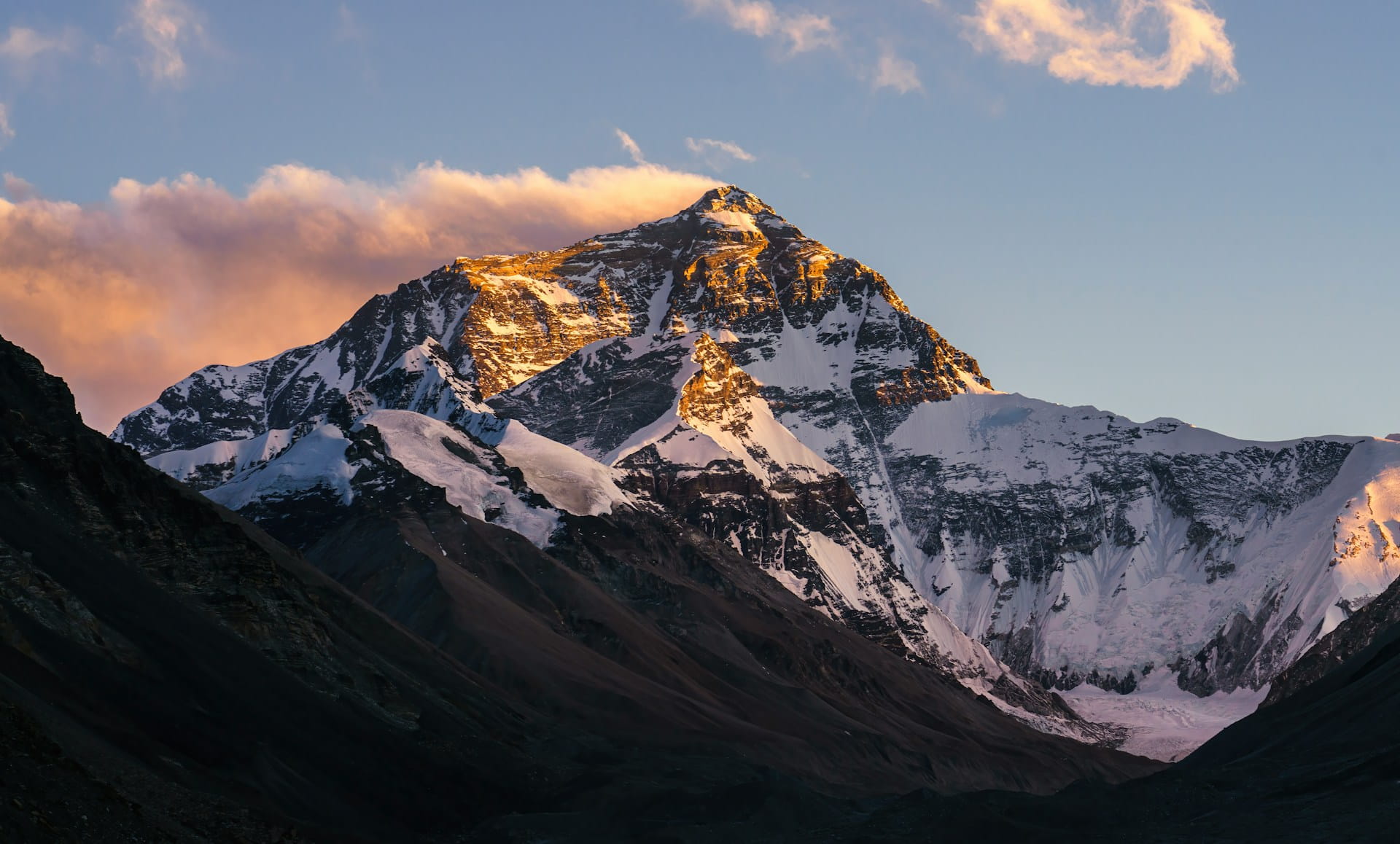
The 12 to 14-day duration is not arbitrary. It is determined by altitude physiology — specifically, the rate at which the human body can safely adapt to decreasing atmospheric oxygen.
Above approximately 2,500 meters, the air contains fewer oxygen molecules per breath than at sea level. The body compensates through several mechanisms — increased breathing rate, elevated heart rate, and over days, increased red blood cell production — but these adaptations take time. The widely accepted guideline for safe altitude gain above 3,000 meters is to increase sleeping altitude by no more than 300 to 500 meters per day, with a rest day every 600 to 1,000 meters of accumulated altitude gain.
The EBC itinerary is structured around this guideline. The two mandatory acclimatization days — at Namche Bazaar (3,440 meters) and Dingboche (4,410 meters) — are not rest days in a casual sense. They are physiologically active days during which trekkers hike to higher elevation during the day and return to sleep at the same lower altitude as the night before. This walk-high, sleep-low pattern triggers altitude adaptation more effectively than simply staying stationary.
Skipping these days to finish the trek faster is the most common reason for helicopter evacuations from the Khumbu. Trekkers who compress a 14-day itinerary into 10 days arrive at Lobuche and Gorak Shep with bodies that haven’t had adequate time to produce additional red blood cells or adjust respiratory response. The result — Acute Mountain Sickness progressing to more serious conditions — is both predictable and avoidable.
The Different Versions: How Time Varies by Itinerary
Not everyone does the standard itinerary. Here are the realistic time requirements for every main version of the EBC journey.
| Version | Days from Lukla | Total Days from Kathmandu | Notes |
|---|---|---|---|
| Minimum (fast track, experienced trekkers) | 10-11 days | 12-13 days | Higher AMS risk; not recommended for first-timers |
| Standard (recommended) | 12-14 days | 14-16 days | Includes 2 acclimatization days |
| Extended (with buffer days) | 14-16 days | 16-18 days | Safest; accommodates weather delays |
| Helicopter return (EBC to Kathmandu) | 7-9 days | 9-11 days | Cuts return trek; descends by helicopter |
| EBC + Gokyo Lakes (Three Passes) | 18-21 days | 20-23 days | Adds Gokyo Valley and Cho La crossing |
| EBC + Gokyo Lakes (standard loop) | 16-18 days | 18-20 days | Gokyo via valley trail, no pass crossing |
The 10 to 11-Day Fast Track
A 10 to 11-day itinerary from Lukla is physically possible for highly fit, experienced trekkers who have been at high altitude recently. Some operators offer it. The key difference from the standard itinerary is typically reducing to one acclimatization day (at Namche) and compressing some of the mid-route stages.
The altitude risk is measurably higher than on the standard itinerary. Most reputable guides and operators do not recommend it for first-time high-altitude trekkers, and most Khumbu helicopter rescue companies report that trekkers on compressed itineraries represent a disproportionate share of their callouts.
The 14 to 16-Day Extended Itinerary
Adding extra days to the standard itinerary is never a mistake on the EBC trek. A buffer day at Namche allows for a longer acclimatization hike to the Everest View Hotel ridge or toward Thame. An additional day at Tengboche allows time to explore the monastery in the morning and walk without a heavy pack. Weather delays at Lukla — where flights to Kathmandu are frequently cancelled due to cloud and wind, sometimes for multiple days — are much less stressful if your schedule has one or two days of flexibility built in.
The 14 to 16-day version is the one most experienced guides recommend to first-time trekkers who want to enjoy the experience rather than simply survive it.
The Helicopter Return Version
One of the most significant time-saving options available in 2026 is the helicopter return from Gorak Shep or Base Camp to Lukla or directly to Kathmandu. Instead of retracing the 4 to 5 days of descent from Gorak Shep back to Lukla on foot, trekkers fly by helicopter — a journey of roughly 45 to 60 minutes that replaces 4 to 5 days of walking.
This version of the trek takes 7 to 9 days from Lukla instead of 12 to 14, covering the full ascent itinerary to Base Camp and Kala Patthar, then returning by air. The acclimatization days remain — they are not optional regardless of how you descend. The helicopter simply replaces the walking portion of the return.
The helicopter from Gorak Shep or Base Camp area to Lukla costs approximately $350 to $500 per person for a shared flight. A direct helicopter from the EBC area to Kathmandu costs considerably more. This option has become popular among trekkers with limited vacation time who want to experience the full ascent to Base Camp without committing to the full round-trip walking duration.
The Flights: Getting to Lukla From Kathmandu
The domestic flight from Kathmandu to Lukla is approximately 35 to 40 minutes. It departs from Tribhuvan International Airport in Kathmandu and lands at Tenzing-Hillary Airport in Lukla. The flight operates exclusively in the morning — most flights depart between 6:00 and 9:00 AM — because afternoon cloud and wind make the approach to Lukla’s short, cliff-edge runway too dangerous.
This morning-only operating window has a significant practical implication: Lukla flights are frequently cancelled or delayed. Cloud cover over the mountains, poor visibility at either end of the route, or wind at Lukla can ground flights for a full day at a time. During periods of unsettled weather, cancellations can stack for multiple consecutive days.
Building at least one buffer day into your Kathmandu schedule before the flight to Lukla is essential. Trekkers who schedule their Lukla flight for the morning immediately after arriving in Kathmandu on an international flight, with no buffer for delays, frequently find themselves stuck in Kathmandu watching their trekking days shrink. Two days in Kathmandu before flying to Lukla is the minimum sensible planning margin.
The return flight from Lukla to Kathmandu has the same morning-only constraint and similar cancellation risk. Budget at least one extra day at Lukla on the return before any critical onward connection.
Total Time From Arrival in Nepal to Departure
Adding everything together — international arrival, Kathmandu days, pre-trek logistics, the trek itself, Lukla flight delays, and post-trek time — here is what a complete EBC trip actually looks like in total days from landing in Nepal to departing Nepal.
| Component | Minimum Days | Recommended Days |
|---|---|---|
| Arrival day in Kathmandu, recovery | 1 | 1-2 |
| Kathmandu permits, gear, pre-trek prep | 1 | 1-2 |
| Domestic flight to Lukla (inc. delay buffer) | 1 | 1-2 |
| Trek Lukla to EBC and back to Lukla | 12 | 14 |
| Return flight Lukla to Kathmandu (inc. delay buffer) | 1 | 1-2 |
| Post-trek day in Kathmandu | 1 | 1 |
| Total in Nepal | 17 days | 19-24 days |
The minimum viable trip — everything going exactly to plan with no weather delays and a compressed 12-day itinerary — takes 17 days in Nepal. The recommended version with realistic buffers and a 14-day trek is 19 to 24 days. Most experienced Nepal operators quote 18 to 22 days as the practical planning figure for a complete EBC trip.
Daily Walking Hours: What Each Day Actually Involves
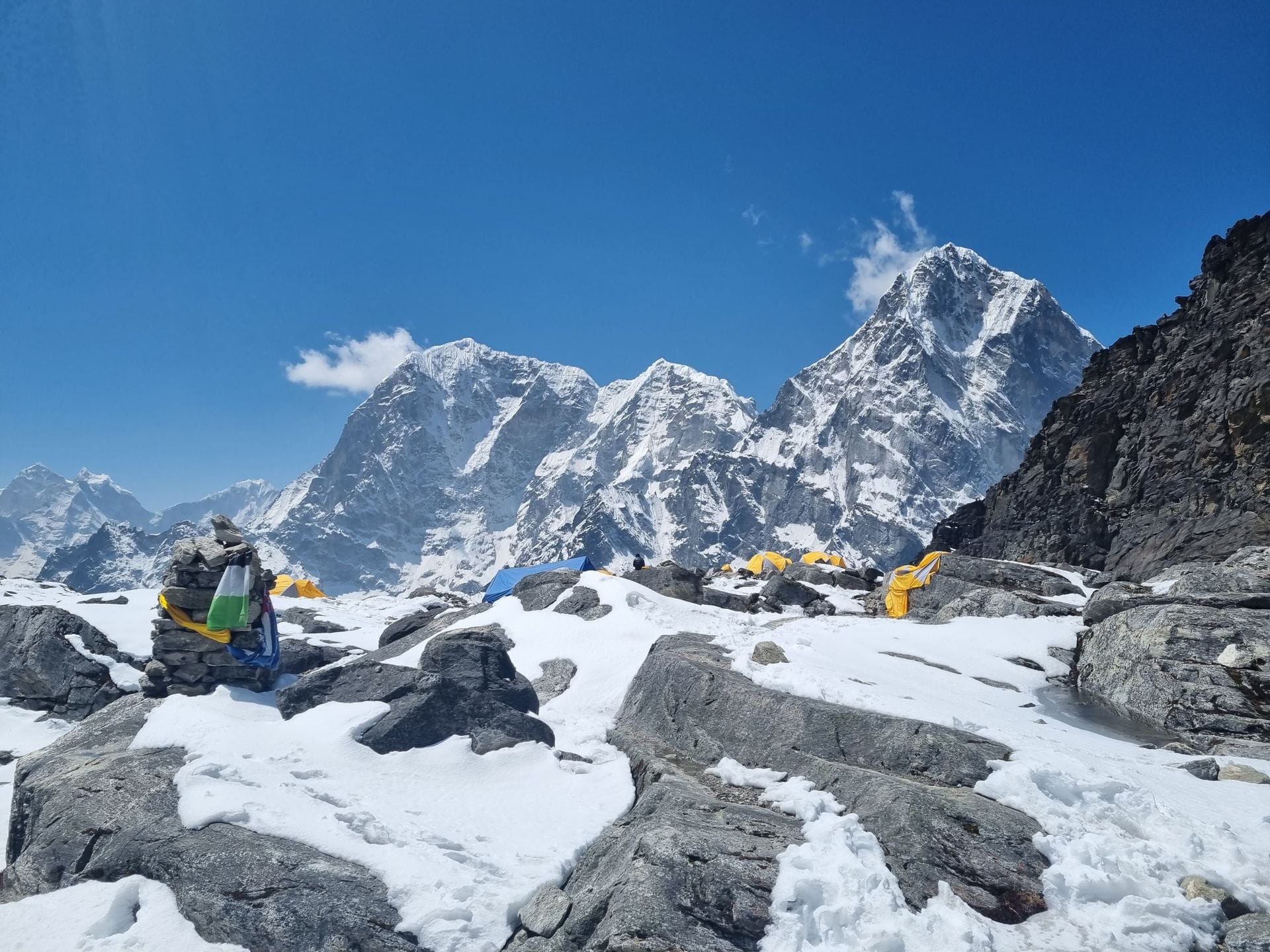
One factor people underestimate is not the number of days but the daily commitment within each day. EBC is not a casual walk — it involves 5 to 8 hours of active trekking per day, over consecutive days, with a loaded pack, at progressively higher altitude.
| Trek Stage | Typical Daily Distance | Daily Walking Hours | Altitude Range |
|---|---|---|---|
| Lukla to Namche Bazaar | 8-11 km/day | 4-6 hours | 2,610-3,440 m |
| Namche to Tengboche | 10 km | 5-6 hours | 3,440-3,860 m |
| Tengboche to Dingboche | 10 km | 5-6 hours | 3,860-4,410 m |
| Dingboche to Lobuche | 9 km | 5-6 hours | 4,410-4,910 m |
| Lobuche to Gorak Shep + EBC | 13 km | 7-8 hours | 4,910-5,364 m |
| Gorak Shep to Kala Patthar + descent | 16 km | 7-8 hours | 5,185-5,545 m |
| Descent days (Gorak Shep to Lukla) | 14-19 km/day | 6-7 hours | Descending to 2,860 m |
Days 8 and 9 — the Base Camp approach and the Kala Patthar summit day — are the longest and most demanding in terms of walking hours. They are also the days at the highest altitude, meaning that cardiovascular effort is significantly greater than the distance numbers alone suggest.
What Affects How Long It Takes For You Specifically
The standard 12 to 14-day figure is accurate for most trekkers. Several individual factors push the duration longer or shorter in practice.
- Fitness level affects daily pace but not total days. A fit trekker and a less fit trekker both need the same acclimatization days — altitude physiology is not accelerated by fitness. What fitness affects is how much energy you have at the end of each walking day and how well you sleep at altitude.
- Prior altitude experience is more relevant than fitness to the acclimatization timeline. Trekkers who have been at high altitude recently — within the past 6 to 12 months — sometimes acclimatize more efficiently and may experience fewer symptoms at the acclimatization stops. Those without prior altitude experience should add rather than subtract acclimatization days.
- Weather is the variable nobody controls. Extended bad weather at Lukla can delay the start or end of the trek by 1 to 3 days. Snowfall on the high route between Dingboche and Lobuche can slow daily progress. A storm settling in on the planned Kala Patthar summit day may require waiting another day at Gorak Shep for a clear morning. A realistic itinerary plans for at least one weather-related delay day somewhere in the schedule.
- Route choice changes total days significantly. The standard out-and-back from Lukla to Base Camp and back is the 12 to 14-day version. Adding Gokyo Lakes via the western valley route and returning via Cho La Pass or Renjo La creates a loop of 18 to 21 days. Adding just the Gokyo Valley without a pass crossing adds 4 to 5 days.
Helicopter options compress the return leg significantly, as covered above.
The Fastest Possible Way to Reach Everest Base Camp in 2026
The physically fastest way to reach Everest Base Camp is not trekking — it is by helicopter. A helicopter flight from Kathmandu to the EBC area takes approximately 1.5 to 2 hours including the Lukla fuel stop that most EBC helicopter tours include. Helicopter tours to EBC are commercially available from Kathmandu and typically take a single morning.
However — and this is critical — arriving at Base Camp (5,364 meters) by helicopter without any altitude acclimatization exposes passengers to serious altitude sickness risk. The body has had no time to adapt to the dramatic reduction in oxygen from Kathmandu’s 1,400 meters to Base Camp’s 5,364 meters. Helicopter tours to Base Camp land briefly and return quickly specifically to minimize this risk. They are a scenic flight experience, not a substitute for the trek.
For trekkers who want to walk the ascent but save time on the return, the standard approach is to trek up (8 to 9 days) and helicopter back (1 day), for a total of approximately 9 to 10 days of walking plus travel. This is the fastest responsible version of the EBC experience for someone who wants to walk to the top rather than fly there.
Frequently Asked Questions About How Long Does It Take to Get to Base Camp
- How long does it take to get to Everest Base Camp from Lukla?
From Lukla, the standard trek to Everest Base Camp takes 8 to 9 days of walking on the ascent, including two acclimatization days. The total round trip from Lukla back to Lukla is 12 to 14 days. Most reputable operators recommend 14 days as the standard duration to allow adequate acclimatization and some flexibility for weather. - How long does it take to get to Everest Base Camp from Kathmandu?
From Kathmandu, allow 14 to 16 days for the complete trek including the domestic flights to and from Lukla. Including pre-trek days in Kathmandu for permits, gear, and acclimatization at lower altitude, and post-trek recovery, most trekkers budget 18 to 22 days total in Nepal for the complete EBC experience. - Can you trek to Everest Base Camp in 10 days?
A 10-day round trip from Lukla is possible for highly fit trekkers with prior high-altitude experience. It is not recommended for most people because it involves compressing the acclimatization schedule that protects against altitude sickness. The majority of operators consider 12 days the minimum responsible duration from Lukla. - How long does the descent from Everest Base Camp take?
The descent from Base Camp to Lukla takes 3 to 4 days of walking at a comfortable pace, covering approximately 65 kilometers. Some trekkers complete the descent in 2 days by pushing long days, though this is hard on the knees after 8 to 9 days of continuous trekking. The helicopter return from Gorak Shep to Lukla takes approximately 10 to 15 minutes. - Is there a helicopter option to get to Everest Base Camp quickly?
Yes. Helicopter tours from Kathmandu to the EBC area are available and take approximately 1.5 to 2 hours one way, including a stop at Lukla. They land at Base Camp briefly before returning. These are scenic tourism flights — arriving by helicopter without trekking acclimatization means very limited time at altitude before returning. The helicopter return option for trekkers who have already walked the ascent costs approximately $350 to $500 per person for a shared flight from Gorak Shep to Lukla. - What is the shortest realistic EBC trek?
The shortest realistic EBC experience that includes walking the route, reaching Base Camp, and ascending Kala Patthar is approximately 10 to 11 days from Lukla with a helicopter return — 8 to 9 days of ascent plus 1 helicopter day back. A 10-day walking round trip is possible but carries higher altitude sickness risk and is not recommended for first-time high-altitude trekkers. - Do you need acclimatization days on the EBC trek?
Yes, acclimatization days are not optional. Every responsible EBC itinerary includes at minimum one full rest day at Namche Bazaar (3,440 meters) and one full rest day at Dingboche (4,410 meters). These days should include a hike to a higher elevation before returning to sleep at the same altitude — the walk-high, sleep-low approach that most effectively stimulates altitude adaptation. Removing these days significantly increases the risk of serious altitude sickness. - How long are the walking days on the EBC trek?
Most walking days on the EBC route involve 5 to 7 hours of actual trekking. The two longest and most demanding days — the Base Camp approach day and the Kala Patthar summit day — involve 7 to 8 hours each. The descent days from Gorak Shep to Lukla are typically 6 to 7 hours per day but are physically easier than the ascent because they are almost entirely downhill. - What happens if Lukla flights are cancelled?
Lukla flights are cancelled frequently due to cloud, wind, and poor visibility. When flights are cancelled, trekkers wait at Lukla for conditions to improve. Cancellations can last for one day or, during extended bad weather, several consecutive days. The most important planning response is to build at least one buffer day into your schedule at both ends of the trek — before flying to Lukla and after returning from Lukla to Kathmandu — to absorb delays without disrupting onward travel connections. - How does the time to Base Camp change if I start from Jiri instead of flying to Lukla?
The classic overland route from Jiri adds roughly 6-8 extra days of walking before you even reach Lukla, since you’re covering on foot what the flight skips entirely. This pushes total trip time to around 20-24 days round trip, but it’s a popular option for trekkers wanting to avoid flight risk entirely or follow the historic route used by early Everest expeditions before Lukla’s airport existed. - Does trekking during monsoon or winter change how long the trip takes?
Not dramatically in terms of walking days, but both seasons add unpredictability that can extend the total trip. Monsoon brings higher Lukla flight cancellation rates due to persistent cloud cover, while winter can occasionally close sections above Dingboche after heavy snowfall, meaning either season may require extra buffer days beyond the standard schedule to reach the same 12-14 day core itinerary safely. - How long does it take to reach Base Camp if I combine the trek with the Gokyo Valley?
Adding the Gokyo Valley and the Cho La Pass crossing extends the standard itinerary to roughly 16-18 days round trip from Lukla, since you’re walking a longer loop rather than the direct out-and-back route. This version reaches Base Camp via Cho La and Lobuche rather than the standard Namche-Tengboche-Dingboche line, adding both distance and an extra high-altitude pass crossing. - Is there a faster way to reach Everest Base Camp for someone with limited vacation time?
A helicopter-assisted itinerary — trekking in normally but flying out from Gorak Shep or Pheriche instead of walking back down — is the most practical way to shave 3-4 days off a standard trip without compromising the acclimatization schedule on the way up. Attempting to compress the ascent itself rather than the descent carries real altitude sickness risk and isn’t a safe way to save time. - How much time should I budget in Kathmandu before starting the trek?
At least 1-2 full days before departure for final gear checks, permit processing, and a buffer in case of any pre-trek Lukla flight delay, since a missed first flight can otherwise eat into your trekking schedule immediately. Trekkers combining EBC with Kathmandu Valley sightseeing often extend this to 3-4 days, using the extra time for Durbar Square, Boudhanath, and other cultural sites before flying out to Lukla.
Final Word on how Long Does It Take to Get to Base Camp
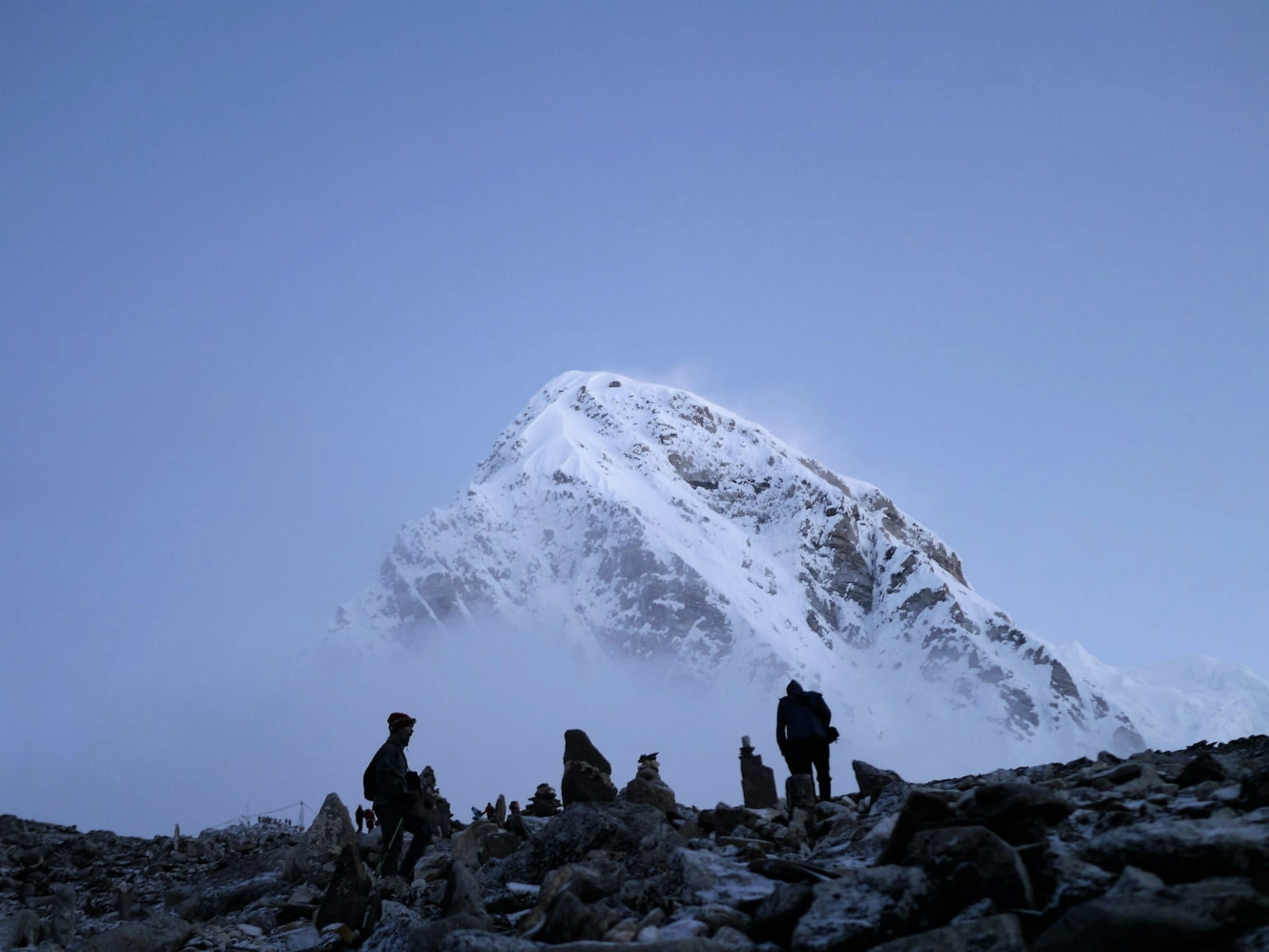
The Everest Base Camp trek takes 12 to 14 days from Lukla, and that is the number you’ll see most often in promotional materials because it is the trekking duration without the surrounding logistics. It is an accurate number for the walking portion.
The complete trip from international arrival in Nepal to international departure — accounting for pre-trek days, domestic flight delays, the trek itself, return flight delays, and a day of recovery — takes 16 to 22 days for most trekkers in practice.
The single most common planning mistake on the EBC trek is not under-training or poor gear or the wrong season. It is under-budgeting time. Trekkers who give themselves exactly 12 days from Lukla with no buffer, on a tight international connection, are the ones who miss the Lukla flight home because of a weather delay, or who rush the acclimatization schedule because they’re running out of days, or who don’t get to Kala Patthar because their schedule ran a day behind somewhere in the middle.
Give this trek more time than you think it needs. You won’t regret the extra days in the Khumbu. You will regret not having them.