Is the Annapurna Base Camp Trek Right for You?
Before diving into itineraries and permits, let’s address the real question: Can you actually do this Annapurna Base Camp trek?
The honest answer is that most reasonably fit people can complete the Annapurna Base Camp trek. This Annapurna Base Camp trek guide exists to help you determine if you’re one of them. The trek doesn’t require technical climbing, rope work, or prior high-altitude experience . But it does require walking—up and down, through forest and along ridgelines, day after day. Total elevation gain from Nayapul to ABC is approximately 3,000 meters, but cumulative elevation change including descents exceeds 5,000 meters over the full trek.
Who should seriously consider the ABC trek:
-
First-time Himalayan trekkers looking for something achievable but still spectacular
-
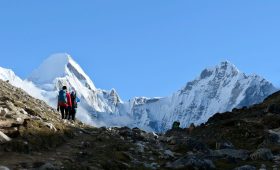
People who can comfortably walk 5–6 hours a day with a daypack
-
Anyone willing to prepare physically in advance
-
Trekkers who want cultural immersion alongside mountain views
Who might want to consider another trek:
-
Those with serious knee problems (the stone steps on descents are relentless)
-
Anyone unwilling to prepare for altitude (4,130m is serious, even if not “extreme”)
-
People who can’t handle basic accommodation (shared toilets, cold showers, limited electricity)
If you’re thinking, “I’m not sure I’m fit enough,” that’s normal. Most trekkers on this route are first-timers. The question is whether you’re willing to prepare .
What Makes the Annapurna Base Camp Trek Unique
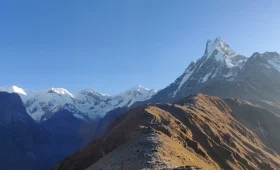
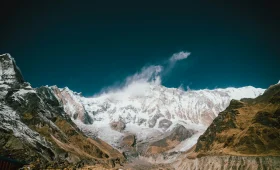
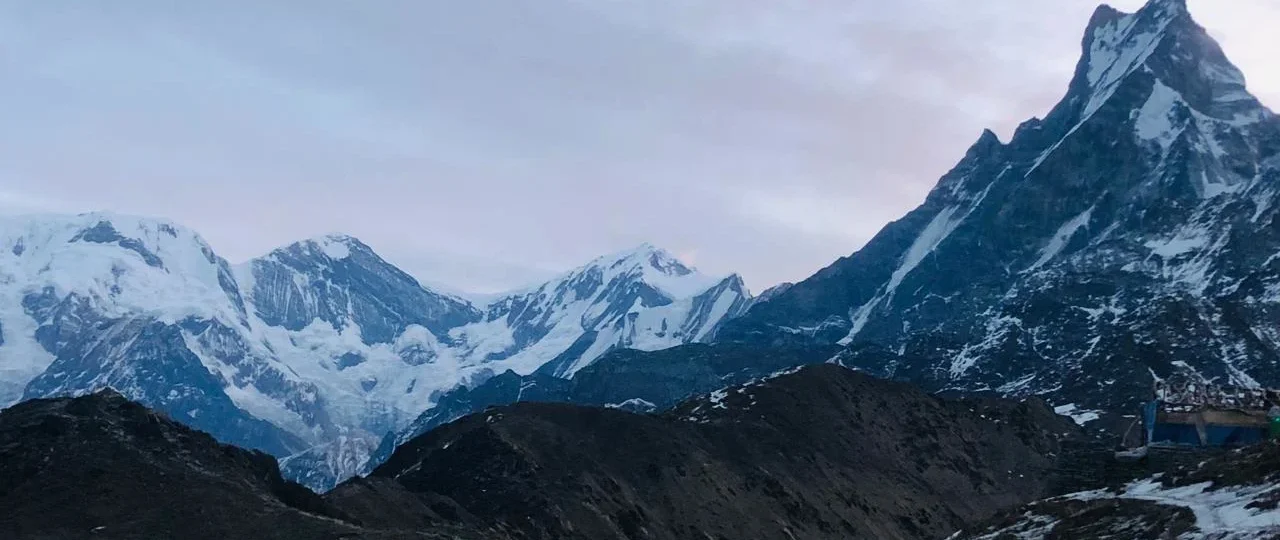
The Annapurna Base Camp trek doesn’t just show you mountains—it drops you into their heart. The trail ends at Annapurna Sanctuary, a glacial amphitheater ringed by some of the world’s most dramatic peaks: Annapurna I (8,091m), Annapurna South (7,219m), Hiunchuli (6,441m), and the iconic Machhapuchhre (Fishtail, 6,993m) .
Three things set ABC apart from other treks:
1. The Sanctuary effect. Unlike treks that view peaks from a distance, ABC places you at the base of giants. The 360-degree panorama at sunrise is genuinely overwhelming—not in a clichéd “unforgettable” sense, but in a “I can’t comprehend the scale” way .
2. Cultural layering. The trail winds through traditional Gurung villages where stone houses, terraced farms, and teahouse hospitality feel authentic rather than staged.
3. Landscape variety. In a single trek, you’ll move from rice paddies to bamboo forest to rhododendron jungle to alpine terrain to glacial valley .
Realistic Annapurna Base Camp Difficulty: What “Moderate” Actually Means
Every Annapurna Base Camp trek guide calls the trek “moderate.” But that word doesn’t tell you what it feels like to walk this trail. Understanding Annapurna Base Camp difficulty is essential before you commit.
The truth about difficulty:
The stone steps will test you. The famous 3,300 stone steps to Ulleri are one of the most demanding sections . The climb out of Chhomrong is equally challenging. These are not gentle forest paths—they’re steep, uneven stone staircases that seem to go on forever . The steepest section is the stone staircase above Chhomrong; the most sustained climbing is the final push from Deurali to ABC.
Expect 5–7 hours of walking per day. That’s moving time, not including breaks. The distance per day is usually 10–12 kilometers, but altitude, terrain, and vertical gain make it feel longer .
Descents are harder than ascents. This surprises many first-timers. Going down thousands of stone steps is jarring on knees and ankles . Trekking poles are essential here—not optional .
Altitude symptoms affect at least some people. At 4,130m, AMS (Acute Mountain Sickness) is common enough that you need to take it seriously . Headaches, fatigue, and sleep disruption above 3,000m are normal responses—not signs of failure . At 4,130 meters, the air contains roughly 60% of the oxygen available at sea level.
Fitness benchmark
If you can comfortably walk for 5–6 hours on hilly terrain with a 5–8 kg daypack for two consecutive days, you have the baseline fitness . More important than raw strength is cardiovascular endurance and descending skill. Practice coming down steep hills before you arrive—your knees will thank you .
Best Time for Annapurna Base Camp: Month-by-Month Honesty
The two main seasons for the Annapurna Base Camp trek—autumn and spring—are both excellent, but they offer different experiences . Here’s a detailed breakdown without the marketing gloss.
Autumn (September–November): Best Overall
October is the single best month for the Annapurna Base Camp trek. After the monsoon clears, the atmosphere is exceptionally clean, delivering the sharpest mountain views of the year .
| Month | Daytime at ABC | Night at ABC | Crowds | The Reality |
|---|---|---|---|---|
| September | 5°C–12°C | -2°C–5°C | Building | Trails still damp from monsoon, but clearing. Good if you want fewer people. |
| October | 5°C–10°C | -5°C–0°C | Peak | Clear skies, dry trails, stable weather. The busiest month. Book ahead. |
| November | 2°C–8°C | -8°C–-2°C | Still busy | Clear, cold, brilliant views. Slightly fewer crowds than October. |
Watch out for: Crowds. Teahouses fill, trails feel busy, and prices are at their peak .
Spring (March–May): Rhododendrons and Warmer Days
Spring is visually stunning. The rhododendron forests between Chhomrong and Bamboo burst into red and pink, creating one of the Himalayas’ most photographed sections .
| Month | Daytime at ABC | Night at ABC | Crowds | The Reality |
|---|---|---|---|---|
| March | 0°C–5°C | -8°C | Moderate | Cold nights, possible snow above 3,500m. Good views, fewer people. |
| April | 2°C–10°C | -5°C | Very busy | Peak bloom, stable weather, warm lower sections. The best spring month . |
| May | 5°C–10°C | -2°C | Moderate | Warm days, afternoon clouds, pre-monsoon rain possible. |
Early May is genuinely underrated. Clear mornings, warm days, and fewer crowds than April .
Winter (December–February): Possible but Challenging
Winter trekkers get solitude and snow-covered landscapes. They also get freezing conditions at ABC—temperatures dropping to -15°C at night .
| Detail | Winter Reality |
|---|---|
| Conditions | Snow above 3,000m likely; icy sections after Deurali |
| Who it’s for | Experienced trekkers with proper winter gear |
| Not for | First-timers lacking winter experience |
| Teahouses | Open but with reduced menus |
The honest verdict: If this is your first Himalayan trek, avoid winter. The cold and icy conditions add significant difficulty and risk .
Monsoon (June–September): Avoid for Beginners
Heavy rainfall, leeches, slippery trails, landslide risk, and obscured mountain views make this the worst season for first-timers .
Annapurna Base Camp Trek Itinerary: Route Options and Sample Schedule
The standard route starts from Pokhara, drives to Nayapul or Siwai, and follows a well-established trail through Ghandruk and Chhomrong, then up through Bamboo, Dovan, Deurali, and Machhapuchhre Base Camp to Annapurna Base Camp . Most Annapurna Base Camp trek itineraries run 7–12 days .
10-Day Annapurna Base Camp Itinerary (Most Balanced)
| Day | Route | Walking Time | Altitude Change |
|---|---|---|---|
| 1 | Drive Pokhara to Nayapul, trek to Ghandruk | 4–5 hrs | 820m → 1,940m |
| 2 | Ghandruk to Chhomrong | 5–6 hrs | 1,940m → 2,170m |
| 3 | Chhomrong to Bamboo | 5–6 hrs | 2,170m → 2,310m |
| 4 | Bamboo to Deurali | 5–6 hrs | 2,310m → 3,200m |
| 5 | Deurali to ABC (via MBC) | 5–6 hrs | 3,200m → 4,130m |
| 6 | Sunrise at ABC, descend to Bamboo | 6–7 hrs | 4,130m → 2,310m |
| 7 | Bamboo to Jhinu Danda (hot springs) | 5–6 hrs | 2,310m → 1,780m |
| 8 | Drive to Pokhara | – | – |
Important: A 7-day version is possible but puts more strain on altitude acclimatization . The slower you go above 3,000m, the safer you are .
Route Variations
Add Poon Hill — 2–3 extra days before the main trek. Poon Hill (3,210m) offers classic sunrise views of the Annapurna and Dhaulagiri ranges.
Jhinu Danda detour — Most Annapurna Base Camp trek itineraries include the natural hot springs at Jhinu on the descent. It’s genuinely restorative after days on the trail .
Annapurna Base Camp Trek Permits: What You Need for 2026
This Annapurna Base Camp trek guide provides the most current information on Annapurna Base Camp trek permits for 2026.
1. ACAP Permit (Annapurna Conservation Area Permit) — Required
Cost: NPR 3,000 (approximately $30 USD) for foreign nationals; NPR 1,000 for SAARC nationals. Children under 10 enter free .
Where to obtain: Nepal Tourism Board offices in Kathmandu or Pokhara, or through a registered trekking agency .
What it funds: The ACAP fee directly supports conservation, trail maintenance, community development, and environmental monitoring across the 7,629 km² Annapurna Conservation Area—the largest protected area in Nepal .
2. TIMS Card — Suspended for 2026
Current status: The TIMS (Trekkers’ Information Management System) card is suspended until further notice as of 2026 . This suspension covers the ABC trek and every other Nepal trekking route.
What this means for your permits: No TIMS card purchase, no TIMS fee (NPR 2,000 saved per person), and no NTB office visit for TIMS registration .
Caveat: If TAAN reinstates the TIMS requirement before your departure, your trekking agency should arrange it as part of the standard permit process .
Guide Requirement 2026
Since April 2023, foreign nationals are required to trek with a licensed guide on all standard trekking routes—including the Annapurna Base Camp trek . This is not optional. Any cost estimate that doesn’t include a guide fee is not giving you the full picture .
Permit Checkpoints on the Trail
| Checkpoint | Location | Day | Altitude |
|---|---|---|---|
| Birethanti ACAP entry | Birethanti—20 min from Nayapul | Day 1 | ~1,025m |
| Chhomrong checkpoint | Chhomrong village | Day 3 | 2,170m |
| Upper sanctuary spot checks | Various above Chhomrong | Days 4–6 | 2,310–4,130m |
What happens at checkpoints: A guard examines your permit, verifies your name against your passport, records your entry in their log, and stamps your permit . The process takes 2–5 minutes .
Important: Carry your original passport in your daypack top pocket—not in the porter’s duffel .
Annapurna Base Camp Trek Cost: What You’ll Really Spend
Transparency matters when researching the Annapurna Base Camp trek cost. Here’s what the trek actually costs—not just the package price.
Trek Package Costs (2026 estimates)
| Package Type | Price Range | Typical Inclusions |
|---|---|---|
| Budget group trek | $700–$1,100 | Guide, permits, basic teahouse accommodation, shared jeep transport, 3 meals daily |
| Mid-Range guided | $1,100–$1,700 | Experienced guide, individual porter, better teahouse selection, private jeep |
| Premium guided | $1,800–$3,200+ | Private guide, personal porter, best available lodges, 4-star Pokhara resort |
Hidden Costs Most Guides Don’t Mention
| Item | Cost | Notes |
|---|---|---|
| Tips | 10–15% of package cost | Expected for guide and porter—significant part of their income |
| Wi-Fi | NPR 100–300 per session | Available in most teahouses but basic and limited |
| Phone charging | NPR 200–500 per device | Higher at altitude; outlets fill quickly |
| Hot shower | NPR 100–600+ | Not all teahouses offer hot water; often unavailable above Deurali |
| Bottled water | $1–2 per liter | Gets more expensive at altitude |
| Extra meals/snacks | $15–28/day | Depending on appetite |
The reality: Budget at least $100–200 beyond your package price for tips, extras, and emergencies .
Teahouses and Food: The Reality
Accommodation by Altitude
Teahouses along the ABC route are basic but functional . At lower elevations (Ghandruk, Chhomrong—below 2,500m), rooms are reasonably comfortable with attached bathrooms available. At mid elevations (Bamboo, Dovan, Deurali—2,300–3,230m), rooms become simpler—wooden walls, thin mattresses, shared bathrooms . At high elevations (MBC, ABC—3,700–4,130m), rooms are basic shelters—functional but not comfortable. Expect shared toilets, no heating, and cold temperatures dropping to -5°C to -10°C at night.
What you actually get:
-
A room with two beds, a pillow, and a blanket (bring a sleeping bag)
-
Shared squat or Western-style toilets (bring your own toilet paper)
-
Hot showers cost extra and are often lukewarm above Chhomrong
-
Electricity for charging is available but limited
Food
Teahouses serve standardized but good food :
-
Breakfast: Oatmeal, eggs, toast, pancakes, Tibetan bread with honey
-
Lunch/Dinner: Dal bhat (rice and lentils—the classic trekker fuel), noodles, pasta, fried rice, momos, vegetable curries
Dal bhat is your friend. It’s filling, high-energy, and comes with unlimited refills at most teahouses .
Altitude affects taste. At higher elevations, food can taste bland. Don’t be surprised if you lose your appetite—force yourself to eat anyway .
Annapurna Base Camp Trek Packing List: The Non-Negotiables
This Annapurna Base Camp trek guide provides a complete packing list for Annapurna Base Camp.
Footwear
-
Waterproof hiking boots with ankle support (broken in)
-
Camp shoes (sandals or trainers)
Clothing
-
Moisture-wicking base layers (2–3 sets)
-
Insulated mid-layer jacket (fleece)
-
Down or puffy jacket
-
Waterproof outer shell jacket
-
Trekking trousers (2–3 pairs, quick-dry)
-
Warm hat, gloves, neck gaiter
-
Socks: 4–5 pairs wool or synthetic; liner socks prevent blisters
Equipment
-
Trekking poles. Non-negotiable for descents
-
Headlamp with spare batteries
-
Sleeping bag rated to -10°C (spring/autumn); -15°C for winter
-
Daypack (20–35 liters) with rain cover
-
Water bottles or hydration bladder (2+ liters)
-
Water purification tablets or filter
-
Power bank
Health & Safety
-
Basic first aid kit + blister kit
-
Sunscreen SPF 50+ and lip balm
-
Diamox (acetazolamide) — discuss with your doctor
-
Ibuprofen and paracetamol
-
Travel insurance with high-altitude rescue coverage. Helicopter evacuation from ABC costs $1,000–$5,000
Acclimatization and Altitude Illness
Acute Mountain Sickness (AMS) is the primary health concern on the ABC trek. Since the trail ascends relatively quickly in the upper section, first-timers need to understand the risks .
Common AMS symptoms above 3,000m:
-
Headache (most common)
-
Nausea or loss of appetite
-
Fatigue beyond expected effort
-
Dizziness or lightheadedness
-
Difficulty sleeping
The Golden Rule:
Never ascend with AMS symptoms. If symptoms appear, rest at the same altitude for 24 hours. If symptoms worsen, descend immediately .
Prevention strategies:
-
Go slow. The recommended 10-day itinerary includes built-in acclimatization. Rushing to ABC in 7 days dramatically increases AMS risk .
-
Sleep below the maximum altitude. The night before reaching ABC, sleep at MBC (3,700m) .
-
Hydrate. Drink 3–4 liters of water daily .
-
Eat. Even if you don’t feel hungry, force yourself to eat.
-
Consider Diamox. Discuss acetazolamide with your doctor .
Remember: Altitude affects everyone differently. Physical fitness doesn’t predict susceptibility .
Choosing a Trekking Company: What to Look For
If you’re booking with a company (rather than independently), here’s what matters:
1. Licensed guides. Ask if guides are registered with the Nepal Tourism Board. Since the mandatory guide rule, every agency should provide this .
2. Transparent inclusions. What’s included in the package price? Permits? Meals? Teahouse accommodation? Transport? Tipping guidelines? Get it in writing .
3. Safety protocols. Does the company carry first aid kits and oximeters? Do they have evacuation protocols?
4. Itinerary flexibility. What happens if you need an extra rest day due to fatigue or weather?
5. Local knowledge. Guides from the region have deeper cultural understanding and community connections .
What to Avoid
-
Companies that guarantee success or safety (unverifiable claims)
-
Packages that seem suspiciously cheap (hidden costs or corners cut)
-
Pressure to book immediately
ABC vs EBC vs Mardi Himal: Which Trek Is Best?
| Factor | Annapurna Base Camp (ABC) | Everest Base Camp (EBC) | Mardi Himal |
|---|---|---|---|
| Duration | 7–12 days | 14–18 days | 5–8 days |
| Max altitude | 4,130m | 5,364m | 4,500m |
| Difficulty | Moderate | Strenuous | Moderate |
| Cost | $700–$1,800 | $2,000+ | $500–$900 |
The honest recommendation:
-
Choose ABC if this is your first Himalayan trek, you have 10 days, and you want a spectacular but achievable experience .
-
Choose EBC if you’re set on Everest, have 2+ weeks, and are prepared for higher altitude and costs.
-
Choose Mardi Himal if you want a shorter, quieter trek.
Practical Tips From the Trail
Start early each day. Clouds often roll in by late morning, obscuring views. The best photography and visibility is before noon.
Carry small denomination Nepali rupees. Teahouses often struggle to make change for large notes.
Bring cash. There are no ATMs beyond Pokhara.
Tipping matters. Guides and porters rely on tips. The recommended range is 10–15% of package cost .
Be kind to your knees on descents. Use trekking poles, take breaks, and watch your footing on stone steps .
Stay hydrated. Drink 3–4 liters daily. Tap water is unsafe without treatment—use purification tablets or filters .
Pack light but pack smart. The porter weight limit is 15kg .
About Merriment Treks
If you’re considering booking with a company for your Annapurna Base Camp trek, Merriment Treks offers local knowledge, personalized itineraries, and responsible planning.
What makes them different:
-
Local expertise. Their guides come from the region and know the trail intimately—the best teahouses, the safest routes, and the most rewarding side trips.
-
Realistic itineraries. They design schedules with genuine acclimatization, not the fastest possible time to ABC.
-
Transparent pricing. No hidden fees, clear inclusions, and honest guidance on extra costs.
-
Safety-first culture. Guides are trained in AMS recognition, first aid, and emergency protocols. They carry oximeters to monitor vital signs at altitude .
-
Personalized planning. Custom itineraries for trekkers with specific needs, timelines, or fitness levels.
Merriment Treks focuses on quality experiences for trekkers who want genuine connection to the mountains and the culture.
Frequently Asked Questions about Annapurna Base Camp Trek Guide
1. Can a beginner complete the Annapurna Base Camp trek?
Yes, with adequate preparation. The ABC trek requires no technical skills, rope work, or prior high-altitude experience. Physical preparation—cardiovascular endurance and leg strength—is the main requirement .
2. How difficult is the Annapurna Base Camp trek?
It’s considered moderate . In practice, that means 5–7 hours of walking daily, steep stone steps, and an altitude of 4,130m. Descents are challenging on the knees. Trekking poles are essential .
3. What’s the best time of year to trek to ABC?
October–November (autumn) and March–April (spring) are the best months. October offers the clearest mountain views. April features rhododendron blooms and warmer weather .
4. Can I trek ABC in winter?
Possible for experienced trekkers with proper winter gear. Nighttime temperatures at ABC drop to -15°C . Not recommended for first-timers .
5. What Annapurna Base Camp trek permits do I need for 2026?
You need only the ACAP permit (NPR 3,000 / ~$30 USD). The TIMS card is currently suspended for 2026 .
6. Is a guide mandatory for ABC?
Yes. Since April 2023, foreign nationals are required to trek with a licensed guide on all standard trekking routes, including the Annapurna Base Camp trek .
7. How much does the Annapurna Base Camp trek cost?
Package costs range from $700–1,100 for budget group treks to $1,800–3,200+ for premium private treks . Budget an extra $100–200 for tips and extras .
8. How long does the ABC trek take?
7–12 days . A 10-day itinerary provides the best balance of acclimatization and enjoyment.
9. Is there internet and Wi-Fi on the ABC trek?
Wi-Fi is available in most teahouses but tends to be basic and limited, costing about NPR 100–300 per session. Above Deurali, connection is slow and unreliable .
10. Can I charge my phone on the ABC trek?
Electricity is available in teahouses but can be limited at higher altitudes, relying on solar or generators. Charging outlets may cost up to NPR 200–500 per device . Carry a power bank.
11. What food options are available on the ABC trek?
Dal bhat (rice and lentils) is the most common meal, with free refills. Other options include noodles, pasta, fried rice, momos, and breakfast items .
12. Is ABC or EBC harder?
EBC is longer (14–18 days vs 7–12 days), higher (5,364m vs 4,130m), and more expensive. ABC is a better first Himalayan trek .
13. Do I need insurance for ABC?
Yes. Helicopter evacuation from altitude costs $1,000–$5,000. Confirm your policy covers trekking above 4,000m and helicopter evacuation .
14. What should I pack for the ABC trek?
Essentials: high-ankle waterproof boots, trekking poles, down jacket, layered clothing, headlamp, water purification, SPF 50+ sunscreen, sleeping bag, and power bank .
15. Can I do ABC if I have health conditions?
If you have severe respiratory conditions, heart conditions, recent major surgery, or are pregnant, consult a doctor first . The altitude (4,130m) is serious and should be respected.