If you’re asking How High Is Mardi Himal Base Camp, the direct answer is 4,500 meters (14,763 feet) above sea level. This is the Mardi Himal Base Camp altitude commonly cited by trekking operators and listed on official guides for the Mardi Himal Trek . However, as you plan your adventure with Merriment Treks, it’s important to know that this number has a few nuances.
The Mardi Himal Base Camp elevation is the maximum altitude of the classic ridge route. To put that in perspective, it is higher than the famous Annapurna Base Camp (4,130m) but lower than Everest Base Camp (5,364m) . While 4,500m is the standard Mardi Himal Trek highest point, different sources occasionally list variations. This is often due to the use of the term “Base Camp” for different spots along the ridge or differences in GPS readings compared to published topographic data .
This guide from Merriment Treks will clarify exactly what the Mardi Himal Base Camp altitude means for you, breaking down the difference between High Camp, the Viewpoint, and the Base Camp itself. We’ll cover the Mardi Himal altitude in feet, how to prepare for the altitude, and give you a clear picture of the trek’s difficulty so you can set off with confidence.
Quick Altitude Reference Table (2026 Update)
Before diving into the details, here is a quick reference table showing the key altitudes on the Mardi Himal Trek. This table is based on 2026 verified data from local teahouse operators and the Annapurna Conservation Area Project .
| Location | Altitude (Meters) | Altitude (Feet) | Notes |
|---|---|---|---|
| Kande (Trailhead) | ~1,770m | ~5,807ft | Starting point of the trek |
| Forest Camp | ~2,600m | ~8,530ft | First overnight stop |
| Low Camp | ~3,050m | ~10,007ft | Second overnight stop |
| High Camp | ~3,580m | ~11,745ft | Highest sleeping point on the trek |
| Upper Viewpoint / Base Camp | 4,500m | 14,763ft | Maximum altitude of the trek. The end of the trail . |
| Mardi Himal Summit | 5,587m | 18,330ft | A technical climbing peak, not part of the standard trek . |
Why Different Websites Show Different “Mardi Himal Base Camp Altitude” Figures
You might see the Mardi Himal Base Camp elevation listed as 4,500m, 4,450m, or other figures. The main reason for this is a common confusion between the Mardi Himal Base Camp and the Mardi Himal Viewpoint.
-
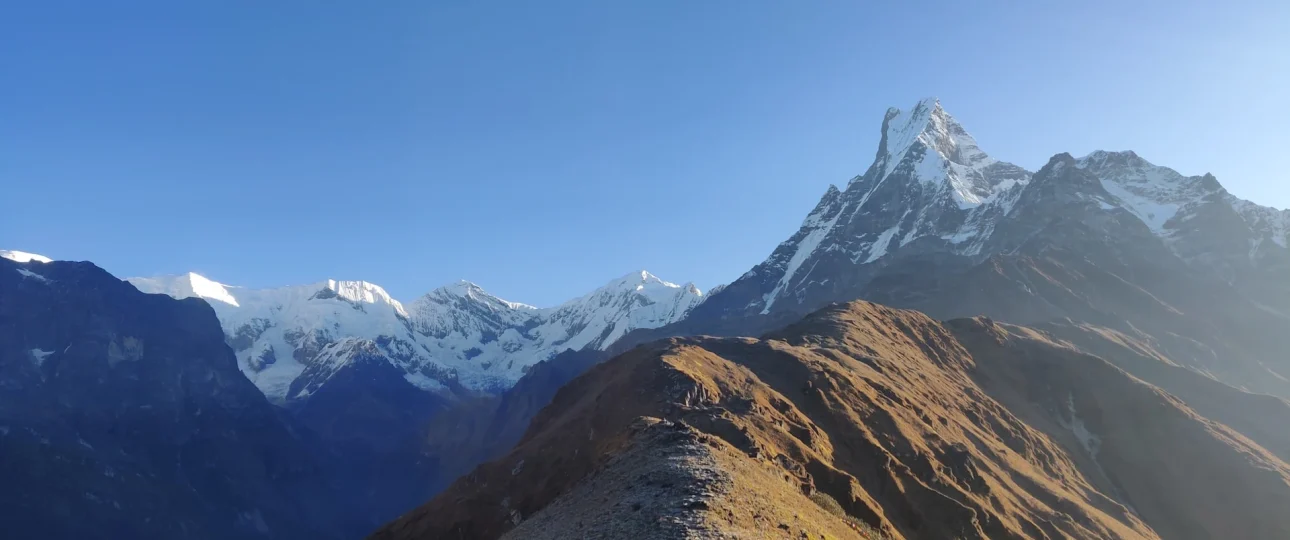
The Trekking Route: The classic Mardi Himal Trek is a ridge walk that ends at what is often called both the “Upper Viewpoint” and “Mardi Himal Base Camp.” This is a broad, flat area at the base of Mardi Himal’s southeast ridge. This is where you will get those iconic, close-up views of Machhapuchhare (Fishtail). The Mardi Himal Base Camp altitude here is consistently cited as 4,500m by official sources .
-
The Climbing Base Camp: There is another location that is the actual technical climbing base camp for mountaineers attempting to summit Mardi Himal (5,587m). This camp is in a different location and requires special climbing permits. It is not part of the standard Mardi Himal Trek .
Merriment Treks ensures its itineraries are clear. When we say you will reach the Mardi Himal Base Camp altitude of 4,500m, that is the destination. Our guides will take you to the ridge top at the base of the mountain.
High Camp vs. Upper Viewpoint vs. Base Camp: Understanding the Locations
To fully grasp the trek’s Mardi Himal Base Camp altitude, you need to understand the key locations. The trail to the base camp follows a ridge, and each point is distinct in terms of altitude and purpose.
High Camp (~3,580m / 11,745ft)
This is your final overnight stop. High Camp is a cluster of teahouses perched on an exposed ridgeline . The highest sleeping point on the trek is here at approximately 3,580 meters, which is a critical factor for acclimatization .
Upper Viewpoint (4,500m / 14,763ft)
This is what most trekkers consider “Base Camp.” From High Camp, you’ll hike along the ridge to the Upper Viewpoint at 4,500m. This is the maximum altitude of the trek and where you will witness a spectacular sunrise over the Himalayas. Some teahouses operate here during peak season, but they are very basic .
Mardi Himal Base Camp (4,500m / 14,763ft)
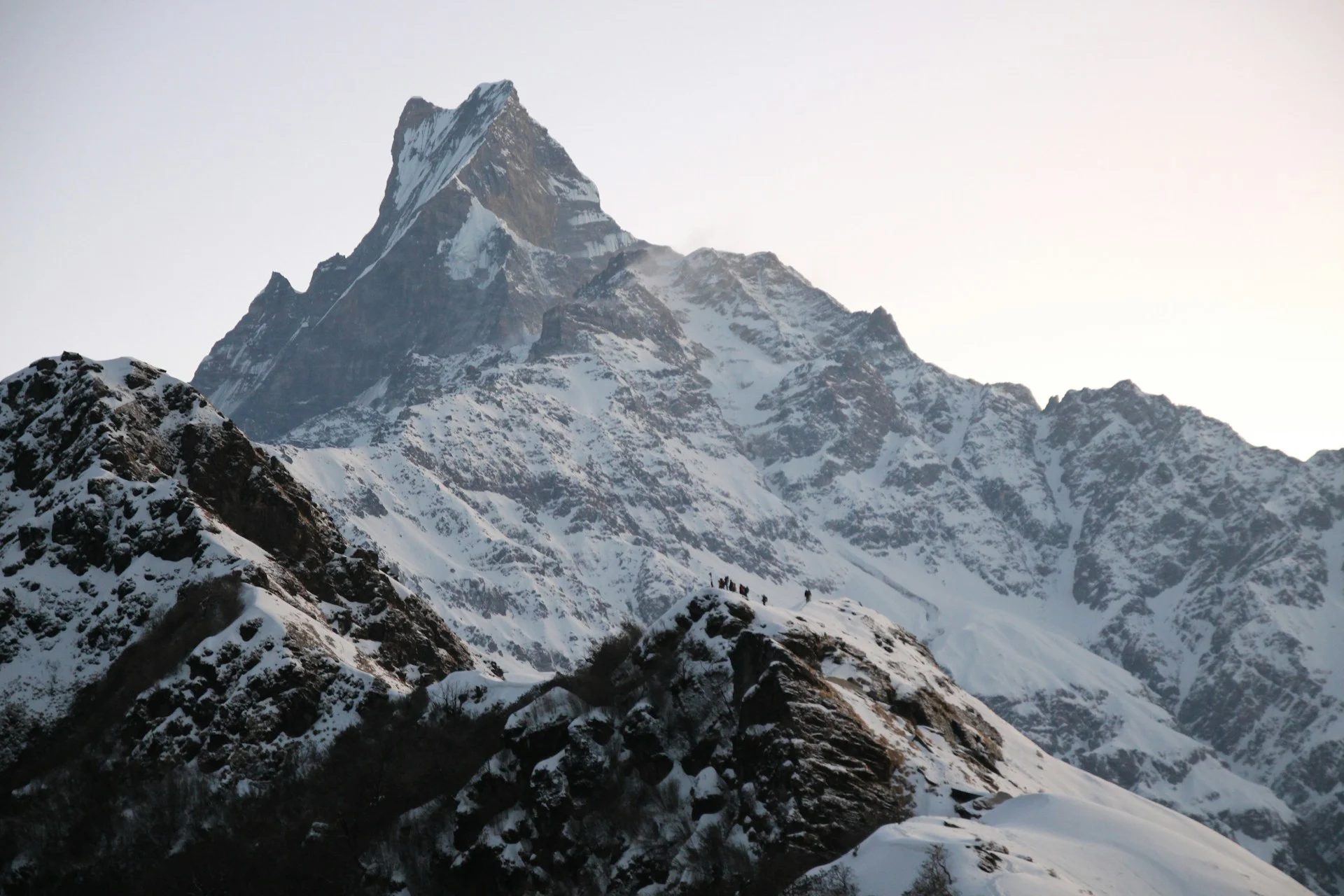
As mentioned, for the trekking route, the Upper Viewpoint and Mardi Himal Base Camp are often the same place. You will stand at the foot of the massive Mardi Himal peak itself, with Machhapuchhare (Fishtail) and Annapurna South dominating the skyline to your left and right .
How High Do You Actually Sleep on the Mardi Himal Trek?
This is a crucial question for planning. You do not sleep at 4,500m. As noted, your Mardi Himal Base Camp altitude experience is a day hike. The highest sleeping point of the entire trek is High Camp at approximately 3,580 meters . After reaching the summit point at 4,500m, you descend back to High Camp or continue down to Low Camp for the night.
This is a significant safety feature of the trek. Sleeping lower allows your body to recover from the high altitude exposure, dramatically reducing the risk of altitude sickness. You experience the Mardi Himal Base Camp altitude during the day, but you rest and sleep at a much more manageable elevation.
How Much Elevation Do You Gain?
The total elevation gain from the trailhead at Kande to the Mardi Himal Base Camp altitude is approximately 2,730 meters (8,956 feet). To put it in perspective, the climb from High Camp to the Base Camp is the steepest part of the trek, with a gain of around 920 meters in a single day before you descend back .
What Does 4,500 Meters Feel Like?
The air at 4,500 meters is thin, containing about 57% of the oxygen available at sea level. For most trekkers, this manifests as:
-
Heavier Steps: Every step requires more effort. You’ll find yourself taking shorter, slower strides.
-
Shallow Breathing: You may feel out of breath after just a few steps.
-
Mild Symptoms: A headache, feeling tired, or a loss of appetite are very common and often manageable by slowing down and drinking water.
-
Better Sleep at Lower Altitude: Because you descend to sleep, you avoid the worst of the sleep disruption experienced on treks where you camp at high altitudes.
Is 4,500 Meters Difficult? (Mardi Himal Trek Difficulty)
The Mardi Himal Trek is considered a moderate trek. It is suitable for beginners with a reasonable level of fitness and proper preparation, though the altitude adds a significant challenge .
What Makes it Challenging?
-
Steep Ascents: The trail features long, steep uphill sections, especially from Forest Camp to High Camp and the final push from High Camp to the Viewpoint .
-
Continuous Walking: You will be walking 5-7 hours per day for 4-7 days .
-
Altitude: The main difficulty is the altitude. You are above 3,500m for a significant portion of the trek, which can be taxing for those not acclimatized .
Can Beginners Do It?
Yes. The Mardi Himal Trek is one of the best choices for beginners wanting a high-altitude Himalayan trek. It requires no technical climbing skills, and a well-paced itinerary with good acclimatization is key. For many, it is an excellent “first trek” in Nepal .
Is 4,500 Meters Dangerous? Understanding Altitude Sickness
While the Mardi Himal Base Camp altitude is not as high as Everest Base Camp, altitude sickness is a genuine risk. Symptoms can occur above 3,500m and include headaches, nausea, fatigue, and loss of appetite .
The key to a safe and enjoyable trek is to follow a well-designed itinerary that includes gradual ascents and proper acclimatization. A day hike from High Camp to 4,500m and back to a lower sleeping altitude is the correct way to manage the risk. It allows you to “climb high and sleep low.”
How to Prepare for the Altitude
Merriment Treks recommends these best practices to prepare for the Mardi Himal Base Camp altitude:
-
Choose a Good Itinerary: Ensure your itinerary includes a night at High Camp (3,580m) before the push to 4,500m.
-
Train Your Body: Focus on cardiovascular fitness and leg strength. Hiking with a loaded daypack is the best preparation.
-
Stay Hydrated: Drink at least 3 liters of water daily.
-
Listen to Your Body: Walk slowly, take frequent breaks, and never push yourself if you feel unwell.
-
Communicate with Your Guide: Our guides at Merriment Treks are highly experienced and will monitor your condition. If you feel any symptoms, tell them immediately.
What to Check Before Booking Your Mardi Himal Trek
When you book with Merriment Treks, we provide full transparency. However, here are some key things to look out for when evaluating any itinerary:
-
Maximum Altitude: Does the itinerary clearly state you will reach 4,500m? Some trips stop at lower viewpoints.
-
Highest Sleeping Altitude: The highest you should sleep is at High Camp (~3,580m). If an itinerary has you sleeping at a higher altitude, you should question it.
-
Permits: The trek requires an ACAP permit and a TIMS card. A reputable operator will handle these for you .
Plan Your 2026 Mardi Himal Trek with Merriment Treks
Understanding the Mardi Himal Base Camp altitude is the first step to a successful trek. You now know the exact elevation, the key locations, and how to prepare. The Mardi Himal Base Camp altitude of 4,500 meters offers an achievable yet rewarding challenge for trekkers.
At Merriment Treks, we specialize in providing transparent, well-paced itineraries for the Mardi Himal Trek. Our experienced local guides prioritize your safety and comfort, helping you adapt to the high altitude while ensuring you experience the breathtaking views of Machhapuchhare, Annapurna, and Mardi Himal. We believe in responsible trekking and clear communication so you can enjoy every step of this incredible journey.
Contact Merriment Treks today to start planning your 2026 Mardi Himal adventure. Let us help you reach the top with confidence.
Frequently Asked Questions
1. How high is Mardi Himal Base Camp?
The Mardi Himal Base Camp altitude is 4,500 meters (14,763 feet) above sea level. This is the maximum altitude of the standard trekking route .
2. What is the Mardi Himal Base Camp elevation in feet?
4,500 meters is equivalent to 14,763 feet .
3. How high is Mardi Himal High Camp?
High Camp is at approximately 3,580 meters (11,745 feet). This is the highest sleeping point on the trek .
4. Is the Mardi Himal Viewpoint the same as the Base Camp?
Yes, for the standard trekking route, the upper viewpoint and the base camp are the same location at 4,500m. It is the end of the trail .
5. Do you sleep at Mardi Himal Base Camp?
No. Trekkers sleep at High Camp (3,580m) or lower. You reach 4,500m as a day hike and then descend .
6. Is 4,500 meters difficult for beginners?
The trek is considered moderate. It is achievable for beginners with good preparation and a well-paced itinerary, though the altitude presents a significant challenge .
7. Can you get altitude sickness on Mardi Himal?
Yes, altitude sickness is possible above 3,500 meters. Symptoms include headache and nausea. Following a proper itinerary that allows for acclimatization is key to prevention .
8. What is the highest point of the Mardi Himal Trek?
The highest point is Mardi Himal Base Camp / Viewpoint at 4,500 meters .
9. How long does it take to reach Base Camp from High Camp?
It takes approximately 3-4 hours to hike from High Camp to the Base Camp at 4,500m .
10. Is Mardi Himal higher than Annapurna Base Camp?
Yes. Mardi Himal Base Camp (4,500m) is higher than Annapurna Base Camp (4,130m) .