Introduction to Annapurna Base Camp Acclimatization
Annapurna Base Camp sits at 4,130 meters (13,549 feet). That’s high enough that Acute Mountain Sickness (AMS) becomes a genuine concern—even for fit and experienced trekkers. Altitude sickness typically begins above 2,500 meters, making the entire upper section of the ABC route a zone where careful acclimatization matters .
The short answer to “Can I get altitude sickness at Annapurna Base Camp?” is yes. But here’s what matters more than the answer: with the right preparation and itinerary, you can significantly reduce your risk and enjoy one of the world’s most spectacular treks. The ABC route is one of the few Himalayan treks that’s genuinely appropriate for fit beginners—but “appropriate” doesn’t mean “risk-free” .
This guide explains exactly how the ABC route’s elevation profile works, what acclimatization actually means, how to recognize symptoms, and when to make the right decisions—not just to reach base camp, but to return safely.
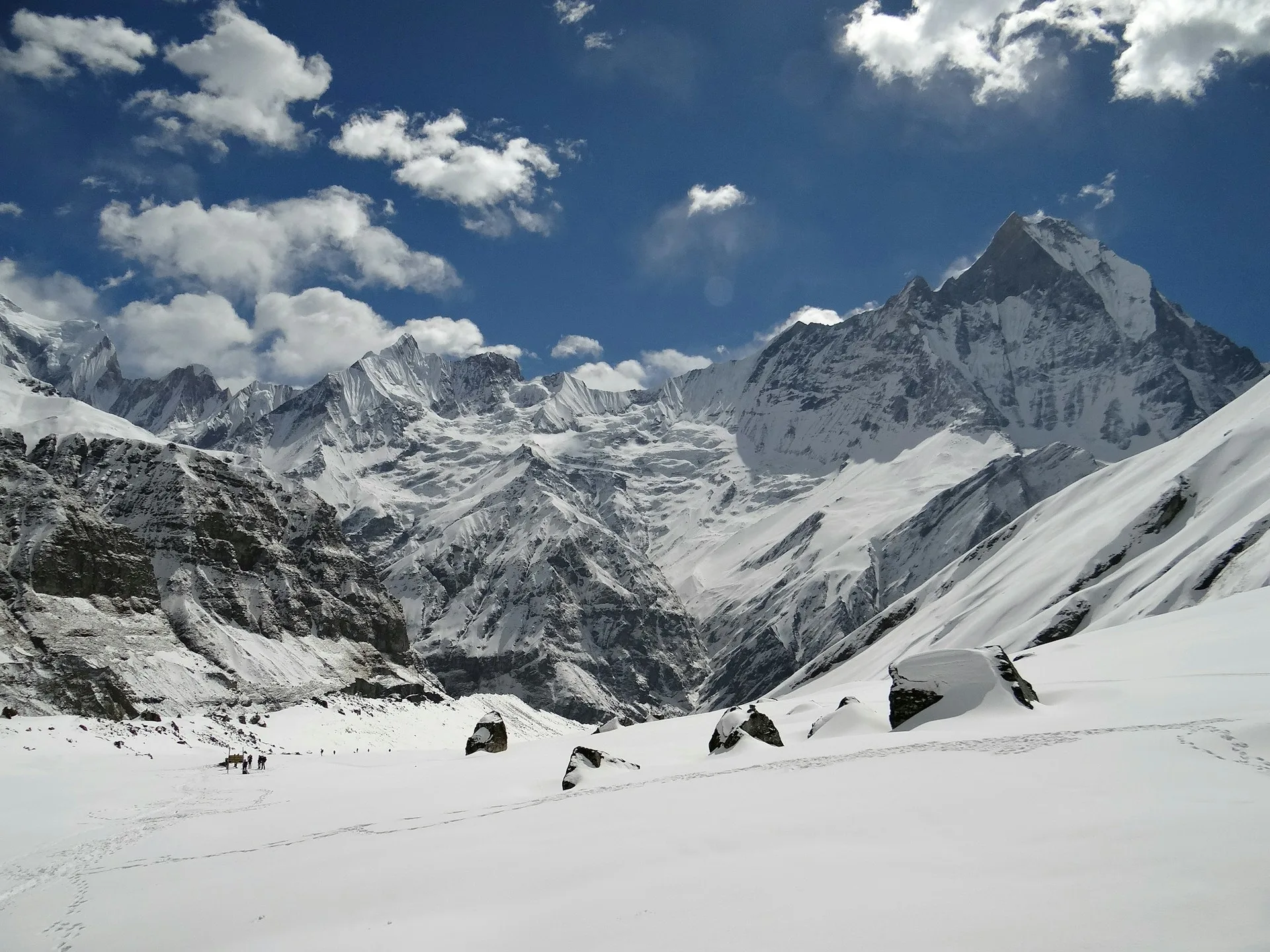
Understanding the Elevation Profile: Where It Gets Real
The ABC route gains around 3,060 meters of elevation from the trailhead at Nayapul (1,070m) to the base camp itself. That’s a substantial vertical climb over roughly 6–8 trekking days. The section that demands the most attention is the push from Deurali (3,200m) to Machhapuchhre Base Camp (3,700m) and then to Annapurna Base Camp (4,130m) .
Many trekkers first notice altitude symptoms somewhere between Deurali and MBC . Machhapuchhre Base Camp is where the oxygen deficit becomes noticeable—you’ll feel more breathless on gentle inclines, sleep may become restless, and appetite often dips . This is normal, but it’s also a signal to pay attention to how your body responds.
The critical rule for safe ascent above 3,000 meters is to limit daily sleeping altitude gain to no more than 300–500 meters . The standard ABC itinerary pushes against this boundary on some days—which is why choosing your itinerary carefully matters more than you might think.
How Altitude Actually Affects Your Body
At 4,130 meters, the oxygen partial pressure is roughly 40% lower than at sea level. Your body’s response is to breathe faster, increase heart rate, and produce more red blood cells to carry oxygen. Acclimatization is the process of your body adjusting to these conditions—but it takes time .
The Annapurna Base Camp Acclimatization Misconception
A common misconception is that Annapurna Base Camp isn’t high enough to cause problems because it’s lower than Everest Base Camp. This is not correct. 4,130 meters is clearly in an altitude zone where AMS can occur, especially if your route includes few rest days or if you’re coming from sea level .
Fitness Does Not Guarantee Protection
Another dangerous misconception: being fit protects against altitude sickness. Fitness helps with walking, climbing stairs, and recovering from muscle strain. However, fitness does not reliably predict who will experience altitude sickness . Your body’s response to altitude is individual and not something you can “train away” in the gym.
Common AMS Symptoms Above 3,000m
-
Headache (most common)
-
Nausea or loss of appetite
-
Fatigue beyond expected effort
-
Dizziness or lightheadedness
-
Difficulty sleeping
-
Shortness of breath at rest
The Golden Rule of Altitude Safety
Never ascend with AMS symptoms. If symptoms appear, rest at the same altitude for 24 hours. If symptoms worsen, descend immediately .
If symptoms get worse rather than better after 12 hours of rest at the same altitude, descend. Do not wait for morning .
Distinguishing Mild AMS from Emergency Conditions
Mild AMS: You have a headache, feel nauseous, and are tired. You can still walk and make decisions. You can eat if you try. Treatment: rest at the same altitude—do not ascend until symptoms resolve .
Moderate AMS: The headache worsens. Vomiting may occur. You feel unsteady on your feet. Walking becomes difficult. Treatment: consider descending 300–500 meters and do not ascend until you feel better.
HAPE (High Altitude Pulmonary Edema): Fluid builds in the lungs. You experience extreme breathlessness, even at rest. A persistent cough produces frothy sputum. This is a life-threatening emergency—immediate descent and evacuation are required .
HACE (High Altitude Cerebral Edema): Fluid builds in the brain. Confusion, loss of coordination, and altered consciousness occur. The person may not recognize the severity of their condition. Immediate descent and emergency evacuation are required.
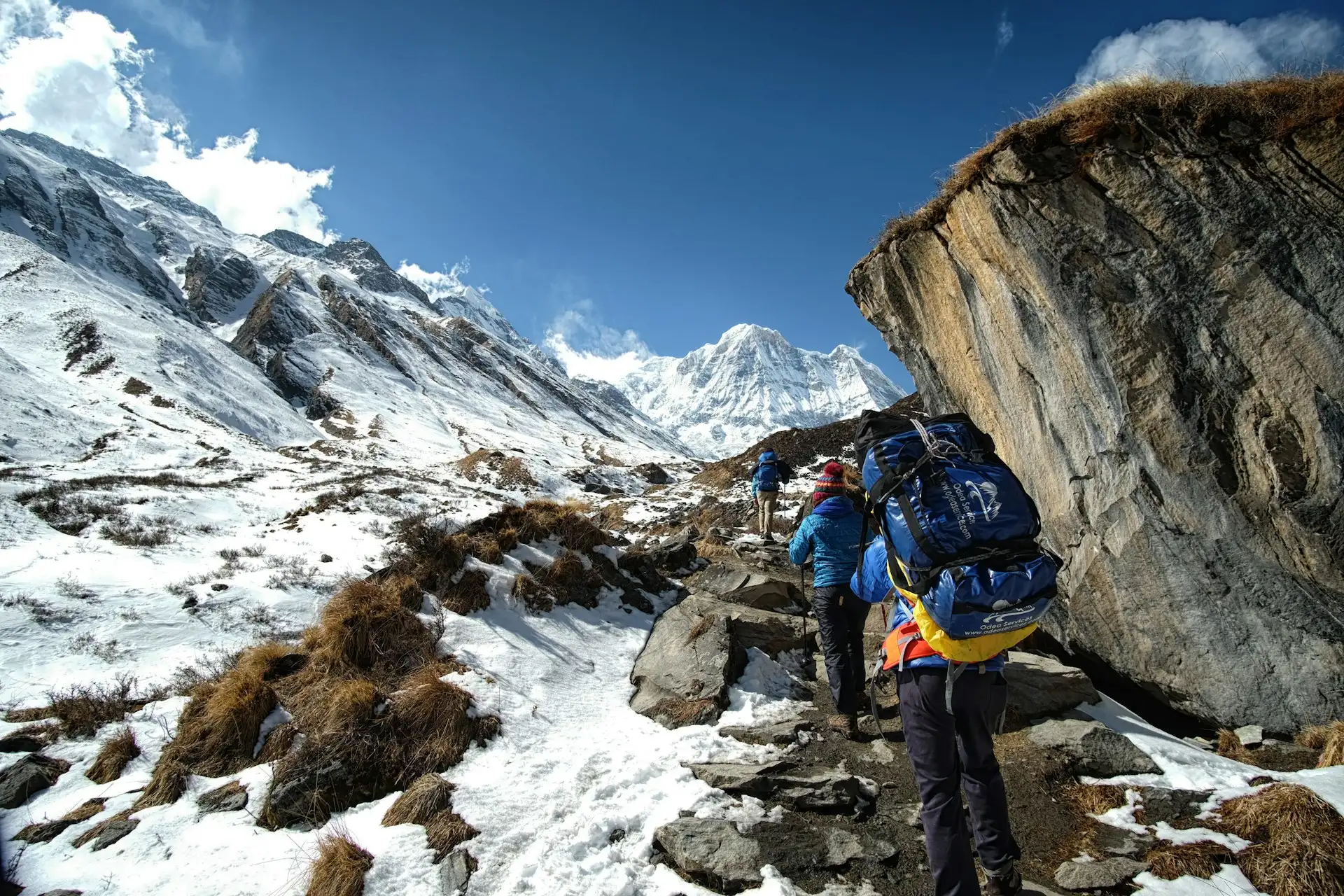
Choosing the Right Itinerary for Safe Annapurna Base Camp Acclimatization
One of the most significant decisions you’ll make is how many days you allocate to the trek. The standard ABC trek can be completed in 7, 10, or 13 days—and the difference matters enormously for acclimatization.
7-Day Itinerary: Fastest but Riskier
A 7-day itinerary is achievable but pushes the limits of safe acclimatization. You’ll gain altitude quickly, with some days exceeding 500 meters of sleeping altitude gain . This is the most common option but also the one where altitude symptoms are most likely.
The 7-day route typically goes:
-
Day 1: Nayapul to Ghandruk (1,940m)
-
Day 2: Ghandruk to Chhomrong (2,170m)
-
Day 3: Chhomrong to Deurali (3,200m)
-
Day 4: Deurali to MBC (3,700m)
-
Day 5: MBC to ABC (4,130m) and back to MBC
-
Day 6: MBC to Jhinu Danda (1,780m)
-
Day 7: Jhinu Danda to Pokhara
What this itinerary lacks is a true rest day at altitude. You reach MBC (3,700m) and push to ABC (4,130m) the next day—a 430-meter sleeping altitude gain, which is within limits, but without a preceding acclimatization day. For many trekkers, this is manageable. For others, it’s where problems begin .
What actual trekkers say: “The hardest days were Ghandruk → Sinuwa and Sinuwa → Deurali due to steep hills and numerous stairs. We stayed in tea houses, which provided wifi, charging, beds, and hot showers up to ABC. After staying at Deurali, we felt well acclimatized and experienced no notable symptoms of AMS” .
10-13 Day Itinerary: Safer and More Comfortable
Adding extra days changes the acclimatization profile entirely. A 10-13 day itinerary typically includes a rest day at Ghorepani (2,860m) or Chhomrong (2,170m), allowing the body to adapt before moving into the higher zone .
A 13-day itinerary adds even more cushion, with multiple rest days and shorter walking days. This is the recommended approach for anyone who:
-
Is prone to altitude sickness
-
Has limited high-altitude experience
-
Is flying directly to Kathmandu from sea level
-
Wants to enjoy the trek rather than race through it
The extra days are not a luxury; they are a safety margin .
The Ghorepani Advantage
One of the underused acclimatization opportunities on the ABC route is the detour through Ghorepani. At 2,860 meters, Ghorepani is exactly the altitude where the body begins to notice reduced oxygen. Spending a night there and doing the Poon Hill side trip (3,210m) before descending to sleep at Ghorepani is a textbook acclimatization exercise .
Why does this matter? Because it means you reach the upper section of the route (Deurali and MBC) with a head start on the adaptation process. Many trekkers who skip Ghorepani arrive at MBC feeling more symptoms than those who built in this extra acclimatization day .
A well-structured itinerary will always factor in these acclimatization opportunities. When comparing packages, any itinerary that reaches ABC in fewer than seven trekking days from Nayapul should be scrutinized carefully .
What to Eat and Drink at Altitude
Hydration
Dehydration significantly worsens altitude sickness symptoms. At elevation, you lose moisture rapidly through respiration—the cold, dry Himalayan air draws it out with every breath. Aim for at least 3 to 4 liters of water daily .
Avoid alcohol entirely above 2,500 meters. It accelerates dehydration and can mask altitude symptoms. Limit caffeine, both of which accelerate fluid loss .
Nutrition
Loss of appetite is one of the earliest signs of AMS—but continuing to eat is important for maintaining energy and aiding recovery. Favor carbohydrates, which require less oxygen to metabolize than fats or proteins .
Dal Bhat: The Altitude Superfood
Dal bhat—lentil soup, rice, vegetables, and pickles—is the staple of the Annapurna region. It’s not just culturally appropriate; it’s also nutritionally ideal for altitude. Dal bhat is served with free refills at most teahouses and is recommended by guides as the best daily meal .
Garlic soup, another staple in Himalayan teahouses, is widely consumed by locals and trekkers alike for its believed acclimatization properties. Science is mixed on this, but it does no harm and is genuinely warming .
Teahouse Food Prices and Realities
Food prices increase with altitude. Expect meals to cost NPR 600–2,000 depending on your elevation . Rooms get colder and menus shorter as you climb higher .
You are expected to eat your meals at the teahouse where you sleep—this is how owners generate most of their income, and respecting that arrangement matters .
How to Monitor Your Acclimatization
Using a Pulse Oximeter
One of the most important and underestimated items for altitude safety is a pulse oximeter. These devices clip onto your finger and measure your blood oxygen saturation (SpO2) in seconds .
A healthy reading at altitude is typically above 90%. Readings below 85% signal inadequate acclimatization and potential AMS. A reading below 75% at rest is a medical emergency .
But here’s the nuance: SpO2 readings are most useful as a trend, not as a single data point. A single low reading could be from cold hands or recent exercise. More important is whether the reading trends downward over multiple days .
SpO2 Monitoring Protocol
| Signal | Favorable Trend | Warning | Action | |
|---|---|---|---|---|
| SpO2 | The trend stabilizes or improves | Trend falling for multiple days | Don’t increase, take extra recovery | |
| Sleep | You sleep more peacefully | You often wake up or feel breathless | Lower setting or stabilize longer | |
| Recovery | You wake up feeling refreshed | You feel heavier, irritable, or tired | Temporarily limit training load | |
| Symptoms | No headache, nausea, or dizziness | Complaints are increasing | Stop increasing and assess medically |
What Your SpO2 Should Be at ABC
| Altitude | Expected SpO2 Range | Warning Sign |
|---|---|---|
| Sea level | 95–100% | N/A |
| 2,500m | 92–95% | Below 90% |
| 3,000m | 90–93% | Below 88% |
| 3,700m (MBC) | 88–90% | Below 85% |
| 4,130m (ABC) | 86–89% | Below 82–85% |
Note: These figures are general guidelines. Individual readings vary depending on age, fitness, and other factors.

Medications: What Works and What Doesn’t
Diamox (Acetazolamide)
Diamox is the most widely used pharmaceutical aid for altitude sickness prevention. It works by stimulating faster breathing, which increases the oxygen content in your blood and speeds up acclimatization .
Important considerations:
-
It should only be taken under medical supervision
-
It comes with side effects—increased urination, tingling in the fingers and toes, occasional nausea
-
It is not suitable for people with sulfa allergies or certain kidney conditions
-
It masks some AMS symptoms—it should not make you feel confident enough to ascend faster than your body is adapting
Emergency Medications Carried by Guides
Diamox: For preventive use and for treating moderate AMS. Guides typically carry both 125mg and 250mg tablets .
Dexamethasone: A powerful corticosteroid used exclusively in emergencies—specifically for HACE. It reduces brain swelling rapidly and can be life-saving when immediate descent is not possible .
Nifedipine: The emergency treatment for HAPE. It reduces pressure in the pulmonary arteries, buying critical time for the affected trekker to descend while a rescue is coordinated .
These are not medications to self-administer.
What Experienced Trekkers Pack
A real traveler’s account highlights the importance of carrying glucose or energy supplements: “When I reached MBC, the high altitude made me dizzy and nauseous. A Sherpa stopped, pulled out a packet of glucose powder from his jacket, tore it open, poured it directly on my tongue, and waited for the sugar to enter my body. My face returned to normal. If you are prone to altitude sickness, be sure to bring high-energy snacks and Diamox” .
Your health kit should include :
-
Basic first aid—blister plasters, bandages, antiseptic
-
Diamox (acetazolamide)—discuss with your doctor before departure
-
Paracetamol and rehydration sachets
-
Glucose or energy supplements
-
A pulse oximeter
What a Licensed Guide Actually Does for Your Safety
You are not legally required to hire a guide on the Annapurna Base Camp Trek. However, as of 2026, Nepal’s trekking regulations require foreign solo trekkers to hire a licensed guide in most Himalayan regions, including the Annapurna Conservation Area . This rule was introduced for good reason; it significantly improves safety outcomes .
Here’s what a licensed guide actually does for you :
-
Monitors you for altitude symptoms: A guide can recognize early AMS symptoms that you might dismiss as normal tiredness. You may not recognize the early signs of AMS in yourself .
-
Sets and enforces pace: A guide will enforce a slow, steady pace that protects acclimatization. They will stop you from rushing .
-
Carries emergency medications: The guide’s kit includes a pulse oximeter and emergency meds for HAPE and HACE .
-
Coordinates emergency response: If evacuation is required, the guide contacts the helicopter rescue service and coordinates logistics .
-
Provides local knowledge: A guide will know which teahouses are best, where to find water, and what the day’s weather forecast suggests. They can also explain cultural context, making the trek more meaningful .
-
Teahouse booking assistance: In peak season, securing a room can be difficult. A guide can reserve rooms in advance—as one trekker noted: “Our guide, Eku, reserved tea house rooms in advance and confirmed private accommodations daily, ensuring we avoided the common struggle for space among trekkers” .
Cost of a Guide
A licensed guide costs approximately $25–$35 USD per day, plus their food and accommodation .
Should You Also Hire a Porter?
For first-time trekkers, hiring a porter is strongly recommended. Carrying a 10–12 kg pack up stone staircases for nine days compounds knee fatigue and reduces enjoyment significantly. With a porter handling your main bag, you carry only a small daypack and experience every kilometer differently .
Porter cost: Approximately $15–$25 USD per day, usually in addition to guide fees .
Permits and Insurance
Permits Required for 2026
Every trekker regardless of experience needs two permits before entering the Annapurna region :
-
ACAP (Annapurna Conservation Area Permit): NPR 3,000 (~$23 USD) for foreigners, NPR 1,000 for SAARC nationals
-
TIMS Card (Trekkers’ Information Management System): NPR 2,000 (~$15 USD) for foreigners, NPR 1,000 for SAARC trekkers
Both can be obtained in Kathmandu or Pokhara at the Nepal Tourism Board office or through a registered trekking agency. Carry passport photos and copies of your passport. Checkpoints along the trail will verify your permits—do not attempt to trek without them .
Travel Insurance (Not Optional)
Get proper travel insurance. This cannot be overstated. Make sure your policy covers high-altitude trekking to at least 4,200m, emergency helicopter evacuation, and medical treatment costs. Read the small print carefully; many standard travel policies explicitly exclude trekking above 3,000m or 4,000m .
Evacuation is expensive—typically $3,000–5,000 USD for a short flight .
What Experienced Trekkers Wish They’d Known
-
Altitude affects sleep more than you expect: Even with proper acclimatization, you may wake up frequently at night above 3,000 meters. This is normal. Rest when you can.
-
The descent is harder than the ascent: Coming down from ABC to Jhinu Danda involves descending 2,350 meters over two days. This is harder on knees and leg muscles than the climb up .
-
Eat even when you don’t feel like it: Loss of appetite at altitude is a signal to eat, not a reason to skip meals. Dal bhat is your best option.
-
Preparation matters: If you can walk 10–15 km a day at home and have done some hill training, you’ll be fine. The ABC trek is non-technical—no climbing skills required—but endurance matters.
-
Take the rest days: Itineraries that skip rest days or push through to ABC in fewer than 7 days from Nayapul are not recommended for most trekkers .
-
A guide is worth the cost: The peace of mind alone is valuable. The safety margin they provide is invaluable .
-
Layering is non-negotiable: Temperatures vary dramatically between day and night. A good system includes moisture-wicking base layers, an insulated mid-layer, and a waterproof outer shell .
-
Trekking poles are essential: Especially valuable on descents near Chhomrong and the full descent from ABC .
-
You don’t need expedition-grade gear, but the wrong choices will make the trek miserable. Broken-in hiking boots with ankle support are non-negotiable .
-
Don’t buy new boots for the trek: Wear your hiking boots on multiple 10+ km hikes before departure. Blisters from new footwear are one of the most common reasons beginners struggle .
Seasonal Considerations for Annapurna Base Camp Acclimatization
Best Seasons for Acclimatization
| Season | Recommended for Beginners | Key Characteristics | |
|---|---|---|---|
| Autumn (Oct–Nov) | Yes, best season | Clear skies, stable weather, excellent mountain views, busiest | |
| Spring (March–May) | Yes, best season | Rhododendrons in bloom, good visibility, warming temperatures | |
| Winter (Dec–Feb) | Possible for fit beginners | Cold at altitude (−10°C at ABC at night), potential snow above 3,000m | |
| Monsoon (June–Sept) | Avoid | Heavy rainfall, leeches, slippery trails, obscured views, landslide risk |
Note on winter conditions: December through February is possible but significantly colder at altitude, with snow potentially blocking higher sections .
When to Turn Back
This is the most difficult decision a trekker faces, and it’s important to be clear about it before you go. The ABC route is demanding, and you will see some trekkers turn back. Turning back is not failure—it’s the responsible decision .
When to turn back:
-
You have symptoms of moderate AMS that don’t improve within 12 hours
-
Your SpO2 reading is below 85% and not improving
-
You vomit
-
You feel unsteady on your feet or have coordination difficulties
-
Your guide recommends descending
-
Your condition worsens rather than improves
No view from Annapurna Base Camp is worth your life. The mountain will still be there next time .
Practical Packing for Altitude Safety
Clothing (Non-Negotiables)
-
Broken-in hiking boots with ankle support
-
Moisture-wicking base layers (2–3 sets)—avoid cotton entirely, it holds sweat and chills fast
-
Fleece mid-layer and down jacket for camp evenings above 3,000m
-
Waterproof outer shell jacket and pants
-
Warm hat, gloves, and neck buff
-
Trekking pants and thermal leggings for higher elevations
Gear Essentials
-
Trekking poles—especially valuable on descents
-
Headlamp with spare batteries
-
Sleeping bag rated to −10°C or warmer
-
Sleeping bag liner—teahouses provide blankets, but a liner adds real warmth above 3,000m
-
Sunscreen SPF 50+, UV-blocking sunglasses, and lip balm
-
Reusable water bottle and purification tablets or a portable filter
Health Kit
-
Basic first aid—blister plasters, bandages, antiseptic
-
Diamox (acetazolamide)—discuss with your doctor before departure
-
Paracetamol and rehydration sachets
-
Pulse oximeter
-
Glucose or energy supplements
What You Can Rent or Buy in Pokhara
Everything you forget can be rented or bought in Pokhara at fair prices. Do not over-pack .
The Annapurna Base Camp Acclimatization Bottom Line
Annapurna Base Camp at 4,130 meters is high enough that altitude sickness is a real concern—but with the right preparation, it’s a manageable one. The key factors are:
-
Choose a longer itinerary (10–13 days) if you have limited altitude experience or are prone to AMS
-
Include rest days at strategic altitudes (Ghorepani or Chhomrong)
-
Stay hydrated (3–4 liters daily)
-
Eat well, especially carbohydrates
-
Monitor your SpO2 for objective data on your acclimatization
-
Descend immediately if symptoms worsen rather than improve
-
Work with a licensed guide who carries emergency medications and a pulse oximeter
The ABC trek is one of the world’s great mountain walks. With proper acclimatization, it’s accessible and safe for most physically fit people. What kills treks isn’t altitude—it’s ignoring the body’s signals.
If you’re planning a safe, properly paced Annapurna Base Camp trek, companies like Merriment Treks offer itineraries that prioritize acclimatization and safety. Whether you’re a first-time trekker or an experienced adventurer, the key to enjoying the Annapurna Sanctuary is giving your body the time it needs to adapt.
FAQs about Annapurna Base Camp Acclimatization
1. Can you get altitude sickness at Annapurna Base Camp?
Yes. ABC sits at 4,130 meters, well above the 2,500-meter threshold where AMS can occur. The risk increases with rapid ascent, inadequate acclimatization, and individual susceptibility .
2. How many days should I take for ABC to avoid altitude sickness?
At least 7 days from the trailhead, but 10–13 days provides a safer acclimatization profile with built-in rest days. Longer itineraries significantly reduce AMS risk .
3. What is the elevation of Annapurna Base Camp?
4,130 meters (13,549 feet) above sea level .
4. How much altitude gain per day is safe on the ABC trek?
Above 3,000 meters, limit sleeping altitude gain to 300–500 meters per day. The standard ABC itinerary pushes close to this limit, so careful pacing matters .
5. Do I need a guide for the Annapurna Base Camp trek?
As of 2026, solo foreign trekkers are required to hire a licensed guide in the Annapurna Conservation Area. Even without the regulation, a guide is strongly recommended for safety .
6. What is the highest point on the ABC trek?
Annapurna Base Camp at 4,130 meters is the highest point. Some side trips like Poon Hill (3,210m) are lower.
7. How do you prevent altitude sickness on Annapurna Base Camp trek?
Follow a gradual ascent schedule, stay hydrated (3–4 liters daily), eat high-carb meals, include rest days, monitor your SpO2, and descend immediately if symptoms worsen .
8. What does AMS feel like at Annapurna Base Camp?
Common symptoms include headache, nausea, loss of appetite, fatigue, dizziness, and difficulty sleeping. At MBC and ABC, you may feel breathless on gentle inclines .
9. Is Diamox needed for the ABC trek?
It’s not essential but may be prescribed by your doctor as a preventive measure. Start the course 1–2 days before ascending above 3,000 meters. Never take Diamox without medical guidance .
10. What is the SpO2 reading at Annapurna Base Camp?
Healthy SpO2 at 4,130 meters is typically 86–89%. Readings below 85% signal inadequate acclimatization; below 75% is a medical emergency .
11. Can beginners do the Annapurna Base Camp trek?
Yes. The trek is non-technical and doesn’t require climbing skills. However, you should be physically fit—able to walk 10–15 km daily—and prepare with hill training. A longer itinerary is recommended for first-timers .
12. What permits do I need for Annapurna Base Camp?
ACAP (Annapurna Conservation Area Permit) at NPR 3,000 and TIMS Card at NPR 2,000 are required. Obtain them in Pokhara or through a registered agency .
13. Is the 7-day ABC trek enough for acclimatization?
It’s possible but pushes the safe limits. The 7-day itinerary lacks a true rest day at altitude, increasing AMS risk. Most reputable companies recommend at least 10 days for comfortable acclimatization .
14. What emergency medications do guides carry?
Licensed guides carry Dexamethasone for HACE, Nifedipine for HAPE, and Diamox for AMS treatment. They also carry a pulse oximeter for monitoring .
15. What happens if I get altitude sickness on the ABC trek?
If you have mild AMS, rest at the same altitude until symptoms improve. If symptoms worsen or you experience confusion, unsteadiness, or breathlessness at rest, descend immediately and arrange evacuation .