-
6,461m (Mera Peak)
-
B in Kathmandu; B, L, D on trek
-
Flight (Lukla) / Private vehicle
-
Spring & Autumn
-
Hotel, Lodge, Tented camp
-
NMA-licensed climbing guides
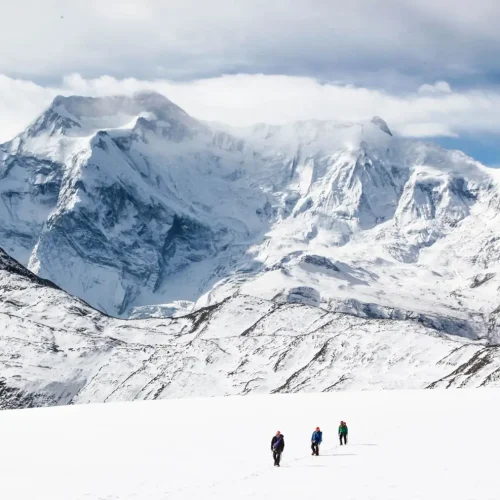
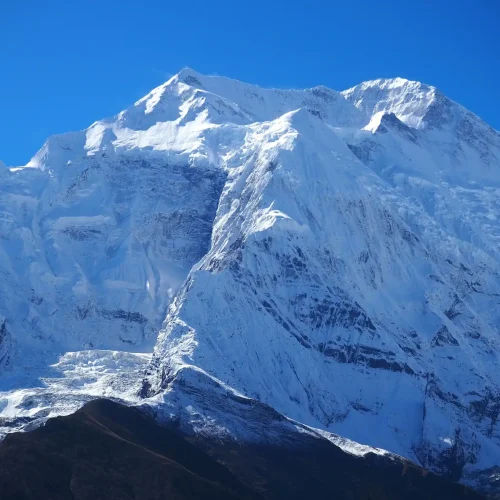
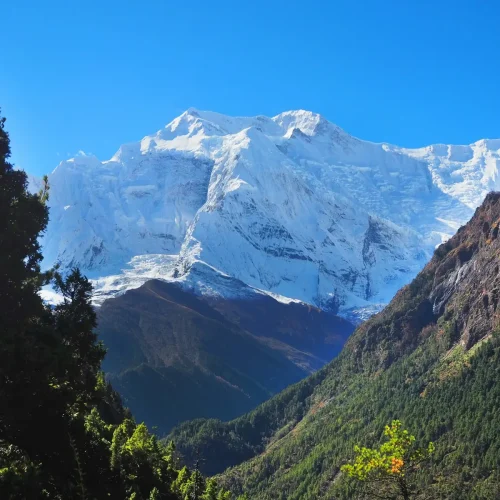
Mera and Island Peak Climbing links two of Nepal’s best-known trekking peaks in a single expedition. You summit Mera Peak (6,476m), cross the uninhabited Hongu valley and the 5,845m Amphu Lapcha pass, and finish on Island Peak (6,165m) in the Khumbu. It’s one of the most complete non-expedition journeys in the Everest region: two 6,000m summits, a remote glacial basin few trekkers ever see, and a technical pass that feels like a third climb.
This is not a beginner’s trip. It’s 26 days long, with ten nights of camping. The Amphu Lapcha crossing involves fixed ropes up steep ice on the south side and an abseil on the north. It suits fit climbers who have done at least one high-altitude trek, and ideally a trekking peak, and who want a genuine expedition feel without the cost and risk of a 7,000m peak.
This page explains the route, the realistic difficulty, what happens if the pass isn’t safe, 2026 permit fees for both peaks, costs and FAQs. If you’d rather climb just one, see Mera Peak Climbing or Island Peak Climbing.
Mera and Island Peak at a Glance
| Detail | Information |
|---|---|
| Summits | Mera Peak, central summit 6,461m (true summit 6,476m); Island Peak 6,165m |
| Highest pass | Amphu Lapcha, 5,845m (technical) |
| Region | Hinku and Hongu valleys (Makalu Barun National Park) and Khumbu (Sagarmatha National Park) |
| Duration | 26 days Kathmandu to Kathmandu |
| Route | Lukla – Paiya – Hinku valley – Khare – Mera Peak – Hongu valley – Amphu Lapcha – Island Peak – Pangboche – Lukla |
| Grade | Mera F/PD; Amphu Lapcha PD with fixed ropes and abseil; Island Peak PD+ |
| Experience | Previous high-altitude trek required; trekking peak experience recommended |
| Accommodation | Hotel in Kathmandu, 12 nights in lodges, 10 nights camping |
| Best seasons | April–May and October–November |
| Group size | 2–8 climbers |
| Permits | Two NMA permits (Mera, Island), Makalu Barun NP, Sagarmatha NP, Khumbu Pasang Lhamu Rural Municipality |
| Price | From USD 4,500 per person |
Package Highlights
- Two 6,000m summits in one expedition: Mera (Nepal’s highest trekking peak) and Island Peak
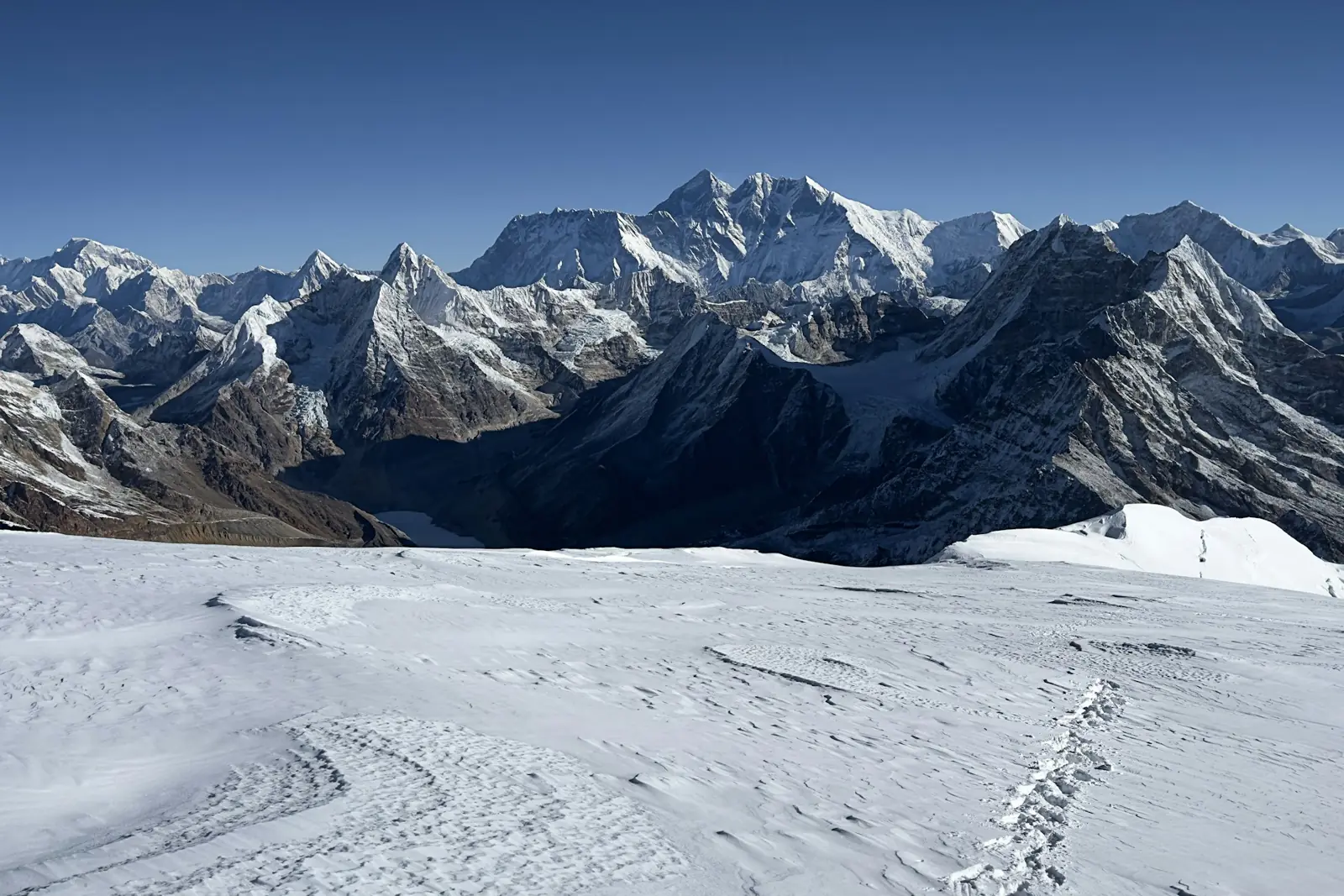
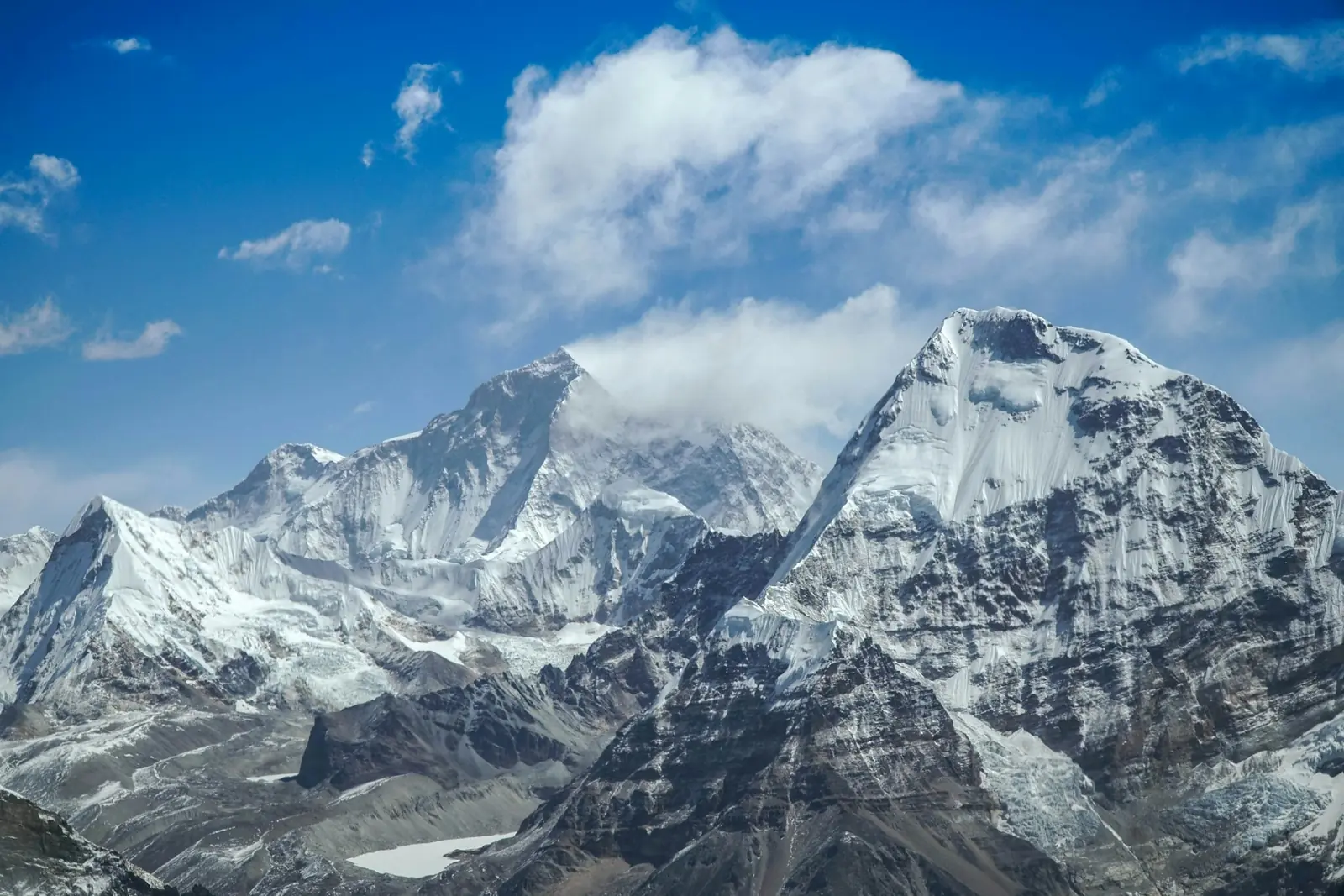
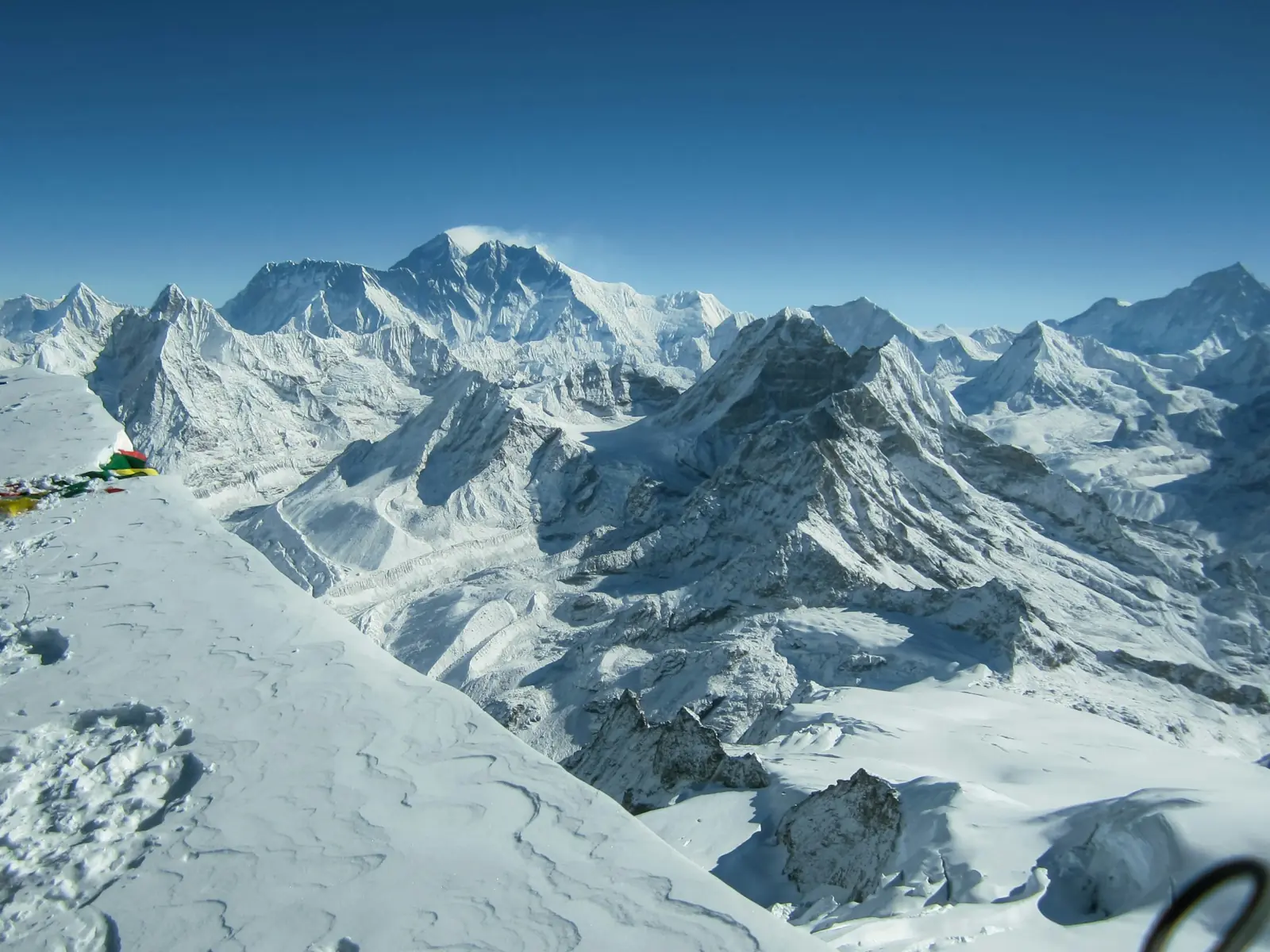
- Five 8,000m peaks from Mera’s summit: Everest, Lhotse, Makalu, Cho Oyu and Kangchenjunga
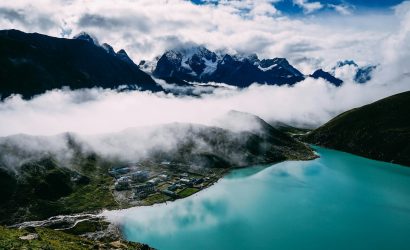
- Cross the remote, uninhabited Hongu valley and its glacial lakes, including Panch Pokhari
- Climb over the technical Amphu Lapcha pass into the Imja valley below Island Peak
- Gradual village approach through Paiya, Pangkongma and Ningsow for safe acclimatisation
- Two spare days for weather, one on each side of the expedition
- Full camping crew, cook and NMA-licensed climbing guides throughout
Why Choose This Mera and Island Peak Package
Most people climb one trekking peak and go home. Doing both on one trip is efficient: you climb Mera at the peak of your acclimatisation, then use that fitness and adaptation for Island Peak a week later, without the long walk back to Lukla and in again.
How we’ve built this itinerary:
- The slow way in. The Paiya–Pangkongma–Ningsow approach avoids an early jump over the Zatrwa La and protects your acclimatisation for the rest of the trip.
- Mera first, Island second. Mera is higher but less technical. Climbing it first means Island Peak comes when you are fully acclimatised and rope-practised.
- Two reserve days: one at Kongma Dingma after Mera, and one at Island Peak Base Camp.
- Small expedition team: groups of 2–8, with one climbing guide for every two climbers on summits and on the Amphu Lapcha.
- An honest contingency plan if the pass is unsafe (see below).
Amphu Lapcha: The Key Section
Amphu Lapcha (5,845m) connects the Hongu basin to the Imja valley and is often described as one of the highest and most technical trekking passes in Nepal. On the south side, guides fix ropes up a steep, broken icefall and snow slope. On the north side, the descent is steep and usually needs an abseil before easier ground leads down toward Island Peak Base Camp. The crossing day is long, 8–10 hours, at high altitude, with no settlement on either side.
Conditions on the pass change from season to season. Heavy snow, ice or rockfall can make it unsafe. If our guides judge the pass unsafe, we will not cross. The alternative is to return via the Hinku and Zatrwa La to Lukla. In that case Island Peak may not fit within the trip dates. We’ll explain options and costs on the spot, and travel insurance with trip curtailment cover is strongly recommended.
Route Overview
After the flight to Lukla (2,860m), the route heads south and east through the forested middle hills to Paiya, Pangkongma and Ningsow, then turns north up the Hinku valley to Kothe, Thangnak and Khare (5,045m). From Khare you climb onto the Mera Glacier, camping at Mera La (5,415m) and High Camp (about 5,780m) before the Mera summit.
From the summit you descend east into the Hongu valley to camp at Kongma Dingma. The next days follow the empty upper Hongu past glacial lakes to Seto Pokhari and the Panch Pokhari lakes, then up to Amphu Lapcha South Base Camp. You cross the pass with fixed ropes and descend into the Imja valley to Island Peak Base Camp (5,087m), where you rest and train before the Island Peak summit. The trip ends via Pangboche and Namche back to Lukla.
Distance & Walking Hours
All distances are approximate, especially in the trail-less Hongu.
| Stage | Approx. distance | Walking time |
|---|---|---|
| Lukla → Paiya → Pangkongma → Ningsow → Chhatra Khola | 33 km over 4 days | 5–7 hrs per day |
| Chhatra Khola → Kothe → Thangnak → Khare | 23 km over 3 days | 3–7 hrs per day |
| Khare → Mera La → High Camp | 6 km over 2 days | 3–4 hrs per day |
| High Camp → Mera summit → Kongma Dingma | about 12 km | 10–12 hrs |
| Kongma Dingma → Seto Pokhari | 10 km | 5–6 hrs |
| Seto Pokhari → Amphu Lapcha South Base Camp | 7 km | 5–6 hrs |
| Amphu Lapcha pass → Island Peak Base Camp | 10–11 km | 8–10 hrs |
| Island Peak Base Camp → Summit → Base Camp | about 8 km | 10–14 hrs |
| Base Camp → Pangboche → Namche → Lukla | 47 km over 3 days | 5–7 hrs per day |
Altitude Table
| Day | Overnight | Altitude (approx.) |
|---|---|---|
| 1–2 | Kathmandu | 1,400m |
| 3–6 | Paiya, Pangkongma, Ningsow, Chhatra Khola | 2,730–2,860m |
| 7 | Kothe | 3,600m |
| 8–9 | Thangnak | 4,350m |
| 10–11 | Khare | 5,045m |
| 12 | Mera La camp | 5,415m |
| 13 | Mera High Camp | 5,780m |
| 14–15 | Kongma Dingma (Mera summit 6,461m on Day 14) | 4,850m |
| 16 | Seto Pokhari | 5,000m |
| 17 | Amphu Lapcha South Base Camp | 5,500m |
| 18–21 | Island Peak Base Camp (Amphu Lapcha 5,845m on Day 18; Island summit 6,165m on Day 20) | 5,087m |
| 22 | Pangboche | 3,985m |
| 23 | Namche Bazaar | 3,440m |
| 24 | Lukla | 2,860m |
| 25 | Kathmandu | 1,400m |
Map Overview
Think of the route as a giant horseshoe around Mera and Baruntse. The first half climbs north up the Hinku valley on Mera’s west side. After the summit you drop east into the parallel Hongu valley, a high, empty basin enclosed by Chamlang, Baruntse and the Lhotse–Nuptse wall to the north. At the head of the Hongu, Amphu Lapcha cuts through the ridge to the Imja valley, where Island Peak stands on the far side. From there you rejoin the main Khumbu trail at Dingboche and Pangboche for the walk out to Lukla.
Difficulty Level
This is the hardest of our trekking-peak trips. It’s rated strenuous to very strenuous overall, and technically about PD+.
- Mera Peak: mostly F (easy) glacier walking at 30–40 degrees, roped for crevasses, with a short, steep fixed-rope pitch at about 45–55 degrees to the central summit. The difficulty here is altitude and cold.
- Amphu Lapcha: the most technical section. You’ll climb steep ice and snow on fixed lines with a jumar, cross crevasses, and abseil on the north side. It’s long and exposed.
- Island Peak: a glacier crossing with ladders, then a 100–150m headwall at roughly 40–50 degrees on fixed rope, and an exposed summit ridge.
- Endurance: 26 days, three very long days (Mera summit, Amphu Lapcha, Island summit) and ten nights camping above 4,800m.
You need to be self-sufficient in cold, uncomfortable conditions, comfortable with exposure, and confident with crampons. Previous trekking peak experience is strongly recommended.
Fitness Requirements
You should be able to hike 7–8 hours a day for several days in a row, with 1,000m+ of ascent and a 7–8kg pack, then recover overnight. Train for at least 16 weeks:
- Aerobic base (4–5 sessions a week): long hill walks, stairs, incline treadmill, cycling or running.
- Long days: build up to back-to-back 6–8 hour hikes with a 10–12kg pack.
- Strength (2–3 sessions a week): legs, core and upper body for rope work.
- Skills: do a winter skills or basic alpine course: crampons, ice axe, jumaring and abseiling. On this trip it’s not optional.
Medical clearance is recommended if you have any heart, lung or blood pressure condition.
Altitude Sickness & Acclimatisation
You’ll spend more than a week above 5,000m, so AMS management is central. AMS can progress to HAPE or HACE, and descent is the treatment for worsening symptoms.
How the itinerary manages it:
- A gradual start: four nights between 2,730m and 2,860m before Kothe (3,600m).
- Acclimatisation days at Thangnak and Khare, with hikes above each.
- Short steps above Khare: Mera La and High Camp split the climb to 5,780m.
- Descent after Mera: the camp at Kongma Dingma (about 4,850m) is lower than High Camp, giving you a recovery night.
- Spare days on both sides of the pass.
- Daily oximeter checks, satellite communication for emergencies, and helicopter evacuation through your insurance where weather allows.
Remote sections of the Hongu are several days’ walk from the nearest village. Evacuation depends on weather and helicopter access, so insurance and fitness both matter more than on a standard trek.
Best Time for Mera and Island Peak Climbing
- Mid-April to May: the best season for the Amphu Lapcha crossing, with longer days and warmer conditions. It’s the most popular time for this route.
- October to mid-November: clear skies and the best views, but colder in the Hongu and on the pass. November nights below −20°C are common.
- Winter and monsoon: not offered. The Amphu Lapcha is usually too dangerous with deep snow or ice, and the Hongu camps are exposed.
Weather by Season
| Season | Hongu camps (about 5,000m) day / night | Summits & pass | Conditions |
|---|---|---|---|
| Spring (Apr–May) | 2–10°C / −12 to −6°C | −10 to −20°C | Best pass conditions, afternoon cloud |
| Autumn (Oct–Nov) | 0–8°C / −18 to −10°C | −15 to −25°C | Clearest skies, very cold nights |
| Winter (Dec–Feb) | Not operated | — | Pass usually unsafe |
| Monsoon (Jun–Aug) | Not operated | — | Snow, cloud, landslides |
Approximate temperatures; wind makes it feel much colder.
Transportation Details
- Kathmandu airport transfers included.
- Lukla flights (25–35 minutes) leave from Ramechhap (Manthali) in the main seasons, a 4–5 hour early drive from Kathmandu, which we arrange by private vehicle. See our Lukla flight guide.
- Porters carry personal bags (up to 15kg) and the camping equipment. In the Hongu, our crew carries everything: tents, kitchen, food and fuel.
- Leave 1–2 days after the trip before your international flight.
Accommodation
- Kathmandu (3 nights): tourist-standard hotel, twin-share, with breakfast.
- Lodges (12 nights): simple lodges in the Hinku villages, Kothe, Thangnak and Khare, then Khumbu teahouses at Pangboche, Namche and Lukla.
- Camping (10 nights): Mera La, Mera High Camp, the Hongu valley, Amphu Lapcha Base Camp and Island Peak Base Camp, with mountain tents, insulated mats, dining and toilet tents and a full kitchen crew.
Meals & Drinking Water
All meals are included on the trek and climb, and breakfast in Kathmandu. In the lodges you’ll eat dal bhat, noodles, pasta, potatoes and eggs. On the camping stages our cook prepares hot meals, soups and drinks three times a day from supplies carried in. Water is boiled or treated by the kitchen crew; bring purification tablets as backup.
Internet, Mobile Network & Charging
- Mobile signal is patchy in the Hinku and non-existent in the Hongu. Expect no contact for about a week.
- Wi-Fi is paid and slow at some Hinku and Khumbu lodges.
- Charging: solar or paid charging at lodges only. Bring a 20,000mAh power bank, plus a small solar panel if you need devices in the Hongu.
- Emergencies: your guide carries satellite communication throughout.
Permits & Fees (2026)
All permits and garbage deposits are included.
| Permit | Cost for foreign climbers |
|---|---|
| NMA Mera Peak permit | USD 350 spring; USD 175 autumn, winter & summer |
| NMA Island Peak permit | USD 350 spring; USD 175 autumn, winter & summer |
| Makalu Barun National Park entry permit | NPR 3,000 + 13% VAT (about USD 25) |
| Sagarmatha National Park entry permit | NPR 3,000 + 13% VAT (about USD 25) |
| Khumbu Pasang Lhamu Rural Municipality fee | NPR 3,000 (about USD 22) |
| Garbage deposits | USD 500 per team per peak, refundable |
NMA royalties were revised from 1 September 2025. Licensed climbing guides are mandatory on NMA peaks. See our trekking permits in Nepal guide.
Packing List
Group gear (fixed ropes, anchors, ice screws, tents, kitchen) is provided. Most personal climbing gear can be rented in Kathmandu.
| Category | Items | Bring or rent? |
|---|---|---|
| Climbing gear | Harness, jumar, figure-8 or ATC, 4 carabiners (2 locking), slings/prusik, ice axe, crampons, helmet | Rent or bring |
| Footwear | Double or 6,000m-rated mountaineering boots, broken-in trekking boots, camp boots, wool socks | Mountaineering boots rentable |
| Insulation | Expedition down jacket (−25°C), down or synthetic trousers, fleece, thermals | Down jacket rentable |
| Shell | Waterproof jacket and trousers | Bring |
| Hands & head | Liner gloves, climbing gloves, expedition mitts, warm hat, balaclava, sun hat | Bring |
| Sleeping | Sleeping bag rated −25°C or lower | Rentable |
| Sun & eyes | Category 4 glacier glasses, goggles, SPF 50 | Bring |
| Packs | 40–45L climbing pack (porter duffel provided) | Bring |
| Water & health | 2 insulated bottles, pee bottle, first-aid kit, medicines | Bring |
| Electronics | Headlamp, spare batteries, power bank, small solar panel | Bring |
| Documents | Passport, photos, insurance details, NPR cash | Bring |
Don’t economise on boots, mitts or your sleeping bag. Ten nights of camping above 4,800m are colder than any lodge night.
Cost Breakdown
Our price is from USD 4,500 per person. A realistic total budget:
| Expense | Estimated cost (USD) | Included? |
|---|---|---|
| Mera and Island Peak expedition (26 days) | 4,500 | — |
| Two NMA permits, park and municipality fees, garbage deposits | — | Included |
| Lukla return flights | — | Included |
| Full camping crew, tents and food for 10 nights | — | Included |
| Nepal tourist visa (30 days) | 50 | Not included |
| Insurance with helicopter evacuation to 6,500m | 200–450 | Not included |
| Climbing gear rental (if needed) | 120–180 | Not included |
| Kathmandu lunches and dinners | 40–80 | Not included |
| Lodge extras (charging, Wi-Fi, drinks, snacks) | 100–200 | Not included |
| Tips for guides, porters and camp crew | 300–450 | Not included |
| Realistic total (excluding international flights) | about 5,310–5,910 |
The price reflects a full camping expedition: cook, kitchen staff and porters carrying food, fuel and tents through the uninhabited Hongu for a week.
What’s Included
- Airport pickup and drop-off in Kathmandu
- 3 nights’ hotel in Kathmandu with breakfast (twin-share)
- Private transfer to Ramechhap (Manthali) airport when Lukla flights operate from there
- Kathmandu/Ramechhap – Lukla – Kathmandu/Ramechhap flights for you and your guide
- 12 nights in lodges (twin-share)
- 10 nights of full-service camping (tents, mats, dining, kitchen and toilet tents)
- Breakfast, lunch and dinner throughout the trek and climbs
- NMA-licensed climbing guides (one for every two climbers on summits and the Amphu Lapcha)
- Cook, kitchen staff and porters (up to 15kg personal load per climber)
- NMA Mera Peak and Island Peak permits
- Makalu Barun and Sagarmatha National Park permits, Khumbu Pasang Lhamu Rural Municipality fee
- Garbage deposits and waste management
- Group climbing gear: fixed ropes, anchors, ice screws, snow stakes
- Rope and glacier training at Khare and Island Peak Base Camp
- Satellite communication for emergencies
- First-aid kit and pulse oximeter
- Salary, meals, accommodation, insurance and equipment for all staff
- Trek duffel bag and NMA summit certificates
- All government taxes and service charges
What’s Excluded
- International flights and Nepal visa fee
- Travel insurance (must cover climbing to 6,500m, helicopter evacuation and trip curtailment)
- Lunch and dinner in Kathmandu
- Personal climbing gear and clothing (rental available)
- Lodge extras: charging, Wi-Fi, showers, bottled drinks, alcohol, snacks
- Extra costs if the Amphu Lapcha is impassable and the route must change
- Extra nights caused by flight delays, early return or personal reasons
- Helicopter rescue (billed to your insurance)
- Tips for guides, porters and crew
Optional Add-ons
- Everest Base Camp and Kala Patthar after Island Peak (+3–4 days). See Everest Base Camp and Island Peak.
- Lobuche East as a third summit for very strong teams. See Lobuche East Peak Climbing.
- Helicopter return from Chhukung or Dingboche after Island Peak (price on request).
- Private expedition on your own dates.
Travel Tips
- Take an alpine course first if you’ve never used crampons or a jumar. The Amphu Lapcha is not the place to learn.
- Keep the pee bottle and warm boots handy. Hongu nights are long and cold.
- Pack for a week without lodges: extra snacks, wet wipes, a small solar charger.
- Expect to lose weight. Eat whatever you can, whenever you can.
- Trust the guides’ call on the pass. Turning back from the Amphu Lapcha is always an option and sometimes the right one.
- Book flights home 2 days after Day 26.
Photography Spots
- Pangkongma La: your first view of Mera from the south.
- Mera High Camp at sunset: Everest, Lhotse, Makalu, Cho Oyu and Chamlang.
- Mera summit: five 8,000m peaks in one frame.
- The Hongu lakes: Panch Pokhari’s turquoise pools under Baruntse and Chamlang.
- The top of the Amphu Lapcha: the Imja valley, Island Peak and the Lhotse wall opening up ahead.
- Island Peak summit ridge: Lhotse’s south face towering overhead.
Responsible Trekking
- Leave nothing in the Hongu. There is no waste system in the valley, so our crew carries everything out.
- Fuel, not firewood: all cooking uses carried gas and kerosene to protect the fragile high vegetation.
- Look after the crew: porters carry fair loads, with proper boots, clothing, shelter and insurance.
- Respect local culture in the Hinku villages and the Khumbu.
Why Book With Merriment Treks
- Expedition-style logistics for a remote route: a full camp crew, food and fuel through the Hongu.
- NMA-licensed climbing guides, with one guide for every two climbers on the hard days.
- A sensible plan: a slow approach, Mera before Island, two reserve days and an honest Amphu Lapcha contingency.
- Transparent pricing: both permits, flights, park fees and garbage deposits included.
- One local team from planning to summit. Browse all our peak climbing trips.
Cancellation & Refund Policy
Deposit, payment and cancellation terms are set out in our terms and conditions, and we confirm them in writing with every booking. Weather delays, a turned-back summit, an impassable pass or leaving early are not refundable, so make sure your insurance covers cancellation and curtailment. Questions? Contact our team.
Plan Your Mera and Island Peak Expedition
Mera and Island Peak Climbing is for climbers who want more than a single summit: two 6,000m peaks, a wild valley and a real alpine pass in one journey. It’s demanding, and it’s one of the most rewarding routes in Nepal.
Tell us about your experience and preferred dates, and we’ll reply with honest advice on readiness and a clear quote. Contact us or use the booking form on this page.