Places to Visit Kathmandu Nepal
Kathmandu is the kind of city that resists a single description. It is ancient and chaotic and deeply sacred, a place where a living goddess peers from a first-floor window overlooking a medieval square, where cremation fires burn openly on river banks within walking distance of café-lined trekking districts, and where seven UNESCO World Heritage Sites are distributed across a single valley that most visitors try to cover in two or three days. Most don’t entirely succeed, because the more time you give Kathmandu, the more layers it reveals.
This guide covers every significant place to visit in Kathmandu and the surrounding valley — what each site actually is, why it matters, what to expect when you’re there, the correct 2026 entry fees, and the practical detail that makes the difference between a confusing afternoon and a genuinely memorable visit. The guide also covers Patan and Bhaktapur, the valley’s two other historic cities, because visiting Kathmandu without them is like visiting Rome and skipping the Vatican.
Understanding the Kathmandu Valley
Before the site-by-site breakdown, one geographic fact shapes everything about planning a visit: Kathmandu is not one city but three. Kathmandu, Patan (officially Lalitpur), and Bhaktapur are separate historic cities that share the same valley, each with its own Durbar Square, its own distinct architectural tradition, and its own cultural identity. The seven UNESCO World Heritage Sites of the Kathmandu Valley — designated together in 1979 — are distributed across all three cities and the outlying temples beyond.
Most travelers base themselves in Thamel, Kathmandu’s main tourist district, and travel outward from there. Patan is roughly 20 to 25 minutes south by taxi. Bhaktapur is 45 minutes to an hour east depending on traffic. All seven UNESCO sites can be visited in three full days with efficient planning — though giving each one the time it deserves across four to five days is considerably more rewarding.
Pashupatinath Temple
No site in Nepal carries more religious significance than Pashupatinath. It is one of the most sacred Hindu temples in the world dedicated to Lord Shiva, a UNESCO World Heritage Site, and a living pilgrimage center where thousands of devotees arrive daily. It is also the site of the open-air cremation ghats on the banks of the Bagmati River — a function that is central to its sacred identity and among the most confronting and meaningful experiences available to visitors in Nepal.
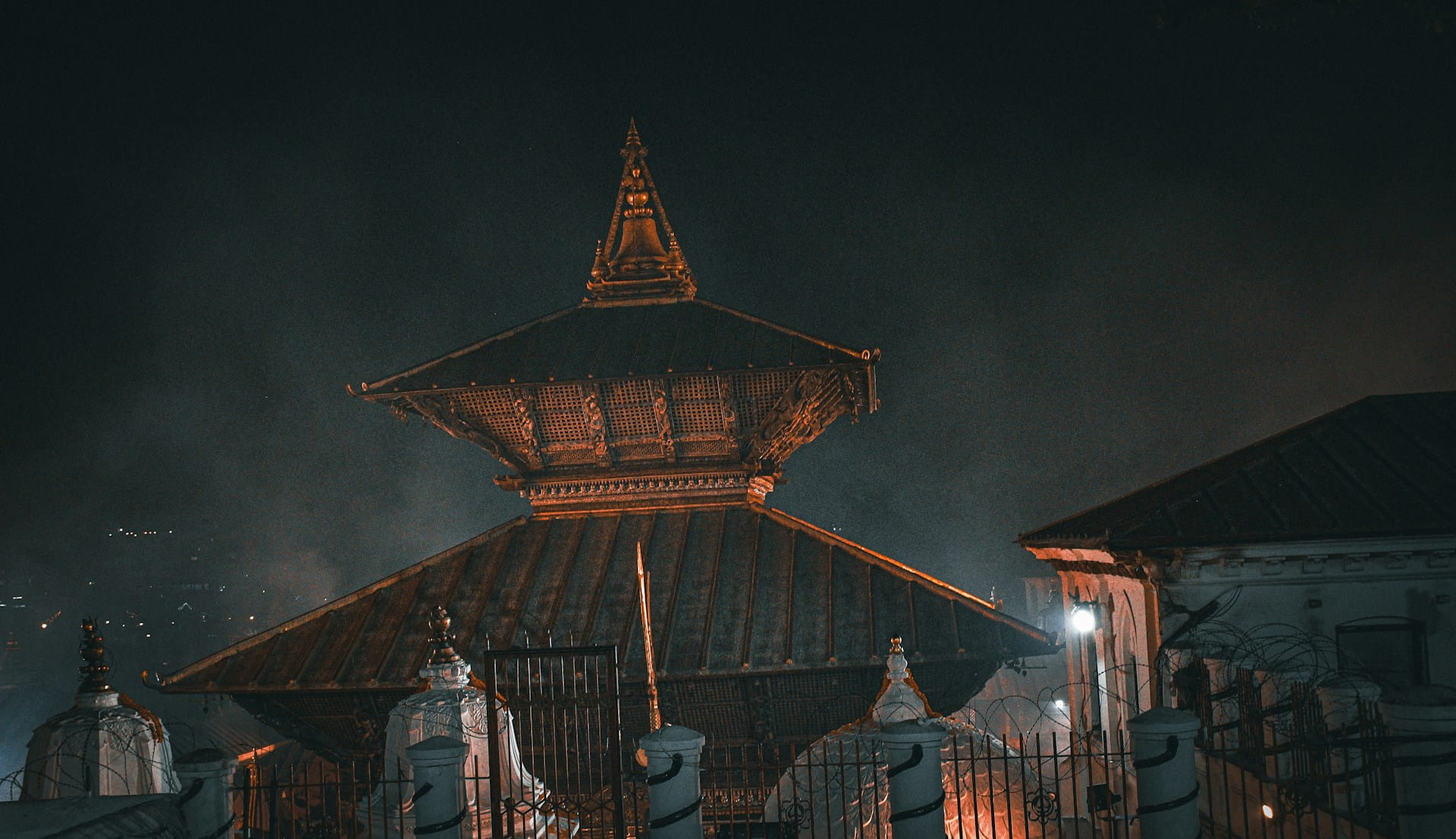
The main temple is a two-tiered pagoda with gilded roofs and silver doors, built in the 17th century on a site of far older religious significance. It is accessible only to Hindu devotees — non-Hindus cannot enter the inner sanctum. This is a firm rule, not a suggestion. The entry ticket for foreign visitors gives access to the wider temple complex: the ghats, the surrounding shrines, the Deer Park (Mrigasthali), the ashrams on the eastern riverbank, and the elevated viewing area from which the main temple and cremation platforms are visible across the Bagmati.
The cremation ghats are the most significant and most discussed aspect of Pashupatinath for non-Hindu visitors. Hindu cremation is traditionally a public act, not a private one, and the pyres on the stone platforms along the Bagmati burn throughout the day. Viewing them from the opposite bank is respectful and appropriate — visitors maintain distance, speak quietly, and do not photograph grieving families directly. Most visitors who approach this experience thoughtfully describe it as one of the most profound encounters of their Nepal trip, a direct and undisguised engagement with mortality that most modern cultures have systematically hidden from public view.
Sadhus — Hindu holy men who have renounced worldly life — gather in the courtyard areas of the complex, many with painted faces, matted hair, and saffron robes. Some welcome respectful conversation and photographs in exchange for a small voluntary donation.
The main festival at Pashupatinath is Maha Shivaratri, which typically falls in February or March and draws over one million pilgrims and thousands of sadhus from across Nepal and India to the temple over several days.
Entry fee for foreign nationals in 2026: NPR 1,000. Entry is free for Indian and Nepali nationals. The temple complex is open from 4:00 AM to 9:00 PM. Early morning — before 8:00 AM — is the most atmospheric time to visit, when morning prayers are being conducted along the ghats. A knowledgeable guide transforms the visit from confusing to genuinely illuminating.
Boudhanath Stupa
Boudhanath is the first place most experienced Nepal travelers recommend, and the reason becomes clear within minutes of entering the complex. The stupa — one of the largest spherical stupas in the world — rises approximately 36 meters from a tiered base to a gilded spire topped with a tower on each face of which the all-seeing eyes of the Buddha are painted, watching every direction simultaneously. The scale is not apparent from photographs. Standing at the base of the dome, looking up at the white curve of the structure against the sky, the physical mass of it recalibrates your expectations.
The circumambulation path — the kora — runs around the base of the stupa and is lined with prayer wheels, each engraved with the mantra Om Mani Padme Hum. Locals circle the stupa clockwise in the early morning and evening, often holding prayer beads and murmuring mantras. The surrounding ring of buildings houses dozens of Tibetan Buddhist monasteries, many established by Tibetan refugees who arrived in Nepal after 1959. The community built around Boudhanath is one of the largest Tibetan Buddhist communities outside Tibet itself.
The stupa suffered significant damage in the April 2015 earthquake and was carefully restored. It was re-consecrated in November 2016 and has been fully operational since. The restoration maintained the original form and materials closely.
The best time to visit is before 8:00 AM, when the morning kora is at its most concentrated and the light is directional and clear, or in the early evening when butter lamps are lit at the shrines around the base. Midday is the flattest period for both atmosphere and photography.
Entry fee for foreign nationals in 2026: NPR 400. SAARC nationals pay NPR 100. Nepali citizens enter free. The stupa complex is open from early morning until evening.
Swayambhunath Stupa
Swayambhunath sits on a forested hill rising from the western edge of Kathmandu city, its gilded spire visible from much of the valley below. The approach from the main eastern entrance involves climbing approximately 365 stone steps through rhododendron trees, past a population of rhesus macaques that have lived on this hill for as long as records exist — which is how the site acquired its widely used informal name, the Monkey Temple, though that name has no basis in tradition.

The stupa at the top is ancient. Its origins are traced by Newar Buddhist tradition to before the valley was drained of a primordial lake, placing its founding in the distant mythological past. The present structure has been built and rebuilt over many centuries; the current form dates primarily to later renovation but incorporates foundations of considerable antiquity. The same all-seeing eyes of the Buddha visible at Boudhanath appear here on the harmika — the square base above the dome — painted on each of the four cardinal faces.
The hilltop complex layers Buddhist and Hindu shrines in a density that reflects the valley’s syncretic religious tradition. Prayer flags cross between every available point. Butter lamps burn in the shrines. Small pagodas dedicated to various deities stand around the main stupa. The Harati Devi temple, dedicated to the goddess of smallpox who converted to Buddhism and became a protector of children, sits just to the west of the main stupa and is one of the more active devotional spaces on the hilltop.
The primary practical reason to visit Swayambhunath beyond the religious and architectural interest is the view. From the hilltop at approximately 77 meters above the valley floor, the spread of Kathmandu city is visible in every direction. On clear days in October and November, or in March before haze builds, the Himalayan range is visible to the north — Langtang Lirung and the peaks of the Ganesh Himal range rising above the valley rim.
Entry fee for foreign nationals in 2026: NPR 200. The complex is open from approximately 5:00 AM to 8:00 PM. Early morning and late afternoon are the best times to visit — the light is better, the monkeys are most active, and fewer tour groups are present.
Kathmandu Durbar Square (Hanuman Dhoka)
Kathmandu Durbar Square is the historic center of the old city, a complex of palaces, temples, courtyards, and open plazas that served as the royal ceremonial heart of the Malla kingdom and later the Shah dynasty. It is a UNESCO World Heritage Site and one of the most historically layered urban spaces in South Asia — centuries of construction, destruction, earthquake, and restoration are visible simultaneously in a single view.
The square takes its common name Hanuman Dhoka from the statue of the monkey god Hanuman at the entrance to the former royal palace — a brightly painted figure draped in red cloth that has stood guard at the palace gate since 1672. The Hanuman Dhoka Palace complex itself is now partly a museum — the Tribhuvan Museum inside covers Nepal’s royal history from the Rana era through the 20th century.
Several structures in the square merit specific attention. Kumari Ghar — the home of the Living Goddess — is a distinctive three-story building with elaborately carved wooden windows facing the main square. The Kumari is a prepubescent girl from the Shakya caste of Newar Buddhists who is worshipped as the living embodiment of the goddess Taleju until she reaches puberty. She lives in the Kumari Ghar and occasionally appears at a first-floor window.
There is no schedule for these appearances, and photography of the Kumari is traditionally not permitted. The Jagannath Temple, one of the older structures in the square, is known for the erotic carvings on the supporting struts of its roof — a feature common in Newar religious architecture that has practical, symbolic, and narrative explanations still debated by scholars.
The square took significant damage in the April 2015 earthquake, including the collapse of the Kasthamandap — the wooden pavilion from which Kathmandu derives its name, believed to have been constructed from the wood of a single tree. Reconstruction of Kasthamandap was completed in 2021. Other restoration work is ongoing.
Entry fee for foreign nationals in 2026: NPR 1,000 for the square, which includes access to the Tribhuvan Museum inside the palace. The ticket is valid for multiple entries over several days — keep the ticket if you plan to return. Children under 10 years of age enter free.
Patan Durbar Square and the Patan Museum
Of the three Durbar Squares in the Kathmandu Valley, Patan’s is most consistently praised by architects, art historians, and returning visitors as the most refined. Patan — also known as Lalitpur, meaning “city of artisans” — has been a center of metalwork, woodcarving, and stone sculpture for centuries, and the quality of craft visible in the square and in the Patan Museum reflects that tradition at its height.
The square is anchored by the Royal Palace complex along the eastern edge, a series of connected courtyards built primarily during the reign of the Malla kings in the 17th and 18th centuries. The main courtyard, Mul Chowk, contains a gilded doorway flanked by stone figures of the river goddesses Ganga and Yamuna. The Krishna Mandir — a 17th-century Shikhara-style temple built entirely of stone rather than the brick-and-wood construction typical of Newar architecture — stands in the middle of the square. Its three tiers feature carved panels depicting scenes from the Mahabharata on the first floor and the Ramayana on the second, with a dedication inscription confirming its construction by King Siddhi Narsingh Malla in 1637.

The Patan Museum, housed in the restored Keshav Narayan Chowk section of the Royal Palace, is the finest museum of traditional Nepali art and religious metalwork in the country. The collection of bronze deity figures — cast using the lost-wax technique that Patan’s craftsmen have practiced for centuries — is extraordinary. The interpretive approach, which explains the religious and iconographic context of each work, makes the collection accessible to visitors without prior background in Hindu or Buddhist iconography. The museum is closed on Tuesdays.
The Golden Temple — Hiranya Varna Mahavihar — is a three-story Buddhist monastery a short walk from the Durbar Square, its facade covered in gilded metal sheets. The inner courtyard, reached through a low doorway, is one of the quietest and most beautiful spaces in the valley, largely unknown to visitors who don’t specifically seek it out.
Entry fee for foreign nationals in 2026: NPR 1,000, which covers the Durbar Square and the Patan Museum. The Golden Temple charges a separate NPR 100 entry fee for foreigners.
Bhaktapur Durbar Square
Bhaktapur is the most intact medieval city in Nepal, and among the best-preserved medieval urban environments in Asia. Located approximately 14 kilometers east of Kathmandu, it functioned as a separate kingdom until the 18th century. The relative isolation that followed its political absorption by the unified kingdom of Nepal — and later a concerted community-led preservation effort — has left the city’s historic core remarkably coherent: brick lanes, pagoda temples, traditional Newari courtyard houses, and the sounds of daily life in an urban environment that reads as genuinely continuous with its past.
Bhaktapur’s historic area has three main interconnected squares. Durbar Square at the western end is anchored by the 55-Window Palace — built by King Bhupatindra Malla in the early 18th century — and the Vatsala Durga Temple with its distinctive carved stone bell erected in 1737, called the Bell of Barking Dogs because its ringing was said to disturb them. The Nyatapola Temple in Taumadhi Square, built in 1702 during the reign of King Bhupatindra Malla, stands five stories tall and is the tallest surviving temple in Nepal.
Its stairway is flanked by pairs of mythological guardians at each tier — wrestlers, elephants, lions, griffins, and goddesses — each consideredten times more powerful than the pair below. Pottery Square, further east in Dattatraya Square area, is where traditional potters still work on foot-operated wheels producing water vessels, ritual containers, and household pottery using techniques unchanged across generations.
The city charges the highest entry fee of any single site in the valley, reflecting the scale of what is covered — access to the entire walled historic city, all three squares, and the museums within. A full day is the genuine minimum to explore Bhaktapur properly; half a day produces the sensation of having skimmed rather than experienced it.
Entry fee for foreign nationals in 2026: NPR 1,500. SAARC nationals pay NPR 500. Nepali citizens pay NPR 50. The ticket covers full-day access to the historic city area.
Changu Narayan Temple
Changu Narayan is the oldest temple in Nepal, its origins traced to the 4th century CE during the Licchavi period, and one of the most undervisited sites in the Kathmandu Valley. It sits on a forested hilltop approximately 22 kilometers northeast of Kathmandu, near Bhaktapur, within a village that has maintained much of its traditional character.
The temple is dedicated to Vishnu and its surrounding courtyard contains some of the most significant stone sculptures in Nepal — carvings of Vishnu in his various manifestations dating to the Licchavi period (4th to 9th centuries CE) that are considered among the masterpieces of early Nepali religious art. A stone inscription in the courtyard, dated to 464 CE, is one of the oldest inscriptions in Nepal and records a military victory of the Licchavi king Mandeva I. In front of the main temple stands a kneeling statue of King Bhupatindra Malla and his queen, placed there in the 18th century as an act of devotion. The temple structure itself is a two-tiered pagoda with a gilded copper roof.
Changu Narayan was designated a UNESCO World Heritage Site as part of the Kathmandu Valley designation in 1979. Its relative obscurity among foreign tourists means that visits here feel genuinely quiet — you are often the only foreign visitor in the temple courtyard, able to stand directly before Licchavi-era stone carving without any barrier between you and 1,500 years of Nepali artistic history.
Entry fee for foreign nationals in 2026: NPR 300. SAARC nationals pay NPR 100.
Budhanilkantha Temple

Budhanilkantha lies approximately 8 kilometers north of central Kathmandu at the base of the Shivapuri Hills. The site’s central feature is a 5-meter-long reclining figure of Vishnu carved from a single block of black stone, submerged in a rectangular water tank fed by natural springs. The deity appears to float on the coils of the great serpent Ananta, from whose navel the lotus of creation emerges in the cosmological imagery of Vaishnavism.
The statue is believed to date to the Licchavi period — 7th to 9th centuries CE — and is considered one of the finest examples of early Nepali stone sculpture. How the massive single stone was transported to this location from a quarry source remains genuinely uncertain. The site functions as an active pilgrimage destination with devotees bringing flower offerings throughout the day. Non-Hindu visitors can view the statue from the perimeter of the tank but cannot enter the inner sanctum. There is no formal entry fee. The temple is approximately 30 to 40 minutes from Thamel by taxi.
Thamel: What It Is and What It’s Actually Useful For
Thamel is Kathmandu’s main tourist district — a dense network of narrow lanes in the city center lined with guesthouses, restaurants, trekking gear shops, bookshops, handicraft stores, money changers, and the offices of trekking and tour operators. It is not a heritage site and not a quiet corner of Nepal’s cultural landscape. It is the logistical hub of Nepal tourism and is both better and worse than its reputation.
The trekking gear market in Thamel is genuinely useful. Both authentic branded equipment and locally manufactured alternatives are available at prices significantly below what the same items cost in Europe, North America, or Australia. Sleeping bags, down jackets, trekking poles, boots, and technical layers are all available to buy or rent. Quality varies considerably — inspect items carefully and, for critical gear, prioritize authenticity over price. Shops generally allow thorough inspection.
The bookshops — particularly on the main Thamel lanes — carry the best collection of Nepal-related titles available outside academic libraries: Himalayan mountaineering history, Buddhist philosophy, Newari cultural studies, trekking route guides, and literary accounts of exploration across the region. For anyone seriously interested in understanding Nepal before or after visiting, an hour in a Thamel bookshop is worthwhile.
The restaurant quality has improved across the board in recent years. Beyond the standard tourist menus of pasta and pizza, a growing number of restaurants serve genuinely good dal bhat, Newari khaja sets, and Tibetan cuisine. The Newari khaja set — beaten rice, black-eyed peas, fried meat or egg, spinach, and spiced pickles — is the traditional snack meal of the Kathmandu valley and significantly better value and more culturally interesting than most foreign food options.
Chandragiri Hills
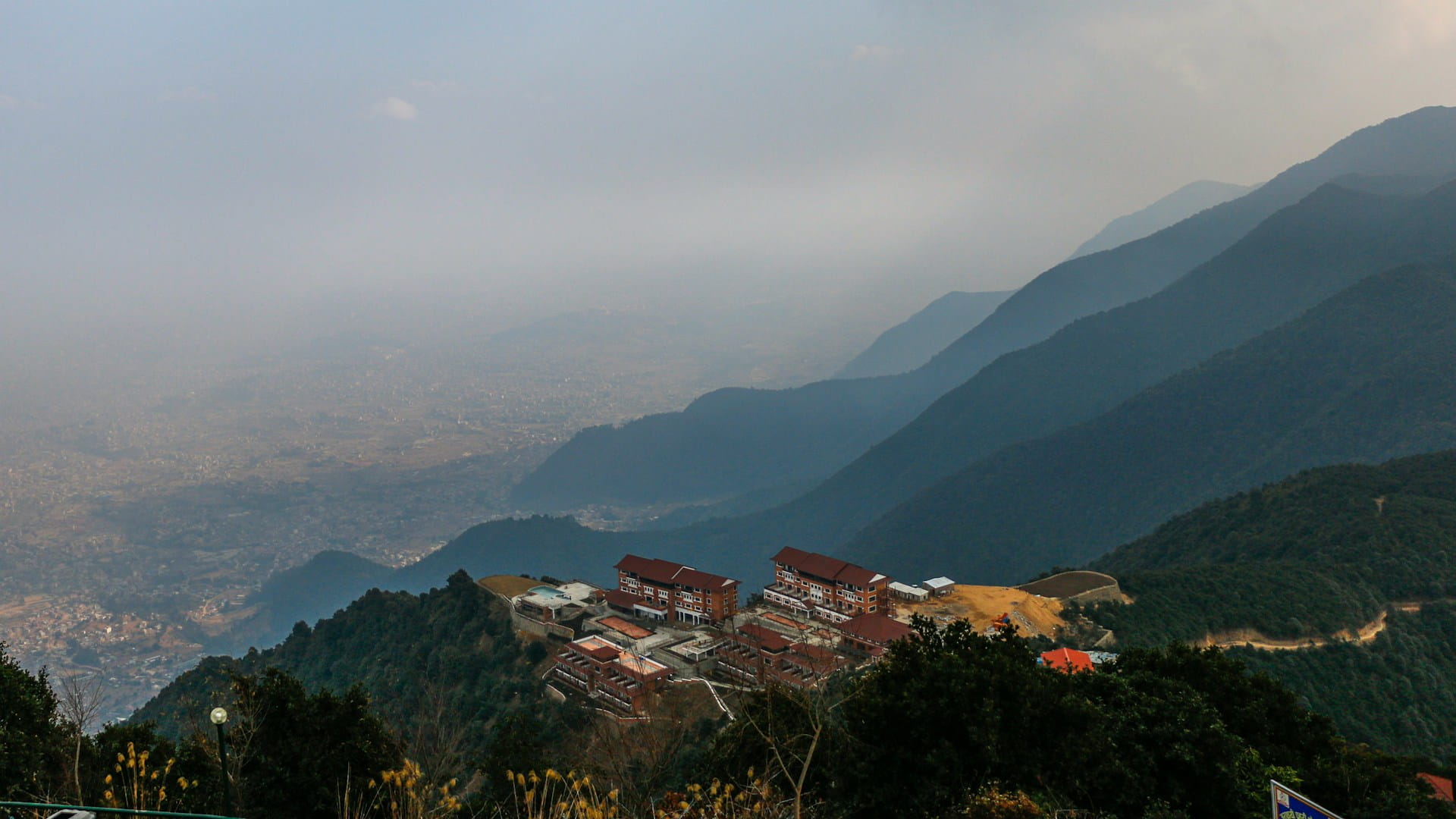
Chandragiri Hill sits on the southwestern rim of the Kathmandu Valley and is reached by cable car from the Thankot area. The cable car covers approximately 2.5 kilometers of ascent in around 10 to 15 minutes and deposits passengers at the hilltop at approximately 2,551 meters above sea level. The Bhaleshwor Mahadev Temple at the top is an active Shiva shrine, and the Himalayan panorama on a clear day stretches from the Langtang range in the east to the Ganesh Himal and Annapurna range visible to the west.
The view from Chandragiri is the best accessible mountain panorama from any point reachable from central Kathmandu without trekking, and on a clear October or November morning, the full sweep of the snow-covered range is visible above the valley rim. The hilltop area has walking paths through the forest and facilities for families. Weekends bring significant crowds from the local Kathmandu population, and cable car queues can be long on public holidays. Weekday mornings in October or November offer the best combination of mountain visibility and manageable crowds.
Cable car entry and ride fee for foreign nationals in 2026: approximately NPR 750 to 800 round trip.
Asan Tole and the Old Bazaar Lanes
Asan is a traditional Newar market intersection in the heart of Kathmandu’s old city — six lanes converge at a small temple to the goddess Annapurna, and the surrounding buildings, some dating to the medieval period, house ground-floor shops overflowing with the materials of daily and ritual life: spices, dried goods, fresh produce, metal ritual objects, cloth, incense, and household supplies. The commerce here is not for tourists — it is the same market activity that has functioned at this spot for centuries, serving the city’s population.
The lanes leading from Asan toward Indra Chowk — where a shrine to the deity Akash Bhairab occupies a building decorated with strung bead necklaces — and toward Kathmandu Durbar Square pass through the most historically continuous commercial streetscape in the valley. Small shops selling specific categories of goods occupy the same positions they have occupied for generations: the metalwork section, the textile section, the incense suppliers, the shops selling the supplies for ritual puja. There is no entry fee. The area is most active in the early morning when fresh goods arrive and in the late afternoon before closing.
Practical Information: Entry Fees, Timing, and Getting Around
The combined entry fee for visiting Swayambhunath, Pashupatinath, and Boudhanath in a single day totals NPR 1,600 for foreign nationals — roughly USD 12 to 14 at current exchange rates. Adding Kathmandu Durbar Square brings the daily total to NPR 2,600. A Bhaktapur full-day visit adds another NPR 1,500. Over three days of serious heritage site visiting, budget approximately NPR 5,000 to 6,000 in entry fees per person — roughly USD 37 to 45 — for comprehensive valley coverage.
Carry Nepali Rupees in small denominations. Most heritage site ticket offices do not accept payment cards and make change from large notes reluctantly. Exchange money at a bank or authorized money changer in Thamel before heading to sites.
Taxis are the most practical mode of transport between sites. Agree on a fare before getting in or use a ride-hailing app (Pathao and InDrive are both widely used in Kathmandu). For Thamel-area sites and the old city, walking is faster than any vehicle during peak traffic hours. Private car hire for a full day — typically NPR 4,500 to 7,000 depending on the vehicle and itinerary — makes sense for covering Bhaktapur, Changu Narayan, and Pashupatinath in a single long day.
October and November, and March and April, are the best months to visit. Weather is stable, mountain views are clearest, and major festivals sometimes fall in these windows. October’s Dashain and Tihar festivals bring Kathmandu alive with specific color and ceremony that transforms even familiar sites. June through September is monsoon season — possible but rainier, muggier, and with lower mountain visibility.
Frequently Asked Questions About Places to Visit in Kathmandu
- What are the must-see places in Kathmandu Nepal?
The non-negotiable sites for any first visit are Boudhanath Stupa, Pashupatinath Temple, Swayambhunath Stupa, and Kathmandu Durbar Square in the city itself, plus Patan Durbar Square and Bhaktapur as full-day valley extensions. Changu Narayan and Budhanilkantha round out the seven UNESCO World Heritage Sites of the Kathmandu Valley for those with more time. - How many days do you need in Kathmandu?
Three days covers the major UNESCO sites and main neighborhoods adequately without feeling rushed. Two days is possible but requires choosing between Patan and Bhaktapur. Four to five days allows proper time in Bhaktapur, day trips to Changu Narayan and Namo Buddha, and the slower exploration of old Kathmandu’s lanes that reveals the city’s texture most fully. - What are the entry fees for Kathmandu heritage sites in 2026?
The confirmed 2026 fees for foreign nationals are: Boudhanath NPR 400, Pashupatinath NPR 1,000 (free for Indian and Nepali nationals), Swayambhunath NPR 200, Kathmandu Durbar Square NPR 1,000, Patan Durbar Square NPR 1,000 (includes Patan Museum), Bhaktapur NPR 1,500, Changu Narayan NPR 300, Chandragiri cable car approximately NPR 750 to 800. The Garden of Dreams charges NPR 400. - Can non-Hindus visit Pashupatinath Temple?
Non-Hindus cannot enter the main temple inner sanctum. The entry ticket gives access to the wider complex including the ghats, surrounding shrines, Deer Park, and the viewing area along the Bagmati River where the cremation platforms are visible. Most of the meaningful experience at Pashupatinath is available from this wider access — the inner sanctum restriction does not significantly limit what can be understood and witnessed. - Is one day enough for Bhaktapur?
One full day is the minimum. Half a day is insufficient to cover Durbar Square, Taumadhi Square, Pottery Square, and the surrounding lanes with any unhurried engagement. The NPR 1,500 entry fee is the highest of any single Kathmandu Valley site, but it covers an entire walled medieval city rather than a single monument and is genuinely justified by the scope of what is accessible. - What is the best time to visit Kathmandu?
October to November offers the best weather — cool, dry, and with the clearest Himalayan visibility of the year. March to April is the second-best window with warmer temperatures and the rhododendron bloom on the surrounding hills. June to September is monsoon season with daily rain and high humidity. December to February is cold but clear, with occasional exceptional mountain views on crisp winter mornings. - What is the Living Goddess Kumari and where is she seen?
The Kumari is a prepubescent girl from the Shakya community of Newar Buddhists, worshipped as the earthly manifestation of the goddess Taleju. She lives in the Kumari Ghar in Kathmandu Durbar Square and occasionally appears at a first-floor carved window. Appearances are unpredictable and not scheduled. Photography of the Kumari is traditionally not permitted. A separate Kumari also resides in Patan’s Durbar Square area. - How do you get from Kathmandu to Bhaktapur?
Bhaktapur is approximately 14 kilometers east of central Kathmandu. A taxi from Thamel takes 45 minutes to one hour depending on traffic and costs approximately NPR 700 to 1,000 one way. Local buses are available but slower. A private car hired for the full day makes sense for combining Bhaktapur with Changu Narayan in a single eastern valley circuit. - Is Kathmandu safe for tourists in 2026?
Generally yes. The major tourist areas and heritage sites are well-trafficked and navigable without particular concern. Standard urban travel awareness applies — keep valuables secured, use authorized money changers, agree on taxi fares before departure, and exercise normal caution in less-lit areas after dark. The most common issues tourists report are overcharging for taxi rides and persistent shop-redirection by tuk-tuk drivers, both of which are manageable with basic awareness. - What should I buy in Kathmandu?
Thangka paintings vary enormously from mass-produced items to genuine traditional craft — a reputable shop will explain the difference and allow unhurried comparison. Pashmina quality also varies widely; genuine pashmina is soft, lightweight, and warm, and better shops will distinguish between pure pashmina and blended products. Singing bowls, prayer flags, and traditional metalwork are widely available and reasonably priced. For trekking gear, Thamel’s market offers the widest selection in Nepal at competitive prices. - Is Swayambhunath the same as the “Monkey Temple,” and is it worth the climb?
Yes, Swayambhunath is commonly called the Monkey Temple due to the resident population of monkeys around the site. Reaching the main stupa involves climbing roughly 365 stone steps, which is a genuine cardio effort but manageable for most visitors, and it rewards the climb with one of the best panoramic views over the Kathmandu Valley available from any single site in the city. - Can you visit Kathmandu Valley UNESCO sites in one day using a private guide or driver?
It’s physically possible to see all seven UNESCO World Heritage Sites in a single very long day with a private driver, but it turns the visit into a checklist exercise rather than an experience of any one place. Most travelers get more value from spreading the seven sites across two to three days, pairing the ones close together geographically, such as Kathmandu Durbar Square with Swayambhunath, or Bhaktapur with Changu Narayan. - What is the Garden of Dreams and is it worth visiting?
The Garden of Dreams is a restored early 20th-century neoclassical garden in central Kathmandu, offering a quiet, manicured contrast to the density and noise of the surrounding city streets. It’s a smaller-scale stop best treated as a relaxing pause between temple visits rather than a standalone destination, and its central location near Thamel makes it an easy add-on rather than requiring a special trip. - Do I need a guide to visit Kathmandu’s heritage sites, or can I explore independently?
Unlike restricted-area or national park treks, there’s no guide requirement for visiting Kathmandu Valley’s UNESCO sites — independent exploration with a map or offline app is entirely feasible. That said, a local guide adds real value at sites like Kathmandu Durbar Square and Bhaktapur specifically, where the layered history and symbolism of individual temples and courtyards aren’t obvious from signage alone, so many travelers hire a guide for a couple of the denser sites while exploring others independently.
Final Word: The More Time, the More Kathmandu Gives
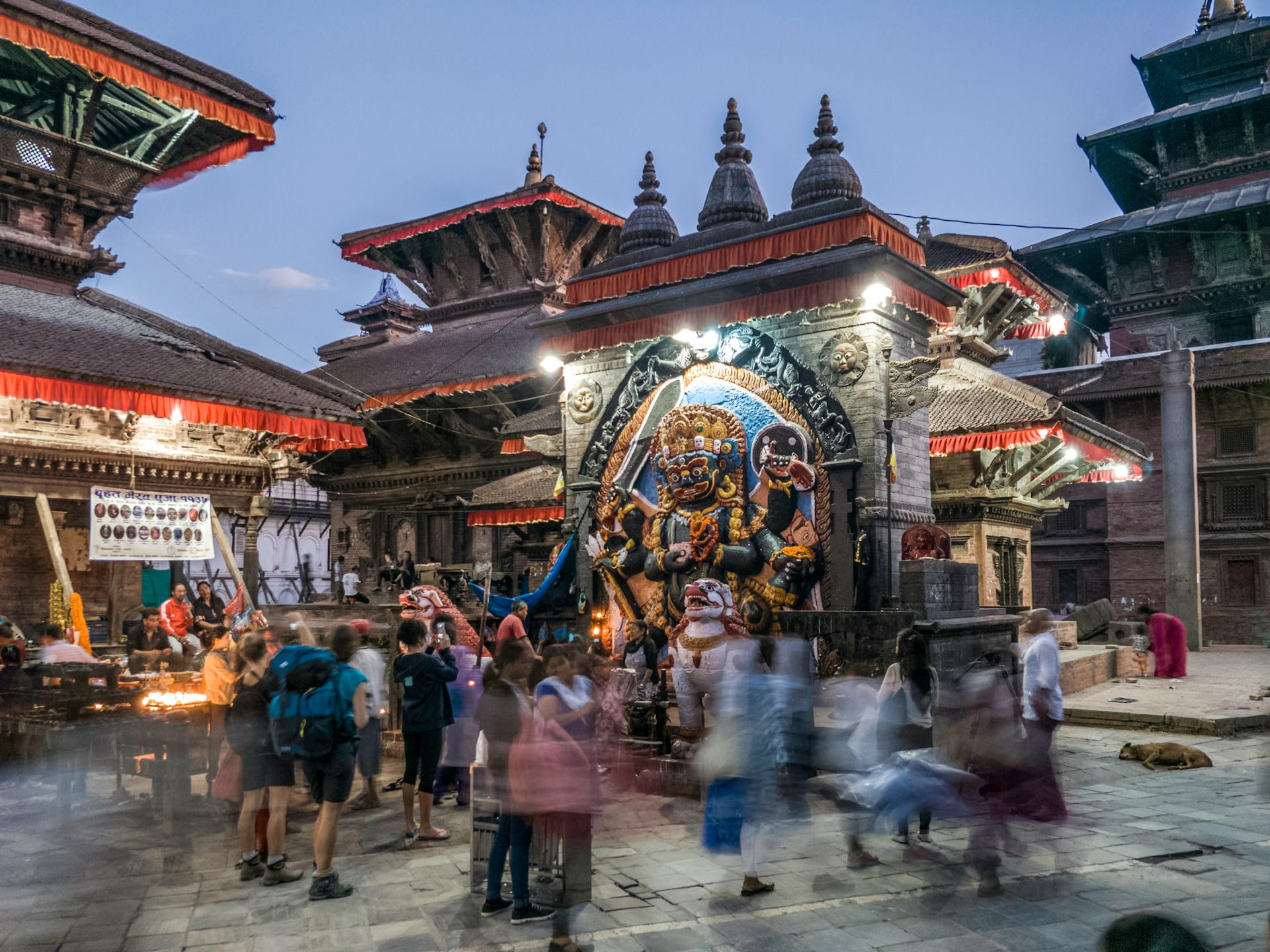
Kathmandu Valley is the kind of city that punishes rushing. The trekker who spends 36 hours here before flying to Lukla, ticking four sites off a list between jet lag and gear shopping, leaves with a functional impression of a busy South Asian city and misses something harder to describe — the specific quality of a place where human civilization has been continuous in a single valley for two thousand years, where the sacred and the everyday share the same streets, and where the layers of history are visible not in a museum but in the faces of the buildings and the behaviors of the people living around them.
Every extra day you give Kathmandu pays back more than the day before. The first day disorients. The second day organizes. The third day, something shifts, and the city starts to feel less foreign and more inevitable — the way genuinely old places do when you stop moving fast enough to miss them.