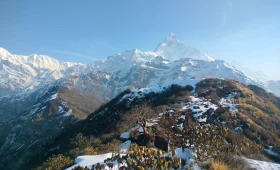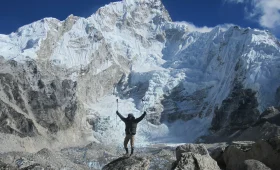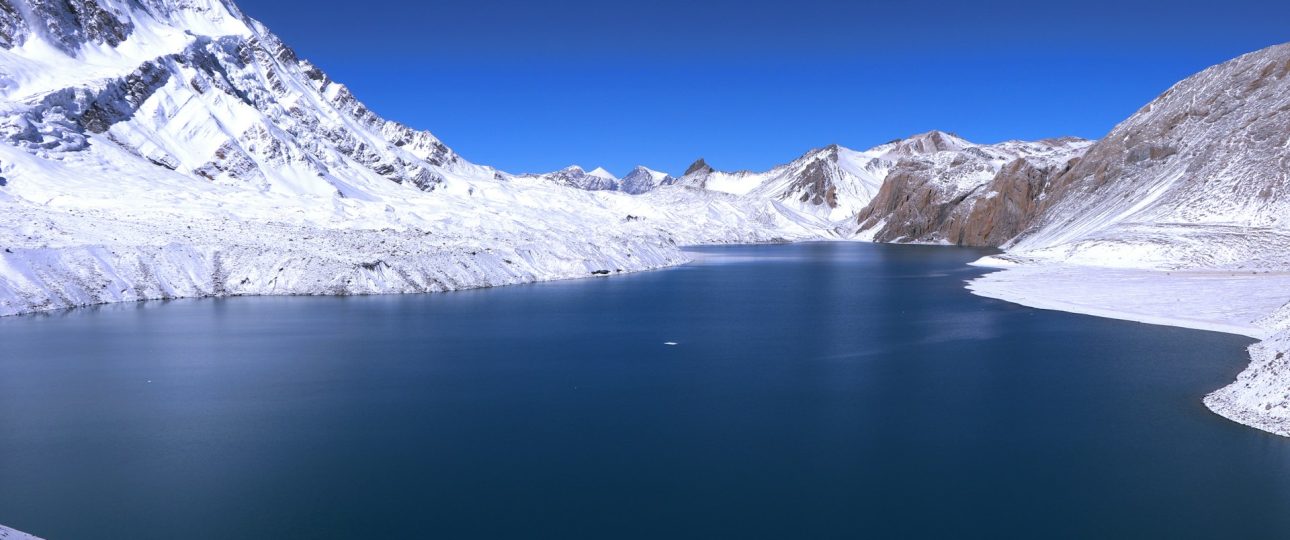
Best Time to Visit Tilicho Lake in Nepal
Tilicho Lake at 4,919 meters is not a destination you can casually reschedule around bad weather. The lake sits in a high glacial basin surrounded by Tilicho Peak (7,134m) on one side and the rugged walls of the Manang Valley on the other. The approach trail involves a landslide-prone traverse, significant altitude gain in a short window, and a summit day that depends almost entirely on conditions at the time you leave base camp in the early morning. Choose the wrong month and you might not make it to the lake at all.
Choose the right one and you’re standing at the shoreline of one of the highest lakes in the world with clarity that makes the color of the water genuinely difficult to believe.
This guide breaks every season down honestly — not just weather summaries, but what the trail actually feels like, what the landslide zone looks like after monsoon versus mid-autumn, what temperatures you’re sleeping in at base camp, why the Manang Valley’s rain shadow changes the monsoon calculation, what October crowds actually mean at the teahouses, and the precise windows within each season that experienced guides consistently recommend over the season-level advice that most articles stop at.
Start here before you book flights.
Why the Season Matters More at Tilicho Than Most Nepal Treks
On lower-altitude Nepal routes — Ghandruk, Poon Hill, even parts of the Annapurna Base Camp approach — a suboptimal weather window is manageable. Trails are muddier, views are cloudier, but you reach your destination with discomfort rather than genuine danger.
Tilicho Lake operates on different margins. The trail between Khangsar and Tilicho Base Camp crosses a well-documented landslide zone where the slope above the path is actively unstable — more so in wet conditions, and genuinely dangerous after heavy precipitation. The summit day from base camp to the lake at 4,919 meters involves exposure to wind that picks up dramatically in the afternoon, making the timing of your departure from base camp a real safety decision rather than a preference.
The altitude means that a storm front moving in mid-morning can convert a clear summit attempt into a whiteout scenario within a few hours. And the base camp itself, at 4,200 meters, means you’re sleeping at an elevation where temperature drops, illness, and weather changes are compounded.
None of this is meant to be alarming — hundreds of trekkers reach Tilicho Lake every season without incident. The point is that seasonal planning here has genuine consequences, not just experiential ones. Knowing exactly which months offer the right conditions, and why, is part of doing this trek correctly.
The Two Best Time to Visit Tilicho Lake in Nepal: Autumn and Spring
The broad answer that every article gives — and which is correct — is that Tilicho Lake is best visited between October and November in autumn, or between March and May in spring. Both windows offer stable weather, manageable temperatures, and safe trail conditions on the landslide traverse.
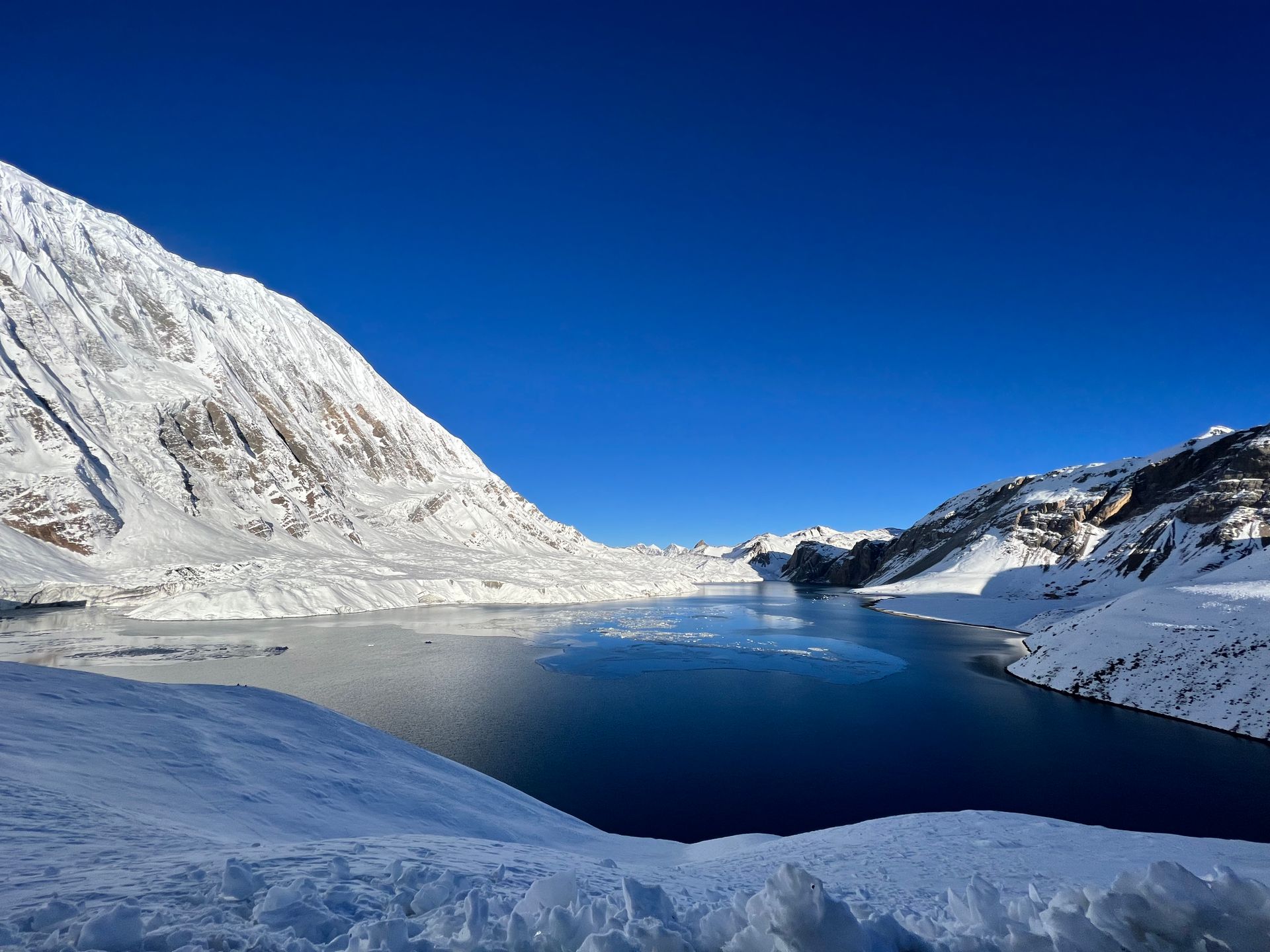
Everything else flows from understanding what each window actually delivers, and which one is right for you specifically.
Autumn (September to November): The Most Reliable Season
Autumn is the undisputed peak trekking season for Tilicho Lake and for Nepal broadly. September marks the tail end of monsoon, October settles into the clearest and most stable conditions of the year, and November stays excellent until the latter half of the month when cold intensifies and early-winter snowfall begins to affect the highest sections.
September: Good, With a Caveat
The Manang Valley typically receives its final monsoon precipitation by the third week of September on average. That means early September still carries meaningful rainfall risk — trails below Chame and Pisang can be slippery, and the landslide zone above Khangsar is at its most unstable following months of monsoon saturation. If you’re aiming for a September visit, the final ten days of the month are measurably safer than the first three weeks. Trekkers who arrive in Kathmandu in the first week of September and spend five or six days on the circuit approach before reaching the Manang area often find that conditions have improved considerably by the time they’re ready for the lake push.
September also comes with one notable benefit: significantly fewer trekkers. The teahouses in Manang and at Tilicho Base Camp that see 75 to 90 trekkers per day at peak October periods are quiet in late September — you’re likely to have base camp nearly to yourself, which changes the psychological texture of the experience.
October: The Single Best Time to Visit Tilicho Lake in Nepal
October earns its reputation. The monsoon is definitively over. The skies across the Manang Valley are the deep blue that high-altitude post-monsoon clarity produces — a specific quality of light and visibility that makes Gangapurna’s glaciers and the wall of Annapurna II look closer and sharper than at any other time of year. The landslide zone above Khangsar dries completely in the weeks following monsoon end, and by mid-October the traverse has firm footing rather than the slick surface that September rain can leave behind. All three teahouses at Tilicho Base Camp operate at full capacity through mid-November, meaning accommodation, hot meals, and basic electricity are reliably available.
Daytime temperatures on the lake day are typically between 5°C and 10°C, cold but manageable in proper layers. Nights at base camp drop to between minus 5°C and minus 10°C — genuinely cold, requiring a good sleeping bag. The summit day push from base camp at 4,200 meters to the lake at 4,919 meters is done in stable pre-dawn cold that rewards starting at 5:00 to 5:30 AM, allowing you to reach the lake before any afternoon cloud builds.
The trade-off in October is crowd density. Nepal’s major Hindu festivals — Dashain and then Tihar — fall in October, and Nepali domestic trekkers join international visitors on the Annapurna Circuit during this period, creating the highest trekker volumes of the year. The Manang area and Tilicho Base Camp are busier in peak October than at any other time. Teahouses book up early; arriving at base camp without a reservation and finding a room is increasingly uncertain during peak weeks. This is solvable — book accommodation in advance through your agency or directly with the base camp teahouses if your itinerary is fixed — but worth planning for.
November: Excellent Early, Cold Late
The first three weeks of November offer conditions nearly as good as October with meaningfully fewer people on the trail. The festival crowds have dispersed, the weather remains largely stable, and the clarity of mountain views stays excellent. Temperatures drop more noticeably — nights at base camp can reach minus 10°C to minus 15°C by mid-November, and the lake day itself will be colder than in October. This is manageable with proper gear but worth knowing if you’re planning your packing list.
The final week of November marks the beginning of a transition. Snow on the upper section of the trail above Shree Kharka starts to become a factor, and the first early-winter fronts can arrive during this period. Most experienced guides and operators close out their Tilicho Lake season by the end of November’s third week. A late November attempt is possible but should be treated as shoulder-season trekking with genuine winter risk management, not as a standard autumn visit.
Spring (March to May): Flowers, Fewer Crowds, Warmer Days
Spring is the second-best season for Tilicho Lake and has specific advantages over autumn that make it genuinely preferable for certain types of trekkers — not just a consolation option.
March: Improving, But Not Quite There
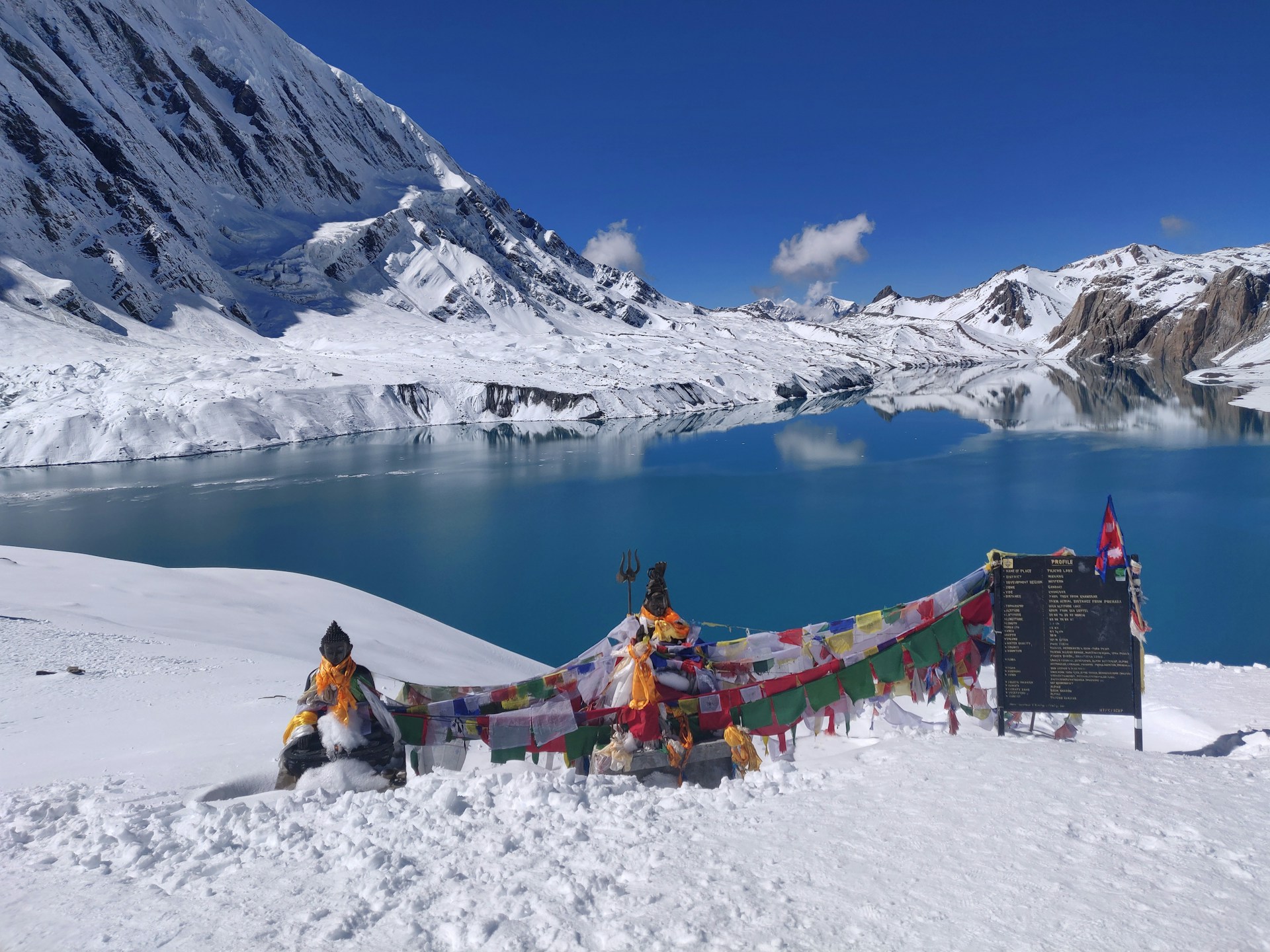
March begins the spring thaw. At the lake’s elevation and on the high passes above the base camp approach, winter snow is still substantial in early March, and the trail from Shree Kharka upward can require wading through knee-deep snow with poor footing underneath. Some years, late-winter storms deposit fresh snow well into March on the upper sections. The second half of March is considerably better — snowmelt has begun in earnest, the trail surface is returning to navigable rock and scree rather than compacted ice, and daytime temperatures at Manang (3,500m) climb back to a comfortable range.
If you’re planning a March visit, the last ten days of the month are the minimum standard for reliable access to the lake. Early to mid-March is doable with proper cold-weather gear and a guide who knows the current trail conditions, but it’s not the relaxed spring experience that April delivers.
April: Spring Best Time to Visit Tilicho Lake in Nepal
April at Tilicho Lake is the closest spring equivalent to October. The snow that covered the upper trail in winter and early spring has largely melted or compacted into firm passage, daytime temperatures are pleasant (12°C to 18°C in the lower valleys, 5°C to 12°C at base camp), and the rhododendron forests on the lower sections of the circuit approach are in full bloom — a completely different sensory experience from the brown and grey post-monsoon landscape of autumn.
The rhododendron bloom is not a minor aesthetic detail. The lower Annapurna Circuit passes through dense forest between roughly 2,400 and 3,200 meters, and in April that forest is running red, pink, and white with rhododendron flowers in a way that photographs poorly and impresses profoundly in person. Combined with the high-altitude ice and glacial landscape that emerges above Manang, the spring trek covers an unusually wide range of ecosystems within a single itinerary.
April crowds are lighter than peak October but not empty — the spring trekking season is well-established and the circuit and Tilicho side branch see consistent traffic in April. The lighter-crowd advantage over October is real but modest. Where April is genuinely different from autumn is in the quality of the mountain photography: spring light tends to be warmer and more golden in the morning hours, and the snow still covering the higher peaks and the lake’s surrounding walls creates a more dramatically white landscape than the darker, drier autumn palette.
May: Warm, Worth the Trade-Off
May continues the spring window, though the dynamic shifts as the month progresses. Temperatures are warmer — sometimes noticeably so in the lower valleys — and the pre-monsoon cloud that builds over the southern ranges of the Himalayas from mid-May onward can affect afternoon visibility. The mornings in May are typically clear and the best photography light is still excellent. By the final week of May, cloud is building reliably in the afternoons and occasional pre-monsoon showers arrive in the lower sections below Chame.
The practical advice for May: start your summit day from base camp earlier than you would in autumn or April. The pre-monsoon cloud pattern means your window of clear visibility is concentrated in the morning hours, and the difference between leaving base camp at 5:00 AM and 7:00 AM on a May morning can be the difference between arriving at a mirror-clear lake and arriving in building cloud with the surrounding peaks beginning to disappear.
The lake itself in May has typically lost its winter ice but still has visible snowfields on the surrounding walls and glacier above — visually striking in a different way from mid-summer, when the snow coverage is at its annual minimum.
Monsoon (June to August)
Most Tilicho Lake articles give monsoon a flat refusal. The honest picture is more nuanced — because the Manang area, including the Tilicho approach, lies in the rain shadow of the Annapurna and Dhaulagiri ranges, which means it receives significantly less monsoon rainfall than most of Nepal.
- The trans-Himalayan landscape that begins above Manang — barren, brown, and arid — is the same rain shadow effect that makes Upper Dolpo and Mustang viable summer destinations. The Tilicho Lake basin itself is not getting the same rainfall as Pokhara or the lower Annapurna slopes during monsoon.
- What monsoon does affect is the approach trail below Manang. The sections between Besisahar and Chame, through the Modi Khola river valley and the lower gorge sections of the circuit, receive heavy monsoon rainfall. Landslide risk on these lower sections is genuine and documented — not a theoretical concern. Trails are muddy, river crossings are swollen, and leeches colonize the forest sections in numbers that most trekkers find unpleasant rather than dangerous.
- The landslide zone between Khangsar and Tilicho Base Camp, specifically, is at its most unstable during and immediately following heavy monsoon precipitation. Even if the Tilicho area itself is relatively dry, a large storm front can destabilize the slope above the traverse. Timing a crossing during or immediately after a significant rain event is the specific scenario that makes monsoon visits higher risk than other seasons.
- A small number of experienced trekkers do complete the Tilicho Lake trek in June and July, typically those combining it with a broader Annapurna Circuit route through Mustang or aware of the rain shadow dynamic. This is not a general recommendation, but it’s not impossible either. What it requires is flexibility to wait out bad weather at Manang, a guide with real-time condition knowledge of the landslide traverse, and willingness to turn back from the lake approach if the traverse appears compromised. On good weather days in mid-summer, the Tilicho area can be genuinely beautiful — vivid green lower valleys transitioning to the dusty brown plateau, with considerably fewer people on the trail.
The definitive monsoon advice: avoid July and August unless you’re an experienced Himalayan trekker with significant flexibility in your schedule and a guide who knows this specific trail. Late June and September (as discussed above) sit in a more reasonable gray zone for well-prepared trekkers.
Winter (December to February)
Winter is not a category you should simply dismiss, but it’s also not a season to approach without understanding exactly what you’re taking on.
- From mid-December, snow accumulates on the upper sections of the Tilicho approach — particularly the Shree Kharka ridge traverse between 4,050 and 4,400 meters. The Nepal Department of Hydrology and Meteorology issues avalanche bulletins for Manang district from December 15 through March 15 annually, and the three avalanche paths that descend from the Tilicho Peak northwest glacier toward the main trail are the specific hazard that makes this section genuinely dangerous in winter rather than just difficult. Attempting the trail above Shree Kharka without an experienced guide, avalanche awareness, and the willingness to turn back is not a reasonable winter approach.
- The teahouse situation changes in winter. Some operators at Tilicho Base Camp reduce service or close between December and February. The teahouses that remain open do so with reduced staff and supplies. Arriving at base camp expecting the same facilities as October and finding a partially operational kitchen is a genuine planning failure that leaves you at 4,200 meters with inadequate resources.
- That said, winter has qualities that draw experienced trekkers who genuinely appreciate them. The Manang Valley in winter silence — no trekker traffic, yaks grazing on frost-hardened meadows, the Gangapurna glacier catching low winter light — is a different and austere beauty from the busy autumn circuit. Tilicho Lake in January, when it often freezes partially or completely, is a landscape that no photograph adequately represents. The frozen surface, the surrounding snow walls, the absolute stillness — experienced trekkers who’ve done winter Tilicho consistently describe it as their most intense memory of the trek.
Winter Tilicho is for experienced cold-weather trekkers with proper equipment (sleeping bag rated to at least minus 20°C, insulated layers for -25°C potential wind chill at the lake, gaiters and microspikes at minimum), a licensed guide with winter experience on this specific trail, and a genuine commitment to turning back if the avalanche zone or trail conditions above Shree Kharka are unsafe on the day. It is not for first-time high-altitude trekkers or those on a fixed schedule without flexibility.
What the Manang Valley’s Climate Does That Most People Don’t Account For
Tilicho Lake sits in the broader Manang Valley, which has a semi-arid trans-Himalayan climate — meaning it behaves differently from the rest of Nepal in ways that affect season planning specifically.
The southern wall of the Annapurna range acts as a barrier that deflects the monsoon’s heaviest rainfall. Manang receives approximately 300mm of annual rainfall — compared to Pokhara’s 3,600mm — and much of that comes in scattered form rather than the sustained precipitation that characterizes the southern slopes. This is why the lake-day weather can be surprisingly clear even in months when Pokhara is underwater.
What this means practically: the standard seasonal advice for Nepal trekking doesn’t map perfectly onto Tilicho Lake. A day in July that would cancel all outdoor plans in Pokhara might be clear and pleasant at Manang. A clear October day in Kathmandu doesn’t guarantee the same at the lake — afternoon cloud builds in the high basin even in peak autumn, which is why experienced guides consistently emphasize early morning starts for the lake push regardless of how clear the previous day looked.
The Manang Valley also experiences localized wind patterns that intensify in the afternoon as the valley heats relative to the surrounding peaks. These winds are at their most pronounced in late spring and summer but exist year-round. On the lake day approach, which covers exposed ridgeline and the open high basin above base camp, this wind picks up noticeably by 10:00 to 11:00 AM and becomes significantly stronger by early afternoon.
Trekkers who start late and are still ascending when this wind intensifies have a harder and colder experience than those who reach the lake in the calm pre-wind morning.
Best Time to Visit Tilicho Lake in Nepal – Month-by-Month Summary
Rather than repeating seasonal categories, here’s the month-level precision that other articles skip.
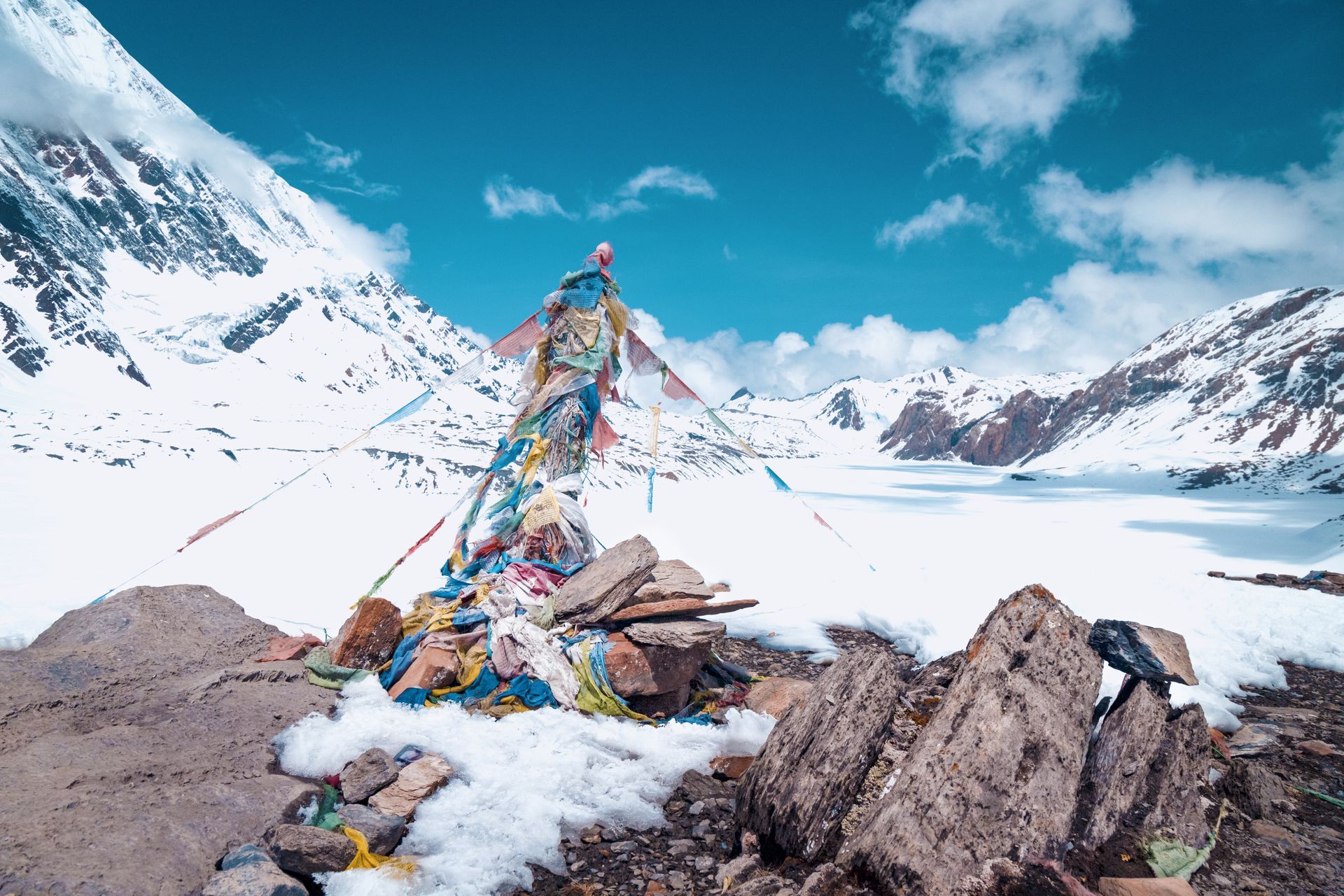
- January is the coldest month. Trail above Shree Kharka carries winter risk. Suitable only for cold-weather specialists with experienced guidance. The lake may be frozen.
- February conditions remain winter-standard. The second half of February occasionally sees early signs of improvement, but avalanche bulletins remain active through mid-March. Not recommended for standard trekking.
- March is transitional. The last ten days of March offer reasonable conditions; the first three weeks carry meaningful winter-leftover risk. If your trek departure is March, the later in the month the better.
- April is the single best spring month. Rhododendrons in bloom, snow largely cleared from the upper trail, excellent light, lighter crowds than October. Recommended strongly for photographers and those wanting the floral landscape.
- Early May delivers spring continuation with warming temperatures and the earliest signs of pre-monsoon cloud building in afternoons. Leave base camp before 5:30 AM on the lake day to capture the clear morning window.
- Late May sees pre-monsoon cloud increasing. Not a flat refusal, but requires earlier starts and acceptance of building afternoon cloud cover. Suitable for experienced trekkers who understand the weather pattern.
- June carries monsoon risk on the lower circuit approach. The Tilicho area itself may be drier, but landslide risk on the traverse increases. For experienced, flexible trekkers only.
- July and August are the peak monsoon months. Lowest recommendation for most trekkers. The lower trail challenges and landslide risk are at their maximum.
- September, first half: still carries monsoon tail risk. September, second half: rapidly improving, often excellent by the final week of the month.
- October is the peak month. Best weather, best visibility, maximum crowd density. Book accommodation early. Leave base camp very early on the lake day.
- Early to mid-November is excellent with thinning crowds. Late November requires winter gear and carries increasing risk of early snowfall on the upper sections.
- December marks the beginning of winter conditions. Access to the lake becomes progressively more difficult through the month.
The Landslide Zone and Seasonal Risk
The traverse between Khangsar and Tilicho Base Camp is the section that distinguishes Tilicho Lake from most comparable Nepal destinations in terms of terrain risk. It’s worth being direct about this rather than softening it into generic “challenging trail” language.
The slope above the traverse is geologically unstable. Rock and debris fall from the walls above, particularly after precipitation events, freeze-thaw cycles, and periods of snowmelt. Three identifiable avalanche paths from the Tilicho Peak northwest glacier cross close to the main trail. These are not remote possibilities — they are documented, active, and the reason experienced guides time the traverse specifically in early morning and do not proceed if overnight rain or snowfall has destabilized the surface above.
Seasonally, the traverse is at its safest in dry autumn conditions — October and early November. In spring, the snowmelt period adds debris risk in March and early April before the upper slopes have fully stabilized. In monsoon, any significant precipitation event raises risk considerably. In winter, ice on the traverse itself and active avalanche conditions above it make this section the primary objective hazard of the season.
The practical implication for season planning: if you are traveling outside the core October and April windows, your guide’s judgment about when and whether to cross the traverse on any given day is more important than your itinerary. A guide who has done multiple Tilicho Lake seasons knows what the slope above the traverse looks and sounds like when it’s stable versus when it’s releasing debris. That knowledge isn’t transferable through a packing list or a guidebook recommendation.
What Trekkers Who’ve Done It in Different Seasons Actually Say
The consistent pattern across experienced Tilicho Lake trekkers — setting aside the inevitable outliers who had exceptional monsoon visits or difficult autumn days — follows the seasonal advice closely but with texture:
- October visitors most often describe the visual experience in terms of the color and scale of the lake against the dark blue sky, the extraordinary mountain clarity from the approach ridgeline, and the sense of arriving at something genuinely extraordinary after multiple days of build-up. The crowd mention is consistent — October teahouses are busy — but rarely described as a negative at the lake itself, which feels large and impersonal enough to absorb company without losing its character.
- April visitors most often describe the rhododendron sections as the unexpected highlight — specifically the contrast between the flower-covered lower valleys and the icy, still, snowbound quality of the lake basin. The quiet on the trail above Manang in spring compared to October is frequently noted appreciatively.
- Winter visitors who managed the traverse safely in December or January consistently describe the experience as their most intense and vivid of any Nepal trek — precisely because of the cold, the isolation, the frozen lake surface, and the absence of any other human presence. These accounts are usually accompanied by emphatic “do not attempt without a guide and proper gear” caveats.
- Monsoon visitors who completed the trek in late June or August describe the approach as challenging and the lake day as either spectacular (if they got a clear window) or obscured by cloud (if they didn’t). The variance is higher, which is a fair summary of the monsoon experience generally.
Best Time to Visit Tilicho Lake in Nepal – Packing for the Season You’ve Chosen
The packing requirements shift meaningfully between seasons, and dressing for the wrong conditions at 4,919 meters is not a recoverable mistake on the day.
- For October and November: sleeping bag rated to minus 15°C minimum, down jacket for evenings and early mornings, thermal base layers, windproof outer shell, trekking poles (the descent from the lake to base camp is steep and hard on knees without them), sun protection rated for high altitude (UV is intense at 4,900 meters even in autumn), and warm gloves for the lake day pre-dawn start.
- For April and May: similar layers but with more flexibility — mid-April days at lower elevation are genuinely warm. A sleeping bag rated to minus 10°C covers most April scenarios at base camp. The rhododendron sections of the lower circuit can be warm enough for a single base layer during the day. Don’t drop your guard on the upper sections — the lake basin in spring mornings is still cold and the wind carries significant chill.
- For late November or March edges: treat these as near-winter conditions. Sleeping bag rated to minus 20°C, microspikes or traction devices for icy trail sections above Shree Kharka, and layering that covers the full range from valley warmth to high alpine cold.
Frequently Asked Questions About Best Time to Visit Tilicho Lake in Nepal
- When is the absolute best time to visit Tilicho Lake in Nepal?
October is the single best time to visit Tilicho Lake in Nepal. Weather is most stable, mountain visibility is at its clearest post-monsoon, the trail is dry and firm, and all teahouses at base camp operate at full capacity.
April is the spring best time to visit Tilicho Lake in Nepal, with the added visual of rhododendron bloom on the lower circuit sections and lighter crowd levels than October. - Can you visit Tilicho Lake during monsoon?
Not recommended for most trekkers, but not impossible for experienced, flexible visitors who understand the nuance. The Manang Valley lies in Annapurna’s rain shadow and receives significantly less monsoon rainfall than the rest of Nepal. The main risks are the lower circuit trail below Chame (slippery, active landslide risk) and the traverse above Khangsar (at its most unstable during and after precipitation). Late June and early September sit in a more reasonable gray zone than July and August. - Is Tilicho Lake accessible in winter?
Technically yes, but only for cold-weather specialists with appropriate gear, experienced guidance, and a genuine willingness to turn back. Trail sections above Shree Kharka carry documented avalanche risk from December 15 through mid-March. Temperatures at base camp reach minus 15°C to minus 20°C at night. Some base camp teahouses reduce operations or close. Winter Tilicho is extraordinary for experienced trekkers who handle it correctly — and genuinely dangerous for those who don’t. - What are daytime temperatures at Tilicho Base Camp by season?
In October: 5°C to 12°C daytime, minus 5°C to minus 10°C at night. In April: 8°C to 15°C daytime, minus 5°C to minus 8°C at night. In late November: 0°C to 8°C daytime, minus 10°C to minus 15°C at night. In January: below 0°C even in daytime at base camp, with wind chill bringing effective temperatures significantly lower. - How early do you need to leave base camp for the lake day?
Experienced guides consistently recommend departing base camp between 5:00 and 5:30 AM regardless of season. The reasons are altitude wind (builds significantly by mid-morning), afternoon cloud (more pronounced in spring and summer but present in all seasons), and the need to complete the descent before any weather change. Trekkers who leave at 7:00 or 8:00 AM often arrive at the lake during building cloud and return in afternoon wind conditions that are noticeably harder than the calm morning. - Is October too crowded at Tilicho Lake?
October is the busiest month on the Annapurna Circuit and the Tilicho side branch. Tilicho Base Camp teahouses see 75 to 90 trekkers per day at the October peak. This is genuinely busy by Nepal teahouse standards and means advance accommodation booking is important. The lake itself is large enough that even a busy summit day doesn’t feel crowded at the shoreline — the lake basin has space and scale that absorbs visitors differently from a narrow viewpoint or a small summit. If October crowds at teahouses are a significant concern for you, late September or early to mid-November offer the same trail quality with considerably fewer people. - Does the Tilicho Lake trek combine well with the Annapurna Circuit?
Yes, and most trekkers do the lake as a side trip from the main circuit, branching left at Khangsar before rejoining the circuit and continuing to Thorong La Pass, Muktinath, and Jomsom. The best season for this combined itinerary remains October to November and March to May, with the same reasoning as the standalone lake visit. - How does the monsoon rain shadow actually work at Tilicho?
The Annapurna and Dhaulagiri massifs deflect the southwest monsoon, creating a significantly drier climate north of the main Himalayan barrier. Manang receives roughly 300mm of annual rainfall versus Pokhara’s 3,600mm. This means the lake area in mid-summer is not experiencing the same conditions as Nepal’s south-facing slopes. However, the lower approach trail below Chame does receive monsoon rainfall, and even one significant storm in the upper valley can destabilize the traverse above Khangsar. The rain shadow creates opportunity for experienced trekkers in summer but doesn’t eliminate the risk entirely. - What month has the least crowds at Tilicho Lake?
Late September and the first three weeks of November have the lightest crowds among the recommended trekking windows. January and February are the emptiest months overall, but for reasons related to conditions rather than preference — most trekkers stay away in winter because of trail difficulty rather than crowd avoidance. - Is a licensed guide required for the Tilicho Lake trek in 2026?
Under Nepal’s guide regulations as applied in the Annapurna Conservation Area in 2026, a licensed guide is effectively required at most checkpoints on this route. Beyond the regulatory question, a guide with Tilicho-specific seasonal knowledge is functionally necessary for making the traverse timing decision, managing the early-morning summit push, and identifying early AMS symptoms at altitude. This is not a symbolic requirement — it’s the most practical safety investment the trek offers.
Final Word on Best Time to Visit Tilicho Lake in Nepal
The best time to visit Tilicho Lake in Nepal is the time that matches what you’re actually going to the lake for.

- If you want the clearest photographs, the most stable trail, and the widest open teahouse availability, October is your month. Accept the crowds, book accommodation in advance, leave base camp before sunrise on the lake day, and you’ll have the conditions that most people picture when they imagine this trek.
- If you want flowering valleys, lighter trails, warmer lower-elevation days, and the specific beauty of a snow-covered lake basin in spring morning light, April is your month. The rhododendron sections are genuinely a different and arguably more striking lower-valley experience than anything autumn offers.
- If you want the mountains to yourself, a starfield above base camp unobscured by competing headlamps, and the willingness to do this correctly in cold that makes the climb harder and the arrival more earned, late September or early November are the two quiet season windows that reward exactly that.
And if you’re someone who’s been to the Annapurna Circuit twice, who owns a minus 20°C bag and has used it, who’s crossed avalanche terrain before and knows what a stable slope feels like against an unsettled one — January at Tilicho Lake will give you something that no other season delivers. It’s just not where most people should start.
The lake doesn’t change between seasons. What changes is everything surrounding your approach to it.