Interesting Facts About Nepal 2026
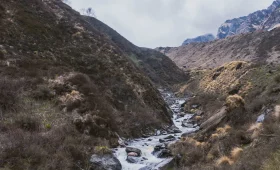
Interesting facts about Nepal usually get flattened into the same short list: Everest, the flag, Buddha’s birthplace. That repetition misses the point. Nepal is one of the most compressed countries on Earth — a place where 142 ethnic groups, 124 living languages, eight of the world’s fourteen 8,000-metre peaks, and two UNESCO natural World Heritage sites fit into an area roughly the size of England. This guide takes a different approach to the facts. Each one is paired with context: what it means, why it matters, and what it tells you about travelling through the country. Whether you are planning a trek, preparing for a cultural visit, or simply trying to understand a nation that sits between India and China, these facts are chosen to build a picture, not just fill a list. Merriment Treks helps travellers connect these facts to real routes and real seasons, and that planning perspective runs through the article
Nepal at a Glance: The Numbers That Define the Country
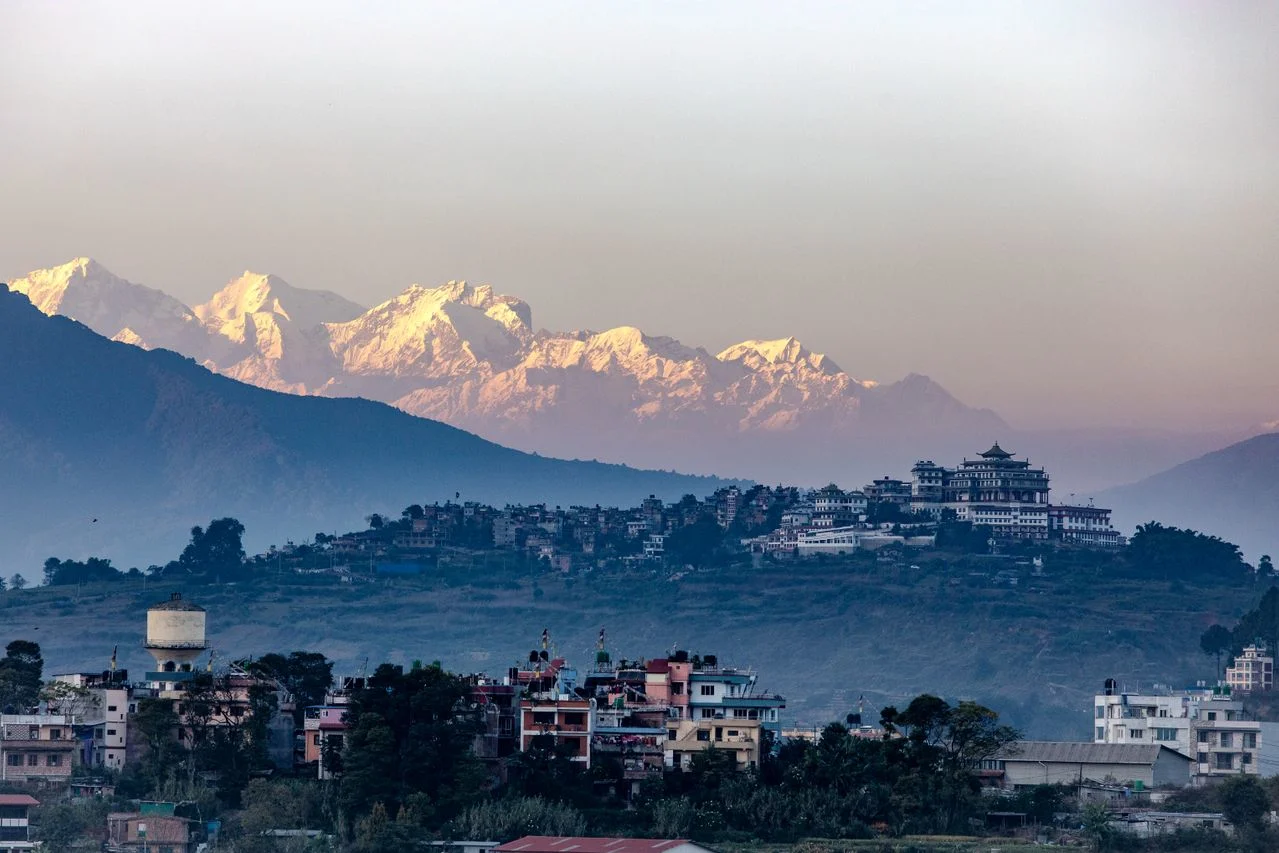
Interesting facts about Nepal begin with scale. Nepal covers 147,181 square kilometres and is landlocked between China’s Tibet Autonomous Region to the north and India on the south, east, and west. The country’s altitude runs from about 60 metres in the Terai plains of Jhapa district to 8,848.86 metres at the summit of Everest. That is a vertical range of nearly 8,800 metres inside a country that takes roughly ten days to cross on foot.
Nepal’s population was estimated at 30.4 million in 2026, according to Britannica’s latest estimate, though UN country data places the figure closer to 29.6 million. The difference reflects methodology and migration assumptions. What matters is the direction: Nepal’s population growth has slowed sharply, and out-migration for work in the Gulf and Malaysia has reshaped households across the mid-hills.
The country is divided into three ecological belts. The Terai occupies about 17 percent of the land area but produces most of Nepal’s food. The mid-hills contain the Kathmandu and Pokhara valleys, where most travellers spend their time. The Himalaya holds the high peaks and the restricted trekking areas.
| Fact | Figure | Why It Matters |
|---|---|---|
| Area | 147,181 sq km | Roughly the size of England |
| Population (2026 est.) | ~29.6–30.4 million | Slowing growth, high out-migration |
| Altitude range | 60m to 8,848.86m | Nearly 8,800m of vertical variation |
| Ecological zones | Terai, mid-hills, Himalaya | Three distinct climates and cultures |
| 8,000m peaks | 8 of the world’s 14 | Everest, Kanchenjunga, Annapurna, and five others |
Travel connection: The geography is not background information. It determines what you can see in a single trip. Moving from Kathmandu (1,400m) to Pokhara (820m) to Chitwan (200m) means passing through radically different vegetation, architecture, and food traditions in the space of a few days.
Mountains and the 8,000-Metre Club
Interesting facts about Nepal almost always mention Everest, but the country’s mountain portfolio is wider. Eight of the world’s fourteen peaks above 8,000 metres lie in Nepal: Everest (8,848.86m), Kanchenjunga (8,586m), Lhotse (8,516m), Makalu (8,463m), Cho Oyu (8,201m), Dhaulagiri (8,167m), Manaslu (8,163m), and Annapurna (8,091m). The remaining six are in Pakistan and China.
This concentration is why Nepal became synonymous with mountaineering. It is also why trekking routes like the Annapurna Circuit and Everest Base Camp draw hundreds of thousands of visitors annually. But the mountain story is not only about the highest peaks. The mid-hills and foothills contain some of the most accessible Himalayan scenery in the world.
The Kali Gandaki Gorge, which cuts between Dhaulagiri and Annapurna, is one of the deepest gorges on Earth. Measured from the riverbed to the summit of Annapurna I, the difference is about 5,571 metres. The gorge is crossed by the Annapurna Circuit trek and is one of the most dramatic sections of any trek in Nepal.
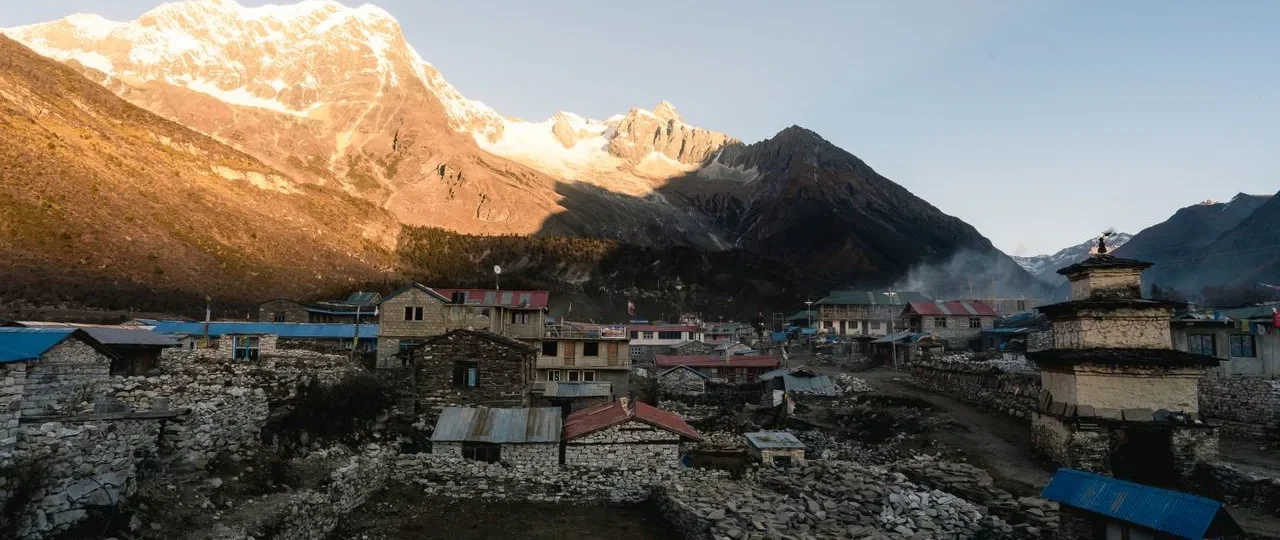
Travel connection: You do not need to climb an 8,000-metre peak to experience the mountains. The Langtang Valley trek, accessible from Kathmandu without a domestic flight, offers Himalayan scenery and Tamang culture in seven to ten days. The Annapurna region, reached via Pokhara, offers everything from four-day ridge walks to the full circuit.
Everest: The Facts Behind the Name
Interesting facts about Nepal frequently note that Everest is called Sagarmatha in Nepali, meaning “forehead of the sky.” In Tibetan, it is Chomolungma, meaning “Goddess Mother of the World.” The international name honours Sir George Everest, the British Surveyor General of India, who never actually saw the mountain.
The official height is 8,848.86 metres, as jointly announced by Nepal and China in 2020. Older sources citing 8,848 metres are slightly outdated. The mountain continues to rise by roughly four millimetres per year due to tectonic movement.
Travel connection: You do not need to climb Everest to see it. Domestic carriers operate one-hour “Everest Experience” flights from Kathmandu that offer views of Everest, Lhotse, and twenty other high peaks without leaving the aircraft. For a ground-level view, the Everest View Hotel at Nagarkot offers a distant but clear sight of the summit on cloudless mornings.
National Symbols: The Flag, the Flower, the Animal
Interesting facts about Nepal almost always include the flag, and the detail is worth explaining properly. Nepal’s flag is the only national flag in the world that is not rectangular or square. It consists of two overlapping triangles — a double-pennon — with a crimson red base and a deep blue border.
The symbolism is layered. The crimson red represents the rhododendron, Nepal’s national flower, and also signifies victory and bravery. The blue border stands for peace and harmony. The two triangles originally symbolised the Himalaya Mountains; today they are understood to represent Hinduism and Buddhism, Nepal’s two dominant religious traditions. The moon in the upper triangle represents the serenity of the Nepalese people; the sun in the lower triangle depicts the warmth of the lower regions.
The national flower is Rhododendron arboreum, known locally as Lali Gurans. Nepal holds 32 species of rhododendron, which bloom between March and April at elevations from 1,200 to 4,000 metres. The national animal is the cow, sacred in Hinduism and legally protected. Slaughtering a cow is prohibited by law.
Travel connection: The rhododendron bloom is one of the strongest arguments for trekking in spring (March–April). The forests of the Annapurna and Langtang regions are particularly spectacular during this period, and the Mundum Trail in Khotang district has drawn increasing numbers of trekkers in recent seasons.
Culture and Religion: Living Traditions
Interesting facts about Nepal often note that Nepal was declared a secular country in 2006, but the reality is more layered. Hinduism and Buddhism coexist in a syncretic blend that is difficult to separate. Buddha is worshipped by both Hindus and Buddhists. The same temple may contain Hindu and Buddhist deities. Swayambhunath and Boudhanath are Buddhist stupas with Hindu guardian deities. Pashupatinath is a Hindu temple complex that draws Buddhist pilgrims as well.
Nepal has a full calendar of festivals, with more than 50 celebrated nationally and dozens more at the local level. Dashain (October) is the longest and most important, lasting fifteen days and celebrating the victory of good over evil. Tihar (November) honours animals — crows, dogs, cows, and oxen — on successive days. Indra Jatra (September) features masked dances and the public appearance of the Kumari.
Travel connection: Understanding the religious landscape helps with temple etiquette. Remove shoes before entering temple grounds. Do not touch anything with your feet. Walk clockwise around stupas and temples. Namaste — palms pressed together at the chest — is the standard greeting and is appropriate in almost every context.
The Kumari: The Living Goddess
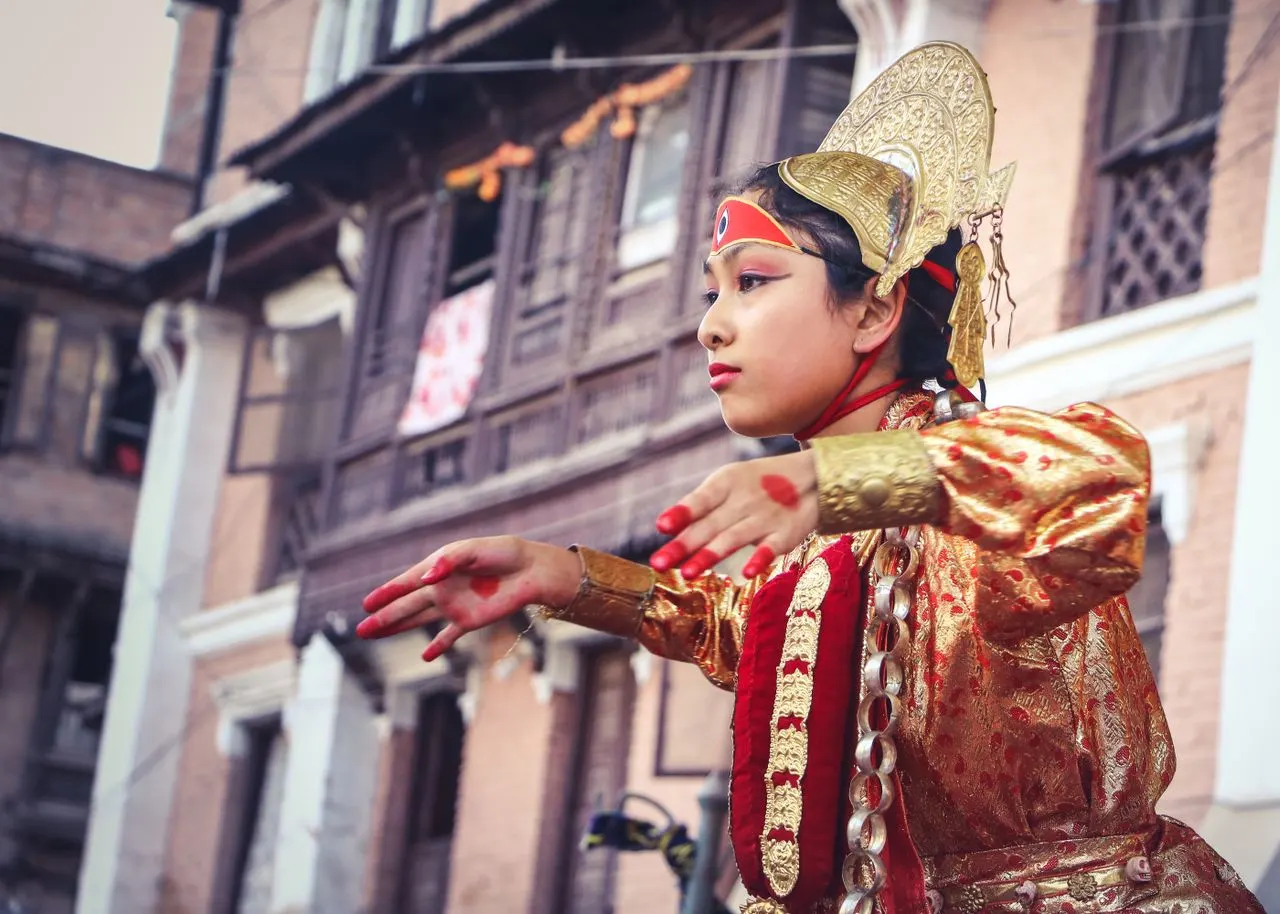
Interesting facts about Nepal include the Kumari, a pre-pubescent girl chosen from the Shakya caste of the Newar community who is worshipped as a living goddess. The current Kumari, Aryatara Shakya, was chosen in September 2025 at the age of two years and eight months. She resides in the Kumari Ghar on Kathmandu Durbar Square and appears at her window for visitors at certain times of day.
The Kumari is revered by both Hindus and Buddhists. She is considered an incarnation of the goddess Taleju. When she reaches puberty, she retires and returns to ordinary life. Former Kumaris receive a government pension. The tradition is documented in Newar chronicles and has survived political upheaval, including the 2008 abolition of the monarchy.
Travel connection: You can see the Kumari at Kumari Ghar in Kathmandu Durbar Square. Photography is prohibited. The appearance is brief — often just a few seconds at the window — and visitors should remain respectful.
Languages and Ethnic Diversity
Interesting facts about Nepal that genuinely surprise people involve its diversity. The 2021 census identified 142 ethnic groups and at least 124 languages spoken as mother tongues. Nepali is the official language, spoken by about 44.6 percent of the population. Maithili (11.7 percent), Bhojpuri (6 percent), and Tamang are among the other major languages.
The Language Commission has identified 131 languages, and 37 are spoken by fewer than 1,000 people. The country’s linguistic diversity is concentrated in the mid-hills and Himalayan regions, where isolated valleys preserved distinct languages for centuries. The Tharu of the Terai, the Newar of the Kathmandu Valley, the Sherpa of the Everest region, and the Gurung and Magar of the mid-hills each maintain distinct cultural practices.
Travel connection: English is widely spoken in tourist areas, but learning a few Nepali phrases — Namaste (hello), Dhanyabad (thank you) — is appreciated. In remote trekking regions, your guide will translate.
Festivals: More Than 50 a Year
Interesting facts about Nepal include the claim that there are more festivals than days in the year. That is an exaggeration, but not by much. Nepal celebrates more than 50 national festivals annually, and regional and ethnic communities add dozens more.
Dashain (September–October) is the longest, lasting fifteen days. Families gather, animal sacrifices are performed at temples, and bamboo swings are erected in villages. Tihar (October–November) is the festival of lights, with oil lamps lit in doorways and windows. Holi (March) is the festival of colours. Buddha Jayanti (May) celebrates the Buddha’s birth, enlightenment, and death. Sa: Paru, a festival in Bhaktapur that honours those who died in the past year, was featured in international travel coverage in 2026.
Travel connection: Visiting during a major festival can be a highlight, but it also means crowds, higher prices, and transportation disruptions. Book accommodations and transport well in advance if your trip coincides with Dashain or Tihar.
Food: Dal Bhat and Beyond
Interesting facts about Nepal often overlook the food, which is a mistake. The staple meal is dal bhat — lentil soup with rice, vegetables, and pickle. It is eaten twice daily in most Nepali households and is the standard trekking meal. Dal bhat is nutritionally complete, affordable, and endlessly refillable at most teahouses.
Nepal’s cuisine varies by region. Newari cuisine, from the Kathmandu Valley, includes bara (lentil pancakes), chatamari (rice crepe), and choila (spiced meat). Momos — steamed dumplings with vegetable or meat filling — are ubiquitous. Thukpa (noodle soup) and Tibetan bread are common in the mountains. The Tharu of the Terai have their own cooking traditions, including freshwater fish and mustard greens.
Travel connection: Vegetarians are well catered for in Nepal. Dal bhat is vegetarian by default. In trekking regions, menu options are extensive but prices increase with altitude.
Wildlife and Biodiversity
Interesting facts about Nepal include a conservation story that deserves more attention. Nepal’s tiger population rose to an estimated 429 individuals in the 2026 national census, up from 121 in 2010 — a more than threefold increase. The survey was carried out between December 2025 and April 2026 using camera traps across five protected areas. Parsa National Park recorded the largest increase of any landscape, rising from 41 tigers in 2022 to 71 in 2026.
Nepal is also home to the greater one-horned rhinoceros, which was brought back from the brink of extinction in the twentieth century. Chitwan National Park and Bardia National Park are the primary strongholds. Nepal has 861 species of birds, about 8.9 percent of the world’s total. The Spiny Babbler is Nepal’s only endemic bird species, found only in the mid-hills and recorded in Madhesh Province for the first time in 2026.
Travel connection: Chitwan offers jeep safaris, canoe trips, and jungle walks. Best season is October to March. Bardia, in far western Nepal, is less visited but offers a more authentic safari experience. Shukla Phanta holds the world’s largest population of barasingha (swamp deer).
UNESCO World Heritage Sites
Interesting facts about Nepal include its UNESCO listings. Nepal has four World Heritage Sites — two cultural and two natural. The cultural sites are the Kathmandu Valley (seven monument zones) and Lumbini, the birthplace of the Buddha. The natural sites are Chitwan National Park and Sagarmatha National Park.
The Kathmandu Valley was inscribed in 1979 as a serial property of seven monument zones: Kathmandu Durbar Square, Patan Durbar Square, Bhaktapur Durbar Square, Swayambhunath, Boudhanath, Pashupatinath, and Changu Narayan. UNESCO reported in late 2025 that Nepal had restored and rebuilt 170 heritage structures damaged by the 2015 earthquake, leaving about 11 percent still to be completed. Lumbini has stayed off UNESCO’s World Heritage in Danger list for three consecutive years. Nepal also has 15 sites on UNESCO’s Tentative List, including Tilaurakot, Panauti, and the Ram Janaki Temple.
Travel connection: All four UNESCO sites are accessible. Kathmandu Valley sites are within a 20-kilometre radius. Lumbini requires a domestic flight or long drive. Chitwan is a five to six-hour drive from Kathmandu or Pokhara. Sagarmatha requires a flight to Lukla and a trek.
History: Never Colonised
Interesting facts about Nepal include its status as a country that was never colonised by a European power. Nepal was unified in 1768 by Prithvi Narayan Shah, the Gurkha ruler who conquered the Kathmandu Valley and laid the foundations for the modern state. Nepal fought a war with the British East India Company in 1814–16 and subsequently supplied Gurkha soldiers to the British Army, but it was never formally occupied.
Nepal was a monarchy until 2008, when the Constituent Assembly declared it a federal democratic republic. The transition followed a decade-long Maoist insurgency and the 2001 royal massacre that killed King Birendra and most of the royal family. In September 2025, youth-led Gen Z protests against corruption and inequality led to the fall of the government, and in March 2026, Nepal held a snap election in which the Rastriya Swatantra Party won a landslide victory. The political transition is ongoing.
Travel connection: Nepal’s non-colonised history is a point of national pride and shapes its cultural confidence. Unlike India, Nepal did not experience the systematic cultural disruption of colonial rule. The 2026 political changes have not affected tourist services, but travellers should stay informed about any local disruptions.
The Calendar and Time Zone
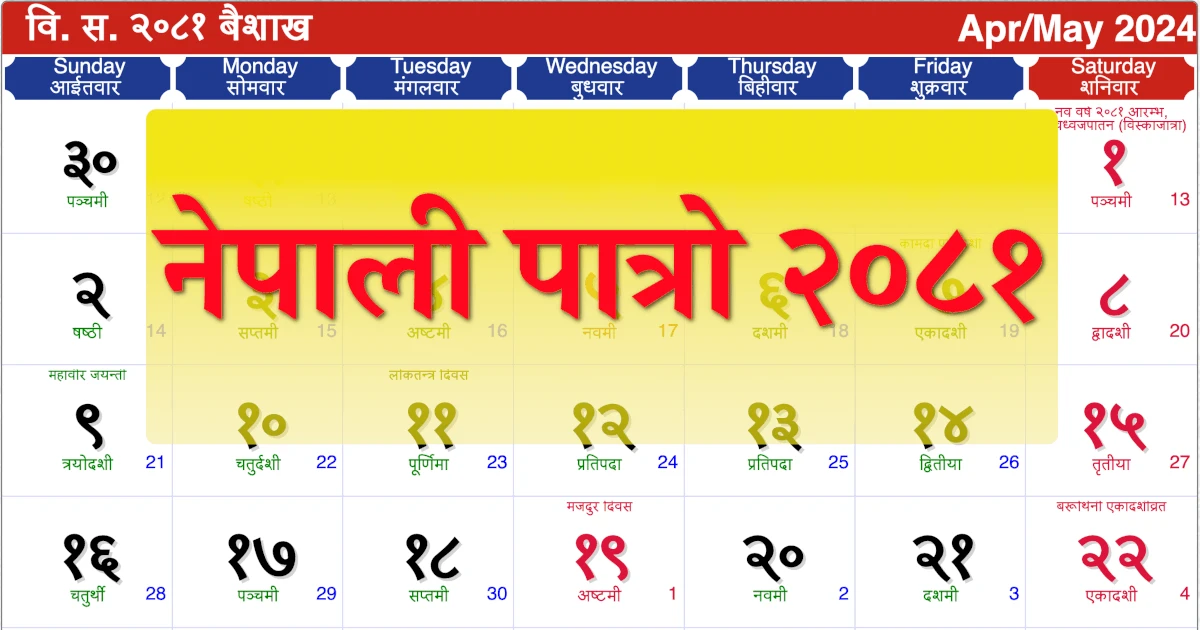
Interesting facts about Nepal include its unique calendar and time zone. Nepal follows the Bikram Sambat calendar, which is approximately 56.7 years ahead of the Gregorian calendar. In April 2026, Nepal entered the year 2083 B.S. . The Nepali New Year falls in mid-April.
Nepal’s time zone is UTC+5:45, one of the few time zones in the world with a 45-minute offset. When it is 12:00 UTC, it is 17:45 in Nepal. This puts Nepal 15 minutes ahead of India and 5 hours 45 minutes ahead of Greenwich Mean Time.
Travel connection: The time zone is a minor detail but can cause confusion when scheduling international calls or flights. The calendar difference means that official documents in Nepal often show dates in Bikram Sambat. Domestic flight schedules and festival dates are typically published in both calendars.
Lesser-Known Facts
Interesting facts about Nepal that rarely make standard lists include cliff honey hunting in the Lamjung district. Gurung communities have harvested honey from cliff faces for centuries, using rope-and-bamboo ladders to reach combs of the world’s largest honeybee, Apis laboriosa. The practice has attracted global media attention and now draws tourists to villages such as Bhujung, Ghanpokhara, and Ghalegaun.
The Yeti scalp of Khumjung. A monastery in Khumjung village in the Everest region claims to possess a 300-year-old Yeti scalp. Sir Edmund Hillary took it for scientific analysis, which found it to be from a serow, a goat-antelope native to the Himalayas. The monastery still displays it in a locked glass case.
Tilicho Lake, at 4,919 metres, is one of the highest lakes in the world. It sits in the Annapurna region and is accessible via a side trek from the Annapurna Circuit. The Kali Gandaki Gorge is deeper than the Grand Canyon when measured from riverbed to surrounding peaks.
Travel-Relevant Facts for Visitors
Interesting facts about Nepal that affect your trip include permits. Most trekking regions require permits. The Annapurna region requires ACAP (NPR 3,000). Langtang requires the Langtang National Park permit and TIMS. Restricted areas such as Upper Mustang, Nar Phu, and Manaslu require special permits and a licensed guide.
Currency. The Nepali rupee is the local currency. ATMs are available in Kathmandu and Pokhara but not in trekking regions. Carry cash in small denominations.
Weather. The best seasons are autumn (October–November) and spring (March–May). Monsoon (June–September) brings rain and leeches to lower elevations but is viable in Upper Mustang and Dolpo, which sit in the rain shadow.
Domestic flights. Flights to Lukla, the gateway to Everest treks, are frequently delayed or cancelled due to weather. Allow buffer days.
Merriment Treks: Planning Support
Interesting facts about Nepal become more useful when you can experience them in person. Merriment Treks helps travellers plan Nepal trips that connect cultural understanding with practical logistics. If you are deciding between trekking regions, wondering when to visit for festivals, or trying to understand permit requirements, we are happy to help. Contact us for route-specific planning support.
Frequently Asked Questions
1. How many languages are spoken in Nepal?
At least 124 languages are spoken as mother tongues, according to the 2021 census. Nepali is the official language.
2. Why is Nepal’s flag not rectangular?
Nepal’s flag consists of two overlapping triangles, a design that predates the modern rectangular flag convention. It is the only non-quadrilateral national flag in the world.
3. Is Nepal a Hindu country?
Nepal was declared a secular country in 2006. Hinduism is practised by about 80 percent of the population, but Buddhism, Islam, Christianity, and animist traditions are also practised.
4. How many ethnic groups are in Nepal?
The 2021 census identified 142 ethnic groups.
5. What is the Kumari?
The Kumari is a pre-pubescent girl chosen from the Shakya caste who is worshipped as a living goddess by Hindus and Buddhists. She resides in Kumari Ghar on Kathmandu Durbar Square.
6. How many 8,000-metre peaks are in Nepal?
Eight of the world’s 14 peaks above 8,000 metres are in Nepal, including Everest, Kanchenjunga, and Annapurna.
7. What is the national animal of Nepal?
The cow. It is sacred in Hinduism and legally protected.
8. What is the national flower of Nepal?
The rhododendron (Rhododendron arboreum), known locally as Lali Gurans.
9. What is the best time to visit Nepal?
Autumn (October–November) and spring (March–May) are the best seasons for trekking and sightseeing.
10. Can I see Mount Everest without trekking?
Yes. Domestic carriers operate one-hour Everest Experience flights from Kathmandu.
11. What is dal bhat?
Dal bhat is the staple Nepali meal: lentil soup with rice, vegetables, and pickle. It is eaten twice daily and is the standard trekking meal.
12. Is Nepal safe for travellers?
Nepal is generally safe for travellers. The main risks are altitude sickness, road accidents, and flight delays due to weather.
13. What is the Bikram Sambat calendar?
The Bikram Sambat is Nepal’s official calendar, approximately 56.7 years ahead of the Gregorian calendar. The new year falls in mid-April.
14. How many UNESCO World Heritage Sites are in Nepal?
Nepal has four: Kathmandu Valley and Lumbini (cultural), Chitwan National Park and Sagarmatha National Park (natural).
15. What wildlife can I see in Nepal?
One-horned rhinoceros, Bengal tiger, snow leopard, red panda, and over 860 species of birds. Chitwan and Bardia national parks are the best places for wildlife viewing.