Can a Helicopter Fly to Top of Mt Everest? The short answer is yes — but it has happened exactly once, under conditions so precise and demanding that no pilot has repeated it in the two decades since.
On May 14, 2005, French test pilot Didier Delsalle landed a Eurocopter AS350 B3 helicopter on the summit of Mount Everest at 8,848 meters (29,029 feet) above sea level, stayed for 3 minutes and 50 seconds, and flew back down to Lukla. The following day he returned and landed again, this time for approximately 4 minutes, specifically to demonstrate that the first landing was not a fluke. No helicopter has touched the summit since.
That record answers the physics question — yes, a helicopter can reach and land on the summit of Everest. But it leaves several more important and practical questions unanswered. Why is it possible at all, given that the air at 8,848 meters contains roughly a third of the oxygen available at sea level? Why has nobody repeated it? What helicopter makes it possible? How high can helicopters fly routinely in the Everest region? And what does any of this mean for rescue operations, trekkers, and tourism flights in the Khumbu?
This guide answers all of it.
The Physics: Why Helicopters Struggle at Extreme Altitude
To understand the Everest summit landing, you first need to understand what altitude does to a helicopter’s ability to fly — because the challenge is fundamental rather than incidental.
A helicopter generates lift by spinning its rotor blades through the air. The blades are shaped like aerofoils — the same basic wing profile as a fixed-wing aircraft — and as they rotate they create a pressure differential between the upper and lower surface of each blade, generating upward force. The amount of lift generated depends directly on the density of the air the blades are moving through. Denser air contains more molecules per cubic meter, and more molecules per cubic meter means more lift generated per rotation.
At sea level, air density is approximately 1.225 kilograms per cubic meter. At 8,848 meters — the summit of Everest — air density drops to approximately 0.468 kilograms per cubic meter, roughly 38 percent of sea level density. A helicopter rotor moving through air at that density generates dramatically less lift per rotation than the same rotor at sea level. To compensate, the engine must work much harder, the rotor must spin faster, and the entire aircraft must be as light as possible.
The compounding problem is that the engine itself also struggles at altitude. Turbine engines — the type used in all modern high-performance helicopters — require oxygen to combust fuel. Thinner air means less oxygen available for combustion, which reduces the power the engine can produce. At extreme altitude, the engine is being asked to produce more power than at sea level (to compensate for lower lift) while simultaneously having less capacity to do so (due to lower oxygen). This is the fundamental aerodynamic paradox of high-altitude helicopter flight.
The result: every helicopter has a service ceiling — a maximum altitude at which it can maintain controlled hovering flight under standard conditions. Most conventional helicopters used in normal operations have service ceilings well below 5,000 meters. Even high-performance models certified for mountain operations typically have practical hovering ceilings of 6,000 to 7,000 meters under optimal conditions. Getting to 8,848 meters requires an aircraft specifically designed and prepared for extreme altitude, flown by a pilot with exceptional skill, in the narrowest possible atmospheric window.
The Aircraft: Eurocopter AS350 B3 — Why This Helicopter Specifically
The helicopter Delsalle used for the Everest summit landing was the Eurocopter AS350 B3 Écureuil — French for “squirrel,” the nickname given to the AS350 family. This aircraft is now produced and marketed by Airbus Helicopters under the designation H125, following Eurocopter’s rebrand to Airbus Helicopters in 2014 and a subsequent renaming in 2016. The AS350 B3 and the H125 are effectively the same airframe lineage.
The AS350 B3 was introduced with a Turbomeca Arriel 2B engine — a turboshaft engine that had been specifically developed with improved high-altitude performance characteristics compared to its predecessors. The combination of this engine with the relatively light AS350 airframe gave the aircraft better power-to-weight performance at extreme altitude than any comparable single-engine helicopter available at the time.
Several key specifications made the AS350 B3 the only credible candidate for the Everest summit attempt:
| Specification | AS350 B3 Detail |
|---|---|
| Engine | Turbomeca Arriel 2B turboshaft |
| Maximum takeoff weight | 2,250 kg (4,960 lb) |
| Cruise speed | Approximately 259 km/h (140 knots) |
| Certified operating altitude | 7,010 m (23,000 ft) |
| Summit landing altitude | 8,848 m (29,029 ft) |
| Margin above certified ceiling | ~1,838 m (6,029 ft) above certified ceiling |
The aircraft used for the record attempt was not a standard production helicopter. It was stripped of all non-essential equipment to reduce weight to the absolute minimum. Every kilogram removed from the airframe directly improved the aircraft’s ability to generate surplus lift in the thin air at the summit. Delsalle and the Eurocopter engineering team spent months identifying every component that could be removed without compromising flight safety and removing it.
Even with these modifications, the aircraft was operating well above its certified ceiling. The standard operating certification for the AS350 B3 goes to 7,010 meters — the summit landing was conducted approximately 1,838 meters above the aircraft’s certified operational limit. Delsalle was operating in a regime that no certification authority had tested or approved for normal operations. This is why the attempt required a test pilot rather than a line pilot, and why it constituted a world record rather than a routine procedure.
The Flight: What Delsalle Actually Did on May 14, 2005
Delsalle and his team based their preparation at Lukla — the same mountain airport (elevation 2,860 meters) used by EBC trekkers arriving from Kathmandu. From Lukla, he conducted reconnaissance flights toward Everest to assess approach routes and conditions before committing to the summit attempt.
- During these reconnaissance flights, Delsalle discovered a crucial aerodynamic problem: on one side of the mountain, powerful updrafts were so strong that even at maximum power reduction he continued climbing involuntarily. Approaching from the updraft side was not controllable. He had to identify an approach from the downdraft side — a more demanding approach that required precise power management to descend toward the summit without losing rotor speed or control authority in the thin air.
- On April 14, 2005 — about a month before the summit attempt — Delsalle and the AS350 B3 set three time-to-climb world records over Istres in France, demonstrating the aircraft’s performance at altitude before committing to the Himalayan attempt. The aircraft climbed to 3,000 meters in 2 minutes 21 seconds, to 6,000 meters in 5 minutes 6 seconds, and to 9,000 meters in 9 minutes 26 seconds.
- On May 14, 2005, conditions aligned. Delsalle approached the summit, touched down on the narrow snow-covered peak, and held the helicopter stable for 3 minutes and 50 seconds. The Fédération Aéronautique Internationale (FAI) — the world governing body for air sports and aeronautical records — required a minimum of 2 minutes of contact with the summit for the landing to qualify as an official record. Delsalle exceeded this requirement.
- He then lifted off and flew back to Lukla. The following day, May 15, 2005, he repeated the summit landing and remained for approximately 4 minutes — specifically to demonstrate repeatability to the FAI and to any sceptics who might have attributed the first landing to exceptional luck. The repeat also confirmed that the aircraft and techniques could perform the feat under slightly different conditions.
The FAI officially certified two world records from the attempt: the highest altitude helicopter landing and the highest altitude helicopter takeoff, both at 8,848 meters. Both records remain in Delsalle’s name as of 2026 — no other pilot has landed a helicopter on the Everest summit in the 21 years since.
Why Nobody Has Repeated It
Twenty-one years have passed since Delsalle’s landing. The AS350 B3 / H125 airframe is still in production and in widespread use across the Khumbu region. Helicopter technology has not regressed. Why has nobody repeated the summit landing?
The answer is a combination of factors that individually are manageable but together create a compounding difficulty that approaches the limit of what is physically achievable.
The atmospheric window is extremely narrow. Summit conditions at Everest that are simultaneously calm enough (low wind), warm enough (denser air expands slightly with warmth, marginally improving performance), and clear enough for the visual navigation required are rare. The spring climbing window — late May — offers the best overlap of these conditions, but even within that window the specific combination required for a safe summit landing presents itself for hours or less, not days.
The pilot skill requirement is genuinely exceptional. Delsalle was an Airbus (then Eurocopter) factory test pilot — a category of aviator distinct from even highly experienced line pilots or mountain rescue pilots. Test pilots are trained specifically to operate aircraft in regimes beyond their certified limits and to make real-time engineering judgments about aircraft behavior at the edge of the performance envelope. The Everest summit landing required the kind of judgment that comes from years of test flying, not simply years of mountain flying.
The preparation requirement is immense. The stripped-down aircraft, the weeks of acclimatization and reconnaissance flights at altitude, the specific approach technique identified for the downdraft side of the summit — these required months of preparation by a factory team, not a field modification.
The practical reason to attempt it is essentially zero. The summit of Everest offers nothing that justifies the risk of a summit landing from an operational standpoint — no rescue could be conducted from the summit, no tourist would survive exposure at that altitude for the duration of boarding and flight, and no scientific purpose requires landing rather than hovering above.
Delsalle’s flight was a demonstration of engineering margin and pilot skill, not a solution to any operational problem. Without a compelling operational reason, no operator or pilot has reason to bear the risk and cost of attempting it again.
How High Do Helicopters Routinely Fly in the Everest Region?
This is the question most relevant to trekkers, climbers, and anyone planning a visit to the Khumbu. The summit record is remarkable but operationally irrelevant to most people. The practical ceiling for routine helicopter operations in the region is a different and more useful number.
The AS350 B3 / H125 — the same airframe family used for the Everest record — is the primary helicopter used for rescue and tourism operations in the Khumbu region of Nepal. Under normal operational conditions, these aircraft reliably operate up to approximately 6,000 to 6,500 meters in the Khumbu, which covers most of the Everest trekking and lower climbing zone.
| Operation Type | Maximum Routine Altitude | Notes |
|---|---|---|
| EBC tourism helicopter tours | ~5,550 m (Kala Patthar area) | Common, commercially available |
| Everest Base Camp helicopter flights | ~5,364 m (EBC) | Routine; weather-dependent |
| High-altitude rescue (standard) | ~6,000-6,500 m | Well within operational envelope |
| Record highest rescue operation | ~6,900 m (22,640 ft, set 2010) | Exceptional; not routine |
| Highest long-line rescue (AS350 B3) | ~7,800 m (Lhotse, May 2013) | Record operation; not repeatable routinely |
| Summit landing (Delsalle record) | 8,848 m | One-time record; not operational |
In May 2013, an AS350 B3 performed the world’s highest long-line rescue operation on Lhotse — the fourth highest mountain in the world at 8,516 meters — at approximately 7,800 meters (25,590 feet). This was another exceptional operation rather than a routine one, involving a specialized long-line (external sling) technique to reach a climber at altitude the aircraft could not safely land at. It represents the upper boundary of what can be achieved in genuine rescue operations by the most capable current production helicopter.
The 2010 record for highest search and rescue operation was set at 22,640 feet (approximately 6,900 meters) — well above EBC and into the lower death zone.
The 2015 Nepal Earthquake: Helicopters at Their Operational Limit
The April 2015 earthquake that struck Nepal — magnitude 7.8, centered near Gorkha — created an immediate mass rescue requirement across the Khumbu. The earthquake triggered an avalanche that struck Everest Base Camp, killing 19 people and injuring dozens more at the camp itself. Simultaneously, climbers and trekkers were stranded at altitude across the Khumbu.
The rescue operation that followed represented the largest helicopter mobilization in Nepal’s history. Dozens of H125 / AS350 B3 helicopters flew continuous sorties for days, operating at and above their standard operational envelopes in some cases to reach stranded survivors. The operations demonstrated both the capability and the limits of current helicopter technology in the Khumbu — aircraft operating at 5,000 to 6,000 meters with injured passengers, in post-earthquake conditions with uncertain landing zones and changing weather, pushed crews and aircraft to the edge of routine operational capacity.
These were not record attempts. They were emergency operations conducted under extreme pressure, and the performance of both aircraft and crews was widely recognized as exceptional. The earthquake response reinforced the operational standard: helicopters in the Khumbu routinely operate to approximately 6,000 to 6,500 meters in rescue scenarios, with experienced crews able to push to higher altitudes in critical situations.
Helicopter Tourism in the Everest Region: What Is Actually Available
For most people asking whether a helicopter can fly to the top of Everest, the underlying question is whether they can take a helicopter to see Everest from the air or get to Base Camp by helicopter instead of trekking. Both are commercially available and widely used.
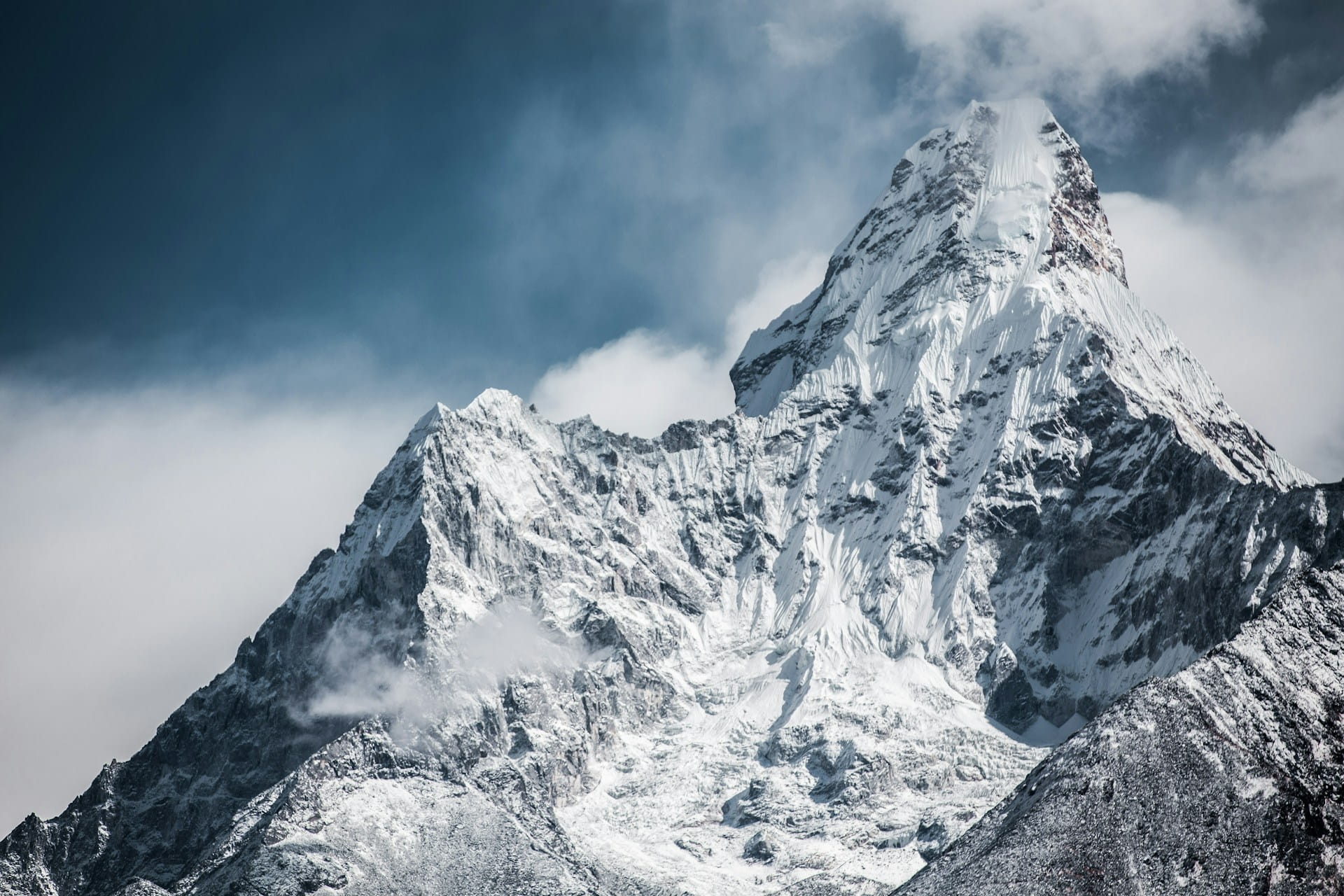
Everest Base Camp helicopter tours are one of the most popular aviation tourism products in Nepal. A typical tour departs from Kathmandu or Pokhara, flies through the Himalayan foothills, enters the Khumbu region, and lands at or near Everest Base Camp (5,364 meters) or at the Kala Patthar viewpoint area (5,545 meters). The flights typically last 4 to 5 hours round trip from Kathmandu, including time at altitude. Passengers see the same mountain panorama — Everest, Lhotse, Nuptse, Ama Dablam — that trekkers reach after 8 days of walking, from the window of an aircraft in a morning.
These flights are weather-dependent, operate primarily in morning hours before thermal activity makes conditions less stable, and cannot be guaranteed to complete on any specific day. They are not flights to the summit of Everest — they land at Base Camp altitude, approximately 3,484 meters below the summit. But for travelers who want to see Everest up close without the 12 to 14 day trek commitment, they are a genuine and accessible option.
The cost of a shared Everest Base Camp helicopter tour from Kathmandu typically runs $1,000 to $1,500 per person in 2026. Private charter rates are significantly higher.
What Prevents Helicopters from Conducting Summit Rescues?
A common question from anyone who has read about deaths on Everest’s upper mountain is why helicopters cannot be used to rescue stricken climbers at extreme altitude — in the death zone above 8,000 meters where most Everest fatalities occur.
The honest answer is physics. Above approximately 6,500 to 7,000 meters, the ability of even the most capable current production helicopter to hover with a meaningful payload — a pilot plus a patient plus rescue equipment — at the temperatures typically encountered drops below what is reliably achievable. The air is too thin, the aircraft too heavy even stripped down, and the temperature envelope at those altitudes too variable to conduct reliable rescue operations.
Delsalle’s summit landing was achieved with a stripped aircraft carrying only the pilot and minimum essential equipment. Adding a patient, a rescue medic, and rescue equipment would have made the aircraft too heavy to lift from the summit under the same conditions. The summit landing was physically possible with one person and minimal payload. A rescue from the same location would require substantially more capacity than any current production helicopter can provide at that altitude.
Above the high rescue threshold — the 6,900-meter record set in 2010 — climbers in distress must be assisted by other climbers or descend under their own power to an altitude where helicopter evacuation becomes possible. The practical rescue ceiling of helicopters in Nepal represents a genuine and current limitation of aviation technology, not a policy choice.
Frequently Asked Questions about Can a Helicopter Fly to Top of Mt Everest?
- Can a helicopter fly to the top of Mount Everest?
Yes, but it has happened only once. French test pilot Didier Delsalle landed a Eurocopter AS350 B3 on the summit of Everest at 8,848 meters on May 14, 2005, staying for 3 minutes and 50 seconds. He repeated the landing the following day for approximately 4 minutes to confirm the record. No helicopter has landed on the summit since. The feat required a specially stripped aircraft, a factory test pilot, months of preparation, and a precise atmospheric window. - What helicopter landed on top of Everest?
The Eurocopter AS350 B3 Écureuil — now marketed by Airbus Helicopters as the H125 — was the aircraft used for the 2005 Everest summit landing. The same airframe family is the primary helicopter used for rescue and tourism operations throughout the Khumbu region of Nepal today. - Who was the pilot who landed on Everest’s summit?
Didier Delsalle, a French test pilot born May 6, 1957, who worked for Eurocopter (now Airbus Helicopters). He was an experienced test pilot who had conducted extensive high-altitude performance testing of the AS350 B3 before the Everest summit attempt. He holds the FAI world records for both highest altitude helicopter landing and highest altitude helicopter takeoff, both set at 8,848 meters on May 14, 2005. - How long did the helicopter stay on Everest’s summit?
On the first landing (May 14, 2005), Delsalle remained on the summit for 3 minutes and 50 seconds — exceeding the FAI’s minimum 2-minute requirement for an official landing record. On the second landing the following day (May 15, 2005), he remained for approximately 4 minutes. - How high can helicopters normally fly near Everest?
The helicopters used for rescue and tourism operations in the Khumbu region — primarily the H125 / AS350 B3 — routinely operate up to approximately 6,000 to 6,500 meters under normal operational conditions. The highest search and rescue operation on record was conducted at approximately 6,900 meters (22,640 feet) in 2010. The highest long-line rescue operation was conducted on Lhotse at approximately 7,800 meters in May 2013. These are exceptional operations, not routine capabilities. - Can I take a helicopter to Everest Base Camp?
Yes. Everest Base Camp helicopter tours are commercially available from Kathmandu and Pokhara. A typical tour lands at or near Everest Base Camp (5,364 meters) or the Kala Patthar area (5,545 meters), giving passengers mountain views comparable to what trekkers see after 8 days of walking. The flights are weather-dependent and operate primarily in the morning hours. Cost in 2026 typically runs $1,000 to $1,500 per person for a shared tour from Kathmandu. - Why can’t helicopters rescue climbers in the death zone above 8,000 meters?
Above approximately 6,500 to 7,000 meters, current production helicopters cannot reliably hover with the combined weight of a pilot, patient, and rescue equipment. Delsalle’s summit landing was possible only because the aircraft was stripped to minimum weight carrying only the pilot. A rescue operation requires substantially greater payload capacity than the aircraft can provide at extreme altitude. Climbers in distress above this threshold must descend to lower altitude where helicopter rescue becomes feasible. - Has anyone flown a helicopter above Everest’s summit?
Yes. Helicopters and fixed-wing aircraft regularly fly above 8,848 meters in the region — flying over the summit is less demanding than landing on it because the aircraft is not required to hover. Bar-headed geese migrate over the Himalayas at altitudes up to approximately 8,800 meters, demonstrating that the airspace is navigable.
A helicopter flying over the summit generates lift from forward flight rather than hovering, which is more efficient in thin air. Landing — requiring a stable hover — is the specific challenge that makes the summit so difficult. - What world records did Delsalle set with the Everest landing?
The FAI certified two world records from the May 14, 2005 flight: the highest altitude helicopter landing and the highest altitude helicopter takeoff, both at 8,848 meters. Both records remain in Delsalle’s name as of 2026. The attempt also came 20 years after the concept was first seriously discussed within the French helicopter industry following Jean Boulet’s 1972 FAI absolute altitude record of 12,442 meters in an Aérospatiale SA 315 Lama.
Final Word on Can a Helicopter Fly to Top of Mt Everest
A helicopter can fly to the top of Mount Everest. The physics allow it under precise conditions, the right aircraft makes it achievable in theory, and one pilot proved it in practice on May 14 and 15, 2005.
What the record does not mean is that summit helicopter operations are feasible in any normal sense — for tourism, for rescue, or for any commercial purpose. The conditions required to repeat Delsalle’s feat present themselves rarely and unpredictably. The aircraft required must be stripped to minimum weight. The pilot must possess test-pilot-level judgment and experience operating beyond certified performance limits. And the purpose, beyond the demonstration itself, is essentially nil — the summit of Everest at 8,848 meters offers nothing that justifies the risk.
What the Everest region does have, and what serves genuine operational needs, is one of the most active high-altitude helicopter operations in the world. The H125 / AS350 B3 family routinely operates up to 6,000 to 6,500 meters across the Khumbu, conducting rescues, supporting tourism, and moving supplies to communities that road access cannot reach. Every year, these aircraft save lives at altitudes that would ground any other commonly available helicopter.
The summit landing is the record that answers the physics question. The daily operations of the Khumbu’s rescue and tourism fleet are the answer to the practical one.