Upper Dolpo Trekking Permits
Most people who research the Upper Dolpo trekking permit give up after reading three or four contradictory pages and assume the process is impossibly complicated. It’s not complicated — but it is specific, layered, and subject to a genuinely significant rule change that took effect in March 2026 that most existing guides haven’t caught up with yet.
This guide gives you the complete, current picture: every permit you need, what each one costs, how the permit structure changed in 2026, how to apply, what documents you need, the one major eligibility shift that now allows solo trekkers to apply when that was previously impossible, and the practical logistics that experienced Dolpo operators know but rarely put in writing.
Start here and you’ll understand the entire permit process before you make a single booking call.
What Upper Dolpo Actually Is — And Why Permits Are Different Here
Before getting into the permit mechanics, it helps to understand why Upper Dolpo has a different permit structure from the rest of Nepal. This isn’t bureaucracy for its own sake — there are specific reasons this region is restricted, and those reasons directly explain why the process works the way it does.
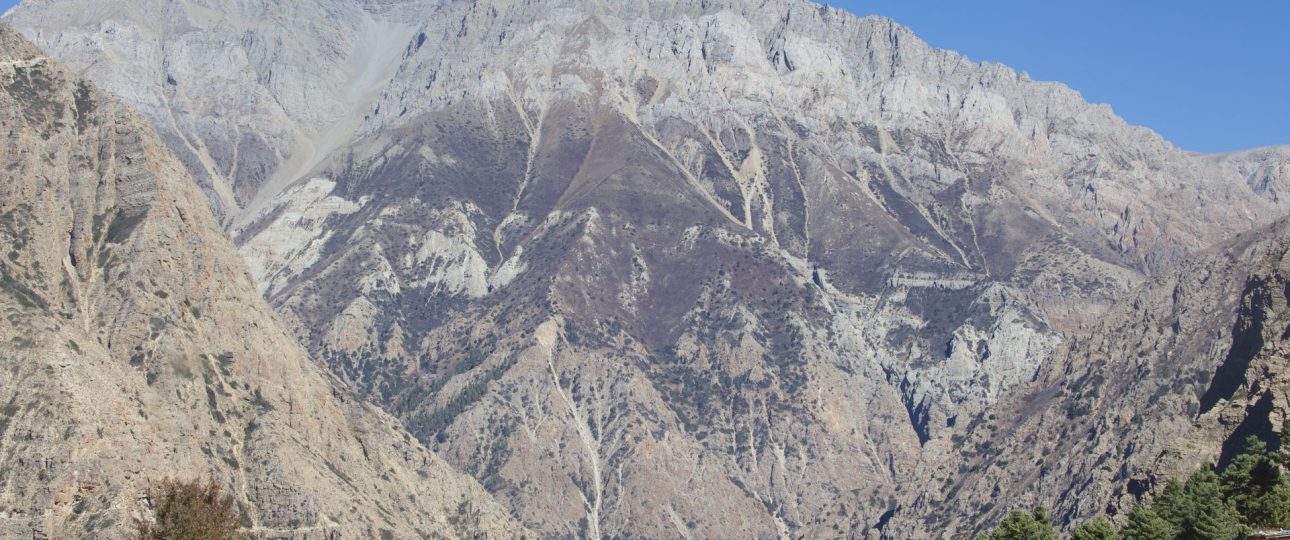
Upper Dolpo sits in the far northwest of Nepal, tucked behind the Dhaulagiri massif in the rain shadow of the Himalayas and directly adjacent to the Tibetan border. The entire region is part of Shey Phoksundo National Park — Nepal’s largest national park by area — and contains one of the last living examples of pre-Buddhist Bon culture anywhere on earth. The villages, monasteries, trade routes, and way of life here have changed remarkably little over centuries. The isolation that preserved this culture is also the reason Nepal’s government controls access carefully.
The region was completely closed to foreign visitors until 1989. Even today, it sees only a few hundred foreign trekkers per year — a number that reflects the remoteness, the cost, the logistics, and the deliberate management of the permit system rather than any lack of quality. In most years, Upper Dolpo gets a fraction of the visitor numbers of the Everest or Annapurna regions, which is precisely why it remains what it is.
Understanding this context makes the permit cost feel different. You’re not paying an access fee to a tourist infrastructure — you’re contributing to the conservation of one of the most culturally and ecologically significant landscapes in Asia, with visitor numbers capped to protect exactly that.
The Three Permits You Need for Upper Dolpo in 2026
Upper Dolpo requires three separate permits, and all three must be arranged before you start trekking. There is no option to obtain any of them at the trailhead or en route.
Upper Dolpo Trekking Permit One: Lower Dolpo Restricted Area Permit
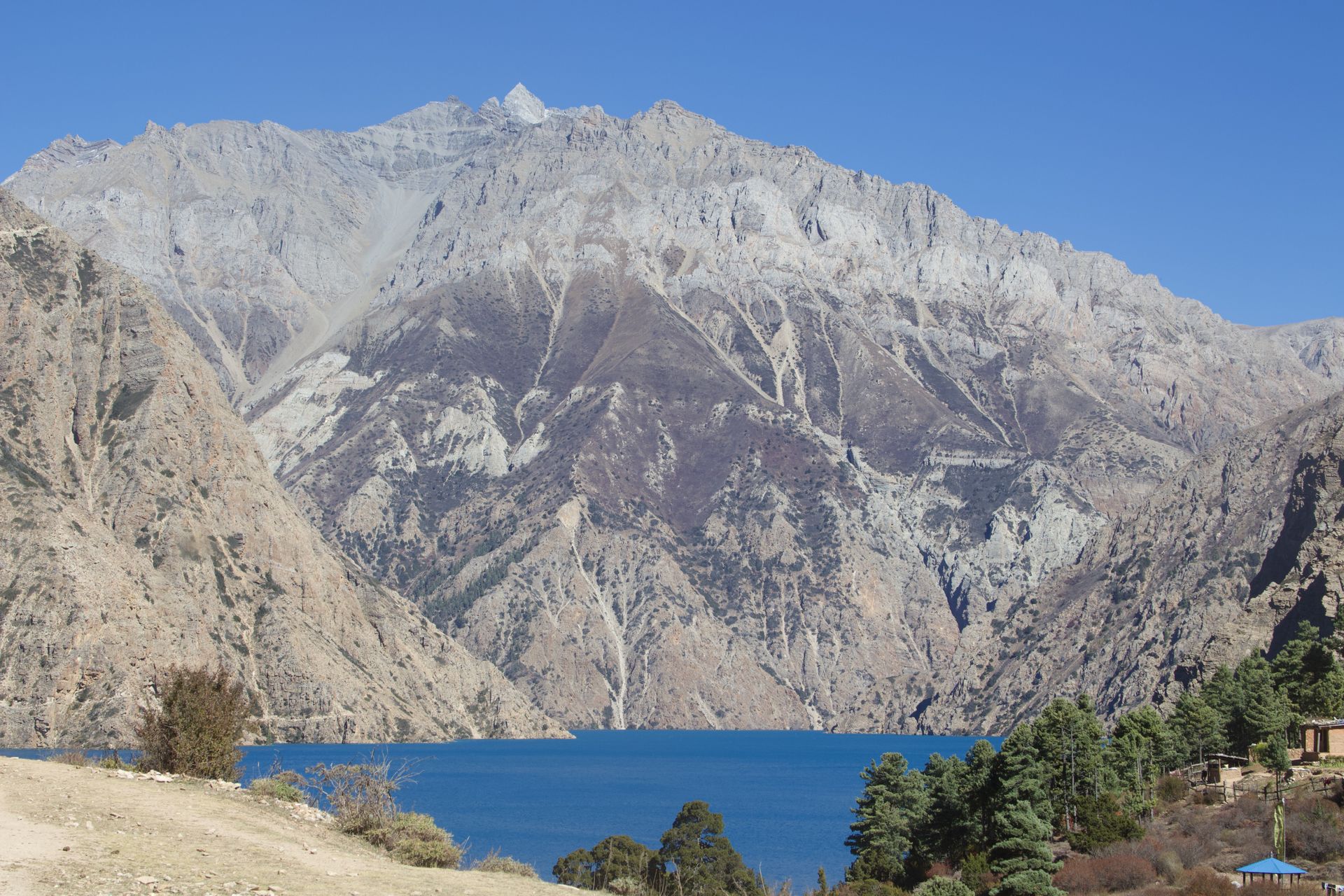
The first permit required is the Lower Dolpo Restricted Area Entry Permit. This might seem counterintuitive — you’re going to Upper Dolpo, so why do you need a Lower Dolpo permit?
The answer is geographic: the approach trail from Juphal through Dunai and up to Phoksundo Lake passes through the Lower Dolpo restricted zone.
You enter the restricted area before you reach the boundary of Upper Dolpo itself. Both permits must be valid simultaneously for the period you’re in each zone.
Cost in 2026: USD 20 per person per week, plus USD 5 per person per additional day beyond the first week. For a 3-week approach and return through Lower Dolpo, the cost per person is typically USD 40-60 depending on exact days in the zone.
Upper Dolpo Trekking Permit Two: Shey Phoksundo National Park Entry Permit
The national park permit covers entry into Shey Phoksundo National Park, which encompasses the entire Upper Dolpo trekking area. The park takes its name from Shey Phoksundo Lake — the deepest lake in Nepal at approximately 145 meters, with water of an almost improbable turquoise color that has been described in trekking literature repeatedly as the most beautiful lake in the Himalayas. Whether you agree depends on what else you’ve seen, but the experience of walking into the Ringmo valley and seeing it for the first time is one of those geographical moments that earns its reputation.
Cost in 2026: USD 30 per person, with no time limit — the permit covers your entire stay in the park regardless of how many days. This permit is available from the Department of National Parks and Wildlife Conservation in Kathmandu, or technically at the park entry point, though obtaining it in Kathmandu before departure through your agency is strongly recommended to avoid any administrative friction at a remote checkpoint.
Upper Dolpo Trekking Permit Three: Upper Dolpo Restricted Area Permit
This is the primary permit, the most expensive by a significant margin, and the one that makes Upper Dolpo one of the costliest trekking destinations in Nepal per day.
Cost in 2026: USD 500 per person for the first 10 days in the Upper Dolpo restricted zone, then USD 50 per person per additional day beyond 10 days.
A standard Upper Dolpo itinerary spending 14-18 days in the restricted zone costs USD 700-900 per person in Upper Dolpo permit fees alone. On a 20-day itinerary with 10 days in Upper Dolpo and 10 days in the approach/return through Lower Dolpo, total permit costs per person run approximately USD 550-600 for the restricted area permits plus USD 30 for the national park — around USD 580-630 before any agency fees, guide costs, flights, food, or accommodation are counted.
This is the correct framing for the permit cost. It is not “expensive for what it is.” It is an intentionally high-barrier permit designed to keep visitor numbers low and the cultural and environmental impact of trekking manageable in one of the most sensitive regions in the Himalayas.
The 2026 Rule Change That Changes Everything for Solo Trekkers
This is the most significant update to Upper Dolpo trekking regulations in years, and most existing permit guides haven’t covered it properly.
- On March 22, 2026, Nepal’s Department of Immigration issued an official notice revising the restricted area trekking permit policy across 13 districts including Dolpa. The change: solo foreign trekkers can now obtain restricted area permits individually, without needing to find a second trekker to form a group.
- Previously, the rule was clear and absolute — restricted area permits were only issued to groups of a minimum two people. A solo trekker with a registered agency and a licensed guide still couldn’t get a permit if they didn’t have at least one other person to trek with. This excluded a significant number of otherwise qualified, well-prepared solo trekkers from some of Nepal’s best-kept destinations.
- The new rule removes the group minimum for permit issuance. A solo trekker can now apply for and receive a restricted area permit for Upper Dolpo as an individual.
- However — and this is the part most coverage glosses over — “solo permit” does not mean “independent trekking.” The rule change has a crucial distinction: it changes who can apply for a permit, not how the trek must be conducted. A licensed guide hired through a TAAN-registered trekking agency remains legally mandatory for all restricted area treks. The term “solo” refers to the applicant being a single person, not to trekking without professional support. One licensed guide can accompany up to seven trekkers under the current regulations.
- There’s also a practical note worth making: as of the date this guide was written, some trekking operators noted the policy was still moving through final implementation channels in the weeks following the March 22 announcement. The policy is officially confirmed and reported, but verifying current implementation status directly with your chosen TAAN-registered agency before submitting applications is the prudent step.
The financial implication of solo trekking under the new rules is significant. Previously, a solo trekker who paid for a companion slot (some operators offered this option at double the per-person rate) shared the fixed costs of guide, porter, camp equipment, and cooking crew with at least one other person.
Now, a genuine solo trekker in Upper Dolpo bears all those fixed costs alone. The permit fee itself doesn’t change — it’s per person. But the total trip cost for a solo trekker is substantially higher than for a group of two or more sharing logistics.
Who Issues Upper Dolpo Trekking Permits and Where
Upper Dolpo restricted area permits — both the Lower Dolpo and Upper Dolpo components — are issued by the Department of Immigration (DoI) in Kathmandu. This is not the same office that handles Nepal visas, but it is a government authority under the Home Ministry.
- Individual trekkers cannot apply to the DoI directly. All restricted area permit applications must be submitted through a licensed Nepali trekking agency registered with the Trekking Agencies’ Association of Nepal (TAAN). The agency submits your application documents to the DoI, pays the permit fees, and collects the permits on your behalf before your trek begins.
- The Shey Phoksundo National Park permit is issued separately by the Department of National Parks and Wildlife Conservation, also in Kathmandu. Your agency handles this simultaneously with the restricted area permits.
- A significant practical improvement in the 2026 update: permits can now be applied for online using your Nepal visa number or, in the case of trekkers applying before arrival, the visa application submission ID number. This removes the previous requirement to be physically present in Nepal before initiating the permit process, allowing trekkers to confirm their permit applications from home before booking flights. Payment of fees in advance using the Application Submission ID is now available for international applicants.
In practical terms, this means your agency can begin the permit process weeks before you land in Kathmandu, which matters for a trek like Upper Dolpo where demand during peak season means some agencies have waiting lists for guide and porter availability.
Documents Required for Upper Dolpo Trekking Permit Application
Your trekking agency submits the following on your behalf:
A copy of your valid passport including the biographical data page. Your Nepal visa copy (or visa application submission ID if applying before arrival). Two recent passport-size photographs. A completed permit application form — your agency provides and fills this out based on the information you supply. Proof of travel insurance covering helicopter evacuation and medical rescue to the relevant altitude, which is now a standard requirement across Nepal’s restricted trekking zones and is verified at the permit stage. Payment of permit fees in Nepali Rupees, equivalent to the USD amounts stated — note that the official fee is denominated in USD but must be paid in NPR at the DoI, converted at the prevailing rate on the application date.
Your agency like Merriment Treks handles all submission, follow-up, and collection. Allow at least 5-7 business days for restricted area permit processing in Kathmandu, though experienced agencies with established DoI relationships often process faster. In peak season, build in more buffer.
What You Actually Pay: Full Permit Cost Breakdown for a Typical Itinerary
The permit cost calculation for Upper Dolpo confuses many trekkers because of the multi-permit structure and the daily-rate component of the Upper Dolpo RAP. Here’s a realistic breakdown for the most common itinerary configurations.
- For a 24-day Upper Dolpo trek with approximately 10 days in the Upper Dolpo restricted zone and 14 days in the Lower Dolpo approach/return zone:
- Lower Dolpo Restricted Area Permit: USD 20 for the first week, then USD 5 per additional day for 7 more days = USD 55 per person. Shey Phoksundo National Park Entry: USD 30 per person, no time limit. Upper Dolpo Restricted Area Permit: USD 500 for the first 10 days in the upper zone. Total permits per person: approximately USD 585.
- For a 28-day itinerary with 15 days in the Upper Dolpo zone: Upper Dolpo RAP becomes USD 500 for first 10 days plus USD 250 for 5 additional days = USD 750. Total permits for 28 days: approximately USD 835 per person.
For comparison, Lower Dolpo only (not crossing into the upper restricted zone): Lower Dolpo Restricted Area Permit plus National Park permit totals approximately USD 75-100 per person depending on duration — a dramatically different cost structure, which is why many trekkers who want the Dolpo experience on a tighter budget choose the Lower Dolpo circuit.
The Mandatory Agency and Guide Requirement
Upper Dolpo cannot be trekked independently. This is not a guideline or a recommendation — it is a legal requirement enforced at checkpoints throughout the region. The checkpoints at Sulighat (entry to Shey Phoksundo National Park), at the boundary between Lower and Upper Dolpo, and at several points within the restricted zone all verify permits and check for licensed guide credentials. Trekkers found without proper permits face fines and expulsion from the region. Agencies facilitating non-compliant treks face license revocation.
The mandatory agency-and-guide requirement serves multiple purposes. Safety is the first and most obvious: Upper Dolpo involves crossings of multiple passes above 5,000 meters, full camping logistics with no teahouse fallback in the upper zone, and locations so remote that emergency evacuation by helicopter can take 24-48 hours even with immediate coordination. A licensed guide with high-altitude experience, altitude sickness recognition skills, and established relationships with local logistics providers is not a convenience — it’s the safety infrastructure for the entire trek.
Cultural sensitivity is the second purpose. The Bon and Buddhist communities of Upper Dolpo have welcomed visitors on specific terms, and those terms include the expectation that trekkers arrive with knowledgeable guides who understand the cultural protocols of monastery visits, sacred sites, and village interaction. Showing up uninvited at a village like Saldang without any local connection or cultural context is a fundamentally different and less welcome presence than arriving with a guide who speaks the local dialect and can facilitate genuine exchanges.
Environmental management is the third purpose. A registered agency is legally responsible for the environmental impact of the trek, including waste removal from camping sites — a serious concern in an area with no village infrastructure for waste management and no ranger capacity to patrol thousands of square kilometers of national park.
Upper Dolpo vs Lower Dolpo: Permit Cost vs Experience
Since the permit cost question often leads to a Lower vs Upper comparison, it’s worth addressing this directly rather than making you find the answer elsewhere.
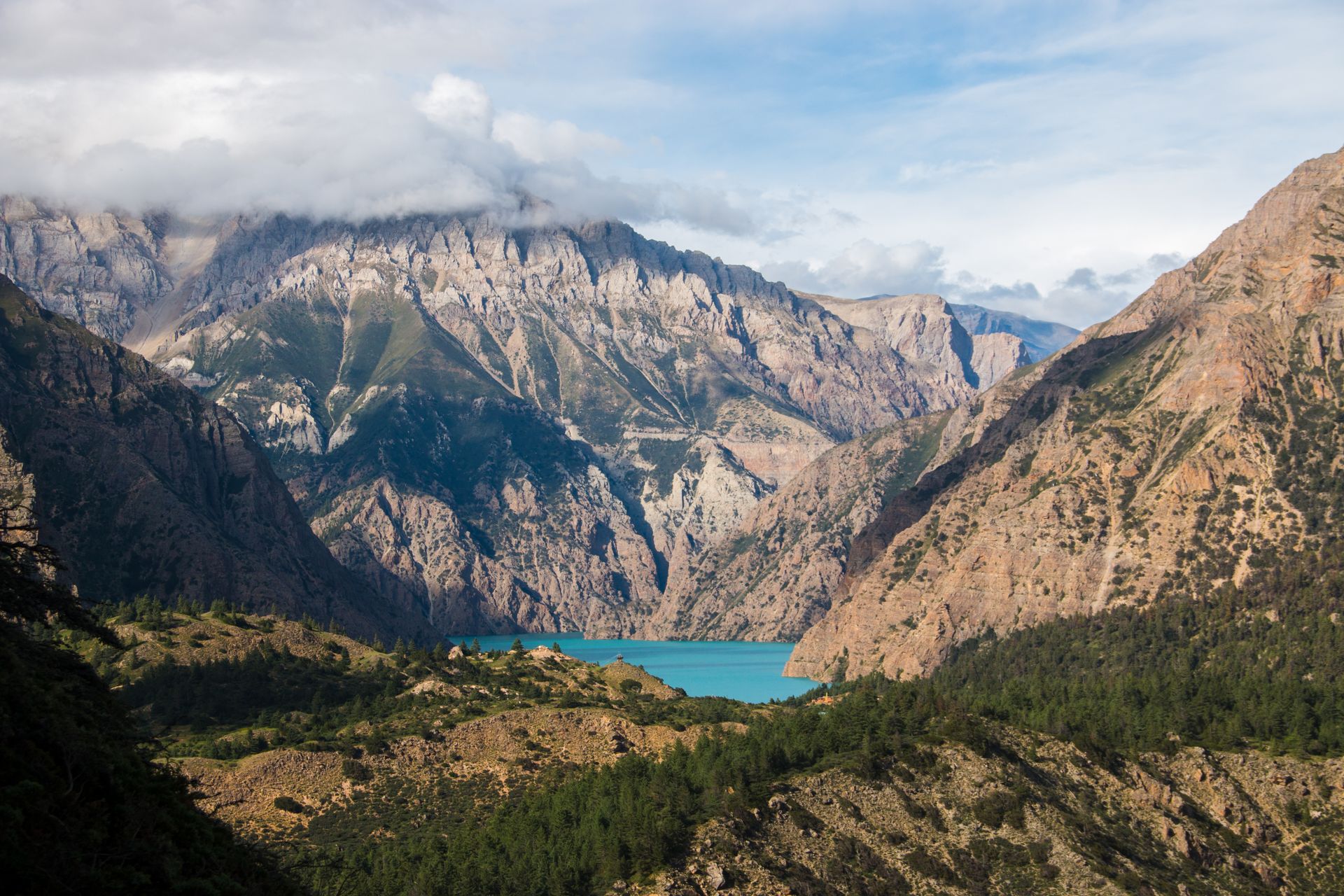
- Lower Dolpo is centered on the Phoksundo Lake area, the Ringmo village, and the approach valleys accessible without crossing into the northern restricted zone. The Phoksundo Lake itself — the reason most people first hear of Dolpo — is technically in the Lower Dolpo zone. The Shey Gompa, the Crystal Mountain, the Saldang village, the Dho Tarap Valley, and the high Trans-Himalayan landscape that gives Dolpo its reputation for otherworldliness are all in Upper Dolpo.
- If your primary goal is the lake and you’re constrained by budget, Lower Dolpo at approximately USD 75-100 in permits and significantly lower overall trek cost delivers Phoksundo Lake, Ringmo village, and the forests and river valleys of the national park. It’s a genuinely beautiful trek, though shorter and less dramatic in its cultural and geographical range.
If you want the full Dolpo experience — the Bon monasteries, the barren plateau landscapes, the ancient salt trade villages, the multi-pass traverses, and the profound remoteness of the inner valleys — Upper Dolpo is the correct choice and the permit cost is genuinely the appropriate price of admission to one of the world’s most extraordinary trekking environments. Experienced trekkers who have done both consistently describe Upper Dolpo as the more transformative of the two, specifically because of the difficulty of access.
Upper Dolpo Trekking Permit Checkpoints on the Trail
Understanding where your permits are checked prepares you for what happens at each stage and why having everything in order before you depart Kathmandu is so important.
The first checkpoint is at Sulighat, on the Phoksundo River, where you present your Lower Dolpo Restricted Area Permit and Shey Phoksundo National Park permit before entering the national park. This checkpoint is staffed and active — arriving without the correct permits here means you cannot continue.
The second key point is the boundary between Lower and Upper Dolpo, effectively crossed in the approach toward Phoksundo Bhanjyang and the Kang La Pass area. Your Upper Dolpo Restricted Area Permit must be valid from this point forward. The permit specifies an entry date, and the 10-day first-tier counting begins from your first day inside the upper zone.
Additional checkpoints exist within the upper zone, particularly around Shey Gompa and at points approaching the Tibetan border zone. These checkpoints exist for both permit verification and border security — Upper Dolpo’s proximity to Tibet means that border monitoring is an active function of the permit system, not just a formality.
When to Apply for Upper Dolpo Trekking Permits
The practical answer: as early as possible, but with a confirmed trek booking through a registered agency.
The permit process itself is not time-limited in the sense that applications can technically be submitted at any time of year. The constraint is that your agency needs your complete documentation and payment before they can file. Given that Upper Dolpo logistics — hiring experienced high-altitude guides and camping crew, securing mule or yak support for load carrying, arranging the domestic flight series — require advance planning anyway, starting 3-4 months before your intended departure is not excessive.
For peak season departures (May-June and September-October), experienced agencies for Upper Dolpo operate with significant advance bookings. The guide and cook teams that have Upper Dolpo experience are a finite pool, and the best operators have their seasons committed 6 months in advance. The permit application itself can happen in the final weeks before departure once you have a visa number, but the rest of the logistics need to be locked in earlier.
Best Season to Trek Upper Dolpo
This is one of the genuinely unusual aspects of Upper Dolpo: its best trekking season is the opposite of most Nepal treks.
- Because Dolpo sits in the rain shadow of the Dhaulagiri massif, it receives very little monsoon rainfall. While the rest of Nepal experiences heavy rain from June through September, Upper Dolpo remains dry. The monsoon months — particularly June to September — are actually among the best times to trek here, with clear skies, warm daytime temperatures, and lush vegetation in the lower valleys before the landscape transitions to the arid plateau above.
- The classical peak season of October to November is also excellent — post-monsoon clarity is superb, temperatures are stable, and the autumn light on the landscape is extraordinary. Spring (March to May) is good but occasionally affected by late-season snowfall on the high passes.
- Winter (December to February) is severe at Upper Dolpo’s altitudes. High passes become genuinely dangerous with ice and snow, temperatures plunge well below freezing, and some sections of trail become impassable. Experienced winter Dolpo treks exist but are the domain of very experienced mountaineers with full cold-weather expedition capability.
For permit planning: the permit is date-specific, and your agency will register entry dates based on your itinerary. If weather delays push your entry into the restricted zone by a day or two, your guide will coordinate with your agency to update the permit accordingly — this is a standard logistical function that experienced Upper Dolpo agencies handle routinely.
What the Total Upper Dolpo Trekking Permit Actually Costs in 2026
The permit is the most-asked-about cost but it’s one component of a trek whose total cost significantly exceeds most other Nepal destinations.
- The complete Upper Dolpo package — permits, domestic flights (Kathmandu to Nepalgunj, Nepalgunj to Juphal, and return), licensed guide, cook, camp staff wages and food, mules or yak support for load carrying, all camping equipment including tents, sleeping gear, kitchen equipment, and tables, plus full camping meals for the entire duration — typically costs USD 2,800 to USD 4,500 per person for a group of two to four trekkers on a 24-28 day itinerary.
- For solo trekkers under the new 2026 rules, the same package costs more — typically USD 3,500 to USD 5,500 — because all fixed logistics costs (cook crew, mules, kitchen equipment, camp setup crew) are shared across fewer people. Solo trekking Upper Dolpo is now legally possible in 2026. It is not cheap.
This is the correct context for the permit cost. The USD 500-700 in restricted area permits represents approximately 15-20% of a typical fully supported package cost. The remainder goes to the extensive logistics that a true Himalayan expedition requires. There are no teahouses above the lower valleys of Dolpo. There are no food resupply points in the inner valleys. Everything your expedition needs for 3-4 weeks in the high mountains goes in with you on the backs of mules and porters or is sourced from local communities with advance coordination.
Red Flags When Choosing an Upper Dolpo Operator
A permit guide would be incomplete without addressing the operator selection question, because the permit process is easy to understand but the operator you choose determines everything about the quality and safety of the actual experience.
Operators who quote total package prices significantly below the ranges above are almost certainly cutting somewhere visible only when you’re already in the mountains: inadequate camping gear, under-staffed kitchen crews, inexperienced guides, or shortcuts on mule support that result in overloaded staff. In a region where you can be 3-4 days’ walking distance from any evacuation point, these are not acceptable compromises.
Verify that your operator is TAAN-registered — this is verifiable through the Nepal Tourism Board. Ask specifically about your guide’s prior Upper Dolpo experience — the route, the checkpoints, the logistics, and the cultural context of specific villages and monasteries reward experience in a way that generic high-altitude guiding does not. Ask who your cook and kitchen crew are, and how many mules or yaks are allocated per trekker for load carrying. Ask about the contingency plan for weather delays at the Juphal airstrip — this is one of the most weather-affected domestic airports in Nepal, and delayed flights are common enough to require a plan, not just an optimistic itinerary.
Frequently Asked Questions About the Upper Dolpo Trekking Permit
- How much does the Upper Dolpo trekking permit cost in 2026?
Three permits are required. The Upper Dolpo Restricted Area Permit costs USD 500 per person for the first 10 days, then USD 50 per person per additional day. The Lower Dolpo Restricted Area Permit costs USD 20 per person per week plus USD 5 per additional day. The Shey Phoksundo National Park permit costs USD 30 per person with no time limit. For a typical 24-day itinerary, total permit costs run approximately USD 585-835 per person depending on days spent in each zone. - Can I trek Upper Dolpo solo in 2026?
Yes, under the March 22, 2026 rule change from the Department of Immigration, solo trekkers can now obtain restricted area permits as individuals without needing a group of two. However, a licensed guide hired through a TAAN-registered agency remains legally mandatory. “Solo” means you can apply alone — it does not mean you can trek without an agency and guide. - Can I arrange my own Upper Dolpo Trekking Permit without an agency?
No. Restricted area permits for Upper Dolpo can only be applied for and collected through a licensed, TAAN-registered trekking agency. Individual trekkers cannot apply to the Department of Immigration directly. This is a legal requirement, not a guideline. - How long does it take to get an Upper Dolpo trekking permit?
Allow 5-7 business days for processing through your agency in Kathmandu. Experienced agencies with established DoI relationships sometimes process faster. In peak season (May-June, September-October) build in additional buffer. The new 2026 online application system allows permit processing to begin before you arrive in Nepal using your visa application ID number. - Is there a minimum group size for Upper Dolpo in 2026?
The previous two-person minimum was removed by the March 2026 Department of Immigration policy update. Solo trekkers can now apply for restricted area permits independently. Each licensed guide can accompany up to seven trekkers; larger groups require additional guides. - Where are the Upper Dolpo trekking permit checked on the trail?
The first checkpoint is at Sulighat on the Phoksundo River, where Lower Dolpo and National Park permits are verified before entering the national park. The Upper Dolpo permit is checked at the boundary entering the restricted upper zone, and at additional checkpoints including Shey Gompa and other points within the inner valley. - What is the best time to trek Upper Dolpo?
Unlike most Nepal treks, Upper Dolpo’s best season includes the monsoon months of June through September because the region lies in the rain shadow of Dhaulagiri and receives minimal rainfall. Autumn (September-October) and early spring (May) are also excellent. Winter (December-February) is severe and generally unsuitable. - Is Upper Dolpo a teahouse trek or camping trek?
Upper Dolpo is exclusively a camping trek in the inner valleys. Teahouses are absent from the upper restricted zone, and the entire expedition above Ringmo village runs on full camping support — tents, kitchen crew, mule or yak load carriers, and all food carried in or sourced with advance local coordination. This is a major logistical distinction from most Nepal treks and is why the total cost is considerably higher. - Can I get Upper Dolpo trekking permits on arrival in Nepal without advance booking?
Technically possible if processing time allows, but strongly not recommended. Upper Dolpo logistics — experienced guides, cook crews, mule support, domestic flight bookings to Juphal via Nepalgunj — require advance arrangement. Showing up in Kathmandu expecting to put a full Upper Dolpo expedition together in a few days will either fail or result in an inadequately prepared trek. Plan at least 3-4 months in advance for peak season departures. - Do Upper Dolpo trekking permits cover the Dho Tarap Valley?
Yes. The Dho Tarap Valley is within the Upper Dolpo restricted zone and is covered by the Upper Dolpo Restricted Area Permit. It’s one of the highlights of extended itineraries — a wide, high valley containing some of the highest permanently inhabited settlements on earth, with a cultural atmosphere unlike anything in the lower Himalayan zones. - Is travel insurance required for Upper Dolpo trekking permits?
Yes. Proof of travel insurance covering helicopter evacuation and medical rescue to the relevant altitude is now required at the permit stage. A helicopter rescue from the Upper Dolpo interior can cost USD 4,000-8,000 out of pocket. No reputable agency will facilitate an Upper Dolpo trek without verified evacuation coverage.
Final Word: Upper Dolpo Trekking Permit Is the Gateway, Not the Obstacle
The Upper Dolpo trekking permit costs more than almost any comparable permit anywhere in Nepal. It requires more documentation, more advance planning, a mandatory agency relationship, and a licensed guide without exception. For trekkers used to simply buying a national park permit at the gate and walking in independently, the Upper Dolpo process can feel like a significant administrative barrier.
It is more accurately understood as a curatorial system. The combination of cost, logistics, and mandatory professional support results in a trek that sees perhaps a few hundred foreign visitors per year — compared to tens of thousands on the Everest and Annapurna routes. The people you encounter in the villages of Saldang, Shey Gompa, and Ringmo are living their lives, not performing them for tourist footfall. The Crystal Mountain beside the ancient monastery has not been turned into a viewpoint with a coffee shop. The salt trade routes that predate any modern nation-state in the region are still walked by people for whom they serve an economic and cultural function.
The permit is what makes all of that possible. Understanding exactly what you’re paying for, how the process works, and what 2026’s updated rules now allow makes the planning straightforward. The experience, once you’re standing on the shore of Phoksundo Lake or walking through the barren plateau toward Shey Gompa with nothing but mountain silence in every direction, is the kind that stays with you in a way the more accessible treks simply don’t.