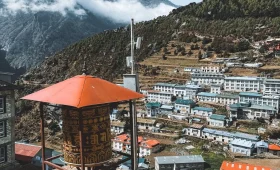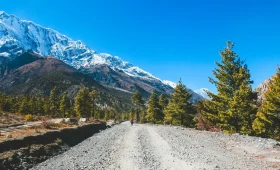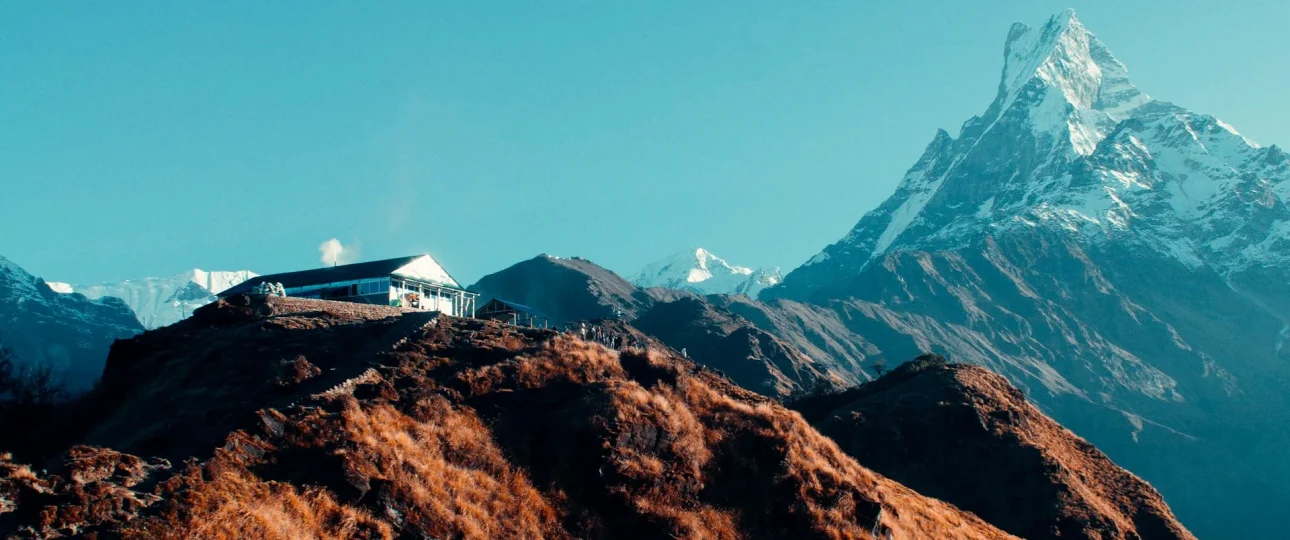
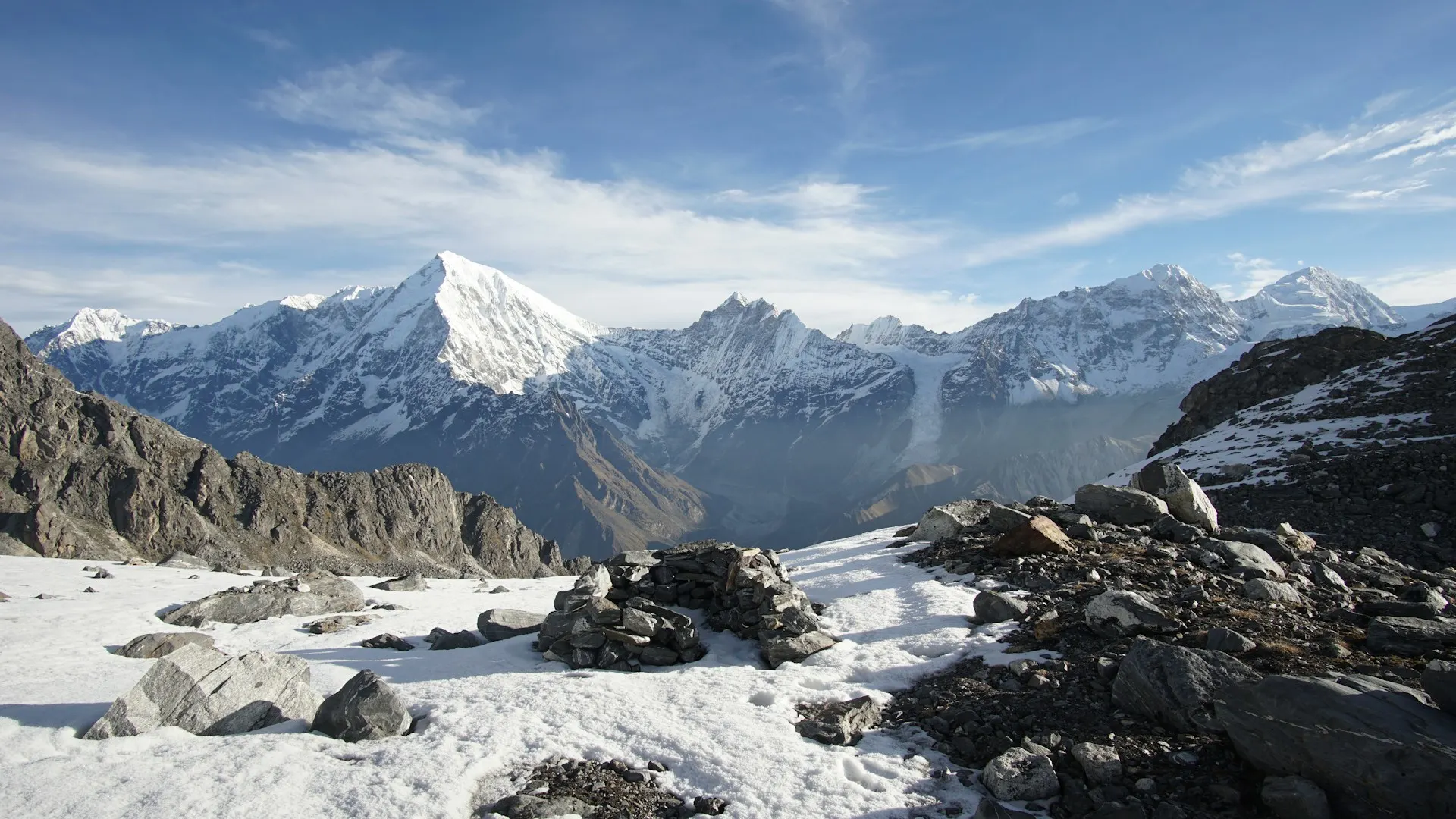
The Mardi Himal view delivers one of Nepal’s most accessible and intimate Himalayan panoramas, dominated by the dramatic twin-peaked profile of Machhapuchhre (Fishtail) at 6,993 meters, with Annapurna South, Hiunchuli, and multiple other Annapurna massif peaks visible on clear mornings from the upper viewpoints. Unlike longer treks to Annapurna Base Camp or Everest, Mardi Himal offers trekkers close-up mountain views within a relatively short 4-5 day itinerary, making it increasingly popular for those seeking maximum visual reward with moderate physical investment.
Merriment Treks has guided hundreds of trekkers along this route, and the consistent feedback remains: the Mardi Himal view exceeds expectations—but only when trekkers understand what they’re seeing, when to look, and how to position themselves for optimal visibility. This guide provides the complete, honest assessment of what you’ll actually see, rather than what marketing brochures promise.
What Makes the Mardi Himal View Different from Other Annapurna Treks
The Mardi Himal view occupies a unique position in the Annapurna region’s visual hierarchy. While Poon Hill offers a broader panorama that includes Dhaulagiri in the far west, and Annapurna Base Camp provides a dramatic 360-degree amphitheater experience, Mardi Himal creates something different entirely: proximity without enclosure.
The Mardi Himal view puts you closer to Machhapuchhre than almost any other teahouse trek in the region. From Upper Viewpoint, the Fishtail’s distinctive double summit appears startlingly close—you can observe individual ice formations, rock bands, and the mountain’s legendary unclimbed ridgelines in remarkable detail. This intimate perspective creates a different emotional experience than the more distant vistas from Poon Hill or the overwhelming enclosure of ABC.
Additionally, the Mardi Himal view includes an unusual perspective angle. Rather than viewing Machhapuchhre from directly south (as you do from Pokhara or the Annapurna Sanctuary approach), Mardi positions you to the southwest, revealing the mountain’s western flank alongside the Annapurna South-Hiunchuli massif. This angular perspective creates layered compositions that photographers particularly appreciate.
For trekkers deciding between options, understand this: Poon Hill provides more mountains but less intimacy. Annapurna Base Camp provides more drama but requires more effort. Mardi Himal provides the closest Machhapuchhre views with the most moderate time and fitness investment.
Complete Mountain Identification Guide from Mardi Himal Viewpoints
Machhapuchhre (Fishtail) – The Dominant Peak
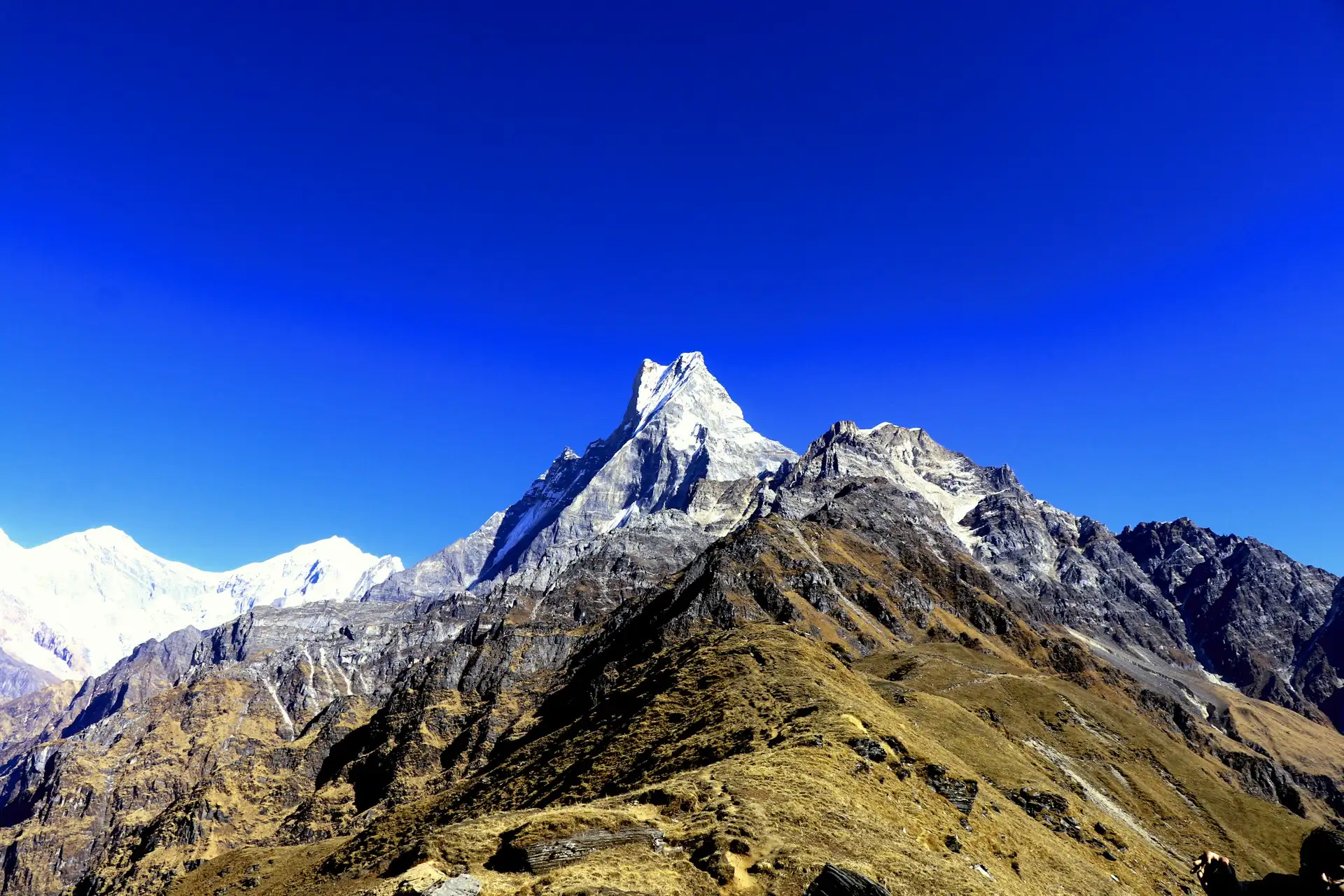
Machhapuchhre dominates every Mardi Himal viewpoint, particularly from High Camp onward. At 6,993 meters (22,943 feet), this sacred unclimbed peak appears as a nearly perfect double summit rising dramatically above the Modi Khola valley. The name “Machhapuchhre” translates to “Fish Tail” in Nepali, accurately describing the mountain’s distinctive twin peaks.
From the Mardi Himal trail, you’ll first spot Machhapuchhre from Australian Camp on Day 1, but the mountain truly reveals itself from Badal Danda (3,300m) onward. By the time you reach High Camp, the mountain fills a substantial portion of your northern horizon. From Upper Viewpoint, you’re positioned almost directly west of the summit, creating a profile view that emphasizes the mountain’s elegant ridgelines.
What makes this view exceptional is the mountain’s isolation. Unlike peaks clustered in massifs, Machhapuchhre stands somewhat independently, making it visually dominant and photographically compelling. The mountain also changes appearance dramatically throughout the day—pre-dawn reveals its silhouette, sunrise paints it golden, and midday light reveals its glacial details.
Annapurna South and Hiunchuli
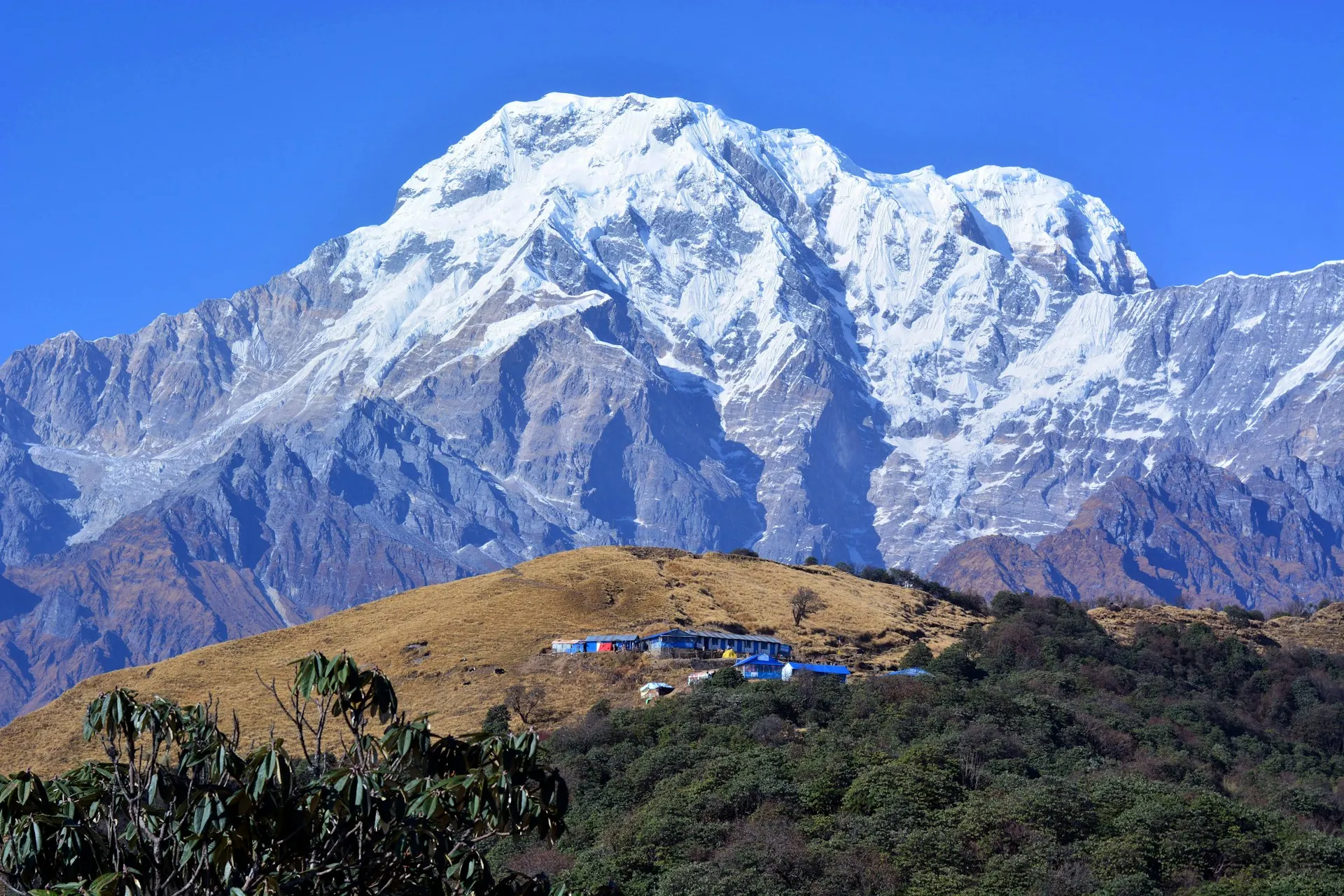
To the west of Machhapuchhre, Annapurna South (7,219m) and Hiunchuli (6,441m) form a massive wall that anchors the Mardi Himal panorama. Annapurna South, despite its name suggesting southern positioning, actually sits northwest of the Mardi Himal viewpoint area. From Upper Viewpoint, this massive peak appears as a broad, snow-covered giant with an extensive glacier system.
Hiunchuli, positioned slightly further west, creates a dramatic rocky pyramid that catches morning light beautifully. Together, these two peaks plus Machhapuchhre create the classic three-mountain composition that defines Mardi Himal photography.
What trekkers often don’t realize is that Annapurna South actually rises higher than Machhapuchhre, though its greater distance makes it appear slightly smaller. At 7,219 meters, it’s among the world’s highest peaks, and its massive south face presents one of the most impressive mountain walls visible from any moderate-altitude trek in Nepal.
Other Visible Peaks on Clear Days
On exceptionally clear mornings, the Mardi Himal view expands dramatically. Annapurna I (8,091m), the world’s 10th highest mountain, appears on the far horizon, partially obscured by Machhapuchhre but visible as a massive snow-covered giant to the northeast. Annapurna II (7,937m) and Annapurna IV (7,525m) may also be visible in optimal conditions, appearing as distant snow peaks beyond the Annapurna Sanctuary.
The Lamjung Himal (6,983m), located to the east, sometimes appears in the early morning view from Low Camp and Badal Danda, though it becomes less visible from higher viewpoints where Machhapuchhre dominates. Gangapurna (7,455m), located within the Annapurna Sanctuary, remains mostly hidden behind Annapurna South and Hiunchuli.
One important clarification: Everest is NOT visible from any Mardi Himal viewpoint. The Khumbu region lies hundreds of kilometers to the east, and even from the highest Mardi viewpoints, intervening ranges completely obscure any view toward Everest. If any trekking company or guide suggests otherwise, they are incorrect.
Mardi Himal Viewpoint Comparison: High Camp vs Upper Viewpoint vs Base Camp
The Mardi Himal view varies significantly depending on which viewpoint you reach, and understanding these differences helps you plan appropriately for your fitness level and time constraints.
High Camp Views (3,580m)
High Camp provides what many trekkers consider the best effort-to-view ratio on the entire Mardi Himal trek. From the High Camp lodges, you’re positioned at the edge of the tree line with an unobstructed northern view of Machhapuchhre and Annapurna South. The elevation is sufficient to clear all intervening ridges, creating a clean mountain panorama.
What makes High Camp particularly valuable is accessibility. Most trekkers reach High Camp by early afternoon on Day 3, giving them the entire evening and following morning for views. The sunrise from High Camp is spectacular—Machhapuchhre catches first light while you remain at comfortable elevation with easy access to warm tea.
The limitation of High Camp is elevation. Because you’re lower than Upper Viewpoint, the perspective is slightly less expansive, and some western peaks remain partially hidden. Additionally, High Camp’s position means you’re looking slightly upward at Machhapuchhre rather than across at it, which creates less dramatic photographic compositions.
Upper Viewpoint (4,200m)
Upper Viewpoint represents the classic Mardi Himal view that defines the trek. Located approximately 1-1.5 hours above High Camp, this ridge-top position at roughly 4,200 meters provides the broadest panorama on the trek. From here, you’re positioned higher than intervening ridges, creating an unobstructed 180+ degree view that includes Machhapuchhre, Annapurna South, Hiunchuli, and on clear days, distant Annapurna massif peaks.
The sunrise from Upper Viewpoint is genuinely transformative. As first light hits Machhapuchhre’s east face, the mountain transitions from dark silhouette to golden pyramid within minutes. Annapurna South follows moments later, and for perhaps 15-20 minutes, the entire panorama glows with alpine light that photographers describe as “impossible to capture adequately.”
The trade-off is effort. Reaching Upper Viewpoint for sunrise means departing High Camp around 4:00-4:30 AM, walking uphill in darkness and cold for 60-90 minutes. The trail is straightforward but steep, and at 4,200 meters, you’ll feel the altitude. For most trekkers, this effort is absolutely worth it, but it’s essential to understand the commitment.
Mardi Himal Base Camp (4,500m)
Mardi Himal Base Camp offers a subtle but meaningful improvement in proximity to the peaks, though the view quality improvement over Upper Viewpoint is marginal for most trekkers. Base Camp sits at approximately 4,500 meters, roughly 45-60 minutes beyond Upper Viewpoint, on a high alpine plateau.
From Base Camp, you’re positioned more directly beneath Machhapuchhre’s west face, creating a sense of overwhelming proximity. The mountain appears to loom overhead in a way it doesn’t from Upper Viewpoint. You also gain a slightly more northern perspective, revealing more of the Mardi Himal peak itself (5,587m) and the Mardi Himal ridge system.
However, the Base Camp view is not dramatically different from Upper Viewpoint for most trekkers. The additional 300 meters of elevation and 45-60 minutes of walking produce perhaps a 10-15% improvement in view quality. If you’re physically comfortable and have time, Base Camp provides a satisfying completion point. If you’re struggling with altitude or schedule, Upper Viewpoint provides essentially the same panorama.
Merriment Treks recommends making this decision based on how you feel at Upper Viewpoint. If you’re energized and the weather is clear, continue to Base Camp. If you’re exhausted or clouds are building, Upper Viewpoint provides excellent views without additional effort.
Best Time for Mardi Himal Views: Seasonal Visibility Guide
The Mardi Himal view varies dramatically by season, and choosing the right month significantly impacts your probability of clear mountain visibility.
October-November: Peak Visibility Season
October and November represent the optimal months for Mardi Himal views, with post-monsoon clarity creating the highest visibility probability of the year. Following the summer monsoon’s end, the atmosphere clears of moisture and dust, producing the famous “crystal blue” autumn skies that Nepal is known for.
During these months, visibility probability for clear morning views from Upper Viewpoint exceeds 80%, with many consecutive days of perfect conditions. The air is cold and dry, minimizing haze, and the mountains appear sharp against deep blue skies. Temperatures at Upper Viewpoint during sunrise typically range from -5°C to 5°C, requiring warm layers but not extreme winter gear.
The trade-off is crowds. October-November is peak trekking season throughout Nepal, and Mardi Himal has grown increasingly popular. Expect company at Upper Viewpoint during sunrise, particularly on the main trail. Merriment Treks recommends considering early November for a balance of excellent weather with slightly reduced crowds.
December-February: Crisp Clarity with Cold
Winter offers the clearest atmospheric conditions of any season, but cold temperatures and potential snow create additional challenges. December through February features extremely dry air that virtually eliminates haze, creating views so sharp that distant peaks appear closer than they actually are.
The visibility probability during winter exceeds 85% for clear mornings, the highest of any season. However, temperatures at Upper Viewpoint can drop to -10°C or lower during sunrise, and snow accumulation above 3,000 meters sometimes makes the trail challenging. The trail from High Camp to Upper Viewpoint may require microspikes in January and February.
For trekkers comfortable with cold weather, winter offers perhaps the most rewarding Mardi Himal views—crystal-clear panoramas with few other trekkers present. The solitude combined with exceptional visibility creates a genuinely special experience.
March-April: Spring Views with Rhododendrons
Spring delivers good morning visibility with the added bonus of blooming rhododendron forests during the approach. March and April mornings typically provide 60-70% visibility probability, though afternoon clouds become increasingly common as the season progresses toward monsoon.
The rhododendron bloom transforms the lower trail sections into a colorful wonderland, with red, pink, and white flowers lining the path from Forest Camp through Low Camp. These flowers create beautiful foreground elements for mountain photography that aren’t available in other seasons.
The challenge of spring is afternoon cloud development. Thermal activity causes clouds to build from late morning onward, sometimes obscuring mountains by noon. This means sunrise viewing becomes even more critical—if you miss the morning window, you may not get another chance that day.
May: Increasing Haze
May marks the transition toward monsoon, with pre-monsoon haze gradually reducing long-distance visibility. While mornings still offer reasonable clarity, particularly early in the month, haze accumulation creates a milky quality to distant views that reduces the drama of the panorama.
Visibility probability drops to 40-50% by late May, and afternoon clouds become almost certain. The mountains remain beautiful, but the crisp clarity of autumn and winter gives way to softer, hazier conditions. For trekkers with flexible schedules, October, November, or March provide substantially better view quality.
June-September: Monsoon Challenge
Monsoon season presents the lowest visibility probability for Mardi Himal views, though occasional dramatic clearings create uniquely atmospheric conditions. Between June and September, monsoon moisture creates persistent cloud cover that obscures mountains for days at a time.
Visibility probability during monsoon drops below 20%, with some weeks featuring no clear mornings at all. The trail becomes muddy, leeches appear in lower sections, and the atmosphere feels perpetually damp. Most trekking companies, including Merriment Treks, recommend against Mardi Himal treks during this period.
However, if you do trek during monsoon, occasional clearings after heavy rain can produce spectacularly clear views—the rain literally washes the atmosphere clean. These windows are unpredictable and brief, but when they occur, the combination of dramatic clouds and clear peaks creates unique photographic opportunities.
Time of Day Strategy: Maximizing Your Mardi Himal View Opportunities
Understanding daily weather patterns is as important as choosing the right season. The Mardi Himal view follows predictable daily cycles that savvy trekkers can leverage.
Sunrise at Mardi Himal Viewpoints
Sunrise provides the highest probability of clear views on any given day, making it the single most important viewing opportunity on the trek. Multiple factors align to make sunrise optimal: overnight cooling stabilizes the atmosphere, preventing cloud formation; morning air contains minimal thermal haze; and the low sun angle creates dramatic lighting on mountain faces.
From Upper Viewpoint during clear conditions, the sunrise sequence unfolds as follows: approximately 30 minutes before sunrise, the sky behind Machhapuchhre begins lightening, revealing the mountain’s silhouette against the pre-dawn glow. As sunrise approaches, the highest peaks catch first light—Annapurna South often glows first, followed by Machhapuchhre’s east face. For 15-20 minutes, the entire panorama transitions through shades of orange, gold, and finally bright white as the sun fully rises.
This experience requires preparation. From High Camp, plan to depart no later than 4:30 AM to reach Upper Viewpoint before sunrise. Bring headlamps, warm layers, and patience—the cold at 4,200 meters before dawn is genuinely challenging, but the visual reward justifies it.
Mid-Morning to Afternoon Visibility Patterns
After approximately 9:00-10:00 AM, cloud development becomes increasingly common, particularly during spring months. Thermal activity caused by solar heating creates convection that draws moisture up from lower valleys, forming clouds that accumulate around mountain slopes.
This pattern explains why experienced trekkers prioritize morning viewing: the window for clear views typically extends from sunrise until late morning, after which clouds may progressively obscure peaks. During autumn and winter, this pattern is less pronounced, and clear conditions often persist all day. During spring, afternoon clouds become nearly certain.
If you miss the morning window, don’t despair entirely. Late afternoon sometimes brings a second clearing as thermal activity decreases, though this is less reliable than morning conditions. Evening golden hour, when it coincides with clear skies, creates beautiful warm light on Machhapuchhre’s west face.
What Happens When the Mardi Himal View Is Cloudy
Every trekker worries about cloudy conditions obscuring the Mardi Himal view, and this concern is legitimate—no amount of planning guarantees clear weather. Understanding what happens on cloudy days helps manage expectations and identify alternative experiences.
Cloudy conditions at Mardi Himal viewpoints typically mean the mountains are partially or completely obscured, with visibility ranging from hazy outlines to complete white-out. The emotional impact of reaching Upper Viewpoint only to see clouds cannot be minimized—it’s genuinely disappointing, especially after the effort required to get there.
However, cloudy conditions rarely persist for an entire trek. Weather systems in the Annapurna region tend to cycle, with cloudy periods lasting 1-2 days before clearing. If you encounter clouds at Upper Viewpoint, options include:
-
Waiting: Conditions can change rapidly at altitude. A cloudy morning sometimes clears by mid-morning, particularly during autumn.
-
Returning to High Camp and trying again tomorrow: If your itinerary allows, an extra night at High Camp provides another sunrise opportunity.
-
Adjusting expectations: Even in clouds, the experience of being at 4,200 meters in the Himalaya has value beyond mountain views.
Merriment Treks recommends building flexibility into your itinerary where possible, allowing an extra day at High Camp if initial conditions disappoint.
Cloud Inversion at Mardi Himal
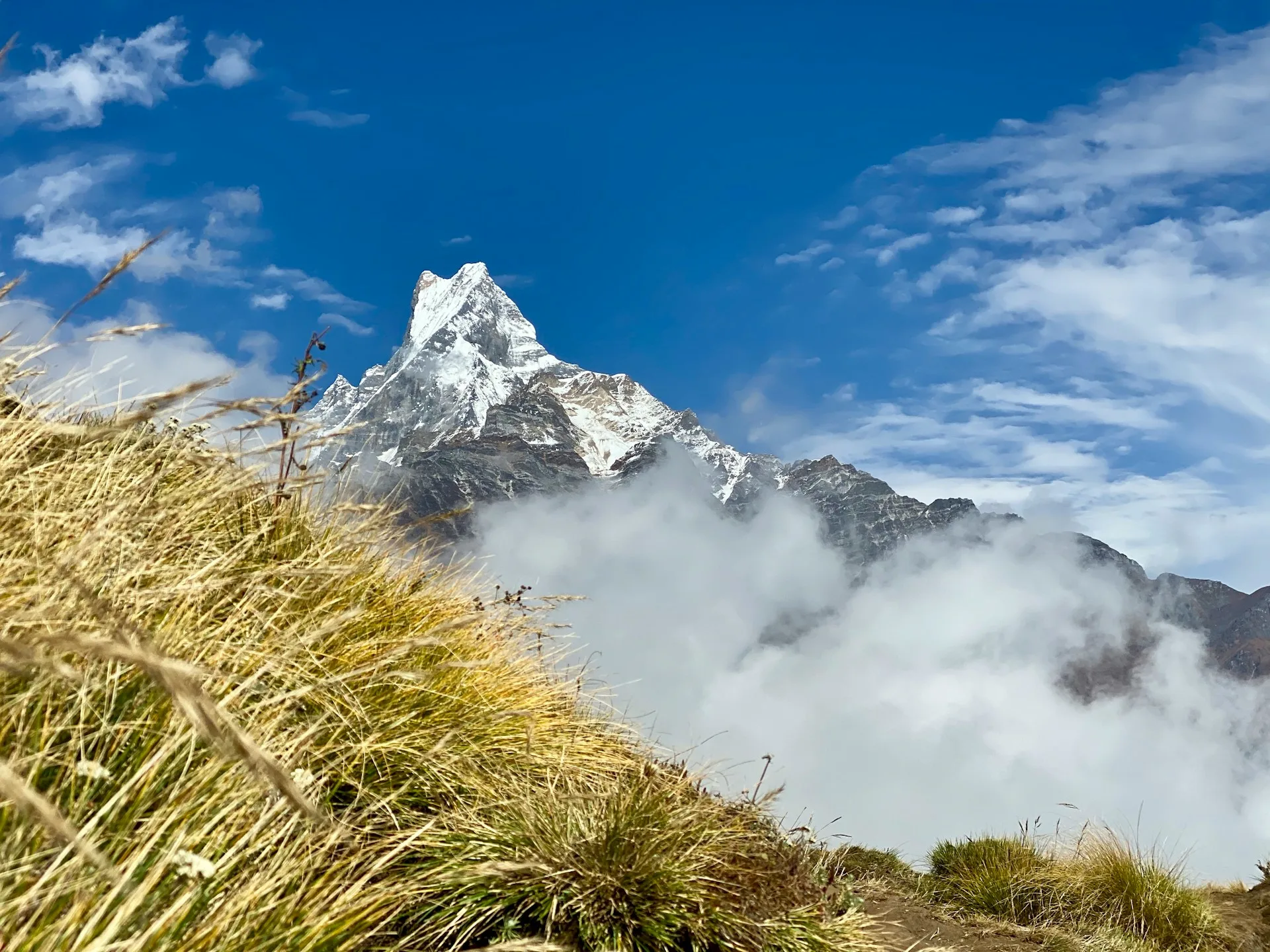
Cloud inversion—where clouds fill lower valleys while mountain peaks remain visible above—creates one of the most spectacular Mardi Himal view experiences possible. This phenomenon occurs when temperature inversions trap moisture in valleys while higher elevations remain clear.
From Upper Viewpoint during cloud inversion, you stand above a literal sea of clouds, with Machhapuchhre and Annapurna South rising dramatically from the white expanse below. The effect is surreal—it feels like standing on an island in an ocean of cloud, surrounded by Himalayan giants.
Cloud inversion occurs most commonly during autumn and winter, particularly after evening rainfall followed by clear nights. While impossible to predict reliably, understanding that this phenomenon exists helps trekkers recognize and appreciate it when it occurs.
Photography Guide: Capturing the Mardi Himal View
The Mardi Himal view presents specific photographic challenges and opportunities that benefit from preparation.
Best Spots for Mardi Himal Photography
Each viewpoint offers distinct photographic compositions that suit different types of images.
From High Camp, the primary composition opportunity is Machhapuchhre rising above the tree line, often with prayer flags or teahouses providing foreground interest. The elevation is sufficient for clean mountain views while allowing inclusion of human elements that convey scale.
From Upper Viewpoint, the broader panorama allows multi-peak compositions including Machhapuchhre, Annapurna South, and Hiunchuli in a single frame. The ridge-top position also enables interesting foreground rock formations that add depth. For sunrise photography, Upper Viewpoint provides the best angle on Machhapuchhre’s east face catching first light.
From Base Camp, the closer proximity to Machhapuchhre creates opportunities for more detailed mountain photography, including individual glacial features and rock formations on the mountain’s west face.
Key Photography Tips for Mardi Himal:
-
Bring spare batteries: Cold temperatures at altitude drain batteries rapidly. Keep spares in an inner pocket close to body heat.
-
Use a tripod: Sunrise photography requires slow shutter speeds in low light. Even a lightweight travel tripod dramatically improves sharpness.
-
Shoot in RAW: The extreme dynamic range between mountain highlights and shadow valleys requires RAW format for optimal results.
-
Protect your camera: Cold condensation occurs when moving from cold outdoors into warm teahouses. Allow your camera to adjust gradually in a sealed bag.
-
Frame with foreground: Include prayer flags, rocks, or trekking companions in compositions to convey the scale of these massive mountains.
Mardi Himal View vs Other Nepal Treks: Honest Comparison
For trekkers evaluating options, understanding how the Mardi Himal view compares to alternatives helps with decision-making.
| Trek | Primary Mountain Views | Proximity to Peaks | Crowd Level | Accessibility | Time Required |
|---|---|---|---|---|---|
| Mardi Himal | Machhapuchhre, Annapurna South, Hiunchuli | Very close to Machhapuchhre | Moderate | High (near Pokhara) | 4-5 days |
| Poon Hill | Broad Annapurna panorama, Dhaulagiri | Distant but expansive | High | High (near Pokhara) | 3-4 days |
| Annapurna Base Camp | 360-degree amphitheater | Surrounding peaks | Moderate-High | Moderate | 7-10 days |
| Everest Base Camp | Everest, Lhotse, Nuptse, Ama Dablam | Distant views | High | Low (requires flight) | 12-14 days |
Mardi Himal’s unique advantage is Machhapuchhre proximity with minimal time investment. No other short trek in Nepal brings you as close to a major Himalayan peak as Mardi Himal does. The trade-off is fewer total mountains visible compared to Poon Hill or ABC.
For trekkers prioritizing intimate mountain views with limited time, Mardi Himal represents the best available option. For those seeking maximum mountain count regardless of proximity, Poon Hill may better suit. For those with time and fitness for the full sanctuary experience, ABC remains unmatched for overall drama.
Practical Tips for the Best Mardi Himal View Experience
Based on extensive experience guiding trekkers, Merriment Treks recommends these specific strategies:
1. Plan for sunrise at Upper Viewpoint at least once. This requires overnight at High Camp and an early start, but provides the best probability of clear views plus the most dramatic lighting.
2. Build flexibility into your itinerary. Weather doesn’t follow schedules. Having an extra day available allows waiting out cloudy conditions.
3. Check mountain weather forecasts. Before your trek, understand the broader weather pattern. Approaching systems may suggest delaying or extending your trek.
4. Prepare for cold at viewpoints. The combination of altitude, wind, and pre-dawn temperatures creates genuine cold. Warm layers make the difference between enjoying the view and enduring it.
5. Bring binoculars if you have them. While not essential, binoculars reveal mountain details—glaciers, rock formations, and climbing routes—that naked-eye viewing misses.
6. Manage expectations honestly. Even in optimal conditions, atmospheric conditions vary. Some days produce spectacular clarity; others produce hazy views. This variability is part of the Himalayan experience.
7. Consider your guide’s knowledge. A guide who knows exactly where to stand at Upper Viewpoint for different compositions, and who can identify every visible peak, enhances the experience substantially.
8. Stay hydrated and manage altitude. Proper hydration improves overall comfort and reduces altitude symptoms, making the early morning walk to Upper Viewpoint more pleasant.
9. Don’t rush the experience. Many trekkers rush to capture photos and miss actually experiencing the view. Spend time simply looking, observing how light changes the mountains, and absorbing the landscape.
10. Be patient with weather. Conditions can change rapidly. A cloudy morning sometimes clears within an hour. Before giving up, wait and watch.
Frequently Asked Questions About Mardi Himal Views
1. What mountains can you see from Mardi Himal viewpoint?
From Upper Viewpoint, you can see Machhapuchhre (6,993m) prominently, along with Annapurna South (7,219m) and Hiunchuli (6,441m). On exceptionally clear days, Annapurna I (8,091m) and other Annapurna massif peaks may also be visible. The Mardi Himal peak itself (5,587m) appears to the northeast.
2. Can you see Mount Everest from Mardi Himal?
No, Mount Everest is not visible from any Mardi Himal viewpoint. The mountain lies approximately 200 kilometers to the east, and intervening Himalayan ranges completely block any view toward Everest.
3. Is Mardi Himal Base Camp worth the extra effort for views?
For most trekkers, Base Camp provides only marginal improvement over Upper Viewpoint views. The additional 45-60 minutes of walking and 300 meters of elevation gain produce perhaps 10-15% better proximity to peaks. If you’re comfortable with altitude and have time, it’s worth doing. If not, Upper Viewpoint provides essentially equivalent views.
4. What is the best month for Mardi Himal views?
October and November offer the highest probability of clear views, with post-monsoon clarity producing sharp mountain visibility on most days. December-February offers even clearer atmospheric conditions but with colder temperatures. March-April provides good morning visibility with the bonus of rhododendron blooms.
5. Can you see mountains during monsoon season?
Visibility during monsoon (June-September) is poor, with probability below 20% for clear morning views. However, brief clearings after heavy rain sometimes create spectacularly clear conditions. Overall, monsoon is not recommended for Mardi Himal trekking.
6. What happens if the viewpoint is cloudy?
Cloudy conditions are genuinely disappointing but rarely persist for entire treks. Weather systems typically cycle over 1-2 days. Options include waiting for potential clearing, staying an extra night at High Camp, or adjusting expectations and appreciating the atmospheric experience of being at altitude.
7. Is sunrise really worth waking up early for?
Yes, absolutely. Sunrise provides the highest probability of clear views (due to overnight atmospheric stabilization) plus the most dramatic lighting. The experience of watching Machhapuchhre catch first light from Upper Viewpoint is consistently described by trekkers as a highlight of the entire experience.
8. How close do you actually get to Machhapuchhre?
From Upper Viewpoint, you’re approximately 15-20 kilometers from Machhapuchhre’s summit. This proximity is closer than from Poon Hill (approximately 25-30 kilometers) or Pokhara (approximately 40+ kilometers), making Mardi Himal the closest easily accessible viewpoint for this mountain.
9. Is Mardi Himal good for photography?
Yes, exceptionally so. The intimate Machhapuchhre perspective, dramatic sunrise lighting, and relatively uncrowded viewpoints (compared to Poon Hill) make Mardi Himal excellent for photography. The main challenges are cold temperatures affecting batteries and extreme dynamic range during sunrise.
10. Can you see the Mardi Himal peak itself from the viewpoints?
Yes, Mardi Himal peak (5,587m) is visible from upper viewpoints, appearing to the northeast of Machhapuchhre. However, it’s less visually dramatic than its more prominent neighbors, appearing as a lower ridge rather than a distinctive peak.
11. What is cloud inversion and when does it happen?
Cloud inversion occurs when clouds fill lower valleys while higher elevations remain clear, creating the appearance of a sea of clouds below you. It’s most common during autumn and winter, particularly after evening rain followed by clear nights. While unpredictable, it creates one of the most spectacular experiences possible at Mardi Himal.
12. How long should I spend at Upper Viewpoint?
For sunrise viewing, plan to spend at least 45-60 minutes at Upper Viewpoint to experience the full sequence of pre-dawn glow through full sunrise. If conditions are clear, many trekkers stay longer simply enjoying the panorama. For photography, allow additional time as lighting changes.
13. Do I need a guide to find the viewpoints?
While the trail to Upper Viewpoint is reasonably well-defined, a guide provides substantial value including mountain identification, optimal timing, safety management, and local knowledge. Merriment Treks guides know exactly where to position trekkers for optimal views and can identify every visible peak.
14. What if I can’t reach Upper Viewpoint due to altitude?
High Camp (3,580m) itself provides excellent views of Machhapuchhre and Annapurna South. If you’re struggling with altitude, High Camp sunrise viewing offers a very good alternative with substantially less effort. Some trekkers choose to stay at High Camp while others continue to Upper Viewpoint.
15. Are the Mardi Himal views better than Poon Hill?
This depends on preference. Poon Hill offers a broader panorama with more mountains visible, including Dhaulagiri in the far west. Mardi Himal offers closer, more intimate views of fewer mountains, particularly Machhapuchhre. For intimate proximity to a single iconic peak, Mardi Himal wins. For maximum mountain count, Poon Hill may better suit your preferences.