-
6,812m (Ama Dablam)
-
B in Kathmandu; all meals on trek and expedition
-
Flight (Lukla) / Private vehicle
-
Autumn (Oct–Nov) & Spring
-
Hotel, Teahouse, Expedition camps
-
Expedition leader + 1:1 climbing Sherpa
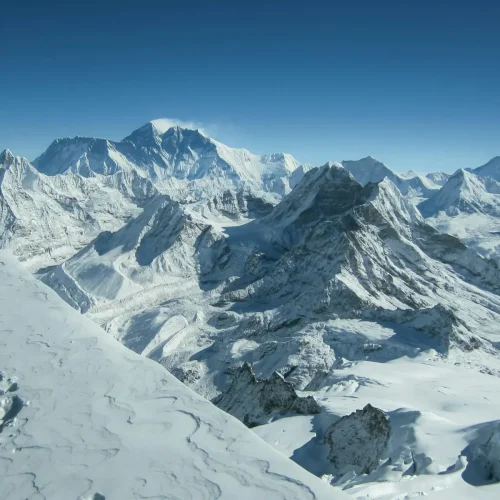
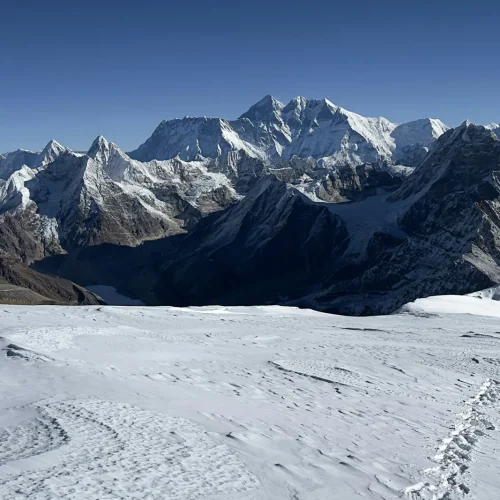
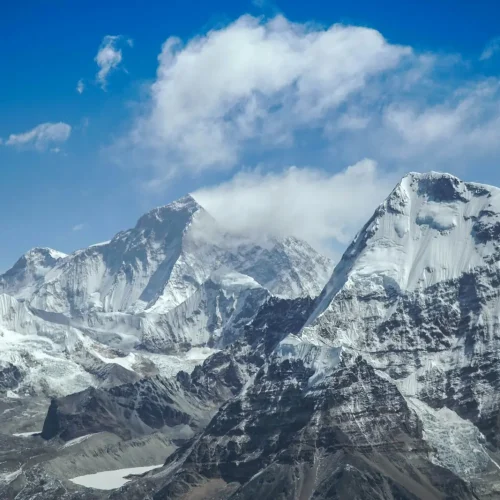
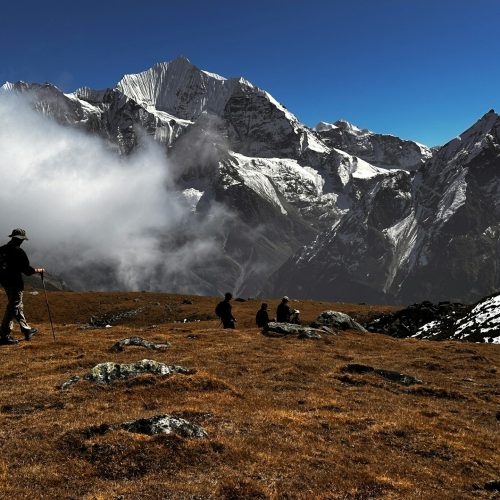
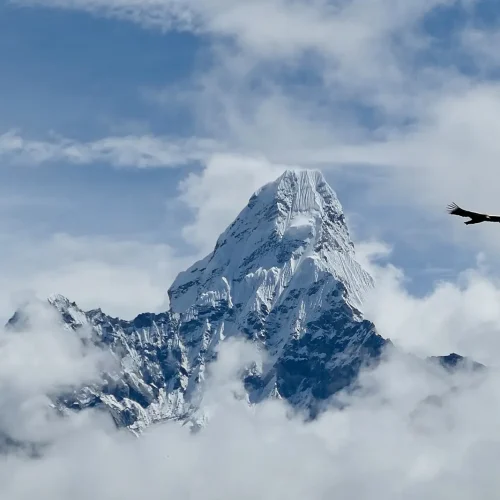
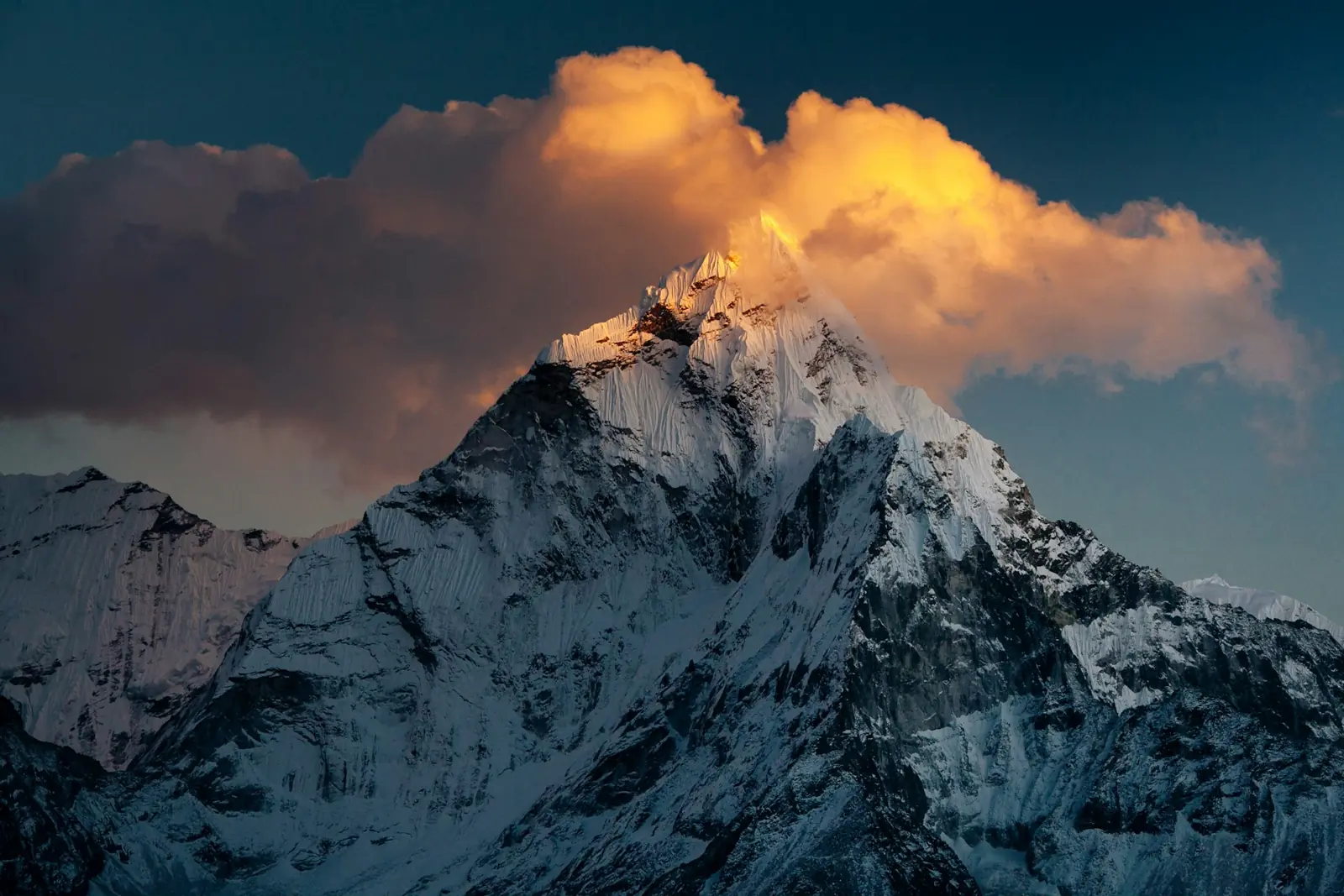
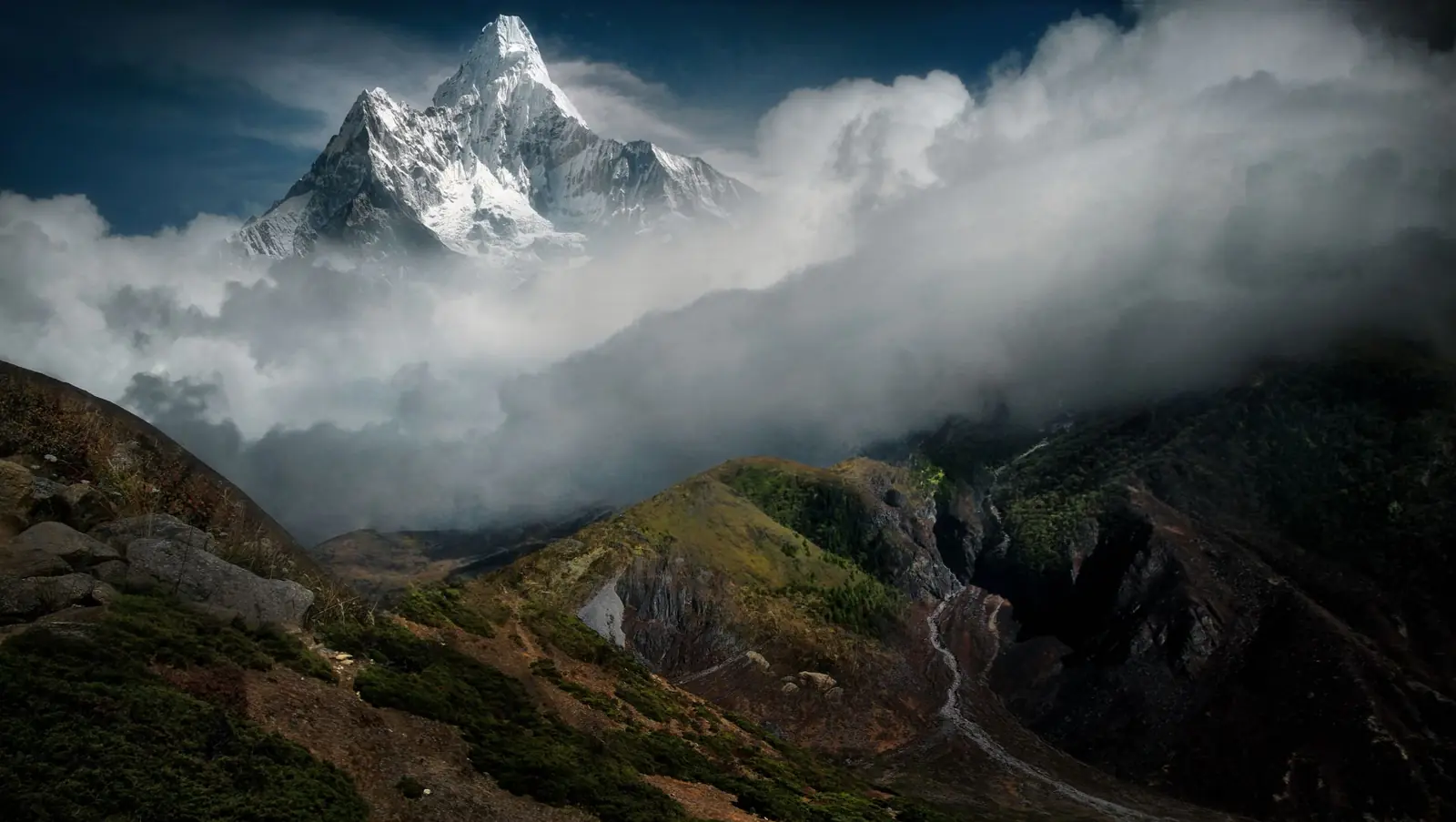
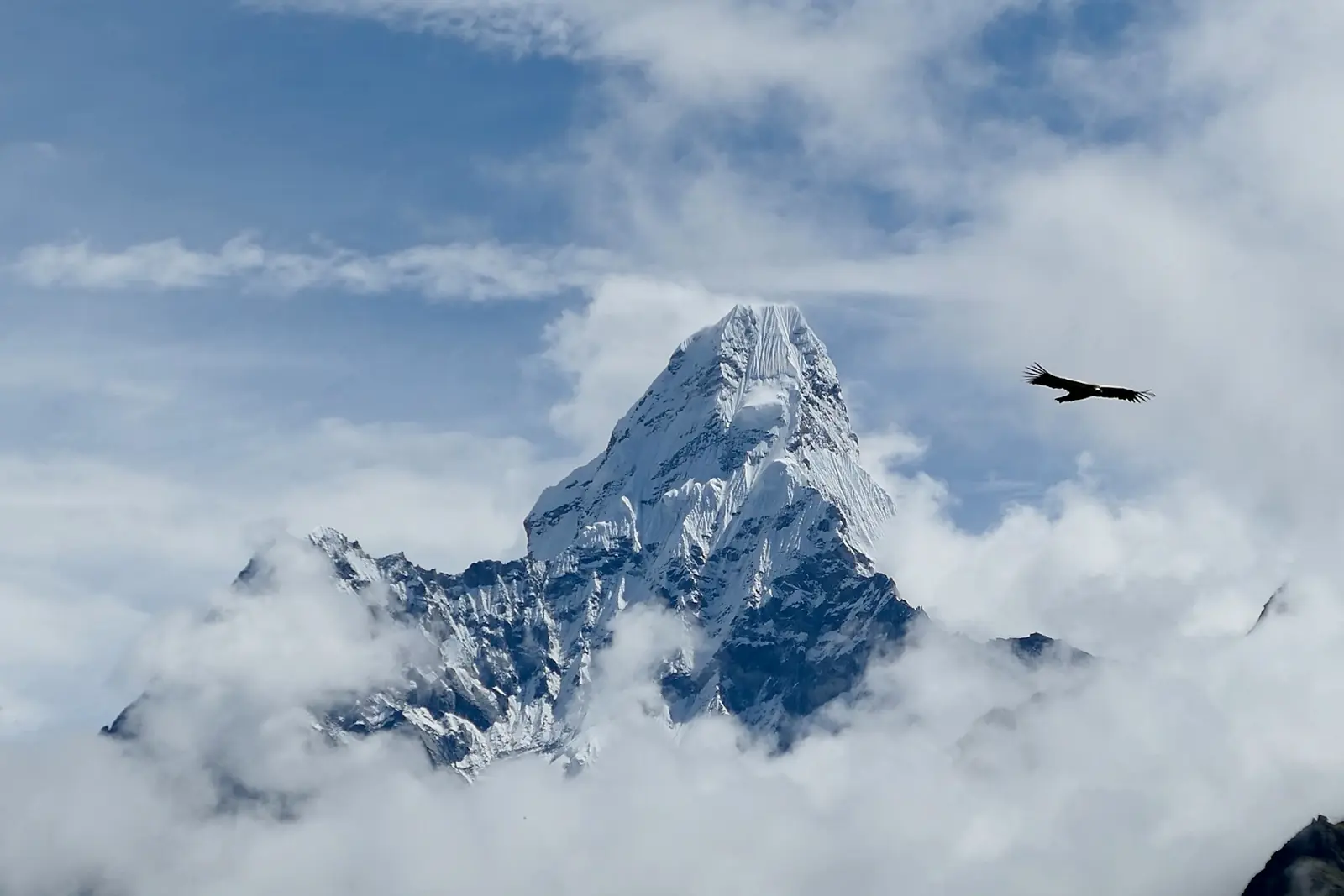
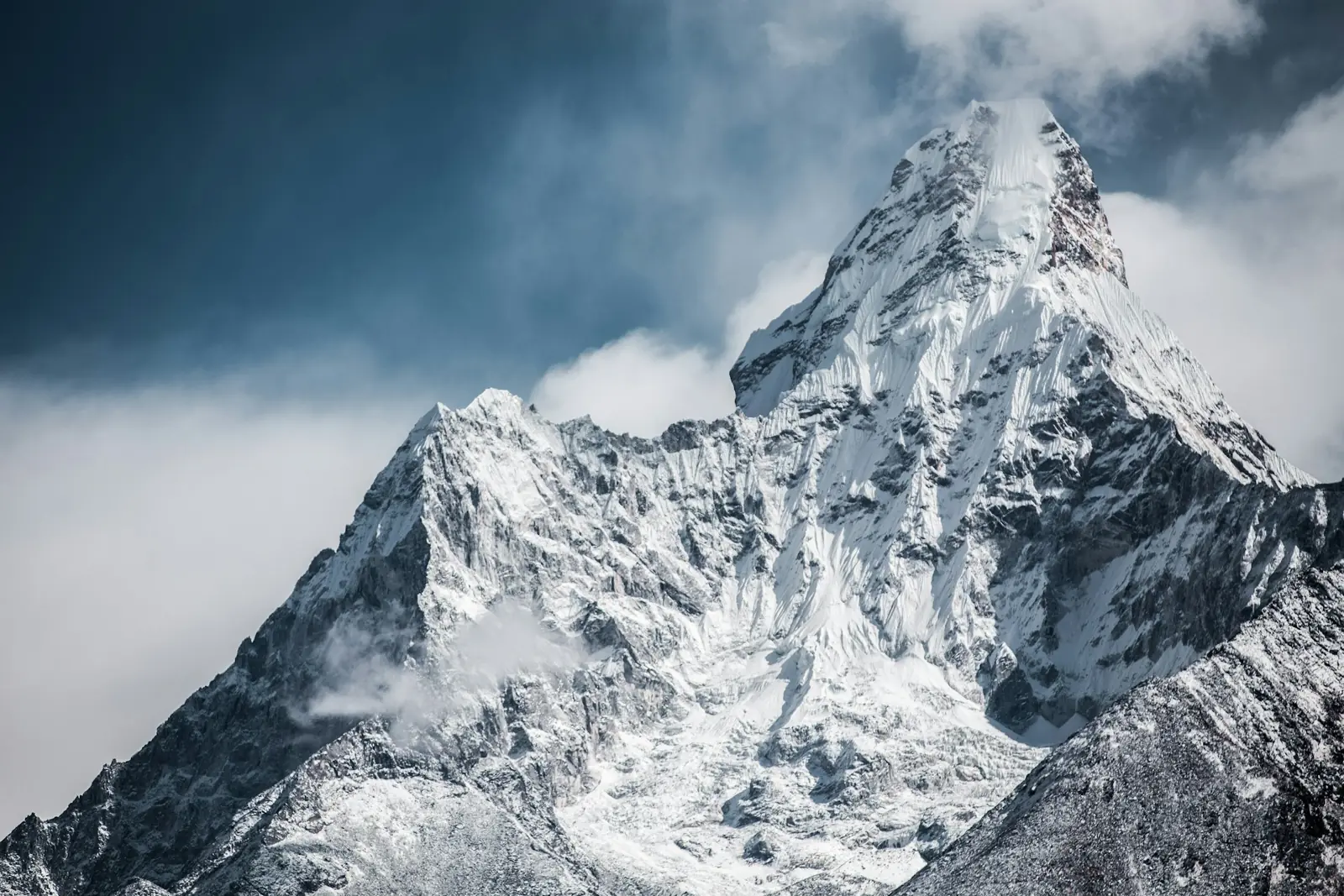
The Ama Dablam Expedition takes you up one of the most famous mountains on Earth: the 6,812m fang of rock and ice that towers over the Everest trail between Tengboche and Dingboche. Its name means “mother’s necklace”. The hanging glacier below the summit, known as the Dablam, looks like the charm box (dablam) traditionally worn by Sherpa women. Thousands of trekkers photograph it every season. Far fewer stand on top.
This is a genuine technical expedition, not a trekking peak. The normal Southwest Ridge involves sustained climbing on rock, snow and ice, almost entirely on fixed ropes, with exposed camps perched on ridge-top platforms. It’s often recommended as the ideal step between 6,000m trekking peaks and 8,000m expeditions, because it tests everything an 8,000m climb will ask of you, at a lower altitude.
This 28-day package follows the classic Lukla–Namche–Pangboche approach, then allows a full 16-day climbing period at Base Camp for acclimatisation rotations, training and a summit window. Below we cover exactly what experience you need, the route camp by camp, the real risks, 2026 permit fees from the Department of Tourism, a transparent cost breakdown and the questions climbers ask before committing.
Ama Dablam at a Glance
| Detail | Information |
|---|---|
| Summit altitude | 6,812m / 22,349ft |
| Region | Khumbu (Everest region), Sagarmatha National Park |
| Route | Southwest Ridge (first climbed 1961) |
| Duration | 28 days Kathmandu to Kathmandu (16-day climbing period) |
| Grade | Alpine AD to AD+; rock to about 5.7–5.8 (UIAA V−) at the Yellow Tower; snow and ice to 60° |
| Camps | Base Camp about 4,600m; Camp 1 about 5,700–5,800m; Camp 2 about 5,900–6,000m; Camp 3 about 6,200–6,300m (used depending on conditions) |
| Fixed rope | Most of the route above Camp 1 |
| Experience required | Previous 6,000m+ summit with fixed ropes; rock climbing in boots; confident jumaring and abseiling |
| Best seasons | October–November (main season); April–May |
| Group size | 2–8 climbers, 1 climbing Sherpa per climber on the summit push |
| Permits | Department of Tourism Ama Dablam royalty, Sagarmatha National Park, Khumbu Pasang Lhamu Rural Municipality |
| Price | From USD 6,950 per person |
Expedition Highlights
- Summit one of the world’s most recognisable mountains, often called the most beautiful peak in the Himalaya
- Climb the Yellow Tower, the Grey Tower and the knife-edge Mushroom Ridge on the classic Southwest Ridge
- Summit views of Everest, Lhotse, Makalu, Cho Oyu and the whole Khumbu
- A full expedition Base Camp below the ridge, with dining tent, kitchen crew and puja ceremony
- A 1:1 climbing Sherpa ratio on the summit push
- Built-in acclimatisation rotations and weather days within a 16-day climbing window
- Perfect preparation for 8,000m peaks such as Cho Oyu, Manaslu or Everest
Who This Expedition Is For
Ama Dablam is for climbers who have already done some mountaineering. Be honest with yourself about these requirements; our team will also ask about your experience before confirming a place.
You should have:
- At least one 6,000m+ summit that used crampons and fixed ropes, such as Island Peak, Lobuche East or Mera Peak, or equivalent alpine experience.
- Rock climbing ability to about 5.7 (UIAA IV+/V−) while wearing mountaineering boots and a pack. The Yellow Tower is short but near-vertical.
- Fixed-rope skills: efficient jumaring on steep and vertical rope, abseiling with a figure-8 or ATC, and safe changeovers at anchors, on your own, quickly, in gloves.
- Multi-day endurance at altitude: several back-to-back 8–12 hour climbing days above 5,500m.
- Comfort with exposure: camps are tiny ledges with big drops on both sides.
It’s not for: first-time climbers, people who have never used a jumar, or anyone hoping to “learn on the mountain”. If you’re not there yet, climb Island Peak or Lobuche East first. We’d be happy to plan a progression with you.
Why Choose This Ama Dablam Expedition
- Time on the mountain: a 16-day climbing period lets you acclimatise properly with rotations to Camp 1 and Camp 2 and still keep spare days for weather.
- A 1:1 climbing Sherpa on the summit push, plus experienced climbing staff on rotations.
- Conservative camp strategy: our guides decide where (and whether) to use Camp 3 after assessing conditions below the Dablam serac, and many summit pushes now start from Camp 2.
- Full Base Camp service: cook, kitchen team, dining tent and individual sleeping tents.
- Transparent pricing: the royalty, garbage deposit, route-fixing fee, high camp tents and food are all included, and the extras are listed below.
Route Overview: Southwest Ridge, Camp by Camp
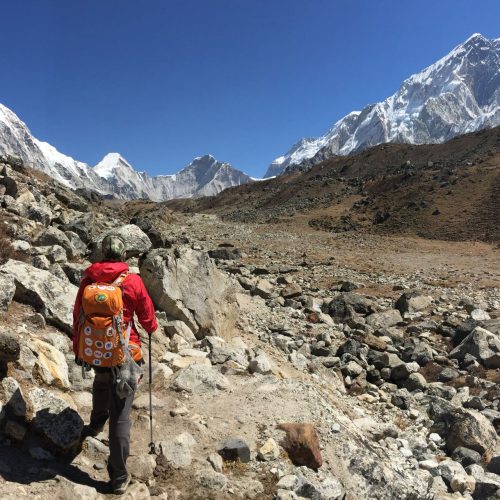
The expedition approaches along the Everest Base Camp trail from Lukla via Namche Bazaar and Tengboche to Pangboche. From Pangboche a side trail crosses the Imja Khola and climbs to Ama Dablam Base Camp, on a grassy meadow below the Southwest Ridge.
| Section | Altitude (approx.) | Terrain |
|---|---|---|
| Base Camp | 4,600m | Meadow below the ridge; full expedition camp |
| Base Camp → Camp 1 | 4,600 → 5,700–5,800m | Long moraine and boulder field, then slabs to a rocky ridge-top camp |
| Camp 1 → Camp 2 | → 5,900–6,000m | Exposed rock ridge on fixed lines, then the Yellow Tower: a short, near-vertical rock pitch (about 5.7–5.8). Camp 2 sits on tiny platforms on top |
| Camp 2 → Camp 3 | → 6,200–6,300m | The Grey Tower (mixed rock, snow and ice), then the corniced, airy Mushroom Ridge |
| Camp 3 → Summit | → 6,812m | Steep snow and ice, about 40–60°, beside and above the Dablam hanging glacier, to the summit snowfield |
Above Camp 1 nearly the whole route is protected by fixed ropes, which are installed each season by a coordinated team of Sherpa climbers. You still need to climb it: the rope is protection and an aid on the steepest steps, not an escalator.
About Camp 3 and the 2006 avalanche: on the night of 13–14 November 2006, a serac collapse from the Dablam swept away tents at the traditional Camp 3 site and killed six climbers. Camp 3 placement has been treated much more cautiously since. Our team assesses the serac and current conditions each season, and many summit pushes now go from Camp 2 directly to the summit, a longer day but less time spent in that zone.
Distance & Climbing Hours
| Stage | Time |
|---|---|
| Lukla → Phakding | 3–4 hrs |
| Phakding → Namche Bazaar | 5–6 hrs |
| Namche → Tengboche | 5–6 hrs |
| Tengboche → Pangboche | 2–3 hrs |
| Pangboche → Ama Dablam Base Camp | 3–4 hrs |
| Base Camp → Camp 1 | 5–7 hrs |
| Camp 1 → Camp 2 | 3–5 hrs |
| Camp 2 → Camp 3 | 3–6 hrs |
| Summit push (from Camp 2 or 3) and descent | 10–15 hrs |
| Base Camp → Namche | 6–7 hrs |
| Namche → Lukla | 6–7 hrs |
Altitude Table
| Day | Location | Altitude (approx.) |
|---|---|---|
| 1–2 | Kathmandu | 1,400m |
| 3 | Phakding | 2,610m |
| 4–5 | Namche Bazaar | 3,440m |
| 6 | Tengboche | 3,860m |
| 7 | Pangboche | 3,985m |
| 8–24 | Base Camp and high camps | 4,600–6,300m (summit 6,812m) |
| 25 | Namche Bazaar | 3,440m |
| 26 | Lukla | 2,860m |
| 27 | Kathmandu | 1,400m |
Map Overview
Ama Dablam stands on the east side of the Imja Khola, opposite Tengboche and Pangboche, at the heart of the Khumbu. The Southwest Ridge is the left-hand skyline seen from Pangboche and Tengboche. Base Camp lies on the mountain’s south-west side, reached from Pangboche. To the north are Lhotse and Everest, and to the south-east lies the Mingbo valley, where the 1960–61 Silver Hut expedition wintered before the first ascent.
Ama Dablam Difficulty Level
Ama Dablam is technically one of the hardest mountains commonly offered as a guided expedition in Nepal. It is graded around AD to AD+ on the alpine scale:
- Sustained technical climbing. From Camp 1 upward, almost every hour involves rock steps, ridge traverses or steep snow and ice on fixed rope.
- The Yellow Tower: a short, near-vertical rock pitch below Camp 2 (about 5.7–5.8), climbed in boots, with a pack, at about 5,900m.
- The Grey Tower and Mushroom Ridge: mixed ground and a narrow, corniced snow crest with huge exposure.
- The summit slopes: steep snow and ice of about 40–60 degrees.
- Objective hazards: rockfall (especially from climbers above), the Dablam serac, cold and wind on an exposed ridge.
- Altitude: 6,812m is lower than an 8,000m peak, but high enough that AMS, cold injury and exhaustion are serious risks.
It is harder technically than Everest’s normal route, though shorter and lower.
Fitness Requirements
You need expedition-level fitness: the strength to climb technical ground with a pack day after day, and the aerobic base to recover between rotations.
Train for at least 4–6 months:
- Aerobic base: 5–6 sessions a week, including long hill days with 1,000–1,500m of ascent and a 12–15kg pack.
- Climbing: regular rock climbing (indoor and outdoor) to at least 5.8–5.9 in shoes, plus easier routes in mountaineering boots.
- Rope systems: practise jumaring a vertical rope, abseiling and anchor changeovers until they’re automatic, ideally in gloves.
- Strength: legs, core, back and shoulders for hauling yourself up fixed lines.
- Altitude experience: a recent 6,000m peak is the best preparation of all.
Altitude & Acclimatisation Strategy
The climbing period follows a classic expedition pattern:
- Approach trek: gradual ascent from Lukla with a rest day in Namche and a short day to Pangboche.
- Base Camp: several nights at about 4,600m, with a puja ceremony, training on nearby rock and acclimatisation hikes.
- Rotation 1: climb to Camp 1, sleep there, return to Base Camp.
- Rotation 2: climb to Camp 1, then touch or sleep at Camp 2, then return to Base Camp to recover.
- Summit push: in a good weather window, climb to Camp 2 (and Camp 3 if used), summit, and descend.
- Weather and rest days: several are built into the 16-day period.
Bottled oxygen is not normally needed on Ama Dablam. One bottle and a mask for the summit day can be arranged as an optional extra, and our team carries emergency oxygen and a medical kit. Helicopter evacuation from Base Camp is possible in good weather through your insurance.
Best Time for an Ama Dablam Expedition
- Autumn (October–November): the main season, with the most stable weather after the monsoon, clear skies and well-established fixed lines. It gets colder through November.
- Spring (April–May): possible, and quieter, with warmer temperatures but more afternoon cloud and snowfall. Some climbers use it as acclimatisation before an Everest-season climb.
- Winter and monsoon: not offered as standard expeditions.
Weather by Season
| Season | Base Camp (4,600m) day / night | Camp 2–summit | Conditions |
|---|---|---|---|
| Autumn (Oct–Nov) | 5–12°C / −10 to −4°C | −15 to −30°C | Most stable, cold and windy higher |
| Spring (Apr–May) | 8–15°C / −6 to 0°C | −10 to −25°C | Warmer, afternoon cloud and snow |
Approximate temperatures; wind on the ridge makes it feel much colder.
Transportation Details
- Kathmandu airport transfers are included.
- Lukla flights for you, your climbing Sherpa and expedition cargo. In autumn and spring most Lukla flights depart from Ramechhap (Manthali), a 4–5 hour early drive from Kathmandu, which we arrange.
- Porters and yaks carry personal and expedition loads to Base Camp.
- Please allow 1–2 buffer days after Day 28 before your international flight.
Accommodation
- Kathmandu (3 nights): comfortable hotel, twin-share, with breakfast.
- Trek lodges (7 nights): Khumbu teahouses at Phakding, Namche, Tengboche, Pangboche and Lukla.
- Base Camp: individual sleeping tents, a dining tent, a kitchen tent and a toilet tent.
- High camps: high-altitude tents shared between climbers and Sherpas, with sleeping mats, stoves and cooking gear.
Meals & Drinking Water
All meals are included from Lukla back to Lukla, with breakfast in Kathmandu. At Base Camp our cook prepares fresh meals: soups, rice and curries, pasta, eggs, fresh vegetables when supplies arrive, and plenty of hot drinks. High camp food is lightweight, high-calorie expedition food plus your own preferred snacks. Water at Base Camp is boiled or treated by the kitchen, and on the mountain it is melted from snow.
Internet, Mobile Network & Charging
- 4G mobile signal may reach Base Camp from the main Khumbu valley, but don’t rely on it.
- Wi-Fi is available in trek lodges for a fee.
- Charging: solar charging at Base Camp. Bring a power bank and spare batteries for the high camps.
- Emergencies: the expedition carries satellite communication and radios between camps.
Ama Dablam Permits & Fees (2026)
Ama Dablam is a Department of Tourism expedition peak, not an NMA trekking peak. All of the following are included:
| Item | Cost (foreign climbers) |
|---|---|
| Ama Dablam royalty (Department of Tourism) | USD 1,000 spring & autumn; USD 500 winter & summer, per climber |
| Garbage management deposit | USD 2,000 per expedition team, refundable |
| Sagarmatha National Park entry permit | NPR 3,000 + 13% VAT |
| Khumbu Pasang Lhamu Rural Municipality fee | NPR 3,000 |
| Route-fixing (rope) fee and liaison officer arrangements | Included |
These royalties took effect on 1 September 2025, raising the Ama Dablam fee sharply from the previous rate, so many websites are out of date. Figures are from the Department of Tourism’s published schedule.
Ama Dablam Packing List
Expedition-grade personal equipment is essential. Some items can be rented in Kathmandu, but for a technical climb like this we strongly recommend your own boots, harness and gloves, tested before you arrive.
| Category | Items |
|---|---|
| Boots | Double or insulated 6,000–7,000m mountaineering boots (crampon compatible), broken-in trekking boots, camp booties |
| Climbing hardware | Harness, helmet, 2 jumars (or 1 jumar + backup), figure-8 or ATC, 4 locking + 4 non-locking carabiners, slings and cowstails, prusiks, ice axe, technical crampons |
| Insulation | Expedition down suit or down jacket and trousers (−30°C), fleece and synthetic mid-layers, thermals |
| Shell | Waterproof and windproof jacket and trousers |
| Hands | Liner gloves, climbing gloves, warm gloves, expedition mitts |
| Head & face | Warm hat, balaclava, buff, sun hat, glacier glasses (category 4), ski goggles |
| Sleeping | Sleeping bag rated −30°C (Base Camp and high camps), inflatable sleeping mat |
| Packs & bags | 45–55L climbing pack, 2 large duffel bags |
| Water & food | Insulated water bottles, pee bottle, high-calorie snacks you enjoy |
| Health | Personal first-aid kit, prescribed medicines, AMS medication (on medical advice), lip balm, SPF 50 |
| Electronics | Headlamp and spare batteries, power bank, small solar panel, camera |
| Documents | Passport (6+ months), passport photos, insurance policy with climbing and rescue cover |
Ama Dablam Expedition Cost Breakdown
Our price is from USD 6,950 per person. Here’s what an Ama Dablam expedition really costs:
| Expense | Estimated cost (USD) | Included? |
|---|---|---|
| Ama Dablam Expedition package (28 days) | 6,950 | — |
| Royalty (USD 1,000 spring/autumn), garbage deposit, park and municipality fees | — | Included |
| Route-fixing fee, liaison officer arrangements | — | Included |
| Lukla flights for you, your Sherpa and cargo | — | Included |
| Nepal tourist visa (30 days) | 50 | Not included |
| Expedition insurance (climbing to 7,000m, rescue, evacuation) | 300–700 | Not included |
| Personal expedition equipment | 1,000–3,000+ (if buying) | Not included |
| Summit bonus for your climbing Sherpa (customary) | about 500 | Not included |
| Tips for Base Camp crew and porters | 150–300 | Not included |
| Optional summit oxygen (bottle, mask, regulator) | quoted on request | Optional |
| Realistic total (excluding flights and equipment) | about 7,950–8,500 |
How prices compare: published 2026 prices for Ama Dablam typically range from about USD 6,500 to over USD 10,000. Lower prices usually mean fewer climbing Sherpas, shorter climbing periods, or royalty and rope fees left out of the headline price. Check those before comparing.
What’s Included
- Airport transfers in Kathmandu
- 3 nights’ hotel in Kathmandu with breakfast (twin-share)
- Expedition briefing and Department of Tourism formalities in Kathmandu
- Ama Dablam royalty, garbage deposit, Sagarmatha National Park permit and Khumbu Pasang Lhamu Rural Municipality fee
- Route-fixing (rope) fee and liaison officer arrangements
- Kathmandu/Ramechhap – Lukla – Kathmandu/Ramechhap flights for members, climbing Sherpas and cargo
- 7 nights in trekking lodges (twin-share) with all meals on the trek
- Full Base Camp service: cook, kitchen staff, dining, kitchen, toilet and individual sleeping tents
- All meals at Base Camp, and high-altitude food and fuel at high camps
- High camp tents, stoves and cooking equipment
- An experienced expedition leader and 1:1 climbing Sherpa on the summit push
- Porters and yaks for personal and expedition loads (up to 30kg per member)
- Fixed ropes, anchors and group climbing equipment
- Emergency oxygen and comprehensive medical kit
- Satellite communication and radios
- Salary, meals, equipment and insurance for all staff
- Summit certificate from the Department of Tourism (on successful summit)
- All government taxes and service charges
What’s Excluded
- International flights and Nepal visa fee
- Expedition insurance covering climbing to 7,000m, helicopter rescue and evacuation
- Lunch and dinner in Kathmandu
- Personal climbing equipment and clothing
- Summit bonus for climbing Sherpas (customary, about USD 500)
- Tips for Base Camp and trekking staff
- Optional summit oxygen
- Personal satellite phone and internet use
- Extra nights or costs from early return, flight delays or circumstances beyond our control
- Anything not listed under What’s Included
Optional Add-ons
- Pre-acclimatisation on Lobuche East or Island Peak: arrive at Ama Dablam already adapted and practised. See Lobuche East and Island Peak.
- Everest Base Camp trek after the expedition. See the Everest Base Camp Trek.
- Helicopter return from Pangboche or Base Camp to Kathmandu (price on request).
- Private expedition with your own Sherpa team and dates.
- Kathmandu sightseeing at the end. See our Kathmandu Valley Tour.
Expedition Tips
- Practise the Yellow Tower before you arrive. Find a short, vertical rock pitch and climb it in mountaineering boots with a pack.
- Get fast at changeovers. Most of your time on Ama Dablam is spent passing anchors. Speed here saves energy and time in the cold.
- Wear a helmet at all times on the ridge. Rockfall from climbers above is a real hazard.
- Respect the turnaround time. The descent is long and technical. Most accidents happen on the way down.
- Bring food you love. Appetite drops at altitude, and familiar snacks help you keep eating.
- Keep spare days in your plans after the expedition for weather delays at Lukla.
Photography Spots
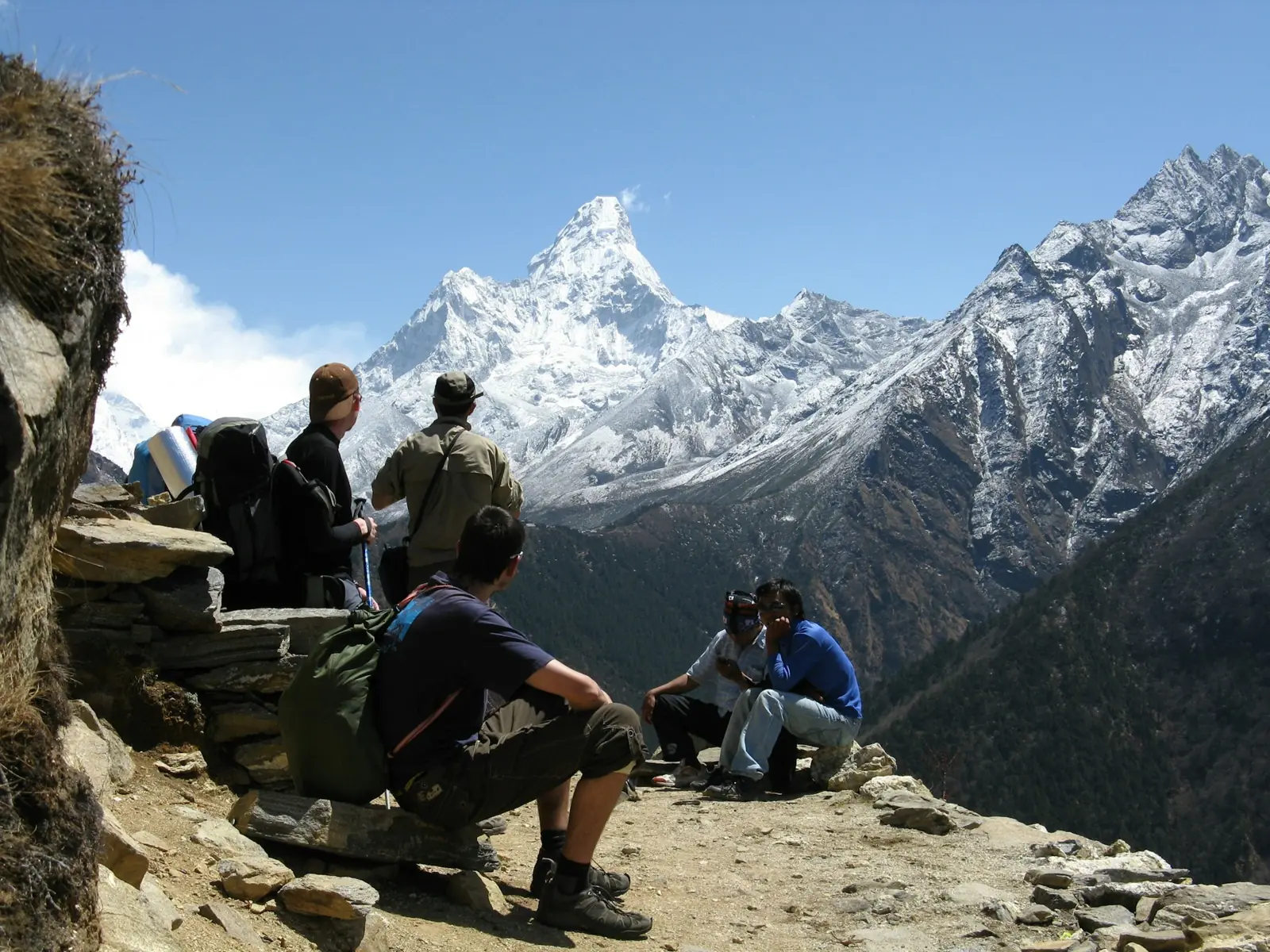
- Tengboche Monastery with Ama Dablam rising behind, the classic view.
- Base Camp at sunset: the whole Southwest Ridge glowing above you.
- Camp 2 on the Yellow Tower: one of the most spectacular campsites in the Himalaya.
- The Mushroom Ridge: a narrow crest with Everest and Lhotse beyond.
- The summit: Everest, Lhotse, Makalu, Cho Oyu and the Khumbu glaciers below.
Responsible Climbing
- Carry everything down. The garbage deposit is only refunded when expedition waste is returned, and we bring down all high camp rubbish and human waste as required.
- Respect the mountain and the Sherpa community. The Base Camp puja asks the mountain’s permission and blessing; please take part respectfully.
- Fair treatment of staff: proper equipment, insurance, wages and summit bonuses for every climbing Sherpa.
- Leave no fixed gear or personal rubbish on the ridge.
Why Book Your Ama Dablam Expedition With Merriment Treks
- Honest selection: we’ll talk through your experience before confirming your place, because the right climbers make the mountain safer for everyone.
- A 1:1 climbing Sherpa on the summit push and an experienced expedition leader.
- A sensible strategy: a 16-day climbing window, rotations and careful Camp 3 decisions.
- Transparent pricing based on the current Department of Tourism royalty, with all extras listed.
- A clear progression: from Yala, Island, Lobuche or Mera to Ama Dablam. Browse all our peak climbing trips.
Cancellation & Refund Policy
Deposit, payment and cancellation terms are set out in our terms and conditions, and we confirm them in writing with every booking. The royalty and many expedition costs are committed well in advance, so cancellation charges apply earlier than for treks. Weather, unsafe conditions or a turned-back summit attempt are not refundable, so make sure your insurance covers expedition cancellation and curtailment. Questions? Contact our team.
Climb Ama Dablam With Us
The Ama Dablam Expedition is a serious climb on a mountain every Himalayan climber dreams of. If you have the experience and the drive, we’ll give you the time, the team and an honest plan to get you up and back safely.
Tell us about your climbing background and preferred season, and we’ll reply with honest advice on readiness and a full quote. Contact us or use the booking form on this page.