What Is Barun Valley Nepal?
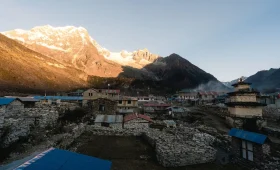
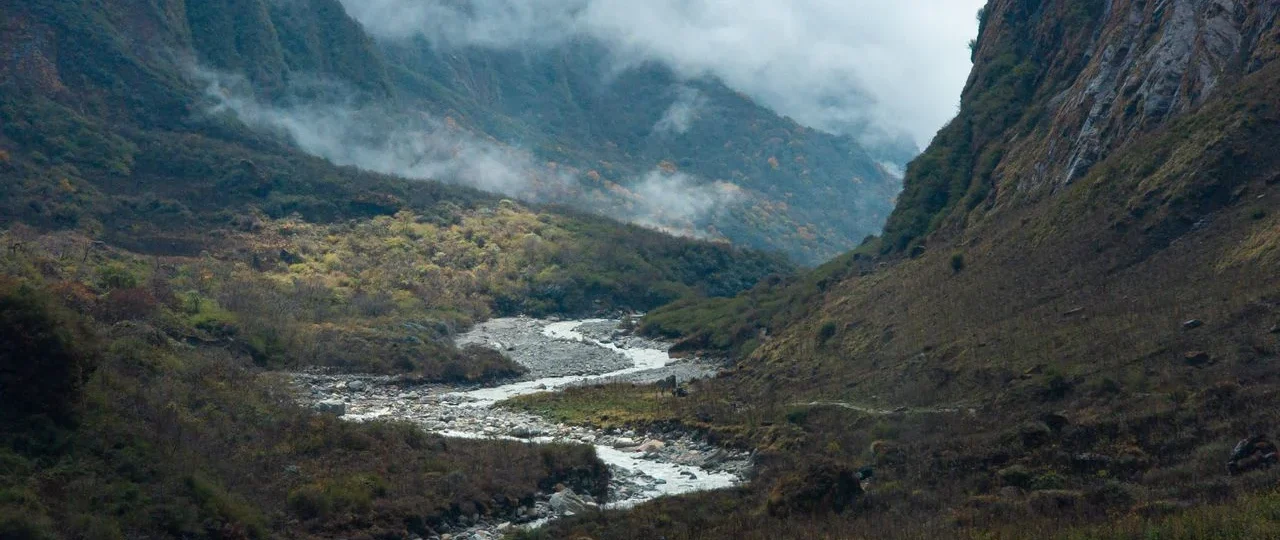
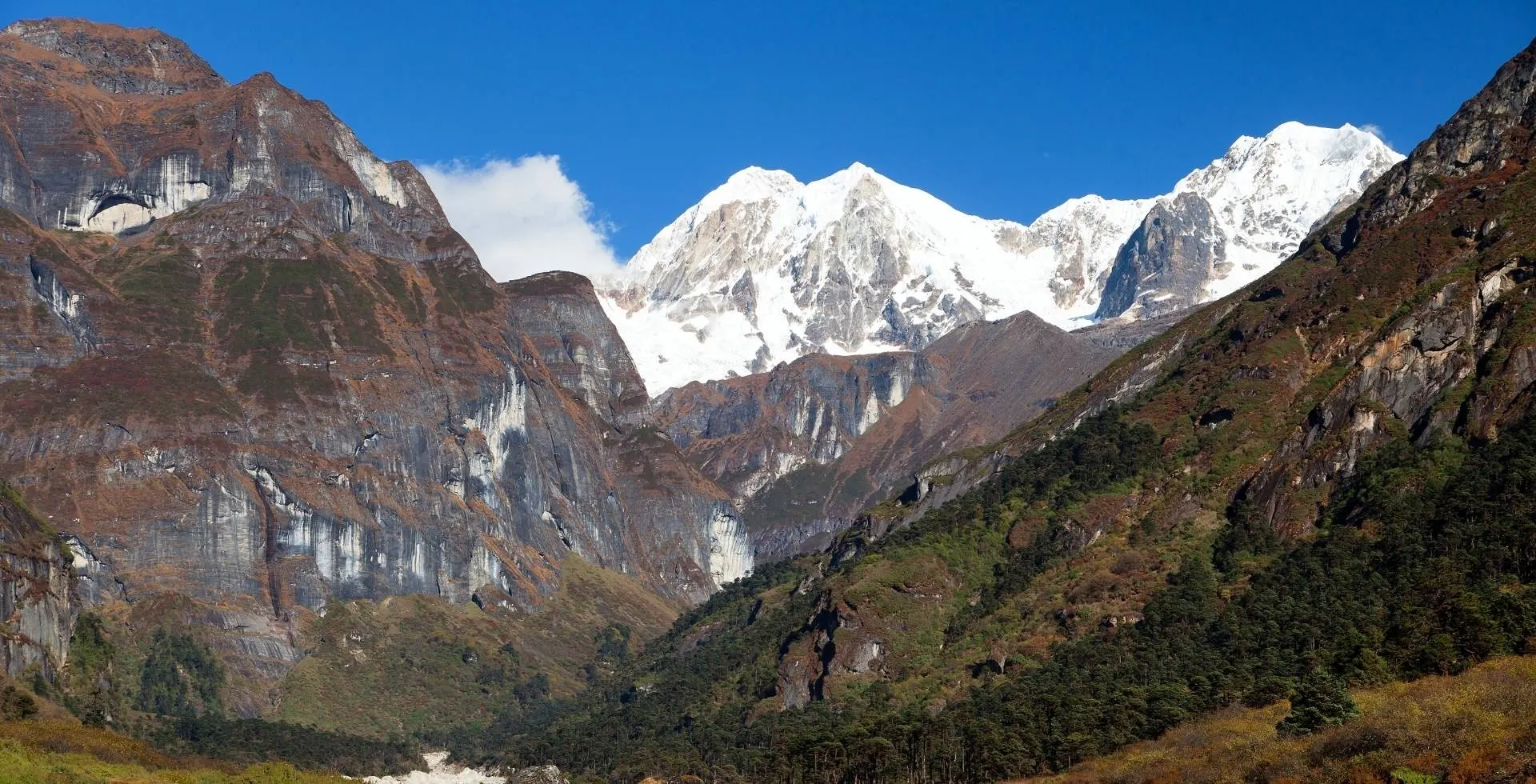
Barun Valley Nepal is a remote Himalayan valley in the eastern region of the country, carved by the Barun River and enclosed within the protected boundaries of Makalu-Barun National Park. It sits below the south face of Mount Makalu (8,485m), the world’s fifth-highest peak, and serves as the primary trekking corridor toward Makalu Base Camp.
What distinguishes Barun Valley from Nepal’s more trafficked trekking regions is its extraordinary ecological range. The valley descends from glacial moraine below Makalu to subtropical forest near its confluence with the Arun River, creating one of the most compressed elevation gradients found anywhere in the Himalayas. The park is the only protected area on Earth preserving an unbroken ecological corridor from subtropical lowland to an 8,000-meter summit.
Quick Facts: Barun Valley Trek 2026
| Feature | Details |
|---|---|
| Location | Sankhuwasabha & Solukhumbu districts, Koshi Province |
| Protected Area | Makalu-Barun National Park (established 1992) |
| Trek Starting Point | Tumlingtar (flight from Kathmandu) → Num trailhead |
| Highest Point | Makalu Base Camp (~4,870m) |
| Trek Duration | 16–19 days (round trip from Tumlingtar) |
| Best Season | March–May; September–November |
| Accommodation | Teahouses below Tashi Gaon; camping above |
| Guide Requirement | Mandatory licensed guide (2026 regulation) |
| Park Permit | NPR 3,000 (foreigners) |
Where Is Barun Valley Located?
Barun Valley Nepal is positioned in the far eastern Himalayan range, approximately 19 kilometers southeast of Mount Everest and directly below Mount Makalu. The valley lies entirely within Makalu-Barun National Park, which spans 1,500 square kilometers of core protected area with an additional 830 square kilometers of buffer zone.
The primary access route begins with a 35–50 minute flight from Kathmandu to Tumlingtar, followed by a jeep drive to Num village, which serves as the conventional trailhead. The flight crosses into the Arun Valley, and on clear days, aerial views take in the eastern Himalayan skyline, including distant glimpses of Everest, Lhotse, and Makalu. From Num, trekkers descend briefly to cross the Arun River before ascending into the Barun watershed.
Barun Valley vs. Arun Valley: Critical Distinction
Barun Valley Nepal and Arun Valley are geographically separate river systems that many trekking resources blur together. This confusion creates unnecessary planning errors.
Arun Valley is a broad, lower-elevation valley running north-to-south through eastern Nepal. Trekkers pass through a small section of it during the approach to Num and Seduwa, but the Arun Valley is not the destination. The Arun River watershed is the underlying artery of the region, but the trek itself leaves it behind quickly.
Barun Valley branches eastward from the Arun system and climbs steeply toward Makalu. It is the upper valley system that contains the trekking route, the national park’s high biodiversity zone, and Makalu Base Camp. Much of the Barun Valley trail is completely uninhabited and requires tent camping.
Makalu-Barun National Park encompasses both the upper Barun Valley and the surrounding mountain terrain, including Mount Makalu itself. The park is jointly named for the two rivers—Makalu and Barun—that define its boundaries.
Simple version: The Barun Valley is the road. Makalu-Barun National Park is the protected land it sits in. Makalu Base Camp is where the road ends. The Arun Valley is a different road entirely—you just glimpse it on the way to the trailhead.
Why Barun Valley Trek 2026 Is Different
Barun Valley Nepal offers a trekking experience that contrasts sharply with Everest Base Camp or Annapurna Circuit. Three factors define its character.
First, the trek is genuinely remote. Above Tashi Gaon (2,100m), permanent settlement ends. There are no lodges, no shops, and no road access. Trekkers camp in seasonal herder shelters or designated campsites, and all supplies must be carried. While Everest Base Camp sees tens of thousands of trekkers annually, Makalu sees only a few hundred, and it shows in every mile of trail: no queues, no helicopter traffic, no crowded lodges.
Second, biodiversity is exceptional. The park shelters snow leopard, red panda, clouded leopard, Himalayan black bear, and more than 400 bird species. Camera trap studies have confirmed species including dhole (Asiatic wild dog) and spotted linsang in the Barun Valley’s mid-elevation forests. The valley is one of the most biodiverse corridors in the Himalaya, sliding from subtropical forest to high alpine terrain within a matter of days.
Third, cultural significance runs deep. Barun Valley is identified in Nyingma Buddhist tradition as Beyul Khembalung, a hidden valley consecrated by Guru Rinpoche. The caves near Yangle Kharka and the high lake of Tso Karpo remain active pilgrimage sites for local communities. The Rai and Sherpa villages along the route see a fraction of the foot traffic of Namche or Manang.
Barun Valley Trek Route Overview
The standard Barun Valley Nepal trek follows an out-and-back route from Num to Makalu Base Camp. There is no loop option, and trekkers retrace their steps on the return. The trail covers roughly 150 kilometers round trip.
Route Summary
| Stage | Trailhead | Destination | Elevation Gain |
|---|---|---|---|
| 1 | Num (1,560m) | Seduwa (1,500m) | Descend to river, cross |
| 2 | Seduwa | Tashi Gaon (2,100m) | Moderate ascent |
| 3 | Tashi Gaon | Khongma Danda (3,500m) | Steep forest climb |
| 4 | Khongma Danda | Dobate | Cross Shipton La (~4,125m) |
| 5 | Dobate | Yangri Kharka (3,557m) | Descend into Barun Valley |
| 6 | Yangri Kharka | Langmale Kharka (4,410m) | Alpine ascent |
| 7 | Langmale Kharka | Makalu Base Camp (~4,870m) | Moraine traverse |
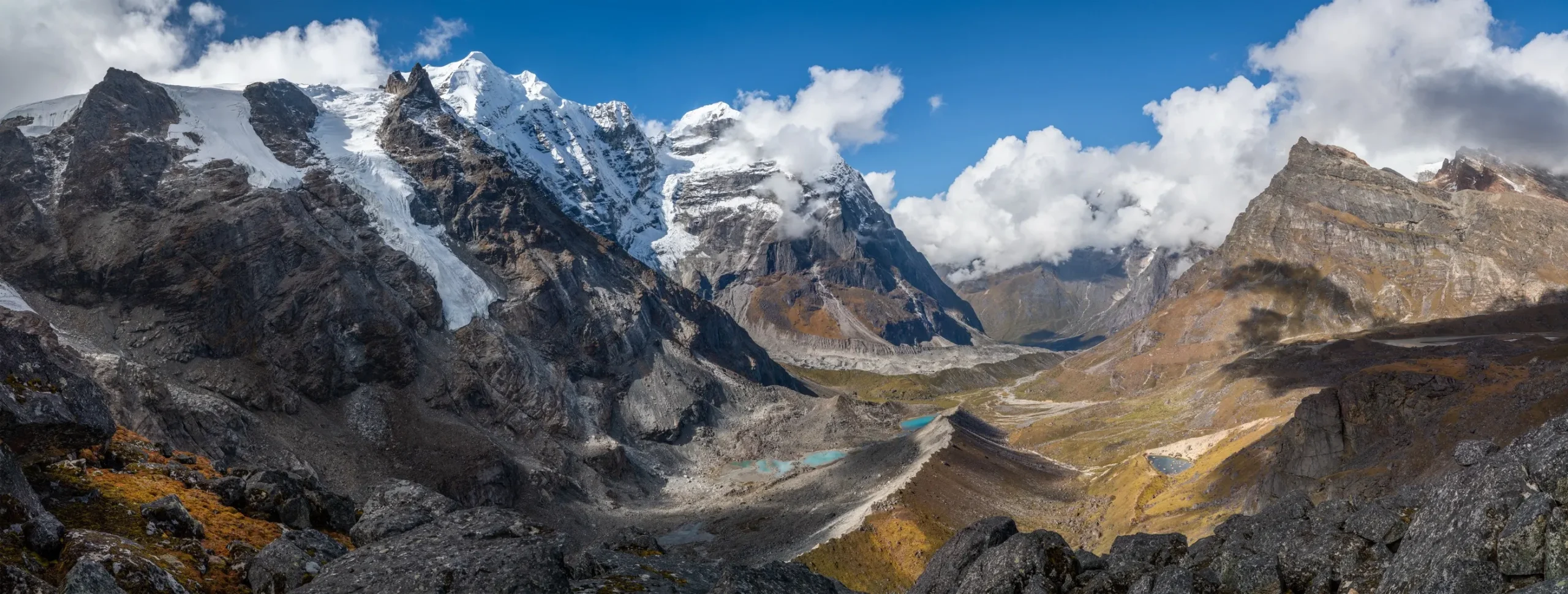
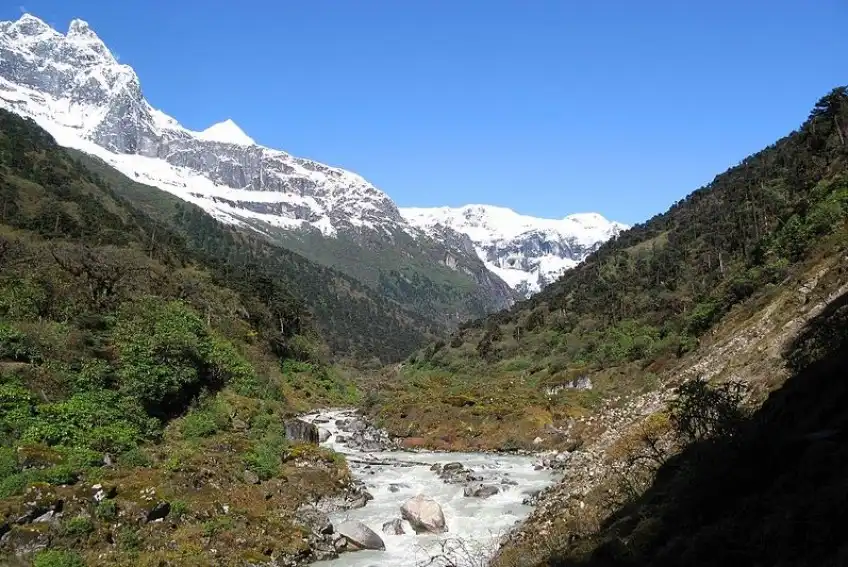
The trek crosses Shipton La (also called Tutu La, ~4,125m) between Khongma Danda and Dobate, marking the transition from forested ridges into the upper Barun Valley. From Yangri Kharka onward, the route follows the Barun River upstream through alpine meadows and glacial moraine. The upper trail above Tashigaon passes through Kohong, Mumbuk, and Yangri Kharka, with lodges sporadic and often seasonal.
How Difficult Is Barun Valley Trek?
Barun Valley Nepal Trek is rated strenuous and requires prior high-altitude trekking experience. The trek is not suitable as a first Himalayan trek. This is a demanding route with less forgiving logistics than Everest or Annapurna.
Key Difficulty Factors
-
Altitude: Reaching 4,870m at Makalu Base Camp, with multiple days above 4,000m.
-
Terrain: Steep forest ascents, rocky moraine, and a high pass crossing at Shipton La.
-
Remoteness: No road access, limited evacuation options, and no teahouses above Tashi Gaon. There is no reliable phone coverage after Tashigaon.
-
Duration: 16–19 days of continuous trekking with only two scheduled acclimatization days.
Trekkers should be comfortable walking 6–8 hours per day on consecutive days, carrying a daypack, and managing the psychological demands of isolation. Solo trekkers or pairs often join an existing group’s cook crew for the camping sections, as solo camping costs significantly more.
Barun Valley Altitude and Acclimatization
Barun Valley Nepal Trek involves significant altitude gain, and proper acclimatization is critical. The itinerary includes two dedicated rest days to manage this.
Elevation Progression
| Location | Altitude |
|---|---|
| Tumlingtar | 400m |
| Num | 1,560m |
| Seduwa | 1,500m |
| Tashi Gaon | 2,100m |
| Khongma Danda | 3,560m |
| Shipton La | 4,125m |
| Dobate | 3,600m |
| Yangri Kharka | 3,610m |
| Langmale Kharka | 4,410m |
| Makalu Base Camp | 4,870m |
The first dedicated acclimatization day occurs at Khongma Danda (3,470m) , where short exploratory hikes are recommended to ease into the altitude gain ahead. This is the trek’s first critical acclimatization stop. A second rest day may be scheduled at Yangri Kharka or Langmale Kharka depending on the itinerary and how the group is adapting.
Trekkers should monitor themselves for symptoms of acute mountain sickness (AMS), including headache, nausea, dizziness, and shortness of breath. If symptoms worsen, descent is the only reliable treatment. A guide with satellite phone can call evacuation within hours, though helicopter rescue is only possible from open landing zones and weather often delays flights.
Best Time to Visit Barun Valley
Barun Valley Nepal Trekking operates primarily during two seasonal windows:
Spring (March–May): Rhododendron forests bloom in vivid reds and pinks, and temperatures are moderate at lower elevations. Higher elevations may still hold snow, particularly on Shipton La. Teahouses above Seduwa operate seasonally from April to May and October to November.
Autumn (September–November): Stable weather, clear mountain views, and dry trails. This is the most popular window for Makalu Base Camp trekking. Trail conditions are generally at their best during this period.
Monsoon (June–August): Heavy rainfall, landslide risk, and leeches at lower elevations. Teahouses above Seduwa close during this period. Not recommended.
Winter (December–February): Extreme cold, snow-blocked passes, and limited access. Teahouses above Seduwa close from December to February. Only suitable for experienced expedition trekkers.
Barun Valley Permits and Guide Requirements (2026)
Barun Valley Nepal Permit requirements have changed for 2026. The Nepalese government mandates a licensed guide for all trekkers entering Makalu Barun National Park. Unlike some restricted areas where this rule is inconsistently enforced, Makalu checkposts do verify. You cannot complete this trek legally on your own, which adds a fixed daily cost regardless of your group size.
Required Permits for 2026
| Permit | Cost (Foreigners) | Where to Obtain |
|---|---|---|
| Makalu-Barun National Park Entry | USD 30 (~NPR 3,000) | Nepal Tourism Board or park gate |
| TIMS Card | NPR 2,000 (~$15 USD) | Nepal Tourism Board |
| Local Municipality Permit | NPR 2,000 (~$15 USD) | Makalu Rural Municipality |
Total permit cost: Approximately $45–55 USD per person.
The permit is straightforward. Makalu Barun National Park entry is USD 30 plus TIMS. There is no restricted area permit required, unlike Manaslu or Kanchenjunga. However, the guide requirement is strictly enforced, and your trekking agency will handle permit acquisition as part of your package.
Accommodation and Food on Barun Valley Trek
Barun Valley Nepal Accommodation follows a distinct pattern: teahouses are available only in the lower villages, while the upper valley requires full camping support. This is one of the most important logistical realities of the trek.
Lower Valley (Num to Tashi Gaon): Basic teahouses offer dormitory-style rooms, dal bhat, noodles, and tea. Facilities are simple but adequate. Seduwa has 3 to 4 family-run lodges with shared rooms. Num has 2 lodges. Tashigaon has 4 lodges and is the last proper teahouse stop. Teahouse rooms cost USD 5 to 10 per night, and full-board meals run USD 12 to 20 per day.
Upper Valley (Above Tashi Gaon): No permanent lodges exist. Mumbuk at 3,500m has one basic lodge that operates seasonally. Yangri Kharka at 3,610m has two teahouses, but both can be closed. Above Mumbuk, the standard plan is organised camping. Most groups carry tents, sleeping mats, food, and a cook crew from Tumlingtar or Seduwa. The camping section runs 6 to 8 nights through Sherson, Makalu Base Camp, and the return.
Food Available: Below Tashi Gaon, teahouse menus include dal bhat, Tibetan bread, noodles, eggs, and tea. From 2,500m to 3,500m, dried rice, lentils, potatoes, noodles, and tinned fish replace fresh produce. Above 3,500m, the cook crew carries supplies from Tumlingtar: rice, potatoes, noodles, porridge, and tinned goods. At Makalu Base Camp, only cook crew prepared meals are available. Dal bhat remains the most reliable energy source throughout the trek.
Barun Valley Trek Cost 2026
Barun Valley Nepal Trek Cost varies significantly based on service level, group size, and inclusions. This trek is not priced like Everest or Annapurna because the logistics are fundamentally different. The guide requirement adds a fixed daily cost, and the camping sections above Tashi Gaon require full crew support.
Cost Breakdown by Service Level
| Cost Component | Budget Trekker | Standard Package | Premium / Full Service |
|---|---|---|---|
| Total Estimate | $1,200–$1,700 | $1,800–$2,300 | $2,500–$3,200+ |
| Teahouse room (below Tashigaon) | USD 5–10/night | USD 5–10/night | Included |
| Teahouse meals | USD 12–20/day | USD 12–20/day | Included |
| Camping crew (cook + 2 helpers) | USD 50–80/group/day | Included | Included |
| Camping equipment rental | USD 8–15/person/day | Included | Included |
| Food supplies from Tumlingtar | USD 8–12/person/day | Included | Included |
| Porters for camping load | USD 25–35/porter/day | Included | Included |
International operators charge £2,685–£4,590 (approximately $3,400–$5,800) for packages including flights, camping equipment, and comprehensive support. Budget trekking packages start around $1,650–$1,950 for 15-day itineraries.
Key cost factors to consider:
-
Permits: ~$45–55 USD per person
-
Domestic flights: Kathmandu–Tumlingtar round trip
-
Camping equipment and crew: Cook, porters, tents, food for upper valley
-
Guide and agency fees: Mandatory licensed guide
-
Insurance: Helicopter evacuation coverage to 5,500m+ is essential
Solo camping costs USD 100 to 150 per day, which is why solo trekkers or pairs often join an existing group’s cook crew. Carry USD 200 in NPR for emergencies, as there are no ATMs above Tumlingtar.
What to Pack for Barun Valley
Barun Valley Nepal Trek requires careful packing because there are no last-minute gear shops once you leave Kathmandu. Beyond Khongma, this is a true wilderness trek with camping setups including dining tents, kitchen tents, toilet tents, and sleeping tents.
Essential Packing List
| Category | Items |
|---|---|
| Footwear | Crampon-compatible boots, camp shoes, 3–4 pairs wool socks |
| Layers | Base layers (moisture-wicking), fleece mid-layer, down jacket, waterproof shell |
| Head/Hands | Warm beanie, sun hat, buff/neck gaiter, inner liner gloves, insulated winter gloves |
| Camping Gear | 4-season sleeping bag (-15°C rating), sleeping pad, headlamp with spare batteries |
| Daypack | 35–45L with padded straps and waist belt |
| Water | Purification drops/tablets, 4L daily capacity |
| Sun Protection | Sunglasses (Category 4), SPF 50+ sunscreen, lip balm |
| Personal | First-aid kit, personal medications, toiletries, quick-dry towel |
| Documents | Passport, permits, insurance documents, cash in NPR |
Do not drink untreated tap or spring water. Carry purifying drops or tablets, treat everything, and aim for about 4 liters a day to hold off altitude problems. Expect camping beyond Khongma, and carry proper gear, especially warm layers, waterproofs, and sleeping bags.
Who Should Trek Barun Valley?
Barun Valley Nepal Trekking suits trekkers who meet specific criteria. This is not a trek for everyone, and honest self-assessment is important.
This trek is appropriate for:
-
Trekkers with prior experience above 4,000m
-
Fit individuals comfortable with 6–8 hour trekking days on consecutive days
-
Those seeking solitude and wilderness over teahouse culture
-
Photographers interested in Makalu’s south face and biodiversity
-
Trekkers who have already completed Everest Base Camp or Annapurna and want something genuinely wild
This trek is not appropriate for:
-
First-time Himalayan trekkers
-
Those unwilling to camp in remote conditions for 6–8 nights
-
Trekkers seeking teahouse comfort throughout
-
Individuals with limited time or flexibility for flight delays
-
Anyone unwilling to hire a licensed guide (which is mandatory)
Responsible Trekking in Barun Valley
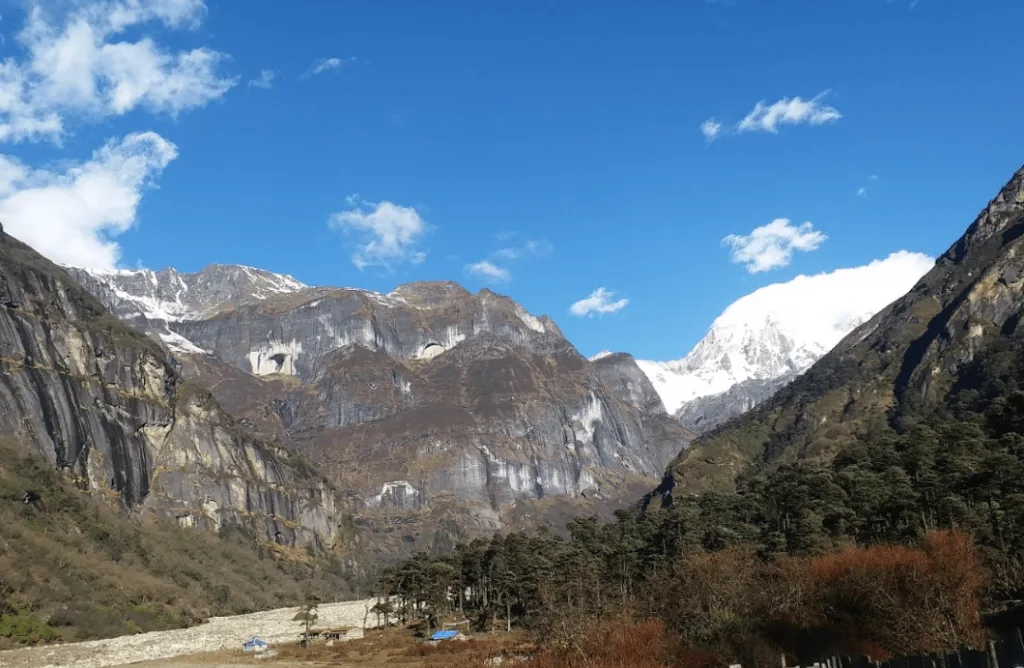
Barun Valley Nepal is a protected area with fragile ecosystems and remote communities. Responsible trekking practices are essential.
Key principles:
-
Pack out everything you carry in. There are no waste management systems above Tashi Gaon.
-
Respect local culture. The Barun Valley is a sacred landscape in Nyingma Buddhist tradition. Ask before photographing religious sites or local people.
-
Use purification methods rather than buying bottled water, which creates plastic waste in remote areas.
-
Support local teahouses in the lower villages where they exist.
-
Follow guide instructions regarding campsite selection and waste disposal.
-
Do not disturb wildlife. Sightings of snow leopard, red panda, and other species are rare and should never be forced.
-
Carry out all non-biodegradable waste, including sanitary items and packaging.
Trekking Barun Valley with Merriment Treks
Merriment Treks operates guided Barun Valley Nepal Trekking expeditions with full logistical support for the upper valley camping sections. Our 2026 itineraries include licensed guides, camping equipment, porter support, and acclimatization planning aligned with current regulations. We manage permits, cook crews, and all camping logistics so you can focus on the trek itself.
Contact us to discuss the Barun Valley Trek 2026 and confirm current permit requirements, itinerary options, and availability.
Frequently Asked Questions about Barun Valley Nepal
- Where is Barun Valley Nepal?
Barun Valley is in eastern Nepal’s Koshi Province, inside Makalu-Barun National Park, below Mount Makalu. Access begins with a flight to Tumlingtar. - Is Barun Valley Trek the same as Makalu Base Camp Trek?
Yes, in practice. The standard Makalu Base Camp Trek follows the Barun Valley route. You cannot reach Base Camp without traversing the valley. - How difficult is Barun Valley Trek?
It is strenuous. The trek requires prior high-altitude experience, crosses Shipton La (~4,125m), and reaches ~4,870m at Base Camp. - Do I need a guide for Barun Valley in 2026?
Yes. Nepal law requires all trekkers in this region to hire a licensed guide through a registered agency. Checkposts verify this requirement. - What permits are required?
Makalu-Barun National Park permit (USD 30), TIMS card (NPR 2,000), and local municipality permit (NPR 2,000). - What is the best time for Barun Valley Trek?
Spring (March–May) and autumn (September–November) offer the most stable conditions. - How long does the trek take?
Standard itineraries run 16–19 days from Tumlingtar, including acclimatization and return. The trail covers roughly 150km round trip. - Is accommodation available above Tashi Gaon?
No. Camping with full support is required above Tashi Gaon. There are no permanent lodges. - What wildlife can I see in Barun Valley?
Snow leopard, red panda, clouded leopard, Himalayan black bear, and 400+ bird species inhabit the park. Sightings are not guaranteed. - Can I trek Barun Valley independently?
No. The guide requirement and camping logistics above Tashi Gaon make independent trekking impractical and illegal. - What is the highest point?
Makalu Base Camp, at approximately 4,870m. - What does the trek cost?
Budget packages from ~$1,200; standard packages $1,800–$2,300; premium full-service packages $2,500–$3,200+. - Do I need travel insurance?
Yes. Helicopter evacuation coverage to at least 5,500m is strongly recommended. Rescue is possible from Yangri Kharka, Khongma Danda, and Makalu Base Camp, but weather often delays flights. - Is Barun Valley in a restricted area?
No. It is not a restricted area requiring special RAP permits, but guide rules apply. - How do I get to the trailhead?
Fly Kathmandu–Tumlingtar (35–50 min), drive to Num (4 hours), then trek.