What Is the Khumbu Icefall?
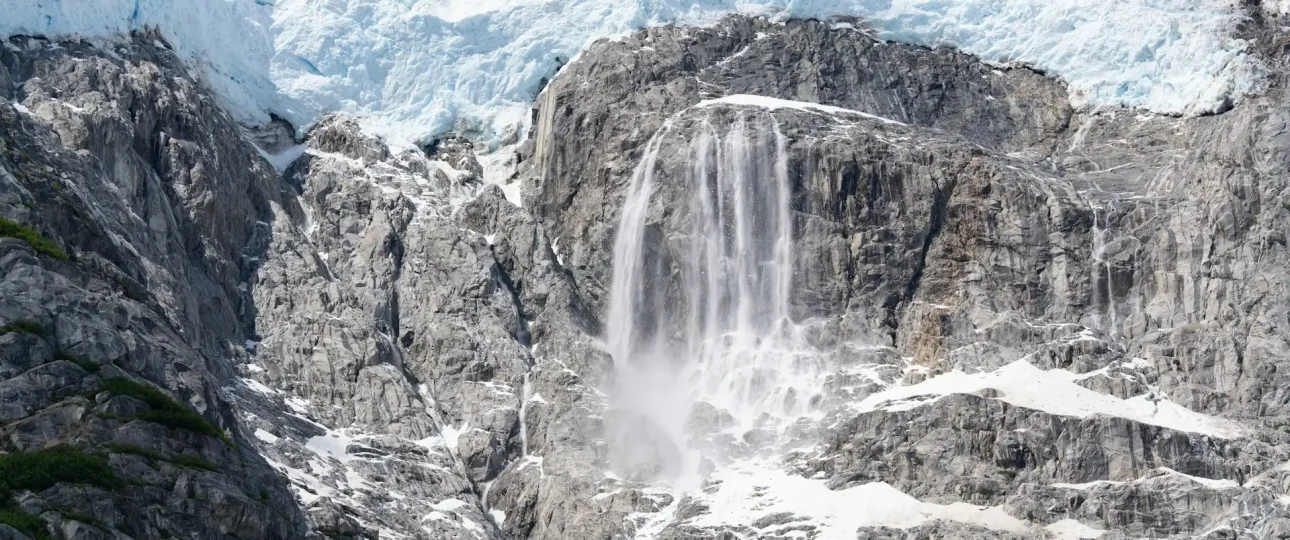
Khumbu Icefall is a shattered, perpetually moving section of the Khumbu Glacier that sits directly above Everest Base Camp on the Nepali side of Mount Everest. It runs from approximately 5,486 meters at its base to around 6,100 meters where it meets the Western Cwm, gaining roughly 600 meters of elevation over a distance of about two kilometers.
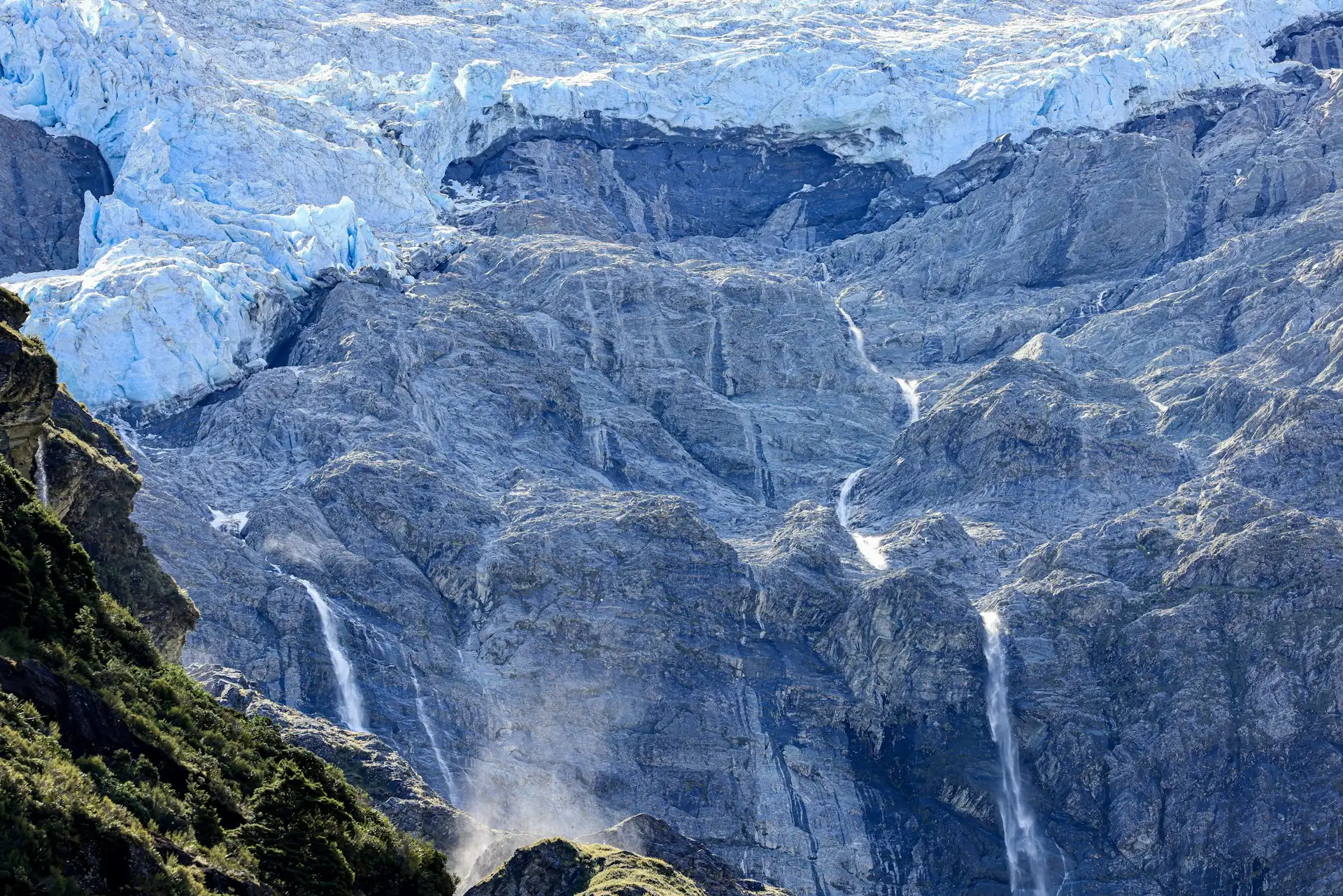
Khumbu Icefall is not a static landscape. The glacier here flows downhill at approximately one meter per day, fracturing the ice into a chaotic jumble of towers, blocks, and deep splits. A piece of ice takes roughly four years to travel from the top of the Icefall to the bottom.
Every climber attempting Everest from the south side must cross the Icefall. There is no alternative route. It is the first major obstacle above Base Camp and, by the record, the deadliest section of the standard South Col route.
Quick Facts: Khumbu Icefall 2026
| Feature | Detail |
|---|---|
| Location | Above Everest Base Camp, Nepal side |
| Elevation Range | ~5,486m to ~6,100m |
| Length | ~2 km |
| Elevation Gain | ~600m |
| Glacier Movement | ~1 meter per day |
| Deaths (1953–2023) | Approximately 47 |
| Deadliest Event | 2014 avalanche (16 deaths) |
| 2026 Season | 19-day delay due to serac |
| Who Crosses | Permitted Everest/Lhotse/Nuptse climbers only |
Where Is the Khumbu Icefall Located?
Khumbu Icefall location is in the Mahalangur Himal section of the Himalayas, in Solukhumbu District of Nepal’s Koshi Province. It sits directly above Everest Base Camp (5,364m) and below the Western Cwm, at approximately 27°56′N, 86°49′E.
Khumbu Icefall is part of the larger Khumbu Glacier system, which stretches approximately 15.7 kilometers and is one of the highest glaciers in the world. The glacier originates on the slopes of Everest and Lhotse, flows through the Western Cwm, cascades down the Icefall, and terminates near the village of Lukla.
From a trekker’s perspective, Khumbu Icefall becomes visible as you approach Everest Base Camp from Gorak Shep. The massive ice towers and the jumbled terrain are unmistakable against the backdrop of Nuptse and Everest.
Trekkers vs. Climbers: Who Actually Crosses the Icefall?
Khumbu Icefall trekking does not involve crossing the Icefall. This is the single most important distinction in Everest region trekking—and the most commonly misunderstood.
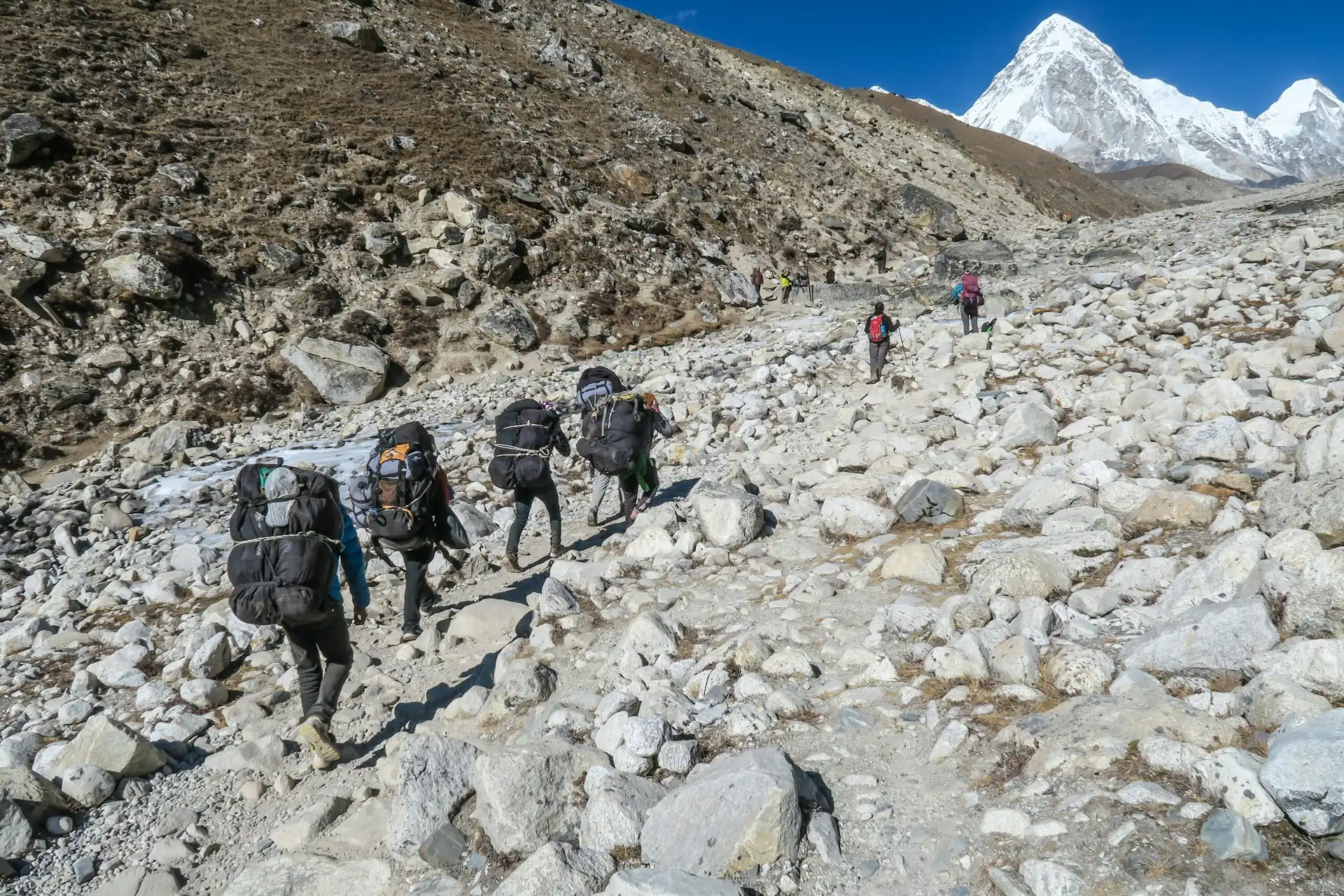
Trekkers on the Everest Base Camp trek do NOT cross the Khumbu Icefall. The trek ends at Base Camp (5,364m). From there, the Icefall rises above you, but entering it requires a climbing permit, mountaineering equipment, and technical skills that trekkers do not need.
Only permitted climbers on Everest, Lhotse, and Nuptse cross the Icefall. These climbers typically cross multiple times during their expedition: for acclimatization rotations (2–3 crossings), for gear ferrying, and for the final summit push. A paying climber may cross 6–8 times; Sherpa workers may cross 30–40 times in a single season.
Comparison Table: Trekker vs. Climber Experience
| Aspect | EBC Trekker | Everest Climber |
|---|---|---|
| Max Elevation | 5,364m (Base Camp) | 8,849m (summit) |
| Crosses Icefall? | No | Yes, multiple times |
| Permit Required | TIMS + Sagarmatha National Park | $15,000 climbing permit |
| Equipment | Trekking gear | Full mountaineering gear |
| Technical Skill | None required | High-altitude climbing experience |
| Risk Level | Moderate (altitude) | Extreme (objective hazards) |
| Sees Icefall From | Base Camp, Gorak Shep, Kala Patthar | Inside the Icefall |
How the Icefall Forms: Glacier Physics Made Simple
Khumbu Icefall formation follows a clear physical process that any trekker can understand. An icefall forms when a glacier flows over a steep drop in the bedrock beneath it. Ice cannot bend quickly enough to follow the sudden slope change, so it fractures.
The chain of events:
Glacier movement → The Khumbu Glacier flows downhill at roughly one meter per day, driven by gravity and the weight of accumulated ice and snow.
Fracturing → As the ice moves over uneven bedrock, stress accumulates and the ice cracks. The steeper the drop, the more violent the fracturing.
Crevasses → These are the gaps that open between ice blocks. The largest in the Khumbu Icefall are over 100 meters deep and up to 15 meters wide.
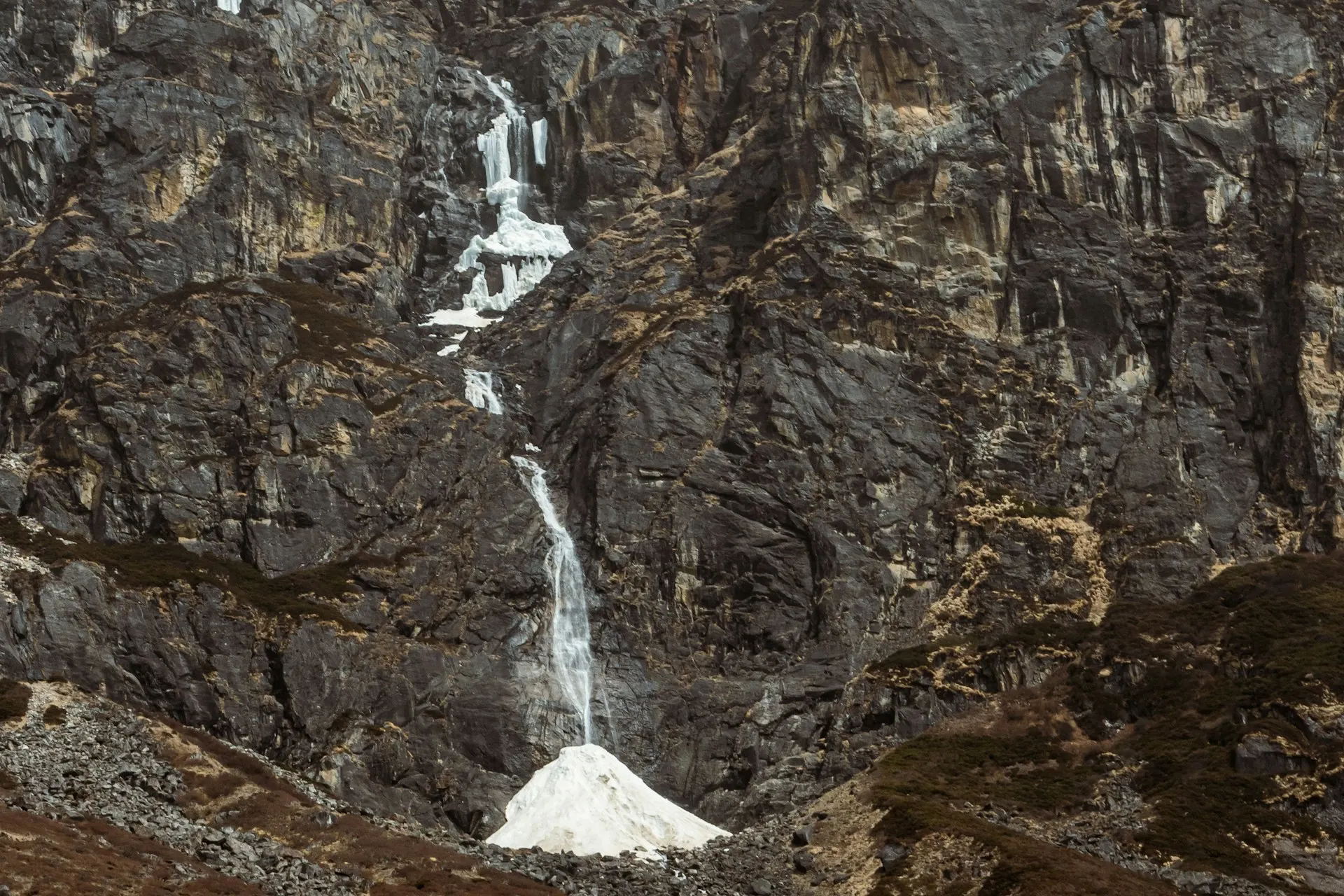
Seracs → These are towers of ice—some the size of small buildings—that result from fracturing. They can topple without warning. In 2026, a single serac measuring approximately 55 meters long, 28 meters high, and 37 meters wide blocked the route for 19 days.
Snow bridges → Snow accumulates over crevasses, creating deceptive surfaces that may or may not support weight. Snow bridge collapse is a constant hazard.
Route instability → Because the glacier never stops moving, the route through the Icefall changes constantly. The Icefall Doctors must monitor and rebuild sections throughout the season.
How Dangerous Is the Khumbu Icefall?
Khumbu Icefall danger is widely considered the most dangerous section of the standard South Col route on Everest. The danger is objective—it comes from the ice itself, not from the difficulty of the climbing moves.
Death Statistics
| Source | Figure | Period |
|---|---|---|
| Himalayan Database | ~47 deaths | 1953–2023 |
| Explorersweb (2024) | “Almost 50 Sherpas” | 1953–2023 |
| Modern fatality rate | 0.3–0.5% per traverse | 2020–2025 |
Most deaths in the Icefall are Sherpa workers who cross multiple times per season. In 2014, a single avalanche killed 16 Nepali workers in the Icefall.
Why the Icefall is so dangerous:
-
Serac collapse: Ice towers can fall without warning. No technology or skill can prevent this.
-
Crevasse falls: Snow bridges collapse; climbers fall into deep crevasses.
-
Avalanche: Ice and snow from the West Shoulder can sweep the route.
-
Exposure time: The longer you spend in the Icefall, the higher your risk. Climbers try to cross between 3 AM and 5 AM when temperatures are lowest and ice is most stable.
The 2026 Season: 19 Days of Waiting
Khumbu Icefall 2026 produced one of the most challenging route-setting periods in recent Everest history. On April 10, 2026, the Icefall Doctors discovered an unstable serac approximately 300 meters below Camp I. The serac was about 30 meters high and hung directly above the planned ascent route.
Work on fixed ropes and ladders was suspended. Hundreds of climbers waiting at Base Camp could only watch and wait. Garrett Madison of Madison Mountaineering told Reuters: “Expeditions are all being delayed because of the impasse”.
Timeline of the 2026 Crisis
| Date | Event |
|---|---|
| March 16 | Icefall Doctors begin route-fixing work |
| April 8 | Route secured to rockfall point |
| April 10 | Unstable serac discovered 300m below Camp I |
| April 24 | Section officially declared impassable |
| April 28 | Route opened after 19-day delay |
| May 5 | Serac collapse injures two climbers |
| May 10 | Nepali worker dies in Icefall |
The route was finally opened on April 28, after a joint team of eight Icefall Doctors and 16 guides established a passage below the serac. However, the SPCC warned that the ice formation—measuring approximately 55 meters long, 28 meters high, and 37 meters wide—had multiple cracks and could collapse at any time.
The delay compressed the climbing season. With 425 foreign climbers holding permits and over 1,000 people waiting to move up, teams had limited time for acclimatization rotations before the summit window.
Icefall Doctors: The Sherpas Who Build the Route
Khumbu Icefall Doctors are a specialized team of Sherpa climbers who build and maintain the route through the Khumbu Icefall each spring. They are organized by the Sagarmatha Pollution Control Committee (SPCC), a local NGO created by the Sherpa community of the Khumbu Valley.
History and Governance
-
Sherpa climbers have fixed routes through the Icefall since the first Everest expeditions
-
The SPCC has organized the Icefall Doctors since 1993
-
Since 1997, SPCC has held an annual contract from Nepal’s Department of Tourism
-
The 2026 team includes eight Icefall Doctors led by Ang Sarki Sherpa as chief leader
What They Do
-
Open the route in early April and close it at the end of May
-
Fix ropes and place aluminum ladders across crevasses
-
Carve paths through ice blocks and clear snow-covered sections
-
Continuously monitor and maintain the route as the glacier moves
Why Their Work Matters
Without the Icefall Doctors, there would be no commercial Everest climbing season. No individual climber could navigate the Icefall alone—the route changes constantly, and the objective hazards are too great. The Icefall Doctors transform an impassable chaos of ice into a route that hundreds of climbers can follow each season.
Why Their Work Doesn’t Eliminate Danger
The Icefall Doctors can only choose the least dangerous route. They cannot prevent serac collapse. The 2026 season demonstrated this: despite their expertise and use of drones and 3D photogrammetry, a 30-meter serac blocked the route for 19 days. A serac collapse on May 5 injured two climbers on the newly opened route.
How the Route Is Built: Ladders, Ropes, and Anchors
Khumbu Icefall route construction is a process of constant adaptation. The glacier moves roughly one meter per day, which means ladders shift, ropes loosen, and anchors weaken. The Icefall Doctors must rebuild sections throughout the season.
The Route-Building Process
1. Route scouting: Icefall Doctors assess the Icefall from Base Camp and from the air using drones. They identify the most stable path through the seracs and crevasses.
2. Ladder placement: Aluminum ladders are connected to span crevasses. In 2026, eight ladders were installed across three sections, with more added as crevasses widened.
3. Rope fixing: Fixed ropes are anchored to ice screws and snow bars. Climbers clip into these ropes with ascenders and safety tethers.
4. Anchor maintenance: Anchors weaken as the glacier moves. Icefall Doctors check and replace anchors throughout the season.
5. Continuous monitoring: The route is never “finished.” It requires daily monitoring and adjustment.
Khumbu Icefall vs. Western Cwm: What’s the Difference?
Khumbu Icefall and Western Cwm are often confused, but they are distinct parts of the Everest climbing route.
| Feature | Khumbu Icefall | Western Cwm |
|---|---|---|
| Location | Above Base Camp | Above the Icefall |
| Elevation | ~5,486m–6,100m | ~6,100m–6,500m+ |
| Terrain | Shattered ice, seracs, crevasses | Relatively flat glacial valley |
| Difficulty | Extreme objective danger | Moderate (altitude, crevasses) |
| Camps | None (transit only) | Camp I (6,065m), Camp II (6,500m) |
| Who Crosses | All Everest climbers | All Everest climbers |
| Trekker Access | View only from Base Camp | Not accessible to trekkers |
The Western Cwm (pronounced “koom”) is a French term meaning “valley.” It is the flat, glacial valley above the Icefall where climbers establish Camps I and II. While the Icefall is a chaotic, unstable hazard zone, the Western Cwm is comparatively gentle terrain—though it still contains large crevasses and presents altitude challenges.
Can You See the Khumbu Icefall on the Everest Base Camp Trek?
Khumbu Icefall viewing is possible for trekkers—but only from a distance. The Icefall is visible from several points on the Everest Base Camp trek, and for many trekkers, it is the most dramatic visual moment of the journey.
Best Viewpoints
| Location | Elevation | What You See |
|---|---|---|
| Gorak Shep | 5,164m | First clear views of the Icefall on approach to Base Camp |
| Everest Base Camp | 5,364m | Direct view of the lower Icefall from the Base Camp floor |
| Kala Patthar | 5,545m | Panoramic view of the Icefall, Everest, and the Khumbu Glacier |
From Everest Base Camp, you stand at the foot of the Icefall. The massive ice towers rise above you, and you can see the route ladders and fixed ropes where climbers begin their ascent. It is an unforgettable sight—and a stark reminder that the trek ends where the climbing begins.
Important: Trekkers cannot enter the Icefall. There is no trail through it for non-climbers. Going beyond Base Camp requires a climbing permit and mountaineering equipment.
How Climate Change Is Making the Icefall More Dangerous
Khumbu Icefall climate change impact is a growing concern among mountaineers and scientists. Veteran climbers and Sherpa guides have reported that the Khumbu Icefall is becoming more dangerous due to warming temperatures.
How climate change increases risk:
-
Melting snow bridges: Snow bridges that once provided stable crossings are collapsing earlier and more unpredictably.
-
Serac instability: Warming destabilizes ice towers, making collapse more frequent.
-
Erratic weather: Unseasonal snowfall and wind patterns disrupt route-setting and climbing schedules.
-
Shorter windows: The safe crossing window (pre-dawn hours) is becoming more critical as daytime warming accelerates.
Gelje Sherpa, a former Icefall Doctor, told CNN that the Icefall is “significantly more dangerous today than it was just a few years ago.” The 2026 season illustrated this trend: the serac that blocked the route for 19 days was described as “unusually large and fractured,” and its behavior was difficult to predict.
Scientific projections indicate that historical warming has committed the Khumbu Glacier to a mass loss of 10%–23% during this century, with potential losses of up to 70% by 2100 under some scenarios.
Frequently Asked Questions about Khumbu Icefall
What is the Khumbu Icefall?
It is a shattered, moving section of the Khumbu Glacier above Everest Base Camp, ranging from ~5,486m to ~6,100m. It is the deadliest section of the standard South Col route on Everest.
Where is the Khumbu Icefall located?
It sits directly above Everest Base Camp on the Nepali side of Mount Everest, in Solukhumbu District, Nepal.
How dangerous is the Khumbu Icefall?
It is considered the most dangerous section of the Everest climbing route. Approximately 47 people have died there since 1953.
Do trekkers cross the Khumbu Icefall on the Everest Base Camp trek?
No. The EBC trek ends at Base Camp (5,364m). Crossing the Icefall requires a climbing permit and mountaineering experience.
How many people have died in the Khumbu Icefall?
The Himalayan Database records at least 47 deaths between 1953 and 2023. The deadliest single event was the 2014 avalanche, which killed 16 Nepali workers.
What are Icefall Doctors?
They are a specialized team of Sherpa climbers organized by the Sagarmatha Pollution Control Committee (SPCC). They build and maintain the route through the Icefall each spring.
What happened in the Khumbu Icefall in 2026?
A 30-meter serac blocked the route approximately 300 meters below Camp I, causing a 19-day delay. The route opened on April 28. A serac collapse on May 5 injured two climbers.
Can you see the Khumbu Icefall from Everest Base Camp?
Yes. From Base Camp, you have a direct view of the lower Icefall. The best panoramic views are from Kala Patthar (5,545m).
What was the 2014 Khumbu Icefall disaster?
On April 18, 2014, a serac collapse triggered an avalanche that killed 16 Nepali workers in the Icefall. It led to the cancellation of the 2014 climbing season.
How does climate change affect the Khumbu Icefall?
Warmer temperatures are melting snow bridges and destabilizing seracs, making the Icefall more unpredictable and dangerous.
Planning Your Everest Region Trek with Merriment Treks
Merriment Treks operates guided Everest Base Camp treks and custom Everest region itineraries. Our guides are trained in high-altitude safety and have extensive experience in the Khumbu region. While trekkers do not cross the Icefall, understanding it is essential to appreciating what you see at Base Camp.
We provide comprehensive pre-trek briefings on Everest region geology, altitude management, and the history of the Icefall. Our itineraries include Kala Patthar and Base Camp viewpoints where the Icefall is most visible.
Contact Merriment Treks to plan your Everest Base Camp trek or to discuss custom itineraries in the Khumbu region.
About This Guide: This Khumbu Icefall guide was researched and compiled by the Merriment Treks editorial team for the 2026 season. Death statistics are based on Himalayan Database and Explorersweb records. Permit fees, regulations, and route conditions are subject to change. Verify current requirements with your trekking agency before departure.