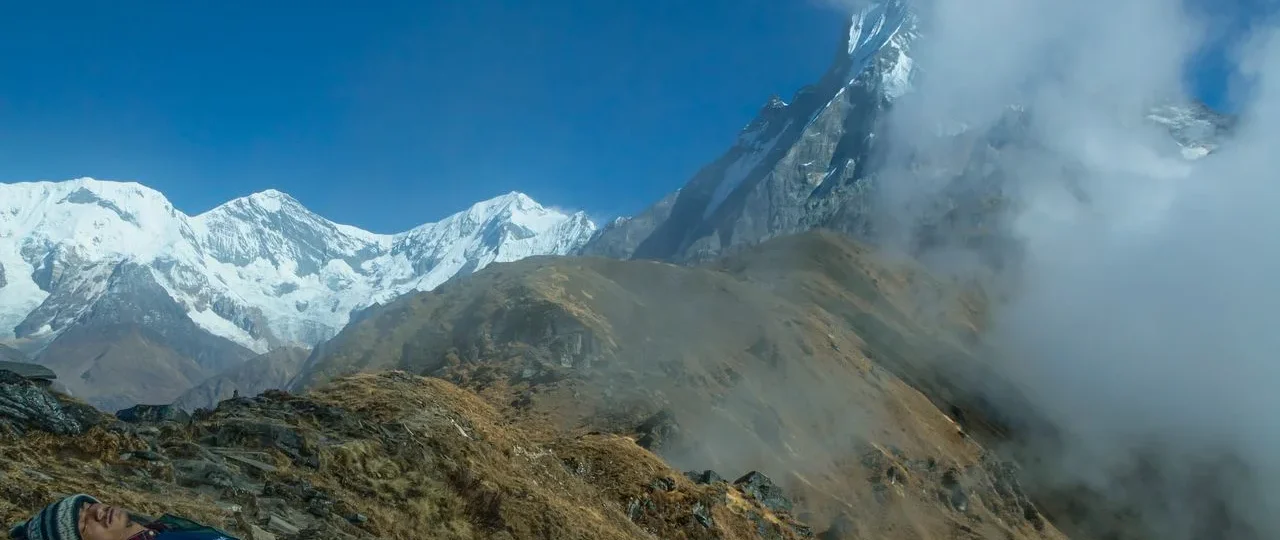
Quick Answer: How Many Days Do You Need for Mardi Himal?
The Mardi Himal Trek itinerary requires 5 days from Pokhara to Pokhara for the standard experience, with overnight stops at Forest Camp, Low Camp, High Camp, and Siding village. Merriment Treks recommends 5 days for most trekkers, 6 days for beginners or those wanting comfort, and 4 days only for experienced trekkers who fully understand the trade-offs.
The duration you choose shapes everything. A 5-day Mardi Himal Trek itinerary distributes the walking across manageable days while maintaining safe altitude progression. A 6-day itinerary breaks the trek into shorter segments, creating a gentler experience. A 4-day itinerary compresses the journey into a demanding schedule that sacrifices comfort, safety margin, and enjoyment for speed.
Merriment Treks will not tell you that one duration is universally best. We will tell you which duration fits your body, your experience, and your goals. That is the information you actually need.
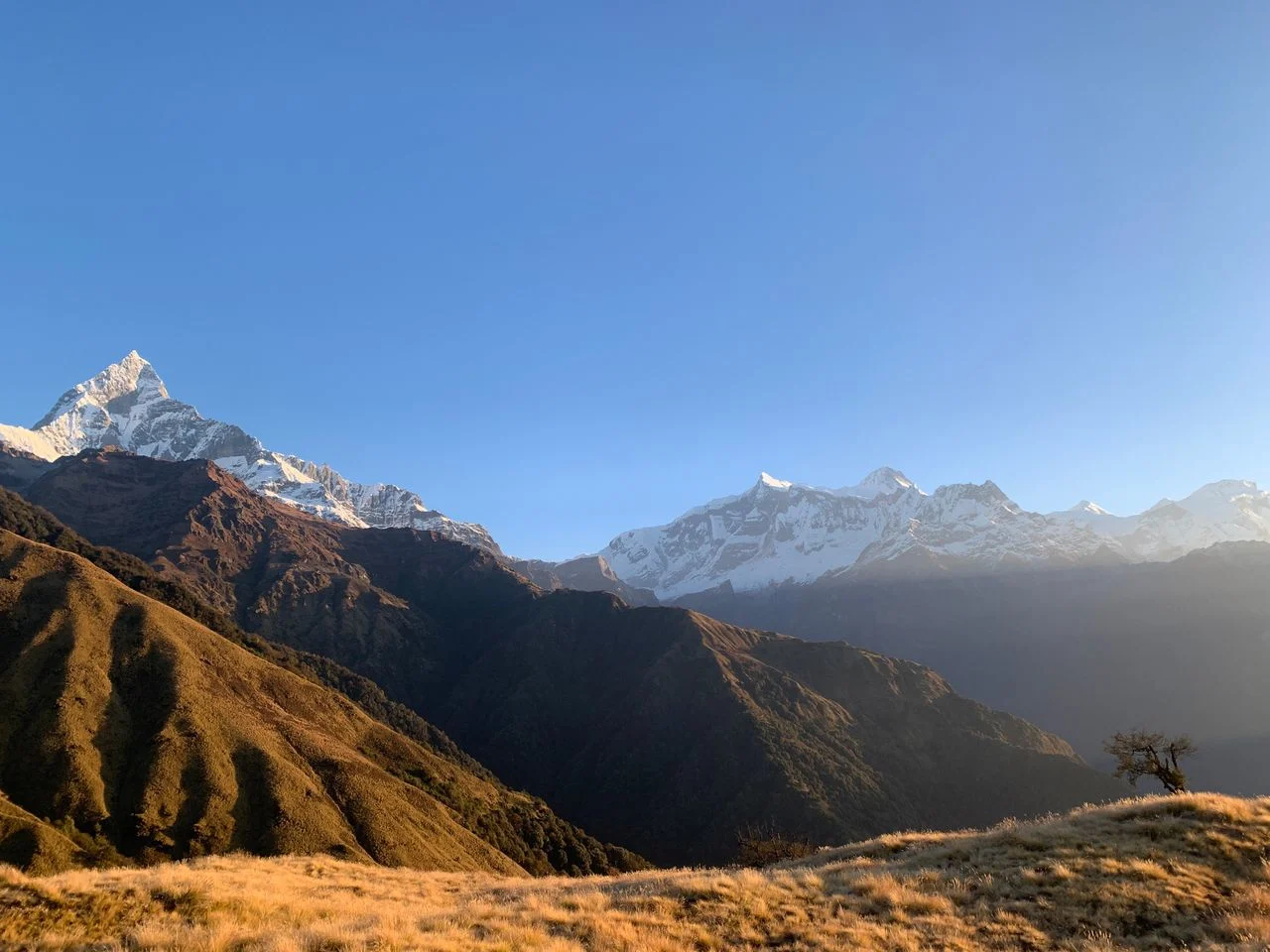
Mardi Himal Trek Itinerary Comparison: Choosing Your Duration
The right Mardi Himal Trek itinerary depends on your fitness, experience, available time, and what you want from the trek. Merriment Treks provides this comparison to help you decide honestly rather than defaulting to whatever appears first in a search result.
Complete Itinerary Comparison Matrix
| Factor | 4-Day Itinerary | 5-Day Itinerary | 6-Day Itinerary |
|---|---|---|---|
| Total Days | 4 | 5 | 6 |
| Trekking Days | 3 full days | 4 full days | 5 full days |
| Daily Walking Hours | 5-8 hours | 3-7 hours | 2-6 hours |
| Hardest Day | Day 3 (8+ hours) | Day 4 (7-8 hours) | Day 6 (5-6 hours) |
| Altitude Risk | Higher (rapid ascent) | Moderate (safe progression) | Low (gradual progression) |
| Sunrise Experience | Rushed | Full | Full with rest |
| Photography Time | Limited | Good | Excellent |
| Weather Buffer | None | Limited | Some |
| Physical Recovery | Minimal | Adequate | Good |
| Merriment Treks Verdict | Only if necessary | Recommended | Best for beginners |
If I Have Limited Time, What Should I Choose?
Merriment Treks recommends the 5-day itinerary as the minimum for a safe, enjoyable Mardi Himal experience. If you cannot spare 5 days, we suggest considering whether Mardi Himal is the right trek for your schedule. The 4-day option exists for experienced trekkers who understand the trade-offs, but it is not the experience we want for most clients.
The 4-day Mardi Himal Trek itinerary compresses what should be a gradual ascent into punishingly long days. You will spend more time staring at your feet than at the mountains. The sunrise that should be your highlight becomes a rushed checkpoint before an exhausting descent. If time is truly limited, ask Merriment Treks about alternative treks that better suit a compressed schedule.
If I Am a Beginner, What Should I Choose?
Choose the 6-day Mardi Himal Trek itinerary. This option is designed for people who have never trekked in the Himalayas, who are uncertain about their fitness, or who simply want to enjoy the experience without feeling overwhelmed.
The 6-day itinerary includes a gentle first day to Australian Camp, shorter walking days throughout, and a rest afternoon at High Camp after your sunrise experience. You will arrive at each destination with energy. You will sleep better. You will acclimate better. You will simply have a better time.
If I Want the Most Comfortable Experience, What Should I Choose?
Choose the 6-day itinerary or ask about a 7-day extension. The 6-day option eliminates the single longest day that defines the 5-day itinerary. A 7-day option adds a second night at High Camp, allowing two sunrise opportunities and a full rest day before the descent.
Comfort on the Mardi Himal Trek itinerary comes from two things: shorter daily walking hours and proper altitude acclimatization. The 6-day itinerary provides both. You will never walk more than 6 hours in a day, and your body will have time to adjust to each elevation gain.
If Mountain Views Are My Priority, How Should I Plan?
Choose either the 5-day or 6-day itinerary, and ensure your schedule includes overnight at High Camp. The sunrise from Upper Viewpoint is the definitive mountain view experience on this trek, and it requires staying at High Camp the night before.
The 6-day itinerary provides additional time at viewpoints and better photography opportunities. A 7-day option with an extra night at High Camp gives you two sunrise attempts—valuable insurance against cloudy mornings.
Complete Route Overview: The Mardi Himal Journey
The Mardi Himal Trek itinerary follows a route that begins at Kande trailhead, climbs through rhododendron forests and alpine zones to High Camp at 3,580 meters, reaches Upper Viewpoint at 4,200 meters, and descends through Siding village before returning to Pokhara. Understanding this complete progression helps you see where each day fits within the larger journey.
Route Progression
| Stop | Elevation | Walking Time from Previous | Key Features |
|---|---|---|---|
| Pokhara | 820m | — | Starting city |
| Kande | 1,770m | 1.5 hours by vehicle | Trailhead |
| Australian Camp | 2,060m | 1-1.5 hours | First mountain views |
| Forest Camp (Kokar) | 2,520m | 3-4 hours | Rhododendron forest |
| Low Camp | 3,050m | 3-4 hours | Tree line, open views |
| Badal Danda | 3,300m | 45 min – 1 hour | Exposed ridge |
| High Camp | 3,580m | 2-3 hours | Above tree line |
| Upper Viewpoint | 4,200m | 1-1.5 hours | Sunrise destination |
| Mardi Himal Base Camp | 4,500m | 1-1.5 hours | Optional extension |
| Siding | 1,750m | 4-6 hours from High Camp | Exit village |
The descent from High Camp to Siding does not retrace the ascent route. Instead, the trail drops eastward into the Mardi Khola valley, creating a loop trek with fresh scenery on the return.
4-Day Mardi Himal Trek Itinerary: The Compressed Option
The 4-day Mardi Himal Trek itinerary is an aggressive schedule that compresses the standard route into three full trekking days. Merriment Treks offers this option only for experienced trekkers who understand the physical demands and accept the increased altitude risk.
4-Day Itinerary Schedule
| Day | Route | Walking Hours | Overnight | Elevation Change |
|---|---|---|---|---|
| 1 | Pokhara → Kande → Forest Camp | 5-6 hours | Forest Camp (2,520m) | +750m from Kande |
| 2 | Forest Camp → High Camp | 6-8 hours | High Camp (3,580m) | +1,060m |
| 3 | High Camp → Upper Viewpoint → Siding | 7-9 hours | Siding (1,750m) | +620m then -2,450m |
| 4 | Siding → Pokhara | 2 hours vehicle | Pokhara | -930m by vehicle |
Day-by-Day Breakdown
Day 1: Pokhara to Kande to Forest Camp
The first day of this compressed Mardi Himal Trek itinerary is immediately demanding. After the 1.5-hour drive from Pokhara to Kande, you begin climbing without adjustment time. The trail climbs through Australian Camp—which the 5-day itinerary uses as a first-night stop—and continues without rest through Pothana and Deurali to Forest Camp.
Expect 5-6 hours of continuous walking with significant elevation gain. By the time you arrive at Forest Camp, you will have completed what the 5-day itinerary spreads across two days. This sets a demanding tone for the trek from the very beginning.
Day 2: Forest Camp to High Camp
This is the hardest regular trekking day of any Mardi Himal Trek itinerary option. The 4-day version combines what the 5-day itinerary splits into two days: the climb from Forest Camp to Low Camp plus the climb from Low Camp to High Camp.
Total walking time is 6-8 hours with continuous elevation gain. The morning section through rhododendron forest is pleasant, but the afternoon exposed ridge walking after Badal Danda can be brutal in wind or cold. By the time you reach High Camp at 3,580 meters, altitude will be affecting your breathing, and cumulative fatigue from two consecutive long days will be significant.
Day 3: High Camp to Upper Viewpoint to Siding
This is the most demanding day of the entire 4-day Mardi Himal Trek itinerary. You wake at 4:00 AM to climb to Upper Viewpoint for sunrise. After 1-1.5 hours of uphill walking in darkness, you reach the viewpoint at 4,200 meters.
The sunrise is spectacular—but you cannot fully enjoy it because you know that after descending to High Camp for breakfast, you still face a 4-6 hour descent to Siding. Total walking time exceeds 8 hours. The descent is steep and punishing on knees. Many trekkers on the 4-day itinerary arrive at Siding completely exhausted.
Day 4: Siding to Pokhara
The final day is straightforward: a 2-hour vehicle ride back to Pokhara. You will arrive by late morning, likely exhausted but with the satisfaction of completing the trek in minimal time.
4-Day Itinerary Honest Assessment
Merriment Treks does not recommend the 4-day Mardi Himal Trek itinerary for most trekkers. The compressed schedule creates multiple significant problems:
-
Altitude risk: You gain over 1,800 meters in two days, increasing susceptibility to Acute Mountain Sickness
-
Physical exhaustion: Day 3 is genuinely punishing and diminishes enjoyment
-
No weather buffer: One cloudy morning means no sunrise experience at all
-
Reduced experience quality: You spend more time rushing than appreciating
If you are considering the 4-day option because of time constraints, Merriment Treks encourages you to reconsider. The 5-day itinerary requires only one additional day but provides a dramatically better experience.
5-Day Mardi Himal Trek Itinerary: The Standard Recommendation
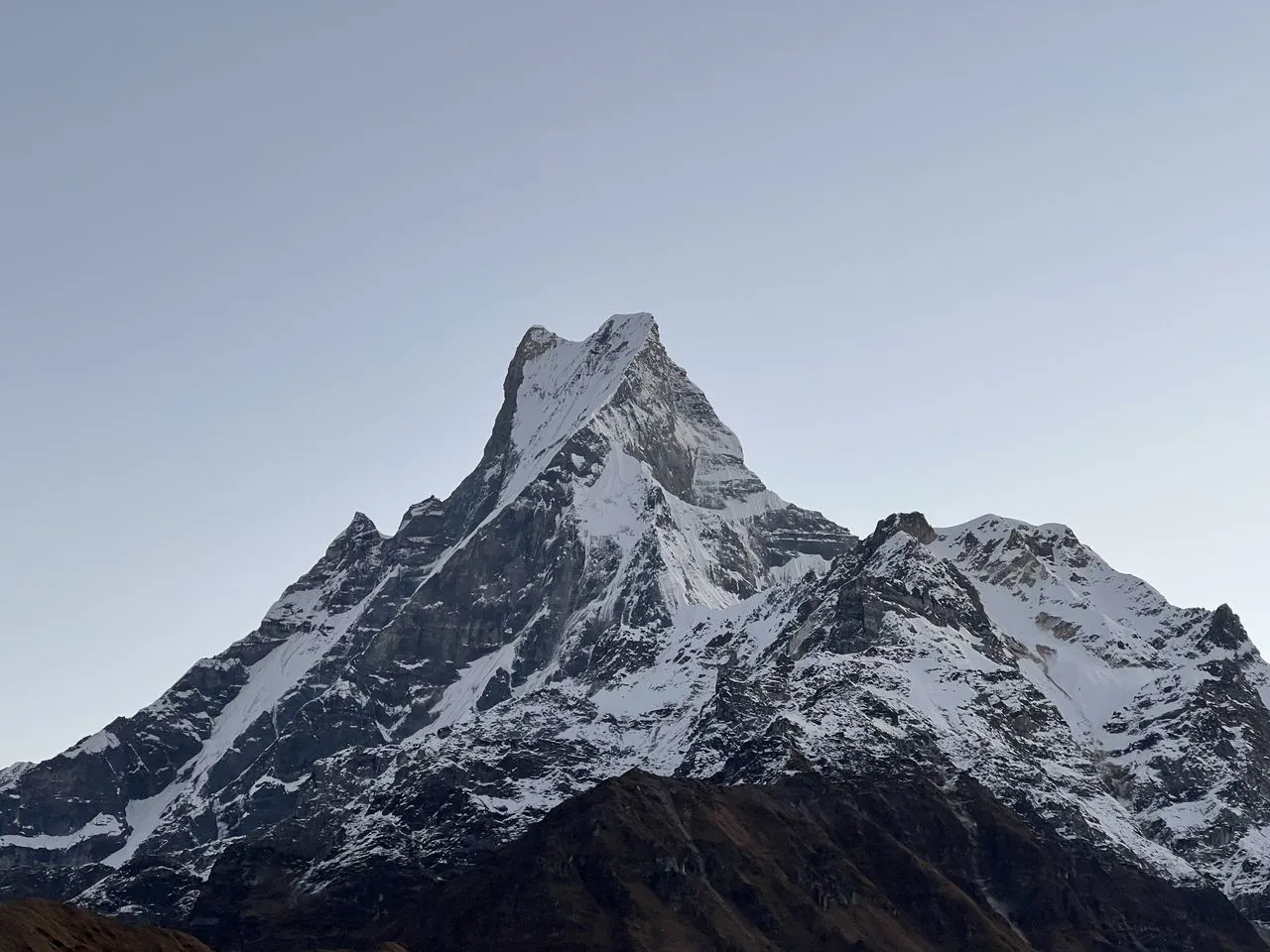
The 5-day Mardi Himal Trek itinerary is the standard option that Merriment Treks recommends for approximately 80% of trekkers. This duration provides the optimal balance of physical demand, altitude safety, experience quality, and time efficiency.
5-Day Itinerary Schedule
| Day | Route | Walking Hours | Overnight | Elevation Change |
|---|---|---|---|---|
| 1 | Pokhara → Kande → Forest Camp | 5-6 hours | Forest Camp (2,520m) | +750m from Kande |
| 2 | Forest Camp → Low Camp | 3-4 hours | Low Camp (3,050m) | +530m |
| 3 | Low Camp → High Camp | 3-5 hours | High Camp (3,580m) | +530m |
| 4 | High Camp → Upper Viewpoint → Siding | 6-8 hours | Siding (1,750m) | +620m then -2,450m |
| 5 | Siding → Pokhara | 2 hours vehicle | Pokhara | -930m by vehicle |
Day-by-Day Breakdown
Day 1: Pokhara to Kande to Forest Camp
The 5-day Mardi Himal Trek itinerary begins with an early morning departure from Pokhara. Merriment Treks arranges private vehicle transport from your hotel to Kande, approximately 1.5 hours along the Pokhara-Baglung Highway.
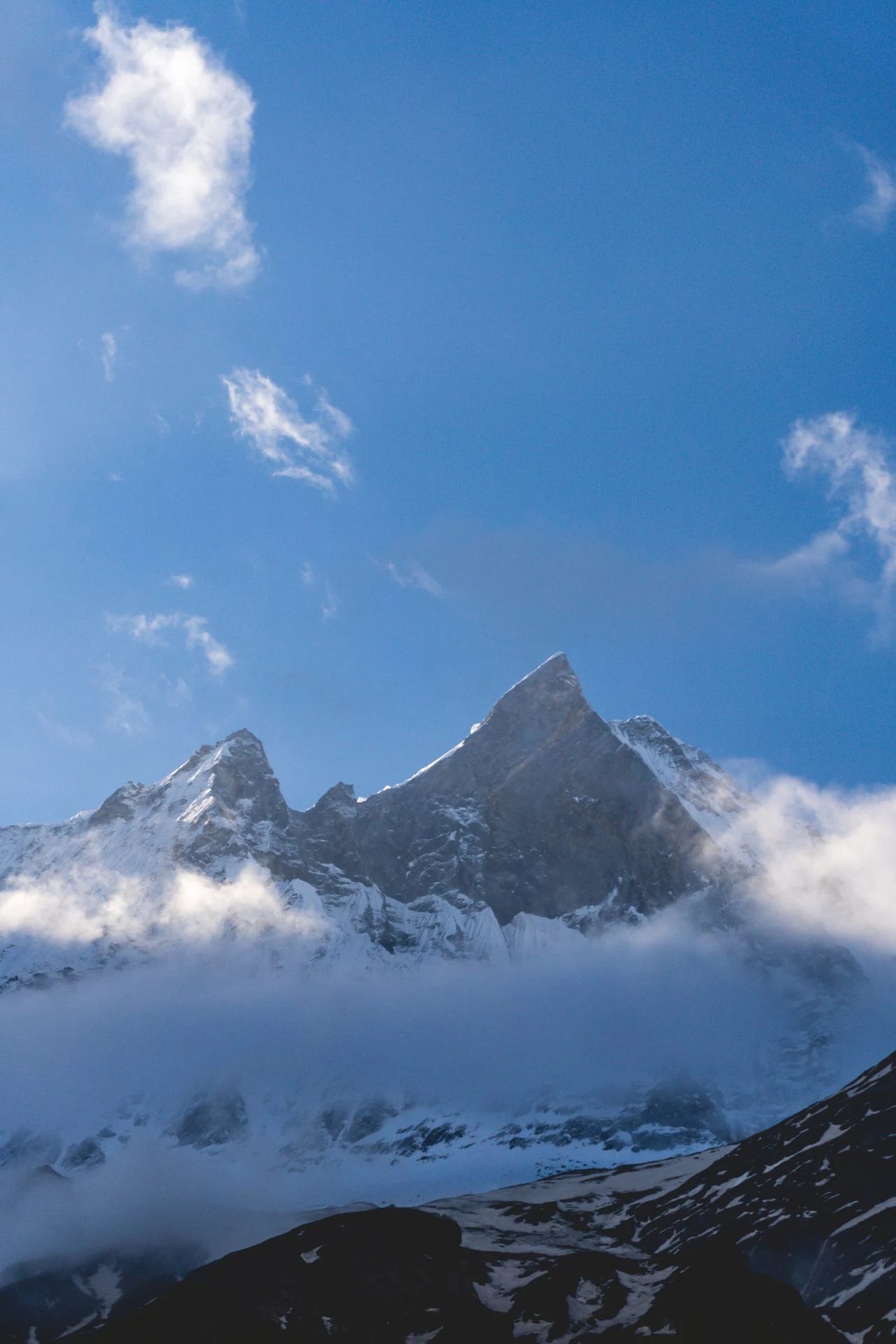
At Kande (1,770m), the trailhead is marked by small shops and the beginning of a stone-paved path that climbs immediately. The first hour brings you to Australian Camp (2,060m), a beautiful grassy ridge with panoramic mountain views. On clear days, you will see Machhapuchhre dominating the skyline, Annapurna South and Hiunchuli to the west.
From Australian Camp, the trail continues through Pothana and Deurali before entering rhododendron forest proper. The forest section is shaded and cool, but the trail remains consistently uphill. You will arrive at Forest Camp (2,520m) in the late afternoon, approximately 5-6 hours after starting from Kande.
Forest Camp is a small settlement of teahouses surrounded by dense forest. The accommodation is basic but comfortable. The dining room with its wood stove becomes a gathering place in the evening. This is your first night at altitude.
Day 2: Forest Camp to Low Camp
This is the shortest walking day of the 5-day Mardi Himal Trek itinerary, providing essential recovery after Day 1 and important acclimatization before higher elevations. The trail climbs steadily through rhododendron forest for 3-4 hours.
The forest on this section is genuinely beautiful—gnarled rhododendron trees draped in moss, occasional clearings with mountain views. The trail is well-defined and the gradient is steady rather than steep. This is trekking at its most pleasant.
You will emerge from the forest at Low Camp (3,050m), where the tree line begins and mountain views open dramatically. Low Camp sits on a ridge with direct views of Machhapuchhre and Annapurna South. The afternoon is free for rest, photography, and enjoying the views.
Merriment Treks considers this day critical for acclimatization. Sleeping at 3,050m helps your body adjust to altitude before the higher overnight at High Camp. The short walking day also allows your legs to recover from Day 1.
Day 3: Low Camp to High Camp
The third day is moderately challenging. The trail climbs from Low Camp through Badal Danda (3,300m) to High Camp (3,580m), taking 3-5 hours depending on pace.
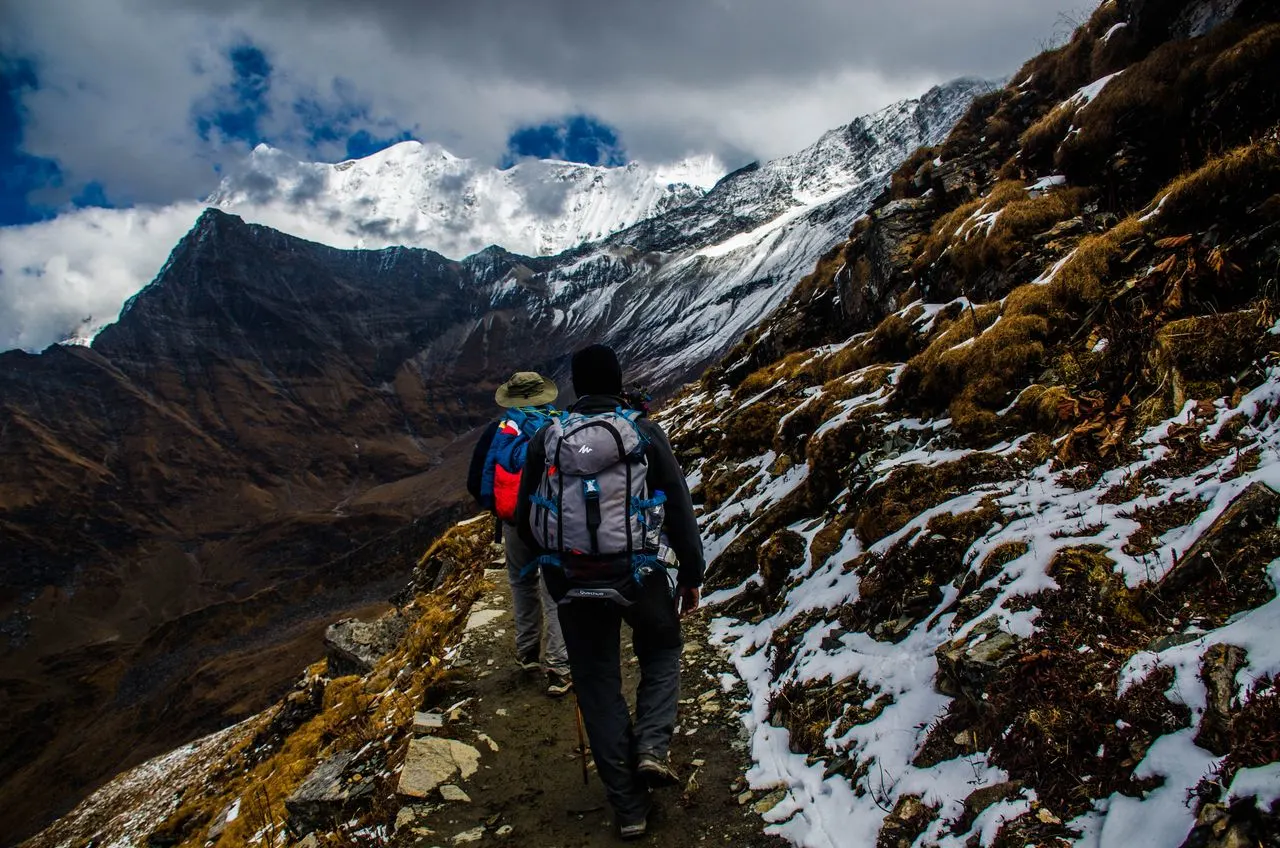
The first section climbs through thinning forest before emerging onto the open ridge at Badal Danda. “Badal Danda” means “Cloud Hill,” and this exposed section often experiences wind and cloud. On clear days, the ridge walking from Badal Danda to High Camp provides dramatic mountain scenery—you are now above the tree line with panoramic views in all directions.
High Camp (3,580m) sits in an alpine environment above the tree line. This is the highest sleeping elevation on the trek, and temperatures drop significantly at night. The accommodation is basic—simple rooms, shared facilities, limited electricity—but the location is extraordinary.
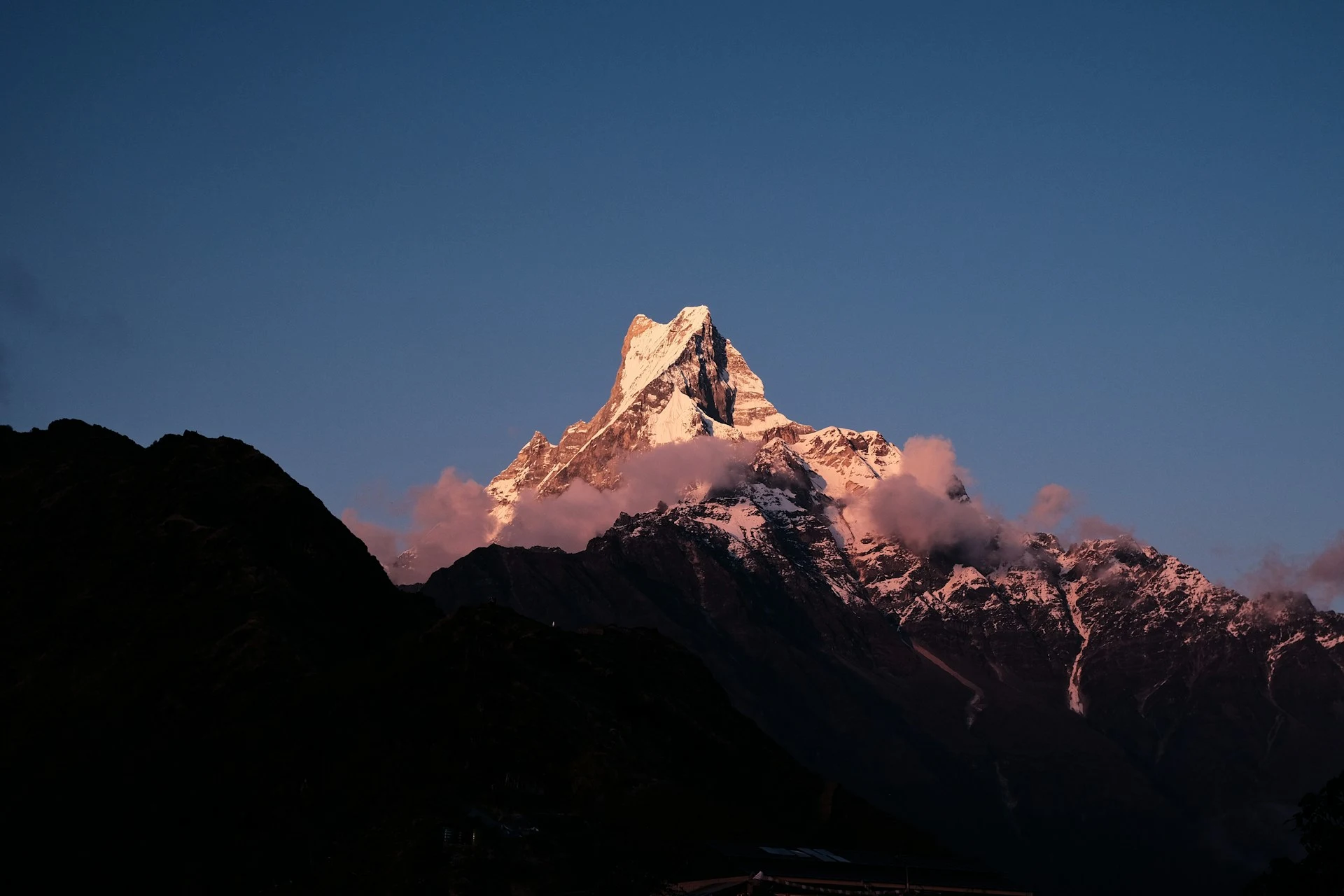
The sunset from High Camp is genuinely one of the best experiences on the Mardi Himal Trek itinerary. As the sun sets behind the Annapurna range, Machhapuchhre glows orange and pink. The stars at night are spectacular from this elevation.
Day 4: High Camp to Upper Viewpoint to Siding
This is the most important day of the 5-day Mardi Himal Trek itinerary and also the longest. The morning begins early—around 4:00 AM—when your Merriment Treks guide wakes you with hot tea. After a quick snack, you begin the climb to Upper Viewpoint in darkness.
The trail to Upper Viewpoint (4,200m) is steep but straightforward, taking 1-1.5 hours. The darkness adds psychological challenge—you can only see as far as your headlamp illuminates—but the reward is extraordinary.
As you climb, the sky gradually lightens behind Machhapuchhre. By the time you reach Upper Viewpoint, the pre-dawn glow is beginning. Then, as the sun rises, the mountains catch fire: Annapurna South first, then Machhapuchhre’s east face transitioning from silhouette to golden pyramid. For 15-20 minutes, the entire panorama glows.
After spending 45-60 minutes at the viewpoint, you descend back to High Camp for a proper breakfast. Then begins the long descent to Siding (1,750m).
The descent from High Camp to Siding takes 4-6 hours and is the most physically demanding section of the 5-day itinerary. The trail drops steeply into the Mardi Khola valley, losing over 1,800 meters of elevation. This is hard on knees and legs. Trekking poles are highly recommended.
You will arrive in Siding in the late afternoon, exhausted but exhilarated. Total walking time for Day 4 is 6-8 hours. Because you have had proper acclimatization over the previous days, it is manageable in a way that the same day would not be in the 4-day itinerary.
Day 5: Siding to Pokhara
The final day is straightforward. A vehicle picks you up in Siding for the 2-hour drive back to Pokhara, arriving by late morning. You will have the afternoon to rest, explore lakeside Pokhara, or celebrate.
6-Day Mardi Himal Trek Itinerary: The Comfortable Option
The 6-day Mardi Himal Trek itinerary is the most comfortable standard option, splitting the trek into shorter daily segments that create a gentler experience. Merriment Treks highly recommends this option for beginners, older trekkers, photography enthusiasts, and anyone who prefers not to feel rushed.
6-Day Itinerary Schedule
| Day | Route | Walking Hours | Overnight | Elevation Change |
|---|---|---|---|---|
| 1 | Pokhara → Kande → Australian Camp | 1-1.5 hours | Australian Camp (2,060m) | +290m from Kande |
| 2 | Australian Camp → Forest Camp | 3-4 hours | Forest Camp (2,520m) | +460m |
| 3 | Forest Camp → Low Camp | 3-4 hours | Low Camp (3,050m) | +530m |
| 4 | Low Camp → High Camp | 3-5 hours | High Camp (3,580m) | +530m |
| 5 | High Camp → Upper Viewpoint → High Camp | 2-3 hours | High Camp (3,580m) | +620m then -620m |
| 6 | High Camp → Siding → Pokhara | 4-6 hours walking + 2 hours vehicle | Pokhara | -1,830m then -930m |
Day-by-Day Breakdown
Day 1: Pokhara to Kande to Australian Camp
The 6-day Mardi Himal Trek itinerary begins with a relaxed first day. After the 1.5-hour drive from Pokhara to Kande, you walk only 1-1.5 hours to Australian Camp (2,060m). This gentle introduction allows you to settle into the trekking rhythm without immediately facing a full day of walking.
Australian Camp is a beautiful grassy ridge with panoramic mountain views. On clear days, you will see Machhapuchhre, Annapurna South, and Hiunchuli. The sunset is often spectacular, and the relatively low elevation means comfortable temperatures.
This easy first day is one of the key advantages of the 6-day itinerary. You arrive at your first overnight stop with energy to explore, photograph, and simply enjoy being in the mountains.
Day 2: Australian Camp to Forest Camp
The second day involves 3-4 hours of walking through forest from Australian Camp to Forest Camp (2,520m). The trail passes through Pothana and Deurali before entering rhododendron forest proper.
This is pleasant walking—shaded forest trails, occasional clearings with mountain views, and a steady but manageable gradient. You will arrive at Forest Camp in the early afternoon with time to rest.
Day 3: Forest Camp to Low Camp
This day mirrors Day 2 of the 5-day itinerary, with 3-4 hours of climbing through rhododendron forest to Low Camp (3,050m). The shorter previous days mean you will arrive feeling fresher than trekkers on the 5-day schedule.
The afternoon at Low Camp provides time for rest, photography, and acclimatization. The mountain views are excellent, and the teahouse terrace is a pleasant place to spend the afternoon.
Day 4: Low Camp to High Camp
The fourth day follows the same route as Day 3 of the 5-day itinerary, climbing from Low Camp through Badal Danda to High Camp (3,580m). You will arrive at High Camp in the early afternoon with plenty of time to rest before sunset.
The sunset from High Camp is a highlight of the 6-day Mardi Himal Trek itinerary. Because you will stay at High Camp for two nights, you can fully enjoy this experience without worrying about the early wake-up for sunrise.
Day 5: High Camp to Upper Viewpoint to High Camp
This is the unique advantage of the 6-day itinerary. Instead of combining sunrise viewing with the long descent to Siding, you climb to Upper Viewpoint for sunrise and then return to High Camp for a second night.
The morning follows the same pattern: 4:00 AM wake-up, 1-1.5 hour climb in darkness, sunrise at Upper Viewpoint (4,200m). But after enjoying the sunrise, you descend back to High Camp for breakfast and a rest afternoon.
This structure allows you to fully appreciate the sunrise without the physical stress of knowing you have 5 more hours of descent ahead. You can linger at the viewpoint, take your time with photography, and simply absorb the experience.
Day 6: High Camp to Siding to Pokhara
The final day involves the long descent from High Camp to Siding (4-6 hours). Because you have had a rest afternoon the previous day, you will tackle this descent with fresher legs than trekkers on shorter itineraries.
From Siding, a vehicle returns you to Pokhara, arriving by late afternoon.
6-Day Itinerary Advantages
Merriment Treks recommends the 6-day itinerary for these specific benefits:
-
Gentle Day 1: Short walking day eases you into trekking
-
Rest afternoon at High Camp: Full enjoyment of sunrise without immediate descent
-
Better acclimatization: Gradual progression reduces altitude risk
-
More photography time: Time at each viewpoint without rushing
-
Reduced physical stress: No single day feels overwhelming
-
Weather flexibility: Extra day provides buffer against poor conditions
Extended Itineraries: 7+ Days
Merriment Treks offers extended Mardi Himal Trek itinerary options for trekkers seeking maximum comfort, additional photography time, or combination with other destinations.
7-Day Option: Extra Night at High Camp
This extends the 6-day itinerary by adding a third night at High Camp, creating two sunrise opportunities at Upper Viewpoint.
| Day | Route | Overnight |
|---|---|---|
| 1 | Pokhara → Kande → Australian Camp | Australian Camp |
| 2 | Australian Camp → Forest Camp | Forest Camp |
| 3 | Forest Camp → Low Camp | Low Camp |
| 4 | Low Camp → High Camp | High Camp |
| 5 | High Camp → Upper Viewpoint → High Camp | High Camp |
| 6 | Rest day at High Camp, optional second sunrise | High Camp |
| 7 | High Camp → Siding → Pokhara | Pokhara |
This option is ideal for photographers who want multiple sunrise chances, or trekkers who want a full rest day at altitude.
7-Day Option: Slower Descent with Village Stay
Instead of descending directly from High Camp to Siding, this option breaks the descent into two days with an overnight in a village along the way. This reduces the strain of the long descent and provides cultural experiences in villages rarely visited by most trekkers.
8+ Day Options
For trekkers wanting more, Merriment Treks can combine Mardi Himal with nearby destinations like Khumai Danda, or add extra days at lower elevations for gradual acclimatization and cultural exploration.
Day-by-Day Elevation, Walking Time & Difficulty
Understanding the day-by-day demands of your Mardi Himal Trek itinerary is essential for proper preparation. Merriment Treks provides this detailed analysis showing elevation changes, walking times, and honest difficulty ratings.
5-Day Itinerary Daily Difficulty
| Day | Route | Elevation Start | Elevation End | Net Gain | Walking Time | Difficulty | Why It Feels This Way |
|---|---|---|---|---|---|---|---|
| 1 | Kande → Forest Camp | 1,770m | 2,520m | +750m | 5-6 hours | Moderate | First day, pack adjustment, sustained uphill |
| 2 | Forest Camp → Low Camp | 2,520m | 3,050m | +530m | 3-4 hours | Easy | Shortest day, pleasant forest |
| 3 | Low Camp → High Camp | 3,050m | 3,580m | +530m | 3-5 hours | Moderate | Altitude noticeable, exposed ridge |
| 4 | High Camp → Upper Viewpoint → Siding | 3,580m | 1,750m | +620m then -2,450m | 6-8 hours | Difficult | Pre-dawn start, long descent, fatigue |
| 5 | Siding → Pokhara | 1,750m | 820m | -930m | 2 hours vehicle | Easy | Vehicle transfer |
Physical and Emotional Difficulty by Day
Day 1 (Moderate)
The first day feels harder than the numbers suggest because you are adjusting to trekking. Your pack feels unfamiliar. Your legs are not yet accustomed to sustained climbing. The elevation gain is steady rather than steep, but it continues for hours.
Emotionally, Day 1 is exciting—new scenery, anticipation, the camaraderie of starting a trek. This emotional energy helps carry you through the physical adjustment.
Day 2 (Easy)
This is the easiest walking day of the 5-day itinerary. The 3-4 hour duration allows recovery from Day 1 while providing essential acclimatization at Low Camp. The forest is beautiful, and the gradient is manageable.
Emotionally, Day 2 is peaceful. The forest environment is calm and meditative. You will likely feel more settled into the trekking rhythm.
Day 3 (Moderate)
The climb to High Camp is physically similar to Day 2 but feels harder due to cumulative fatigue and altitude. The exposed ridge after Badal Danda can be windy and cold.
Emotionally, Day 3 is dramatic. The transition from forest to alpine zone is visually stunning. The mountain views become more intimate and imposing. There is anticipation of reaching the highest overnight stop.
Day 4 (Difficult)
This is genuinely the hardest day of the Mardi Himal Trek itinerary. The pre-dawn wake-up, the dark climb, the emotional intensity of sunrise, and then the long descent combine to create a physically and emotionally demanding day.
The sunrise at Upper Viewpoint is the emotional high point of the entire trek. But the descent to Siding is long and physically draining. By the time you reach Siding, you will be exhausted but deeply satisfied.
Day 5 (Easy)
The vehicle ride back to Pokhara is straightforward. Your legs will be grateful for the rest. Emotionally, this day brings satisfaction, relief, and nostalgia.
Sunrise Planning at High Camp and Upper Viewpoint
The sunrise at Upper Viewpoint is the defining moment of any Mardi Himal Trek itinerary. Proper planning is essential. Merriment Treks provides this detailed timeline and preparation guide.
Sunrise Morning Timeline
| Time | Activity | Details |
|---|---|---|
| 3:45 AM | Guide wakes you | Hot tea or coffee delivered |
| 4:00 AM | Light breakfast | Biscuits, energy bars, or porridge |
| 4:15 AM | Depart High Camp | Headlamp required |
| 4:15-5:30 AM | Climb to Upper Viewpoint | 1-1.5 hours uphill in darkness |
| 5:30 AM | Arrive at 4,200m | Find position, set up camera |
| 5:45-6:15 AM | Pre-dawn glow | Sky lightens behind mountains |
| 6:15-6:45 AM | Sunrise | Peaks catch first light |
| 6:45-7:15 AM | Golden hour | Best photography conditions |
| 7:15-7:45 AM | Begin descent | Return to High Camp for breakfast |
Essential Gear for Sunrise Morning
Merriment Treks recommends preparing these items the night before:
-
Headlamp with fresh batteries — Trail is dark and rocky
-
Warm layers — Temperatures at 4,200m before dawn range from -5°C to 5°C depending on season
-
Gloves and warm hat — Extremities get cold quickly
-
Camera with charged batteries — Cold drains batteries faster
-
Water bottle — Hydration helps with altitude
-
Trekking poles — Useful for steep sections
-
Light snacks — Energy for the climb
What Happens If It’s Cloudy?
Clouds at Upper Viewpoint are always possible, and Merriment Treks wants you to have realistic expectations. If clouds obscure the sunrise:
-
Wait: Conditions can change rapidly at altitude
-
Return tomorrow: If on a 7-day itinerary with two High Camp nights
-
Appreciate the atmosphere: Even in clouds, being at 4,200m is powerful
-
Photograph the clouds: Dramatic formations can create beautiful images
Altitude Progression and Acclimatization
Proper altitude progression is the most important safety consideration in any Mardi Himal Trek itinerary. Merriment Treks designs itineraries specifically to minimize altitude risk.
Altitude Progression by Itinerary
| Night | 4-Day | 5-Day | 6-Day |
|---|---|---|---|
| 1 | Forest Camp (2,520m) | Forest Camp (2,520m) | Australian Camp (2,060m) |
| 2 | High Camp (3,580m) | Low Camp (3,050m) | Forest Camp (2,520m) |
| 3 | Siding (1,750m) | High Camp (3,580m) | Low Camp (3,050m) |
| 4 | — | Siding (1,750m) | High Camp (3,580m) |
| 5 | — | — | High Camp (3,580m) |
| 6 | — | — | Siding (1,750m) |
Understanding Safe Progression
The body needs time to adjust to reduced oxygen at altitude. The general rule is to limit sleeping altitude gain to 300-500m per day above 3,000m.
The 5-day itinerary follows this guideline:
-
Night 1 (Forest Camp, 2,520m): Below altitude where most people experience symptoms
-
Night 2 (Low Camp, 3,050m): First night above 3,000m, gain of 530m
-
Night 3 (High Camp, 3,580m): Gain of 530m, within safe range
-
Upper Viewpoint (4,200m): Visited but not slept at
The 4-day itinerary violates this guideline:
-
Night 1 (Forest Camp, 2,520m): Reasonable
-
Night 2 (High Camp, 3,580m): Gain of 1,060m, above recommended limit
The 6-day itinerary exceeds the guideline:
-
Night 1 (Australian Camp, 2,060m): Very gentle
-
Night 2 (Forest Camp, 2,520m): Gain of 460m
-
Night 3 (Low Camp, 3,050m): Gain of 530m
-
Night 4 (High Camp, 3,580m): Gain of 530m
Altitude Sickness Prevention
Merriment Treks guides are trained to recognize altitude sickness and manage it. Key prevention strategies:
-
Walk slowly — Maintain a pace that allows conversation
-
Stay hydrated — Drink 3-4 liters daily
-
Eat regularly — Even if appetite is reduced
-
Avoid alcohol — Increases dehydration and masks symptoms
-
Communicate symptoms — Tell your guide immediately
-
Consider Diamox — Consult your doctor before trekking
Transportation: Pokhara to Kande and Siding to Pokhara
Transportation logistics are essential to any Mardi Himal Trek itinerary. Merriment Treks arranges all transportation as part of our packages.
Pokhara to Kande
| Transport Option | Duration | Cost (2026 Approximate) | Notes |
|---|---|---|---|
| Private Vehicle (Merriment Treks) | 1.5 hours | Included | Recommended |
| Local Bus | 2-3 hours | NPR 200-300 | Crowded, frequent stops |
| Taxi | 1.5 hours | NPR 2,500-3,500 | Negotiate before departure |
| Shared Jeep | 2 hours | NPR 500-800 | Less comfortable |
Siding to Pokhara
| Transport Option | Duration | Cost (2026 Approximate) | Notes |
|---|---|---|---|
| Private Vehicle (Merriment Treks) | 2 hours | Included | Recommended |
| Local Jeep | 2.5-3 hours | NPR 800-1,200 | May require waiting |
| Local Bus | 3-4 hours | NPR 300-400 | Infrequent departures |
Important Note: The road to Siding is not as well-developed as the Pokhara-Kande road. During monsoon season or after heavy rain, conditions can deteriorate. Merriment Treks monitors road conditions and adjusts transport arrangements as needed.
Permits and Guide Requirements for 2026
Understanding permit and guide requirements is essential before starting any Mardi Himal Trek itinerary. Merriment Treks handles all permit arrangements for our clients.
Required Permits for 2026
| Permit | Cost (2026) | Where Obtained | Required For |
|---|---|---|---|
| TIMS Card | NPR 3,000 (Foreign), NPR 2,000 (SAARC) | Nepal Tourism Board or registered agency | All trekkers |
| ACAP Permit | NPR 3,000 (Foreign), NPR 1,000 (SAARC) | ACAP entry points or registered agency | All trekkers in Annapurna Conservation Area |
Merriment Treks handles all permit processing. Your guide will carry permits and present them at checkpoints.
Guide Requirement
Since April 2023, the Nepal Tourism Board has required all foreign trekkers to use a licensed trekking guide in designated trekking areas, including Mardi Himal. Independent trekking without a guide is no longer permitted for foreign nationals.
Merriment Treks provides licensed, experienced guides for all Mardi Himal Trek itineraries. Our guides hold valid licenses, carry first aid kits, know the route intimately, and manage all logistics.
Accommodation and Food on the Mardi Himal Trek
Understanding teahouse accommodation and food expectations is essential for preparing for your Mardi Himal Trek itinerary.
Teahouse Accommodation by Location
| Location | Quality | Facilities | Notes |
|---|---|---|---|
| Australian Camp | Good | Shared rooms, some private | Limited lodges |
| Forest Camp | Basic to Good | Shared rooms, common dining | Fewer options |
| Low Camp | Good | Shared rooms, some private | More options |
| High Camp | Basic | Shared rooms, limited electricity | Highest and coldest |
| Siding | Basic to Good | Shared rooms, common dining | Village guesthouses |
What to Expect
Rooms: Simple twin beds, foam mattresses, basic bedding. Merriment Treks recommends bringing a sleeping bag rated to at least -5°C, especially for High Camp.
Bathrooms: Shared toilet facilities. Hot showers available at some locations for NPR 300-500. At High Camp, hot water may not be available.
Electricity: Available at most locations for charging (NPR 200-300 per charge). At High Camp, electricity may be limited. Bring a power bank.
Dining: Common dining room with stove or heater. Social experience with other trekkers.
Food on the Trail
Meals provided at teahouses. Breakfast and dinner at overnight locations. Lunch at teahouses along the trail.
Typical Menu:
| Meal | Options |
|---|---|
| Breakfast | Porridge, eggs, Tibetan bread, pancakes, muesli |
| Lunch | Dal bhat, fried rice, noodles, momos, sandwiches |
| Dinner | Dal bhat, pasta, fried potatoes, soups, curries |
| Snacks | Chocolate, biscuits, fruit, energy bars |
Dal Bhat is the traditional Nepali meal of rice, lentil soup, and vegetables. Nutritious, filling, and provides excellent energy. Most teahouses offer unlimited refills.
Merriment Treks recommendation: Eat dal bhat at least once daily for sustained energy.
Common Itinerary Mistakes and How to Avoid Them
Merriment Treks has observed several common mistakes trekkers make when planning their Mardi Himal Trek itinerary.
Mistake 1: Choosing Too Short an Itinerary
The Problem: Choosing 4 days to save time, not realizing the compressed schedule creates dangerously long days, increases altitude risk, and diminishes enjoyment.
The Solution: Choose 5 days as a minimum. The extra day provides essential acclimatization and creates a significantly better experience.
Mistake 2: Not Planning for Sunrise
The Problem: Some itineraries do not emphasize overnight at High Camp, meaning trekkers miss the sunrise opportunity.
The Solution: Ensure your itinerary includes overnight at High Camp. This is non-negotiable for the full experience.
Mistake 3: Underestimating the Descent
The Problem: The descent from High Camp to Siding is often harder on knees than any uphill section.
The Solution: Bring trekking poles and knee support if needed. Respect the descent.
Mistake 4: Ignoring Altitude Considerations
The Problem: Assuming altitude will not affect them because Mardi Himal is “only” 4,200m.
The Solution: Understand that sleeping at High Camp (3,580m) can cause symptoms in anyone. Follow acclimatization guidelines.
Mistake 5: Packing Too Much
The Problem: Overpacking creates unnecessary weight.
The Solution: Pack light. One set of trekking clothes, one set of evening clothes, warm layers, basic toiletries.
Mistake 6: Not Building Weather Contingency
The Problem: Bad weather can disrupt even the best-planned itinerary.
The Solution: Choose an itinerary with flexibility. The 6-day option provides more buffer.
How to Customize Your Mardi Himal Itinerary
Merriment Treks offers customizable Mardi Himal Trek itineraries that can be adjusted to meet individual needs.
Common Customization Requests
| Customization | Description | Best For |
|---|---|---|
| Extra Night at High Camp | Two nights for multiple sunrises | Photographers |
| Slower Descent | Split descent into two days | Knee concerns |
| Australian Camp Start | Easy first day | Beginners |
| Direct to Forest Camp | Faster start | Experienced trekkers |
| Village Extension | Additional cultural stops | Culture-focused |
| Private Guide & Porter | Dedicated service | Couples, families |
How to Request Customization
Contact Merriment Treks directly. Our team will design an itinerary matching your fitness, time constraints, interests, and budget.
Important Considerations
-
Altitude safety: Any customization must maintain safe progression
-
Weather windows: Extra days provide buffer
-
Physical limitations: Longer days require better fitness
-
Cost implications: Additional days increase costs
-
Seasonal constraints: Some customizations impractical during certain seasons
Frequently Asked Questions About Mardi Himal Trek Itinerary
1. How many days do I need for Mardi Himal trek?
Five days is the standard Mardi Himal Trek itinerary from Pokhara to Pokhara. This includes overnight stops at Forest Camp, Low Camp, High Camp, and Siding. It provides proper altitude progression, includes sunrise at Upper Viewpoint, and creates manageable daily walking hours.
2. Can I do Mardi Himal trek in 4 days?
Yes, but Merriment Treks does not recommend it for most trekkers. The compressed schedule creates long days (7-9 hours), increases altitude risk, and diminishes enjoyment. Choose 5 days if at all possible.
3. What is the hardest day on the Mardi Himal trek?
Day 4 of the 5-day itinerary (High Camp to Upper Viewpoint to Siding) is hardest. It combines pre-dawn climbing, sunrise viewing, and a long descent. Total walking time can exceed 8 hours.
4. Is Mardi Himal trek suitable for beginners?
Yes, the 6-day itinerary is suitable for beginners with reasonable fitness. Shorter daily walking hours and proper altitude progression make it accessible. The 5-day option works for fit beginners.
5. Where do I sleep on the Mardi Himal trek?
You sleep in teahouses at Forest Camp, Low Camp, High Camp, and Siding. In the 6-day itinerary, you also sleep at Australian Camp. Rooms are simple with twin beds and shared bathrooms.
6. How cold is High Camp?
High Camp (3,580m) is cold, especially at night and in winter. Nighttime temperatures range from 5°C to -10°C depending on season. Bring a sleeping bag rated to at least -5°C.
7. Do I need a guide for Mardi Himal trek?
Yes, since April 2023, the Nepal Tourism Board requires all foreign trekkers to use a licensed guide. Merriment Treks provides licensed, experienced guides for all itineraries.
8. What permits do I need for Mardi Himal?
You need the TIMS card and the ACAP permit. Merriment Treks handles all permit processing for our clients.
9. What is the best season for Mardi Himal trek?
October to November and March to April are the best seasons. Autumn offers post-monsoon clarity. Spring offers warmer temperatures and blooming rhododendrons. Winter offers clear skies but cold conditions.
10. How much does the Mardi Himal trek cost?
The trek typically costs USD 400-800 depending on duration, group size, and services. Merriment Treks packages include transportation, permits, guide, accommodation, and meals.
11. Can I see Mount Everest from Mardi Himal?
No, Mount Everest is not visible from any point on the Mardi Himal trek. You will see Machhapuchhre, Annapurna South, Hiunchuli, and other Annapurna massif peaks.
12. What is the difference between Upper Viewpoint and Base Camp?
Upper Viewpoint (4,200m) is the primary sunrise destination with the broadest panorama. Base Camp (4,500m) is 45-60 minutes further with slightly closer views. For most trekkers, Upper Viewpoint provides essentially the same experience.
13. How do I get from Pokhara to Kande?
Kande is reached by vehicle from Pokhara in approximately 1.5 hours. Merriment Treks arranges private vehicle transport as part of all packages.
14. What is the daily walking distance on Mardi Himal trek?
Daily walking distances vary from 3 km to 12 km. Walking times range from 1.5 hours to 7-8 hours. Distances are approximate as Nepal trails are measured by walking time.
15. Can I customize my Mardi Himal trek itinerary?
Yes, Merriment Treks offers customizable itineraries. Common customizations include extra nights at High Camp, slower descents, and village extensions.