Annapurna Circuit trek difficulty is moderate to challenging, but it is not a technical climb. You don’t need mountaineering skills or elite fitness, but you do need good cardiovascular endurance, strong legs, altitude awareness, and the mental stamina to walk for around 14–18 days across constantly changing terrain. The route takes you from lower, warmer valleys through steep trails and long ascents to the high-altitude Thorong La Pass at 5,416 meters.
For a reasonably fit beginner, the trek is achievable with proper training, a sensible itinerary, and gradual acclimatization. The biggest challenges are often the long walking days, repeated elevation gains and losses, altitude, cold weather, and accumulated fatigue. Annapurna Circuit trek difficulty can feel very different depending on your fitness, pace, backpack weight, weather, and how well your body adapts to altitude.
This guide breaks down the real challenges, fitness requirements, altitude risks, and practical training needed for a successful 2026 trek.
How Difficult is the Annapurna Circuit Trek? — The Honest Answer
Most guides describe the Annapurna Circuit as “moderate to challenging.” That’s technically accurate but practically useless .
The circuit is technically non-difficult — there’s no rock climbing, no glacier travel, no ropes required . The trail is a well-established path that requires no special mountaineering skills .
But technical ease doesn’t mean physical ease. The difficulty comes from altitude, distance, and elevation gain . You’re walking approximately 259 kilometers over 14-18 days with 15,124 meters of ascent and 14,888 meters of descent . At 5,416 meters (Thorong La), the air holds roughly 50% of sea-level oxygen .
What “moderate to challenging” actually means in practice:
-
Long walking days (5-7 hours average)
-
Sustained altitude above 3,000 meters
-
One extremely long day crossing Thorong La (8-10 hours)
-
Consecutive days of walking with minimal rest
-
Variable terrain and weather
-
Risk of altitude sickness
The 12 Factors That Determine Annapurna Circuit Trek Difficulty
No single factor determines the difficulty. It’s the combination that makes the trek demanding.
| Factor | Difficulty Level | Why |
|---|---|---|
| Cardiovascular Endurance | High | You’re walking 5-7 hours daily at altitude |
| Leg Strength | High | Steep ascents and descents demand muscular endurance |
| Uphill Walking | High | Extended climbs, especially before Thorong La |
| Downhill Walking | High | 1,600-meter descent from Thorong La destroys knees |
| Consecutive Days | Medium-High | Day 5 feels harder than Day 1 |
| Altitude | High | Above 3,500m, your body works nearly twice as hard |
| Thorong La Crossing | Very High | 8-10 hour day, 5,416m, freezing conditions |
| Weather | Medium | Can close the pass in winter; landslides in monsoon |
| Terrain | Medium | Packed dirt, scree, loose rocks, some snow |
| Pack Weight | Medium | Daypack 5-8kg without porter; porter reduces significantly |
| Recovery | Medium | Sleep quality suffers at altitude |
| Mental Endurance | High | 14-18 days of walking tests motivation |
Why Mental Endurance Matters
This is the factor that most guides ignore. After a week of waking up cold, packing your bag, and walking for hours, the mental fatigue can be worse than the physical. Boredom and impatience are real risks . A trek of this duration requires a mindset that accepts walking as the main activity of your day, every day.
Thorong La Pass Difficulty — The Decisive Day
Thorong La Pass is the hardest single day of the Annapurna Circuit, and it’s the section that makes or breaks the trek.
Thorong La at a glance:
-
Elevation: 5,416 meters (17,769 feet)
-
Pass day distance: 15-17 km from Thorong Phedi/High Camp to Muktinath
-
Pass day duration: 8-10 hours
-
Elevation gain (pass day): +536m to +876m
-
Elevation loss (pass day): -1,616m descending to Muktinath
-
Effective oxygen: ~50% of sea level
What the crossing actually looks like :
Phase 1: The Pre-Dawn Climb (3:30-4:00 AM start)
You leave Thorong Phedi (4,540m) or High Camp (4,880m) in complete darkness. Headlamps on. Temperatures can drop to -10°C or below . You climb continuously for 3-5 hours over scree, loose rocks, and often packed snow. The trail has false summits that test your mental endurance .
Phase 2: The Summit
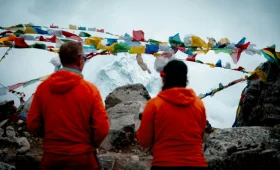
You reach the prayer flags at 5,416m. The wind picks up significantly after 10 AM . You stay briefly for photos and a rest. Then you descend.
Phase 3: The Descent
This is where many trekkers suffer most. You drop 1,600 meters over 7-8 km to Muktinath (3,800m). The descent is through loose scree and rocky trails. “This section destroys your knees if you don’t use trekking poles” .
Success rate: Approximately 85-90% of trekkers who arrive at Thorong Phedi in good health make a successful crossing . The 10-15% who turn back do so for:
-
Poor acclimatization (most common)
-
Sudden bad weather
-
Serious AMS symptoms
-
Starting too late (after 5-6 AM)
The key insight: Thorong La is fully non-technical . It’s a walk — but it’s a walk at 5,416 meters through freezing conditions with a long descent that challenges your knees.
Altitude vs Physical Fitness — What’s the Bigger Challenge?
This is the most misunderstood aspect of the Annapurna Circuit.
Physical fitness determines how efficiently your muscles work.
Acclimatization determines how your body adapts to reduced oxygen .
They are not the same thing.
| Aspect | Physical Fitness | Acclimatization |
|---|---|---|
| What it affects | Walking speed, stamina, recovery | Breathing, sleep quality, AMS risk |
| Can you train for it? | Yes, extensively | Partially, but mostly on the trek |
| Does being fit prevent AMS? | No | No |
| What matters more at Thorong La? | Secondary | Primary |
Critical truth: Being extremely fit does not prevent altitude sickness. A marathon runner who flies to altitude too fast still gets AMS . Conversely, an average-fit trekker who acclimatizes properly can complete the trek.
The Annapurna Circuit gives you natural acclimatization by starting low (760m at Besisahar) and climbing gradually over 8 days to Manang (3,540m) before the Thorong La push . This is a huge advantage over treks like EBC where you fly into higher altitudes.
The golden rule above 3,500 meters: Walk 300m per hour of altitude gain and add a rest day for every 1,000m gained . The acclimatization stop at Manang (3,519m) is essential and should not be rushed or skipped .
Daily Walking Demands
Typical day: 5-7 hours of walking
Total days: 14-18 days (or 8-10 if using road transport for sections)
Section-by-section breakdown:
| Section | Days | Walking Hours/Day | Elevation | Key Challenge |
|---|---|---|---|---|
| Besisahar to Chame | 3-4 | 5-6 | 760m to 2,670m | Road sections and dust |
| Chame to Manang | 2-3 | 5-7 | 2,670m to 3,540m | Gradual altitude gain, acclimatization day |
| Manang to Thorong Phedi | 2 | 4-6 | 3,540m to 4,540m | Cold, thinning air |
| Thorong La Pass Day | 1 | 8-10 | 4,540m to 5,416m then down to 3,800m | Extreme altitude, long day, steep descent |
| Muktinath to Jomsom | 1-2 | 5-6 | 3,800m to 2,700m | Descent, Tibetan plateau landscape |
| Jomsom to Pokhara | 1 | Transport | 2,700m to 800m | Road transport available |
The “hardest” section after Thorong La is often the descent from Muktinath, which is steep and rocky .
Uphill vs Downhill Difficulty
Uphill feels harder during the climb — your heart pounds, your breathing is labored, and you stop frequently.
Downhill is objectively harder on your body — it stresses your knees, quads, and ankles more than ascents .
“The descents were tough in their own way — descending lots of steep steps really hammers your knees after a while” .
The 1,600-meter descent from Thorong La to Muktinath is the most physically damaging section of the entire trek . Trekking poles are not optional here — they’re essential for protecting your knees .
Terrain and Trail Conditions
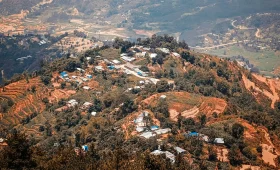
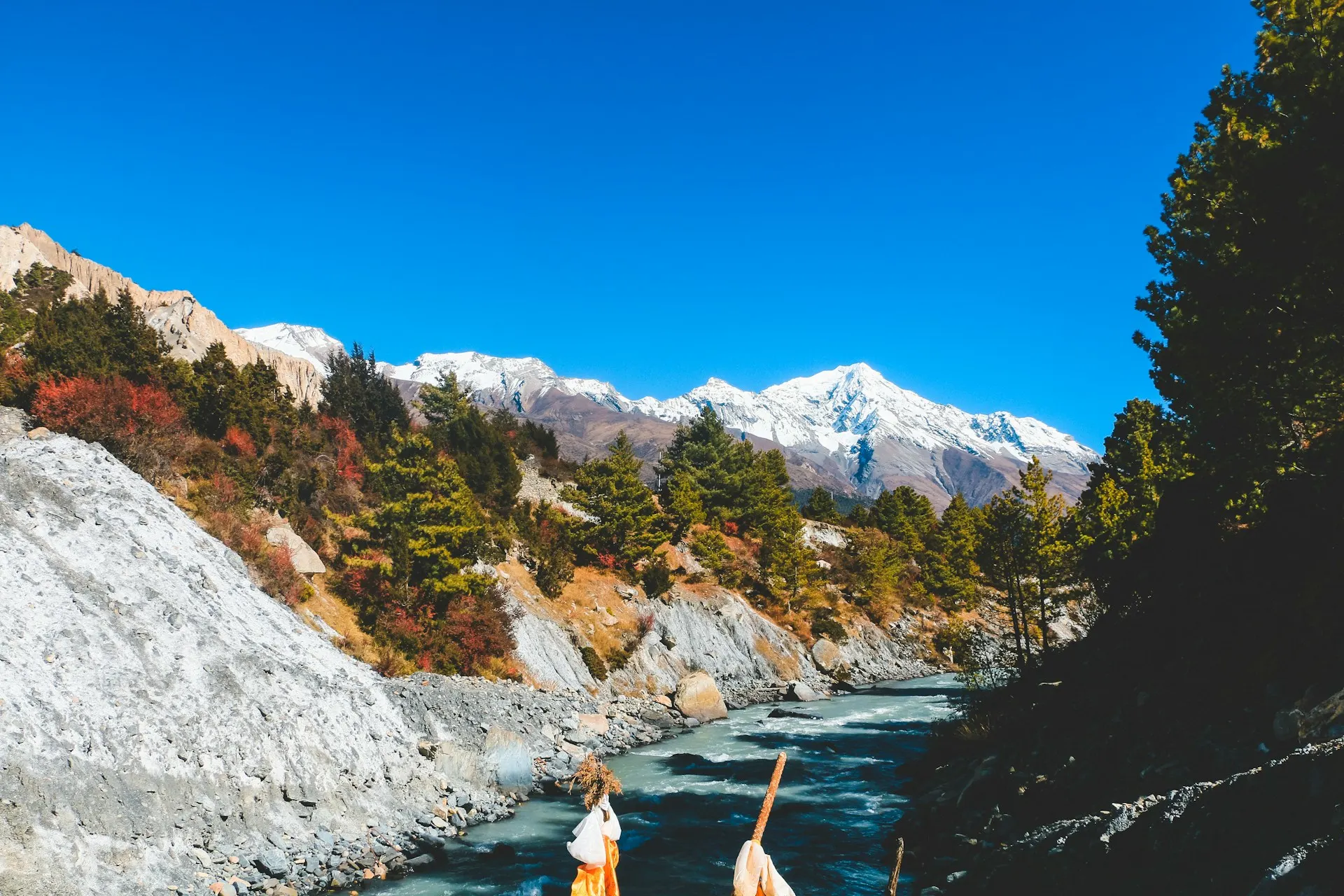
The Annapurna Circuit offers unmatched visual storytelling because you walk through multiple climate zones :
-
Subtropical jungles — humid, lush, green rice terraces, rhododendron forests
-
Alpine terrain — rocky, cold, thin air
-
High-altitude desert — arid, Tibetan-influenced Mustang region
-
Glacial valleys — massive ice formations
Technically, the trail is non-technical — no climbing, no ropes, no glaciers . But surfaces vary: packed dirt, loose rock, scree, occasional snow, and suspension bridges.
How Weather Affects Difficulty
| Season | Months | Conditions | Difficulty |
|---|---|---|---|
| Autumn (Best) | Sept-Nov | Clear skies, stable, moderate cold | Lowest |
| Spring | Mar-May | Warmer, rhododendrons, variable | Low-Medium |
| Monsoon | Jun-Aug | Rain, landslides, leeches, pass may close | High |
| Winter | Dec-Feb | Heavy snow, pass often closed | Very High |
Most trekkers experience the best conditions in October and November when skies are crystal clear . Spring (March-May) is the second-best option with warmer temperatures and lush landscapes .
Monsoon warning: Road access in lower sections gets disrupted by landslides .
Winter: The pass can be closed entirely due to heavy snowfall . Genuinely cold temperatures make Thorong La difficult or temporarily closed.
Can Beginners Do the Annapurna Circuit?
Yes — but “beginner” needs definition .
Who can do it:
-
Regular hikers who can walk 5-7 hours for multiple days
-
People with reasonable baseline fitness
-
Trekkers who respect altitude and follow acclimatization
-
People in their 60s (there’s no upper age limit)
Who should reconsider:
-
Anyone who can’t walk continuously for 5 hours at home
-
Anyone with a history of severe altitude sickness
-
Anyone unwilling to walk for 14-18 days
-
Anyone with untreated knee or ankle problems
The big advantage for beginners: You can make the trek easier by:
-
Taking a longer itinerary (more rest days)
-
Using a porter (reduces pack weight significantly)
-
Hiring a guide (removes navigation/logistics stress)
-
Starting from lower elevations (Besisahar vs road shortcuts)
Fitness Requirements and Training
The honest benchmark:
-
Can you walk 5-7 hours consecutively for multiple days?
-
Can you handle 500-1,000m elevation gain in a day?
-
Are your knees stable on steep descents?
Training plan for Annapurna Circuit :
| Phase | Weeks | Focus | Weekly Hours |
|---|---|---|---|
| Aerobic Base | 1-4 | 3-4x cardio (running, cycling, stairs), 45-75 mins | 3-5 |
| Build Volume | 5-8 | Hill hikes (500-700m gain), loaded pack, 6-8 hour hikes | 5-7 |
| Peak Volume | 9-12 | Hard hikes with pack, 8-9 hour capability, 900-1,000m gain | 7-9 |
| Taper | 13-14 | Reduce volume by 50%, keep intensity light | 3-4 |
Key training elements :
-
3x weekly cardio at 65-75% max heart rate for 45-60 minutes
-
1x weekly interval session from week 4
-
Loaded hikes with a daypack (4-5kg, increasing to 8-10kg)
-
Stair climbing — this is the most specific preparation
-
Downhill training — walk down hills to condition your knees
Time needed: 10-14 weeks of preparation, depending on starting fitness . Sedentary starters need 14-16 weeks; active trekkers can compress to 10 weeks .
How Itinerary Choice Affects Difficulty
Longer itinerary = easier trek. This seems counterintuitive but it’s true.
| Itinerary Length | Days | Acclimatization | Difficulty |
|---|---|---|---|
| Standard | 14-18 | Good | Moderate |
| Shortened | 10-12 | Minimal | Hard |
| Extended | 18-21 | Excellent | Easier |
The extra days are for acclimatization. Cutting a day out of the schedule to save time almost always means cutting it from the acclimatization section — exactly where you don’t want to rush .
Porter vs No Porter
| Aspect | With Porter | Without Porter |
|---|---|---|
| Pack weight | Daypack only (4-5kg) | Full pack (12-15kg) |
| Energy expenditure | Lower | Higher |
| Knee stress | Lower | Higher |
| Cost | +$300-450 for trek | Free |
| Difficulty reduction | Significant | You carry everything |
“If you pick a guided trip that includes porters to carry your packs, you’ll make things much easier for yourself” .
Annapurna Circuit vs ABC vs EBC
| Comparison | Annapurna Circuit | ABC Trek | Everest Base Camp |
|---|---|---|---|
| Max altitude | 5,416m (Thorong La) | 4,130m | 5,545m (Kala Patthar) |
| Days | 14-18 | 5-7 | 12-14 |
| Difficulty | Moderate-Challenging | Moderate | Strenuous |
| Main challenge | Endurance + Thorong La | Acclimatization | High altitude |
| Technical | Non-technical | Non-technical | Non-technical |
| Best for | Variety, culture, endurance | Short time, first-timers | Iconic peak experience |
Key comparison:
-
ABC is shorter and lower — good for beginners or those with limited time
-
EBC has higher altitude stress and more sustained time above 4,000m — altitude is the main challenge
-
Annapurna Circuit is longer with one major push (Thorong La) — endurance is the main challenge
Which is harder? It depends. EBC is harder on altitude; Annapurna Circuit is harder on endurance. Most objective assessments rate Annapurna Circuit as more physically demanding overall due to the extended duration and cumulative fatigue.
Safety and Altitude Awareness
Acute Mountain Sickness (AMS) is a real risk above 3,500m .
AMS symptoms to watch :
-
Headache
-
Fatigue
-
Loss of appetite
-
Mild nausea
-
Dizziness
Severe symptoms requiring immediate descent :
-
Severe headache
-
Vomiting
-
Poor coordination
-
Extreme fatigue
-
Confusion
-
Inability to walk
-
Wet cough
-
Blue lips
“The only cure for severe AMS is immediate descent” .
Altitude safety tips :
-
Climb high, sleep low — the golden rule
-
Walk 300m per hour of altitude gain above 3,500m
-
Add a rest day for every 1,000m gained
-
Drink 3-4 liters of water per day
-
Don’t skip the Manang acclimatization day
-
Avoid alcohol above 3,000m
Common Mistakes That Make the Trek Harder
-
Rushing the acclimatization section — cutting days in Manang is the most common mistake
-
Starting Thorong La too late — leave by 4:00 AM; the wind arrives after 10 AM
-
Skipping training — legs need to be conditioned for descents
-
Not using trekking poles — your knees will regret this on the Thorong La descent
-
Carrying too much weight — overpacking makes every day harder
-
Not checking seasonal weather — winter can close the pass
-
Ignoring AMS symptoms — summit fever kills; a functioning body can try again another day
How to Make Annapurna Circuit Easier
-
Take a longer itinerary — 18-21 days instead of 14
-
Add acclimatization days — two in Manang, one at Thorong Phedi
-
Use a porter — reduces pack weight significantly
-
Hire a guide — removes navigation and logistics stress
-
Train specifically for descents — strengthen quads and knees
-
Get altitude medication (Diamox) prescribed — if your doctor recommends it
-
Choose autumn season — best weather stability
-
Start the Thorong La day at 3:30-4:00 AM — beat the wind
When to Reconsider the Trek
Be honest with yourself. The Annapurna Circuit may not be right for you if:
-
You cannot walk 5-7 hours consecutively
-
You have untreated knee or ankle problems
-
You have a history of severe altitude sickness
-
You are unwilling to train for 10+ weeks
-
You dislike walking as your primary activity for days on end
-
You’re inflexible with your schedule (weather and acclimatization require flexibility)
If any of these apply, consider the Annapurna Base Camp trek instead — it’s shorter, lower, and more forgiving .
How Merriment Treks Helps
Merriment Treks specializes in helping trekkers prepare for — and successfully complete — the Annapurna Circuit. Here’s how:
-
Itinerary design — build in proper acclimatization days, not just the minimum
-
Guide coordination — licensed guides who manage the Thorong La crossing and checkpoints
-
Permit assistance — ACAP permit (NPR 3,000) arranged in advance
-
Transportation — from Pokhara to the trailhead and back
-
Porter arrangement — reducing your physical load
-
Gear advice — practical recommendations for altitude and weather, including micro-spikes for Thorong La
Merriment Treks doesn’t just sell a trek. They help you understand whether you’re ready, how to prepare, and what to expect in 2026.
Conclusion on Annapurna Circuit Trek Difficulty
The Annapurna Circuit is difficult — but it’s the kind of difficult that’s achievable with the right preparation.
The hard parts:
-
Thorong La Pass at 5,416m
-
14-18 days of walking
-
15,000m+ of elevation gain
-
Altitude, cold, and variable weather
The doable parts:
-
No technical climbing required
-
Natural acclimatization from starting low
-
Teahouse infrastructure makes logistics easier
-
You can choose longer itineraries for easier days
-
A porter makes the physical side manageable
The question isn’t “can I do it?” It’s “will I respect the altitude, train my legs, and prepare mentally?”
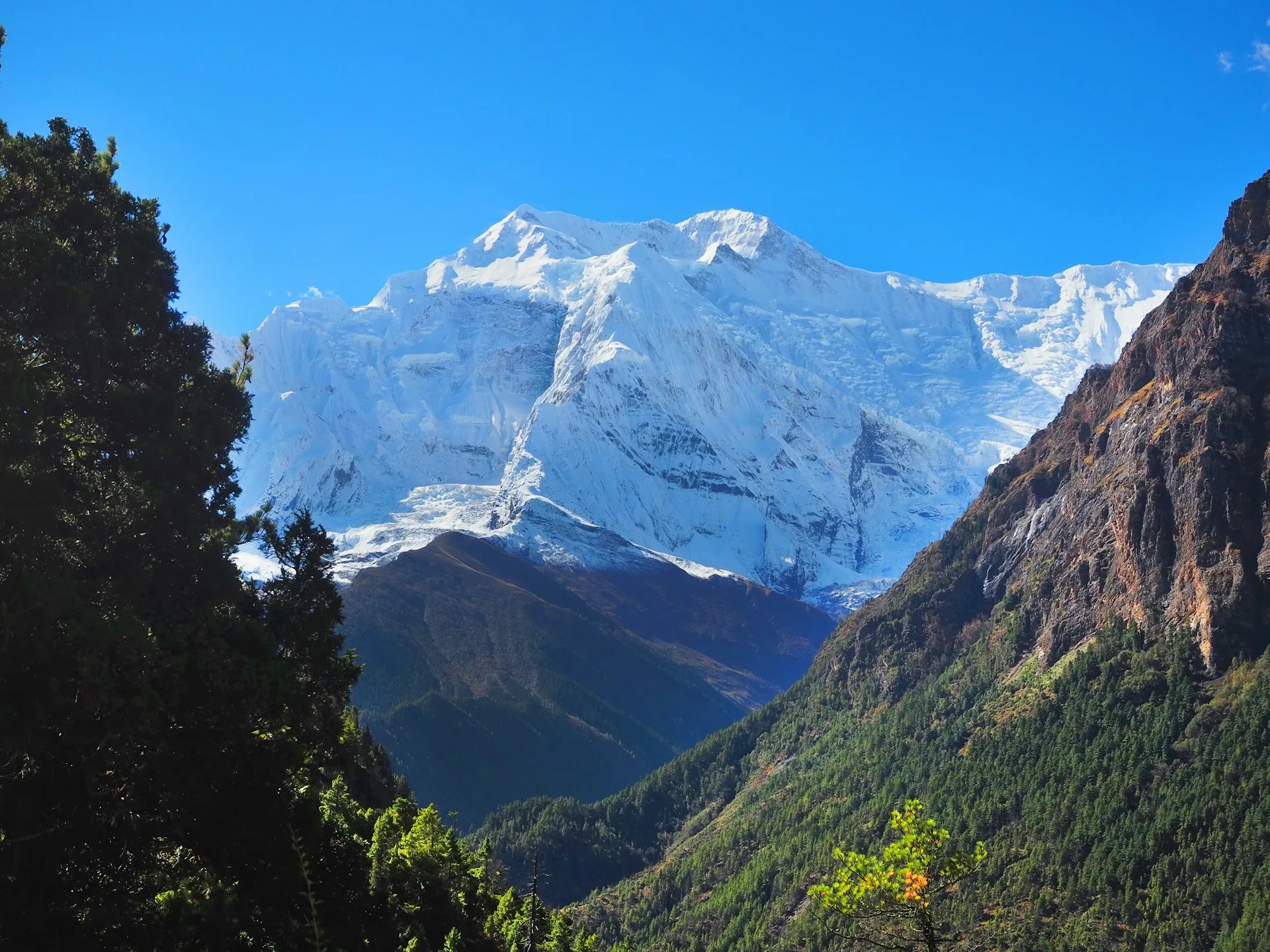
If the answer is yes, the Annapurna Circuit is within your reach. The view from Thorong La — standing at 5,416m surrounded by the Annapurna massif — is worth every step.
Frequently Asked Questions about Annapurna Circuit Trek Difficulty
1. How difficult is the Annapurna Circuit trek?
Moderate to challenging . It’s technically non-difficult (no climbing) but physically demanding due to altitude (5,416m), distance (259km), and 14-18 days of walking .
2. Is Annapurna Circuit suitable for beginners?
Yes — with proper preparation . You need reasonable fitness, 10-14 weeks of training, and respect for altitude . Previous trekking experience is beneficial but not mandatory.
3. How fit do I need to be?
You should be able to walk 5-7 hours for multiple days, handle 500-1,000m elevation gain, and have stable knees for descents . Training should include 3x weekly cardio, leg strength, and loaded hikes .
4. How hard is Thorong La Pass?
The hardest day of the trek . It’s an 8-10 hour day at 5,416m with a 1,600m descent. It’s non-technical but physically and mentally demanding .
5. How many hours do you walk each day?
Average 5-7 hours . The Thorong La crossing day is 8-10 hours .
6. Is altitude the biggest challenge?
Altitude is the biggest serious challenge — it can cause AMS. Physical fatigue is the biggest everyday challenge. The two are different and both matter .
7. Can I do Annapurna Circuit without previous trekking experience?
Yes . A guided trip with a porter makes the trek accessible to fit beginners .
8. How should I train for Annapurna Circuit?
10-14 weeks: 3x weekly cardio, 2x weekly leg strength, loaded hill hikes up to 6-8 hours, and taper in the final weeks .
9. Is the descent difficult?
Yes — often more physically damaging than the ascent . The 1,600m descent from Thorong La stresses knees, quads, and ankles . Trekking poles are essential .
10. Is Annapurna Circuit harder than ABC?
Yes. Annapurna Circuit takes 2-3x as long, crosses higher altitude (5,416m vs 4,130m), and requires more endurance .
11. Is Annapurna Circuit harder than Everest Base Camp?
They’re different. EBC has higher sustained altitude; Annapurna Circuit is longer and tests endurance more . Annapurna Circuit is generally considered more physically demanding overall.
12. Does being fit prevent altitude sickness?
No . Fitness does not prevent AMS. Acclimatization does. A fit person who rushes to altitude can still get sick.
13. Can older trekkers complete the Circuit?
Yes — there’s no upper age limit . Hikers in their 60s have succeeded. The key is training, acclimatization, and being honest about fitness.
14. How can I make Annapurna Circuit easier?
Take a longer itinerary (18-21 days) , use a porter , hire a guide, train specifically, choose autumn season , and prioritize acclimatization over speed .
15. What is the hardest day of Annapurna Circuit?
Thorong La Pass day without question . It combines the highest elevation, longest day, freezing conditions, and a punishing descent .