Nepal Short Treks
Nepal is famous for its long expeditions — the 14-day Everest Base Camp trek, the 20-day Annapurna Circuit, the multi-week journeys through Dolpo and Mustang. These routes deserve their reputations. But the assumption that you need two or three weeks to genuinely experience the Himalayan landscape is wrong, and it keeps a significant number of travelers from attempting anything at all.
Nepal’s short treks — routes of 2 to 7 days — cover some of the most beautiful terrain in the country, reach altitudes that deliver genuine Himalayan drama, pass through traditional villages that haven’t been sanitized for tourism, and do all of this within a time window that fits a long weekend, a week of annual leave, or a few free days at either end of a longer South Asia trip.
This guide covers every significant short trek in Nepal for 2026: what each route delivers, how many days it takes, the altitude it reaches, the difficulty level, where it starts, what permits it requires, and who it’s best suited for. It also covers the practical differences between trekking near Kathmandu versus near Pokhara — a choice that significantly affects how much of your limited time goes to transport versus trail.
Choosing Between Kathmandu and Pokhara as Your Base
Before the route-by-route breakdown, the most important planning decision for short treks is geography. Nepal’s best short trekking routes cluster around two cities — Kathmandu in the center-east and Pokhara in the west — and the travel time between the city and the trailhead directly affects how many of your available days go to hiking versus sitting in vehicles.
| Starting City | Travel to Trailhead | Best Routes Available |
|---|---|---|
| Kathmandu | 1-3 hours by road | Chisapani-Nagarkot, Nagarkot-Dhulikhel, Shivapuri, Ama Yangri, Kalinchowk |
| Pokhara | 1-3 hours by road | Poon Hill, Australian Camp, Mardi Himal, Ghandruk, Mohare Danda |
| Kathmandu (with domestic flight) | 35-min flight to Lukla | Everest Panorama, Pikey Peak |
If you have 3 days or fewer, choose a trek that starts within 2 hours of wherever you’re based. A 3-day trek with a 6-hour transport day to the trailhead effectively becomes a 1-day trek. If you’re based in Kathmandu and have 3 days, trek near Kathmandu. If you’re based in Pokhara, the Annapurna-area short treks are accessible without losing a full day to transport.
Ghorepani Poon Hill Trek — The Most Popular Short Trek in Nepal
Duration: 4 to 5 days (from Pokhara)
Maximum altitude: Poon Hill viewpoint, 3,210 meters
Difficulty: Easy to moderate
Best for: First-time trekkers, families, photographers
Start/end: Nayapul or Tikhedhunga (from Pokhara)
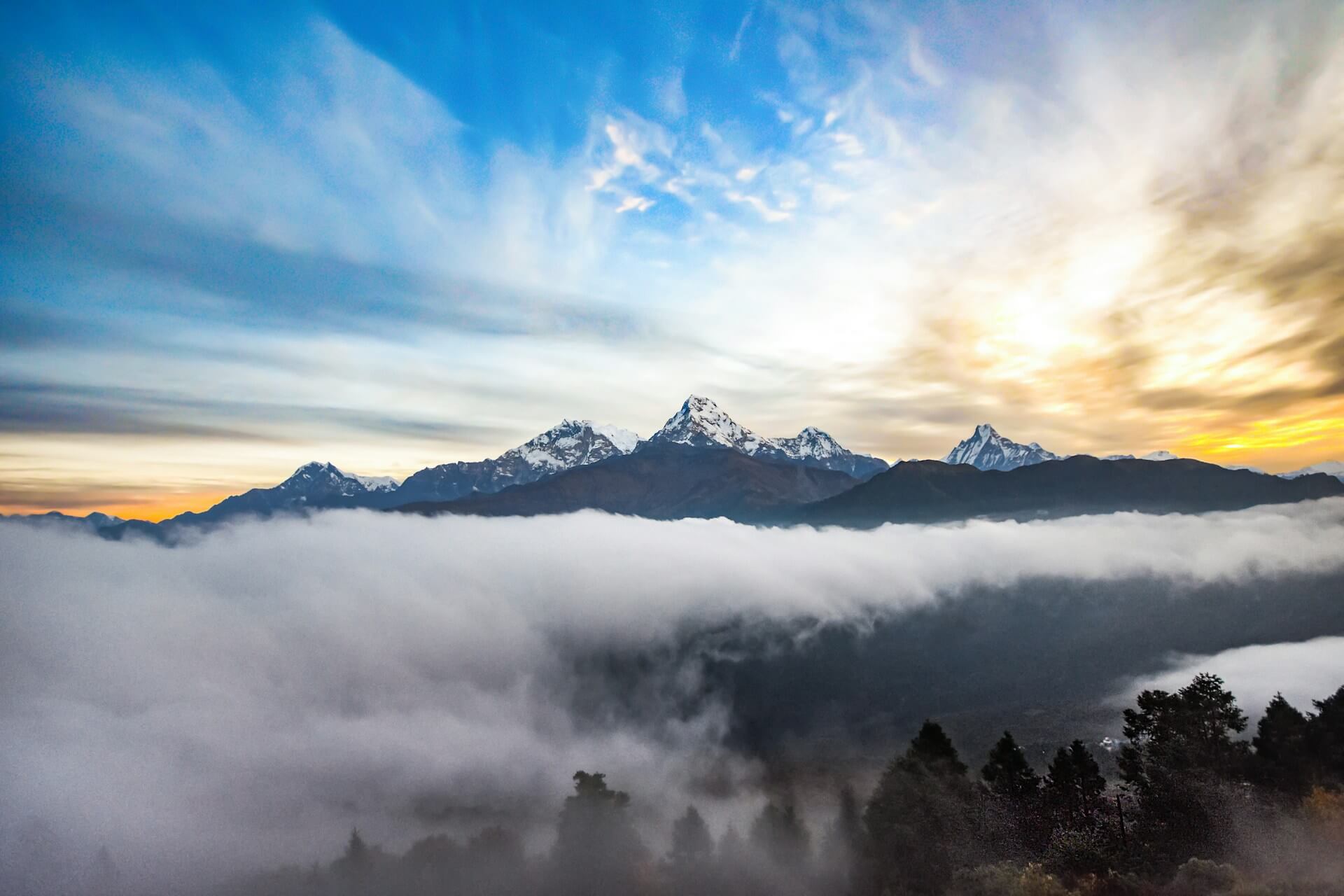
The Ghorepani Poon Hill trek is the most popular short trek in Nepal and has been for years. It earns that position consistently because the payoff — the pre-dawn climb to Poon Hill at 3,210 meters for a sunrise panorama of Dhaulagiri (8,167 meters) to the west and the entire Annapurna range to the east — is one of the most dramatic mountain viewpoints accessible without significant trekking experience.
The route from Nayapul climbs through rhododendron forest to Ulleri, continues to Ghorepani village (2,860 meters), and reaches Poon Hill for sunrise on day 3. The return goes back through Ghorepani and down to Nayapul or, in a more interesting variation, adds a day to descend through Tadapani and Ghandruk before returning to Pokhara.
The rhododendron forest on this route is one of its defining features — in March and April, the trail passes through flowering forest that shifts between red, pink, and white depending on species and elevation. In October and November, the trail is clear and the mountain views are at their sharpest.
In March-April, this trail is genuinely busy at peak times. Starting the Poon Hill ascent before 5:00 AM is standard to reach the summit before crowds and cloud arrive simultaneously.
Permits required: ACAP (NPR 3,000 for foreign nationals)
Australian Camp Trek (Dhampus Trek) — Easiest Short Trek From Pokhara
Duration: 2 to 3 days (from Pokhara)
Maximum altitude: Approximately 2,050 to 2,100 meters
Difficulty: Easy
Best for: Families with children, older travelers, first-time trekkers, those with very limited time
Start/end: Phedi (from Pokhara)
The Australian Camp trek — also called the Dhampus trek after the village of Dhampus through which it passes — is the gentlest and most accessible short trek in the Pokhara area. The maximum altitude of approximately 2,050 to 2,100 meters makes altitude sickness a non-issue. The trail is well-marked, passes through small villages with teahouses, and delivers a ridge-top viewpoint looking directly at Machhapuchare (6,993 meters), Annapurna South (7,219 meters), and Hiunchuli (6,441 meters) — the same peaks that impress at Annapurna Base Camp, seen from a much lower elevation.
The trail from Phedi takes 2 to 3 hours uphill to reach Australian Camp, where teahouses sit on the ridge. An overnight stay gives you the morning mountain view before the cloud builds. The return to Pokhara can be done on foot or by shared vehicle from Dhampus village.
This trek is genuinely suitable for children old enough to walk for 2 to 3 hours, and for older adults for whom altitude is a concern. It is also the fastest Annapurna mountain view available from Pokhara without altitude risk.
Permits required: ACAP (NPR 3,000 for foreign nationals)
Ghandruk Trek — Culture, Gurung Villages, and Mountain Views
Duration: 3 days (from Pokhara)
Maximum altitude: Ghandruk village, approximately 2,012 meters
Difficulty: Easy to moderate
Best for: Cultural trekkers, first-timers wanting village experience, those interested in Gurung community life
Start/end: Nayapul (from Pokhara)
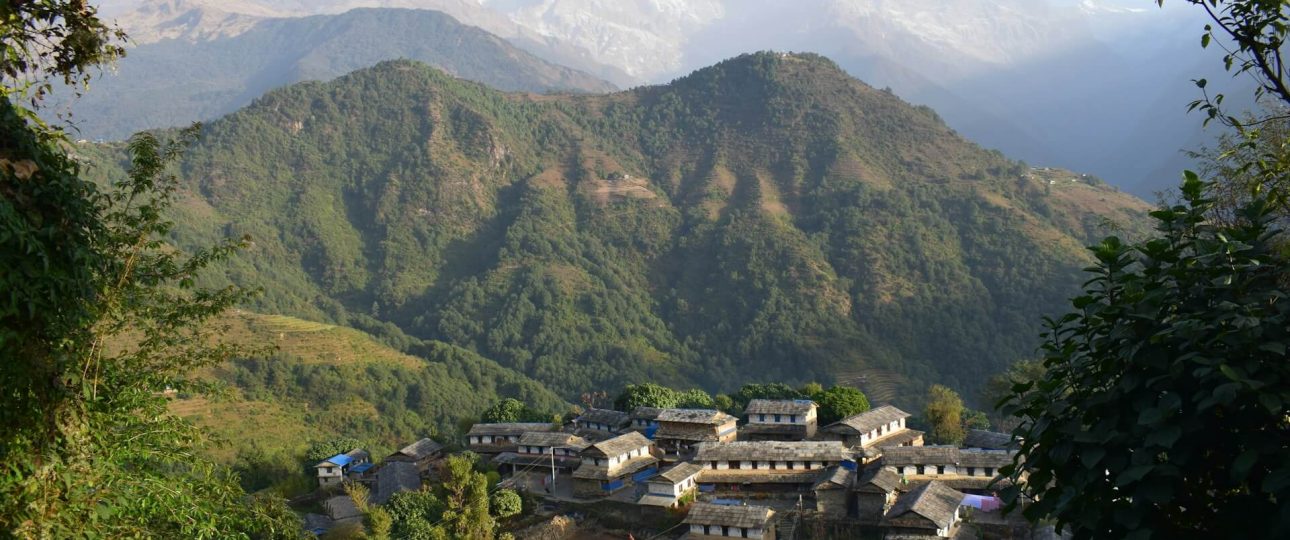
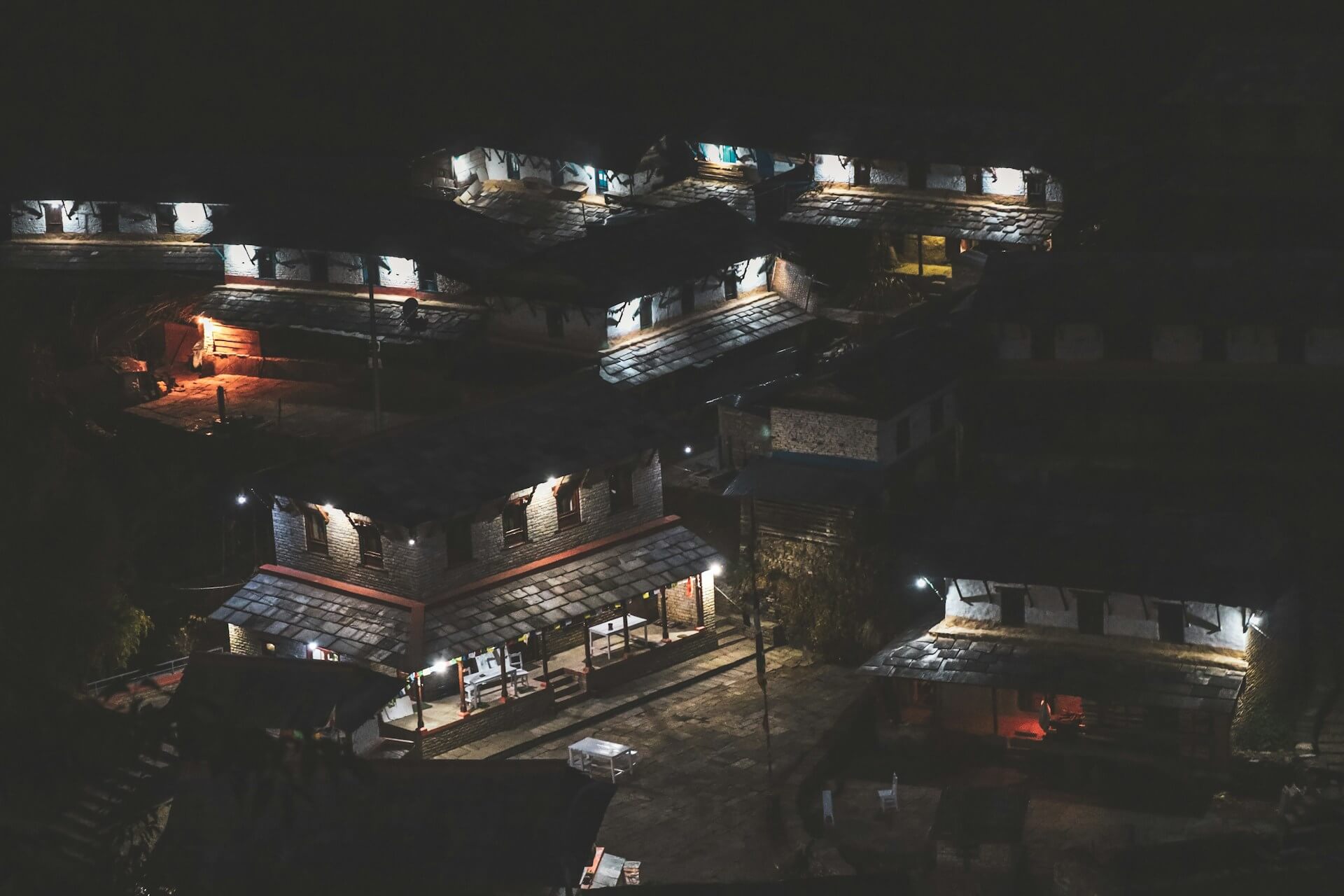
Ghandruk is one of the best-preserved Gurung settlements in Nepal, sitting at approximately 2,012 meters with a direct and wide view of Annapurna South and Machhapuchare. The village itself — stone-paved lanes, traditional courtyard houses, a Gurung Museum, and community homestay options — offers a cultural dimension that most short trek viewpoints lack.
The standard 3-day version from Nayapul climbs to Ghandruk on day one (5 to 6 hours), explores the village and surroundings on day two, and descends on day three. A more interesting variation extends to a 4-day version by continuing to Tadapani and combining with the Poon Hill route for the sunrise viewpoint.
The trail between Nayapul and Ghandruk is one of Nepal’s classic short routes — wide enough to be easy to follow, passing through terraced farmland and forest, with the Annapurna peaks growing larger with every hour of ascent.
Permits required: ACAP (NPR 3,000 for foreign nationals)
Mardi Himal Trek — Hidden Gem With High Altitude Without the Crowd
Duration: 5 to 6 days (from Pokhara)
Maximum altitude: Mardi Himal Base Camp, 4,500 meters
Difficulty: Moderate
Best for: Trekkers wanting altitude and solitude, Annapurna region experience with fewer crowds
Start/end: Kande (from Pokhara)
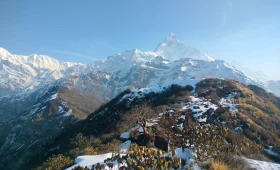
The Mardi Himal trek was developed as an official route by the Nepal Tourism Board only in 2012, making it one of the newer designated trails in the Annapurna region. Despite reaching 4,500 meters at Mardi Himal Base Camp — higher than many famous longer treks — it receives a fraction of the traffic of the Poon Hill or Annapurna Base Camp routes. The trail passes through rhododendron and bamboo forest, climbs to open high-ridge terrain with unobstructed Annapurna views, and ends at a base camp with a close-range view of Mardi Himal (5,587 meters) itself.
The standard 5-day itinerary from Kande — a short drive from Pokhara — climbs through Forest Camp (approximately 2,600 meters), Low Camp (approximately 3,100 meters), High Camp (approximately 3,900 meters), and to Mardi Himal Base Camp at 4,500 meters before descending to Siding village and returning to Pokhara.
At 4,500 meters, the Mardi Himal trek reaches altitude that requires respect — acclimatization is handled by the gradual daily ascent profile, and mild symptoms at High Camp or above are possible. This is the most altitude-demanding trek on this guide’s short-trek list, and it is not appropriate for people with no prior altitude experience who are unwilling to go slowly.
Permits required: ACAP (NPR 3,000 for foreign nationals)
Chisapani-Nagarkot Trek — Best Short Trek Near Kathmandu
Duration: 2 to 3 days (from Kathmandu)
Maximum altitude: Chisapani, approximately 2,300 meters
Difficulty: Easy to moderate
Best for: Travelers based in Kathmandu, those with 2 to 3 free days, people who want a trek without a domestic flight
Start/end: Sundarijal (Kathmandu) to Nagarkot
The Chisapani-Nagarkot trek is the best short trek accessible directly from Kathmandu without a domestic flight or a long drive. It begins at Sundarijal on the northeastern edge of the Kathmandu Valley — reachable by taxi in about 45 minutes from Thamel — and climbs through the Shivapuri Nagarjun National Park to Chisapani at approximately 2,300 meters. From Chisapani, the ridgeline trail continues through forest and village to Nagarkot at 2,175 meters, where sunrise mountain views include Everest on clear mornings.
The total walking distance is approximately 30 to 35 kilometers over 2 days. Daily walking is 5 to 6 hours on a well-defined forest and ridgeline path. The altitude gain is gradual and altitude sickness is not a concern at these elevations.
This trek can be extended by a third day with the addition of the walk from Nagarkot to Dhulikhel through Changu Narayan, visiting one of Nepal’s oldest temples en route and finishing in a traditional Newari market town.
Permits required: Shivapuri Nagarjun National Park entry fee (NPR 250 for foreign nationals for the Shivapuri section)
Langtang Valley Short Trek — Most Accessible Valley Trek

Duration: 7 days (from Kathmandu)
Maximum altitude: Kyanjin Gompa, approximately 3,870 meters
Difficulty: Moderate
Best for: Trekkers wanting a genuine high valley experience close to Kathmandu, those with one week available
Start/end: Syabrubesi (approximately 7-8 hour drive from Kathmandu, or 3-4 hours via Dunche)
At 7 days, the Langtang Valley trek sits at the longer end of the short trek definition — but it earns its place on this list because the trailhead is accessible by road from Kathmandu without a domestic flight, and the valley it enters is genuinely spectacular. The Langtang Valley runs east of Kathmandu in the Rasuwa district, bordered by the Langtang range to the north and the Ganesh Himal range to the south.
Kyanjin Gompa at approximately 3,870 meters is the trek’s high point — a small settlement of teahouses and a monastery beneath the tongue of the Langtang Glacier, with Langtang Lirung (7,227 meters) rising directly above. The walk from the road at Syabrubesi (1,550 meters) to Kyanjin Gompa gains approximately 2,300 meters over 3 days, with a rest and acclimatization day at Kyanjin before the descent.
The Langtang Valley was severely affected by the April 2015 earthquake and the associated ice avalanche that struck Langtang village, killing many residents and trekkers. The trail has since been fully reconstructed and new villages built, and the Langtang community has worked to rebuild the tourism economy that supports the valley. Visiting supports that ongoing recovery.
Permits required: Langtang National Park entry permit (NPR 3,000 for foreign nationals) and TIMS card (NPR 2,000)
Gosaikunda Lake Trek — Sacred High-Altitude Lake in 5 Days
Duration: 5 to 6 days (from Kathmandu or Dhunche)
Maximum altitude: Gosaikunda Lake, 4,380 meters
Difficulty: Moderate to challenging
Best for: Trekkers wanting a high-altitude lake experience, Hindu pilgrimage significance, combined with Langtang Valley
Start/end: Dhunche or Syabrubesi (from Kathmandu)
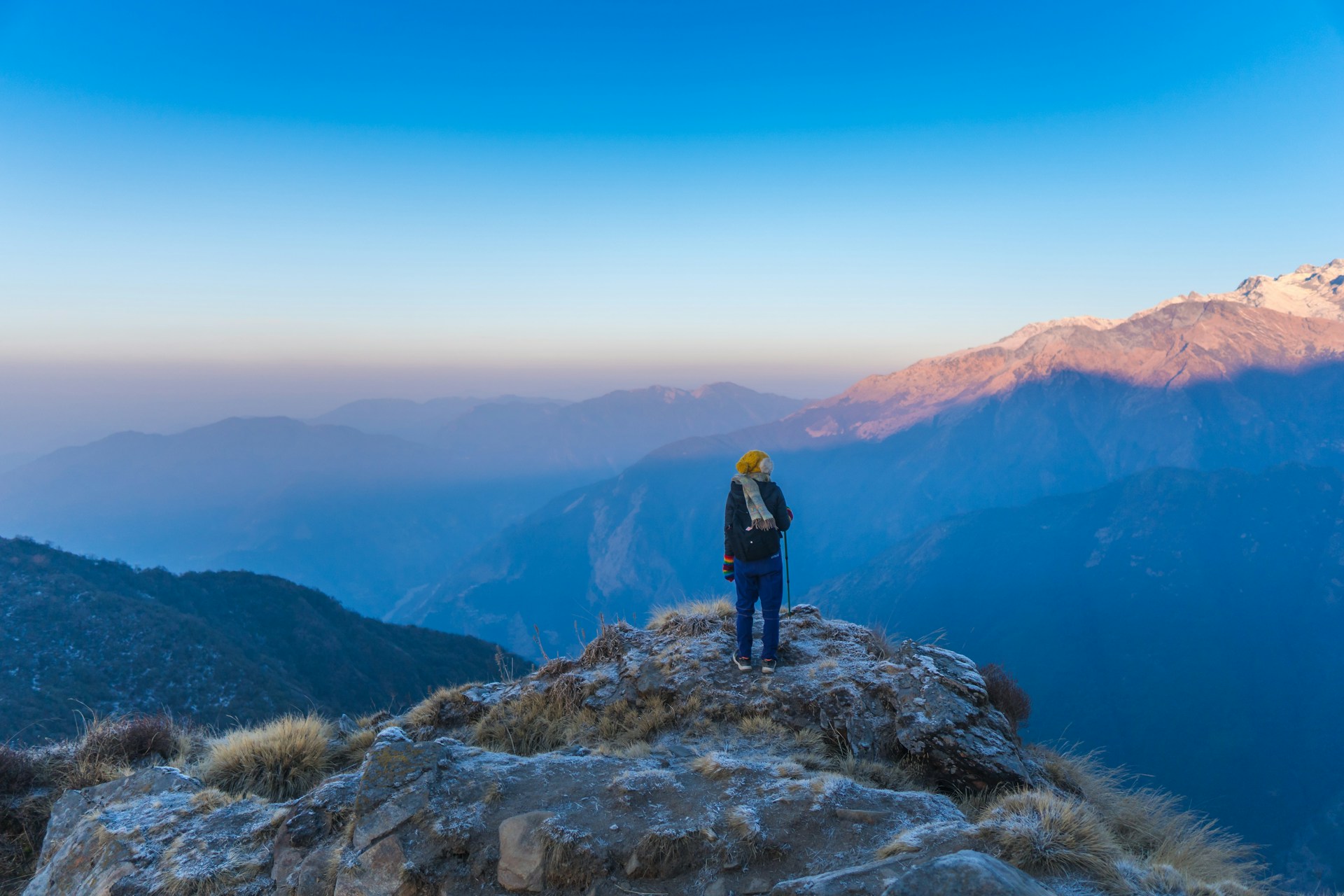
Gosaikunda Lake at 4,380 meters is one of the most sacred lakes in Nepal — a high-altitude glacial lake of deep religious significance to both Hindus and Buddhists. Hindu mythology connects the lake directly to Lord Shiva, and the Janai Purnima festival in July or August draws tens of thousands of pilgrims to the lake’s shore. The trail climbs through Langtang National Park forest from Dhunche or Syabrubesi, passing through Sing Gompa (approximately 3,330 meters) before reaching the lake.
The 4,380-meter altitude means genuine acclimatization is required — this is not a trek for complete beginners without any prior altitude experience. Trekkers who have spent a day at Chisapani (2,300 meters) or Nagarkot the week before as acclimatization will handle the Gosaikunda altitude better than those arriving directly from sea level.
The lake is sacred — shoes are removed by Hindu pilgrims before approaching the water’s edge, and the atmosphere during the Janai Purnima period is one of the most extraordinary festival experiences in Nepal’s mountains.
Permits required: Langtang National Park entry permit (NPR 3,000 for foreign nationals) and TIMS card (NPR 2,000)
Everest Panorama Trek — Short Everest Region Experience
Duration: 5 to 7 days (from Lukla)
Maximum altitude: Tengboche Monastery, approximately 3,860 meters
Difficulty: Easy to moderate
Best for: Travelers who want the Khumbu experience without committing to the full EBC route
Start/end: Lukla (domestic flight from Kathmandu, approximately 35 minutes)
The Everest Panorama trek is the shorter version of the EBC route — it flies into Lukla, walks up through Phakding, Namche Bazaar (3,440 meters), and to Tengboche Monastery at approximately 3,860 meters, then returns to Lukla. It covers the most culturally rich and scenically varied portion of the Khumbu without reaching the highest altitude of the full route.
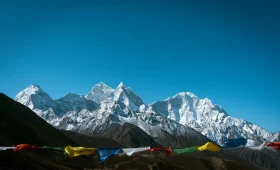
Namche Bazaar itself is worth a full day — the busy Sherpa market town has excellent lodges, restaurants, and a Saturday bazaar that draws traders from across the Khumbu. The Everest View Hotel above Namche at approximately 3,962 meters offers one of the most famous mountain views in Nepal: Ama Dablam (6,812 meters), Lhotse (8,516 meters), and the tip of Everest visible across the valley.
Tengboche Monastery — the largest Buddhist monastery in the Khumbu, perched on a ridge at 3,860 meters — is the cultural highlight of the lower Khumbu and one of the most photographed locations in Nepal. The morning prayer service, attended by monks in the main gompa, is accessible to respectful visitors.
This trek requires a domestic flight to Lukla, which adds cost and weather-delay risk. Build at least one buffer day into the itinerary for potential Lukla flight delays.
Permits required: Sagarmatha National Park entry permit (NPR 3,000 for foreign nationals) and TIMS card (NPR 2,000)
Mohare Danda Trek — Best Panoramic View With Fewer Crowds
Duration: 5 days (from Pokhara)
Maximum altitude: Mohare Danda ridge, approximately 3,300 meters
Difficulty: Moderate
Best for: Trekkers wanting Poon Hill-quality views with a fraction of the crowd
Start/end: Nayapul or Beni (from Pokhara)
Mohare Danda is a ridge in the Myagdi district south of the Annapurna range, often called the “new Poon Hill” for its comparable panoramic mountain views — Dhaulagiri, Annapurna South, Machhapuchare, and a sweep of high peaks visible from the ridge at approximately 3,300 meters. The trail passes through oak and rhododendron forest and traditional Magar villages with a cultural character distinct from the more heavily touristed Gurung villages closer to Pokhara.
The key difference from Poon Hill is crowd level. Mohare Danda receives a small fraction of Poon Hill’s visitors, meaning the viewpoint in the morning is shared with a handful of other trekkers rather than hundreds. The trade-off is that teahouse infrastructure, while present and functional, is less developed — accommodation options are more limited and the standard is more basic than on the Poon Hill route.
The trek is combined well with the Poon Hill route for a 7 to 8-day loop that covers both viewpoints in a single circuit.
Permits required: ACAP (NPR 3,000 for foreign nationals)
Nepal Short Treks Comparison Table
| Trek | Duration | Max Altitude | Starting Point | Difficulty | Best Season | Permits |
|---|---|---|---|---|---|---|
| Poon Hill | 4-5 days | 3,210 m | Pokhara | Easy-moderate | Oct-Nov, Mar-Apr | ACAP |
| Australian Camp | 2-3 days | ~2,100 m | Pokhara | Easy | Year round | ACAP |
| Ghandruk | 3 days | ~2,012 m | Pokhara | Easy-moderate | Oct-Nov, Mar-Apr | ACAP |
| Mardi Himal | 5-6 days | 4,500 m | Pokhara | Moderate | Oct-Nov, Apr-May | ACAP |
| Chisapani-Nagarkot | 2-3 days | ~2,300 m | Kathmandu | Easy-moderate | Oct-Nov, Mar-Apr | National Park fee |
| Langtang Valley | 7 days | ~3,870 m | Kathmandu | Moderate | Oct-Nov, Mar-May | Langtang NP + TIMS |
| Gosaikunda | 5-6 days | 4,380 m | Kathmandu | Mod-challenging | Oct-Nov, May-Jun | Langtang NP + TIMS |
| Everest Panorama | 5-7 days | ~3,860 m | Lukla (flight) | Easy-moderate | Oct-Nov, Mar-May | Sagarmatha NP + TIMS |
| Mohare Danda | 5 days | ~3,300 m | Pokhara | Moderate | Oct-Nov, Mar-Apr | ACAP |
Permits for Nepal Short Treks in 2026
All short treks in Nepal require at least one permit. The three most relevant are:
| Permit | Applicable Treks | Cost (Foreign Nationals) |
|---|---|---|
| ACAP (Annapurna Conservation Area Permit) | Poon Hill, Ghandruk, Australian Camp, Mardi Himal, Mohare Danda | NPR 3,000 (~$22-25) |
| Langtang National Park Entry | Langtang Valley, Gosaikunda | NPR 3,000 (~$22-25) |
| Sagarmatha National Park Entry | Everest Panorama, Khumbu area treks | NPR 3,000 (~$22-25) |
| TIMS Card | Langtang Valley, Gosaikunda, Everest Panorama | NPR 2,000 (~$15) |
| Shivapuri Nagarjun National Park | Chisapani-Nagarkot route from Sundarijal | NPR 250 |
Permits are obtained in Kathmandu or Pokhara before the trek. Bring your passport and two passport-size photographs for all applications. Payment in Nepali Rupees.
Do You Need a Guide for Short Treks in Nepal in 2026?
Nepal’s 2023 mandatory guide regulation applies to trekking regions broadly, including the Annapurna Conservation Area and the Khumbu. In practice, enforcement on short, low-altitude treks like the Australian Camp or Chisapani-Nagarkot is less strict than on high-altitude remote routes. However, the ACAP permit office in Pokhara is increasingly asking for guide registration numbers at the point of permit issuance.
The practical 2026 advice: for the most popular short treks near Pokhara — Poon Hill, Ghandruk, Australian Camp — arrange a guide through a TAAN-registered agency if you want guaranteed smooth permit processing and legal compliance. The cost of a licensed guide for a 3 to 5-day trek is $75 to $175 total — modest relative to the overall trip cost and genuinely valuable for first-time Nepal trekkers who benefit from cultural context, navigation on less-marked sections, and local knowledge of trail and teahouse conditions.
For the Chisapani-Nagarkot trek near Kathmandu, experienced trekkers with good map skills have been completing the route independently without issue. For Langtang Valley and Gosaikunda, a guide is strongly recommended on both regulatory and safety grounds.
Practical Information for Short Trekking in Nepal in 2026
- Best seasons: October and November for post-monsoon clarity and stable weather. March and April for spring flowering and warm days. Both are peak seasons — book guides and teahouses in advance for these months.
- Cost per day: Budget approximately $30 to $60 per person per day on short treks, covering a basic teahouse room ($3 to $15), three meals ($15 to $25), and daily incidentals. Guide cost adds $25 to $35 per day shared across the group.
- Gear essentials: Good trekking shoes or boots already broken in, a daypack of 20 to 30 liters, warm layers for evenings, a waterproof jacket, sun protection, and a water bottle. For treks reaching above 3,500 meters, a sleeping bag rated to at least minus 5°C is useful since teahouse blankets at altitude are variable in warmth.
- Cash: Carry Nepali Rupees in small denominations for all on-trail expenses. There are no ATMs above Nayapul on the Pokhara-area trails or above Sundarijal on the Kathmandu-area trails.
Frequently Asked Questions About Nepal Short Treks
- What is the easiest short trek in Nepal?
The Australian Camp trek (also called the Dhampus trek) near Pokhara is the easiest significant short trek in Nepal, reaching approximately 2,100 meters with no altitude risk and gentle trail gradients. It is suitable for families with children, older adults, and first-time trekkers. The 2 to 3-day duration fits any schedule. - What is the best short trek in Nepal for beginners?
The Ghorepani Poon Hill trek (4 to 5 days from Pokhara) is the most consistently recommended for first-time trekkers who want a genuine Himalayan experience — it combines rhododendron forest, traditional villages, and the Poon Hill sunrise panorama at 3,210 meters without technical difficulty or altitude sickness risk for most people. - Which Nepal short trek is closest to Kathmandu?
The Chisapani-Nagarkot trek starts at Sundarijal on the northeastern edge of Kathmandu — reachable by taxi in 45 minutes from Thamel — making it the short trek requiring the least transport time for travelers based in Kathmandu. - Do short treks in Nepal need permits?
Yes. All trekking areas in Nepal require at least one permit. The ACAP permit (NPR 3,000 for foreign nationals) covers all Annapurna region short treks. Langtang and Everest region treks require national park permits and TIMS cards. No short trek in Nepal is permit-free for foreign nationals. - What is the highest short trek in Nepal?
Among the routes on this guide, the Mardi Himal Trek reaches the highest point at Mardi Himal Base Camp (4,500 meters) and the Gosaikunda Lake Trek reaches 4,380 meters — both higher than the Annapurna Base Camp trek’s destination of 4,130 meters, though reached in fewer days on shorter routes. - Is the Poon Hill trek suitable for children?
Yes, with appropriate preparation. The trail is well-marked, teahouses are available at regular intervals, and the maximum altitude of 3,210 meters at Poon Hill is manageable for most healthy children. The pre-dawn walk to Poon Hill on Day 3 starts early and is uphill for approximately 45 minutes to an hour — children who are comfortable with sustained walking in the dark will manage it well. - How much do short treks in Nepal cost in 2026?
Daily trekking costs (excluding guide) run approximately $30 to $50 per person covering basic accommodation and three meals. Adding a licensed guide for 4 days ($100 to $140 total) and permits ($22 to $40 depending on the region) brings a typical 4-day short trek to $300 to $450 per person total, excluding transport to and from Kathmandu or Pokhara. - Can you do a short trek in Nepal without prior experience?
Yes. Most short treks in Nepal — Australian Camp, Poon Hill, Ghandruk, Chisapani-Nagarkot — require no prior trekking experience. They follow well-defined trails with teahouses every few hours, reach altitudes that pose minimal altitude risk, and are walked daily by first-time trekkers of all ages. Basic fitness — the ability to walk 4 to 5 hours over hilly terrain — is the only genuine prerequisite. - What’s the difference between Ghandruk and Poon Hill treks?
Ghandruk is a shorter, gentler village-focused trek that can stand alone as a 2-3 day cultural immersion in a large traditional Gurung settlement, while Poon Hill is built specifically around the pre-dawn mountain panorama and typically runs a day or two longer to reach its signature viewpoint. Many itineraries actually combine both, routing through Ghandruk on the way to or from Poon Hill rather than treating them as separate trip choices. - Are short treks in Nepal doable year-round?
Most short treks below 3,000 m, like Australian Camp and Ghandruk, remain accessible even during winter and much of the monsoon, since their lower altitude avoids the snow and pass closures that affect higher routes. Poon Hill and Mardi Himal are more weather-dependent for view quality specifically, since monsoon cloud cover can obscure the mountain panorama even though the trail itself stays walkable. - Do I need travel insurance for a short trek, even at low altitude?
Yes — most trekking agencies and common sense both recommend it regardless of altitude, since insurance covers non-altitude risks like injury, illness, or trip cancellation that can occur on any trek. Given the relatively low cost of short treks overall, insurance is a small addition to the total budget and is worth arranging before departure rather than treating it as optional just because the altitude risk is minimal. - What is the best short trek for photography?
Poon Hill and Mardi Himal both offer strong photography value given their proximity to major peaks relative to trek length, with Poon Hill’s wide Annapurna-Dhaulagiri panorama and Mardi Himal’s close-up Machhapuchhre view offering genuinely different compositions. Ghandruk is a strong alternative for those prioritizing village and cultural photography over pure mountain panoramas, with its traditional stone architecture and Gurung cultural setting framed against a mountain backdrop. - Can short treks be done independently without a guide?
It depends on the region — the 2023 mandatory guide rule now applies broadly across most trekking areas including the Annapurna Conservation Area, so routes like Poon Hill, Ghandruk, and Australian Camp technically require a licensed guide even at these lower, less remote altitudes. Enforcement varies by checkpoint and region, but travelers should not assume a short, low-altitude trek is automatically exempt from the guide requirement. - What’s the best short trek for someone who wants a taste of high-altitude trekking without full commitment?
Mardi Himal is the strongest option among short treks specifically because it pushes to 4,500 m at Base Camp, giving a genuine sense of thinner air and alpine terrain within a manageable 5-7 day window rather than the two-to-three week commitment of routes like EBC or Annapurna Circuit. It’s often described as a “trekking peak experience without the peak,” offering altitude exposure and dramatic mountain proximity in a shorter trip. - Do short treks include cultural or village experiences, or are they mainly nature-focused?
Most short treks blend both, since the trail infrastructure across Nepal’s hill regions runs directly through inhabited villages rather than wilderness, meaning trekkers pass through Gurung, Magar, or Tamang settlements regardless of the route’s primary scenic draw. Ghandruk stands out specifically for its concentrated cultural depth, while Poon Hill and Mardi Himal lean more toward the mountain-view side while still passing through several village stops along the way.
Final Word on Nepal Short Treks
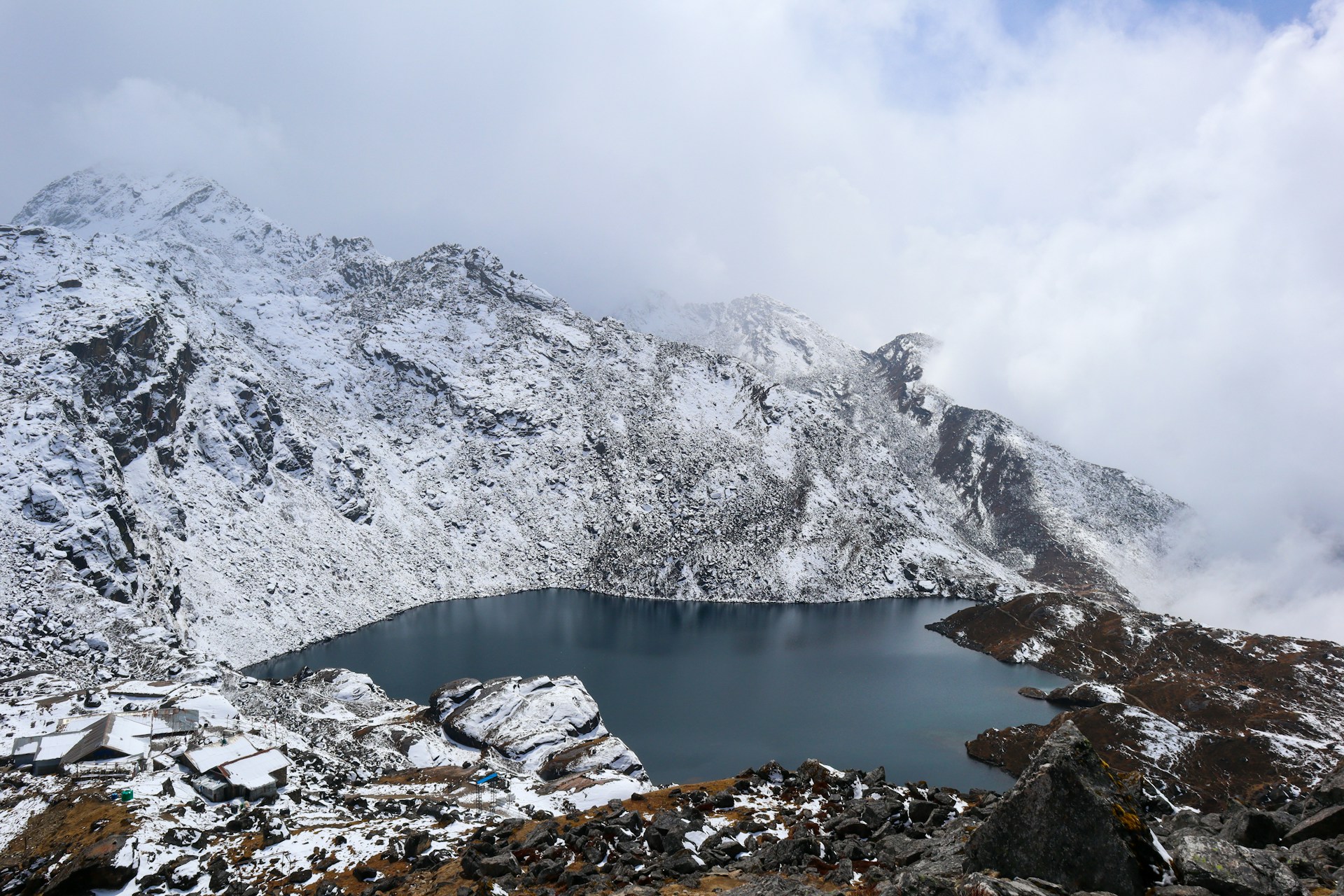
Nepal’s reputation as a destination for serious, long-distance trekking is deserved. But it has created a misconception that only serious, long-distance trekkers should come.
The Ghorepani Poon Hill sunrise at 3,210 meters. The mountain panorama from Ghandruk’s stone lanes at 2,012 meters. The sacred stillness of Gosaikunda Lake at 4,380 meters. The rhododendron forest above Chisapani on a clear March morning. These are not consolation prizes for people who couldn’t manage a longer trek. They are complete experiences in their own right — places worth visiting specifically, not just because they happen to be shorter than something else.
If you have 3 days in Kathmandu before a flight, trek to Nagarkot via Chisapani. If you have 5 days in Pokhara, walk to Poon Hill. If you have a week and want altitude and solitude, go to Mardi Himal. Nepal’s short treks are the right length for the time you have — not a lesser version of the trek you couldn’t do.