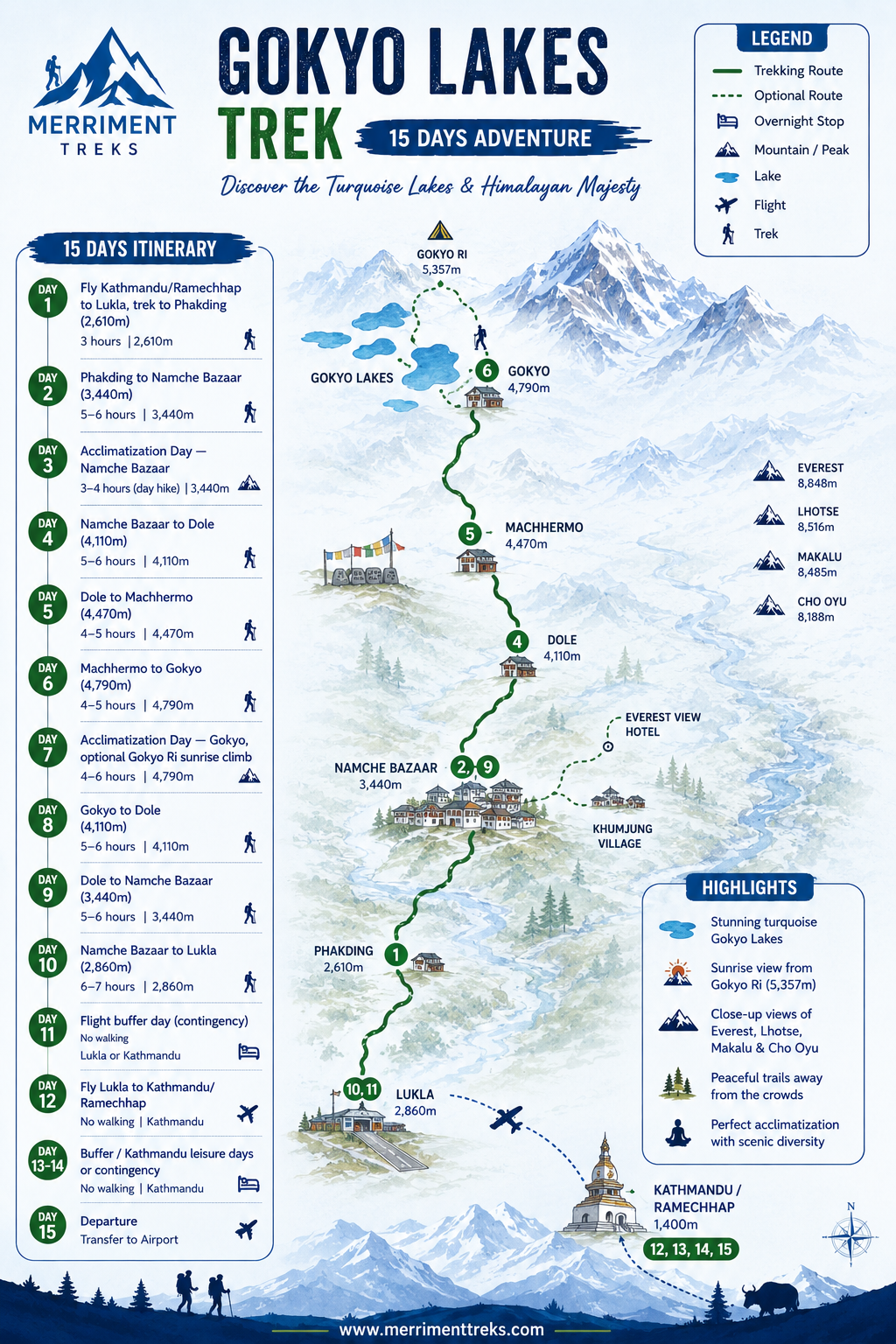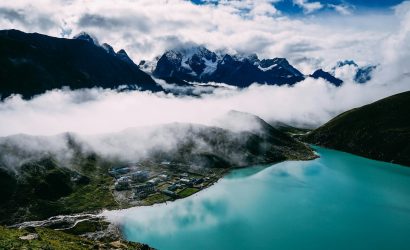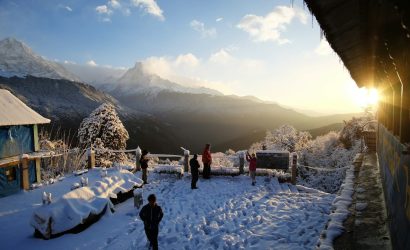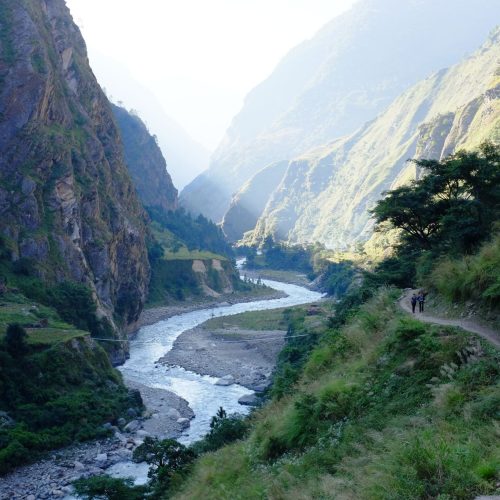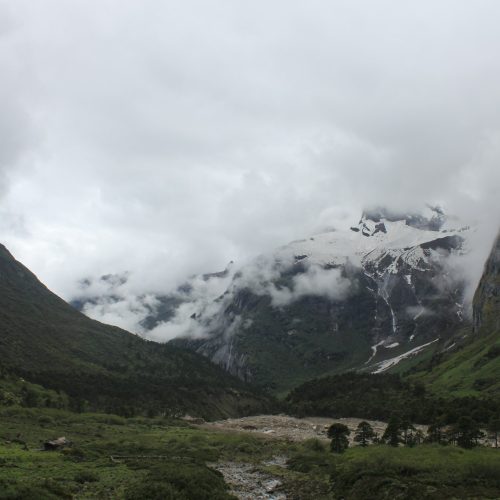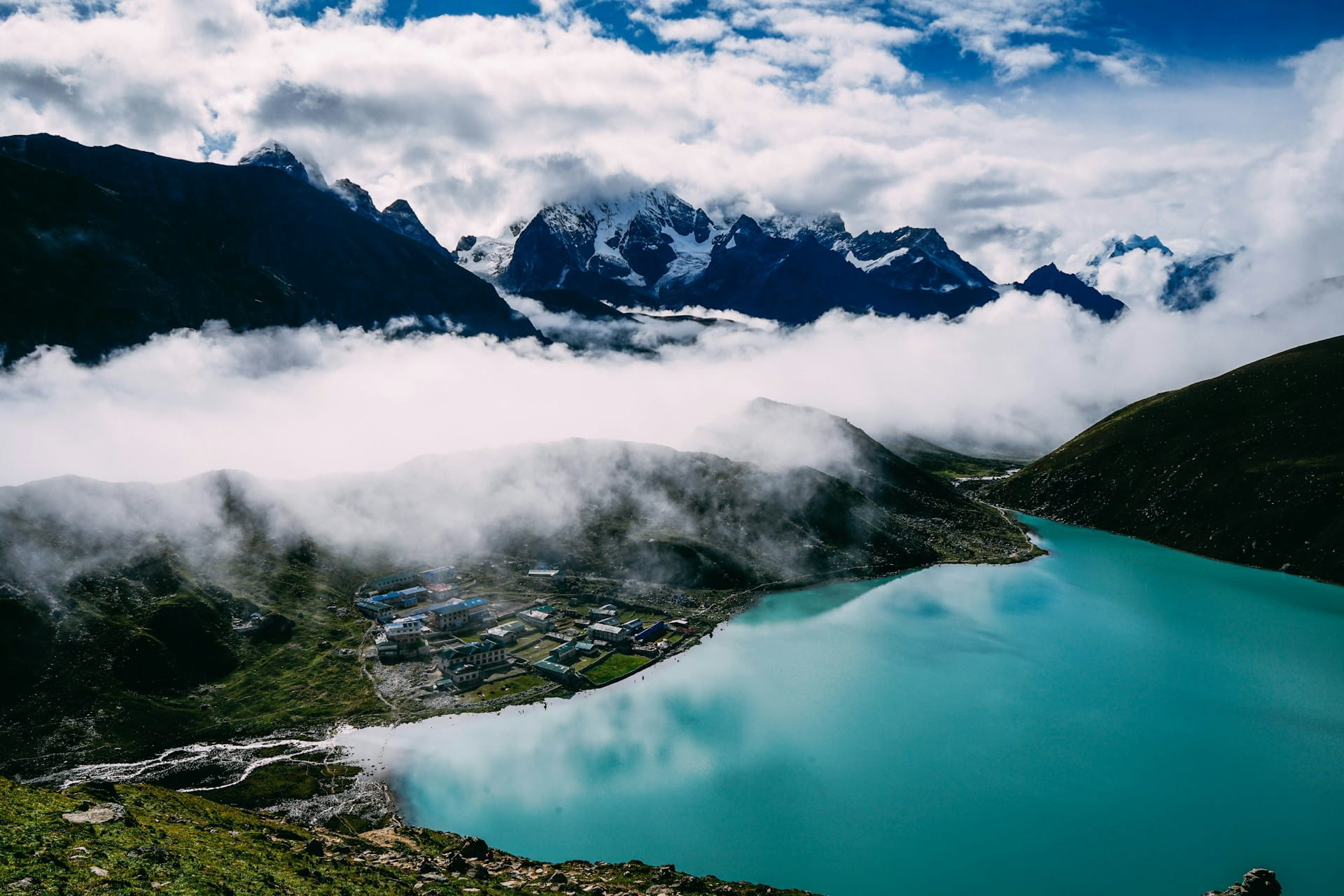
The Gokyo Lakes Trek follows a quieter branch of the Khumbu region, trading the crowded main trail to Everest Base Camp for a route that climbs alongside the Ngozumpa Glacier — the longest glacier in Nepal — to a cluster of turquoise glacial lakes at over 4,700m. From Gokyo Ri (5,357m), the summit viewpoint reached on this trek, you get a wider panorama than Kala Patthar offers on the EBC route, taking in four 8,000m peaks: Everest, Lhotse, Makalu, and Cho Oyu, in a single sweep.
This 15-day package includes the standard Lukla flight approach, proper acclimatization through Namche Bazaar and Machhermo, and enough built-in flexibility to absorb a Lukla flight delay without collapsing your schedule. This page sets out the complete itinerary, realistic costs, permit requirements, seasonal weather, and honest guidance on difficulty and preparation, so you have everything you need to decide before booking.
Gokyo Lakes Trek Facts
| Detail | Information |
|---|---|
| Duration | 15 Days (Kathmandu to Kathmandu) |
| Trek Region | Khumbu Region, Sagarmatha National Park |
| Max Altitude | 5,357m (Gokyo Ri) |
| Difficulty | Challenging |
| Trek Style | Tea house / lodge trek |
| Group Size | Private or small group (2–12) |
| Starting Point | Lukla (via mountain flight from Kathmandu or Ramechhap) |
| Best Season | March–May, September–November |
| Daily Walking Hours | 4–7 hours |
| Total Distance | Approximately 90 km round trip |
| Accommodation | Local tea houses |
| Meals | Full board on trek (breakfast, lunch, dinner) |
| Permits Required | Sagarmatha National Park Entry Permit, Khumbu Pasang Lhamu Rural Municipality Entry Permit |
| Trek Cost | From USD 1,350 per person |
Trip Overview
Gokyo Lakes sits in a side valley off the main Everest Base Camp trail, reached via Dole and Machhermo rather than through Tengboche and Dingboche. This means fewer trekkers on the trail past Namche Bazaar, even during peak season, while still delivering comparable altitude, comparable Sherpa cultural exposure, and arguably better summit-day views from Gokyo Ri than Kala Patthar provides on the standard EBC itinerary.
Fifteen days allows for two full acclimatization days — one at Namche Bazaar and one at Gokyo itself — plus a Lukla flight buffer day near the end of the trip. Shorter itineraries advertised at 11–12 days typically remove one of these rest days, which increases altitude sickness risk without meaningfully improving the experience.
Why Choose the Gokyo Lakes Trek
Trekkers who’ve already researched Everest Base Camp often choose Gokyo Lakes instead once they realize the trail is significantly less crowded past Namche, while the summit viewpoint at Gokyo Ri delivers a four-peak panorama that EBC’s Kala Patthar doesn’t match in scope. The route also crosses the Ngozumpa Glacier directly, giving a firsthand look at glacial moraine terrain that the standard EBC trail only views from a distance.
This package is a reasonable alternative for trekkers who want EBC-level scenery and altitude without walking the same trail as the majority of Khumbu visitors, and who are comfortable with a slightly more remote, less frequently serviced set of tea houses in the upper valley.
Gokyo Lakes Trek Itinerary Overview
Day 1: Fly Kathmandu/Ramechhap to Lukla, trek to Phakding (2,610m)
Day 2: Phakding to Namche Bazaar (3,440m)
Day 3: Acclimatization Day — Namche Bazaar
Day 4: Namche Bazaar to Dole (4,110m)
Day 5: Dole to Machhermo (4,470m)
Day 6: Machhermo to Gokyo (4,790m)
Day 7: Acclimatization Day — Gokyo, optional Gokyo Ri sunrise climb
Day 8: Gokyo to Dole (4,110m)
Day 9: Dole to Namche Bazaar (3,440m)
Day 10: Namche Bazaar to Lukla (2,860m)
Day 11: Flight buffer day (contingency)
Day 12: Fly Lukla to Kathmandu/Ramechhap
Day 13–14: Kathmandu leisure days / Sightseeing
Day 15: Final Departure
Route Overview
The trek follows the Dudh Koshi valley from Lukla through Namche Bazaar, then diverges northwest via Dole and Machhermo into the Gokyo Valley, running alongside the Ngozumpa Glacier to Gokyo, before retracing the same corridor back to Lukla.
Daily Distance & Walking Hours
| Day | Route | Distance | Walking Time |
|---|---|---|---|
| 1 | Lukla – Phakding | ~8 km | 3 hrs |
| 2 | Phakding – Namche Bazaar | ~11 km | 5–6 hrs |
| 3 | Acclimatization (Namche) | ~5–7 km | 3–4 hrs |
| 4 | Namche – Dole | ~11 km | 5–6 hrs |
| 5 | Dole – Machhermo | ~7 km | 4–5 hrs |
| 6 | Machhermo – Gokyo | ~8 km | 4–5 hrs |
| 7 | Acclimatization (Gokyo Ri optional) | ~5–6 km | 4–6 hrs |
| 8 | Gokyo – Dole | ~15 km | 5–6 hrs |
| 9 | Dole – Namche Bazaar | ~11 km | 5–6 hrs |
| 10 | Namche – Lukla | ~19 km | 6–7 hrs |
Difficulty Level
The Gokyo Lakes Trek is rated challenging, on par with Everest Base Camp in terms of altitude exposure. Six consecutive days above 3,400m, with the highest point above 5,300m, make altitude the primary difficulty factor rather than terrain or distance. The trail itself involves no technical climbing, but the Gokyo Ri summit morning is steep and cold, and the moraine crossing near the glacier requires careful footing on loose rock.
Altitude Profile
| Day | Location | Altitude |
|---|---|---|
| 1 | Phakding | 2,610m |
| 2 | Namche Bazaar | 3,440m |
| 4 | Dole | 4,110m |
| 5 | Machhermo | 4,470m |
| 6 | Gokyo | 4,790m |
| 7 | Gokyo Ri | 5,357m |
| 10 | Lukla | 2,860m |
Fitness Requirements
- Ability to walk 4–7 hours on consecutive days at altitude with a light daypack
- 8–10 weeks of cardio and leg-strength preparation beforehand is strongly recommended
- Prior multi-day hiking experience is useful given the sustained altitude exposure
- Comfort with basic tea house facilities — shared bathrooms and unheated rooms are standard from Dole upward
Altitude Sickness & Acclimatization
Above 4,000m, AMS becomes a genuine risk for any trekker regardless of fitness, and this route spends four consecutive nights above that threshold. The two built-in rest days — at Namche Bazaar and Gokyo — exist specifically to manage this using the climb-high-sleep-low principle.
Practical measures that matter on this route:
- Follow the itinerary’s pacing rather than compressing rest days to save time
- Drink 3–4 liters of water daily
- Avoid alcohol and sleeping pills above 3,500m, both of which suppress nighttime breathing rate
- Report early symptoms — headache, nausea, disturbed sleep, loss of appetite — to your guide immediately
- Descent is the only reliable treatment if symptoms worsen; guides are trained to make that call and carry basic oxygen
Diamox (acetazolamide) is commonly used preventively starting a day before altitude gain, but should be discussed with a doctor before departure.
Best Time for Gokyo Lakes Trek
Spring (March–May): Rhododendron blooms lower down, generally stable weather, good visibility for the Gokyo Ri panorama.
Autumn (September–November): The clearest skies of the year and the most reliable window for the four-peak view from Gokyo Ri.
Winter (December–February): Very cold above 4,000m, with possible snow affecting the trail near Gokyo. Doable for well-prepared trekkers but with a smaller weather margin.
Monsoon (June–August): Heavy rainfall, higher Lukla flight cancellation rates, and frequently obscured views. Not recommended.
Season by Season Comparison
| Season | Daytime Temp (Namche) | Daytime Temp (Gokyo) | Night Temp (Gokyo) | Conditions |
|---|---|---|---|---|
| Spring (Mar–May) | 10–15°C | 2–8°C | -10 to -5°C | Clear mornings, afternoon cloud buildup |
| Autumn (Sep–Nov) | 10–15°C | 2–8°C | -12 to -8°C | Stable, clearest visibility |
| Winter (Dec–Feb) | 0–5°C | -8 to -3°C | -20 to -15°C | Cold, possible snow near Gokyo |
| Monsoon (Jun–Aug) | 15–20°C | 8–12°C | -3 to 2°C | Frequent rain, higher flight cancellation risk |
Weather Overview
Temperatures drop sharply above Dole, and the Gokyo Ri sunrise climb is typically the coldest point of the trip due to the pre-dawn start and exposed ridge. Afternoon cloud buildup is common even in the clearer seasons, which is why guides generally push for early starts on viewpoint days.
Accommodation
Tea houses are simple and family-run throughout, with twin-sharing rooms as standard. Attached bathrooms with intermittent hot water are common through Namche Bazaar; from Dole upward, shared bathrooms and unheated rooms become the norm, with heating typically limited to the communal dining area.
| Location | Bathroom | Hot Shower | Heating |
|---|---|---|---|
| Phakding / Namche | Attached, most lodges | Yes (often extra cost) | Dining hall stove, some rooms |
| Dole / Machhermo | Mostly shared | Limited, extra cost | Dining hall stove only |
| Gokyo | Shared | Rarely available | Dining hall stove only |
Meals
Tea house menus offer dal bhat, noodles, soups, momos, and simple breakfast items. Dal bhat remains the best value at altitude with free refills at most lodges, and it’s the most practical choice as menu variety narrows above Machhermo. Boiled or filtered water is recommended over bottled water, both for cost and to reduce plastic waste in villages without road access for waste removal.
Permits & Entry Fees
| Permit | Cost (Foreigners) |
|---|---|
| Sagarmatha National Park Entry Permit | NPR 3,000 approx. (USD 23) |
| Khumbu Pasang Lhamu Rural Municipality Entry Permit | NPR 2,000 approx. (USD 15) |
There’s no separate TIMS Card requirement in the Khumbu region, as it’s covered by the rural municipality permit. Both are arranged by your trekking agency and require a passport copy and passport-sized photos.
Transportation
The Lukla flight is the only practical way in and out of this region — there’s no road access. Flights currently operate from either Kathmandu or Ramechhap depending on seasonal air traffic arrangements; your agency will confirm which applies before departure. Weather-related delays are common enough that this itinerary includes a dedicated buffer day, and international departure flights shouldn’t be booked for the same day as your return from Lukla.
Packing List
Documents & Money
- Passport + photocopies
- Passport-size photos (for permits)
- TIMS card & Sagarmatha National Park permit
- Travel insurance (high-altitude + helicopter evacuation cover essential — Gokyo has fewer easy escape routes than the standard EBC trail)
- Nepali rupees in small denominations
Upper Body
- Moisture-wicking base layer t-shirts (2-3)
- Long-sleeve thermal tops
- Fleece or light down jacket (mid-layer)
- Heavyweight down jacket
- Waterproof, windproof outer shell jacket
Lower Body
- Trekking pants (quick-dry, 2 pairs)
- Thermal leggings/base layer
- Waterproof shell pants
- Shorts (lower altitude days, optional)
Headwear & Accessories
- Warm beanie/wool hat
- Sun hat or cap
- Buff/neck gaiter
- Sunglasses (glacier-rated — important here, since Gokyo Ri summit and Ngozumpa Glacier crossing involve strong snow glare)
- Warm gloves + liner gloves
Footwear
- Broken-in waterproof trekking boots
- Camp shoes/sandals
- Wool trekking socks (4-5 pairs)
- Liner socks (optional)
- Gaiters (recommended — the Ngozumpa Glacier moraine crossing and Renjo La pass, if included, can have snow/loose scree)
Sleeping
- Sleeping bag rated to at least -20°C (Gokyo village nights are colder than equivalent-altitude EBC stops)
- Sleeping bag liner
Gear
- Trekking poles (especially useful for the glacier moraine trail and Gokyo Ri/Renjo La ascents)
- Headlamp + extra batteries
- Daypack (30-40L)
- Duffel bag (for porter)
- Dry bags/stuff sacks
- Basic microspikes/crampons (optional but worth carrying if trekking in winter/early spring, or attempting Renjo La or Cho La passes with snow)
Health & Hygiene
- Diamox (consult doctor first — Gokyo’s altitude gain can be steep if not combined with proper acclimatization days)
- Personal first-aid kit
- Water purification tablets or filter
- Hand sanitizer, wet wipes
- Toilet paper
- Sunscreen (high SPF)
- Lip balm with SPF
Electronics
- Power bank (large capacity — charging is pricier and less reliable in Gokyo than lower EBC villages)
- Camera/phone (a lake reflection shot from Gokyo Ri is a must)
- Universal adapter
- Extra batteries
Food/Extras
- Energy bars, snacks, electrolyte powders
- Reusable water bottle or bladder
- Book, cards, or journal
Gokyo Lakes Trek Cost Breakdown
| Item | Cost (USD) |
|---|---|
| Gokyo Lakes Trek 15 Days Package | 1,350 |
| Lukla round-trip flight | Included in package |
| International flights to/from Nepal | Not included |
| Nepal visa fee | Not included |
| Travel insurance (with evacuation cover) | Not included |
| Personal expenses (snacks, extra showers, charging, Wi-Fi) | Approx. 8–12/day |
| Tips for guide and porter | Approx. 10–15% of package cost (customary, not mandatory) |
Optional Add-ons
- Extension over Cho La Pass to continue on to Everest Base Camp
- Private vehicle transfer to/from Ramechhap (if flying from there)
- Extra porter (one porter per trekker instead of shared)
- Additional acclimatization day
- Kathmandu city tour before or after the trek
Responsible Trekking Practices
- Use reusable water bottles with filtration or purification rather than buying bottled water at every lodge
- Stay on marked trails, particularly near the glacier moraine, to avoid disturbing fragile terrain
- Support local tea houses and guides directly, especially in the smaller settlements of Dole and Machhermo
- Pack out what you pack in; avoid single-use plastics where possible
- Treat the Gokyo Lakes with appropriate respect, as they hold religious significance locally
Travel Tips
- Book Lukla flights and permits several weeks ahead during peak season (October–November and April–May)
- Don’t schedule your international departure flight for the same day you’re due back from Lukla — build in at least one buffer day in Kathmandu
- Carry small denomination Nepali rupees; card payment isn’t available once you leave Lukla
- Break in your boots well before departure — the moraine crossing near Gokyo is uneven and hard on feet
- Pack layers rather than one heavy jacket; the temperature swing between Namche and Gokyo Ri is significant
FAQs about Gokyo Lakes Trek
1. Is the Gokyo Lakes Trek suitable for beginners?
It’s possible with strong fitness preparation, but this is rated challenging due to sustained altitude exposure, and some prior hiking experience is genuinely helpful.
2. How difficult is the Gokyo Lakes Trek compared to Everest Base Camp?
Comparable in difficulty — similar altitude exposure and walking hours, with a somewhat quieter trail past Namche Bazaar.
3. Do I need prior trekking experience?
Not strictly required, but 8–10 weeks of cardio and leg-strength preparation is strongly recommended.
4. What is the maximum altitude of this trek?
5,357m at Gokyo Ri, the summit viewpoint reached on the acclimatization day at Gokyo.
5. Is altitude sickness a real risk on this trek?
Yes, above 4,000m it’s a genuine possibility for anyone regardless of fitness. Two built-in acclimatization days exist to manage this risk.
6. Can this trek be done in fewer than 15 days?
Shorter versions exist but typically remove one of the rest days, which increases altitude sickness risk without meaningfully shortening the walking itself.
7. What permits do I need for the Gokyo Lakes Trek?
The Sagarmatha National Park Entry Permit and the Khumbu Pasang Lhamu Rural Municipality Entry Permit, both arranged through your agency.
8. Do I need a guide, or can I trek independently?
A guide is required in this region under current regulations, and is also strongly advisable for altitude monitoring and navigation on the glacier moraine sections.
9. What is the best time of year for this trek?
Spring (March–May) and autumn (September–November) offer the most stable weather and best visibility for the Gokyo Ri panorama.
10. Can this trek be done in winter?
Yes, though it’s colder and snow can occasionally affect the trail near Gokyo, so it suits well-prepared, experienced trekkers best.
11. Is monsoon season a bad time for this trek?
Generally yes — rain, cloud cover, and higher Lukla flight cancellation rates make it the least favorable season.
12. What kind of accommodation should I expect?
Simple, family-run tea houses with twin-sharing rooms. Attached bathrooms are common through Namche Bazaar; shared bathrooms and unheated rooms are standard from Dole upward.
13. Will I have hot showers during the trek?
Yes at most lodges through Namche and Dole, usually for an additional fee; availability becomes limited at Gokyo.
14. Is Wi-Fi available on the trek?
Yes at most tea houses for a fee, with reliability decreasing at higher elevations.
15. What food is available on the trek?
Standard tea house fare — dal bhat, noodles, soups, momos, and simple breakfasts. Dal bhat is the most practical and best-value choice, especially above Machhermo.
16. Is the drinking water safe?
Not untreated. Boiled water, purification tablets, or a UV filter are recommended over bottled water.
17. What’s the cost of the Gokyo Lakes Trek package?
This 15-day package is USD 1,350 per person, covering Lukla flights, accommodation, meals, permits, and guide/porter services as listed above.
18. What’s not included in the package price?
International flights, visa fees, travel insurance, personal expenses, tips, and extra charging/Wi-Fi/shower fees at tea houses.
19. Do I need travel insurance for this trek?
Yes, and specifically insurance covering high-altitude trekking and helicopter evacuation, given the remoteness of the upper valley.
20. Is a porter included in the package?
Yes, porter service is included and typically shared between two trekkers.
21. Can I combine this trek with Everest Base Camp?
Yes, via the Cho La Pass, which connects the Gokyo Valley to the main EBC trail. This requires additional days and is offered as an optional extension.
22. What happens if my Lukla flight is delayed?
This itinerary includes a dedicated buffer day for exactly this reason. If delays extend beyond that, your agency can typically arrange a helicopter transfer at additional cost.
23. Is there mobile network coverage on the trail?
Coverage exists through most of the route via local providers, though it becomes less reliable above Machhermo.
24. Who should avoid this trek?
Trekkers with pre-existing cardiac or severe respiratory conditions should consult a doctor beforehand, and those uncomfortable with sustained altitude exposure above 4,000m may prefer a moderate alternative like the Langtang Valley Trek.
25. What happens if I get altitude sickness on the trek?
Your guide monitors symptoms continuously and will recommend descent if they worsen — descent remains the only reliable treatment for worsening AMS.
If you want Everest-region altitude and scenery without walking the same trail as everyone headed to Base Camp, the Gokyo Lakes Trek delivers a genuinely different perspective — glacier views, a quieter valley, and a four-peak panorama from Gokyo Ri. Book your 15-day Gokyo Lakes Trek and get proper acclimatization, transparent pricing, and a guide team that treats altitude safety as the priority it should be.
Gokyo Lakes Trek Highlights
- Reach Gokyo Ri (5,357m) for a direct view of four 8,000m peaks: Everest, Lhotse, Makalu, and Cho Oyu
- Walk directly alongside the Ngozumpa Glacier, Nepal's longest glacier
- Visit the Gokyo Lakes themselves, a series of glacial lakes considered sacred in local Buddhist and Hindu tradition
- Experience a quieter trail than the main Everest Base Camp route past Namche Bazaar
- Two full acclimatization days built into the itinerary, at Namche Bazaar and Gokyo
- Optional extension to cross the Cho La Pass and continue to Everest Base Camp for trekkers wanting both routes in one trip