Annapurna Base Camp Cost in 2026
For a fully guided, 10-12 day trek including all permits, a licensed guide, a porter, teahouse accommodation, meals, and transport from Pokhara, most trekkers spend between $700 and $1,200 per person.
Budget-focused trekkers who use shared transport, eat dal bhat twice a day, and skip the porter can bring that down toward $500-650. Trekkers who want more comfort — private jeep transfers, better teahouses where available, extra snacks and hot drinks, and a helicopter return from base camp instead of hiking back — can easily spend $1,500 to $2,000 or more.
That range is wide for a reason, and understanding it saves you from booking the wrong thing. The sections below explain exactly what drives each cost and where you have genuine flexibility.
Permits: What You Need and What It Costs
Every trekker entering the Annapurna Conservation Area requires two permits. There are no exceptions for any nationality other than Nepali citizens.
- The Annapurna Conservation Area Permit (ACAP) costs NPR 3,000 for foreign nationals — roughly $22-23 USD at current exchange rates. This permit funds conservation work, trail maintenance, and local community programs within the protected area.
- The TIMS card (Trekkers’ Information Management System) costs NPR 2,000 for individual trekkers or NPR 1,000 if you’re trekking as part of a registered group. It registers your presence on the trail with the Nepal Tourism Board, which exists partly for your safety — if something goes wrong and a search needs to be launched, your TIMS card information is what authorities use to locate and identify you.
- Combined, your permits cost approximately $35-45 USD depending on group status and the NPR/USD exchange rate on the day. SAARC nationals (India, Pakistan, Bangladesh, Sri Lanka, etc.) pay significantly less for the ACAP — around NPR 2,000 instead of 3,000.
Both permits are obtained in either Pokhara (at the TAAN and NTB office near Lakeside) or in Kathmandu before you leave. Bring your passport, two passport-size photos, and pay in Nepali Rupees. If you’re on a guided package, your agency handles this for you and folds the cost into your package price.
The Guide Situation in 2026
In 2023, Nepal introduced a mandatory guide regulation covering several trekking regions. The Everest region, Langtang, and certain restricted areas were clearly included. The Annapurna Conservation Area — which covers both the Annapurna Circuit and the Annapurna Base Camp trail — sits in a grayer zone, and different sources will tell you different things.
As of 2026, the practical reality is this: most checkpoint officials and permit offices treat a licensed guide as mandatory for foreign trekkers on the ABC route. Enforcement varies depending on where you are on the trail, but there are documented cases of solo trekkers being turned back or fined at checkpoints for not having a guide. There’s also a 2026 insurance requirement — you must show proof of travel insurance covering helicopter rescue and medical evacuation up to 6,000 meters before your permit is issued. Any policy that doesn’t explicitly mention evacuation coverage is rejected at the permit office.
The smartest approach in 2026 is to assume a guide is required. Beyond the regulatory angle, the trail involves significant altitude gain, genuinely remote stretches, and sections that become dangerous in bad weather. The cost of hiring a licensed guide is one of the best-value expenses on this trek.
Guide and Porter Costs — What You Actually Pay
- A licensed trekking guide charges $30-35 per day in 2026. This is an all-in rate that covers their wages, their own food, accommodation, and the mandatory insurance that Nepali law requires operators to provide for their staff. It is not just a day-wage — when you negotiate aggressively below this rate, you’re often talking to someone who will cut corners on their own insurance or pocket the difference from a porter’s wages.
- A porter typically charges $20-25 per day and can carry 20-25 kg, usually shared between two trekkers. They are not the same as a guide — porters carry your pack and often speak limited English, while guides navigate, provide cultural context, monitor your altitude symptoms, and manage logistics.
- If you’re trekking solo, a guide-porter (one person who does both) is a cost-effective middle option, typically charging $25-30 per day. You trade some expertise depth for a lower combined cost.
- For a 10-day Annapurna Base Camp trek, guide costs run $300-350 total. Add a porter for two people and you’re splitting roughly $100-125 each. Over 10 days in high mountains, this is almost certainly money well spent. If something goes wrong at altitude and your guide knows the difference between mild AMS and high-altitude cerebral edema, that judgment alone is worth the entire cost.
Transport to and From the Trek
Most trekkers start from Pokhara, which is either a 6-8 hour bus ride from Kathmandu ($10-15 by tourist bus, $15-20 by luxury coach) or a 25-minute domestic flight ($80-110 one way depending on the airline and booking timing).
From Pokhara, the most common trailheads are Nayapul (starting point for the classic route via Ghandruk and Chhomrong) or Siwai/Phedi (for jeep access to a higher starting point). A local bus from Pokhara to Nayapul costs around $5. A private jeep to a higher trailhead like Jhinu Danda or Chhomrong costs $40-70 and cuts 1-2 days of road-walking from your itinerary, which some trekkers genuinely appreciate and others consider part of the experience.
The return journey is typically the same route reversed — teahouse trekkers walk back down and catch transport from Nayapul. The alternative is a helicopter return from base camp, which we cover separately below.
If flying Kathmandu-Pokhara both ways, budget $160-220 for domestic air alone. If using buses both ways, transport outside of the trek itself costs $30-50.
Teahouse Accommodation on the Trail
The entire Annapurna Base Camp route is serviced by teahouses — family-run mountain lodges that have improved significantly in quality over the past decade. They provide a room, a shared bathroom (usually), and an attached dining hall where you order all your meals. Most trekkers don’t pay separately for accommodation and meals; the standard arrangement is that staying at a teahouse and eating your dinners and breakfasts there results in a heavily discounted or even free room.
At lower elevations, a basic private room costs $3-7 per night. Higher up, toward Machapuchare Base Camp and Annapurna Base Camp, rooms are $5-10 per night and you have less choice about where to stay because the trail itself dictates which teahouses are accessible on a given day. Rooms with attached bathrooms are rare above lower elevations, and hot showers — when available — usually cost $2-5 extra and are heated by solar panels, meaning you want to time your shower to the afternoon, not first thing in the morning.
One practical note: at altitude, teahouse dining halls can be cold even when the kitchen is running. Most teahouses heat the common room in the evenings only, often with a yak-dung or wood stove. Bring warm layers for evenings regardless of how warm the trail feels during daytime hours.
Food and Daily Expenses on the Trail
Food is your biggest ongoing daily expense, and it increases meaningfully as you gain altitude. The reason is purely logistical — everything above a certain elevation has been carried up by porters or pack mules, and the difficulty of that transport is reflected in the menu price.
- At lower elevations, a plate of dal bhat (the classic Nepali meal of rice, lentil soup, and vegetable curry, with free refills) costs $4-6. The same dish at Annapurna Base Camp is more like $8-12. Eggs, fried rice, noodle soup, momos (dumplings), pasta, and porridge are standard across most teahouse menus. Coffee and tea are always available; quality and price vary. A bottle of water runs $2-5 depending on altitude — water purification tablets or a filtered bottle are genuinely worth carrying to cut this cost.
- Budget trekkers eating dal bhat twice a day and keeping drinks simple should expect to spend $15-20 on food per day at lower elevations and $25-35 near the top. Mid-range trekkers eating a full breakfast, a variety lunch, and a proper dinner including a hot drink in the evening typically spend $25-35 per day overall, rising toward $40 at the highest teahouses.
Over a 10-day trek, food costs alone realistically run $200-350 depending on your choices and how high you go.
A Clear Annapurna Base Camp Cost Breakdown By Budget Type
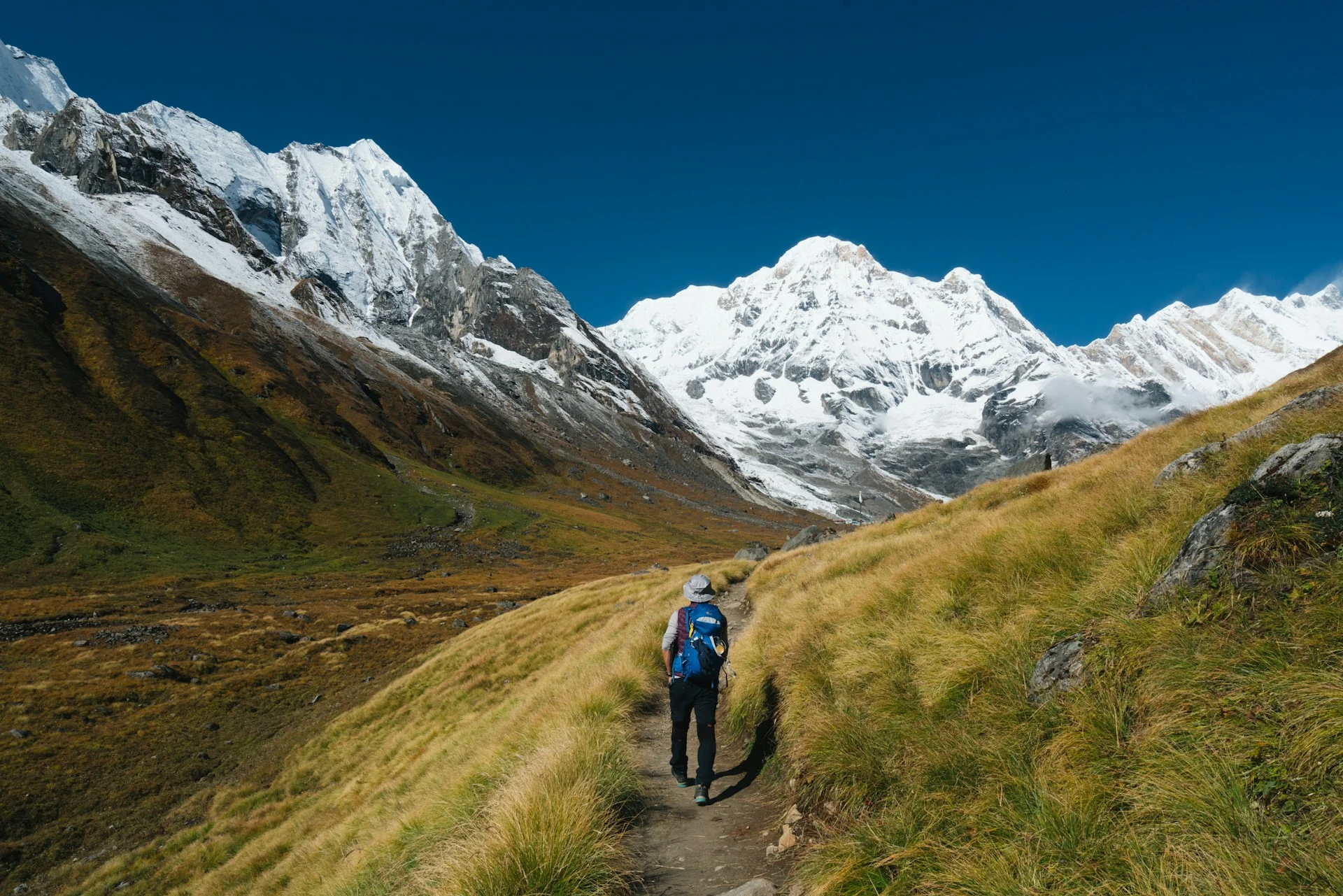
Annapurna Base Camp Cost – Budget trek (10-12 days, independent or basic guided, shared porter, local transport):
Permits: $45. Guide: $300-350. Shared porter: $100-125. Transport Kathmandu-Pokhara-trailhead: $30-50. Food on trail: $200-250. Accommodation: $50-80. Travel insurance: $60-80. Miscellaneous (hot showers, Wi-Fi, charging, snacks): $50-80.
Total: approximately $835-1,010 for a guided trek, or $500-650 independently (though the guide-mandatory situation makes fully independent trekking legally risky in 2026).
Annapurna Base Camp Cost – Mid-range trek (10-12 days, licensed guide, personal porter, private jeep, comfortable teahouses):
Permits: $45. Guide: $350. Porter (personal): $220-250. Transport including domestic flight: $200-250. Food: $280-350. Accommodation (better teahouses): $80-120. Insurance: $80-100. Tips: $60-80. Miscellaneous: $100-150.
Total: approximately $1,415-1,705 per person.
Annapurna Base Camp Cost – Luxury or comfort trek (shorter itinerary, premium guided package, flight, helicopter return):
A full comfort package from a reputable agency like Merriement Treks including a domestic flight to Pokhara, private vehicle, licensed guide, personal porter, and a helicopter return from Annapurna Base Camp to Pokhara (cutting 3-4 days of descent) typically costs $1,499-1,999 per person all-in.
At the very top end, bespoke luxury packages with satellite phone access, premium gear rental, and on-call evacuation coordination can exceed $2,500.
The Helicopter Return Option — When It Makes Sense
One of the most frequently asked questions from people planning this trek is whether the helicopter return is worth it. The honest answer depends on your situation.
A helicopter flight from Annapurna Base Camp to Pokhara takes roughly 45 minutes and costs around $500-700 per person when shared with other trekkers, or $1,000+ if chartered privately. Operators often coordinate shared flights for groups of 4-5 trekkers to bring per-person costs down. The helicopter return eliminates 3-4 days of retracing the same trail, which is the main appeal — if you’ve already seen the descent route and your time or knees won’t cooperate with another long downhill stretch, it’s a practical upgrade rather than a luxury splurge.
If you’re not time-constrained and you’re physically comfortable with the descent, walking back is genuinely enjoyable. The trail looks different going downhill, teahouses you rushed past on the way up become places to linger, and the Gurung villages along the Modi Khola river valley are worth more time than most trekkers give them.
The Hidden Costs That Inflate Your Budget
Most pricing confusion around the ABC trek isn’t about dishonesty — it’s about what people forget to include. A few costs catch trekkers off guard:
- Nepal visa on arrival costs $30 for 15 days or $50 for 30 days (except for Indian nationals who don’t require a visa). If your country requires one and you forget to budget it, it comes straight out of your first day’s spending money.
- Travel insurance with helicopter evacuation coverage is now legally required to obtain permits in 2026. A solid policy from World Nomads, SafetyWing, or True Traveller covering high-altitude trekking to 5,000m and helicopter rescue typically costs $60-120 for a two to three week trip. Without it, a helicopter rescue from the Annapurna region runs $3,000-5,000 out of pocket.
- Tips are culturally expected and, for the guides and porters who earn a modest daily wage, genuinely meaningful. The standard expectation is 10-15% of your guide’s total fee and a similar proportion for your porter. On a 10-day trek with a guide charging $30/day, that’s roughly $30-45 in tips for the guide alone. Budget for it rather than treating it as optional.
- Wi-Fi, phone charging, and hot showers are all paid extras at teahouses. They’re small individually — $1-3 per item — but over 10 days they add up to $50-100 you didn’t plan for. Bring an external battery pack to cut the charging cost significantly.
- Gear rental in Pokhara is available if you don’t own trekking essentials. A sleeping bag rental runs $1-2 per day, a down jacket the same. If you’re trekking in shoulder season or winter, bring or rent both — even in October or March, temperatures at 4,000m drop well below freezing at night.
Do You Need a Full Package, or Can You Arrange It Yourself?
This is a genuine decision that comes down to three factors: experience, time, and how much mental energy you want to spend managing logistics on the road.
- A fully guided package from a licensed Kathmandu or Pokhara operator bundles permits, guide, porter, accommodation, meals, transport, and often the domestic flight into one price. You pay more up front, but you eliminate the risk of anything falling through. Reputable operators charge $700-900 for a 10-12 day all-in package from Pokhara, and $800-1,000+ from Kathmandu including domestic transport. The premium over arranging everything independently is typically $150-300, which for first-time trekkers in a high-altitude environment is almost always worth it.
- Arranging independently — getting your permits in Pokhara, hiring a guide through a trekking agency or referral, booking your own transport, and paying teahouses directly — is manageable for experienced trekkers who’ve done this kind of travel before. It does save money in the $150-300 range, but you carry the coordination risk. If your guide cancels the night before, or your transport falls through, you’re problem-solving in Pokhara rather than resting before a big trekking day.
- The hybrid approach — which more experienced trekkers use — is to book a licensed guide through an agency but handle your own transport and city accommodation, eating at teahouses rather than being on a meal plan. This captures most of the cost savings while keeping the on-trail safety net intact.
What the Annapurna Base Camp Costs Compared to Everest Base Camp
This comparison comes up constantly and is worth addressing directly. The Everest Base Camp trek is longer — typically 14-16 days compared to 10-12 for ABC — and the Lukla flight alone adds $200-250 per person for a notoriously weather-dependent route with frequent cancellations. The Khumbu region’s teahouses are also consistently more expensive than the Annapurna region’s at equivalent altitudes, partly due to fewer supply routes and the remoteness of the approach.
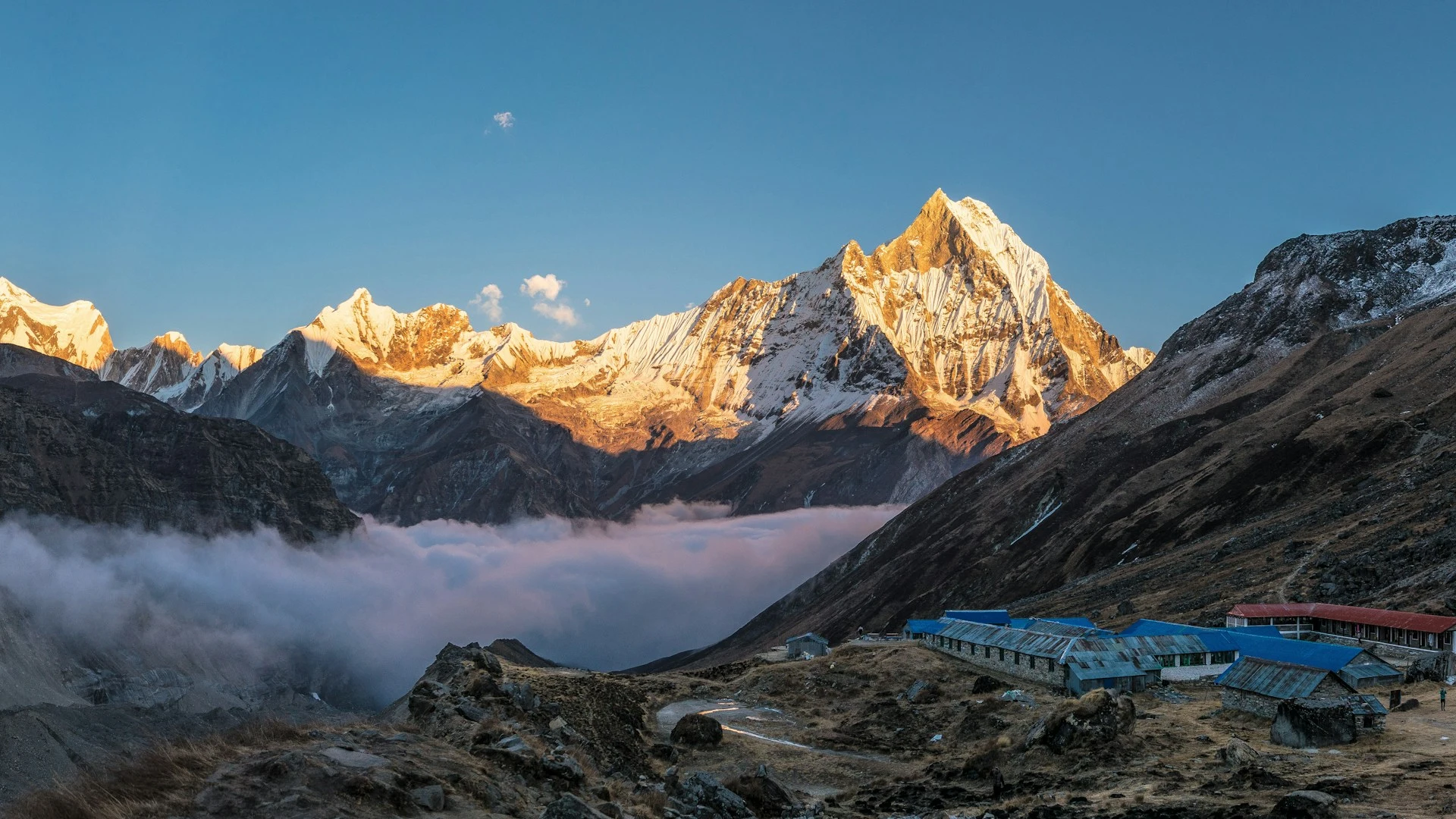
A full guided ABC trek at $700-1,000 compares favorably to EBC packages that typically start at $1,200-1,500 for a comparable service level. For trekkers on a genuine budget, ABC is the stronger choice without meaningful sacrifice in the quality of scenery or experience. The Annapurna Sanctuary — the high glacial amphitheater you enter in the final days — is surrounded by eight peaks over 6,000m including Annapurna I (8,091m), Machapuchare (6,993m), and Hiunchuli (6,441m). The visual impact on arrival at the base camp is, by any honest account, extraordinary.
FAQs About Annapurna Base Camp Cost
- How much does the Annapurna Base Camp cost in 2026?
Most trekkers spend $700-$1,200 for a fully guided 10-12 day trek including permits, guide, porter, teahouse accommodation, meals, and transport from Pokhara. Budget trekkers can bring this closer to $500-650, while helicopter returns and premium packages push costs to $1,500-2,000+. - What permits do I need for the Annapurna Base Camp trek?
You need two permits: the Annapurna Conservation Area Permit (ACAP) at NPR 3,000 (~$22-23) and the TIMS card at NPR 2,000 (~$15) for individual trekkers. Total permit cost is approximately $35-45 for foreign nationals. Both are obtained in Kathmandu or Pokhara. - Is a guide mandatory for Annapurna Base Camp in 2026?
In practice, yes. While the legal regulation has been inconsistently communicated, most trekkers in 2026 are required to show a licensed guide at checkpoints. Trekking without one carries the risk of being turned back. Additionally, travel insurance covering helicopter rescue is now required before permits are issued. - How much does a guide cost for the Annapurna Base Camp trek?
A licensed trekking guide costs $30-35 per day all-in (their wages, food, accommodation, and insurance). A personal porter costs $20-25 per day. For a 10-day trek, guide costs total approximately $300-350. - Is food included in Annapurna Base Camp trek packages?
Most guided packages include full-board meals (breakfast, lunch, dinner) during the trek itself. Food in Kathmandu and Pokhara before and after is almost always excluded. Verify this explicitly when booking, particularly for meals at the highest elevations. - How much does food on the Annapurna Base Camp cost per day?
Expect to spend $15-25 per day at lower elevations and $30-40 per day near Annapurna Base Camp. Dal bhat is the most filling and cost-effective meal on the menu at every teahouse. Over a 10-day trek, food runs roughly $200-350 total depending on choices and altitude. - Is travel insurance mandatory for the Annapurna Base Camp trek?
Yes, from 2026 you are required to show proof of travel insurance covering helicopter rescue and medical evacuation up to at least 6,000m before your permit is issued. Without insurance, a helicopter rescue can cost $3,000-5,000 out of pocket. Budget $60-120 for a suitable policy. - How much does a helicopter return from Annapurna Base Camp cost?
A shared helicopter from base camp to Pokhara costs $500-700 per person. A private charter costs $1,000+. The helicopter return saves 3-4 days of descent hiking and is popular among trekkers with time constraints or those who prefer not to retrace the ascent route. - When is the best time to do the Annapurna Base Camp trek?
October to November and March to May are the two peak windows. October-November offers clear skies, good visibility, and settled weather after monsoon. March-April adds the spectacle of rhododendron forests in full bloom along the lower trail sections. Both windows command the highest teahouse prices and the most trekker traffic. December-February is possible but cold at altitude, and the highest sections can be icy. - Is the Annapurna Base Camp cost worth it?
For the price, it’s one of the best-value high-altitude trekking experiences in the world. You reach 4,130m and enter a glacial sanctuary surrounded by some of the most dramatic mountain scenery on earth, for a total cost that is a fraction of comparable experiences in Patagonia, the Alps, or most African peaks. If you’re drawn to mountains, you will not feel like you overpaid.
Conclusion to Annapurna Base Camp Cost
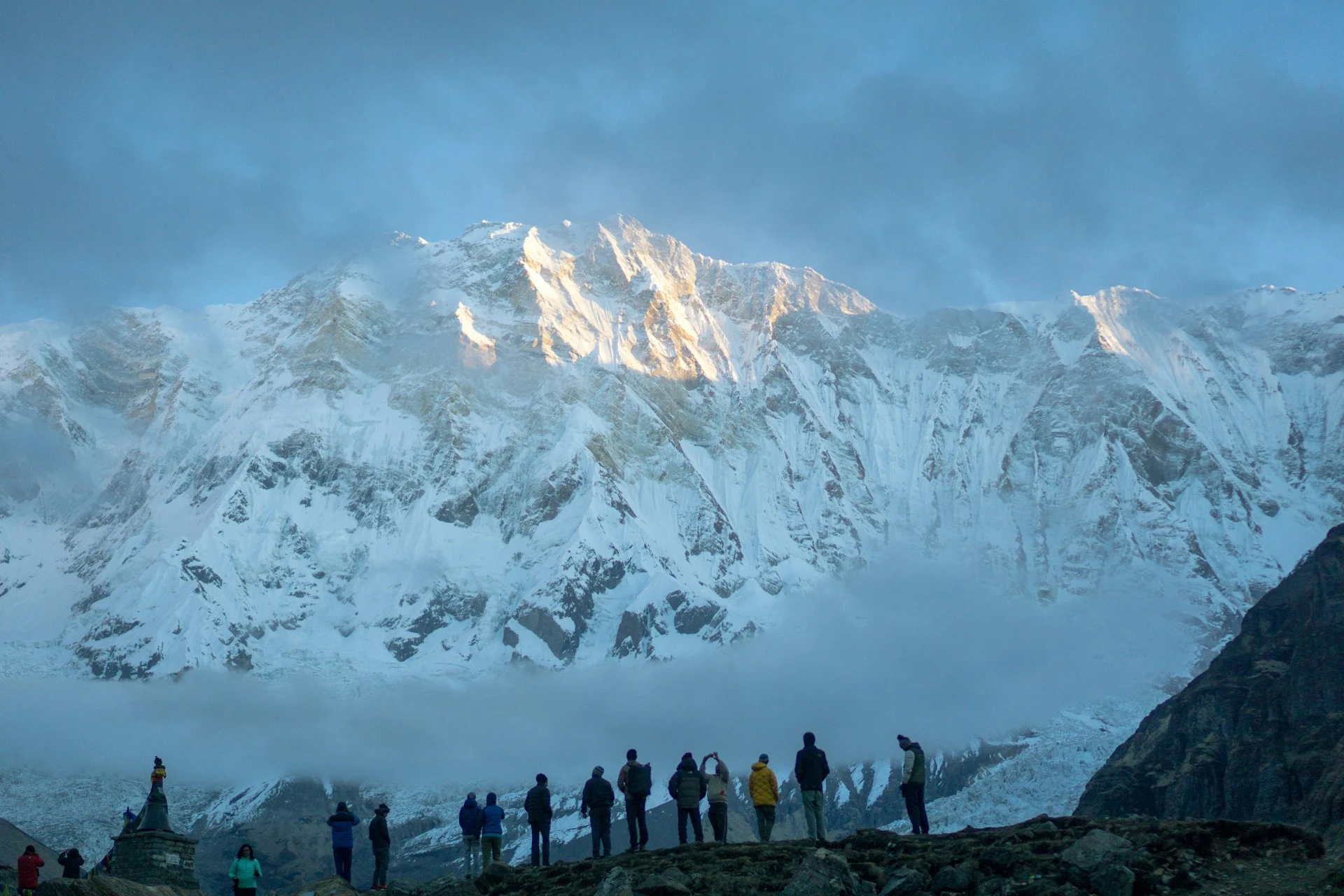
The Annapurna Base Camp costs depends almost entirely on the choices you make about support, comfort, and how you move through Nepal.
If you’re arriving from Kathmandu on a mid-range itinerary with a licensed guide, a shared porter, tourist bus transport to Pokhara, and teahouse accommodation all the way to base camp, budget $900-1,100 per person as your realistic all-in figure including insurance, tips, visas, and trail incidentals. That number should hold no real surprises.
If you’re flying to Pokhara, hiring a personal guide, taking a helicopter back, and spending freely on the trail, budget $1,600-2,000.
If you’re experienced, traveling light, and managing as much independently as the 2026 regulations allow, $600-800 is achievable without cutting corners on the things that actually matter — permits, insurance, and some level of qualified support on the mountain.
What the trail costs in money is straightforward once it’s broken down honestly. What it gives back — ten days of moving through one of the most beautiful landscapes in the world, finishing at a 4,130m glacial bowl ringed by giants — is considerably harder to put a number on.
And if you want a more budget friendly but exciting trip then you can also check out our Kathmandu Chitwan Tour package.