-
6,091m (Pisang Peak)
-
B in Kathmandu; B, L, D on trek
-
Bus / Jeep
-
Spring & Autumn
-
Hotel, Teahouse, Tented camp
-
NMA-licensed climbing guide
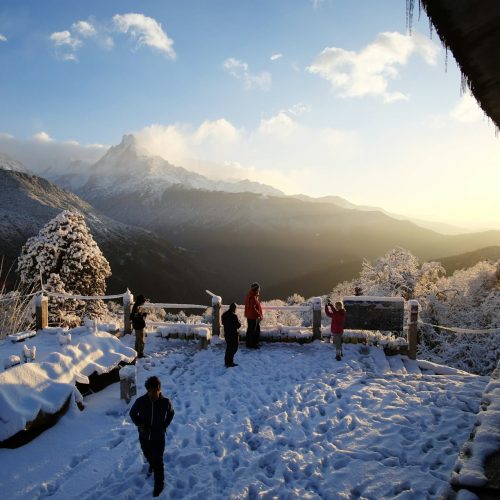
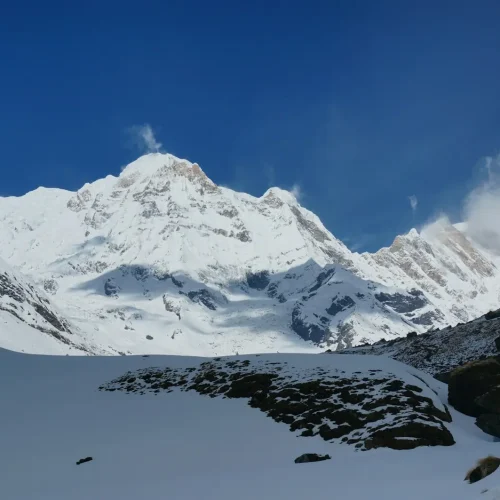
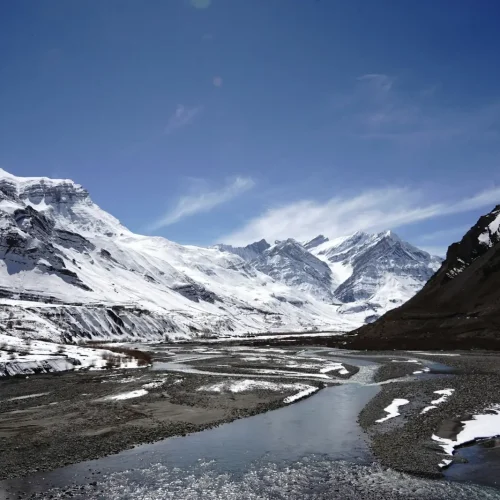
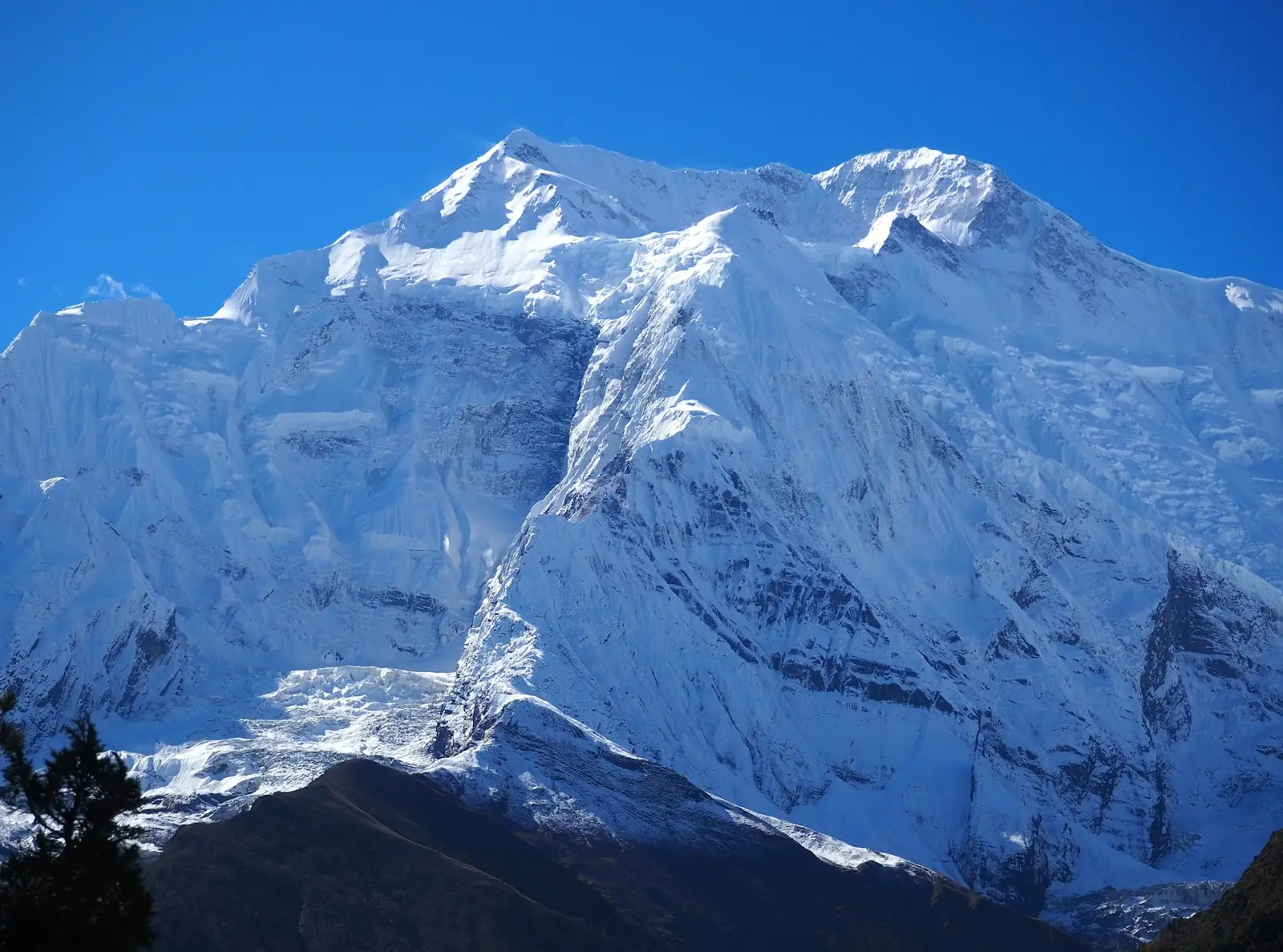
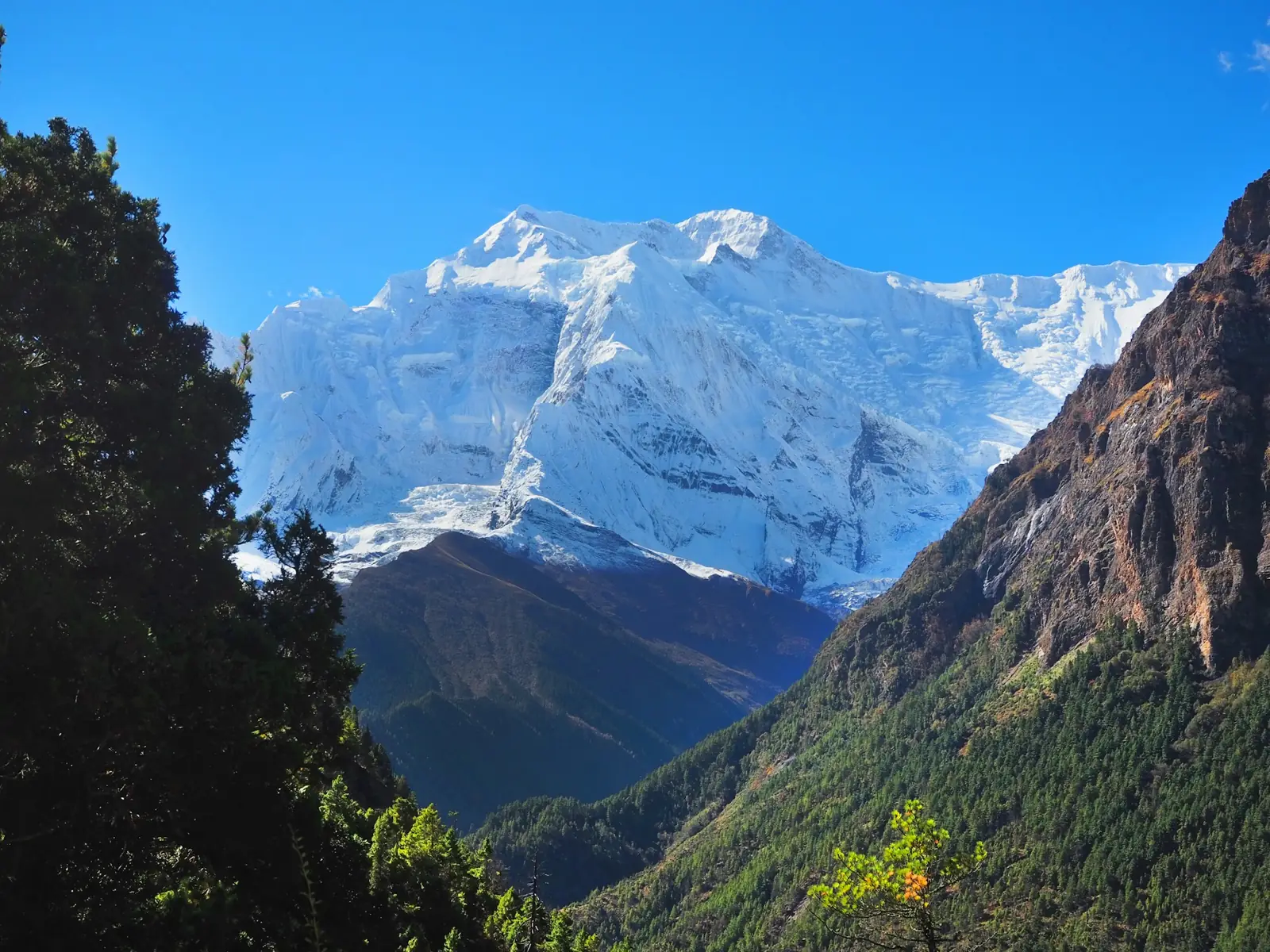
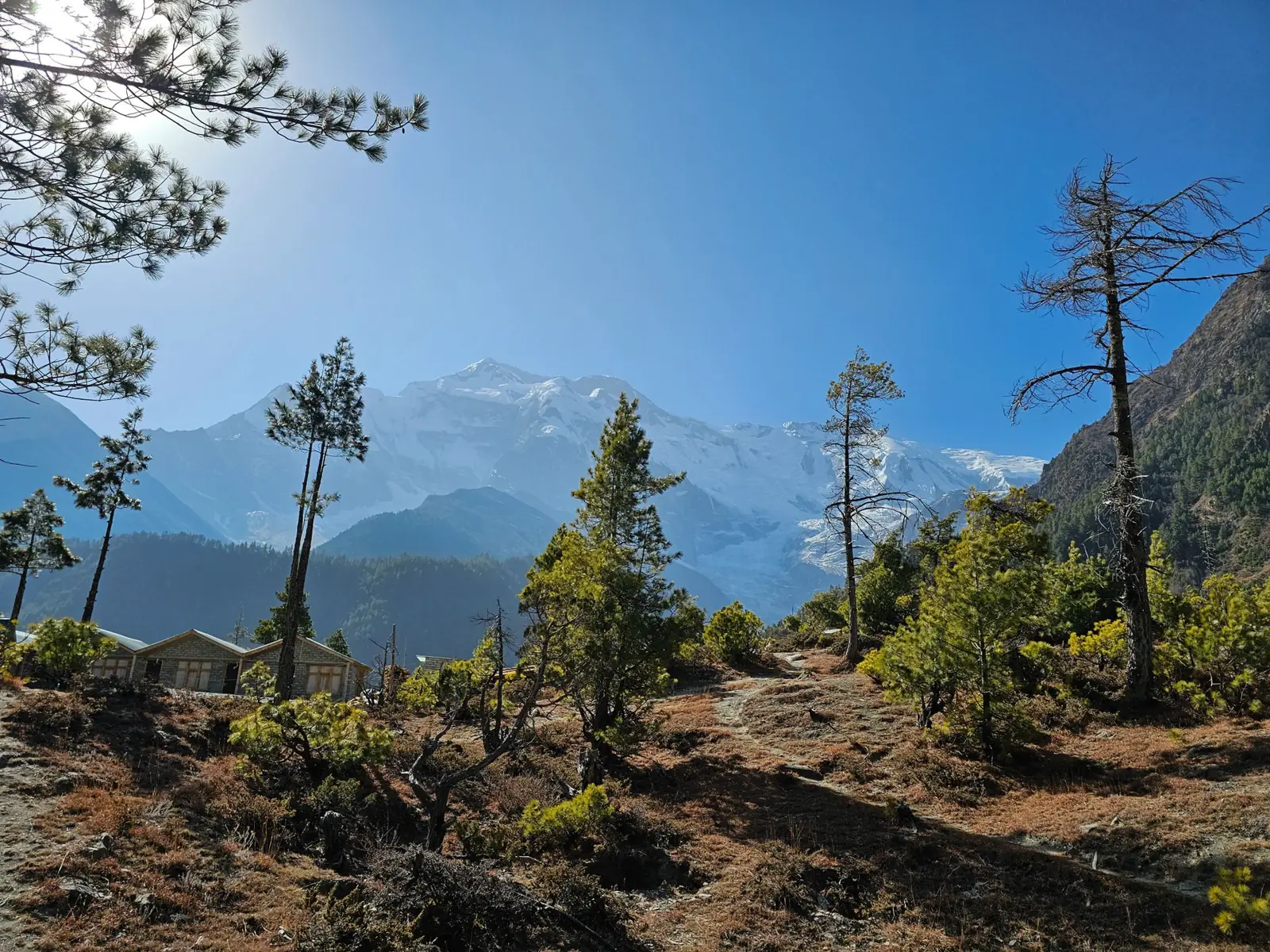
Pisang Peak Climbing puts you on a 6,091m snow pyramid above the Manang valley, on the famous Annapurna Circuit. Locally called Jong Ri, Pisang Peak rises above Upper Pisang village in one long, even sweep of pasture, rock and snow. From the summit you look straight across the valley to Annapurna II, Annapurna IV and Gangapurna, with Manaslu and the Chulu peaks to the east.
It’s one of the most rewarding first 6,000m summits in Nepal. You drive in on the Annapurna Circuit road, so there are no Lukla flights, and you get a full Himalayan climb with a fixed-rope finish. The climbing itself is moderate (PD), but summit day is long and the final 200m of snow is steep. This 15-day itinerary drives to Chame, acclimatises in Upper Pisang, and uses both a Base Camp and a High Camp for the climb, with a spare day for weather.
Below you’ll find the day-by-day plan, difficulty and training advice, 2026 permits, costs and FAQs. Want a bigger objective in the same area? See Chulu East Peak Climbing, or walk the full Annapurna Circuit Trek.
Pisang Peak at a Glance
| Detail | Information |
|---|---|
| Summit altitude | 6,091m / 19,984ft (also known as Jong Ri) |
| Region | Manang, Annapurna region (Annapurna Conservation Area) |
| Duration | 15 days Kathmandu to Kathmandu |
| Route | Kathmandu – Besisahar – Chame – Upper Pisang – Pisang Base Camp – High Camp – summit – Manang |
| Climbing grade | Alpine PD (steep snow up to 45–50° on the final slope, fixed rope) |
| Experience needed | None required; good fitness and basic crampon skills (taught on the trip) |
| Camps | Base Camp about 4,380m; High Camp about 5,400m |
| Accommodation | Hotel in Kathmandu, teahouse lodges, 5 nights in tents |
| Transport | Bus/jeep from Kathmandu via Besisahar to Chame; jeep back from Manang |
| Best seasons | April–May and October–November |
| Group size | 1–12 climbers |
| Permits | NMA Pisang Peak permit, ACAP, TIMS card |
| Price | From USD 1,950 per person |
Package Highlights
- Summit a 6,091m Himalayan peak on the Annapurna Circuit, with no domestic flights
- Face-to-face views of Annapurna II, Annapurna IV, Gangapurna and Tilicho Peak
- Upper Pisang’s Tibetan-style village and monastery, high above the Marsyangdi
- A gradual approach through the Marsyangdi gorge, pine forests and the dry Manang valley
- Base Camp and High Camp, splitting the climb into manageable stages
- Crampon and fixed-rope training with an NMA-licensed climbing guide
- Easy add-ons: Tilicho Lake or the Thorong La pass after the climb
Why Choose This Pisang Peak Package
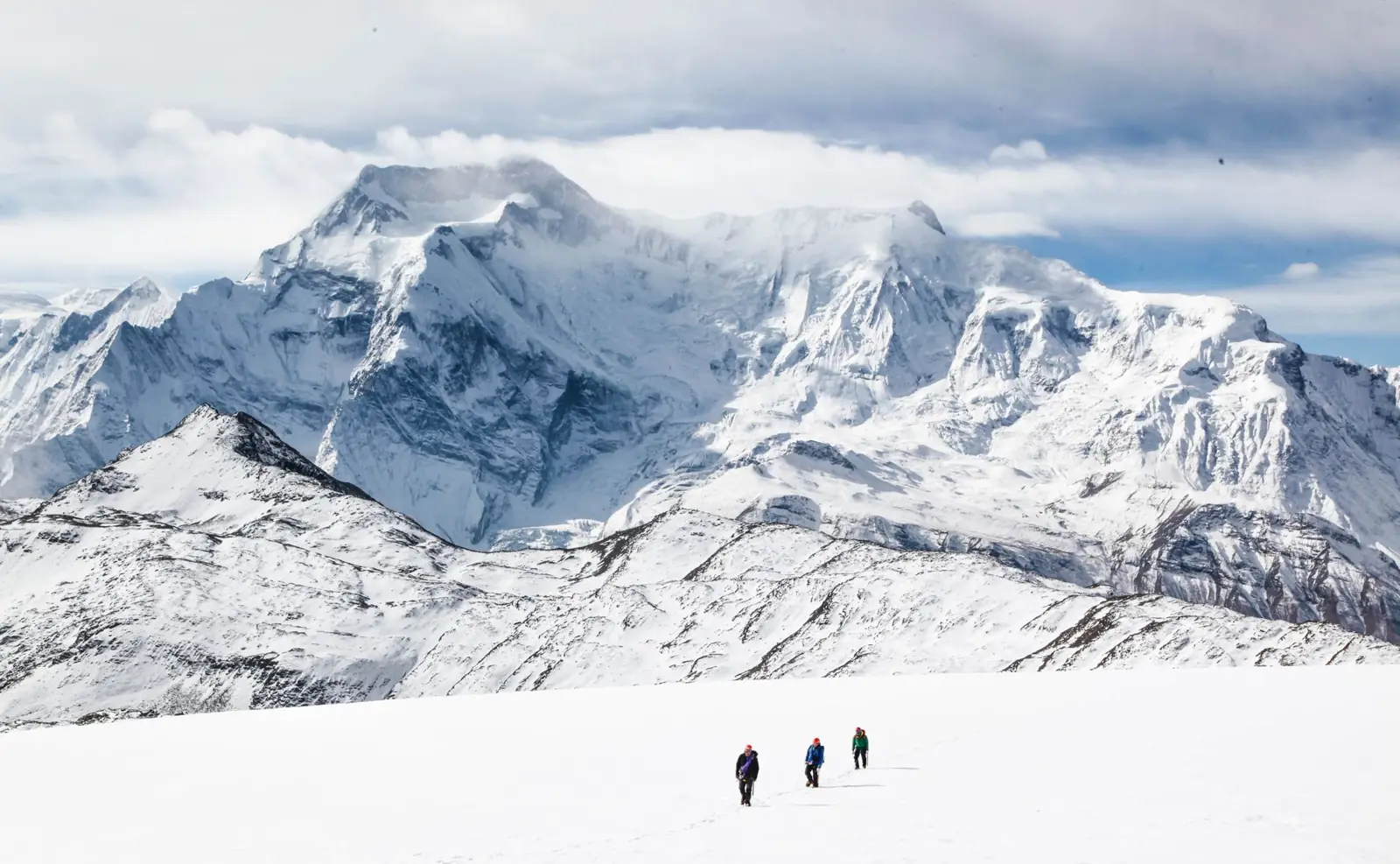
Pisang Peak gives you a true 6,000m summit without the cost and logistics of the Everest region. It suits fit trekkers ready for their first real snow climb, and people who’d like to combine a summit with the Annapurna Circuit.
How our itinerary is designed:
- Drive to Chame, then walk. The new road saves time on the lower circuit, but we start walking at Chame so you gain height gradually.
- A rest day in Upper Pisang (about 3,300m), with a hike above the village, before going higher.
- Base Camp, a training day, then High Camp. Splitting the climb means summit day starts at 5,400m rather than 4,380m.
- A spare summit day for weather or recovery.
- Small rope teams: one climbing guide for every two climbers on summit day.
Route Overview
You drive from Kathmandu to Besisahar (about 760m), then continue by jeep up the Marsyangdi valley road through Jagat and Dharapani to Chame (about 2,670m), the headquarters of Manang district. From Chame the trail climbs through pine forest past the huge curved rock face of Paungda Danda to Upper Pisang (about 3,300m), a stone village with a monastery and views of Annapurna II.
From Upper Pisang, a steep trail climbs through pine and juniper to yak pastures and Base Camp (about 4,380m). A rocky ridge leads up to High Camp (about 5,400m) on the south-west side of the peak. On summit day you follow the ridge to a snowfield, then climb the final steep snow slope (about 45–50 degrees near the top) on fixed rope to the summit pyramid. After the climb you descend to Pisang and continue up the valley to Manang (3,540m), where jeeps take you back down to Besisahar.
Distance & Walking Hours
| Stage | Approx. distance | Time |
|---|---|---|
| Kathmandu → Besisahar (drive) | about 175 km | 6–7 hrs |
| Besisahar → Chame (jeep) | about 65 km | 6–8 hrs |
| Chame → Upper Pisang | 15 km | 5–6 hrs |
| Upper Pisang acclimatisation hike | 5 km | 3–4 hrs |
| Upper Pisang → Base Camp | 5 km | 4–5 hrs |
| Base Camp → High Camp | 3 km | 4–5 hrs |
| High Camp → Summit → Base Camp | about 6 km | 9–11 hrs |
| Base Camp → Manang (via Pisang) | 18 km | 6–7 hrs |
| Manang → Besisahar (jeep) | about 90 km | 7–9 hrs |
| Besisahar → Kathmandu (drive) | about 175 km | 6–7 hrs |
Road times vary a lot with weather and road conditions, especially after the monsoon.
Altitude Table
| Day | Overnight | Altitude (approx.) |
|---|---|---|
| 1–2 | Kathmandu | 1,400m |
| 3 | Besisahar | 760m |
| 4 | Chame | 2,670m |
| 5–6 | Upper Pisang | 3,300m |
| 7–8 | Pisang Base Camp | 4,380m |
| 9 | High Camp | 5,400m |
| 10–11 | Base Camp (summit 6,091m on Day 10) | 4,380m |
| 12 | Manang | 3,540m |
| 13 | Besisahar | 760m |
| 14 | Kathmandu | 1,400m |
Map Overview
The route follows the Marsyangdi river north and then west around the Annapurna massif. Pisang village sits where the valley turns west into the broad, dry upper Manang valley. Pisang Peak rises directly north of the village, on the Damodar Himal side, and the Annapurna II–IV wall runs along the south side of the valley opposite. Manang lies about a day’s walk further west, below Gangapurna. See our Annapurna region trips for the wider area.
Pisang Peak Difficulty Level
Pisang Peak is graded PD (Peu Difficile). It’s technically moderate, but the summit day is long and the final slope is steep.
- Approach to High Camp: steep trail and rocky ridge, with no technical climbing.
- Summit ridge and snowfield: crampons and ice axe, roped together.
- Final slope: roughly 200m of snow and ice, steepening to around 45–50 degrees near the top. Guides fix rope on this section, and you climb with a jumar and come down by abseil or on a safety line.
- Summit day: usually a 3–4am start, 9–11 hours back to Base Camp.
Compared with other peaks: Pisang is harder and higher than Yala Peak, and roughly similar in technical demand to Island Peak, but with no crevasse ladders.
Fitness Requirements
Expect 5–7 hours of walking most days, plus a 9–11 hour summit day above 5,400m. You should be able to hike 15–20km with 1,000m of ascent carrying 6–8kg, and repeat it the next day.
Train for 10–12 weeks:
- Endurance: 3–4 sessions a week (hill walking, stairs, cycling, running).
- Long days: one long hike weekly, building to back-to-back 5–7 hour days with a pack.
- Strength: squats, lunges, step-ups and core, twice a week.
- Rope practice: an indoor session with an ascender is a big help.
Altitude Sickness & Acclimatisation
Watch for headache, nausea, dizziness, poor appetite and poor sleep. Worsening AMS can lead to HAPE or HACE, and the treatment is descent.
- We start walking at Chame (2,670m), not higher, and sleep two nights at Upper Pisang (3,300m).
- An acclimatisation hike above Upper Pisang (towards Ghyaru) on the rest day.
- Two nights at Base Camp (4,380m) before moving to High Camp.
- A spare day to avoid pushing on with symptoms.
- Daily oximeter checks and helicopter evacuation through your insurance.
Best Time for Pisang Peak Climbing
- Spring (April–May): stable weather, good snow, warmer summit mornings.
- Autumn (October–November): clear skies and the best views of the Annapurnas, with colder nights.
- Winter (December–February): very cold and snowy; the Thorong La is often closed. For experienced climbers only.
- Monsoon (June–August): Manang lies partly in the rain shadow, but the drive in suffers landslides and the upper peak gets fresh snow. Not recommended.
Weather by Season
| Season | Upper Pisang (3,300m) day / night | High Camp & summit | Conditions |
|---|---|---|---|
| Spring (Apr–May) | 12–20°C / −2 to 4°C | −8 to −15°C | Stable, afternoon wind |
| Monsoon (Jun–Aug) | 15–22°C / 6–10°C | −3 to −8°C | Showers, landslides on road |
| Autumn (Oct–Nov) | 8–16°C / −5 to 1°C | −10 to −20°C | Clear, cold nights |
| Winter (Dec–Feb) | 0–8°C / −12 to −6°C | −20 to −28°C | Snow, very cold |
Approximate temperatures.
Transportation Details
- Kathmandu to Besisahar by tourist bus or private vehicle (6–7 hours).
- Besisahar to Chame by shared or private jeep on the Annapurna Circuit road. The road is rough, and travel times vary with conditions.
- Manang to Besisahar by jeep at the end of the trip, then on to Kathmandu.
- On the trek your main bag is carried by porters (up to 15kg).
- No flights are needed, though road delays are possible, especially after rain.
Accommodation
- Kathmandu (3 nights): tourist-standard hotel, twin-share, with breakfast.
- Lodges (6 nights): Besisahar, Chame, Upper Pisang and Manang lodges are some of the best on the Annapurna Circuit, often with attached bathrooms and hot showers.
- Camping (5 nights): Base Camp and High Camp, with mountain tents, mats, a dining tent and a kitchen crew.
Meals & Drinking Water
All meals are included on the trek and climb, with breakfast in Kathmandu. Manang valley lodges serve dal bhat, pasta, pizza, Tibetan bread, and apple pie made with local apples. At the camps our cook prepares hot meals. Purify all water with tablets or a filter, or buy boiled water.
Internet, Mobile Network & Charging
- Mobile signal is available in Chame, Pisang and Manang (NTC and Ncell), with gaps between villages.
- Wi-Fi is common in lodges, sometimes free in lower villages.
- Charging is usually available for a fee in lodges, but not at Base Camp or High Camp. Bring a power bank.
Pisang Peak Permits & Fees (2026)
All permits are included.
| Permit | Cost for foreign climbers |
|---|---|
| NMA Pisang Peak permit | USD 350 spring (Mar–May); USD 175 autumn, winter & summer |
| Annapurna Conservation Area Permit (ACAP) | NPR 3,000 (about USD 22) |
| TIMS card | NPR 2,000 (about USD 15) |
| Garbage deposit | USD 500 per team, refundable |
NMA royalties were revised from 1 September 2025, and many older sites still quote the previous USD 250/125. A licensed guide is mandatory. More in our trekking permits in Nepal guide.
Packing List
| Category | Items | Bring or rent? |
|---|---|---|
| Climbing gear | Harness, jumar, figure-8/ATC, 4 carabiners (2 locking), sling, ice axe, crampons, helmet | Rent or bring |
| Footwear | Insulated mountaineering boots (crampon compatible), broken-in trekking boots, camp shoes, wool socks | Mountaineering boots rentable |
| Insulation | Down jacket (about −20°C), fleece, thermal base layers | Down jacket rentable |
| Shell | Waterproof jacket and trousers | Bring |
| Hands & head | Liner and insulated gloves, mitts, warm hat, buff, sun hat | Bring |
| Sleeping | Sleeping bag rated −20°C | Rentable |
| Sun & eyes | Category 3–4 sunglasses, goggles, SPF 50 | Bring |
| Packs | 35–40L daypack (porter duffel provided) | Bring |
| Water & health | 2 bottles, purification, first-aid kit, medicines | Bring |
| Electronics | Headlamp, power bank | Bring |
| Documents | Passport, 2 photos, insurance details, NPR cash | Bring |
Pisang Peak Climbing Cost Breakdown
Our price is from USD 1,950 per person. A realistic total budget:
| Expense | Estimated cost (USD) | Included? |
|---|---|---|
| Pisang Peak Climbing package (15 days) | 1,950 | — |
| NMA permit, ACAP, TIMS, garbage deposit | — | Included |
| Road transport Kathmandu–Chame and Manang–Kathmandu | — | Included |
| Nepal tourist visa (15 or 30 days) | 30–50 | Not included |
| Insurance with helicopter evacuation to 6,500m | 150–350 | Not included |
| Climbing gear rental (if needed) | 100–150 | Not included |
| Kathmandu lunches and dinners | 40–80 | Not included |
| Showers, charging, Wi-Fi, snacks and drinks | 80–150 | Not included |
| Tips for guides, porters and crew | 120–200 | Not included |
| Realistic total (excluding international flights) | about 2,470–2,930 |
Because Pisang is reached by road, it avoids Lukla flight costs and delays. That’s a big part of why it’s cheaper than Everest-region peaks.
What’s Included
- Airport pickup and drop-off in Kathmandu
- 3 nights’ hotel in Kathmandu with breakfast (twin-share)
- Kathmandu – Besisahar – Chame transport and Manang – Besisahar – Kathmandu transport
- 6 nights in teahouse lodges (twin-share)
- 5 nights’ camping at Pisang Base Camp and High Camp (tents, mats, kitchen)
- Breakfast, lunch and dinner throughout the trek and climb
- NMA-licensed climbing guide (one guide for every two climbers on summit day) and English-speaking trekking guide
- Porters (one porter for two climbers, up to 15kg each)
- Camp cook and kitchen staff
- NMA Pisang Peak permit, ACAP and TIMS card
- Garbage deposit and waste management
- Group climbing gear: fixed rope, anchors, snow stakes, ice screws
- Crampon and rope training at Base Camp
- Salary, meals, accommodation, insurance and equipment for staff
- First-aid kit and pulse oximeter
- Trek duffel bag and NMA summit certificate
- Government taxes and service charges
What’s Excluded
- International flights and Nepal visa fee
- Travel insurance (must cover climbing to 6,500m and helicopter evacuation)
- Lunch and dinner in Kathmandu
- Personal climbing gear and clothing (rental available)
- Private jeep upgrade
- Showers, charging, Wi-Fi, bottled drinks, alcohol and snacks
- Extra nights caused by road delays, early return or personal reasons
- Helicopter rescue (billed to your insurance)
- Tips for guides, porters and crew
Optional Add-ons
- Thorong La and Muktinath: after Manang, continue over the 5,416m Thorong La to Muktinath and Jomsom (+4–5 days). See our Thorong La guide.
- Tilicho Lake: one of the highest lakes in the world, an easy detour from Manang. See Tilicho Lake Trek.
- Chulu East or Chulu West: for a second, higher summit. See Chulu East Peak Climbing.
- Private jeep for the road sections.
- Pokhara relaxation days at the end.
Travel Tips
- Choose a private jeep if you can. The shared jeep ride to Chame is long and crowded.
- Visit Upper Pisang’s monastery on your rest day.
- Bring cash from Kathmandu or Besisahar. ATMs further up the valley are limited and unreliable.
- Start early on summit day. Manang gets strong afternoon winds.
- Keep water bottles inside your jacket on the climb so they don’t freeze.
Photography Spots
- Paungda Danda: the huge curved rock face between Chame and Pisang.
- Upper Pisang monastery with Annapurna II across the valley.
- Ghyaru ridge: one of the best Annapurna panoramas on the whole circuit.
- High Camp at sunrise: Annapurna II, IV, Gangapurna and Tilicho Peak.
- The summit: Manaslu, the Chulus and the full Annapurna wall.
Responsible Trekking
- Carry out all waste from Base Camp and High Camp.
- Use ACAP water stations or purify water instead of buying plastic bottles.
- Respect Buddhist culture in Pisang and Manang: walk clockwise around chortens and mani walls.
- Fair porter loads of 15kg maximum, with proper gear and insurance.
Why Book Pisang Peak Climbing With Merriment Treks
- A safe acclimatisation plan: Upper Pisang rest day, two nights at Base Camp, High Camp and a spare day.
- NMA-licensed climbing guides and small rope teams.
- Transparent pricing: permits, transport and the garbage deposit included.
- Annapurna specialists: see our Annapurna Circuit, Short Annapurna Circuit and Chulu East trips, or all our peak climbing trips.
Cancellation & Refund Policy
Deposit, payment and cancellation terms are set out in our terms and conditions, and we confirm them in writing with every booking. Weather or road delays, a turned-back summit attempt or leaving early are not refundable, so make sure your insurance covers cancellation and curtailment. Questions? Contact our team.
Ready for Pisang Peak Climbing?
Pisang Peak Climbing is a real 6,000m summit, reached by road, on the most famous trek in Nepal. Train well, take the acclimatisation seriously and it’s a very achievable first big peak.
Send us your preferred dates and we’ll reply with honest advice and a clear quote. Contact us or use the booking form on this page.