Introduction on How hard is it to climb Everest?
How hard is it to climb Everest? The honest answer is that it depends on what you mean by “hard.” If you mean technically difficult in the way that rock climbing or ice climbing is difficult, then Everest is not the hardest mountain in the world. If you mean physically demanding, mentally exhausting, logistically complex, and objectively dangerous, then Everest base camp is one of the hardest things a human being can attempt. The difficulty is not in any single skill. It is in the combination of extreme altitude, cold, fatigue, danger, and the sheer number of things that must go right over two months. This article will explain what actually makes Everest hard, who should consider attempting it, and how to know if you are ready.
What “Hard” Actually Means on Everest
Most people think of difficulty as a single scale. A mountain is either hard or it is not. That is not how high-altitude mountaineering works. On Everest, there is a crucial difference between technical difficulty and overall expedition difficulty.
Technical difficulty refers to the climbing itself: how steep the terrain is, how much skill is required, how exposed the sections are, and how much rope work is involved. By that measure, Everest’s standard South Col route from Nepal is not exceptionally difficult. It is mostly snow and ice climbing on fixed ropes, with one famous rock step near the summit. A competent mountaineer with glacier experience and basic ice technique can handle the technical demands.
Overall expedition difficulty is something else entirely. It includes:
-
Extreme altitude and reduced oxygen
-
Prolonged exposure to cold
-
Physical exhaustion built up over weeks
-
Acclimatization stress
-
Weather uncertainty
-
Objective hazards like avalanches and crevasses
-
Psychological pressure
-
Decision-making under stress
-
The cumulative effect of poor sleep, poor appetite, and constant discomfort
When people ask how hard is it to climb Everest, they are usually asking about the overall expedition difficulty, not the technical grade. The answer is that the overall difficulty is extremely high — not because any single move is hard, but because everything is hard at once, for a very long time, in an environment where your body is slowly deteriorating.
Is Everest Technically Difficult?
On the standard South Col route, the technical climbing is moderate by mountaineering standards. Most of the route involves walking on steep snow and ice with crampons, using fixed ropes and ascenders. There is no sustained vertical rock climbing. The terrain is not comparable to technical alpine routes in the Alps or the harder routes in the Karakoram.
The most technically notable section is the Hillary Step, a rocky chimney about 12 meters high just below the summit on the southeast ridge. For years, climbers described it as the crux of the route. However, the 2015 earthquake significantly altered the step, and current conditions vary by season. Some years it is a short snow slope; other years it requires a few moves of moderate rock climbing at extreme altitude.
The Khumbu Icefall is technically straightforward but objectively dangerous. It is a moving glacier with ladders over crevasses and constant exposure to collapsing seracs. The climbing itself is not hard. The environment is.
So the technical answer is: no, Everest base camp is not technically hard compared to many other mountains. But that answer is misleading if it stops there.
The Real Difficulty: Altitude and the Death Zone
The single greatest difficulty factor on Everest is altitude. Above 8,000 meters, climbers enter what mountaineers call the Death Zone. The air pressure is roughly one-third of sea level pressure. Human bodies do not function normally there. They do not recover. They only survive for a limited time.
At sea level, blood oxygen saturation is typically 95 to 100 percent. On the summit of Everest, even with supplemental oxygen, saturation often drops below 70 percent. Without supplemental oxygen, it falls further. The body is slowly shutting down even as the climber is moving.
Altitude sickness is not a minor inconvenience on Everest. It is a spectrum that includes acute mountain sickness, high-altitude pulmonary edema, and high-altitude cerebral edema. The latter two can kill within hours if untreated. Acclimatization reduces the risk but does not eliminate it.
The Death Zone is not a dramatic metaphor. It is a physiological reality. Above 8,000 meters, the body cannot acclimatize. It can only tolerate. That is why summit pushes are timed carefully, why climbers use supplemental oxygen, and why turnaround times are enforced.
How Fit Do You Need to Be?
Everest requires an unusual kind of fitness. It is not about being able to run a fast marathon or lift heavy weights. It is about sustained endurance at low intensity over many hours, day after day, for weeks.
A useful benchmark is that a prospective Everest climber should be able to:
-
Walk uphill for 8 to 10 hours on consecutive days without collapsing
-
Carry a 15 to 20 kilogram pack at altitude
-
Maintain a steady, slow pace for hours without needing frequent rest
-
Recover quickly after hard days
-
Manage cold, wind, and discomfort without losing composure
-
Sleep in difficult conditions and function the next day
Many successful Everest climbers are not elite athletes. They are ordinary people with exceptional aerobic base fitness, strong lower-body endurance, and the ability to keep moving when everything hurts. The physical challenge is less about peak performance and more about durability.
What Climbing Experience Do You Need?
This is where many potential Everest climbers go wrong. They assume that because the technical climbing is moderate, they can learn on the mountain. That is a dangerous assumption.
Before attempting Everest, a climber should have:
-
Glacier travel experience — including rope team movement and crevasse rescue
-
Fixed rope technique — using ascenders and descenders efficiently
-
Crampon and ice axe proficiency — comfortable on steep snow and ice
-
High-altitude experience — ideally at least one 7,000-meter peak
-
Cold-weather expedition experience — multiple nights in sub-zero conditions
-
Self-care skills — managing hydration, nutrition, and equipment in extreme conditions
A logical progression might look like: trekking to Everest Base Camp, then a 6,000-meter climb like Island Peak or Lobuche East, then a 7,000-meter peak like Himlung Himal or Baruntse, then Everest. This is not a rigid requirement, but it is a sensible path.
Why Acclimatization Matters More Than Fitness
You can be the fittest person on the mountain and still fail to acclimatize. Acclimatization is the body’s slow adaptation to reduced oxygen. It involves increased red blood cell production, changes in breathing patterns, and shifts in blood chemistry. It cannot be rushed.
On a standard Everest expedition from Nepal, climbers spend roughly six weeks acclimatizing. The pattern is climb high, sleep low. Teams move up to Camp 1, sleep there, return to Base Camp. Then they push to Camp 2, sleep there, return. Then Camp 3. The body gradually adapts, but only up to a point.
Above 8,000 meters, adaptation stops. The body is in survival mode. That is why the summit push is planned as a single, rapid operation from Camp 4 to the summit and back.
The Khumbu Icefall: The Most Objectively Dangerous Section
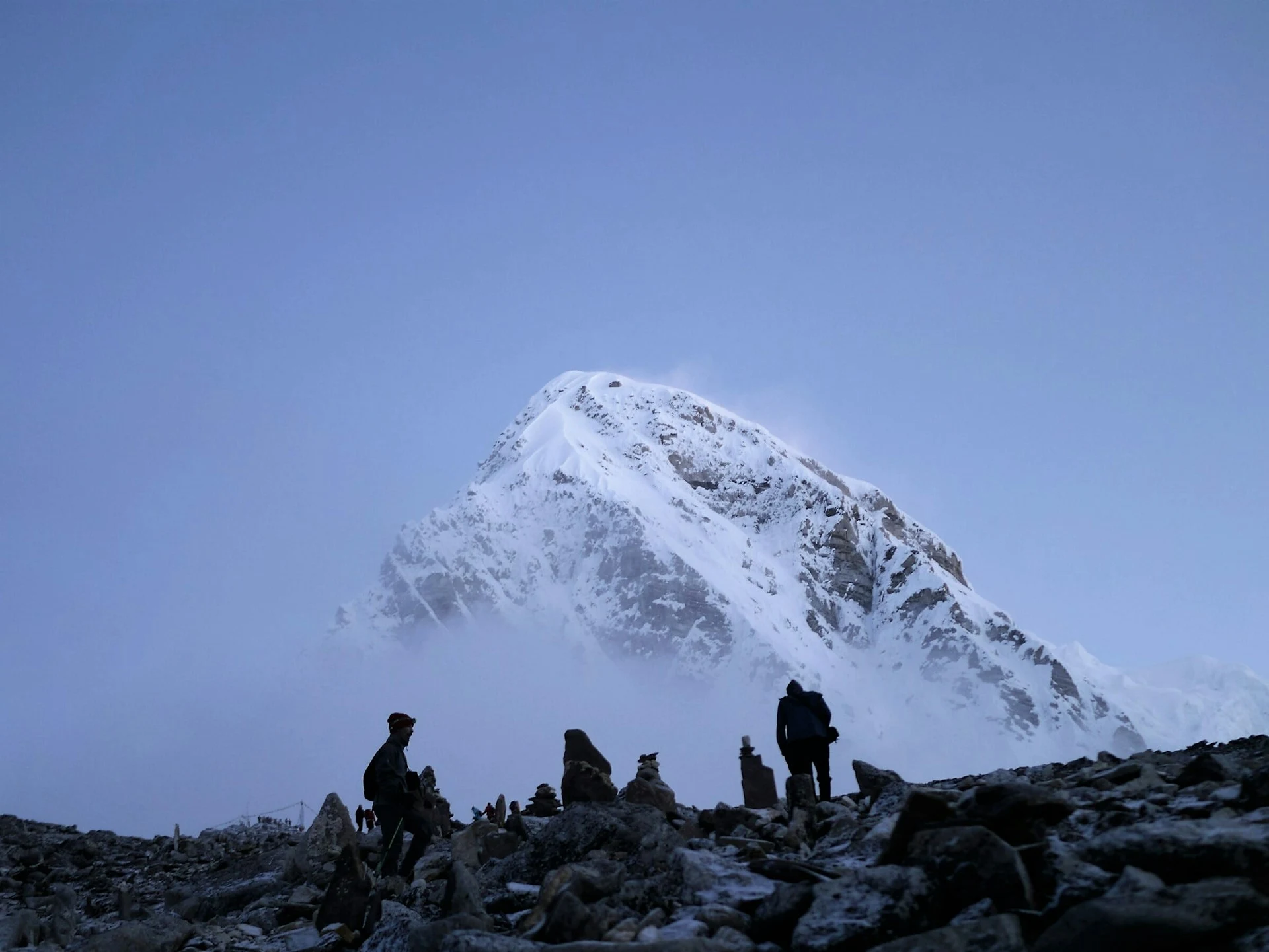
The Khumbu Icefall sits between Everest Base Camp and Camp 1. It is a moving river of ice, fractured into massive blocks called seracs. The route through it changes constantly. Climbing teams place ladders across crevasses and fix ropes along the safest possible path, but “safest” is relative.
The Icefall is dangerous because it is unpredictable. A serac can collapse without warning, regardless of a climber’s skill. That is why teams try to cross it early in the morning, when the cold stabilizes the ice. Even then, the risk is significant.
When people ask how hard is it to climb Everest, the Icefall is part of the answer. It is not technically hard. It is dangerous in a way that skill cannot fully control.
The Lhotse Face and the South Col Push
Above Camp 2, the route climbs the steep, icy Lhotse Face to Camp 3 and eventually to the South Col at around 7,900 meters. The Lhotse Face is sustained, exposed, and physically demanding. Climbers are on fixed ropes for hours, moving slowly upward in the cold.
The South Col is the saddle between Everest and Lhotse. Camp 4 sits there, just below the Death Zone. The push from Camp 3 to Camp 4 is exhausting. Climbers arrive already depleted, and the summit push has not yet begun.
This is the pattern of Everest: each stage drains you, and the hardest part is still ahead.
Summit Day: What It Actually Feels Like
Summit day begins at Camp 4, usually around 9 or 10 p.m. It is dark, windy, and bitterly cold. Climbers leave in headlamp light, moving slowly up the triangular face toward the Balcony at about 8,400 meters.
From the Balcony, the route follows the southeast ridge to the South Summit. Then comes the Hillary Step. Then the final traverse to the true summit.
The pace is brutally slow. At that altitude, a single step can require several breaths. Climbers rest every few meters. The cold penetrates through boots and mittens. Frostbite is a constant threat.
The summit itself is small and exposed. Most climbers stay only 15 to 30 minutes. The weather is closing. The body is failing. The descent is still ahead.
The Descent: Where Everest Gets Truly Dangerous
Most Everest deaths occur during the descent. This is not a coincidence. Climbers reach the summit exhausted, hypoxic, dehydrated, and often behind schedule. They have used much of their supplemental oxygen. Their judgment is impaired.
The descent requires the same technical skills as the ascent, but without the same energy or focus. Accidents happen when climbers run out of oxygen, lose the fixed rope, or simply stop moving.
The rule is simple: the summit is optional. The descent is mandatory. The best Everest climbers are not the strongest. They are the ones who turn around in time.
Weather, Windows, and Waiting
Everest expeditions are not continuous climbing. They are long periods of waiting interrupted by short bursts of effort. Teams wait at Base Camp for a weather window — a period of stable conditions that makes a summit attempt possible.
The waiting is hard. It wears on morale. Climbers sit in tents, eat, sleep, and think. Some lose motivation. Some get sick. Some decide they have had enough.
The psychological difficulty of Everest is real. It is not just about physical endurance. It is about managing uncertainty, fear, boredom, and the slow erosion of confidence over weeks.
Everest vs. Everest Base Camp Trek
It is important to be clear: trekking to Everest Base Camp is not the same as climbing Everest.
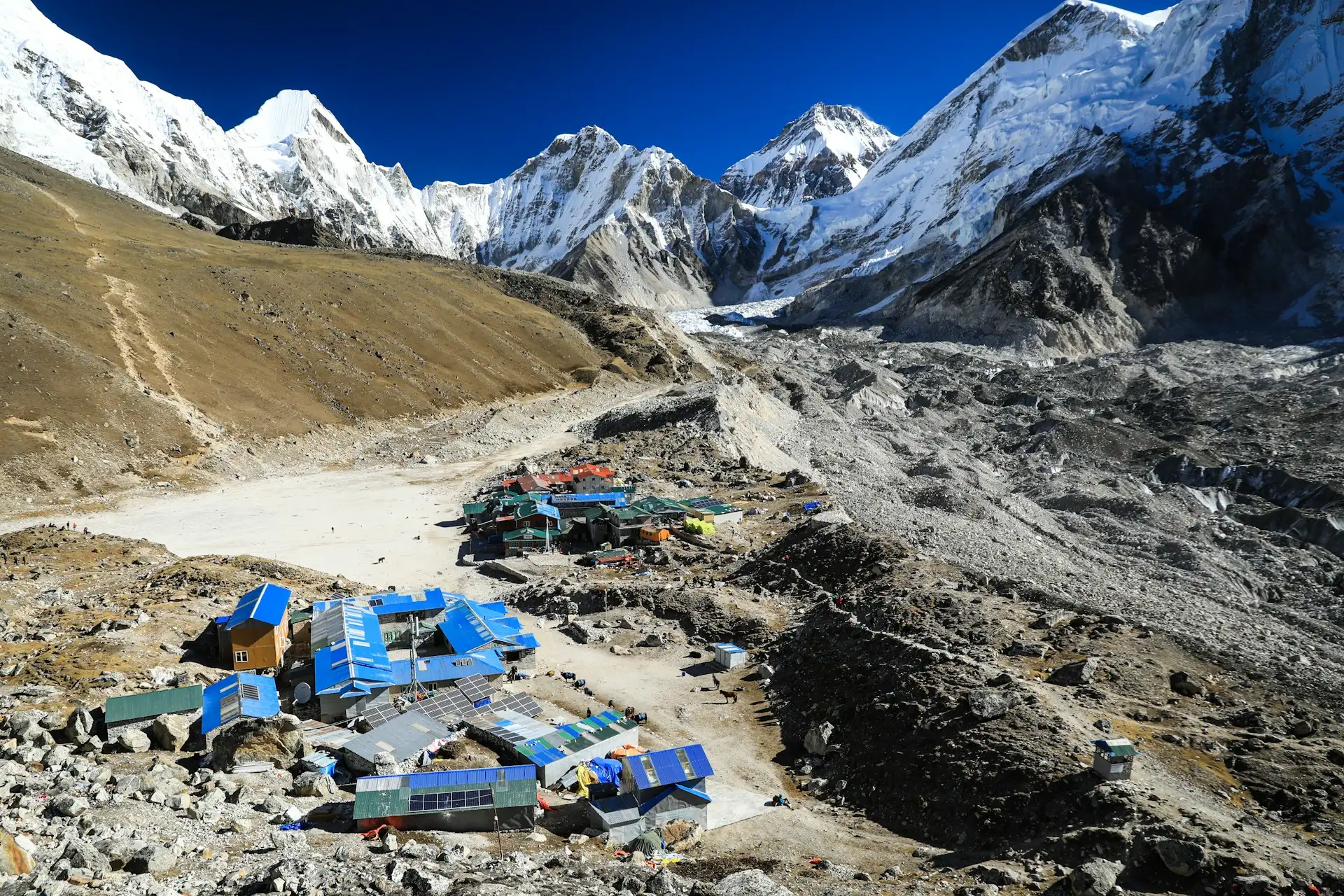
The Everest Base Camp trek is a strenuous high-altitude trek. It reaches about 5,364 meters at Base Camp. It requires good fitness, but no technical climbing skills. Thousands of people complete it every year.
Climbing Everest is a mountaineering expedition. It requires technical skills, expedition experience, and sustained effort above 8,000 meters. The two are not comparable.
Merriment Treks, as a Nepal-based trekking and mountaineering company, organizes both Everest Base Camp treks and Everest expeditions. The trek is an excellent first step. It introduces you to the Khumbu region, to high altitude, and to expedition culture. But it is not a substitute for mountaineering experience.
Am I Ready for Everest? A Self-Assessment Framework
This table will help you evaluate your readiness honestly. Be truthful with yourself. If you cannot check most of these boxes, you are not ready — and that is fine. It means you have a clear training path ahead.
| Readiness Factor | Ready | Not Ready |
|---|---|---|
| Cardiovascular endurance: can sustain 8–10 hours of uphill walking on consecutive days | ||
| Leg strength: comfortable carrying 15–20 kg at altitude | ||
| Recovery: bounce back after hard days without injury | ||
| Glacier travel: rope team movement and crevasse rescue practiced | ||
| Fixed rope technique: efficient with ascenders and descenders | ||
| Crampon and ice axe skill: confident on steep snow and ice | ||
| High-altitude experience: at least one 7,000-meter peak | ||
| Cold-weather camping: multiple nights in sub-zero conditions | ||
| Mental resilience: able to stay calm and focused under stress | ||
| Decision-making: willing to turn around when conditions demand it | ||
| Expedition experience: familiar with long, uncomfortable expeditions | ||
| Emergency awareness: knows the signs of altitude illness and frostbite |
This framework is educational, not medical. It does not guarantee summit success. It is a tool to help you identify gaps.
What to Look for in an Expedition Operator
Choosing the right operator is one of the most important decisions you will make. A good operator does more than sell you a permit. They manage logistics, provide experienced guides, coordinate oxygen, monitor your health, and make hard calls when necessary.
Look for:
-
Nepal-based experience — operators like Merriment Treks understand the local environment, regulations, and Sherpa networks
-
Qualified guides — at minimum, guides with high-altitude experience; ideally, IFMGA-certified lead guides
-
Clear safety protocols — oxygen strategy, turnaround times, emergency evacuation plans
-
Transparent logistics — camps, food, equipment, and support clearly described
-
Honest communication — an operator who tells you if you are not ready
-
Reasonable client-to-guide ratios — smaller is safer
Avoid operators who promise summits. No one can guarantee Everest.
How Much Does It Cost and Why
Climbing Everest from Nepal currently costs roughly $35,000 to $75,000 per person, depending on the operator, level of support, and personal choices. The Nepal government climbing permit alone is $11,000 for foreign climbers in the spring season. Additional costs include the liaison officer, insurance, oxygen, equipment, food, transportation, and Sherpa support.
Costs are rising. Regulations are changing. If you are considering an Everest expedition, it is worth discussing current requirements directly with a Nepal-based operator like Merriment Treks.
Final Assessment on How hard is it to climb Everest
Yes. Everest is hard. It is hard in ways that are difficult to explain to someone who has not experienced extreme altitude. It is not the hardest technical climb in the world, but it may be the hardest overall expedition for most people who attempt it.
The altitude, the cold, the danger, the waiting, the exhaustion, the psychological weight — together they create a challenge that few other mountains match. That is why Everest still means something, despite the crowds and the commercialization.
The question is not just how hard is it to climb Everest. The question is whether you are ready for it. If you are, start preparing now. If you are not, start with something smaller. The mountain is not going anywhere.
FAQs about How hard is it to climb Everest
1. Is Everest technically difficult?
No. The standard South Col route from Nepal is moderate technical terrain. The difficulty comes from altitude, weather, and duration, not from individual climbing moves.
2. Can a beginner climb Everest?
No. A beginner should not attempt Everest. You need glacier travel experience, fixed rope skills, high-altitude experience, and cold-weather expedition time before considering Everest.
3. Can an average fit person climb Everest?
It depends what you mean by average. A very fit, durable, experienced mountaineer can attempt Everest. A generally fit person without mountaineering experience cannot realistically or safely attempt it.
4. How fit do you need to be to climb Everest?
You need excellent aerobic endurance, strong legs, fast recovery, and the ability to sustain low-intensity effort for 8 to 10 hours on consecutive days for weeks.
5. What is the hardest part of climbing Everest?
Most experienced climbers say the hardest part is the cumulative toll: altitude, exhaustion, cold, and the mental strain of the expedition, especially summit day and the descent.
6. What is the Death Zone?
The Death Zone is the altitude above 8,000 meters where the body cannot acclimatize and begins to deteriorate. Human survival there is limited, even with supplemental oxygen.
7. Do you need supplemental oxygen to climb Everest?
Almost all climbers use supplemental oxygen above Camp 4. A small number climb without it, but this dramatically increases risk and is not advisable for most people.
8. How long does an Everest expedition take?
A standard expedition from Nepal takes roughly 6 to 9 weeks, including arrival in Kathmandu, trek to Base Camp, acclimatization rotations, summit push, and descent.
9. How dangerous is the Khumbu Icefall?
It is the most objectively dangerous section of the route. Serac collapse and crevasse falls are real risks that skill cannot fully control.
10. How does Everest Base Camp trekking compare to climbing Everest?
The trek is a non-technical high-altitude hike to 5,364 meters. Climbing Everest is a technical mountaineering expedition above 8,000 meters. They are completely different undertakings.
11. How many people die on Everest each year?
Fatality numbers vary by season and year. The long-term death rate for climbers attempting the summit is roughly 1 to 2 percent, depending on the population and period analyzed.
12. What should you climb before Everest?
A logical progression includes a 6,000-meter trekking peak like Island Peak or Lobuche East, followed by a 7,000-meter peak like Himlung Himal or Baruntse, plus glacier and fixed rope experience.
13. Is the descent harder than the ascent?
In many ways, yes. Climbers are exhausted, hypoxic, and often behind schedule. Most Everest deaths occur during the descent.
14. How much does it cost to climb Everest?
From Nepal, expect to spend roughly $35,000 to $75,000, depending on operator, support level, and personal choices. The climbing permit alone is $11,000 for foreigners in spring.
15. How important is acclimatization?
It is essential. Acclimatization reduces the risk of altitude illness and improves performance, but it cannot fully prepare the body for the Death Zone. Above 8,000 meters, survival is time-limited regardless of acclimatization.