-
Kathmandu
-
Lodge, Hotel
-
Spring, Autumn
-
Guided
-
Drive
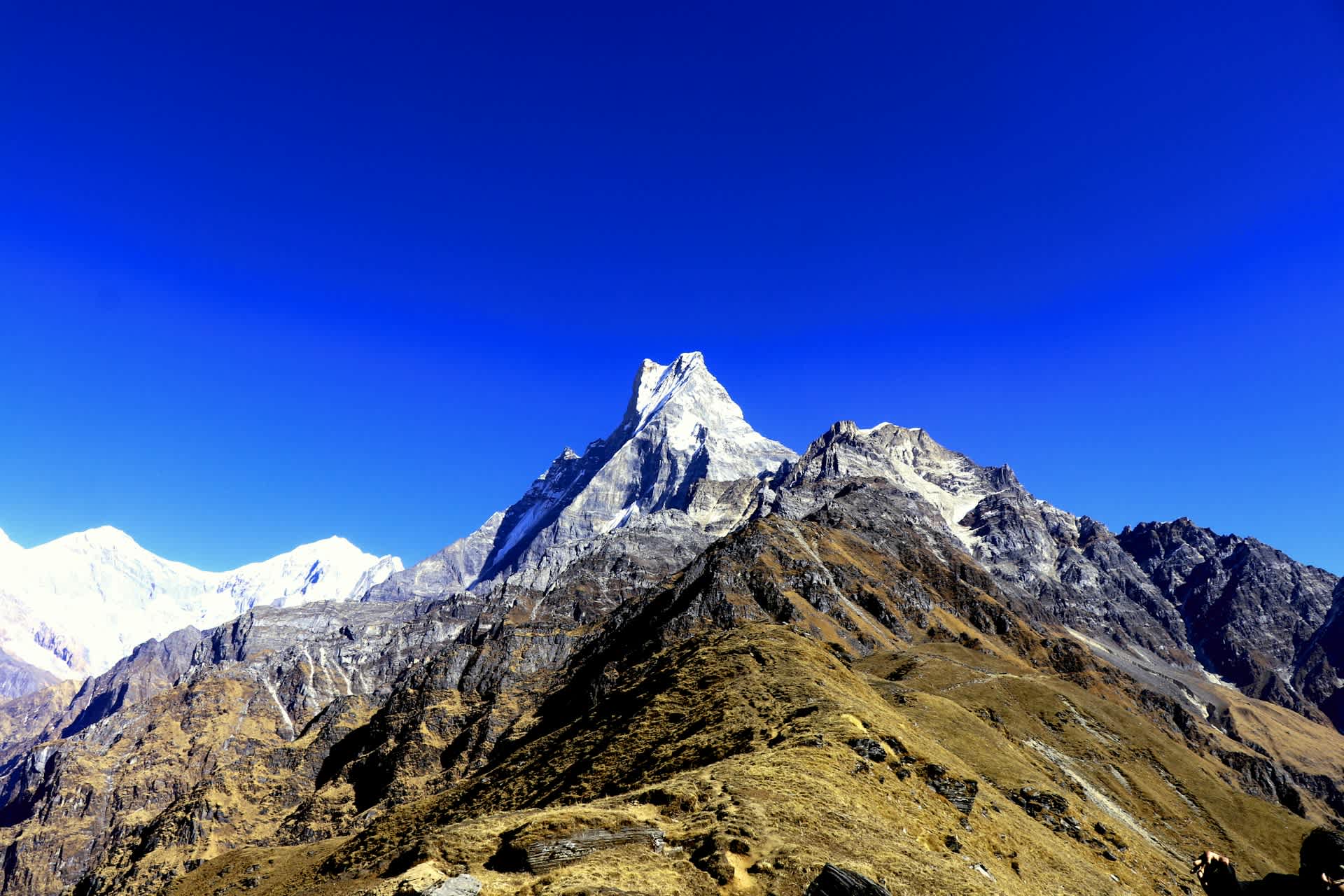
The Mardi Himal Trek has earned its reputation as one of the most rewarding short treks in the Annapurna region — not because it is easy, but because it delivers close-range views of Machhapuchhre (Fishtail), Annapurna South, and Hiunchuli within a timeframe that works for travelers who cannot commit to two or three weeks in the mountains.
Below there is detailed explaination on what the 5-day itinerary actually involves — the daily distances, the altitude gain, the steep sections, the accommodation, and the realistic mountain view conditions — so you can make an informed booking decision before contacting us.
Quick Facts of 5 days Mardi Himal Trek
| Detail | Information |
|---|---|
| Duration | 5 Days |
| Package Price | US$385 per person |
| Maximum Altitude | 4,500m (Mardi Himal High Camp / Upper Viewpoint) |
| Trek Difficulty | Moderate to Strenuous |
| Trek Style | Tea House Trek |
| Region | Annapurna Conservation Area, Kaski District |
| Starting Point | Pokhara → Kande (by vehicle) |
| Ending Point | Siding → Lumre → Pokhara (by vehicle) |
| Accommodation | Tea houses / mountain lodges |
| Meals | Full board during trekking days |
| Guide | Included |
| Permits | ACAP included |
| Best Season | October–November and March–May |
| Group Size | 1–15 trekkers |
Mardi Himal Trek – 5 Days Overview
The Mardi Himal Trek follows a ridge route east of Machhapuchhre, climbing from the subtropical forests above Pokhara into open alpine terrain where the mountain views become increasingly direct with every hour of walking. The trek does not circle the Annapurna massif or cross a high pass. Instead, it follows a single ridge that gains altitude steadily, with the best views concentrated in the upper section between Low Camp and High Camp.
Mardi Himal itself (5,587m) is an unclimbed trekking peak that requires a permit and climbing equipment. This package reaches the area’s designated trekking high point — the Mardi Himal Viewpoint near High Camp at approximately 4,500 meters — which provides the closest access to the mountain available to trekkers without technical gear.
Five days is a fast completion of this route. The itinerary works, but the daily walking is genuine. Trekkers who prepare physically will enjoy it considerably more than those who arrive without prior training.
Why Choose the Mardi Himal Trek
The route’s primary distinction from other Annapurna short treks is the ridge approach. From Low Camp upward, the trail runs along an open ridge with views on both sides. Machhapuchhre appears directly in front of you as you climb, rather than appearing as a distant feature across a valley.
At High Camp, the surrounding peaks feel close in a way that is qualitatively different from viewpoints where you are looking across a broader landscape.
The Mardi Himal Trek also avoids the heaviest traffic sections of the Annapurna region. The trail through rhododendron and oak forest on the lower sections, and the ridge from Forest Camp to High Camp, carries a fraction of the trekker volume found on the main Annapurna Base Camp approach.
Why Choose the 5-Days Itinerary
Five days is not the only way to complete this route. Some operators run 4-day versions that compress the itinerary significantly, and 6 or 7-day options allow for a more relaxed pace. The 5-day structure strikes a practical balance: it includes enough time to reach High Camp and the viewpoint without an extremely rushed schedule, while remaining feasible for travelers with one week in Nepal.
The trade-off is that five days does not allow much margin for bad weather, slow days due to fatigue, or extended time at the viewpoint. Trekkers who want more flexibility should ask about our 6 or 7-day options.
Why Book with Merriment Treks
We arrange transportation from Pokhara to the trailhead and back, process your ACAP permit before departure, assign a licensed and experienced trekking guide, and manage tea house bookings along the route. Every component of the 5-day package is handled before you leave Pokhara, so the first morning of the trek begins with a vehicle to Kande rather than a logistics scramble.
We work with guides who have specific Mardi Himal route experience, not general trekking guides reassigned to this trail seasonally. The ridge sections above Low Camp require route familiarity, particularly in low visibility conditions or early morning starts for the viewpoint.
5 days Mardi Himal Trek Itinerary Overview
Day 1: Drive Pokhara to Kande – Trek to Forest Camp
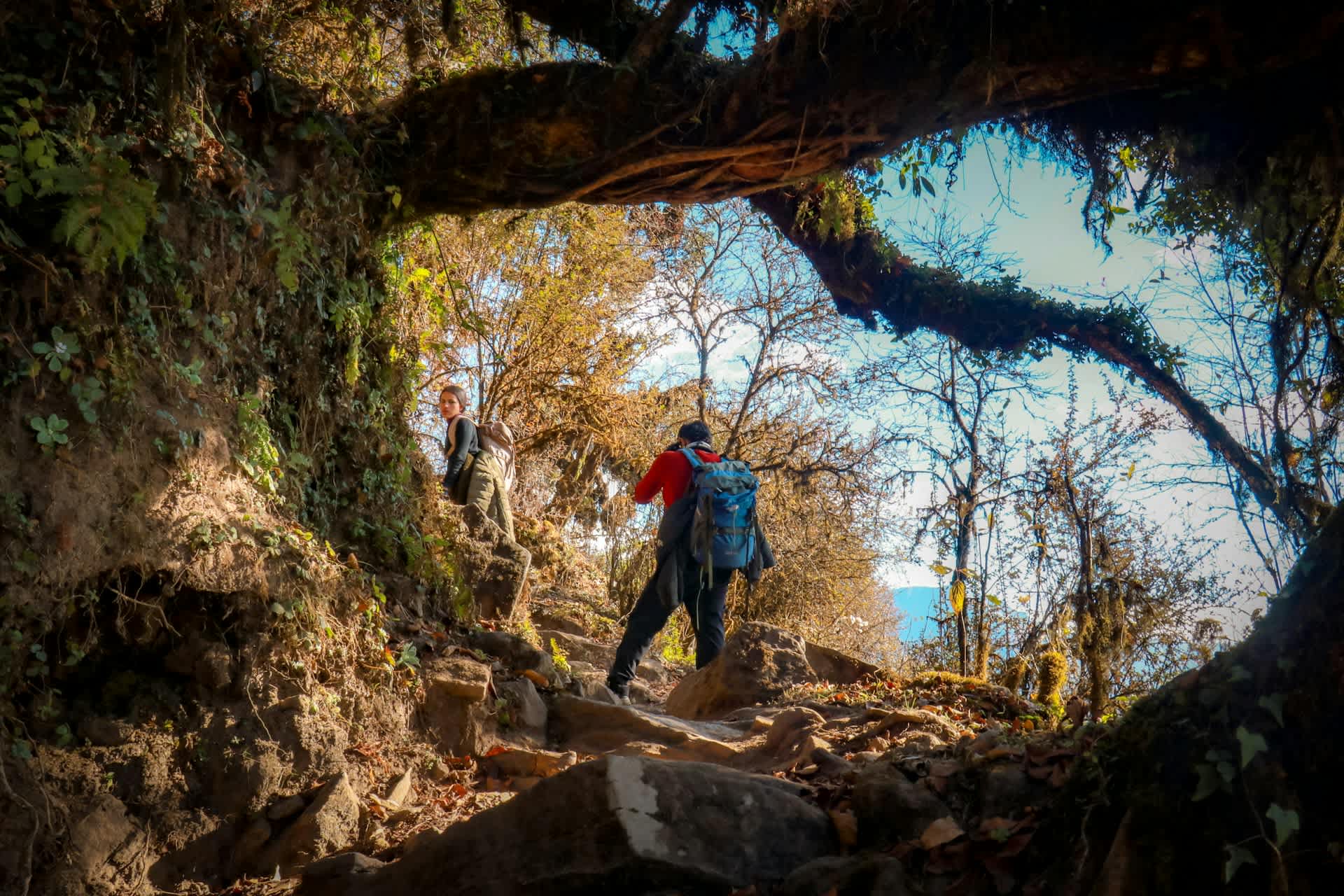
A vehicle from Pokhara transfers you to Kande (approximately 1,770m), the trailhead for the Mardi Himal route. The drive takes roughly 45 minutes to 1 hour depending on traffic. From Kande, the trail begins immediately uphill through rhododendron and oak forest, passing through Pothana (1,890m) before continuing along the ridge to Forest Camp (2,550m).
The first day involves consistent uphill walking through forest. The trail is well-defined but not flat. Expect stone steps in several sections, particularly on the lower approach. This is not a warm-up day in the sense of easy terrain; the climbing begins from the first hour.
Day 2: Forest Camp to Low Camp to High Camp
This is the longest and most demanding day of the upward journey. The trail continues above the tree line as it approaches Low Camp (approximately 3,300m), then pushes further upward to High Camp (approximately 3,850m–4,200m depending on the specific stopping point used).
The section from Low Camp to High Camp is the steepest sustained climb of the trek. The trail narrows in places as it follows the ridge. Open views begin to appear from Low Camp onward, with Machhapuchhre becoming increasingly prominent to the north. Wind can be significant on the exposed ridge above Low Camp, particularly in the afternoon.
Day 3: High Camp – Mardi Himal Viewpoint – High Camp
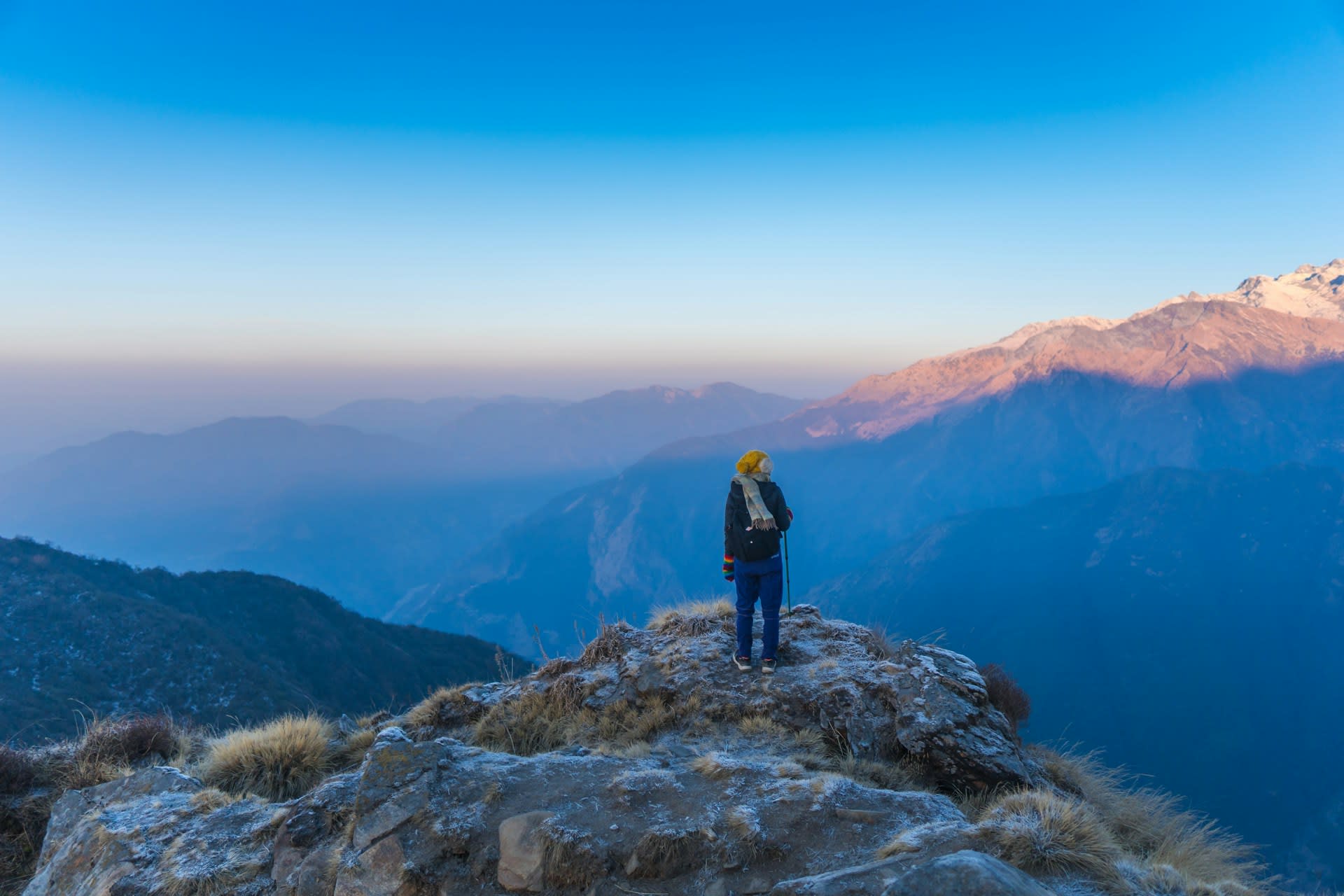
The viewpoint ascent begins early, ideally before sunrise, to maximize the chance of clear visibility before cloud build-up occurs mid-morning. The climb from High Camp to the Mardi Himal Viewpoint (approximately 4,500m) takes 1.5–2 hours depending on pace and altitude response.
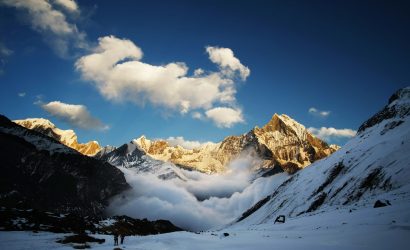
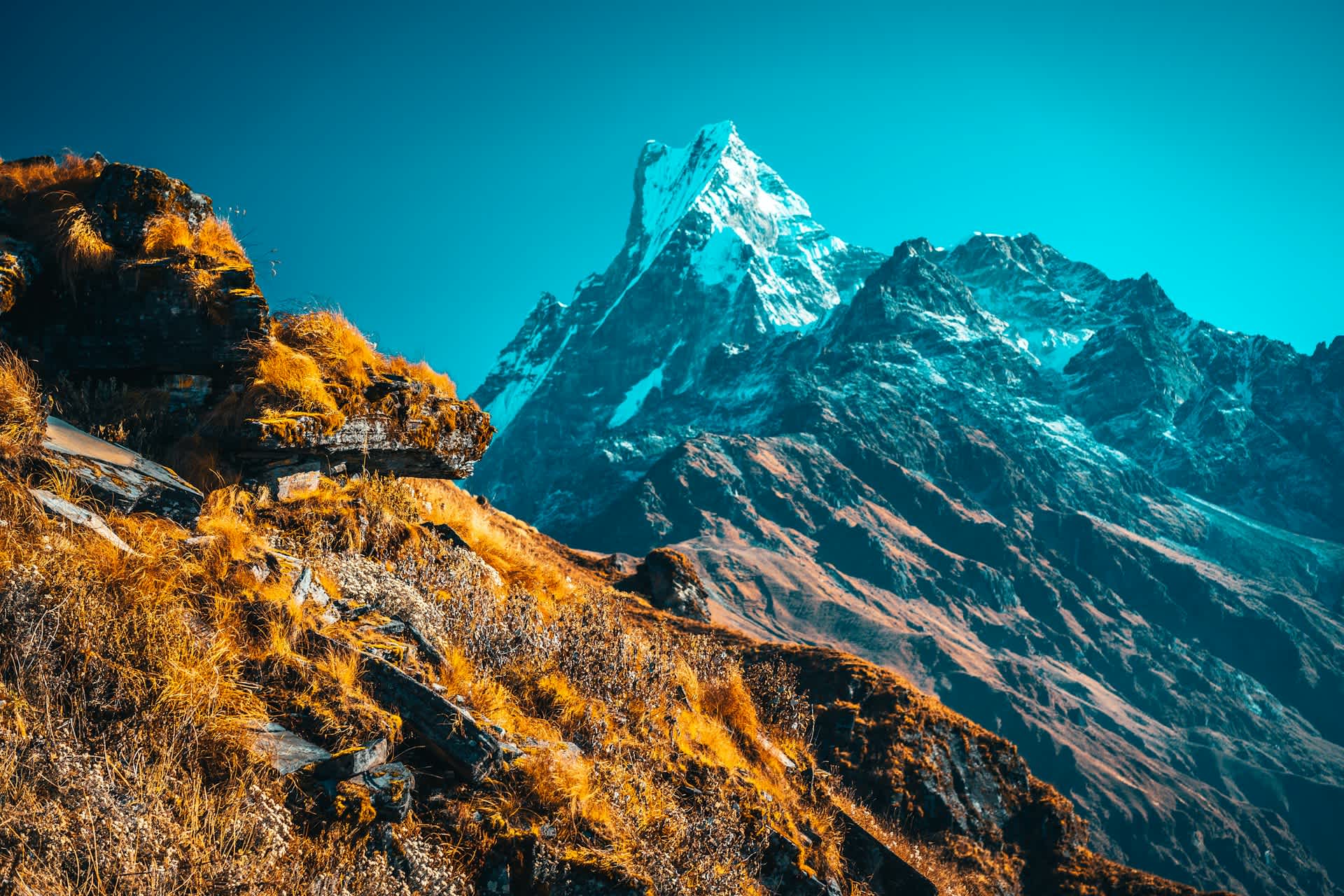
From the viewpoint, the surrounding peaks — Machhapuchhre, Annapurna South, Hiunchuli, and the broader Annapurna range — are visible at close quarters on clear days. This is the highest point of the trek and the primary photographic and experiential objective of the entire 5-day itinerary.
Cloud typically builds from the valley floor by mid-morning. Trekkers who reach the viewpoint by 7:00–8:00 AM on a clear day have the best conditions. Afternoon visits frequently encounter reduced visibility.
After returning to High Camp, the afternoon allows for rest, acclimatization, and optional further exploration of the upper ridge.
Day 4: High Camp to Low Camp to Siding
The descent begins with the same ridge trail used on the ascent, dropping back through Low Camp. Below Low Camp, the route diverges from the ascent path, turning toward Siding (approximately 1,750m) rather than returning to Forest Camp and Kande. This section of the descent is steep and sustained, covering significant elevation loss over several hours.
Siding is a traditional Gurung village with basic tea house accommodation. The descent from High Camp to Siding is long — plan for 5–6 hours of walking. This day puts the most pressure on the knees of any stage on the trek. Trekking poles are valuable here.
Day 5: Siding to Lumre – Drive to Pokhara
A short morning walk from Siding leads to Lumre (approximately 840m), where a vehicle from Merriment Treks meets the group for the return drive to Pokhara (approximately 1–1.5 hours). The morning walk is gentle compared to the previous days and provides a natural wind-down to the trekking portion of the package.
Daily Walking Distance and Hours
| Day | Route | Approx. Distance | Walking Hours |
|---|---|---|---|
| Day 1 | Kande → Forest Camp | 8–10 km | 4–5 hours |
| Day 2 | Forest Camp → High Camp (via Low Camp) | 9–11 km | 6–7 hours |
| Day 3 | High Camp → Viewpoint → High Camp | 5–7 km | 3–4 hours |
| Day 4 | High Camp → Siding (via Low Camp) | 10–12 km | 5–6 hours |
| Day 5 | Siding → Lumre → Pokhara | 4–5 km walk + drive | 2–3 hours |
Walking distances are approximate and vary based on pace and route variations.
Altitude Profile
| Location | Approximate Altitude |
|---|---|
| Pokhara | 820m |
| Kande (trailhead) | 1,770m |
| Pothana | 1,890m |
| Forest Camp | 2,550m |
| Low Camp | 3,300m |
| High Camp | 3,850m–4,200m |
| Mardi Himal Viewpoint | ~4,500m |
| Siding | 1,750m |
| Lumre | 840m |
Mardi Himal High Camp
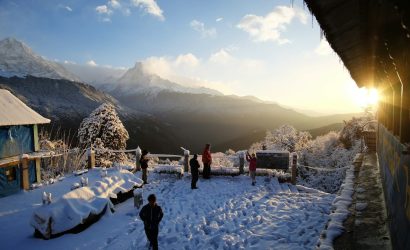
High Camp is the overnight base for the viewpoint ascent and the highest sleeping point on this itinerary. Several tea houses operate at High Camp, offering basic accommodation in a genuinely high-altitude environment. At this elevation, temperatures drop significantly after sunset, and early mornings before the viewpoint ascent will be cold regardless of season.
The tea houses at High Camp are more basic than those at lower elevations. Rooms are simple with limited insulation. The kitchen facilities are functional but menu options narrow at this altitude. Hot drinks are consistently available, which matters more at 4,000 meters than most trekkers anticipate before arriving.
Wind at High Camp can be significant, particularly in the afternoon and evening. The ridge position offers no shelter from prevailing mountain winds. Carrying a windproof layer beyond your standard rain jacket is important for this overnight stop.
Mardi Himal Viewpoint — Highest Point of This Trek
The Mardi Himal Viewpoint at approximately 4,500m is the highest point reached on this 5-day package. This is distinct from Mardi Himal Base Camp, which sits higher on the mountain and is not part of this standard trekking itinerary.
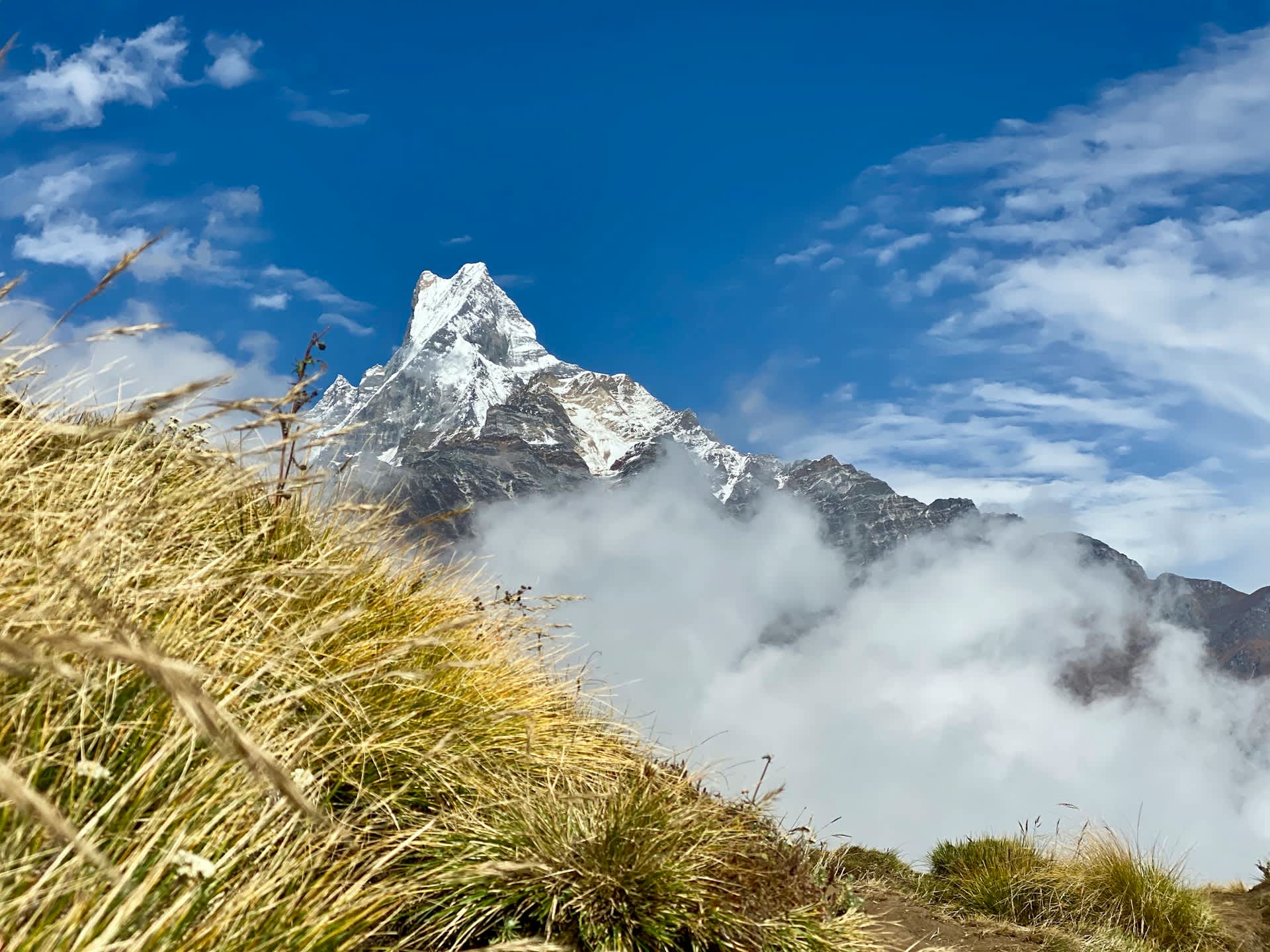
From the viewpoint, the south face of Machhapuchhre dominates the view to the north. Annapurna South and Hiunchuli are visible to the west, and the broader Annapurna range extends behind them. The Mardi Himal peak itself rises above and beyond the viewpoint, explaining why trekkers without technical climbing permits cannot proceed further.
Cloud behavior is the primary variable in the viewpoint experience. Early morning visits in stable weather deliver the best conditions. Even in optimal seasons, some mornings produce cloud that limits visibility. There is no guarantee of clear views at any specific time; the early start simply improves the odds.
Mountain Views Along the Route
| Location | Mountains Visible |
|---|---|
| Pothana | Machhapuchhre, Annapurna South (partial) |
| Forest Camp | Machhapuchhre (clearer), Annapurna South |
| Low Camp | Machhapuchhre, Annapurna South, Hiunchuli |
| High Camp | Full ridge panorama: Machhapuchhre, Annapurna South, Hiunchuli, Mardi Himal |
| Viewpoint | Machhapuchhre (very close), Annapurna massif, Dhaulagiri visible on clear days |
Mountain visibility depends on weather, season, and time of day. Morning views are generally clearer than afternoon. October and November typically offer the most reliable visibility. Clouds frequently build over the range by mid-morning during shoulder seasons.
Trail Conditions
The Mardi Himal trail transitions through several distinct terrain types:
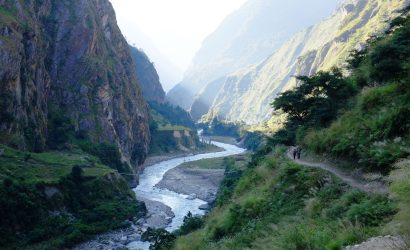
Lower section (Kande to Forest Camp): Mixed stone steps and natural forest path. Can be muddy during and after rain. Well-defined and straightforward to follow. Rhododendron canopy provides shade in warmer months.
Middle section (Forest Camp to Low Camp): Trail becomes steeper and more exposed as it climbs above the tree line. Rocky in places. The transition from forest to open ridge is relatively abrupt.
Upper section (Low Camp to High Camp and Viewpoint): Open ridge walking on narrow trail. Steep in sections. Rocky and potentially icy or snow-covered in colder months (December–February and early March). Requires careful footing particularly on the approach to the viewpoint.
Descent (High Camp to Siding): Steep throughout, particularly the upper section. Loose rock in places. Extended knee strain over a long descent day. Trekking poles significantly reduce discomfort.
Mardi Himal Trek Difficulty
Overall Rating: Moderate to Strenuous
The 5-day Mardi Himal Trek is not a casual walk, and the short duration does not reduce the physical demand. Day 2 in particular — from Forest Camp to High Camp — involves over 1,300 meters of elevation gain in a single day. That is a significant climb regardless of fitness level, and it comes on the second day of the trek before the body has fully adjusted to the daily routine.
Key difficulty factors:
- Sustained uphill walking on Days 1 and 2 with no flat or downhill recovery sections
- High Camp altitude (3,850m–4,200m) reached within two days of leaving Pokhara (820m)
- Exposed ridge sections above Low Camp where wind and cold add to the physical challenge
- Long descent on Day 4 with significant knee pressure over 5–6 hours
- Early morning viewpoint ascent on Day 3 at altitude before breakfast
What makes it manageable:
- The trail is well-defined throughout and does not require technical skills
- Tea houses at each overnight stop provide food and shelter
- Five days provides slightly more margin than a 4-day version
- The maximum altitude of 4,500m at the viewpoint is below the level where serious altitude illness most commonly occurs, though individual responses vary
Fitness Requirements
| Fitness Level | Assessment |
|---|---|
| No prior hiking experience | Not recommended without specific preparation |
| Occasional day hiker | Challenging; preparation required |
| Regular hiker (3–4 times weekly, multi-hour walks) | Well-suited with preparation |
| Experienced trekker | Straightforward with normal preparation |
Begin cardio training at least 4–6 weeks before departure. Loaded day hikes on consecutive days are the most relevant preparation. The sustained uphill on Day 2 is the physical crux of the trek; training specifically for sustained climbing makes a measurable difference.
Altitude and Acclimatization
The 5-day itinerary gains altitude quickly. Leaving Pokhara at 820m and sleeping at High Camp (approximately 4,000m) within two days represents a significant altitude gain without a dedicated acclimatization day.
Most healthy trekkers complete this itinerary without serious altitude-related problems. However, individual responses to altitude vary and cannot be predicted based on fitness level alone. Mild symptoms — headache, disturbed sleep, reduced appetite — are common at High Camp and should be monitored.
Practical guidance:
- Drink 3–4 liters of water daily throughout the trek
- Walk at a steady, sustainable pace rather than pushing hard on Day 2
- Report any symptoms of concern to your guide immediately
- Do not ascend to the viewpoint if you have a worsening headache or nausea from the previous night at High Camp
- Descent is the most effective response to worsening altitude symptoms
Your guide carries a pulse oximeter and basic first aid supplies. Discuss any medical history including respiratory or cardiovascular conditions with your physician before the trek.
Best Time for 5 days Mardi Himal Trek
| Season | Months | Conditions | Suitability |
|---|---|---|---|
| Spring | March–May | Rhododendron bloom; warming temperatures; some cloud | Very Good |
| Pre-Monsoon | Early June | Increasing humidity and rain | Acceptable |
| Monsoon | July–August | Heavy rain; very muddy; reduced views | Not Recommended |
| Autumn | September–November | Stable weather; clearest skies; cold nights | Best |
| Winter | December–February | Cold; snow possible above 3,500m; ice on upper trail | Possible for prepared trekkers |
October and November are the strongest months for mountain visibility and trail conditions. The post-monsoon air is clean, temperatures are cool but comfortable for walking, and the skies are typically stable in the morning.
March and April are excellent for the rhododendron forest experience on the lower sections and for comfortable daytime temperatures. Late April and May introduce more afternoon cloud.
Winter trekking (December–February) is possible but requires experience with cold conditions, appropriate gear for potential ice and snow on the upper trail, and the willingness to accept that the viewpoint section may not be safely accessible in heavy snowfall.
Weather Overview
| Month | Day Temp (High Camp) | Night Temp (High Camp) | Conditions |
|---|---|---|---|
| March | 5–12°C | -5–0°C | Good; rhododendrons blooming |
| April | 8–15°C | -3–2°C | Very good; some afternoon cloud |
| May | 10–18°C | 0–5°C | Good; pre-monsoon cloud building |
| October | 5–12°C | -8– -2°C | Best; clear and stable |
| November | 0–8°C | -12– -5°C | Excellent visibility; cold nights |
| December | -5–5°C | -15– -8°C | Cold; possible snow on ridge |
High Camp temperatures drop significantly below these ranges with wind chill. Regardless of month, a down sleeping bag and insulated layers are essential at this elevation.
Transportation from Pokhara
The package includes vehicle transfer from Pokhara to Kande (trailhead) on Day 1 and from Lumre back to Pokhara on Day 5. Both transfers are arranged by Merriment Treks and included in the US$385 package price.
The Pokhara-to-Kande drive takes approximately 45 minutes to 1 hour by private vehicle. The Lumre-to-Pokhara return is similar in duration. No additional transportation cost is required for the standard trailhead and endpoint transfers.
If you are arriving from Kathmandu, Merriment Treks can assist with Pokhara accommodation and onward transportation arrangements at additional cost.
Accommodation
| Location | Type | Bathroom | Hot Shower | Electricity |
|---|---|---|---|---|
| Forest Camp | Mountain tea house | Shared | Sometimes (fee) | Solar / limited |
| High Camp | Basic mountain lodge | Shared / outdoor | Limited or none | Solar / minimal |
| Siding | Village tea house | Shared | Cold only | Solar / limited |
Accommodation throughout the trek is simple tea house style. Rooms are typically twin-sharing with foam mattresses and basic bedding. At High Camp, room insulation is minimal and nights are genuinely cold. A personal sleeping bag rated to at least -10°C is the appropriate minimum for the High Camp overnight in all but the warmest months.
Private rooms are available at most stops but cannot always be guaranteed, particularly during peak season (October). Inform Merriment Treks of any accommodation preferences at the time of booking.
Meals and Drinking Water
All meals are included from Day 1 dinner through Day 5 breakfast. The tea house menu on the Mardi Himal route offers standard Nepal trekking fare.
Typical menu items:
- Dal bhat (lentil soup with rice, vegetables, and pickles — the most filling and reliably available option)
- Noodle soups and fried noodles
- Pasta and fried rice
- Eggs in various preparations
- Porridge and pancakes for breakfast
- Tibetan bread with butter or honey
- Hot drinks: tea, coffee, hot lemon, hot chocolate
Menu options narrow at High Camp due to supply limitations. Dal bhat is consistently available. High-energy snacks carried from Pokhara — energy bars, dried fruit, nuts — are useful supplements on the longer walking days.
Drinking water: Treat all water sources. Boiled water is available at tea houses for a small additional charge. A personal water purification solution (SteriPen, Sawyer filter, or purification tablets) is recommended as a backup and to reduce reliance on single-use plastic bottles.
Wi-Fi, Electricity, and Connectivity
| Location | Wi-Fi | Charging | Notes |
|---|---|---|---|
| Forest Camp | Sometimes available | Solar / limited | Variable reliability |
| High Camp | Generally unavailable | Very limited | Do not rely on charging at this elevation |
| Siding | Limited | Solar | Inconsistent |
Plan as if Wi-Fi and reliable electricity are unavailable above Forest Camp. A power bank with sufficient capacity for your devices is essential, particularly if you are using a camera or GPS device heavily. NTC and Ncell mobile signal is available on the lower sections but becomes unreliable above Forest Camp on most networks.
Permits and Trekking Requirements
| Permit | Requirement | Included in Package |
|---|---|---|
| Annapurna Conservation Area Permit (ACAP) | Required for all foreign trekkers | Yes — included in US$385 |
| TIMS Card | Currently not required for this specific Annapurna route under updated regulations — confirm at time of booking | Confirm with Merriment Treks |
The ACAP permit is processed by Merriment Treks before departure. You will need to provide your passport details and a passport-sized photograph for the permit application. Your guide carries the permit and presents it at the checkpost on the trail.
Permit regulations and fees in Nepal are subject to change. The inclusions stated in this package are based on current requirements; we confirm all current documentation requirements at the time of booking.
Packing Checklist
Clothing
| Item | Notes |
|---|---|
| Moisture-wicking base layers (top and bottom) | 2 sets minimum |
| Fleece mid-layer | For evenings and cool mornings |
| Down jacket | Essential for High Camp overnight and viewpoint ascent |
| Waterproof jacket (windproof) | Rain and wind protection on exposed ridge |
| Waterproof trousers | For rain and cold on upper sections |
| Trekking trousers | 2 pairs recommended |
| Warm hat covering ears | Essential for High Camp |
| Sun hat or cap | For lower sections |
| Gloves (insulated) | Critical for viewpoint ascent |
| Neck gaiter or buff | Versatile layer |
| Trekking socks | 4–5 pairs; wool blend preferred |
| Trekking boots (high ankle, waterproof) | Well broken-in before the trek |
| Sandals or camp shoes | For tea house evenings |
Gear
| Item | Notes |
|---|---|
| Sleeping bag (-10°C rated) | Non-negotiable for High Camp |
| Trekking poles | Strongly recommended; critical on Day 4 descent |
| Daypack (25–30L) | For personal items during walking |
| Duffel bag | Porter-carried luggage (max 10–12kg) |
| Headlamp with spare batteries | For early viewpoint start |
| Power bank (10,000–20,000 mAh) | Charging unreliable above Forest Camp |
| Water bottles (2 × 1L) | Plus purification method |
| Sunglasses (UV protection) | Needed particularly at High Camp and viewpoint |
| Sunscreen (SPF 50+) and lip balm | UV intensity increases with altitude |
| Personal first-aid kit | Blister care, pain relief, antidiarrheal |
| Camera with extra batteries | Cold reduces battery performance |
Cost Breakdown
| Item | Included |
|---|---|
| Transportation (Pokhara–Kande and Lumre–Pokhara) | ✓ |
| ACAP Permit | ✓ |
| Tea house accommodation (4 nights, twin-sharing) | ✓ |
| All meals from Day 1 dinner to Day 5 breakfast | ✓ |
| Licensed English-speaking trekking guide | ✓ |
| Porter service (1 porter per 2 trekkers) | ✓ |
| Guide and porter insurance and daily allowances | ✓ |
| Government taxes and agency fees | ✓ |
| Additional Costs to Budget Separately | Estimated |
|---|---|
| Pokhara accommodation before/after trek | USD 15–50/night |
| Hot showers at tea houses | NPR 200–500 per shower |
| Wi-Fi fees where available | NPR 200–500 |
| Device charging fees | NPR 100–300 |
| Personal snacks from Pokhara | USD 20–40 total |
| Guide and porter tips (customary) | USD 50–100 total |
| Travel insurance | USD 50–120 |
| Nepal visa | USD 50 (30-day visa on arrival) |
Optional Services and Customization
- 6 or 7-day itinerary: For trekkers who want a more relaxed pace, additional overnight stops can be added at Low Camp, reducing the altitude gain on Day 2 and providing a genuine acclimatization buffer before High Camp. Contact us to discuss extended options.
- Private group departures: The standard package is available year-round on fixed departure dates. Private group bookings allow flexible start dates.
- Single room supplement: Available at most stops subject to tea house availability.
- Kathmandu to Pokhara transfer: Tourist bus or flight can be arranged at additional cost.
Responsible Trekking
The Mardi Himal route passes through the Annapurna Conservation Area, a protected zone that sustains both the ecosystem and the communities that depend on it.
- Carry out all non-biodegradable waste. Tea houses cannot manage large volumes of trekker packaging.
- Use a water filter to reduce single-use plastic bottle consumption on the trail.
- Stay on marked trails, particularly on the upper ridge where vegetation is fragile and regenerates slowly at altitude.
- Respect tea house operations: waste water, rubbish, and noise management in small mountain communities requires more consideration than in standard hotels.
- Tips for guides and porters are an important component of fair wages on this route. The recommended amounts reflect the actual working conditions involved.
Practical Travel Tips
- Carry cash from Pokhara. There are no ATMs or card payment facilities on the trail. NPR is the only currency accepted at tea houses. Budget for the full trek period plus a contingency for extra nights or delays.
- Start Day 2 early. The climb from Forest Camp to High Camp is long. Starting by 7:00 AM gives you the best chance of arriving at High Camp in daylight with energy to spare.
- Treat the viewpoint ascent seriously. An early start on Day 3 (5:00–5:30 AM for a before-sunrise arrival) is strongly recommended. Cloud typically builds over the Annapurna range by 9:00–10:00 AM even on clear days.
- Pack your down jacket in your daypack every day. Temperature drops on the ridge when you stop walking, cloud comes in, or wind picks up. Access to insulation layers during the walk matters as much as having them at the tea house.
- Break in your boots before arrival. Blisters on Day 1 make the next four days significantly harder. Walk in your trekking boots for several weeks before the trek, not just once or twice.
Book Your 5-Day Mardi Himal Trek with Merriment Treks
The US$385 Mardi Himal Trek package covers everything from the Pokhara vehicle transfer to the final descent — guide, porter, permits, accommodation, and meals. What it requires from you is physical preparation and the right gear for the altitude.
To check availability and departure dates:
- Contact Merriment Treks with your preferred start date and group size
- We confirm the guide assignment, permit processing timeline, and any specific questions about the route
- A deposit secures your booking; full payment is due before departure
We respond to all inquiries within 24 hours. If you have questions about fitness preparation, gear, combining this trek with other Nepal itineraries, or adjusting to a 6-day version, include those in your message and we will give you a direct answer.
The Mardi Himal Trek delivers what it promises — close mountain views, genuine ridge walking, and a 5-day itinerary that fits a tight Nepal schedule — provided trekkers arrive prepared for the actual physical demands involved. Contact Merriment Treks to confirm dates and begin planning.
Mardi Himal Trek Highlights
- Reach Mardi Himal High Camp and Viewpoint (approximately 4,500m) with direct views of Machhapuchhre and Annapurna South
- Walk through dense rhododendron and oak forests on the lower ridge — particularly impressive during spring bloom (March–April)
- Follow an open mountain ridge from Forest Camp upward with increasingly unobstructed mountain panoramas
- Experience a genuine high-altitude overnight at High Camp, where the morning light on the surrounding peaks is at its clearest
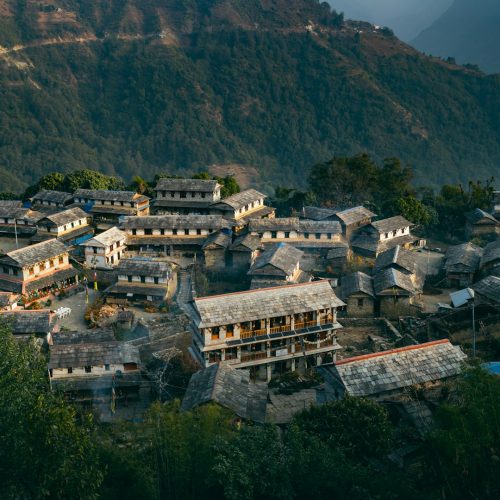
- Descend through Siding village, a traditional Gurung community with a different character from the more trekker-oriented upper route
- Complete a point-to-point route from Kande to Siding/Lumre rather than retracing steps