What Is the Kailash Parikrama?
Kailash Parikrama is the sacred circumambulation of Mount Kailash, a 52-kilometer circuit across the Tibetan Plateau that stands as one of the most demanding high-altitude pilgrimages on Earth. The term “Parikrama” comes from Sanskrit, meaning “to walk around,” and in Tibetan tradition, the same ritual is called a “Kora.” For Hindus, Buddhists, Jains, and followers of the Bon religion, completing this circuit is believed to erase a lifetime of negative karma and bring profound spiritual merit.
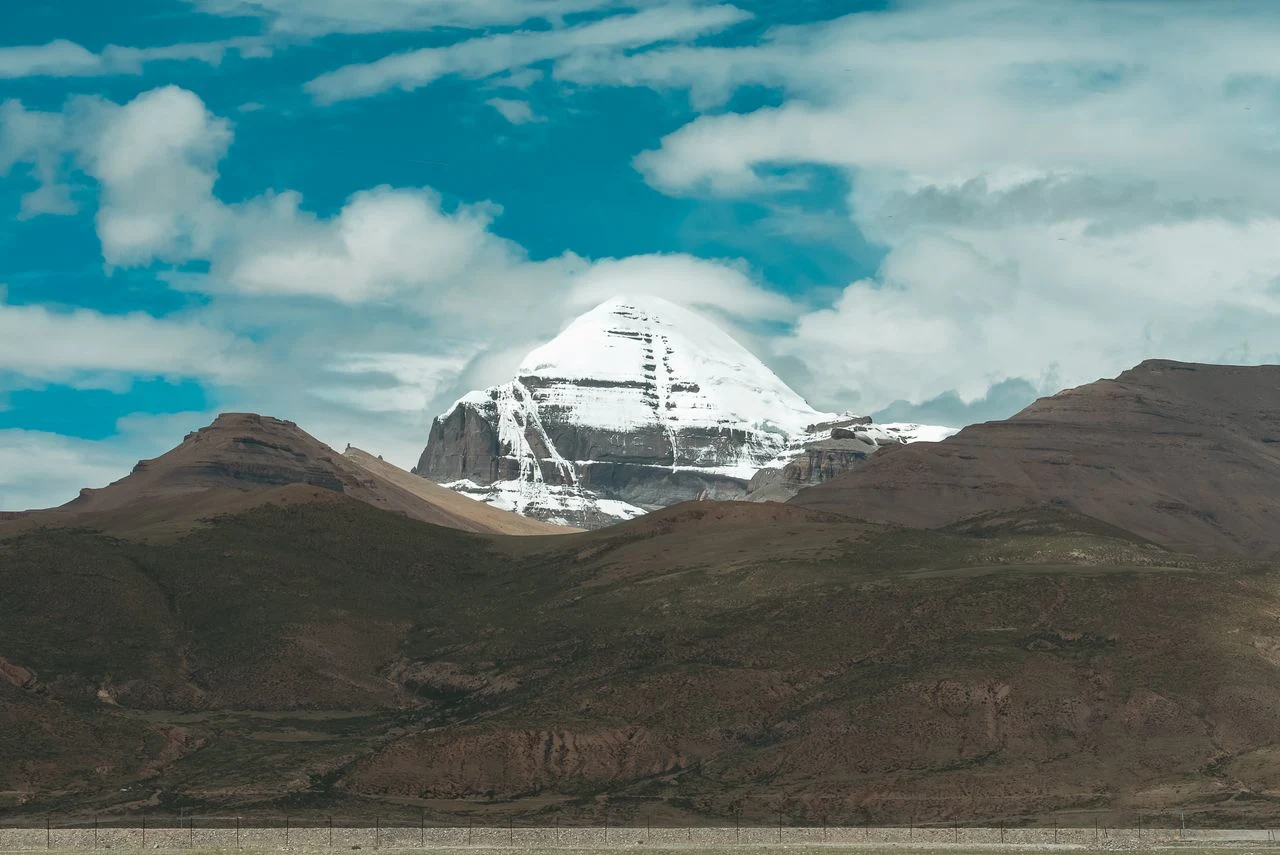
The mountain itself—known as Kang Rinpoche in Tibetan—rises to 6,638 meters and has never been summited. No climber has ever reached its peak, and none are permitted to try. The circumambulation is the only way to engage with this sacred geography. The route crosses one formidable pass, Dolma La, at approximately 5,630 meters, where oxygen levels drop to roughly half of what they are at sea level.
Why 2026 Is Different: The Fire Horse Year
This is the Tibetan Year of the Fire Horse, a once-in-60-years cycle that began on February 17, 2026, and runs until February 5, 2027. In Tibetan Buddhist and Hindu tradition, completing a single Kora during a Horse Year is believed to accumulate twelve times the spiritual merit of an ordinary year. The Fire element amplifies this further, representing transformation and intense spiritual energy.
The peak spiritual date is Saga Dawa Duchen, falling on May 31, 2026—the full moon of the fourth Tibetan month. This day commemorates the birth, enlightenment, and parinirvana of the Buddha, and the combination of the Fire Horse Year with Saga Dawa makes this the single most auspicious day for pilgrimage in a generation. The next Fire Horse year will not occur until 2086. Demand for permits and operator slots is consequently higher than any previous season, with China capping Indian pilgrims traveling via Nepal at 24,000 for the year.
Kailash Parikrama at a Glance
| Feature | Detail |
|---|---|
| Circuit Length | Approximately 52 km (some operators measure 54 km including detours) |
| Duration | 2–3 days (3 days is standard for pilgrims) |
| Start/End Point | Darchen (approx. 4,575 m) |
| Highest Point | Dolma La Pass (approx. 5,630 m) |
| Overnight Stops | Dirapuk (approx. 5,080–5,210 m) and Zuthulpuk (approx. 4,790 m) |
| Difficulty | Moderate to strenuous; high-altitude endurance walk |
| Best Season | May–June and September |
| Permits Required | Tibet Travel Permit, Chinese Group Visa, Alien Travel Permit, Military Permit |
| Minimum Permit Lead Time | 45 days |
Kailash Parikrama Route: Valley, Monastery, Pass, Return
The Kailash Kora route follows a clockwise circuit, a direction that aligns with the path of the sun and is considered auspicious in Hindu and Buddhist traditions. The journey begins and ends at Darchen, a windswept settlement at 4,575 meters that serves as the administrative and logistical gateway to the mountain.
From Darchen, pilgrims drive approximately six kilometers to Tarboche, also known as Yamdwar—the “Gate of Death.” This is the traditional starting point of the Parikrama. Passing through Yamdwar symbolizes the death of the old self and the beginning of a spiritual rebirth. From here, the trail enters the Lha Chu Valley and follows a relatively gentle gradient northward toward the mountain’s north face.
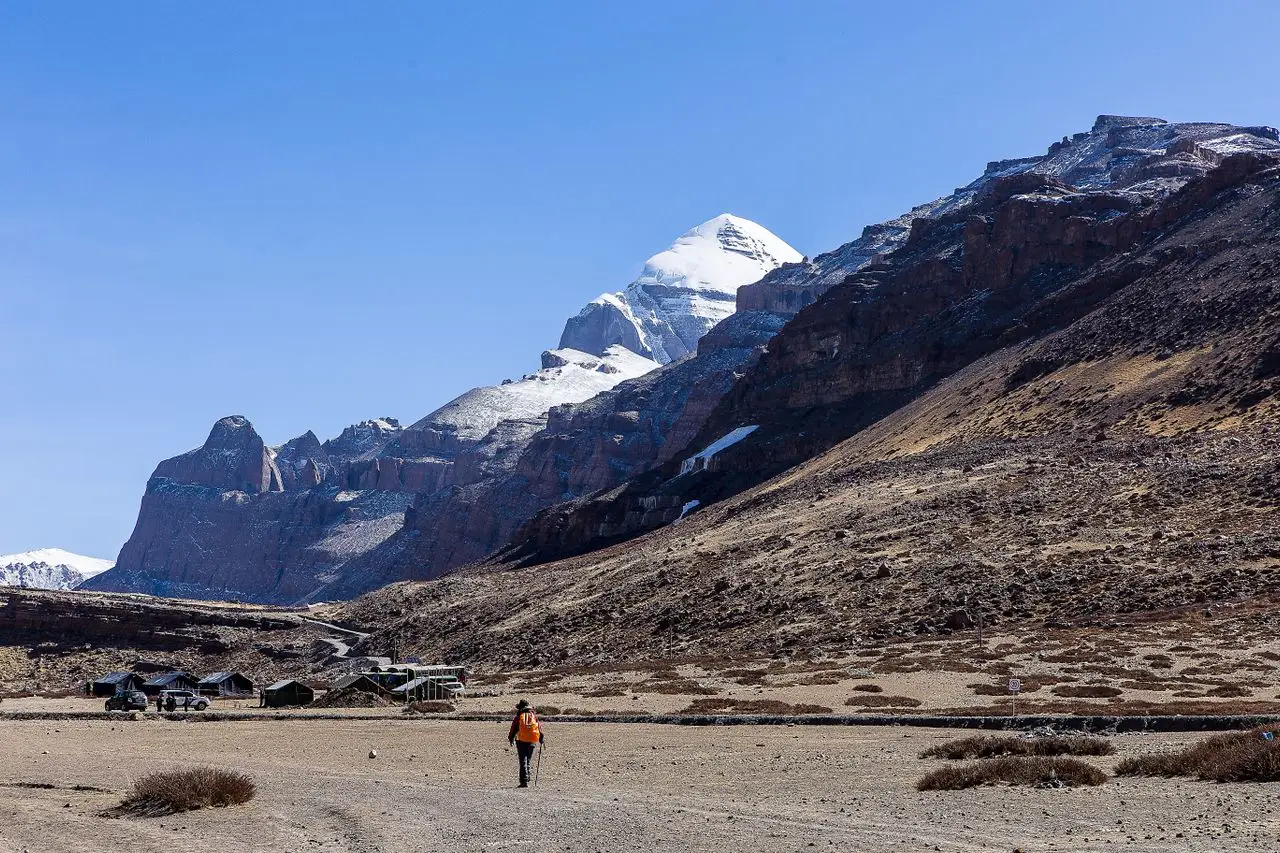
The first day’s walking is not technically difficult, but altitude makes every step deliberate. The trail passes Qugu Temple and several rest stops where Tibetan pilgrims pause for butter tea and instant noodles. By late afternoon, the imposing north face of Kailash dominates the skyline, and the path arrives at Dirapuk Monastery, perched at approximately 5,080 meters. This is the closest and most dramatic view of the mountain available on the entire circuit.
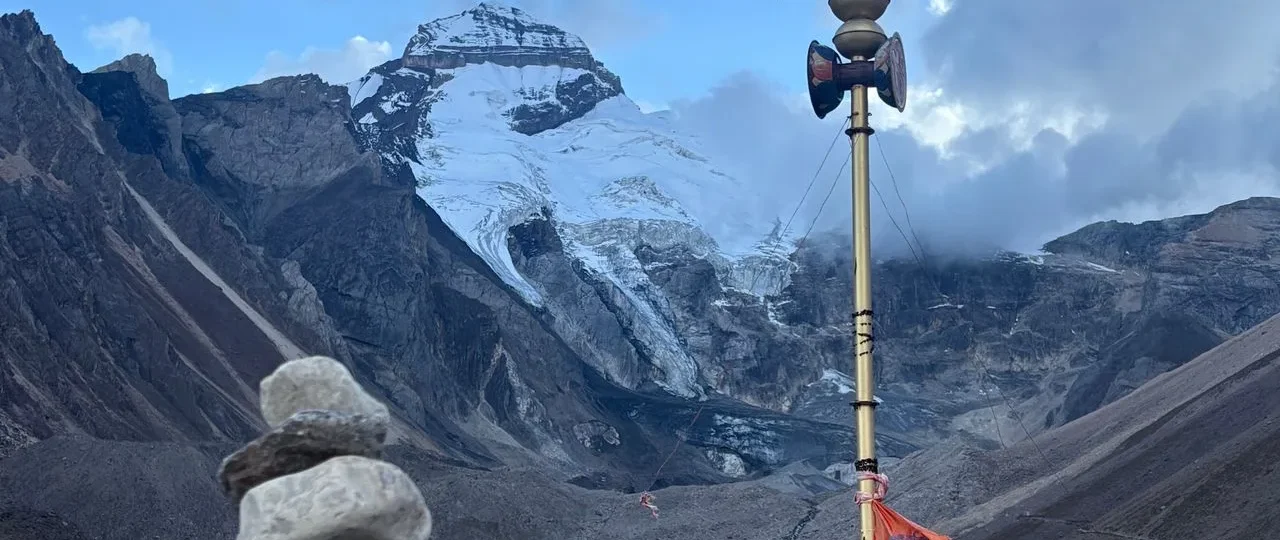
Day two is the defining challenge. From Dirapuk, the trail climbs steadily, crossing several minor ridges before the final push to Dolma La Pass at 5,630 meters. Prayer flags, a massive cairn, and a wooden pole draped in offerings mark the pass. Gauri Kund—a small, turquoise lake associated with Goddess Parvati—lies just below the pass on the descent. The trail then drops steeply through loose rock and glacial moraine to Zuthulpuk Monastery at 4,790 meters.
Day three follows the Zhong Chu River through meadows and past mani stones back to Darchen. This final section is shorter and gentler, typically completed in three to four hours.
How Long Does the Kailash Parikrama Take?
The Kailash Parikrama distance is approximately 52 kilometers, though the exact figure depends on measurement methodology. Some sources cite 54 kilometers when including the drive from Darchen to Yamdwar or side detours to monasteries and sacred sites. A solo pilgrim who completed the circuit noted that most people actually walk about 47 kilometers, with the remaining distance covered by vehicle.
Walking hours vary significantly based on fitness, acclimatization, and weather conditions. Day one typically takes 6–8 hours. Day two, crossing Dolma La, can take 10–12 hours or more. Day three is usually 3–4 hours. A minority of experienced trekkers complete the entire circuit in two days, and a very small number of local Tibetans do it in a single day—but this is not recommended for pilgrims who are still acclimatizing to the altitude.
| Day | Route | Approximate Distance | Walking Time |
|---|---|---|---|
| Day 1 | Darchen to Dirapuk | 12–20 km | 6–8 hours |
| Day 2 | Dirapuk to Zuthulpuk via Dolma La | 19–22 km | 10–12 hours |
| Day 3 | Zuthulpuk to Darchen | 12–18 km | 3–4 hours |
Dolma La Pass: The Highest Point
Dolma La—also spelled Drolma La or Droma La—is the crux of the entire Parikrama. At 5,630 meters (18,471 feet), it is the highest point most pilgrims will ever stand on foot. Some sources cite 5,650 meters, and this discrepancy likely reflects differences in GPS measurement or whether the figure includes the height of the prayer-flag cairn at the pass.
The climb to Dolma La is not technically difficult. There is no scrambling, no exposure, and no need for ropes or crampons. But the altitude transforms a straightforward uphill walk into an endurance test. At 5,600 meters, the partial pressure of oxygen is approximately half that at sea level. Even a fit person will feel breathless and may need to rest every few steps.
In Tibetan Buddhist tradition, Dolma is a goddess associated with compassion. Crossing the pass is understood as a passage from death to rebirth, and many pilgrims leave a symbolic offering—a strand of hair, a piece of clothing, a stone—at the cairn. The descent to Gauri Kund and onward to Zuthulpuk is steep, rocky, and often the most physically draining part of the journey. Trekking poles are essential.
How Difficult Is the Kailash Parikrama?
The Kailash Parikrama difficulty level is best described as moderate to strenuous for a high-altitude walk. It is not a mountaineering expedition. There are no glaciers to cross, no technical climbing, and no fixed ropes. But altitude, distance, and the cumulative effect of consecutive days above 4,500 meters make it far more demanding than a similar-distance trek at lower elevation.
The hardest day is unquestionably day two. The climb to Dolma La, combined with the steep and rocky descent to Zuthulpuk, tests both physical endurance and mental resilience. Most people who are reasonably fit and properly acclimatized can complete the circuit, but “reasonably fit” means different things at different stages of life. A 68-year-old twin pair from Bengaluru completed the Parikrama in July 2026 after training by walking six kilometers daily with a five-kilogram backpack for months in advance.
If you have underlying heart or lung conditions, the Indian Embassy in Kathmandu explicitly advises against undertaking the Parikrama. The embassy also warns that medically unfit pilgrims should avoid it “in their own interest and in the interest of the group they are travelling with.”
Altitude and Acclimatization: Fitness Is Not Enough
Kailash Parikrama altitude is the single most important variable in whether you complete the circuit comfortably or suffer. Physical fitness does not guarantee protection from acute mountain sickness (AMS). A marathon runner can be incapacitated by altitude while a less fit person adapts without incident. Acclimatization is a physiological process, not a measure of willpower.
Most reputable itineraries include at least two nights at or above 4,000 meters before the Parikrama begins—typically at Kyirong (2,774 m), Saga (4,500 m), and Lake Manasarovar (4,590 m). These are not optional rest days. They are the foundation of safe acclimatization. The Indian Embassy advises pilgrims to halt at all designated acclimatization points to reduce health risks from rapid altitude gain.
Symptoms of AMS include headache, nausea, dizziness, fatigue, and loss of appetite. If symptoms worsen, descend immediately. Do not wait for morning. Diamox (acetazolamide) is commonly prescribed to aid acclimatization, but it is not a substitute for slow ascent and should only be taken under medical supervision. Carrying a pulse oximeter to monitor blood oxygen levels is a practical precaution that many experienced pilgrims recommend.
Accommodation During the Kailash Parikrama
Kailash Parikrama accommodation at Dirapuk and Zuthulpuk is basic and should be expected as such. You will stay in monastery guesthouses or tented camps with dormitory-style rooms accommodating four to six people. Bedding may be provided but is thin; bring a sleeping bag rated for sub-zero temperatures. There is no heating. Toilets are shared pit latrines. There are no showers. Electricity is limited or nonexistent.
Some guesthouses have a communal dining area where you can purchase hot tea, instant noodles, rice, and simple vegetables. A solo pilgrim who completed the circuit in 2025 noted that a tea house dormitory bed cost 150 RMB, a cola was 6 RMB, instant noodles were 10 RMB, and rice with toppings was 38 RMB. Prices are clearly marked and fair for the remoteness of the location.
At Darchen, accommodation is slightly better. There are simple hotels with private rooms, and some have hot water. But do not expect luxury. The focus at this stage of the journey is on the pilgrimage itself, not on comfort.
Pony and Porter Support
Kailash Parikrama pony and porter services are available and can make the difference between completing the circuit and turning back. Yaks and horses can carry luggage and, in some cases, riders. Ponies are available for hire at Darchen and along the route, particularly for the climb to Dolma La. However, riding a pony does not eliminate the physical challenge. The descent from Dolma La is too steep and rocky for riding, so even with a horse, you will walk several kilometers on day two.
Porters can carry your backpack, but you should still carry a daypack with water, snacks, medications, and layers. Hiring support is a personal decision. It is not cheating. The pilgrimage is about intention and effort, not about proving something to anyone.
Best Time for Kailash Parikrama
The Kailash Parikrama best time for 2026 is May, June, and September. These months offer the most stable weather, clearest skies, and fully accessible routes. July and August coincide with the monsoon, which can bring rain, snow, cloud cover, and road closures. May and June offer warmer temperatures and longer daylight hours, while September provides post-monsoon clarity and stable conditions.
In 2026, the Fire Horse Year and Saga Dawa Duchen on May 31 have created unprecedented demand. Permits for May and June departures are filling faster than in any previous season. If you are planning to travel during these months, book at least 60 days in advance—ideally 90 days.
Winter access is not possible for most travelers. The Dolma La pass is often snowbound, and border crossings may be closed.
Kailash Parikrama From Nepal: The Overland Route
Kailash Parikrama from Nepal is the most popular route for Indian pilgrims and many international travelers. The journey begins in Kathmandu, where you will spend two to three days for visa processing, briefings, and sightseeing. From Kathmandu, the overland route drives north through Langtang National Park to the Nepal–Tibet border at Rasuwagadhi, crossing into Kyirong (Gyirong) for the first acclimatization night at 2,700 meters.
The route then continues to Saga at 4,500 meters, passing Lake Peiku Tso and the Yarlung Tsangpo (Brahmaputra) river crossing. From Saga, it is a long 450-kilometer drive west to Lake Manasarovar at 4,590 meters, where a full day is kept for prayers, rituals, and rest before the Kora begins. Darchen is approximately 35 minutes by road from Mansarovar.
The Nepal route is logistically complex. You need a Chinese Group Visa issued in Kathmandu, a Tibet Travel Permit, an Alien Travel Permit, and a Military Permit. These cannot be obtained independently. You must go through a registered Nepali operator. Your passport will be held by the Chinese Embassy in Kathmandu for at least six working days, and you must be physically present in Kathmandu for five working days before departure for facial recognition and document submission.
Documents and Permit Requirements for 2026
Tibet Travel Permit requirements for Kailash in 2026 are strict and time-sensitive. The minimum lead time is 45 days. Four separate permits are required for the Kailash region:
-
Tibet Travel Permit (TTP): Issued by the Tibet Tourism Bureau. Required for all foreign nationals entering Tibet.
-
Chinese Group Visa: Issued by the Chinese Embassy in Kathmandu. A standard Chinese tourist visa is not valid for entry from Nepal. Your existing visa will be canceled when the Group Visa is issued.
-
Alien Travel Permit (ATP): Issued by the Public Security Bureau. Required for restricted areas including Ngari Prefecture.
-
Military Permit: Required for the Kailash region and border zones.
Indian passport holders traveling through Nepal also need a Nepal Restricted Area Permit. OCI and PIO card holders cannot use those documents for entry to Tibet; they need a full passport and the appropriate visa. A single spelling error on any document can lead to rejection without refund. Work with a reliable operator and submit documents well in advance.
Kailash Parikrama Cost in 2026
Kailash Parikrama cost varies widely by operator, route, group size, and inclusions. For 2026, private operator packages from Nepal typically range from approximately USD 2,500 to USD 4,500 per person. Group discounts are common: a group of 4–6 might pay USD 3,400 per person, while a group of 20 or more might pay USD 2,850 per person.
The Indian government-organized Yatra via Lipulekh Pass is estimated at approximately INR 2.09 lakh per person, and via Nathu La at approximately INR 3.31 lakh. These figures exclude personal gear, additional expenses, and tips.
When comparing costs, check what is included: permits, visa fees, accommodation, meals, transport, guide, porter or pony, oxygen, and medical support. A low headline price may exclude essential items such as riding a yak or horse for the Parikrama, which is payable directly to the herder, or emergency evacuation costs. Ask for a detailed breakdown before committing.
What to Pack for the Kailash Parikrama
A Kailash Parikrama packing list should prioritize warmth, layering, and altitude safety. The Tibetan Plateau can experience snow, strong winds, and sudden temperature drops even in summer. Essential items include:
-
Clothing: Thermal base layers (2–3), fleece or down mid-layer, windproof and waterproof outer jacket, trekking pants, warm hat, sun hat, buff, gloves (liner and insulated), thick woolen socks (4–5 pairs).
-
Footwear: Broken-in trekking boots with ankle support, camp shoes or sandals.
-
Sleeping: Sleeping bag rated to -10°C or lower, sleeping bag liner.
-
Health: Personal medications, Diamox (if prescribed), altitude sickness medication, sunscreen (SPF 50+), lip balm, sunglasses (category 4), first-aid kit, blister care, pulse oximeter.
-
Gear: Trekking poles (essential for the Dolma La descent), headlamp with spare batteries, water bottles or hydration bladder (2 liters), water purification tablets, snacks, electrolytes, power bank.
-
Documents: Passport, visa, permits, medical clearance form, insurance details.
-
Spiritual: Prayer flags, offerings, a small item to leave at Dolma La.
Do not overpack. You will carry your daypack, and every extra kilogram matters at altitude. Luggage beyond your daypack will be carried by yaks or porters.
How to Train for the Kailash Parikrama
Kailash Parikrama preparation should begin at least three to four months before departure. Focus on cardiovascular endurance and leg strength. Brisk walking, jogging, stair climbing, cycling, and swimming are all effective. Aim for 45–60 minutes of moderate-intensity exercise, four to five days a week.
Add strength training: squats, lunges, step-ups, and core exercises. Practice walking on uneven terrain with a loaded backpack. The Bengaluru twins who completed the Parikrama in 2026 trained by walking six kilometers daily with a five-kilogram backpack and practicing pranayama regularly.
Training cannot prepare you for altitude. Only acclimatization can. But good fitness will make the walking days more manageable, reduce fatigue, and lower the risk of injury on the rocky descent from Dolma La.
Health and Safety on the Parikrama
The Parikrama is a remote, high-altitude environment with minimal medical facilities. There is no doctor accompanying pilgrims on the Parikrama. You must be self-sufficient for basic first aid and carry emergency medications. The Indian Embassy advises pilgrims to carry adequate medicines for the duration of the tour and reserve supplies for at least another 10 days.
Key safety rules:
-
Ascend slowly. Do not rush.
-
Drink 3–4 liters of water per day.
-
Eat even if you are not hungry.
-
Avoid alcohol and smoking.
-
Report any symptoms to your guide immediately.
-
If symptoms of AMS worsen, descend. Do not wait for morning.
-
Carry a satellite phone or know your operator’s emergency communication plan.
Travel insurance that covers high-altitude trekking and emergency evacuation is essential. Standard policies often exclude altitudes above 4,000 meters. The Indian Embassy explicitly advises pilgrims to ensure they have adequate insurance coverage for high-altitude sickness, emergency medical relief, evacuation, and extended stay.
Kailash Parikrama vs Kailash Mansarovar Yatra
The distinction between the Kailash Parikrama and the broader Kailash Mansarovar Yatra is important for planning. The Yatra is the entire pilgrimage—travel to Lake Manasarovar, rituals at the lake, darshan of Mount Kailash, and often the Parikrama. The Parikrama is the circumambulation itself, the three-day walk around the mountain.
Some pilgrims visit Mansarovar and view Kailash from the lake without doing the Parikrama. This is a valid pilgrimage for those who cannot trek or who prefer not to. The Parikrama is an additional commitment of physical effort. If you have the time and health, it is the heart of the journey. If not, the darshan from Mansarovar and Darchen is still deeply rewarding.
Who Should Consider the Parikrama?
The Parikrama is suitable for reasonably fit people who are willing to prepare and who respect altitude. It is not suitable for those with serious heart or lung conditions, uncontrolled diabetes, or pregnancy. Age is not a barrier if you are healthy and active. Pilgrims in their 60s and 70s complete the circuit regularly. A 69-year-old woman from Bengaluru completed the Parikrama in July 2026 and described the challenges as being “in the head.”
If you are uncertain about your ability, consider doing only the first day to Dirapuk and returning. This still provides the powerful darshan of Kailash’s north face and is a meaningful pilgrimage in itself. There is no shame in turning back. The mountain will still be there.
Frequently Asked Questions
1. How long is the Kailash Parikrama?
Approximately 52–54 kilometers, completed over two to three days. Most pilgrims walk about 47 kilometers, with some sections covered by vehicle.
2. What is the highest point on the Kailash Parikrama?
Dolma La Pass, at approximately 5,630 meters (18,471 feet). Some sources cite 5,650 meters.
3. How difficult is the Kailash Parikrama?
It is a moderate-to-strenuous high-altitude walk. The main challenge is altitude, not technical terrain. Day two, crossing Dolma La, is the hardest.
4. Can beginners do the Kailash Parikrama?
Yes, if they are reasonably fit, properly acclimatized, and prepared. Beginners should train for 3–4 months and allow extra acclimatization days.
5. Do I need a guide for the Kailash Parikrama?
Yes. Independent travel in Tibet is not permitted. You must go through a registered operator.
6. What permits are required for the Kailash Parikrama from Nepal?
Tibet Travel Permit, Chinese Group Visa, Alien Travel Permit, and Military Permit. Minimum lead time is 45 days.
7. How much does the Kailash Parikrama cost in 2026?
Private packages from Nepal typically range from USD 2,500 to USD 4,500. Government-organized routes from India are around INR 2.09–3.31 lakh.
8. What is the best time for the Kailash Parikrama?
May, June, and September. Avoid July–August monsoon. In 2026, the Fire Horse Year and Saga Dawa on May 31 have created high demand.
9. Can I use a horse for the Kailash Parikrama?
Yes, ponies are available for hire. However, you will still need to walk some sections, especially the descent from Dolma La.
10. What is the accommodation like on the Kailash Parikrama?
Basic guesthouses with dormitory rooms, shared pit toilets, no showers, and no heating. Bring a sub-zero sleeping bag.
11. How do I train for the Kailash Parikrama?
Cardiovascular exercise (walking, jogging, stairs) 4–5 days a week for 3–4 months, plus strength training and practice walks with a loaded backpack.
12. What if I get altitude sickness on the Kailash Parikrama?
Descend immediately and seek medical help. Do not continue ascending. Carry Diamox if prescribed and a pulse oximeter.
13. Is the Kailash Parikrama safe?
It is safe if you are prepared, acclimatized, and listen to your body. It is not risk-free. Travel insurance covering high-altitude evacuation is essential.
14. Can I do the Kailash Parikrama without visiting Mansarovar?
Technically yes, but most itineraries include Mansarovar. The lake is a key part of the pilgrimage.
15. How far in advance should I book the Kailash Parikrama?
At least 45–60 days. For May–June and September departures in 2026, book 90 days in advance due to Fire Horse Year demand.
Final Takeaway
Kailash Parikrama is not a trek to be conquered. It is a pilgrimage to be undertaken with humility. The mountain does not care about your fitness or your resume. It asks only that you walk, breathe, and let go. Prepare well. Acclimatize properly. Carry the right gear. And when you stand at Dolma La, with the wind tearing at the prayer flags and the turquoise water of Gauri Kund below, you will understand why so many have walked this path before you.
If you are considering Kailash Parikrama from Nepal, Merriment Treks can help you understand the current itinerary, documentation, logistics, and preparation before you commit. We do not promise the easiest journey or the lowest price. We promise clear information, realistic expectations, and support when you need it. Visit our Kailash Mansarovar Yatra page to see current departure dates and detailed itineraries, or contact us to discuss whether this journey is right for you.