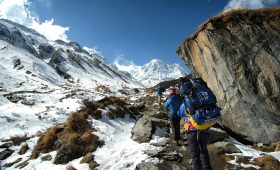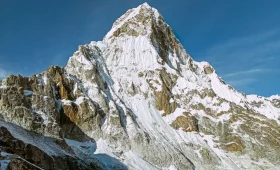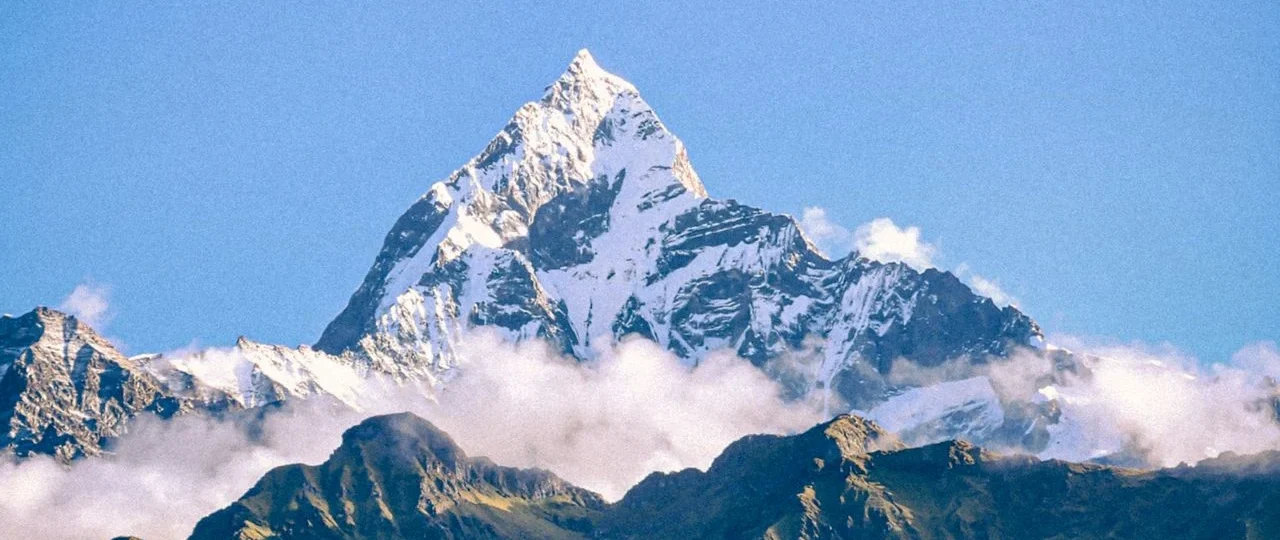
Mardi Himal Trek accommodation consists of teahouses—simple mountain lodges providing twin-sharing rooms, shared bathrooms, and communal dining spaces—at each overnight stop along the route from Forest Camp through High Camp to Siding. The facilities are functional but basic, becoming noticeably more rustic as elevation increases, particularly at High Camp (3,580 meters) where electricity is unreliable, hot water is scarce, and cold temperatures make a warm sleeping bag essential. Merriment Treks arranges all teahouse accommodation as part of every trekking package, ensuring confirmed beds even during peak season when walk-in trekkers may struggle to find rooms.
Mardi Himal Trek accommodation is not what most travelers picture when they think of lodging. There are no hotels with private bathrooms and room service. There are no elevators, minibars, or heated rooms. What exists instead is a network of family-run teahouses that provide shelter, food, and warmth in remote mountain locations. Understanding this reality before you leave Pokhara is essential for a comfortable trek.
This guide explains exactly what to expect from Mardi Himal Trek accommodation in 2026. You will learn what the rooms are actually like, where you will sleep each night, whether you can shower, how to charge your devices, what food is available, how much it costs, and how to book. Merriment Treks has prepared this guide based on current conditions and practical experience arranging teahouse stays along the Mardi Himal route.
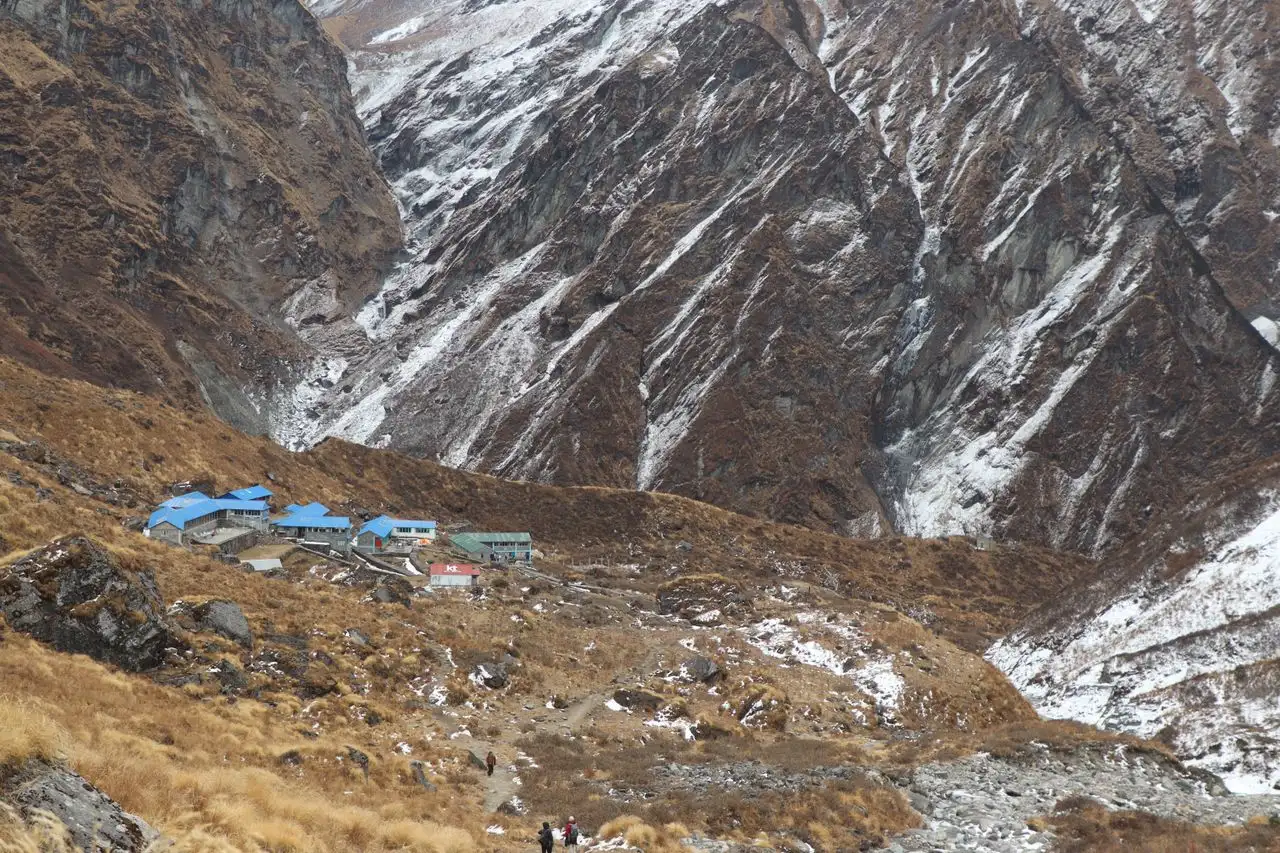
What Is a Teahouse on the Mardi Himal Trek?
A teahouse is a family-operated mountain lodge that provides basic accommodation, meals, and a communal dining area for trekkers. On the Mardi Himal Trek, teahouses are the standard accommodation at every overnight stop, and they vary significantly in comfort, facilities, and character depending on location and altitude.
For first-time trekkers, the teahouse concept requires a mental adjustment. These are not hotels or guesthouses in the conventional sense. They are simple structures built to serve trekkers in remote environments where infrastructure is limited. The rooms are basic. The bathrooms are shared. The dining hall is the social center where everyone gathers around a wood stove or gas heater in the evening.
What teahouses lack in luxury, they make up for in authenticity. The families who run these lodges have hosted trekkers for years. They understand what tired hikers need: hot food, warm bedding, and a place to rest. The teahouse evening—sharing stories with other trekkers, eating dal bhat, warming your hands by the stove—becomes a memorable part of the Mardi Himal experience.
Merriment Treks maintains relationships with established teahouses along the route, selecting lodges that consistently provide clean rooms, reliable food, and honest service. During peak season, these relationships matter significantly—your guide can secure rooms at preferred lodges when independent trekkers might be turned away.
Where You Sleep Each Night: Accommodation by Stage
The Mardi Himal Trek follows a defined route with established overnight stops, each offering teahouse accommodation. The table below shows typical overnight areas, approximate elevations, and what to expect at each location.
| Overnight Area | Approx. Elevation | Accommodation Type | Facilities | What to Expect |
|---|---|---|---|---|
| Australian Camp | 2,060m | Teahouses, some larger lodges | Shared rooms, some private options, hot showers usually available | First mountain views, limited lodges, beautiful sunsets |
| Forest Camp (Kokar) | 2,520m | Basic teahouses | Shared rooms, shared bathrooms, limited electricity | Forest setting, fewer options, simple facilities |
| Low Camp | 3,050m | Teahouses, more options | Shared rooms, some private options, hot showers sometimes available | Ridge views, tree line, better facilities than Forest Camp |
| High Camp | 3,580m | Basic teahouses, limited options | Shared rooms, shared bathrooms, limited or no electricity | Highest overnight, cold, rustic conditions |
| Siding | 1,750m | Village guesthouses | Shared rooms, basic facilities | Lower elevation, warmer, village atmosphere |
Important Note: Elevations are approximate and vary slightly between sources due to lodge relocations and GPS measurement differences. Individual lodges may differ from these typical descriptions.
Room Standards on the Mardi Himal Trek
Rooms in Mardi Himal Trek teahouses are typically twin-sharing with two single beds, foam mattresses, and basic bedding. Private rooms are sometimes available at lower elevations but become uncommon as you climb higher.
What Rooms Include
Standard teahouse rooms include:
-
Two single beds with foam mattresses
-
Basic sheets and pillow
-
One blanket per bed (quality varies by lodge)
-
Small window (at most lodges)
-
Door with basic lock
-
Limited shelving or hooks for belongings
Standard rooms do NOT include:
-
Private bathrooms (at most teahouses)
-
Heating
-
Electrical outlets in rooms
-
Towels
-
Toiletries
-
Sound insulation (walls are thin)
What Changes with Altitude
Accommodation quality generally declines as elevation increases. Rooms at Australian Camp and Low Camp are relatively comfortable, with better bedding and occasionally private bathroom options. Rooms at High Camp are more basic, with thinner walls, colder temperatures, and shared facilities only.
At High Camp, the cold is the biggest challenge. Nighttime temperatures can drop below freezing, especially in winter and early spring. Without heating, the room temperature approaches the outside temperature. This is why a warm sleeping bag is essential, even when the teahouse provides a blanket.
Sharing Rooms
Most teahouses arrange rooms on a twin-sharing basis. Solo trekkers may share with another trekker of the same gender, or may have the room to themselves depending on availability. Couples and friends typically share together.
Merriment Treks arranges room allocations in advance where possible. Private rooms can sometimes be arranged at lower elevations for an additional fee, but cannot be guaranteed at High Camp during peak season.
Bathrooms and Showers on the Mardi Himal Trek
Bathrooms on the Mardi Himal Trek are typically shared facilities located outside the rooms. Hot showers are available at some lower-elevation teahouses for an additional fee but become rare or unavailable at High Camp.
Bathroom Facilities
Most teahouses provide:
-
Shared toilet facilities (Western or squat style depending on lodge)
-
Shared washing area with cold water
-
Basic cleanliness (varies by lodge)
Most teahouses do NOT provide:
-
Attached private bathrooms (rare at lower elevations, non-existent at High Camp)
-
Hot water for washing
-
Towels
-
Toilet paper (bring your own)
-
Soap or hand sanitizer
Hot Showers
Hot showers are available at some lower-elevation teahouses but become impractical at higher elevations.
At Australian Camp and Low Camp, some lodges offer hot showers for an additional fee (typically NPR 300-500). The hot water is usually solar-heated or gas-heated, and availability depends on weather and time of day.
At High Camp, hot showers are generally not available due to water scarcity and the difficulty of heating water at 3,580 meters. Most trekkers use wet wipes or a quick cold-water wash instead. This is normal and expected on the Mardi Himal Trek.
Merriment Treks recommendation: Plan to shower at lower elevations when available. Bring wet wipes and hand sanitizer for higher elevations where showering is impractical.
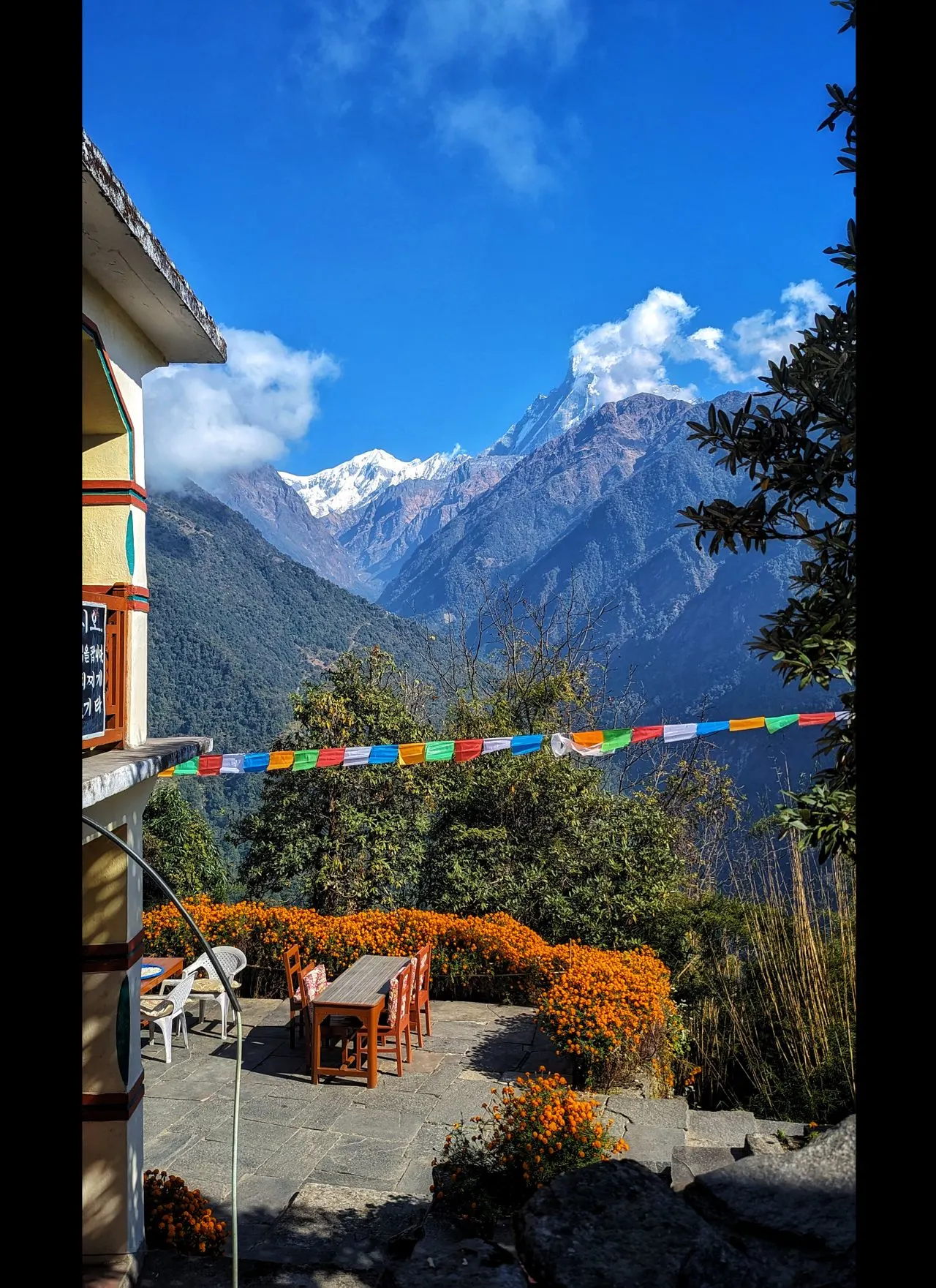
Electricity and Charging on the Mardi Himal Trek
Electricity is available for charging devices at most teahouses below High Camp, but availability is limited, costs extra, and becomes unreliable at higher elevations.
Charging Availability by Location
| Location | Charging Availability | Cost (Approximate) | Notes |
|---|---|---|---|
| Australian Camp | Usually available | NPR 200-300 per device | Solar or grid power |
| Forest Camp | Limited availability | NPR 200-300 per device | May only be in dining area |
| Low Camp | Usually available | NPR 200-300 per device | Better infrastructure |
| High Camp | Limited or unavailable | Not applicable | Solar power only, weather-dependent |
| Siding | Usually available | NPR 200-300 per device | Village power |
Practical Charging Advice
Merriment Treks recommends bringing a power bank (10,000-20,000 mAh) as backup. This ensures you can charge your phone and camera even when teahouse charging is unavailable or inconvenient.
At High Camp, electricity is often solar-powered and weather-dependent. On cloudy days, charging may be unavailable entirely. Conserve battery by using airplane mode, reducing screen brightness, and limiting camera use when not needed.
Wi-Fi and Connectivity on the Mardi Himal Trek
Wi-Fi is limited and unreliable on the Mardi Himal Trek. Do not plan to stay connected throughout your trek.
At lower elevations (Australian Camp, Forest Camp), some teahouses offer Wi-Fi for a fee (typically NPR 300-500). The connection is often slow and unreliable.
At higher elevations (Low Camp, High Camp), Wi-Fi is generally not available. Mobile data may work intermittently at some locations, but signal strength varies significantly. At High Camp, connectivity is minimal or non-existent.
Merriment Treks recommendation: Inform family and friends that you will be unreachable for parts of the trek. Download offline maps, entertainment, and important documents before leaving Pokhara. Use airplane mode to conserve battery.
Food and Drinking Water on the Mardi Himal Trek
Food on the Mardi Himal Trek is provided at teahouses and consists of simple, filling meals designed to fuel trekking. Drinking water is available but must be purified before consumption.
Typical Teahouse Meals
Breakfast (served at overnight teahouse):
-
Porridge with milk or water
-
Eggs (boiled, fried, or omelet)
-
Tibetan bread with honey or jam
-
Pancakes
-
Muesli with milk
-
Tea or coffee
Lunch (served at trailside teahouse):
-
Dal bhat (rice, lentil soup, vegetables)
-
Fried rice
-
Noodles (chowmein or soup)
-
Momos (dumplings)
-
Sandwiches
-
Potatoes (boiled or fried)
Dinner (served at overnight teahouse):
-
Dal bhat (with unlimited refills at most lodges)
-
Pasta
-
Fried potatoes
-
Soup
-
Curry with rice
-
Vegetable dishes
What Changes with Altitude
Food options become more limited at higher elevations. At High Camp, the menu is simpler than at lower teahouses. Fresh vegetables may be unavailable. The emphasis is on filling, energy-dense meals rather than variety.
Merriment Treks recommendation: Eat dal bhat at least once daily. It is nutritious, filling, and provides sustained energy for trekking. Most teahouses offer unlimited refills on dal bhat.
Vegetarian Food
Vegetarian food is widely available on the Mardi Himal Trek. Most teahouses prepare vegetable-based dishes, and dal bhat is naturally vegetarian. If you have specific dietary requirements (vegan, gluten-free, allergies), communicate these to Merriment Treks before the trek so arrangements can be made where possible.
Drinking Water
Safe drinking water is available at teahouses but must be purified. Options include:
-
Boiled water: Available at teahouses for a small fee (NPR 100-200 per liter)
-
Purification tablets: Bring your own and treat tap or stream water
-
Water filter: Portable filters are effective
-
Bottled water: Available at lower elevations but creates plastic waste and becomes unavailable at higher stops
Merriment Treks recommendation: Bring a reusable water bottle and purification tablets or a filter. This is more reliable and environmentally responsible than bottled water.
Sleeping Bags and Bedding on the Mardi Himal Trek
A warm sleeping bag is essential for the Mardi Himal Trek, especially at High Camp where temperatures drop significantly at night. While teahouses provide basic bedding, it is often insufficient for cold conditions at altitude.
What Teahouses Provide
Most teahouses provide:
-
Basic sheet
-
Pillow (quality varies)
-
One blanket per bed
Most teahouses do NOT provide:
-
Heating in rooms
-
Extra blankets (sometimes available on request)
-
Sleeping bags
-
Mattress comfort beyond basic foam
Why You Need a Sleeping Bag
At High Camp (3,580m), nighttime temperatures can drop below freezing, especially in winter and early spring. The teahouse blanket alone is often insufficient. A sleeping bag rated to at least -5°C (comfort rating) provides the additional warmth needed for comfortable sleep.
Merriment Treks recommendation: Bring a sleeping bag rated to at least -5°C comfort. In winter (December-February), consider a bag rated to -10°C or lower. A sleeping bag liner adds versatility and hygiene.

High Camp Accommodation: What It Is Really Like
High Camp accommodation is the most basic and challenging of the entire Mardi Himal Trek. Understanding what to expect prepares you for the experience and helps you pack appropriately.
Room Conditions at High Camp
High Camp rooms are simple and functional. Expect twin-sharing rooms with thin walls, basic foam mattresses, and minimal furnishings. The rooms are not heated, and temperatures at night can drop below freezing. The cold is the biggest challenge—your sleeping bag is essential.
The walls between rooms are thin, and you may hear other trekkers moving around. Earplugs can help with sleep quality.
Bathrooms at High Camp
Bathrooms at High Camp are shared and basic. Expect cold water only, squat or Western toilets depending on the lodge, and no hot showers. The bathroom facilities are functional but minimal.
Dining Area at High Camp
The dining area is the warmest and most social space at High Camp. A wood stove or gas heater provides warmth in the evening. Trekkers gather here for dinner, to share stories, and to warm up before heading to their cold rooms.
The dining area is also where you will eat breakfast before the pre-dawn climb to Upper Viewpoint. Your guide will arrange an early breakfast (around 4:00 AM) before the sunrise walk.
Electricity at High Camp
Electricity at High Camp is limited and often solar-powered. On sunny days, you may be able to charge devices in the dining area. On cloudy days, charging may be unavailable. Do not count on charging at High Camp—bring a power bank.
Why Advance Arrangements Matter at High Camp
High Camp has limited accommodation capacity, and rooms can fill quickly during peak season (October-November and March-April). This is where booking through a trekking company like Merriment Treks makes a significant difference. Your guide can secure rooms in advance, ensuring you have a bed when walk-in trekkers might be turned away.
Accommodation Costs on the Mardi Himal Trek
Accommodation costs on the Mardi Himal Trek vary depending on season, location, lodge, and whether meals are included. Understanding the pricing structure helps you budget appropriately.
Room Costs (Approximate 2026)
| Location | Room Only (NPR) | Room Only (USD) | Notes |
|---|---|---|---|
| Australian Camp | 500-800 | 4-6 | Varies by lodge and season |
| Forest Camp | 400-700 | 3-5 | Basic conditions |
| Low Camp | 500-800 | 4-6 | More options |
| High Camp | 500-800 | 4-6 | Limited options, peak season premium |
| Siding | 400-600 | 3-5 | Village guesthouses |
Important Note: Prices are approximate and can change. Many teahouses offer lower room rates when trekkers purchase meals at the same lodge. This is the standard arrangement for trekking packages.
Meal Costs (Approximate 2026)
| Meal | Cost Range (NPR) | Notes |
|---|---|---|
| Breakfast | 400-700 | Varies by items ordered |
| Lunch | 500-800 | Dal bhat often best value |
| Dinner | 500-800 | Dal bhat with refills |
| Hot drinks | 100-300 | Tea, coffee, hot chocolate |
| Boiled water | 100-200 | Per liter |
Package vs Independent Costs
When you book a Mardi Himal Trek package with Merriment Treks, accommodation and meals are typically included. This means you do not pay separately at each teahouse—your guide manages all payments as part of the package.
Independent trekkers (where permitted) pay separately at each lodge. The total accommodation and meal cost for a 5-day trek typically ranges from NPR 8,000-15,000 (USD 60-115) depending on food choices and lodge selection.
Additional Costs to Budget For
-
Hot showers: NPR 300-500 where available
-
Device charging: NPR 200-300 per device
-
Wi-Fi: NPR 300-500 where available
-
Boiled water: NPR 100-200 per liter
-
Snacks and extra drinks: Varies
Booking Accommodation on the Mardi Himal Trek
Advance booking is essential during peak season, particularly at High Camp. Booking through a trekking company like Merriment Treks ensures your accommodation is arranged before you leave Pokhara.
When Advance Booking Matters
Advance booking is most important during:
-
October-November (peak autumn season)
-
March-April (peak spring season)
-
Any time at High Camp (limited capacity year-round)
Advance booking is less critical during:
-
December-February (winter, fewer trekkers)
-
May (pre-monsoon, reduced numbers)
-
Lower-elevation stops where more options exist
What Trekking Companies Should Arrange
Merriment Treks arranges the following as part of all trekking packages:
-
Room reservations at each overnight stop
-
Meal arrangements at each teahouse
-
High Camp accommodation specifically
-
Alternative arrangements if preferred lodges are full
-
Guide management of all teahouse payments
What Happens If a Lodge Is Full
If a preferred lodge is full, alternative arrangements are made. This may mean staying at a different teahouse at the same location, or adjusting the itinerary slightly. Having a guide who knows the local lodges and can negotiate alternatives is valuable.
Questions to Ask Before Booking
Before booking your Mardi Himal Trek, ask your trekking company:
-
Is accommodation included in the package?
-
Are meals included or separate?
-
Is High Camp accommodation guaranteed?
-
What type of rooms are booked (twin-sharing or private)?
-
Are there options for private rooms at lower elevations?
-
What is the policy if lodges are full?
-
What additional costs should I expect for showers, charging, and water?
-
Is breakfast included at each overnight stop?
-
Are there vegetarian/vegan options available?
-
What is the contingency plan for weather-related delays?
Packing for Teahouse Accommodation
Your packing list should account for teahouse conditions—cold rooms, shared bathrooms, limited electricity, and the need for personal comfort items.
Essential Items for Teahouse Comfort
-
Sleeping bag rated to at least -5°C
-
Sleeping bag liner for hygiene and warmth
-
Headlamp with spare batteries
-
Power bank (10,000-20,000 mAh)
-
Earplugs for thin walls
-
Wet wipes for hygiene at High Camp
-
Hand sanitizer
-
Toilet paper (not always provided)
-
Quick-dry towel (small)
-
Personal toiletries
-
Water purification (tablets or filter)
-
Reusable water bottle
What Not to Bring
-
Heavy electronics requiring daily charging
-
Excessive clothing (laundry is not available on the trek)
-
Bulky toiletries (facilities are basic)
-
Hairdryers or styling tools (no electricity)
-
Multiple books (one is enough)
Frequently Asked Questions About Mardi Himal Trek Accommodation
1. What type of accommodation is available on Mardi Himal Trek?
The Mardi Himal Trek uses teahouses—simple mountain lodges offering twin-sharing rooms, shared bathrooms, and communal dining areas. These are the only accommodation option at most overnight stops. Facilities are basic but adequate, becoming more rustic at higher elevations.
2. Are rooms private or shared?
Most rooms are twin-sharing with two single beds. Private rooms are sometimes available at lower elevations (Australian Camp, Low Camp) for an additional fee but cannot be guaranteed at High Camp. Solo trekkers may share with another trekker of the same gender.
3. What is High Camp accommodation like?
High Camp accommodation is the most basic of the trek. Expect twin-sharing rooms with thin walls, no heating, and cold temperatures at night. Bathrooms are shared with cold water only. The dining area is the warmest space, heated by a wood stove. Electricity is limited and often solar-powered.
4. Do Mardi Himal teahouses have bathrooms?
Yes, all teahouses have bathroom facilities, but they are typically shared and located outside the rooms. Bathrooms may be Western or squat style. Hot water for washing is generally not available at higher elevations.
5. Are hot showers available?
Hot showers are available at some lower-elevation teahouses (Australian Camp, Low Camp) for an additional fee of NPR 300-500. At High Camp, hot showers are generally not available. Most trekkers use wet wipes at higher elevations.
6. Is Wi-Fi available?
Wi-Fi is limited and unreliable on the Mardi Himal Trek. Some lower-elevation teahouses offer Wi-Fi for a fee, but the connection is often slow. At higher elevations, Wi-Fi is generally not available. Do not plan to stay connected throughout the trek.
7. Can I charge my phone?
Charging is available at most teahouses below High Camp for a fee of NPR 200-300 per device. At High Camp, charging is limited or unavailable due to solar power dependency. Bring a power bank as backup.
8. Do I need a sleeping bag?
Yes, a sleeping bag rated to at least -5°C is essential for the Mardi Himal Trek. Teahouse blankets are often insufficient at High Camp where nighttime temperatures drop below freezing. A sleeping bag liner adds warmth and hygiene.
9. Are blankets provided?
Yes, teahouses provide basic blankets, but quality varies. At High Camp, the single blanket provided is often insufficient for cold nights. Your sleeping bag provides the additional warmth needed.
10. How much does accommodation cost?
Room-only costs range from NPR 400-800 (USD 3-6) per night depending on location and season. Many teahouses offer lower room rates when meals are purchased at the same lodge. Most trekking packages include accommodation and meals in the total price.
11. Should I book accommodation in advance?
Yes, advance booking is essential during peak season (October-November and March-April), particularly at High Camp. Booking through a trekking company like Merriment Treks ensures your accommodation is arranged before departure.
12. What food is available?
Teahouses serve simple, filling meals including dal bhat, fried rice, noodles, momos, pasta, soup, and eggs. Food options become more limited at higher elevations. Dal bhat is the traditional Nepali meal and offers excellent value with unlimited refills at most lodges.
13. Is vegetarian food available?
Yes, vegetarian food is widely available on the Mardi Himal Trek. Dal bhat is naturally vegetarian, and most teahouses prepare vegetable-based dishes. Communicate specific dietary requirements to your trekking company before departure.
14. Is drinking water available?
Yes, drinking water is available at teahouses but must be purified. Options include boiled water (fee applies), purification tablets, portable filters, or bottled water at lower elevations. Bring a reusable bottle and purification method.
15. Is accommodation included in Mardi Himal Trek packages?
Yes, accommodation is typically included in Mardi Himal Trek packages booked through trekking companies like Merriment Treks. Meals are usually included as well. Confirm exactly what is covered when booking.