How to Train for Everest Base Camp
The Everest Base Camp trek is not a technical climb. It requires no ropes, no crampons, no mountaineering experience. What it does require — and what most people underestimate — is the capacity to walk 5 to 7 hours per day, on steep and uneven terrain, at altitudes where your body is working significantly harder than normal, for 12 to 14 consecutive days.
That specific combination — sustained daily effort, cumulative fatigue over two weeks, and reduced oxygen at altitude — is what training for EBC actually prepares you for. Not a single hard day. Not a weekend hike. Twelve to fourteen days of consistent, high-altitude effort in which your physical reserves either hold or they don’t.
The good news: with the right preparation over the right timeframe, this is entirely achievable by people of average fitness who have never trekked at altitude before. The bad news: general fitness, while useful, does not specifically prepare you for what EBC demands.
This guide tells you exactly what to train, how to structure the weeks before your trek, what the altitude does to your body and what you can realistically do about it in training, and the practical gear and pre-departure details that most training guides leave out.
Start Here: What the Trek Actually Demands From Your Body
Before building a training plan, understand precisely what the trek puts your body through. This determines which types of training matter most.
EBC involves approximately 130 kilometers round trip from Lukla, with 8 to 10 consecutive days of walking after arrival at Lukla (2,860 meters). Daily walking hours range from 4 to 7 hours. Total elevation gain from Lukla to Kala Patthar — the highest point of the standard EBC trek at 5,545 meters — is approximately 2,685 meters net ascent, though the daily profile involves repeated climbs and descents rather than a continuous uphill gradient.
At 5,364 meters (Everest Base Camp) and 5,545 meters (Kala Patthar), atmospheric pressure is approximately half of sea level. Your cardiovascular system responds by increasing heart rate and breathing rate, and over days of acclimatization, the body increases red blood cell production to carry more oxygen per unit of blood. This adaptation cannot be meaningfully replicated in training at sea level — but you can build the cardiovascular base that allows your body to adapt more efficiently once you arrive.
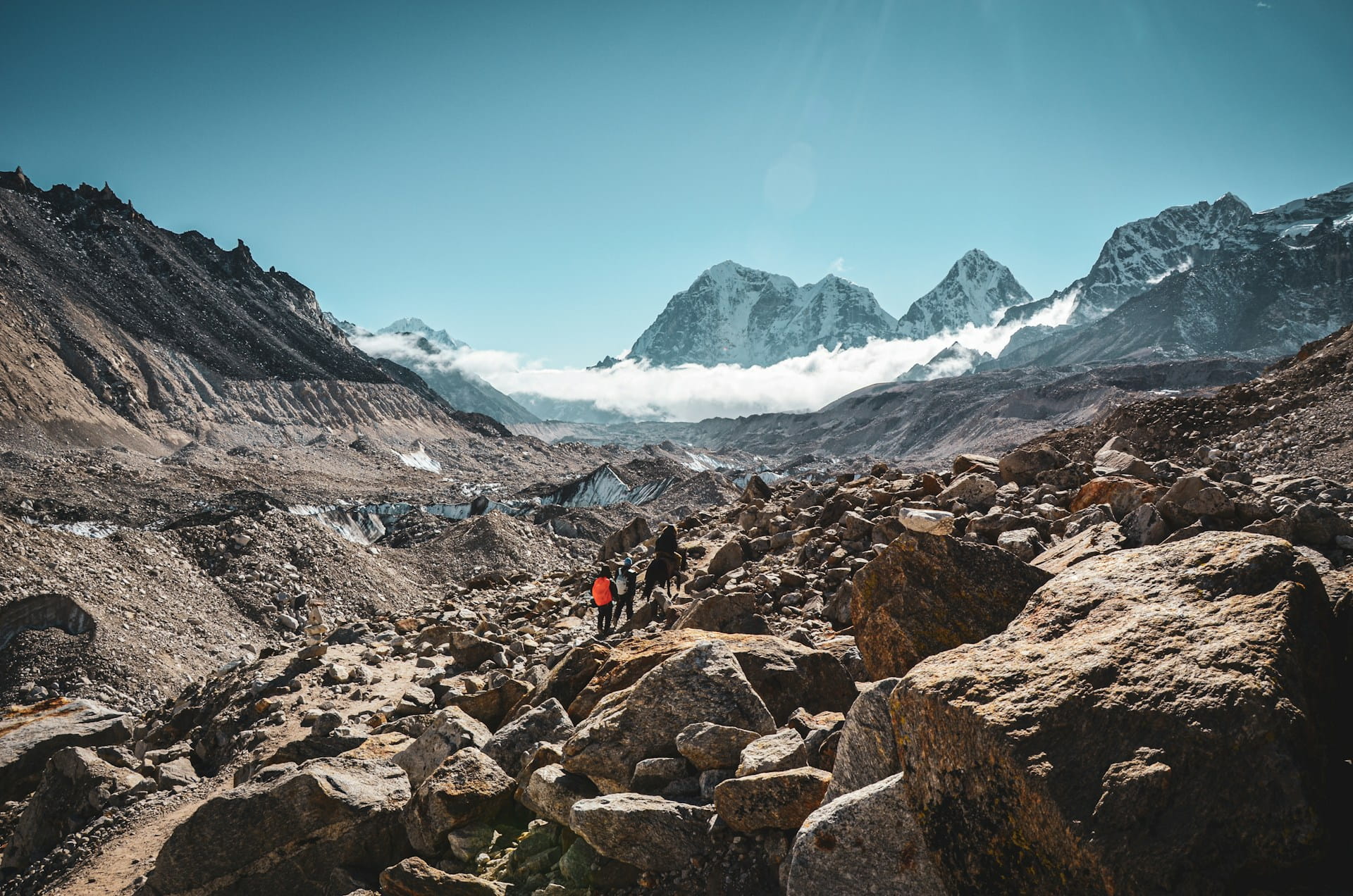
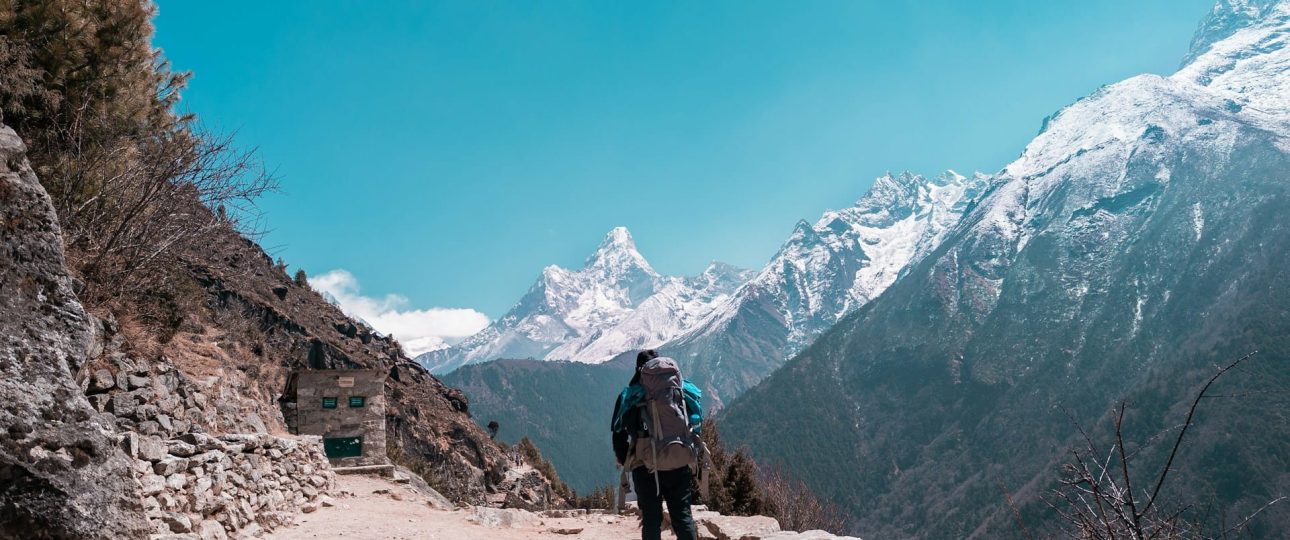
The three physical demands that training must address are: cardiovascular endurance for sustained daily effort over multiple weeks, leg strength and resilience for steep ascents and long descents, and the capacity to carry a daypack of 5 to 8 kilograms while doing both of the above.
Altitude adaptation itself is not trainable at home unless you have access to an altitude tent or a hypoxic training facility. What is trainable — and what determines whether you enjoy the trek or suffer through it — is everything else.
How Long to Train: The Honest Answer
| Starting Fitness Level | Recommended Training Duration |
|---|---|
| Sedentary or lightly active | 5 to 6 months |
| Moderately active (exercise 2-3 times per week) | 3 to 4 months |
| Regularly active with some hiking experience | 12 weeks minimum |
| Regular hiker or runner with strong aerobic base | 8 weeks focused preparation |
Twelve weeks is the realistic minimum for someone of moderate fitness. This is not a conservative overestimate — it reflects the time the body needs to build genuine endurance capacity, strengthen joints and connective tissue (which adapt more slowly than cardiovascular fitness), and accumulate the kind of multi-hour hiking experience that prepares you for consecutive days on the trail. Eight weeks of preparation is enough only if you’re starting from a genuinely strong aerobic and strength base, and even then, more time spent hiking specifically pays dividends on the mountain.
If you are starting from a completely sedentary position, five to six months gives you the training time to build from scratch without the injury risk that comes from increasing volume and intensity too quickly. Connective tissue — tendons, ligaments, cartilage — responds to training load on a timescale of months, not weeks. Overloading it by ramping up hiking volume too fast is one of the most common training mistakes for EBC preparation.
The Four Pillars of EBC Training
Pillar One: Cardiovascular Endurance
The most important physical quality for EBC is your capacity to sustain moderate aerobic effort for 5 to 7 hours per day, day after day. This is different from high-intensity fitness — it is the low-to-moderate zone aerobic capacity that long-distance trekking demands.
Running, cycling, swimming, and elliptical training all build cardiovascular fitness, but hiking is the most specific preparation because it uses the same muscle groups, movement patterns, and joint positions as the trek itself. If you can only do one form of cardio training for EBC, make it uphill walking. If you live in a flat area without hills, stair climbing is the next best substitute.
Target: build to the point where you can walk briskly for 3 to 4 hours continuously with a loaded pack without significant fatigue. This is the minimum baseline for the longer trek days.
Pillar Two: Leg Strength
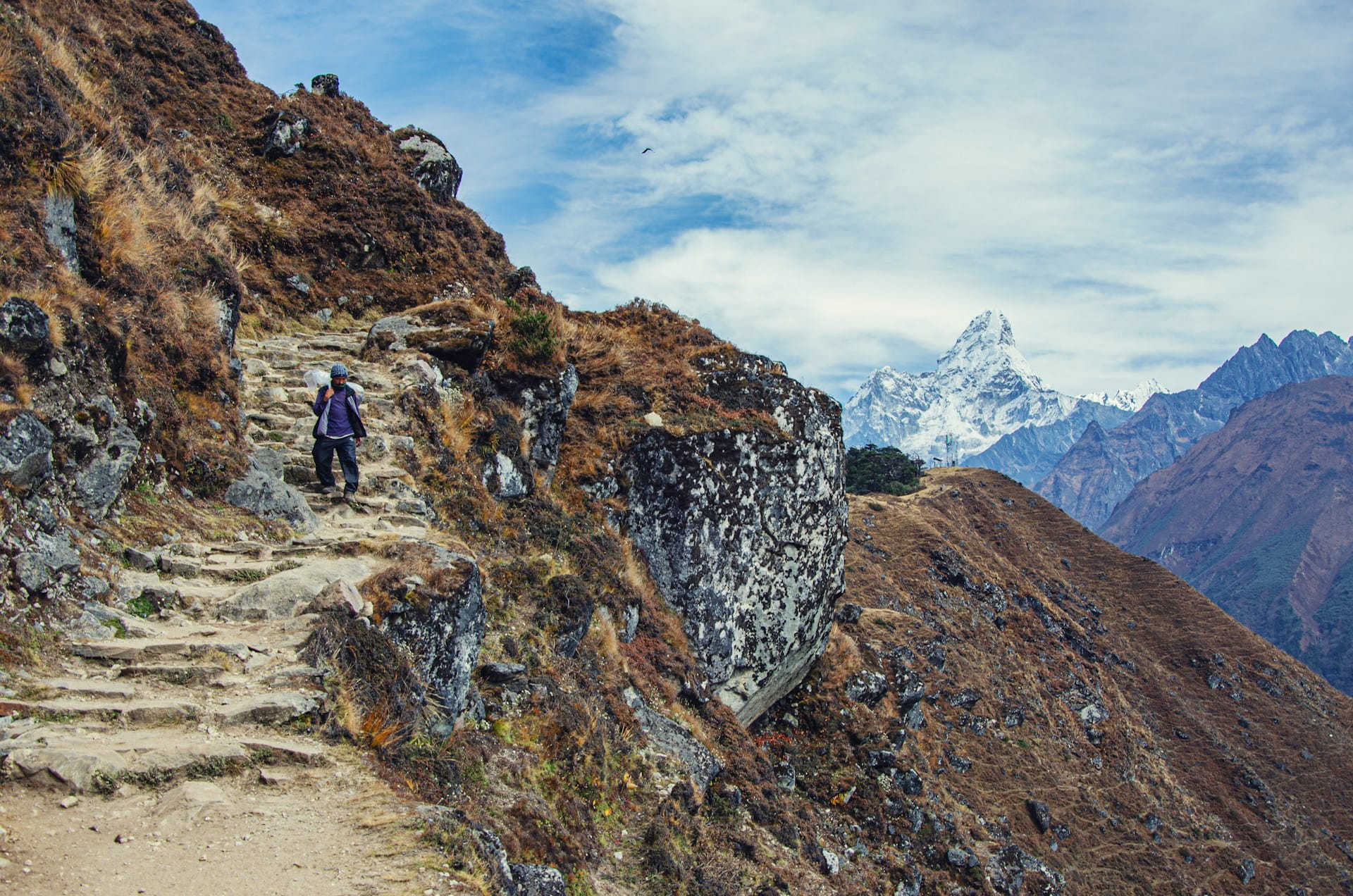
The EBC trail involves continuous ascent and descent on stone steps, rocky paths, and root-tangled trail. Downhill sections — particularly the long descent days — place heavy eccentric load on the quadriceps muscles, which work in their lengthened position to control the descent. This is the movement most trekkers are least trained for, because most cardiovascular training is done on flat or uphill terrain.
Key exercises:
Squats — bodyweight and loaded, building foundational quad and glute strength.
Lunges — forward, reverse, and lateral, which more closely replicate the uneven step patterns of mountain trail.
Step-ups onto a raised platform, which directly simulate uphill trail walking.
Wall sits — held for 30 to 60 seconds, building the static quad endurance used in long descents.
Calf raises — the Khumbu trail involves a great deal of stone staircase, and calf fatigue is a real issue on longer days.
Training frequency: 2 to 3 strength sessions per week, not on back-to-back days to allow recovery.
Pillar Three: Back-to-Back Hiking Days
The most specific and irreplaceable preparation for EBC is doing multi-day hiking trips with consecutive walking days. One long day hike per week builds fitness. Back-to-back 4 to 6-hour hiking days with a loaded pack builds the specific resilience the trek demands — the capacity to wake up on day 3 with sore legs from the previous two days and still walk efficiently for 5 hours.
If you have access to a hill or mountain area, plan at least two or three multi-day trips (minimum 2 consecutive days each) during your training period. These do more to prepare you for the cumulative demands of the trek than any equivalent amount of single-day training.
Pillar Four: Pack Training
You will carry a daypack on the EBC trek. Even with a porter carrying your main bag, a daypack with water, snacks, extra layers, camera, and rain gear typically weighs 5 to 8 kilograms. Training without a pack and then walking with one on the trek is a significant oversight — the additional load changes your posture, changes your joint loading, and tires your shoulders and hips in ways flat-back running does not prepare for.
Start training with a 3 to 4 kilogram pack and increase by 1 kilogram every 2 to 3 weeks until you are regularly hiking with 6 to 8 kilograms. This conditions your back, shoulders, hip flexors, and the adjustment your gait makes to compensate for the additional weight.
The 12-Week Training Plan Structure
This plan assumes a starting base of moderate fitness — you can walk for an hour without significant distress and do some form of exercise 2 to 3 times per week. Adjust the starting volumes up or down to match your actual current capacity.
| Phase | Weeks | Key Focus | Weekly Sessions |
|---|---|---|---|
| Base Building | Weeks 1-4 | Aerobic foundation, basic leg strength, break in gear | 4-5 sessions/week |
| Build Phase | Weeks 5-8 | Increase hiking duration, add pack weight, back-to-back days | 5 sessions/week |
| Peak Phase | Weeks 9-11 | Longest hikes, back-to-back full days, strength maintenance | 5-6 sessions/week |
| Taper Phase | Week 12 | Reduce volume, rest, final logistics | 3 sessions/week |
Weeks 1 to 4: Base Building
Cardiovascular: 3 to 4 sessions per week of 30 to 60 minutes each. Running, brisk walking, cycling, or swimming — any aerobic activity that keeps your heart rate in a sustained moderate zone. If possible, choose routes with hills from the beginning.
Strength: 2 sessions per week of squats, lunges, step-ups, and calf raises. Three sets of 12 to 15 repetitions per exercise. Keep intensity moderate — this phase is about building movement patterns and conditioning connective tissue, not maximum effort.
Hiking: One longer hike per week of 2 to 3 hours with a 3 to 4 kilogram pack. Prioritize elevation gain over flat distance. If you live in a city, staircase climbing with a pack is a legitimate substitute.
Weeks 5 to 8: Build Phase
This is where the training becomes more specifically trek-oriented. The goal is to get comfortable being on your feet for 4 to 5 hours with a pack, and to begin accumulating back-to-back hiking days.
Cardiovascular: Increase one weekly session to 75 to 90 minutes. Maintain 3 to 4 sessions total. Prioritize hill work and uneven terrain over flat gym cardio.
Strength: 2 to 3 sessions per week. Increase resistance on squats and step-ups. Add single-leg exercises — single-leg squats (pistol progressions), single-leg Romanian deadlifts — which build the balance and stability that uneven mountain trail demands.
Hiking: Extend the long hike to 4 to 5 hours with a 5 to 6 kilogram pack. Plan one weekend of back-to-back hiking days — 3 to 4 hours on each of two consecutive days. This is the most valuable single training investment of the entire preparation period.
Weeks 9 to 11: Peak Phase
Your longest and most trek-specific training period. The goal is to build confidence that your body can handle consecutive long days — not to exhaust yourself, but to demonstrate to yourself that the endurance is there.
Cardiovascular: Maintain 4 sessions per week. At least two of these should be hill walks or hikes of 2 to 3 hours.
Strength: 2 sessions per week, maintaining the gains from previous phases without going heavier. Recovery is as important as stimulus in this phase.
Hiking: Your long hike should reach 5 to 7 hours with a 6 to 8 kilogram pack. Plan at least one weekend of back-to-back full hiking days — ideally 5 to 6 hours each day. If you can access a multi-day trail and sleep outdoors between days, this is the most specific simulation available. Altitude-mimicking trails above 2,000 to 3,000 meters, if accessible from your location, are worth seeking out.
Week 12: Taper
Reduce training volume significantly — 3 shorter, easier sessions of 30 to 45 minutes each. The goal of taper week is to arrive in Kathmandu rested, not depleted. Your fitness is built. Rest allows muscles to fully recover, inflammation to subside, and energy stores to replenish. Do not try to add one final big training push in the week before departure. It doesn’t improve your fitness and it leaves you tired at the start of the trek.
Altitude: What You Can and Cannot Train At Home
This is the section most training guides handle vaguely. Here is the direct, honest picture.
You cannot meaningfully train your body to function at 5,000 meters while living at sea level. The specific physiological changes that occur at altitude — increased red blood cell production, adjusted respiratory response, improved oxygen extraction efficiency — require actual altitude exposure to develop. They cannot be replicated by training harder at home, holding your breath during workouts, or any other sea-level intervention.
What you can do: build a cardiovascular system robust enough to adapt quickly once you are at altitude. A trekker with a strong aerobic base reaches Namche Bazaar (3,440 meters) and acclimatizes more efficiently over the mandatory rest day than a trekker with poor cardiovascular fitness. The adaptation still happens on the mountain, not in your gym — but a fit cardiovascular system gives your body more resources to work with during the adaptation process.
If you live near mountains above 2,000 meters and can do training hikes at altitude in the weeks before departure, do so. Spending time at 2,500 to 3,000 meters during training, even if you don’t sleep there, provides some useful physiological stimulus. It also gives you real experience of what reduced oxygen feels like during exertion — a valuable piece of preparation that no flat treadmill run can provide.
Altitude tents (hypoxic tents that simulate reduced oxygen during sleep) are used by some serious athletes and mountaineers to stimulate altitude adaptation. They are expensive, uncomfortable, and while they do produce measurable physiological changes, the extent to which those changes transfer to improved acclimatization on a specific trek is debated in the sports science literature. They are not necessary and not recommended as a standard preparation tool for EBC trekkers.
The Role of the EBC Acclimatization Schedule
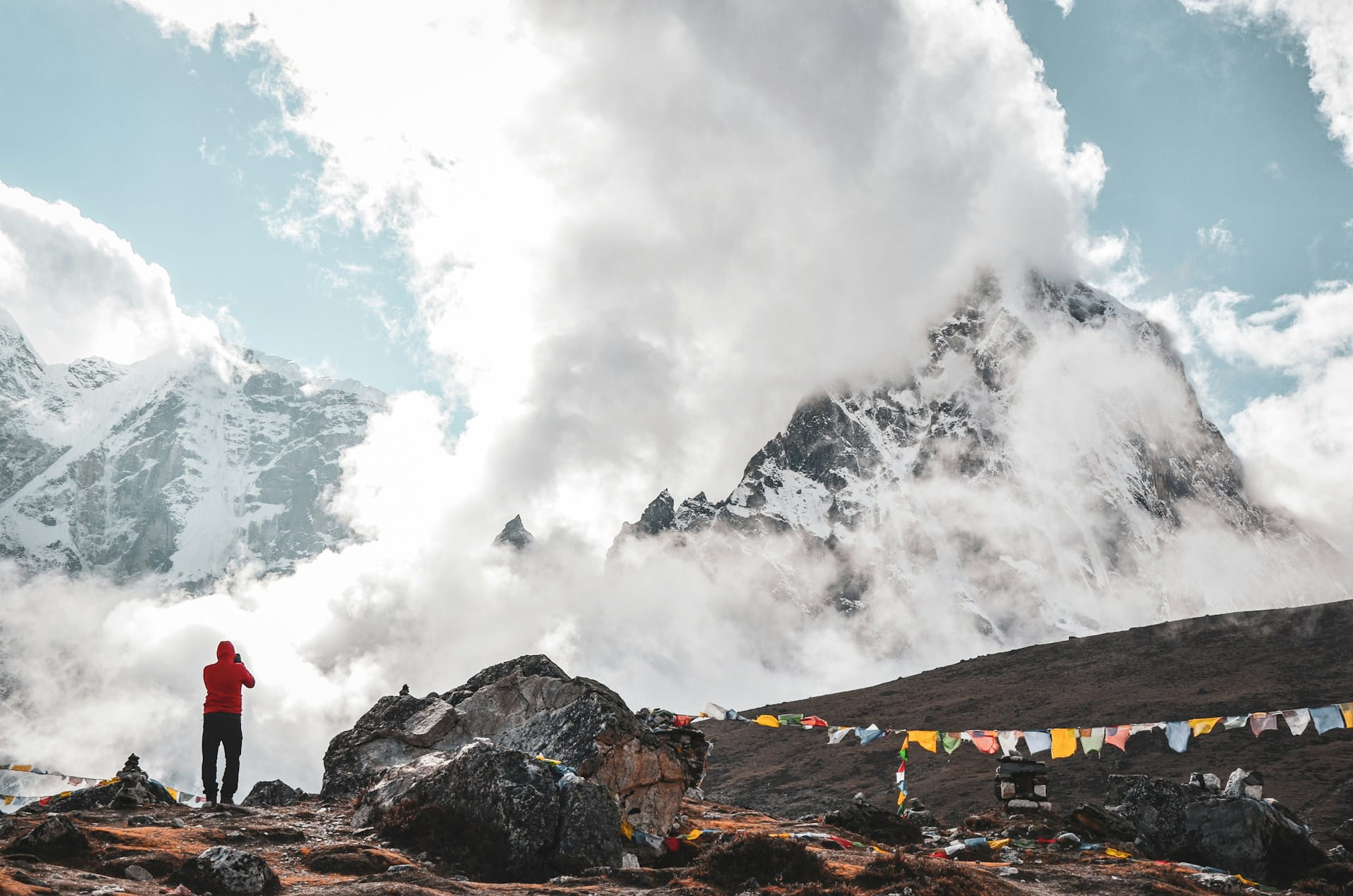
No amount of training replaces the acclimatization schedule built into the standard EBC itinerary. This is worth understanding clearly because it changes how you think about altitude preparation.
The standard 12 to 14-day EBC itinerary from Lukla is calibrated to give your body the time it needs to adapt to increasing altitude. The mandatory rest day at Namche Bazaar (3,440 meters) — typically including an acclimatization hike to a higher elevation before returning to sleep at Namche — and the additional rest day at Dingboche (4,410 meters) are physiologically designed, not optional. They are where altitude adaptation happens.
The most common reason for helicopter evacuation on the EBC route is not insufficient fitness. It is insufficient acclimatization — typically from rushing the schedule by skipping rest days or ascending too quickly. A very fit trekker who rushes the itinerary is more likely to develop serious altitude sickness than a moderately fit trekker who follows the schedule correctly.
Your training builds the physical capacity to handle the walking demands. The itinerary’s acclimatization structure handles the altitude adaptation. Both are required.
Knee Care: The Most Underestimated Training Priority
Knee problems are among the most common reasons trekkers struggle on EBC, and they are almost entirely a function of inadequate preparation of the quadriceps and the connective tissue surrounding the knee joint.
The long descent days on the EBC route — particularly from Gorak Shep back toward Namche on the return — place sustained eccentric load on the quad-patellar tendon system. Trekkers who have not specifically trained for downhill walking often develop significant knee pain by day 5 to 8 of the trek, precisely when they need to perform consistently for the final push to base camp and back.
Training the descent specifically: include downhill walking in your training from week 3 onward. This can be done on stairs (going down stairs is as important as going up), on hillside trails, or on treadmill incline at a negative grade. Step-downs — standing on a step and lowering your heel slowly toward the floor — are a specific exercise that builds eccentric quad strength for descent.
Trekking poles are not optional accessories on the EBC descent. They reduce the compressive load on the knee by transferring some of the downhill force through the arms and poles. Train with them so the movement is natural by the time you’re on the mountain.
Practical Pre-Departure Checklist
Beyond fitness, several practical preparations reduce friction on the trek itself.
- Boot break-in is non-negotiable. New boots cause blisters on day one. Start wearing your trekking boots on every training hike from week one. They should feel like old friends by departure day. Never take new boots to Nepal.
- Pack weight management matters. Most EBC trekkers hire a porter for the main bag (up to 20 to 25 kilograms). Your daypack should carry water (1.5 to 2 liters minimum), snacks, an extra warm layer, rain cover, camera, and first aid essentials. Train with this weight from the beginning of your preparation.
- Medical clearance is worth getting if you have any cardiovascular history, knee problems, or respiratory conditions. At 5,000 plus meters with 50 percent less oxygen per breath, pre-existing conditions you manage easily at sea level can become significant. A pre-departure doctor consultation also allows discussion of Diamox (acetazolamide), which is sometimes prescribed preventively for altitude sickness. Do not make the decision about Diamox without medical input — it has side effects and contraindications that require professional assessment.
- Travel insurance covering helicopter evacuation to at least 6,000 meters is required for EBC in 2026. A helicopter rescue from the Khumbu region can cost $3,000 to $5,000 out of pocket without coverage. Verify your policy specifically covers high-altitude trekking and helicopter rescue before departing.
- Hydration training matters more than most people realize. The EBC trail at altitude causes increased respiratory water loss — you lose more fluid per breath in cold, dry mountain air than at sea level.
The training habit of carrying and consistently drinking from a water bottle or hydration reservoir during hikes translates directly to better hydration behavior on the trek. Aim for 3 to 4 liters of fluid per day during trekking, including oral rehydration salts if you are sweating significantly.
The Mental Training Nobody Mentions
Physical preparation gets all the attention. Mental preparation for EBC is discussed far less but matters specifically in two situations that most trekkers eventually encounter.
- The first is altitude headache at Namche or Dingboche. A dull, persistent headache on acclimatization days is normal and expected. The mind’s instinct when something hurts is to interpret it as a signal to stop — and distinguishing between normal acclimatization discomfort and genuine AMS warning signs requires a calm, observant mindset rather than either panic or denial.
- The second is the final days above 4,500 meters, where cumulative fatigue has been building for more than a week, sleep quality at altitude has been poor, appetite is reduced, and the most spectacular terrain of the trek is ahead. This is where mental determination — the willingness to keep moving at a slow, steady pace, to not compare your pace to other trekkers, and to stay present in what is genuinely one of the most extraordinary environments on earth — is the difference between a difficult day and a defeated one.
You build the mental capacity for this in training by training in bad weather when you could stay home. By finishing a long hike when you’re tired instead of cutting it short. By practicing discomfort management rather than discomfort avoidance. These habits do not translate automatically from comfortable workouts but build directly from every training session you complete when it would have been easier not to.
Frequently Asked Questions about How to Train for Everest Base Camp
- How long should I train for Everest Base Camp?
A minimum of 12 weeks for someone of moderate fitness. Sedentary or lightly active people benefit from 5 to 6 months. The longer your preparation period, the more time your connective tissue, joints, and cardiovascular system have to adapt fully without injury risk. - Do I need to be a runner to train for EBC?
No. Running is a useful training tool but not necessary. Hiking, brisk uphill walking, cycling, stair climbing, and swimming all build the cardiovascular foundation the trek requires. The most specific preparation is uphill walking with a pack — the exact movement the trek demands. - Can beginners do Everest Base Camp?
Yes, with proper preparation over an adequate timeframe. The trek does not require technical skills. What it requires is the cardiovascular endurance to walk 5 to 7 hours per day at altitude, the leg strength to handle repeated ascent and descent on uneven terrain, and the mental patience to go slowly and follow the acclimatization schedule. - Will fitness prevent altitude sickness?
No. Altitude sickness is not caused by poor fitness. It is caused by ascending faster than your body can acclimatize to reduced oxygen. Very fit athletes develop altitude sickness; some moderately fit trekkers acclimatize with no symptoms at all. Fitness improves your overall capacity to handle the trek’s physical demands but does not predict or prevent AMS. The acclimatization schedule is what prevents altitude sickness. - Should I train on a treadmill or outdoors?
Outdoors on uneven terrain is significantly more useful than treadmill training for EBC preparation. Uneven surfaces engage stabilizer muscles around the ankle and knee that treadmills do not train. Outdoor hill walking also builds the mental familiarity with sustained effort on varied terrain. If treadmill is your only option, use incline settings of 8 to 15 percent for uphill simulation, and practice on outdoor stairs and any available trails whenever possible. - How heavy should my training pack be?
Start at 3 to 4 kilograms and build to 6 to 8 kilograms over the course of the training period. Train with the actual daypack you plan to use on the trek to break in both the pack and your body’s adjustment to it. - How many days per week should I train?
Four to five days per week during the build and peak phases. This allows adequate training stimulus while leaving recovery days that prevent overuse injury. Training every day at high intensity increases injury risk and reduces the quality of individual sessions. - What are the most important exercises for EBC training?
Uphill hiking with a loaded pack is the single most important exercise. Supporting exercises that matter most: squats and lunges for leg strength, step-ups for uphill simulation, eccentric step-downs for descent preparation, and calf raises for sustained staircase walking. Core work — planks, dead bugs, bird-dogs — supports the posture needed for efficient walking under pack weight. - What should the last 1-2 weeks before departure look like?
This is a taper period, not a final push — training volume and intensity should drop noticeably while sleep and nutrition take priority, since fresh muscles and joints matter more at this point than squeezing in one more hard hike. Attempting a big final training push in the week before departure typically leaves people fatigued or nursing a minor injury right as the trek begins, which defeats months of otherwise solid preparation. - Do I need to do any strength training, or is cardio enough?
Cardio alone leaves a gap — descent days on uneven, rocky terrain place significant eccentric load on the quads and knees, and pure cardio training doesn’t build the muscular resilience needed to handle that repeatedly over consecutive days. A combination of cardio base-building alongside two to three strength sessions per week focused on legs, core, and stabilizers gives more complete preparation than either approach alone. - How should I train if I only have access to flat terrain, no hills?
Stair climbing in a building, a stair-mill machine at the gym, or a treadmill set to maximum incline are all reasonable substitutes for hill access, since the key stimulus is sustained uphill effort rather than any specific location. Adding a weighted pack to stair sessions closely mimics the loaded uphill walking the trek actually demands, even without natural elevation nearby. - What role does mental preparation play alongside physical training?
A meaningful one — long consecutive days of walking at a deliberately slow pace, combined with basic teahouse comforts and unpredictable weather, tests patience and mental steadiness as much as physical fitness. Trekkers who’ve done long training hikes that mimic the boredom and repetition of multi-hour walking days tend to handle the actual trek’s mental demands more smoothly than those who’ve only trained in short, intense gym sessions. - Is there a specific training plan structure that works best?
Most effective plans follow a base-build-peak-taper structure: a base phase of general cardio and strength, a build phase adding pack weight and longer hikes, a peak phase with the longest and most demanding training hikes roughly 3-4 weeks before departure, and a taper in the final one to two weeks. This progression reduces injury risk by increasing load gradually rather than jumping straight to peak-difficulty training sessions. - How important is nutrition and hydration during training?
Genuinely important, since the body adapting to increased training load needs adequate protein for muscle repair and consistent hydration habits that carry over usefully to the trek itself, where appetite often drops at altitude. Practicing eating enough on long training hikes, even when not particularly hungry, is a useful habit to build before facing the same challenge with less appetite at altitude. - Should older trekkers or those with joint issues train differently?
Lower-impact cardio options like cycling, swimming, or an elliptical machine can build the same cardiovascular base with less joint stress, and extending the overall training timeline gives connective tissue more time to adapt gradually rather than compressing the same load into a shorter window. Consulting a doctor or physiotherapist before starting, especially with any pre-existing joint or cardiac history, is sensible given the sustained physical demands the trek eventually places on the body.
Final Word on How to Train for Everest Base Camp
The most common training mistake for EBC is doing generic fitness work — flat runs, gym circuits, unloaded cardio — and assuming it translates to a 12-day high-altitude trek. It does, partially. But specific preparation that mirrors the actual demands of the trek produces measurably better results.
Hike on hills, not just flat ground. Train with your actual pack, not empty-handed. Do back-to-back hiking days, not just single long efforts. Build your descending capacity as deliberately as your ascending capacity. Arrive rested for departure week, not depleted from a final training push.
The EBC trek is not an athletic event with a finish-line clock. It is 12 to 14 days of walking through one of the most extraordinary landscapes on earth, progressively higher, progressively more demanding, and progressively more rewarding. The training is not about becoming an elite athlete. It is about building enough capacity that the experience is joy instead of survival.
Train for that. The rest takes care of itself on the mountain.